

वह हृदय स्वास्थ्य ऐप जो आखिरकार सही सवाल पूछता है
आज बाज़ार में दिल की सेहत से जुड़े सैकड़ों ऐप्स मौजूद हैं। उनमें से ज़्यादातर एक ही काम करते हैं: वे आपकी हार्ट रेट, आपके कदमों को ट्रैक करते हैं, आपकी नींद को मापते हैं, और आपको अधिक सब्जियां खाने के लिए कहते हैं। कुछ अधिक परिष्कृत लोग पहनने योग्य उपकरणों से जुड़ते हैं और आपको आपकी नब्ज का वास्तविक समय का रीडआउट देते हैं। कुछ तो अनियमित दिल की धड़कन को भी चिह्नित करेंगे।.
ये उपयोगी उपकरण हैं। लेकिन वे सभी एक अलग सवाल का जवाब दे रहे हैं।.
हार्ट रेट मॉनिटर आपको यह बताते हैं कि इस समय आपका दिल क्या कर रहा है। वे आपको यह नहीं बता सकते—आपकी कलाई पर बंधा कोई भी पहनने योग्य उपकरण यह नहीं बता सकता—कि आपके परिवार से आपको मिले आनुवंशिक ब्लूप्रिंट के आधार पर दस, बीस या तीस वर्षों में आपके दिल के साथ क्या होने की संभावना है। इस सवाल के लिए एक बिल्कुल अलग तरह के टूल की आवश्यकता होती है। और अब तक, इसका सही उत्तर देने के लिए कोई ऐप नहीं बनाया गया है।.
यह आज बदल जाता है।.
हार्ट रिस्क कैलकुलेटर पेश है
हृदय जोखिम कैलकुलेटर अब Google Play पर उपलब्ध है, और यह हृदय स्वास्थ्य ऐप के क्षेत्र में वास्तव में कुछ नया प्रस्तुत करता है। यह हृदय गति मॉनिटर नहीं है। यह स्टेप काउंटर नहीं है। यह ध्यान (मेडिटेशन) टाइमर नहीं है और न ही रक्तचाप लॉग। हमारी जानकारी के अनुसार, यह भारित पारिवारिक-इतिहास रूपरेखा का उपयोग करके विशेष रूप से वंशागत हृदय संबंधी जोखिम को मापने के लिए डिज़ाइन किए गए पहले उपभोक्ता ऐप्स में से एक है — उत्तराधिकार संकट गुणांक — सहकर्मी-समीक्षित साहित्य में स्थापित सिद्धांतों से व्युत्पन्न परिसंचरण, जामा, , यूरोपियन हार्ट जर्नल, और लैंसेट. [1],[2],[3],[4]
इस ऐप के पीछे की मुख्य अंतर्दृष्टि सरल लेकिन गहन है: आपका पारिवारिक इतिहास यह हाँ या ना का सवाल नहीं है।.
मानक हृदय जोखिम कैलकुलेटर - व्यापक रूप से उपयोग किए जाने वाले सहित फ्रेमघम जोखिम स्कोर — पूछें कि क्या आपके परिवार में हृदय रोग का कोई इतिहास है।. [1] हाँ या ना। बस इतना ही। एक दादा-दादी की मृत्यु दिल का दौरा 82 साल की उम्र में और एक भाई/बहन के गिरने से अचानक हृदय गति बंद होने से मौत 39 पर दोनों को एक ही चेकबॉक्स मिलता है। वे एक चीज़ नहीं हैं। आस-पास भी नहीं। और इस बारे में शोध स्पष्ट है।. [3],[5]
यह ऐप किस प्रकार अलग है
यह पूछता है कौन, न कि सिर्फ क्या
हार्ट रिस्क कैलकुलेटर आपके परिवार के हृदय रोग के इतिहास को रिश्ते, घटना के समय आयु और परिणाम की गंभीरता के आधार पर व्यवस्थित करता है। एक घातक घटना में प्रथम-डिग्री संबंधी 40 वर्ष की आयु में यह एक मौलिक रूप से भिन्न वंशानुगत संकेत वहन करता है, जबकि 75 वर्ष की आयु में दादा-दादी के किसी गैर-घातक घटना से नहीं। ऐप इस अंतर को गणितीय रूप से कैद करता है, Peter Megdal, PhD द्वारा प्रकाशित महामारी विज्ञान संबंधी अवलोकनों से विकसित साक्ष्य-आधारित भार निर्धारण ढांचे का उपयोग करते हुए:
H = Σ (R × W) / A
जहाँ R है सहसंबंध गुणांक (माता-पिता और भाई-बहनों के लिए 0.5, दादा-दादी और चाचा-चाची तथा बुआ-मामा-मौसी के लिए 0.25), W है गंभीरता भार हृदय की घटना का, और A वह आयु है जिस पर यह घटना घटी। यह समीकरण एक साक्ष्य-सूचित शैक्षिक ढांचा है जो स्थापित महामारी विज्ञान संबंधी जोखिम सिद्धांतों को एक संरचित स्कोर में जोड़ता है — आनुवंशिक पारिवारिक हृदय जोखिम का एक संरचित अनुमान प्रदान करता है जिसे कोई भी मानक चेकबॉक्स कैप्चर नहीं कर सकता है।.
यह खुलासा करता है इमेजिंग ट्रैप
हाल के हृदय संबंधी शोध में सबसे महत्वपूर्ण - और सबसे खतरनाक - निष्कर्षों में से एक वह है जिसे चिकित्सक इमेजिंग ट्रैप कहते हैं। एक मानक कोरोनरी धमनी कैल्शियम स्कैन, जो कार्डियोलॉजी में सबसे अधिक इस्तेमाल किए जाने वाले स्क्रीनिंग टूल में से एक है, खतरनाक सॉफ्ट प्लेक होने पर भी शून्य (जीरो) स्कोर दे सकता है, बिना-कैल्शियम वाला प्लाक आपकी धमनियों में सक्रिय रूप से बन रहा है।. [6] एक महत्वपूर्ण वंशानुगत हृदय जोखिम वाले लोगों के लिए, एक शून्य कैल्शियम स्कोर चुनिंदा रोगियों में यह गलत आश्वस्ति दे सकता है।.
2025 का कॉट-कैट (CAUGHT-CAD) यादृच्छिक परीक्षण इस बात की पुष्टि करता है कि के पारिवारिक इतिहास वाले रोगियों में अल्पवयस्क कोरोनरी धमनी रोग, कोरोनरी सीटी एंजियोडॉग्राफी गैर-कैल्सीफाइड की पहचान कर सकता है पट्टिका कैल्शियम स्कोरिंग द्वारा पता नहीं लगाया जाता है और चयनित रोगियों में प्रबंधन को प्रभावित कर सकता है।. [7] हार्ट रिस्क कैलकुलेटर इस शोध के इर्द-गिर्द बनाया गया है। यह आपको यह समझने में मदद करता है कि क्या आपका पारिवारिक इतिहास आपको ऐसे लोगों में शामिल कर सकता है जिनके लिए इमेजिंग विकल्पों के बारे में किसी डॉक्टर के साथ अतिरिक्त चर्चा करना उचित हो सकता है।.
यह वह सब कैद करता है जिसे पहनने योग्य उपकरण पूरी तरह से छोड़ देते हैं
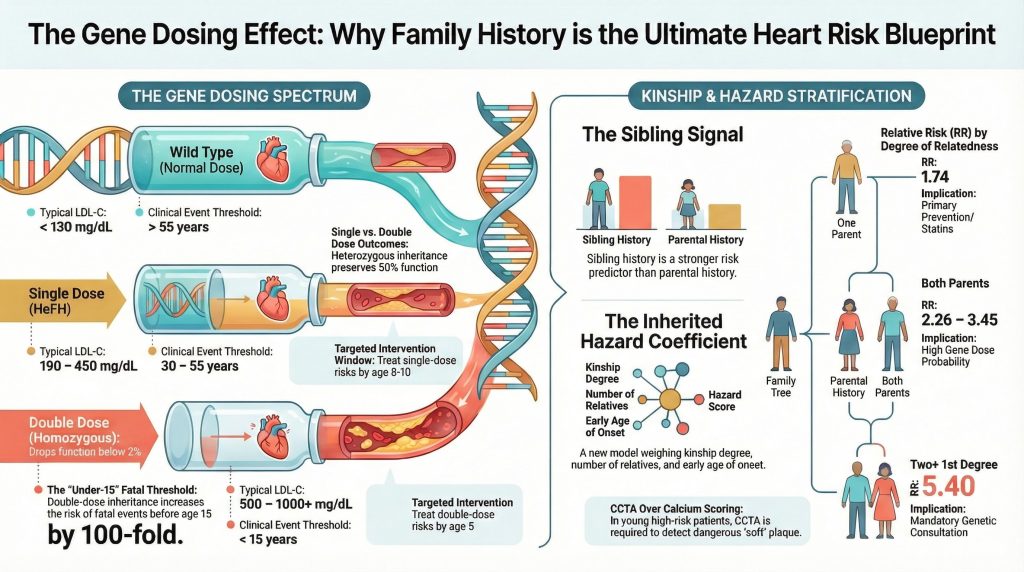
आपका ऐप्पल वॉच आपके आराम करने की हृदय गति को जानता है। यह नहीं जानता कि आपके भाई को 42 साल की उम्र में घातक दिल का दौरा पड़ा था। आपका फिटबिट आपकी नींद की गुणवत्ता को ट्रैक करता है। यह आपको यह नहीं बता सकता कि समय से पहले हृदय रोग से पीड़ित भाई-बहन आपके अपने कार्डियक जोखिम के लिए 2.46 का ऑड्स रेशो प्रदान करता है — एक ऐसा आंकड़ा जो सहकर्मी-समीक्षित शोध में प्रलेखित है जामा. [5] आपका गार्मिन मापता है वीओ2 मैक्स. इसमें योगात्मक वंशागत बोझ — जिसे शोधकर्ता जीन डोजिंग कहते हैं — का हिसाब लगाने का कोई तरीका नहीं है, जो तब होता है जब कई करीबी रिश्तेदार समय से पहले विकसित होते हैं हृदय रोग, वंशानुगत आनुवंशिक संवेदनशीलता की संभावना को काफी हद तक बढ़ा देता है।. [3],[8]
वियरएबल्स इस बात को मापते हैं कि इस समय आपके शरीर में क्या हो रहा है। हार्ट रिस्क कैलकुलेटर (हृदय जोखिम कैलकुलेटर) आपके पारिवारिक इतिहास में झलकी वंशागत पारिवारिक सिग्नल और यह आपके जीवन भर के कार्डियक प्रक्षेपवक्र के बारे में क्या सुझाव देता है, इसका मॉडल तैयार करता है। वियरएबल्स और पारिवारिक-इतिहास के उपकरण पूरक लेकिन अलग-अलग जानकारी प्रदान करते हैं - लेकिन उनमें से केवल एक ही उन लोगों की पहचान करने में मदद करता है जो मानक स्क्रीनिंग की तुलना में अधिक गहन मूल्यांकन से लाभान्वित हो सकते हैं।.
यह आपको अपने डॉक्टर के पास ले जाने के लिए कुछ देता है
हार्ट रिस्क कैलकुलेटर का प्रत्येक आउटपुट एक निष्कर्ष के रूप में नहीं, बल्कि बातचीत की शुरुआत के रूप में तैयार किया जाता है। यह ऐप चर्चा के लिए तैयार पारिवारिक इतिहास का सारांश और विशिष्ट, चिकित्सकीय रूप से आधारित प्रश्नों का एक सेट तैयार करता है जिन्हें आप अपनी अगली अपॉइंटमेंट में ला सकते हैं। ऐसे प्रश्न जैसे: मेरे परिवार के पैटर्न को देखते हुए, क्या मुझे हो सकता है कोमल पट्टिका जो एक मानक कैल्शियम स्कैन से छूट सकता है? क्या मुझे किसी निवारक हृदय रोग विशेषज्ञ के पास भेजा जाना चाहिए, बजाय इसके कि प्राथमिक देखभाल में प्रबंधित किया जाए? क्या मेरे परिवार का इतिहास इस बात को बदल देता है कि मेरे मामले में मानक जोखिम उपकरणों की व्याख्या कैसे की जानी चाहिए? [9]
ये वे प्रश्न हैं जो वास्तव में एक क्लिनिकल मुलाकात की दिशा बदल सकते हैं। ये वे प्रश्न हैं जो एक नियमित वार्षिक शारीरिक जाँच को एक सार्थक हृदय संबंधी बातचीत में बदल देते हैं। और ये वे प्रश्न हैं जिन्हें अधिकांश लोग पूछना नहीं जानते—क्योंकि किसी ने कभी उनके पारिवारिक इतिहास को इस तरह से व्यवस्थित नहीं किया है कि वे प्रश्न दिखाई दे सकें।.
यह वास्तविक विज्ञान पर आधारित है
Heart Risk Calculator सामान्य सलाह पर बना कोई वेलनेस ऐप नहीं है। इसके ढांचे में शामिल अवधारणाएं 40 से अधिक पीयर-रिव्यू पब्लिकेशन्स द्वारा सूचित की गई हैं जो वंशानुगत हृदय जोखिम, समय से पहले होने वाली कोरोनरी धमनी रोग, पारिवारिक इतिहास महामारी विज्ञान, और आनुवंशिकी और हृदय संबंधी संवेदनशीलता पर आधारित हैं। Inherited Hazard Coefficient के पीछे का जीन डोजिंग मॉडल वंशानुगत हृदय रोग के उन मौलिक शोधों पर आधारित है जो Nature Reviews Cardiology, , लैंसेट, और यूरोपियन हार्ट जर्नल. [4],[8] में प्रकाशित हुए हैं। माता-पिता और भाई-बहनों के जोखिम का डेटा इन क्षेत्रों के ऐतिहासिक अध्ययनों से आता है: जामा और परिसंचरण. [3],[5] करीबी रिश्तेदारों में समय से पहले होने वाली घटनाओं का नैदानिक महत्व हृदय संबंधी घटनाएं — और उस महत्व को पकड़ने में मानक उपकरणों की अपर्याप्तता — दशकों के कार्डियोवैस्कुलर एपिडेमियोलॉजी में प्रलेखित है। [9]
यह कोई ऐसा एल्गोरिदम नहीं है जिसे किसी ने एक सप्ताहांत में बनाया हो। यह पीटर मेगडल, पीएचडी द्वारा एक शैक्षिक उपकरण के रूप में विकसित किया गया साक्ष्य-आधारित शैक्षिक ढांचा है, जो स्थापित महामारी विज्ञान सिद्धांतों को एक ऐसी समस्या पर लागू करता है जिसे हल करने के लिए मानक उपकरण कभी डिजाइन ही नहीं किए गए थे।
यह अभी क्यों मायने रखता है
हृदय रोग संयुक्त राज्य अमेरिका में मृत्यु का नंबर एक कारण बना हुआ है। [10] लगभग आधे अमेरिकियों का हृदय संबंधी घटनाओं का पारिवारिक इतिहास है। [11] और फिर भी अधिकांश लोगों के लिए उनके वंशानुगत जोखिम को समझने के लिए उपलब्ध उपकरण उल्लेखनीय रूप से पुराने हैं — इनटेक फॉर्म पर एक चेकबॉक्स, एक फ्रैमिंघम स्कोर जिसे कभी जेनेटिक लोडिंग को पकड़ने के लिए डिज़ाइन नहीं किया गया था, [1] और एक कैल्शियम स्कैन जो कम उम्र के, जीन-डोज वाले व्यक्तियों में सबसे खतरनाक प्लाक को पूरी तरह से छोड़ सकता है। [6],[9]
एक 20 वर्षीय व्यक्ति के लिए जिसके भाई या बहन की 38 वर्ष की आयु में अचानक हृदय गति रुकने से मृत्यु हो गई थी, फ्रैमिंघम रिस्क स्कोर अक्सर एक प्रतिशत से कम का दस-वर्षीय जोखिम दिखाएगा — क्योंकि यह फॉर्मूला कालानुक्रमिक आयु से संचालित होता है, न कि वंशानुगत जीव विज्ञान से। [1] उस व्यक्ति का वंशानुगत जोखिम प्रोफाइल पारंपरिक कैलकुलेटर द्वारा सुझाए गए मूल्यांकन की तुलना में काफी अधिक मूल्यांकन की आवश्यकता पैदा कर सकता है। और उनके पारिवारिक इतिहास में वंशानुगत पारिवारिक संकेतों को मॉडल करने वाले उपकरण के बिना, उन्हें तब तक सही प्रश्न पूछने का पता नहीं चलेगा जब तक कि बहुत देर न हो जाए।
द हार्ट रिस्क ऐप ऐसे व्यक्ति के लिए मौजूद है। यह हर उस व्यक्ति के लिए मौजूद है जो डॉक्टर के क्लिनिक में बैठा है और जिसने कहा है, “हाँ, मेरे परिवार में हृदय रोग का इतिहास है,” और उस जानकारी को एक चेकबॉक्स में गायब होते देखा है जो उनकी देखभाल के बारे में कुछ नहीं बदलता है।.
इसे आज ही डाउनलोड करें
हार्ट रिस्क कैलकुलेटर ऐप अब Google Play पर $4.99 में उपलब्ध है। यह एक शैक्षिक उपकरण है, चिकित्सा उपकरण नहीं, और यह नैदानिक मूल्यांकन का विकल्प नहीं है। लेकिन यह आपके हृदय स्वास्थ्य पर खर्च किए गए पाँच डॉलर में सबसे महत्वपूर्ण हो सकता है — न इसलिए कि यह आपकी नाड़ी की निगरानी करता है, बल्कि इसलिए कि यह अंततः वह प्रश्न पूछता है जिसे पहनने योग्य उपकरणों और मानक कैलकुलेटरों ने कभी उत्तर देने के लिए डिज़ाइन नहीं किया गया था।.
आपका पारिवारिक इतिहास डेटा है। अब इसका उपयोग करने का समय आ गया है।.
यह उपकरण केवल शैक्षिक उद्देश्यों के लिए है और इसमें चिकित्सीय सलाह शामिल नहीं है। व्यक्तिगत हृदय संबंधी घटनाओं की भविष्यवाणी करने के लिए स्कोर को संभावित रूप से मान्य नहीं किया गया है और इसका उपयोग बीमारी के निदान के लिए नहीं किया जाना चाहिए। स्वास्थ्य संबंधी निर्णय लेने से पहले हमेशा किसी योग्य स्वास्थ्य देखभाल पेशेवर से परामर्श लें। पीटर मेगडल, पीएचडी द्वारा शोध — CuringHeartDisease.com
संदर्भ
- D’Agostino RB Sr, Vasan RS, Pencina MJ, et al. General cardiovascular risk profile for use in primary care: the Framingham Heart Study. Circulation. 2008;117(6):743-753. doi:10.1161/CIRCULATIONAHA.107.699579.
- Virani SS, Alonso A, Aparicio HJ, et al. Heart Disease and Stroke Statistics-2021 Update: A Report From the American Heart Association. Circulation. 2021;143(8):e254-e743. doi:10.1161/CIR.0000000000000950
- Lloyd-Jones DM, Nam BH, D’Agostino RB Sr, et al. Parental cardiovascular disease as a risk factor for cardiovascular disease in middle-aged adults: a prospective study of parents and offspring. JAMA. 2004;291(18):2204-2211. doi:10.1001/jama.291.18.2204
- Ference BA, Ginsberg HN, Graham I, et al. Low-density lipoproteins cause atherosclerotic cardiovascular disease. 1. Evidence from genetic, epidemiologic, and clinical studies. A consensus statement from the European Atherosclerosis Society Consensus Panel. Eur Heart J. 2017;38(32):2459-2472. doi:10.1093/eurheartj/ehx144
- Murabito JM, Pencina MJ, Nam BH, et al. Sibling cardiovascular disease as a risk factor for cardiovascular disease in middle-aged adults. JAMA. 2005;294(24):3117-3123. doi:10.1001/jama.294.24.3117
- Villines TC, Hulten EA, Shaw LJ, et al. Prevalence and severity of coronary artery disease and adverse events among symptomatic patients with coronary artery calcification scores of zero undergoing coronary computed tomography angiography: results from the CONFIRM (Coronary CT Angiography Evaluation for Clinical Outcomes: An International Multicenter) registry. J Am Coll Cardiol. 2011;58(24):2533-2540. doi:10.1016/j.jacc.2011.10.851
- Nerlekar N, Vasanthakumar SA, Whitmore K, et al. Effects of Combining Coronary Calcium Score With Treatment on Plaque Progression in Familial Coronary Artery Disease: A Randomized Clinical Trial. JAMA. 2025;333(16):1403-1412. doi:10.1001/jama.2025.0584
- Bachmann JM, Willis BL, Ayers CR, Khera A, Berry JD. Association between family history and coronary heart disease death across long-term follow-up in men: the Cooper Center Longitudinal Study. Circulation. 2012;125(25):3092-3098. doi:10.1161/CIRCULATIONAHA.111.065490
- Arnett DK, Blumenthal RS, Albert MA, et al. 2019 ACC/AHA Guideline on the Primary Prevention of Cardiovascular Disease: A Report of the American College of Cardiology/American Heart Association Task Force on Clinical Practice Guidelines. Circulation. 2019;140(11):e596-e646. doi:10.1161/CIR.0000000000000678
- Martin SS, Aday AW, Allen NB, et al. 2025 Heart Disease and Stroke Statistics: A Report of US and Global Data From the American Heart Association. Circulation. 2025;151(8):e41-e660. doi:10.1161/CIR.0000000000001303
- Moonesinghe R, Yang Q, Zhang Z, Khoury MJ. Prevalence and Cardiovascular Health Impact of Family History of Premature Heart Disease in the United States: Analysis of the National Health and Nutrition Examination Survey, 2007-2014. J Am Heart Assoc. 2019;8(14):e012364. doi:10.1161/JAHA.119.012364
परिशिष्ट
Inherited Hazard Coefficient एल्गोरिदम के साक्ष्य का आधार
संबद्ध दस्तावेज़: “द हार्ट हेल्थ ऐप दैट फाइनली आस्क्स द राइट क्वेश्चन”
अवलोकन
Inherited Hazard Coefficient (IHC) की गणना इस सूत्र का उपयोग करके की जाती है:
H = Σ (R × W) / A
जहाँ R संबंध गुणांक (relation coefficient) है (प्रथम-डिग्री के रिश्तेदारों के लिए 0.5: माता-पिता और भाई-बहन; द्वितीय-डिग्री के रिश्तेदारों के लिए 0.25: दादा-दादी, बुआ-मौसी और चाचा-ताया), W हृदय संबंधी घटना का गंभीरता भार (severity weight) है, A वह आयु है जिस पर घटना हुई थी, और Σ पारिवारिक इतिहास में सभी प्रभावित रिश्तेदारों के योग को दर्शाता है।
इस सूत्र का प्रत्येक संरचनात्मक तत्व — संबंध गुणांक R, गंभीरता भार W, आयु हर A, और योग तर्क — सहकर्मी-समीक्षित कार्डियोवैस्कुलर महामारी विज्ञान के एक विशिष्ट निकाय पर आधारित है। यह परिशिष्ट प्रत्येक घटक का समर्थन करने वाले प्राथमिक साहित्य की पहचान करता है और उस साक्ष्य को उन डिज़ाइन विकल्पों से अलग करता है जो लेखक के अपने साक्ष्य-सूचित संश्लेषण का प्रतिनिधित्व करते हैं।
R पद: संबंध गुणांक
R पद रोगी और प्रभावित परिवार के सदस्य के बीच जैविक संबंध की डिग्री को कूटबद्ध करता है। प्रथम-श्रेणी के रिश्तेदारों (माता-पिता, भाई-बहन) को 0.5 का गुणांक मिलता है, जो 50% साझा जीनोम को दर्शाता है। द्वितीय-श्रेणी के रिश्तेदारों (दादा-दादी, चाची, चाचा) को 0.25 प्राप्त होता है, जो 25% साझा जीनोम को दर्शाता है। प्रथम-बनाम द्वितीय-श्रेणी के रिश्तेदारों के विभेदक भार को दो ऐतिहासिक फ्रेमिंगम-आधारित अध्ययनों द्वारा समर्थित किया गया है।
लॉयड-जोन्स और अन्य, JAMA 2004
[1] यह भावी फ्रेमिंगम संतति विश्लेषण माता-पिता के हृदय रोग को एक के रूप में कड़ाई से पुष्टि करने वाले पहले अध्ययनों में से था स्वतंत्र पूर्वानुमानकर्ता पारंपरिक के लिए पूर्ण समायोजन के बाद संतान के सीवीडी (CVD) का जोखिम कारक। महत्वपूर्ण रूप से, अध्ययन ने प्रदर्शित किया कि जोखिम तब और बढ़ गया जब दोनों माता-पिता प्रभावित थे — जो IHC की योग संरचना का वैचारिक आधार है। यह पेपर सीधे माता-पिता को 0.5 गुणांक के आवंटन और प्रथम-श्रेणी बनाम द्वितीय-श्रेणी के रिश्तेदारों के विभेदक भार का समर्थन करता है।
मुराबितो और अन्य, JAMA 2005
[2] इस साथी फ्रेमिंगम सिबलिंग (सहोदर) विश्लेषण ने एक प्रभावित भाई-बहन वाले व्यक्तियों में कार्डियोवैस्कुलर बीमारी के लिए 2.46 का असमायोजित ऑड्स अनुपात दर्ज किया — एक परिमाण जो कुछ उपसमूहों में माता-पिता के इतिहास के बराबर या उससे अधिक है। यह निष्कर्ष भाई-बहनों को माता-पिता के समान 0.5 का R गुणांक देने का प्राथमिक औचित्य है, न कि कम मूल्य का। इसने इस मूल सिद्धांत को भी पुख्ता किया कि प्रथम-श्रेणी के रिश्तेदार, द्वितीय-श्रेणी के रिश्तेदारों की तुलना में स्पष्ट रूप से भिन्न जोखिम स्तर का गठन करते हैं।
A पद: हर में घटना के समय आयु
A पद उस आयु को सूत्र के हर में रखता है जिस पर परिवार के सदस्य ने अपनी हृदय संबंधी घटना का अनुभव किया था, ताकि कम उम्र की घटनाएं उच्च IHC योगदान उत्पन्न करें। यह एल्गोरिदम की सबसे नैदानिक रूप से परिणामी संरचनात्मक विशेषता है और कई डेटा स्रोतों में सुसंगत निष्कर्षों द्वारा समर्थित है।
लॉयड-जोन्स और अन्य, JAMA 2004 और मुराबितो और अन्य, JAMA 2005
[1],[2] दोनों फ्रेमिंगम विश्लेषणों ने पारिवारिक घटना के समय आयु के आधार पर अपने निष्कर्षों को स्तरीकृत किया और प्रदर्शित किया कि जब हृदय संबंधी घटना समय से पहले (पुरुष रिश्तेदारों में 55 वर्ष की आयु से पहले और महिला रिश्तेदारों में 65 वर्ष की आयु से पहले) हुई, तब जोखिम काफी अधिक था। 40 वर्ष की आयु में एक पारिवारिक घटना 78 वर्ष की आयु में उसी घटना की तुलना में मौलिक रूप से भिन्न विरासत संकेत देती है। हर में A पद इस सुस्थापित महामारी विज्ञान सिद्धांत का प्रत्यक्ष गणितीय कूटलेखन है।
डी'अगस्टीनो और अन्य, सर्कुलेशन 2008 — फ्रेमिंगम रिस्क स्कोर
[3] मुख्य लेख में एक जोखिम कैलकुलेटर के प्राथमिक उदाहरण के रूप में उद्धृत किया गया है जो नहीं पारिवारिक घटना के समय आयु का हिसाब रखें। फ्रेमिंगहैम स्कोर रोगी की अपनी कालानुक्रमिक आयु को 10-वर्षीय जोखिम के अपने मुख्य कारक के रूप में उपयोग करता है, लेकिन इसमें उस आयु के लिए कोई चर शामिल नहीं है जिस पर परिवार के सदस्यों ने हृदय संबंधी घटनाओं का अनुभव किया था। IHC सूत्र में A विभाजक विशेष रूप से इस कमी को पूरा करने के लिए डिज़ाइन किया गया है — जो फ्रेमिंगहैम स्कोर व्यवस्थित रूप से छोड़ देता है उसे यह कैप्चर करता है।
W पद (Term): गंभीरता भार (Severity Weight)
W पद हृदय संबंधी घटनाओं को उनकी गंभीरता के आधार पर अलग-अलग भार देता है — जिसमें घातक घटनाओं, अचानक कार्डियक डेथ और शुरुआती पुनर्संवहन को चिकित्सकीय रूप से प्रबंधित गैर-घातक घटनाओं की तुलना में अधिक भार दिया जाता है। यह घटना की गंभीरता और अंतर्निहित एथेरोस्क्लेरोटिक बोझ के बीच अच्छी तरह से प्रलेखित संबंध को दर्शाता है।
विलिन्स एट अल., JACC 2011 — CONFIRM रजिस्ट्री
[4] इस बड़ी मल्टीसेंटर CCTA रजिस्ट्री ने प्रदर्शित किया कि शून्य के CAC स्कोर वाले रोगियों के बीच भी — जिन्हें पारंपरिक रूप से कम जोखिम वाला माना जाता है — एक महत्वपूर्ण अनुपात में गैर-कैल्सीफाइड, संभावित रूप से प्रतिरोधी पट्टिका (plaque) मौजूद थी। अध्ययन ने पुख्ता सबूत दिए कि मामूली रूप से समान जोखिम प्रोफाइल वाले रोगियों में घटना की गंभीरता और पट्टिका की विशेषताएं एक जैसी नहीं होती हैं। प्रथम-डिग्री के रिश्तेदारों में घातक घटनाएं एक उच्च वंशानुगत प्लाक का बोझ और गैर-घातक, चिकित्सकीय रूप से प्रबंधित घटनाओं की तुलना में अधिक आक्रामक रोग प्रक्षेपवक्र की ओर संकेत करती हैं — जो W गंभीरता भार के लिए महामारी विज्ञान तर्क है।
नेर्लेकर एट अल., JAMA 2025 — CAUGHT-CAD ट्रायल
[5] समयपूर्व CAD के पारिवारिक इतिहास वाले रोगियों में 2025 के इस रैंडमाइज्ड ट्रायल ने प्रदर्शित किया कि गैर-कैल्सीफाइड पट्टिका का बोझ एक ही व्यापक पारिवारिक इतिहास श्रेणी के व्यक्तियों के बीच भी काफी भिन्न था। परीक्षण ने पट्टिका की प्रगति को मापने के लिए CCTA का उपयोग अपने प्राथमिक एंडपॉइंट के रूप में किया, जिससे पुष्टि हुई कि वंशानुगत जोखिम स्पेक्ट्रम के भीतर गंभीरता का अंतर मापने योग्य नैदानिक महत्व रखता है — और यह केवल बाइनरी पारिवारिक इतिहास वर्गीकरण या कैल्शियम स्कोरिंग द्वारा कैप्चर नहीं किया जाता है।
Σ पद: रिश्तेदारों का योग (Summation Across Relatives)
समेशन ऑपरेटर इस सिद्धांत को दर्शाता है कि प्रत्येक अतिरिक्त प्रभावित रिश्तेदार के साथ वंशानुगत हृदय जोखिम बढ़ता जाता है। दो प्रभावित प्रथम-डिग्री के रिश्तेदारों वाले रोगी में एक वाले रोगी की तुलना में काफी अलग वंशानुगत संकेत होता है। Σ संरचना इसे खुराक-प्रतिक्रिया संबंध गणितीय रूप से कूटबद्ध करती है।
बाचमैन एट अल., Circulation 2012 — कूपर सेंटर लॉन्गिट्यूडिनल स्टडी
[6] दशकों तक पुरुषों पर किए गए इस बड़े प्रोस्पेक्टिव अध्ययन ने प्रदर्शित किया कि पारिवारिक इतिहास में कोरोनरी हृदय रोग मृत्यु काफी बढ़े हुए दीर्घकालिक हृदय मृत्यु दर से जुड़ी थी, और यह जोखिम अनुवर्ती अवधि में अंतर्निहित खुराक-प्रतिक्रिया संबंध के अनुरूप तरीके से संचित हुआ था। अध्ययन प्रभावित रिश्तेदारों के योगदान को जोड़ने के तर्क का समर्थन करता है बजाय इसके कि पारिवारिक इतिहास को एक एकल बाइनरी फ्लैग के रूप में माना जाए।
फेरेंस एट अल., European Heart Journal 2017
[7] यह मेंडेलियन रैंडमाइजेशन विश्लेषण ने प्रदर्शित किया कि एथेरोजेनिक प्रभाव एलडीएल कोलेस्ट्रॉल — जो वंशानुगत लिपिड-संबंधित हृदय जोखिम का प्राथमिक चालक है — संचयी और समय पर निर्भर होता है। ऊंचे स्तर के प्रति जीवन भर का जोखिम एलडीएल एथेरोस्क्लेरोटिक बोझ पैदा करता है जो समय के साथ जोखिम के समाकलन (integral) के समानुपाती होता है, न कि केवल किसी एक माप के। यह जैविक ढांचा IHC समेशन संरचना का समर्थन करता है: वंशानुगत हृदय जोखिम कोई बिंदु अनुमान नहीं है बल्कि एक संचयी संकेत है जिसे सभी प्रभावित रिश्तेदारों में एकत्रित किया जाना चाहिए और उनकी घटनाओं की गंभीरता और समय के अनुसार भारित किया जाना चाहिए।
साहित्य क्या प्रमाणित करता है — और क्या नहीं
क्या प्रमाणित है
ऊपर उद्धृत सहकर्मी-समीक्षित साहित्य उच्च विश्वास के साथ निम्नलिखित स्थापित करता है:
- प्रथम-डिग्री के रिश्तेदार दूसरे-डिग्री के रिश्तेदारों की तुलना में अधिक वंशानुगत हृदय जोखिम पैदा करते हैं।
- भाई-बहनों में माता-पिता के समान जोखिम होता है, न कि माता-पिता और दादा-दादी के बीच का मध्यवर्ती जोखिम।
- वह उम्र जिस पर परिवार के किसी सदस्य ने हृदय संबंधी घटना का अनुभव किया, एक महत्वपूर्ण चर है: समयपूर्व घटनाएं जीवन के उत्तरार्ध की घटनाओं की तुलना में काफी अधिक वंशानुगत संकेत प्रदान करती हैं।
- कई प्रभावित रिश्तेदार एक डोज़-रिस्पॉन्स (dose-response) तरीके से वंशानुगत जोखिम को और बढ़ाते हैं।
- घटना की गंभीरता अंतर्निहित एथेरोस्क्लेरोटिक बोझ के साथ सहसंबद्ध है और पारिवारिक इतिहास रिपोर्टों में एक समान नहीं होती है।
- मानक जोखिम कैलकुलेटर व्यवस्थित रूप से इस जानकारी का कम उपयोग करते हैं, विशेष रूप से मजबूत पारिवारिक इतिहास वाले युवा रोगियों में।
क्या मान्य नहीं है
मौजूदा साहित्य करता है नहीं मान्य:
- R के लिए चुने गए विशिष्ट गुणांक मान (0.5 और 0.25)।
- W को सौंपे गए विशिष्ट गंभीरता भार मान।
- श्रेणीबद्ध घटना-पर-आयु संशोधक लागू करने के बजाय A द्वारा विभाजित करने का गणितीय रूप।
- व्यक्तिगत हृदय संबंधी घटना जोखिम के लिए नैदानिक रूप से कैलिब्रेटेड भविष्य कहनेवाला स्कोर के रूप में सूत्र H = Σ(R×W)/A।
- किसी भी संभावित परिणाम डेटासेट के विरुद्ध IHC।
IHC सूत्र एक साक्ष्य-सूचित शैक्षिक ढांचा है जो स्थापित महामारी विज्ञान सिद्धांतों को वंशानुगत पारिवारिक हृदय जोखिम के एक संरचित, मात्रात्मक अनुमान में अनुवादित करता है। इनपुट ऐतिहासिक सहकर्मी-समीक्षित साहित्य पर आधारित हैं। विशिष्ट गणितीय कार्यान्वयन — गुणांक मान, भार योजना और सूत्र संरचना — उन सिद्धांतों के लेखक के संश्लेषण का प्रतिनिधित्व करते हैं और स्वतंत्र रूप से मान्य नहीं किए गए हैं। ACC/AHA प्राथमिक रोकथाम दिशानिर्देश [8] स्पष्ट रूप से पारिवारिक इतिहास को जोखिम बढ़ाने वाले कारक के रूप में मान्यता देता है जिसे नैदानिक निर्णय लेने में संशोधन करना चाहिए, लेकिन ऐसा करने के लिए मात्रात्मक सूत्र प्रदान करने से पीछे रहता है। IHC को ठीक उसी कमी को पूरा करने के लिए डिज़ाइन किया गया है।
संदर्भ
- Lloyd-Jones DM, Nam BH, D’Agostino RB Sr, et al. Parental cardiovascular disease as a risk factor for cardiovascular disease in middle-aged adults: a prospective study of parents and offspring. JAMA. 2004;291(18):2204-2211. doi:10.1001/jama.291.18.2204
- Murabito JM, Pencina MJ, Nam BH, et al. Sibling cardiovascular disease as a risk factor for cardiovascular disease in middle-aged adults. JAMA. 2005;294(24):3117-3123. doi:10.1001/jama.294.24.3117
- D’Agostino RB Sr, Vasan RS, Pencina MJ, et al. General cardiovascular risk profile for use in primary care: the Framingham Heart Study. Circulation. 2008;117(6):743-753. doi:10.1161/CIRCULATIONAHA.107.699579
- Villines TC, Hulten EA, Shaw LJ, et al. Prevalence and severity of coronary artery disease and adverse events among symptomatic patients with coronary artery calcification scores of zero undergoing coronary computed tomography angiography: results from the CONFIRM (Coronary CT Angiography Evaluation for Clinical Outcomes: An International Multicenter) registry. J Am Coll Cardiol. 2011;58(24):2533-2540. doi:10.1016/j.jacc.2011.10.851
- Nerlekar N, Vasanthakumar SA, Whitmore K, et al. Effects of Combining Coronary Calcium Score With Treatment on Plaque Progression in Familial Coronary Artery Disease: A Randomized Clinical Trial. JAMA. 2025;333(16):1403-1412. doi:10.1001/jama.2025.0584
- Bachmann JM, Willis BL, Ayers CR, Khera A, Berry JD. Association between family history and coronary heart disease death across long-term follow-up in men: the Cooper Center Longitudinal Study. Circulation. 2012;125(25):3092-3098. doi:10.1161/CIRCULATIONAHA.111.065490
- Ference BA, Ginsberg HN, Graham I, et al. Low-density lipoproteins cause atherosclerotic cardiovascular disease. 1. Evidence from genetic, epidemiologic, and clinical studies. A consensus statement from the European Atherosclerosis Society Consensus Panel. Eur Heart J. 2017;38(32):2459-2472. doi:10.1093/eurheartj/ehx144
- Arnett DK, Blumenthal RS, Albert MA, et al. 2019 ACC/AHA Guideline on the Primary Prevention of Cardiovascular Disease: A Report of the American College of Cardiology/American Heart Association Task Force on Clinical Practice Guidelines. Circulation. 2019;140(11):e596-e646. doi:10.1161/CIR.0000000000000678