
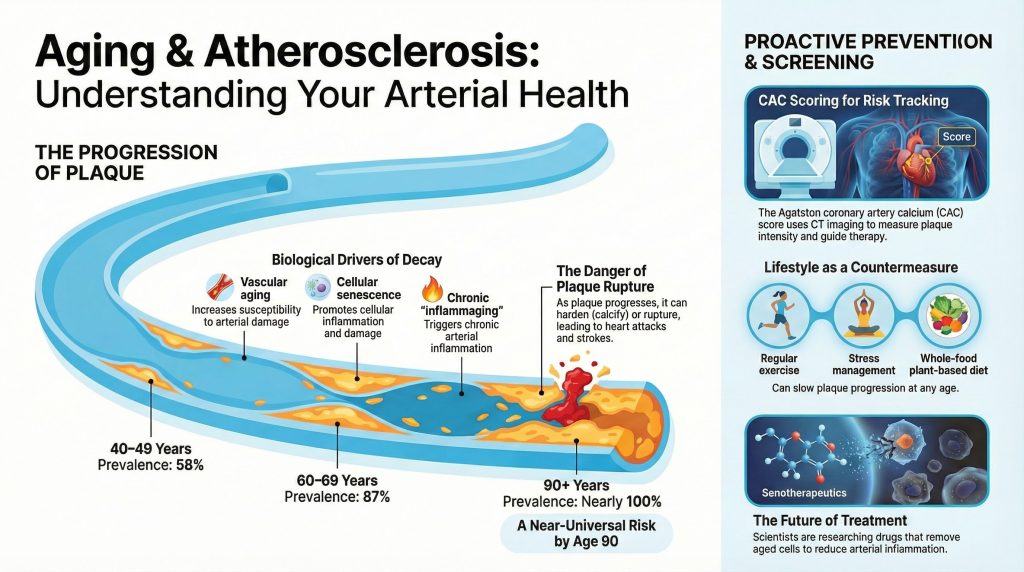
Does the risk of atherosclerosis increase as we age?
Yes. Aderverkalking is considered a disease of aging. The likelihood and severity of tandplak buildup in the arteries increase with age, even when other risicofactoren such as roken, high cholesterol, of hypertension are controlled.
Research shows that by age 40, about half of adults have some form of atherosclerosis. By age 90, nearly everyone shows signs of it.
(Citation: Wang JC, Bennett MR. Circ Res. 2012;111(2):245–259.)
Atherosclerosis Progression
Adapted from Sports Plus Physio / Wikimedia Commons – educational reuse permitted.
Why does aging itself promote plaque buildup?
Aging affects the body’s cells, tissues, and immune system in several ways that make arteries more vulnerable to plaque formation.
- Vasculaire veroudering – Over time, arteries lose elasticity and develop microscopic damage, making them more prone to lipid accumulation and ontsteking.
- Cellular senescence – Older cells stop dividing and repairing damage effectively. These verouderde cellen release inflammatory chemicals that worsen plaque growth.
- Inflammation – Chronic, low-level inflammation (“inflammaging”) contributes to arterial thickening and calcification.
(Citations: Frismantiene A et al. Int J Mol Sci. 2023;24(24):17129; Zhang X et al. Ageing Res Rev. 2023;90:102041.)
Cellular Senescence Process
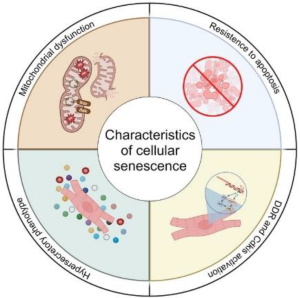
Adapted from Richardson et al., Cells (MDPI, open access).
How common is atherosclerosis in older adults?
Prevalence increases sharply with age:
- 58% of adults aged 40–49
- 87% of adults aged 60–69
- Nearly 100% of adults over 90
These figures come from autopsy and imaging studies across decades of research.
(Citation: Roberts WC, Ferrans VJ. J Chronic Dis. 1961;14(6):614–631.)
Does plaque calcification increase with age?
Yes. Calcification, which makes plaques hard and brittle, accelerates with aging. The Agatston coronary artery calcium (CAC) score is one measure used to track this.
CT Example: CAC Scoring Visualization
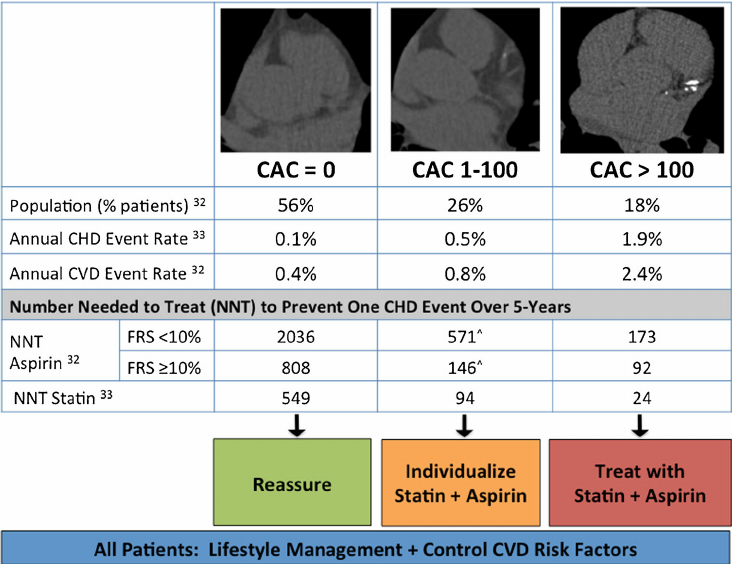
Adapted from Thomas D et al., via ResearchGate (educational use).
Older adults often show significantly higher CAC scores, reflecting both the duration and intensity of plaque development.
(Citation: Bild DE et al. Circulation. 2005;111(10):1313–1320.)
Coronary CT Example of Calcified Plaques
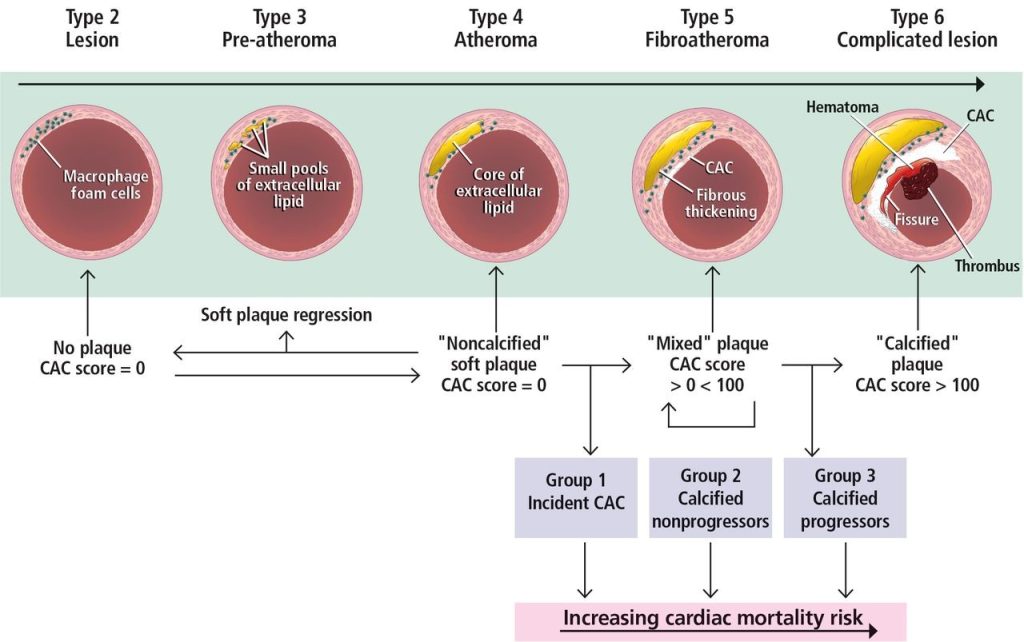 Adapted from Cleveland Clinic Journal of Medicine (used for academic illustration).
What role does the immune system play as we age?
As we age, our immune system changes—a phenomenon called immunosenescence. It becomes less efficient at resolving inflammation, allowing plaque to persist and grow. Persistent, low-level inflammation (“inflammaging”) contributes to the worsening of atherosclerosis over time.
(Citation: Aiello A et al. Ageing Res Rev. 2024;99:102112.)
What are the cardiovascular consequences?
Age-related plaque progression increases the risk of:
- Heart attack (myocardinfarct)
- Stroke
- Peripheral artery disease
These risks rise because plaques not only enlarge but can rupture, triggering clot formation.
(Citations: Wang JC, Bennett MR. Circ Res. 2012;111(2):245–259; Mortensen MB et al. Interv Cardiol Rev. 2024;19:e04.)
Plaque Rupture Illustration
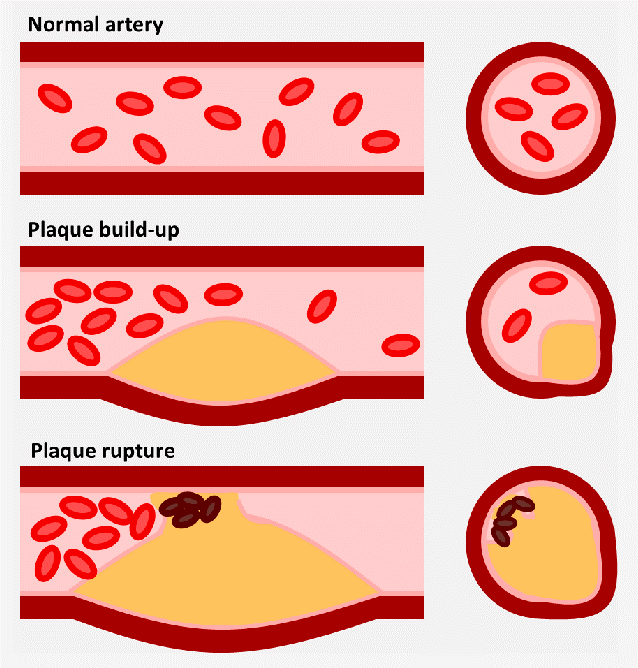
Adapted from research illustration, educational reuse allowed (ResearchGate).
Can measuring plaque help personalize prevention?
Yes. Coronary artery calcium (CAC) scoring using CT imaging helps determine risk levels and guide preventive therapy. Higher CAC scores strongly predict cardiovascular events.
(Citation: Arnett DK et al. J Am Coll Cardiol. 2019;74(10):e177–e232.)
What can older adults do to counteract arterial aging?
- Maintain healthy cholesterol and bloeddruk levels.
- Avoid smoking and manage bloedsuiker.
- Exercise regularly to improve vascular elasticity.
- Eat a balanced, Whole Food plant-based diet
- Get adequate sleep and manage stress.
Older Adults Exercising
Adapted from Wikimedia Commons (“Old people walking in winter, Croatia”).
Even modest lifestyle changes can slow plaque progression and lower the risk of heart disease at any age.
Are there emerging anti-aging treatments for atherosclerosis?
Scientists are exploring senotherapeutics—drugs that remove or modify senescent cells—to reduce inflammation and plaque formation. These are experimental but could, in the future, become part of hart- en vaatziekten prevention.
(Citation: Farr JN et al. Trends Cardiovasc Med. 2024;34(10):e123–e135.)
Takeaway
Aging itself drives the development of atherosclerosis by altering cellular and immune processes. While we can’t stop aging, understanding its effects helps us take proactive steps—through lifestyle, screening, and possibly future therapies—to maintain cardiovascular health.
Image Credits (Generic, Public Sources)
- Atherosclerosis diagram: Adapted from Sports Plus Physio / Wikimedia Commons.
- Cellular senescence schematic: Adapted from Richardson et al., Cells (MDPI, open access).
- CAC scoring figure: Adapted from Thomas D et al., ResearchGate (educational use).
- Coronary CT calcium example: Adapted from Cleveland Clinic Journal of Medicine.
- Plaque rupture diagram: Adapted from ResearchGate (open educational content).
Referenties
- Wang JC, Bennett M. Aging and atherosclerosis: mechanisms, functional consequences, and potential therapeutics for cellular senescence. Circ Res. 2012;111(2):245-259. doi:10.1161/CIRCRESAHA.111.261388
- Molnár AÁ, Pásztor DT, Tarcza Z, Merkely B. Cells in Atherosclerosis: Focus on Cellular Senescence from Basic Science to Clinical Practice. Int J Mol Sci. 2023;24(24):17129. Published 2023 Dec 5. doi:10.3390/ijms242417129
- Adav SS, Ng KW. Recent omics advances in hair aging biology and hair biomarkers analysis. Ageing Res Rev. 2023;91:102041. doi:10.1016/j.arr.2023.102041
- Leigh JP. Interpreting regression coefficients. J Chronic Dis. 1986;39(3):243-244. doi:10.1016/0021-9681(86)90029-9
- Bild DE, Detrano R, Peterson D, et al. Ethnic differences in coronary calcification: the Multi-Ethnic Study of Atherosclerosis (MESA). Circulation. 2005;111(10):1313-1320. doi:10.1161/01.CIR.0000157730.94423.4B
- Damarkusuma A, Mota P, Patel B, Oommen M. Consequences and Management of Excessive Ostial Stent Protrusion: A Case Report. Interv Cardiol. 2024;19:e04. Published 2024 Mar 11. doi:10.15420/icr.2023.34
- Hu C. Prevention of cardiovascular disease for healthy aging and longevity: A new scoring system and related “mechanisms-hallmarks-biomarkers”. Ageing Res Rev. 2025;107:102727. doi:10.1016/j.arr.2025.102727
- Arnett DK, Blumenthal RS, Albert MA, et al. 2019 ACC/AHA Guideline on the Primary Prevention of Cardiovascular Disease: A Report of the American College of Cardiology/American Heart Association Task Force on Clinical Practice Guidelines. J Am Coll Cardiol. 2019;74(10):e177-e232. doi:10.1016/j.jacc.2019.03.010
- Wann LS. Editorial commentary: Therapeutic ultrasound in atherosclerotic cardiovascular disease. Trends Cardiovasc Med. 2023;33(7):441. doi:10.1016/j.tcm.2022.06.009