Lipoprotein(a): How Much Worse Does It Make Heart Disease?
1. What Lipoprotein(a) Is
بروتين دهني (أ)البروتين الدهني (أ)، الذي يُكتب (Lp(a)) ويُقنط بـ "إل-بي-صغيرة-أ"، هو جسيم شبيـه بالبروتين الدهني منخفض الكثافة (LDL) مع بروتين إضافي لزج مرتبط به., abbreviated Lp(a), is a low-density بروتين دهنيالبروتين الدهني عبارة عن حزمة صغيرة تحمل الدهون والكوليسترول عبر مجرى الدم. وبما أن الدهون لا تذوب في الماء، فإنها تحتاج إلى غلاف بروتيني لتنتقل. (البروتين الدهني منخفض الكثافةإن البروتينات الدهنية منخفضة الكثافة (LDL)، أو ما يُعرف بالبروتين الدهني منخفض الكثافة، هي الجسيم الرئيسي الذي ينقل الكوليسترول عبر الدم، والجسيم الرئيسي الذي يترسب في جدران الشرايين.)–like particle containing one molecule of أبروليپوبروتينالبروتين الدهني المساعد هو بروتين مرتبط بجزيء ناقل للدهون في دمك. لا تختلط الدهون بالماء، لذا تعمل هذه البروتينات وكأنها غلاف يسمح للدهون بالانتقال بأمان عبر مجرى الدم. B-100 (أبوبروتين بالـ ApoB هو بروتين يوجَد على السطح الخارجي لكل جزيء كوليسترول يمكن أن يلتصق بجدار الشريان ويسبب اللويحات. ويحمل كل جزيء من هذه الجزيئات بروتين ApoB واحداً بالضبط.) covalently linked to a second بروتينالبروتين هو العنصر الغذائي الذي يستخدمه جسمك لبناء وإصلاح العضلات والأنسجة., apolipoprotein(a), or apo(a). Apo(a) is encoded by the LPA geneLPA is the gene that determines how much lipoprotein(a) you make. Your version is fixed at conception. and contains repeated kringle-IV domainsRepeated structural protein loops within apolipoprotein(a) whose number varies between individuals and is the primary genetic determinant of Lp(a) particle size and plasma concentration.; variation in the number and sequence of those repeats is a principal reason plasma concentrations differ by orders of magnitude between individuals.
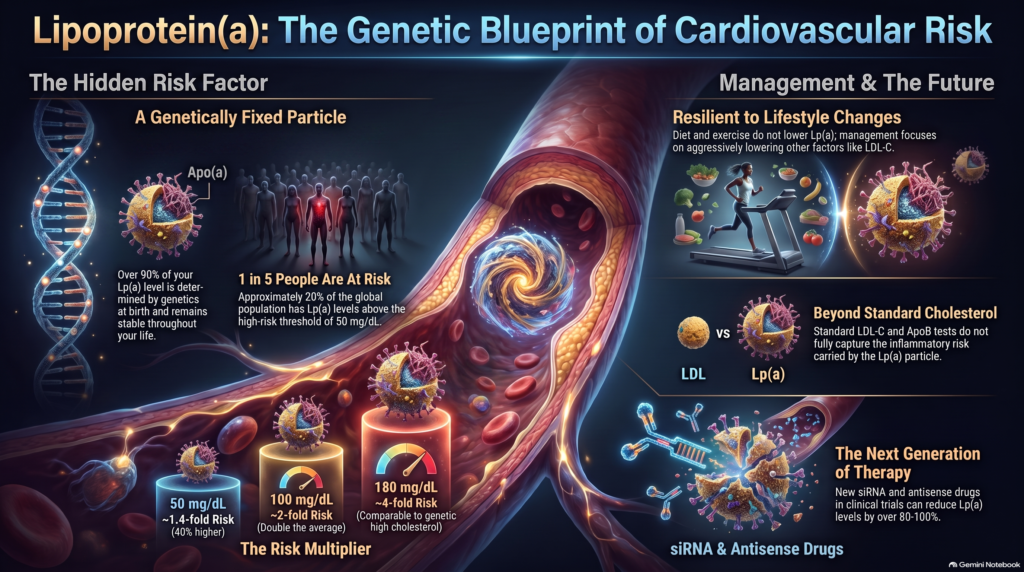
Lp(a) concentration is predominantly genetically determined. The 2022 European تصلب الشرايينتصلب الشرايين هو المرض الكامن وراء معظم النوبات القلبية والعديد من السكتات الدماغية. عالقة جزيئات الكوليسترول في جدار الشريان، فيرسل الجسم خلايا مناعية للتنظيف، وعلى مدى سنوات تتصلب هذه الفوضى لتتحول إلى لويحات. Society (EAS) consensus statement attributes more than 90% of interindividual variation to genetic variability at the LPA locus [1]. Concentrations are generally stable enough that a single adult measurement is sufficient for risk assessment, although kidney, liver and thyroid disease, pregnancy, the سن اليأسMenopause is when a woman's periods stop permanently, usually around age 51, as estrogen levels fall. transition, and certain medications can alter measured levels [1,2].
Lp(a) is often somewhat higher in women after menopause, although the magnitude varies by population and study [1,2]. Median concentrations also differ among ancestry groups, with wide within-group distributions — addressed quantitatively in Section 6.
Lp(a) should not be treated as simply another LDL-C measurement. Every Lp(a) particle contains ApoB and can enter the arterial wall, while the attached apo(a) makes Lp(a) an important carrier of oxidized phospholipids that may promote inflammatory and calcific processes [1]. Conventional LDL-C and ApoB measurements therefore do not fully capture the cardiovascular risk associated with Lp(a).
Units: mg/dL versus nmol/L
Lp(a) is reported either as mass (mg/dL) or as particle concentration (nmol/L). Because apo(a) isoforms differ substantially in molecular mass, a particle carrying a large isoform weighs more than one carrying a small isoform. There is consequently no universally valid fixed conversion factor. Paired expressions such as “50 mg/dL ≈ 125 nmol/L” are epidemiological approximations used for risk communication — including by the 2026 guideline itself — not laboratory conversions. Preserve the laboratory’s reported units and do not apply a fixed mass-to-molar conversion.
2. Is Lp(a) Causal?
The evidence that elevated Lp(a) is causal rather than merely a risk marker is unusually strong for a المؤشر الحيويالمؤشر الحيوي هو شيء قابل للقياس في الجسم يخبرك عن الصحة أو المرض - مثل قيمة مخبرية، أو نتيجة مسح، أو قراءة ضغط الدم., resting on three converging lines: prospective علم الوبائياتعلم الأوبئة هو دراسة أنماط الصحة في مجموعات كبيرة من الناس — من يمرض، وأين، وما الذي كان مشتركاً بينهم., human علم الوراثةعلم الوراثة هو دراسة ما ترثه من والديك. including الوراثة العشوائية المندليةالتكاثر العشوائي المندلي هو طريقة بحث ذكية تستخدم الجينات التي ولِد بها الأشخاص كتجربة طبيعية., and a consistent dose–response relationship.
في Emerging Risk Factors CollaborationA large pooled prospective analysis combining data from 36 studies and 126,634 participants to quantify how novel biomarkers, including Lp(a), add to standard cardiovascular risk prediction; it reported an adjusted coronary heart disease risk ratio of 1.13 per 3.5-fold higher usual Lp(a)., 126,634 people from 36 prospective studies contributed approximately 1.3 million person-years of follow-up, during which 22,076 first major vascular or nonvascular outcomes were recorded, including 9,336 مرض الشريان التاجيمرض الشريان التاجي هو تضيق أو انسداد الشرايين التي تغذي عضلة القلب بالدم، والذي يحدث بسبب تراكم اللويحات تصلب الشرايين؛ وهو السبب الرئيسي للنوبة القلبية والوفاة القلبية في جميع أنحاء العالم. (CHD) outcomes and 1,903 ischemic strokesتحدث السكتة الدماغية الإقفائية عندما ينقطع تدفق الدم إلى جزء من الدماغ وتبدأ أنسجة الدماغ بالموت.. The adjusted CHD risk ratio was 1.13 (95% CI 1.09–1.18) per 3.5-fold higher usual Lp(a) [3].
Genetic studies strengthen the causal inference because LPA alleles are assigned at conception and are not subject to السببية العكسيةالسببية العكسية تحدث عندما يشير السهم في الاتجاه المعكس — أي أن المرض هو ما سبب التعرض وليس التعرض هو ما سبب المرض.. Across three Copenhagen studies totaling 40,486 participants, genetic analyses supported causality; in the Copenhagen City Heart Study the instrumental-variable نسبة الخطرنسبة الخطر تقارن مدى سرعة حدوث الأحداث في مجموعتين. تعني النسبة البالغة 0.75 أن الأحداث حدثت بثلاثة أرباع المعدل في المجموعة المعالجة. was 1.22 (95% CI 1.09–1.37) per genetically predicted doubling of Lp(a) [4]. في PROCARDISA European multicenter case-control study of coronary artery disease genetics in which two LPA variants (rs10455872 and rs3798220) were associated with per-allele coronary heart disease odds ratios of 1.70 and 1.92, strengthening the causal evidence for Lp(a)., the LPA variants rs10455872 and rs3798220 carried per-allele CHD odds ratios of 1.70 (95% CI 1.49–1.95) and 1.92 (95% CI 1.48–2.49) [5].
The distinction that matters clinically: this body of evidence strongly supports elevated Lp(a) as a causal contributor to ASCVD. It does not establish that lowering Lp(a) with a drug, begun in middle age, reverses enough of that risk to prevent events. That question is addressed in Sections 12 through 14.
3. How Much Does Lp(a) Increase Cardiovascular Risk?
The clearest contemporary population-level summary is Table 4 of the 2026 ACC/AHA Multisociety Dyslipidemia GuidelineA joint clinical practice guideline from the American Heart Association and American College of Cardiology that, among other recommendations, tabulates estimated ASCVD relative-risk increments at Lp(a) concentrations from 50 to 180 mg/dL, derived from UK Biobank modeling. [2]. Relative to a population median of approximately 20 nmol/L (about 7 mg/dL), the guideline estimates ASCVD risk as follows.
| Lp(a) level | Approx. percentile | Estimated relative ASCVD risk | Interpretation |
| <30 mg/dL (<75 nmol/L) | Not specifically stated in guideline table | مرجع | Lower Lp(a)-related risk range; not “zero risk” |
| 30–49 mg/dL (75–124 nmol/L) | Not precisely specified | ~1.2-fold | Modest relative-risk increment |
| 50 mg/dL (125 nmol/L) | ~80th | ~1.4-fold | About 40% greater relative estimated ASCVD risk than the reference median |
| 100 mg/dL (250 nmol/L) | ~95th | ~2-fold | Approximately double the estimated ASCVD risk |
| 150 mg/dL (350 nmol/L) | Not specifically stated; lies between the guideline’s ~95th-percentile (100 mg/dL) and ~99th-percentile (180 mg/dL) anchors | ~3-fold | Very high population-level risk estimate |
| 180 mg/dL (430 nmol/L) | ~99th | ~4-fold | Estimated risk comparable to heterozygous فرط كوليستيرول الدم العائليفرط كوليستيرول الدم العائلي، أو ما يُعرف بـ (FH)، هو حالة وراثية لا يستطيع فيها الكبد التخلص من الكوليسترول من الدم بشكل صحيح. وتكون المستويات مرتفعة للغاية منذ الولادة. |
Table 1. 2026 ACC/AHA guideline estimated relative ASCVD risk by Lp(a) concentration.
Essential caveats stated by the guideline itself: these values are derived from البنك الحيوي البريطانييحتفظ البنك الحيوي البريطاني ببيانات جينية ونمط حياة وصحية تفصيلية عن نصف مليون متطوع بريطاني، مرتبطة بسجلاتهم الطبية., are intended as a general guide, may differ among other populations, and use only approximate equivalence between mg/dL and nmol/L [2]. They are population-level estimates, not a patient-specific risk calculatorيتقدر حاسب المخاطر احتمال تعرضك لنوبة قلبية أو سكتة دماغية خلال السنوات العشر القادمة، وذلك باستخدام عمرك، ومستوى الكوليسترول، وضغط الدم، وبعض المدخلات الأخرى..
These estimates are population averages, not destiny. They describe how event rates differ between groups of people at different Lp(a) concentrations; they do not forecast what will happen to any one person.
Lp(a) behaves as a continuous عامل خطرعامل الخطر هو شيء يزيد من احتمالية إصابتك بمرض ما – مثل جزيئات الكوليسترول المرتفعة، وارتفاع ضغط الدم، والتدخين، ومرض السكري، والتاريخ العائلي.. There is no biological cliff between 49 and 51 mg/dL; risk rises continuously rather than switching on at a single threshold. UK Biobank demonstrates this directly: among 460,506 participants followed for a median of 11.2 years, 22,401 incident ASCVD events occurred, median Lp(a) was 19.6 nmol/L, and risk increased approximately linearly at a hazard ratio of 1.11 (95% CI 1.10–1.12) per 50-nmol/L increment [6].
Separately, and at a different threshold, UK Biobank reported that among participants without previous ASCVD, 12.2% had Lp(a) ≥150 nmol/L, with an adjusted hazard ratio of 1.50 (95% CI 1.44–1.56); among those with preexisting ASCVD, prevalence was 20.3% and the hazard ratio 1.16 (95% CI 1.05–1.27) [6]. This ≥150 nmol/L figure must not be confused with, or used to corroborate, a 150 mg/dL (350 nmol/L) exposure — they are very different concentrations.
Why some studies report threefold to fourfold risk
Apparently divergent estimates can often be explained in substantial part by differences in endpoint, comparator, Lp(a) threshold, population, and statistical model rather than by direct contradiction.
In the Copenhagen City Heart Study, 9,330 participants were followed for 10 years and 498 developed احشاء عضلة القلبراجع "نوبة قلبية" للاطلاع على المقالة الكاملة. (MI). Compared with Lp(a) below 5 mg/dL, adjusted MI hazard ratios in women were 1.1 (95% CI 0.6–1.9) at 5–29 mg/dL, 1.7 (1.0–3.1) at 30–84 mg/dL, 2.6 (1.2–5.9) at 85–119 mg/dL, and 3.6 (1.7–7.7) at 120 mg/dL or above. In men the corresponding figures were 1.5 (0.9–2.3), 1.6 (1.0–2.6), 2.6 (1.2–5.5), and 3.7 (1.7–8.0) [7].
It is therefore correct to say that extreme Lp(a) was associated with approximately threefold to fourfold higher MI risk in that cohort. It is not correct to equate that with the guideline’s approximately twofold estimate at 100 mg/dL: the Copenhagen extreme category was 120 mg/dL or above versus a very low comparator of under 5 mg/dL, with an MI-specific endpoint, whereas the guideline estimate is broad ASCVD at 100 mg/dL versus a population-median reference in UK Biobank-derived modeling.
4. Translating Relative Risk Into Absolute Terms
A hazard ratio of 1.4 denotes approximately 40% higher estimated instantaneous event hazard under the proportional-hazards model. It does not mean a 40% probability of having an event, and it is not mathematically identical to multiplying an individual’s 10-year event probability by 1.4.
The following table is an arithmetic illustration only, assuming the stated multiplier behaves as a simple risk ratio applied directly to a baseline probability.
| Hypothetical baseline 10-year risk | RR 1.2 | RR 1.4 | RR 1.7 | RR 2.0 |
| 5% | 6% | 7% | 8.5% | 10% |
| 10% | 12% | 14% | 17% | 20% |
| 20% | 24% | 28% | 34% | 40% |
| 30% | 36% | 42% | 51% | 60% |
Table 2. Pure arithmetic illustration assuming a risk ratio acts multiplicatively on baseline probability. These values are not individualized Lp(a)-adjusted risk predictionsيشير التنبؤ بالخطر في طب القلب والأوعية الدموية إلى استخدام المتغيرات السريرية - مثل العمر، ضغط الدم، الكوليسترول، وحالة التدخين - أو القياسات المباشرة مثل التصوير لتقدير احتمالية تعرض الفرد لنوبة قلبية أو سكتة دماغية خلال إطار زمني محدد..
These are arithmetic illustrations assuming the stated multiplier behaves as a risk ratio applied directly to baseline probability. They are not individualized predictions, and an individual’s risk should not be estimated by multiplying the output of a clinical risk calculator by a hazard ratio or odds ratio reported in a study. The 2026 guideline Lp(a) values are not validated multipliers for an individual clinical risk score.
The clinical point the table makes is nonetheless important: the same multiplier adds far more الخطر المطلقالخطر المطلق هو الاحتمال الحقيقي لحدوث أمر ما لك، مُعبَّراً عنه كنسبة مئوية. إذا كان خطر إصابتك بنوبة قلبية في السنوات العشر القادمة يبلغ 12 بالمئة، فهذا يعني أن حوالي 12 شخصاً من كل 100 شخص مثلك سيصابون بها. to a person whose baseline is already high. Copenhagen provides real, study-specific absolute figures. Among تدخينتدمر التدخين بطانة الأوعية الدموية، وترفع ضغط الدم، وتجعل الدم يتجلط بسهولة أكبر، وتسرع نمو اللويحات., hypertensive participants older than 60, 10-year MI risk was approximately 20% in women and 35% in men with Lp(a) of 120 mg/dL or above, compared with approximately 10% and 19% respectively at under 5 mg/dL [7]. Even in that high-risk subgroup, elevated Lp(a) changed probability rather than making MI inevitable.
5. How Common Is Elevated Lp(a)?
Approximately one in five people has Lp(a) at or above commonly used high-risk thresholds of roughly 50 mg/dL or 125 nmol/L, depending on the assay and reporting units, making elevated Lp(a) very common worldwide [1]. The exact global burden depends on the threshold, the assay, and the demographic distribution examined, so a single precise headcount should be treated with caution. The 2026 guideline places 50 mg/dL near the 80th percentile, 100 mg/dL near the 95th, and 180 mg/dL near the 99th [2].
6. Ancestry
Lp(a) distributions differ by ancestry. In UK Biobank, median concentrations were approximately 19 nmol/L in White, 31 nmol/L in South Asian, 75 nmol/L in Black, and 16 nmol/L in Chinese participants. The association between rising Lp(a) and ASCVD was directionally similar across the major groups studied, with hazard ratios per 50 nmol/L of approximately 1.11, 1.10, and 1.07 in White, South Asian, and Black participants respectively; subgroup estimates outside the White group are less precise because of smaller sample sizes [6].
The 2026 guideline similarly notes that concentrations tend to be highest among people of African and South Asian ancestry, while the relative-risk association remains broadly similar across ancestry groups [2].
These are population distributions with wide within-group variation. They do not justify inferring an individual’s Lp(a) concentration or cardiovascular risk from ancestry alone. The only way to know a person’s Lp(a) is to measure it.
7. Lp(a) in People Who Already Have Cardiovascular Disease
In a Copenhagen secondary-prevention cohort of 2,527 people with prior أمراض القلب والأوعية الدمويةأمراض القلب والأوعية الدموية هي مصطلح شامل للمشكلات المتعلقة بالقلب والأوعية الدموية، بما في ذلك النوبات القلبية، والسكتات الدماغية، وانسداد شرايين الساق. followed for a median of five years, 493 experienced a حدث قلبي وعائي سلبي كبيرحدث قلبي وعائي سلبي كبير، أو ما يُعرف بـ (MACE)، هو مجموعة من النتائج السيئة التي يتم حسابها معاً في دراسة ما - وعادة ما تشمل الوفاة القلبية الوعائية، والنوبة القلبية، والسكتة الدماغية. (MACE). Event rates were 29, 35, 42, and 54 per 1,000 person-years at Lp(a) under 10, 10–49, 50–99, and 100 mg/dL or above respectively. Relative to under 10 mg/dL, adjusted incidence-rate ratios were 1.28 (95% CI 1.03–1.58), 1.44 (95% CI 1.12–1.85), and 2.14 (95% CI 1.57–2.92) [8].
In UK Biobank, the relative association at Lp(a) ≥150 nmol/L was smaller in participants with established ASCVD (HR 1.16, 95% CI 1.05–1.27) than in those without prior ASCVD (HR 1.50, 95% CI 1.44–1.56), although absolute event risk was higher in الوقاية الثانويةالوقاية الثانوية هي علاج شخص أصيب بالفعل بنوبة قلبية أو سكتة دماغية أو دعامة، وذلك لمنع حدوث النوبة التالية. [6].
Evidence from the PCSK9-inhibitor trials
في فورييهاختبرت دراسة فورييه (FOURIER) إيفولوكوماب، وهو مثبط لـ PCSK9، في المرضى الذين يعانون مسبقاً من أمراض قلبية وعائية وكانوا يتناولون الستاتين., 25,096 patients with established ASCVD had Lp(a) measured and were followed for a median of 2.2 years. Among placebo-treated participants, the highest Lp(a) الربيعOne of four equal groups into which a population is divided when ranked by a measured variable; the article reports that individuals in the lowest fitness quartile had dramatically higher mortality than those in higher quartiles. carried an adjusted hazard ratio of 1.22 (95% CI 1.01–1.48) for coronary death, myocardial infarction, or urgent إعادة الترويةإعادة التروية هي إجراء طبي أو جراحي - مثل تطعيم مجازة الشريان التاجي أو التدخل الجلي بالطريق الجلدية - يُجرى لاستعادة تدفق الدم عبر شريان تاجي مسدود أو متضيق، مع معالجة الانسداد الجسدي بدلاً من عملية تصلب الشرايين الكامنة. compared with the lowest quartile, independently of LDL-C. إيفولوكومابإيفولوكوماب هو دواء لخفض الكوليسترول يتم حقنه، ينتمي إلى عائلة مثبطات PCSK9، وعادة ما يُعطى كل أسبوعين إلى أربعة أسابيع. reduced Lp(a) by a median of 26.9% [9].
In secondary analyses of that trial, patients with higher baseline Lp(a) appeared to derive greater coronary benefit: the hazard ratio was 0.77 (95% CI 0.67–0.88) above the median baseline Lp(a) versus 0.93 (95% CI 0.80–1.08) below it, with a three-year absolute risk reduction of 2.49% versus 0.95% and numbers needed to treat of 40 versus 105. The interaction P value was 0.07 and therefore did not reach conventional statistical significance. This is a subgroup finding within a randomized trial, not the primary randomized comparison [9].
في أوديسياختبرت دراسة ODYSSEY OUTCOMES عقار أليروكوماب في المرضى الذين تعافوا من نوبة قلبية حديثة. OUTCOMES, 18,924 patients following an متلازمة الشريان التاجي الحادةمتلازمة الشريان التاجي الحادة (ACS) هي مصطلح شامل لأي انخفاض مفاجئ في تدفق الدم إلى القلب - بدءاً من الذنب الصدري غير المستقر وصولاً إلى النوبة القلبية الكاملة - والذي ينجم عن تمزق أو تآكل مفاجئ في اللويحة. were followed for a median of 2.8 years on intensive ستاتينتعمل الستاتينات على إبطاء الإنزيم الذي يستخدمه كبدك لتصنيع الكوليسترول. يستجيب كبدك عن طريق سحب المزيد من الكوليسترول من دمك، وهذا هو مصدر الفائدة الحقيقية. therapy. Baseline Lp(a) independently predicted recurrent events. In post-hoc analyses, alirocumab-associated reductions in Lp(a) were independently associated with fewer cardiovascular events; however, these analyses cannot establish that the Lp(a) reduction itself caused the event reduction, because أليروكومابأليροكوماب، الذي يُباع تحت اسم برالونت، هو جسم مضاد حقني يمنع PCSK9، ويُعطى كل أسبوعين إلى أربعة أسابيع. simultaneously produces large reductions in LDL-C and ApoB [10,11].
Both trials therefore support elevated Lp(a) as a marker of المخاطر المتبقيةResidual risk is the risk that remains after you have done the obvious things — cholesterol treated, blood pressure controlled, not smoking. in treated patients, and both are consistent with — but do not prove — a benefit attributable to Lp(a) lowering itself.
8. Does Very Low LDL-C Eliminate the Risk?
Lowering LDL-C substantially reduces cardiovascular risk, but it does not appear to eliminate Lp(a)-associated residual risk. A 2025 participant-level analysis of 27,658 people in six placebo-controlled statin trials found that even in the lowest achieved-LDL-C quartile — 3.1 to 77.0 mg/dL — Lp(a) above 50 mg/dL was associated with an ASCVD hazard ratio of 1.38 (95% CI 1.06–1.79) compared with 50 mg/dL or below. The highest joint category of elevated Lp(a) and highest achieved LDL-C carried a hazard ratio of 1.90 (95% CI 1.46–2.48) [12].
Because that lowest quartile spans 3.1 to 77.0 mg/dL, the analysis demonstrates persistence of risk at relatively low achieved LDL-C but does not supply a dedicated estimate at LDL-C below 55 mg/dL. A specific residual-risk figure at that threshold should not be claimed from these data.
The defensible formulation: intensive LDL-C and ApoB lowering reduces overall absolute ASCVD risk, but available data do not establish an LDL-C concentration at which the association with elevated Lp(a) disappears.
9. Lp(a) and ApoB: Overlapping, Not Interchangeable
Plasma ApoB concentration is a practical proxy for the number of circulating ApoB-containing atherogenic lipoprotein particles, including LDL, بروتين دهني منخفض الكثافة جداًVLDL، أو البروتينات الدهنية منخفضة الكثافة جداً، هي الجسيمات التي ينتجها الكبد لنقل الثلاثي الغليسريد إلى باقي أنحاء الجسم. بقايا, لغة IDLالبروتين الدهني متوسط الكثافة (IDL) هو جزيء يتشكل في منتصف عملية تقلص جزيء كبير يحمل الدهون الثلاثية ليتحول إلى بروتين دهني منخفض الكثافة (LDL)., and Lp(a). Because every Lp(a) particle itself contains one أبو بروتين-100أبوبروتين بي-100 هو الشكل الكامل لأبوبروتين بي الموجود على البروتينات الدهنية منخفضة الكثافة، ومنخفضة الكثافة جداً، ومنخفضة الكثافة المتوسطة، والبروتينات الدهنية المتبقية؛ حيث ترتبط مجالاته الأحماض الأمينية مشحونة إيجابياً بشكل أيوني بالسلاسل الجانبية للبروتيوغليكان مشحونة سلباً في جدار الشريان، مما يؤدي إلى حبس الجسيم جسدياً في الغلالة الداخلية وبدء تكوين اللويحات. molecule, Lp(a) and ApoB are not separate biological pathways; they overlap.
What distinguishes Lp(a) is the additional apo(a)- and oxidized-phospholipid-related biology. Adjustment and mediation analyses suggest that conventional lipid and inflammatory markers — including LDL-C, non-HDL-C, ApoB, and hsCRP — explain only a minority of the association between Lp(a) and ASCVD [13].
A 2024 genetic analysis estimated that the CHD association per 50 nmol/L genetically proxied increase in Lp(a)-ApoB was substantially greater than the association for the same increment in LDL-ApoB, with an estimated per-particle ratio of approximately 6.6 (95% CI 5.1–8.8) [14]. This is a Mendelian-randomization effect-size estimate carrying methodological assumptions. It is not proof that any individual Lp(a) particle is literally 6.6 times as biologically harmful as an LDL particle.
The two findings reconcile: Lp(a) contributes to total ApoB while also carrying risk that is not adequately represented by conventional ApoB concentration alone.
10. Lp(a) and Calcific Aortic-Valve Stenosis
In 77,680 Copenhagen participants followed for as long as 20 years, 454 developed تضيق الأبهرAortic stenosis is a narrowing or hardening of the aortic valve — the heart's primary outflow valve — that obstructs blood flow from the left ventricle to the aorta; elevated Lp(a) is recognised as the second leading cause of calcific aortic stenosis.. Relative to Lp(a) under 5 mg/dL, adjusted hazard ratios rose to 1.6 (95% CI 1.1–2.4) at 20–64 mg/dL, 2.0 (95% CI 1.2–3.4) at 65–90 mg/dL, and 2.9 (95% CI 1.8–4.9) above 90 mg/dL. Genetic instrumental-variable analysis yielded a الخطر النسبيالخطر النسبي يقارن بين مجموعتين: هذه المجموعة سجلت نسبة أقل بـ 30 في المائة من النوبات القلبية مقارنة بتلك المجموعة. of 1.6 (95% CI 1.2–2.1) per 10-fold higher Lp(a), supporting a causal contribution [15].
In a separate Copenhagen analysis, each 10-fold higher Lp(a) was associated with an odds ratio of 1.62 (95% CI 1.48–1.77) for aortic-valve تکلسالتكلس هو ترسب الكالسيوم في اللويحة، مما يجعل جزءاً منها صلباً وعظمياً. and a hazard ratio of 1.54 (95% CI 1.38–1.71) for aortic-valve تضيقالـتـضـيـق هـو ضـيـق — يُـوصـف عـادةً كـنـسـبـة مـئـويـة، مـثـل انـسـدَاد بنسبة 70 بالمائة., with approximately 31% of the effect mediated through calcification [16].
Among patients who already had aortic stenosis, a prospective study of 145 patients found that higher Lp(a) and oxidized-phospholipid measures were associated with greater valve-calcification activity and faster CT-calcium and hemodynamic progression. Participants in the top Lp(a) tertile, compared with the lower two tertiles, had a higher risk of aortic-valve replacement or death (hazard ratio 1.87, 95% CI 1.13–3.08); related oxidized-phospholipid measures showed similar associations. Accompanying in-vitro experiments supported a procalcific mechanism [17]. These observational and mechanistic findings support the biological rationale but do not prove that pharmacologically lowering Lp(a) will slow established aortic stenosis. No randomized trial has yet shown that lowering Lp(a) prevents progression of aortic stenosis or reduces valve replacement.
Lp(a) is also linked to atherothrombosis and aortic-valve stenosis independent of التهابالالتهاب هو استجابة جهازك المناعي للإصابة أو لأي شيء يعتبره جسماً غريباً. إنه يجلب التورم، والحرارة، وخلايا تنظيف.. In 68,090 Copenhagen participants followed for a median of 8.1 years, Lp(a) of 70 mg/dL or above versus 6 mg/dL or below was associated with an ASCVD hazard ratio of 1.61 (95% CI 1.43–1.81) among those with البروتين التفاعلي Cبروتين سي التفاعلي، أو اختصاراً CRP، هو مادة يصنعها الكبد عندما يوجد التهاب في مكان ما في جسمك. تُستخدم نسخة حساسة من الاختبار، وهي (hs-CRP)، لتقدير خطر الإصابة بأمراض القلب. under 2 mg/L and 1.57 (95% CI 1.36–1.82) among those with CRP of 2 mg/L or above, interaction P = 0.87 [18].
11. Does High Lp(a) Mean You Will Have a Heart Attack?
No. Lp(a) changes probability; it does not determine outcome. Even in the Copenhagen high-risk subgroup — smokers with ارتفاع ضغط الدمارتفاع ضغط الدم هو المصطلح الطبي لارتفاع ضغط الدم. over age 60 and Lp(a) of 120 mg/dL or above — 10-year MI risk was approximately 20% in women and 35% in men, not 100% [7]. Other baseline-risk profiles differ substantially.
A person with high Lp(a) but excellent ضغط الدمضغط الدم هو قوة دفع الدم ضد جدران الشرايين. ويُكتب على شكل رقمين، مثل 120/80. الرقم العلوي هو الضغط عندما ينقبض قلبك، والفل السفلي هو عندما يسترخي., no مرض السكريمرض السكري هو حالة يبقى فيها سكر الدم مرتفعاً للغاية، إما لأن الجسم ينتج كمية قليلة جداً من الإنسولين أو لأنه يتوقف عن الاستجابة للإنسولين الذي ينتجه., no smoking, low ApoB and LDL-C, and favorable imaging may have a much lower absolute risk than someone with the same Lp(a) plus multiple major risk factors. Age, smoking, blood pressure, diabetes, مرض الكلىKidney disease means the kidneys have lost some of their ability to filter waste from your blood., cumulative ApoB and LDL exposure, التاريخ العائليالتاريخ العائلي يعني ما إذا كان أقرباؤك المقربون قد أصيبوا بأمراض القلب، وكم كانت أعمارهم عندما حدث ذلك., and existing atherosclerosis jointly determine absolute cardiovascular risk alongside Lp(a) [2].
12. Currently Available Treatments
The treatment section must distinguish three separate questions: does the treatment change Lp(a); does it reduce cardiovascular events overall; and has any event benefit been proven to result specifically from lowering Lp(a)? These are not interchangeable.
| Therapy | Effect on Lp(a) | Approximate LDL-C effect [2] | Evidence and safety | Cardiovascular outcome status |
| الستاتينات | On average a modest increase; pooled statin-to-placebo ratio of geometric means 1.11 (95% CI 1.07–1.14); statin-arm mean changes about +8.5% to +19.6% | Moderate-intensity ~30% to <50%; high-intensity ≥50% | Participant-level تحليل تلويالتحليل التلوي يجمع إحصائياً نتائج العديد من الدراسات المنفصلة في تقدير إجمالي واحد., n = 5,256. Whether the modest rise independently affects outcomes is uncertain. | Substantial ASCVD benefit via LDL/ApoB lowering. Not a reason to withhold indicated statin therapy. |
| إزيتيميبEzetimibe is a pill that blocks your intestines from absorbing cholesterol. | Small and inconsistent. A seven-trial meta-analysis of ezetimibe monotherapy reported −7.06% (95% CI −11.95 to −2.18) [19]; a broader analysis including combination therapy found no statistically significant reduction (−2.59%, 95% CI −8.26 to 3.08) [20] | Approximately 15–20% additional lowering when added to a statin | Estimates differ substantially between syntheses. | Its clinical role is LDL-C lowering, not targeted Lp(a) reduction; no Lp(a)-specific outcome evidence. |
| PCSK9PCSK9 هو بروتين ينتجه الكبد يعمل على تدمير مواقع الإرساء التي يستخدمها الكبد لسحب الكوليسترول من دمك. monoclonal antibodies | Mean approximately −27% (95% CI −29.8 to −24.1); evolocumab −29.35%, alirocumab −24.50% | Approximately 50–60% | Meta-analysis of 47 randomized trials, 67,057 participants [21]. | Overall event reduction proven; the incremental causal contribution of Lp(a) lowering is unproven. |
| إِنْكِلِيزِيرَانإينكليسيبران هو حقنة خفض الكوليسترول تُعطى مرتين فقط في السنة بعد الجرعتين الأوليين. | Modest — approximately 18–22% in pooled trial analyses [22,23] | Approximately 50%; pooled ORION-9/10/11 analysis (n = 3,660) placebo-corrected reduction −50.7% [23] | Injection-site adverse events 5.0% versus 0.7% with دواء موهمالعلاج الوهمي (البلاسيبو) هو علاج شكلي - كحبة سكر أو حقنة محلول ملحي - يتم إعطاؤه لكي يتمكن الباحثون من معرفة ما يفعله الدواء الحقيقي بالفعل. in the pooled ORIONThe ORION trials tested inclisiran, the twice-yearly injection that silences PCSK9 production inside liver cells. analysis [23]. | No dedicated proof that its modest Lp(a) reduction causes event reduction. |
| النياسينالنياسين هو فيتامين ب3، والذي يعمل عند الجرعات العالية جداً على خفض الكوليسترول الضار (LDL) ورفع الكوليسترول النافع (HDL). | Approximately −21% in the AIM-HIGH Lp(a) analysis [24] | Modest | HPS2-THRIVE: major vascular events 13.2% vs 13.7%, rate ratio 0.96 (95% CI 0.90–1.03), P = 0.29, with excess serious adverse events [25]. | No added benefit on contemporary therapy. Should not be prescribed solely to lower Lp(a). |
| Lipoprotein apheresis | Approximately −60% to −70% acutely; 68.1% mean single-treatment reduction in Pro(a)LiFe [26,27] | Large acute reduction per session, with rebound between sessions | Levels rebound between sessions, so the time-averaged reduction is smaller than the immediate post-procedure reduction. | Uncontrolled before-after cohorts report large event-rate reductions [26,27]; ربط مربكالخلط الإحصائي هو عندما يجعل عامل خفي ثالث شيئين غير مرتبطين يبدوان مترابطين., selection, and regression to the mean prevent causal claims. |
Table 3. Effects of currently available therapies on Lp(a) and on cardiovascular outcomes.
On statins specifically: the pooled participant-level meta-analysis confirms a modest average increase in Lp(a) [28]. Whether that increase independently affects outcomes is uncertain, and it is not a reason to stop indicated statin therapy, because the LDL and ApoB lowering statins achieve has established cardiovascular benefit.
13. Investigational Lp(a)-Targeted Therapies
A new class of agents lowers Lp(a) far more dramatically than any conventional lipid therapy. These trials establish pharmacodynamic proof, not clinical-outcome proof.
The key distinction is that lowering a laboratory value is not the same as proving fewer النوبات القلبيةتحدث النوبة القلبية عندما ينقطع تدفق الدم عن جزء من عضلة القلب وتبدأ تلك العضلة في الموت. أو السكتات الدماغيةتحدث السكتة الدماغية عندما يتوقف تدفق الدم إلى جزء من الدماغ، إما بسبب انسداد أو بسبب نزيف..
A biomarker reduction of 90% must not be translated into an assumed 90% reduction in events.
| Agent (class) | Trial and size | Lp(a) reduction | Safety findings |
| بيلاكارسينبيلانكارسين هو علاج يستهدف الحمض النووي الريبي (قسيم قليلคروموسودي مضاد للセンス) مصمم لخفض بروتين الدهن (أ) عن طريق تقليل إنتاجه في الكبد؛ ويُعطى عن طريق الحقن الوريدي أو تحت الجلد كل بضع أسابيع، وهو حالياً في المراحل الأخيرة من التجارب السريرية لتحديد ما إذا كان خفض بروتين الدهن (أ) يترجم إلى عدد أقل من الأحداث القلبية الوعائية. (antisense oligonucleotide) | Phase 2, n = 286 [29] | Up to 80% mean reduction at the highest regimen | Injection-site reactions most common; no major platelet, liver, or renal imbalance in phase 2 |
| أولباسيرانأولباسيران هو دواء من الحمض النووي الريبي المتدخل الصغير (siRNA) في المرحلة الثالثة من التطوير السريري، والذي يقلل بشكل كبير من مستويات بروتين الدهن الدبقي (أ) [Lp(a)] الدورية عن طريق إسكات الجين المسؤول عن إنتاجه في الكبد. (siRNA) | OCEAN(a)-DOSE, n = 281 [30] | Placebo-adjusted −70.5%, −97.4%, −101.1%, and −100.5% by regimen at week 36 | Overall adverse events similar to placebo; injection-site reactions most common |
| Lepodisiran (siRNA) | ALPACA, n = 320 [31] | Pooled 400 mg: placebo-adjusted time-averaged −93.9% (95% CI −95.1 to −92.5), days 60–180 | 35 serious adverse events, none deemed treatment-related; generally mild injection-site reactions in up to 12% |
| Zerlasiran (siRNA) | ALPACAR-360, n = 178 [32] | Time-averaged −85.6%, −82.8%, and −81.3% by regimen (all >80%) | Mild injection-site pain in approximately 2.3–7.1%; 20 serious adverse events in 17 patients, none considered drug-related |
| Muvalaplin (oral small molecule) | KRAKEN, n = 233 [33] | Up to −85.8% using the intact-Lp(a) assay; approximately −70% by apo(a) assay | No major safety or tolerability concern reported over the trial period |
Table 4. Phase 2 biomarker results for Lp(a)-targeted agents.
Placebo-adjusted values slightly beyond 100% reflect the statistical adjustment calculation, not physically negative Lp(a) concentrations.
14. The Dedicated Outcomes Trials
These trials are the decisive tests of whether lowering Lp(a) prevents cardiovascular events. Lp(a)HORIZON’s registered primary endpoint is time to first expanded major adverse cardiovascular event in patients with established cardiovascular disease and Lp(a) ≥70 mg/dL, with a second primary analysis in those ≥90 mg/dL. Registry status is fast-moving content and must be re-verified immediately before publication.
| Trial (agent) | Registry ID | Status | Enrollment | Estimated primary completion |
| Lp(a)HORIZON (pelacarsen) | NCT04023552 | Active, not recruiting; no results posted; record last updated 6 May 2026 and last verified May 2026; sponsor Novartis | 8,323 (actual) | 30 June 2026 (estimated) |
| OCEAN(a)-Outcomes (olpasiran) | NCT05581303 | Active, not recruiting; no results posted; record updated 27 February 2026. Established ASCVD with Lp(a) ≥200 nmol/L; eligible ASCVD includes prior MI or PCI with stenting plus an additional risk factor; anticipated follow-up approximately four years | 7,297 (actual) | 31 March 2028 |
| ACCLAIM-Lp(a) (lepodisiran) | NCT06292013 | Active, not recruiting; no results posted; record updated 18 June 2026. Lp(a) ≥175 nmol/L; addendum adds approximately 1,700 participants | 17,300 (estimated) | March 2029 |
| MOVE-Lp(a) (muvalaplin) | NCT07157774 | Recruiting; no results posted; record updated 7 July 2026 | 10,450 (estimated); actual start 2 September 2025 | March 2031 |
Table 5. Dedicated Lp(a)-lowering cardiovascular-outcomes programs, per ClinicalTrials.gov as cited in the August 2026 audit.
A further pelacarsen study, ADD-VANTAGE (NCT06813911), is a recruiting phase 3 study of pelacarsen on a background of inclisiran in patients with elevated Lp(a) and established ASCVD. As checked on 28 August 2026, ClinicalTrials.gov listed the record as last updated 17 June 2026, with no results posted, estimated enrollment of 340, and estimated primary completion 3 February 2028. Its primary endpoint is change in Lp(a) rather than cardiovascular events, so it is a biomarker study and should not be grouped with the dedicated cardiovascular-outcomes trials in Table 5 [38].
As of 28 August 2026, the primary ClinicalTrials.gov records for the major dedicated Lp(a)-lowering cardiovascular-outcomes programs show no posted results. Selective pharmacologic Lp(a) lowering has therefore not yet been demonstrated in a dedicated randomized outcomes trial to reduce cardiovascular events.
Lp(a)HORIZON remains listed as active, not recruiting, despite a 30 June 2026 estimated primary-completion date; OCEAN(a)-Outcomes and ACCLAIM-Lp(a) remain active but not recruiting, and MOVE-Lp(a) is recruiting. A passed estimated date is not evidence that a trial should be described as completed or that any result exists.
15. How Much Would Lp(a) Need to Fall?
Two Mendelian-randomization analyses have estimated the lifelong genetically proxied Lp(a) difference associated with a CHD-risk difference comparable to that associated with 1 mmol/L (38.67 mg/dL) lower LDL-C. Burgess and colleagues estimated 101.5 mg/dL (95% CI 71.0–137.0), reporting an odds ratio of 0.942 per 10 mg/dL lower genetically predicted Lp(a) [39]. Lamina and Kronenberg estimated 65.7 mg/dL (95% CI 46.3–88.3) [40].
The estimates differ in important part because of differences in Lp(a) distributions, assay calibration, and analytical design across the underlying datasets. Both analyses used predominantly European-ancestry datasets and assay-dependent Lp(a) mass measurements.
Both imply that substantial absolute differences in lifelong Lp(a) exposure correspond to clinically meaningful differences in CHD risk. Neither establishes what reduction a drug must achieve over a finite treatment period, and neither should be presented as a validated pharmacologic target. Lifelong genetic exposure beginning at conception is not equivalent to years of drug therapy begun after لوحةاللويحات هي تراكم الكوليسترول، والخ الخلايا المناعية، والنسيج الندبي، والكالسيوم داخل جدار الشريان. has accumulated.
A separate observational modeling projection from the Copenhagen secondary-prevention cohort estimated that lowering Lp(a) by approximately 50 mg/dL (105 nmol/L) over five years might correspond to 20% lower MACE, and approximately 99 mg/dL (212 nmol/L) to 40% lower MACE [8]. These are modeled projections from observational data, not trial-proven treatment effects.
16. Who Should Be Tested
The 2026 ACC/AHA Multisociety DyslipidemiaDyslipidemia is the medical word for an unhealthy pattern of fats in the blood. It can mean high LDL, high triglycerides, low HDL, or some combination. Guideline recommends measuring Lp(a) at least once in adulthood, and the EAS consensus supports the same approach [2,1]. Measurement is particularly informative in premature ASCVD, a strong family history of premature cardiovascular disease, familial فرط كوليстеロール الدمفرطคولسترول الدم هو مستوى مرتفع بشكل غير طبيعي من الجسيمات الحاملة للكوليسترول في الدم، وعادة ما يحدث في تجارب الرئيسيات عن طريق تغذيتها بنظام غذائي غني بالكوليسترول الغذائي والدهون المشبعة، ويقترن بتسارع تكوين اللويحات في جدران الشرايين., recurrent events despite well-controlled LDL-C, and calcific aortic stenosis.
Cascade Lp(a) testing of first-degree relativesقريب بيولوجي يتشارك تقريباً خمسين بالمائة من المادة الوراثية للفرد، وتحديداً الوالدان والأشقاء والأبناء؛ إن الأحداث القلبية لدى الأقارب من الدرجة الأولى تحمل إشارة خطورة موروثة أكبر بكثير من تلك التي تحملها الأحداث لدى الأقارب الأبعد نسباً. is reasonable when markedly elevated Lp(a) is identified. In ordinary practice this means measuring the Lp(a) concentration in relatives, not genotyping them.
Repeat measurement is generally unnecessary, because Lp(a) is predominantly genetically determined and generally stable over time. Repeat testing may nevertheless be appropriate when disease, pregnancy or menopause-related changes, medications, assay uncertainty, or Lp(a)-directed therapy could materially alter the measured concentration.
17. What This Means for You
Lp(a) is an inherited, cholesterol-containing lipoprotein particle that can substantially increase the risk of heart attack, stroke, and aortic-valve disease. At around 50 mg/dL, average relative ASCVD risk is roughly 40% higher than at the guideline’s reference median; at very high levels around 180 mg/dL, average relative risk may be about four times higher [2]. That does not mean a heart attack is inevitable.
Because lifestyle change does not lower Lp(a) appreciably [1,2], healthy behavior should not be judged by whether the Lp(a) number falls. Exercise, avoiding tobacco, maintaining healthy body composition, controlling blood pressure and diabetes, and following a heart-healthy dietary pattern act on the other components of absolute risk. Lowering LDL-C and ApoB is a central evidence-based strategy, because these are modifiable causal exposures that add to the inherited Lp(a)-associated risk.
LDL-C goals should be individualized by risk category rather than applied uniformly. The 2026 guideline recommends LDL-C below 55 mg/dL for very-high-risk ASCVD and below 70 mg/dL for ASCVD not meeting very-high-risk criteria. In الوقاية الأوليةالوقاية الأولية هي معالجة شخص لم يتعرض من قبل لنوبة قلبية أو سكتة دماغية، لمنع وقوع الأولى. مع تصلب الشرايين تحت السريريتصلب الشرايين تحت السريري يعني أن اللويحات موجودة ولكنها لم تتسبب بعد في أي أعراض أو أحداث., progressively higher كالسيوم الشريان التاجيإلتهاب الشريان التاجي هو مقياس لترسبات اللويحات المتكلسة في جدران الشرايين التاجية، والتي يتم قياسها بواسطة التصوير المقطعي المحوسب والتعبير عنها بنقاط أغاتستون؛ تشير النقاط الأعلى إلى عبء أكبر من اللويحات التراكمية وتتنبأ بأحداث قلبي وعائية مستقبلية. burden supports progressively more intensive LDL-C lowering: CAC of 100–299 or at or above the 75th percentile supports LDL-C below 70 mg/dL; CAC of 300–999 supports below 70 mg/dL with at least a 50% reduction, and intensification toward below 55 mg/dL is reasonable in selected patients; CAC of 1000 or above supports below 55 mg/dL with at least a 50% reduction [2].
CAC scoring can be useful selectively — in selected primary-prevention adults for whom the treatment decision remains uncertain after conventional risk assessment and consideration of risk enhancers such as elevated Lp(a). Elevated Lp(a) by itself does not create a universal indication for a calcium scan [2].
Where CAC is obtained, it strongly modifies absolute risk in people with elevated Lp(a). In ميسادراسة MESA، وهي الدراسة متعددة الأعراق لتصلب الشرايين، تابعت آلاف البالغين ممن ليس لديهم مرض قلبي معروف، حيث قامت بفحص شرايينهم وتتبع نتائجهم الصحية., elevated Lp(a) with a CAC score of zero was not significantly associated with higher ASCVD risk than low Lp(a) with CAC of zero (hazard ratio 1.31, 95% CI 0.73–2.35), whereas elevated Lp(a) together with CAC of 100 or above identified markedly higher risk (hazard ratio 4.71, 95% CI 3.01–7.40) [41]. A 2026 multicohort study of 11,319 participants followed for a mean of 14.8 years found that elevated Lp(a) above 50 mg/dL was associated with higher ASCVD risk even among people with a CAC score of zero (hazard ratio 1.28, 95% CI 1.01–1.60), although absolute event rates in that group remained low at 4.9 versus 3.8 per 1,000 person-years [42]. A CAC score of zero should therefore be read as low observed absolute plaque-related risk over the period studied, not as evidence that lifelong Lp(a)-associated risk has disappeared. CAC measures disease already present; Lp(a) measures a lifelong causal exposure [1,2].
Until dedicated outcome trials of Lp(a)-specific drugs report, the most evidence-based strategy is intensive, guideline-directed management of every modifiable cardiovascular risk factor, particularly LDL-C and ApoB.
18. Evidence Hierarchy
- Strong evidence: Lp(a) is a causal, continuously graded risk factor for ASCVD, supported by أفعال مستقبليةتضم دراسة الأتراب الاستباقية أشخاصاً أصحاء، وتسجل خصائصهم، ثم تنتظر لمعرفة ما سيحدث., LPA genetics, Mendelian عشوائيةالعروبة هي عملية تعيين المشاركين في التجربة إلى مجموعات العلاج أو المجموعة الضابطة عن طريق الصدفة، مما يضمن توزيع العوامل المُربكة المعروفة وغير المعروفة بالتساوي؛ وعندما يفشل التوزيع العشوائي -كما وجد المدققون أنه حدث في دراسة "بريديميد" (PREDIMED)- قد تختلف المجموعات بطرق تشوه تأثير العلاج الظاهري., and dose–response. Lp(a) makes a causal contribution to calcific aortic-valve disease.
- Moderate-to-strong evidence: elevated Lp(a) remains associated with residual ASCVD risk in statin-treated and aggressively LDL-lowered populations. Conventional ApoB does not fully capture Lp(a)-associated risk. Elevated Lp(a) predicts recurrent events in established ASCVD.
- Moderate evidence: the genetically estimated per-particle atherogenicity of Lp(a) relative to LDL. Post-hoc PCSK9-inhibitor analyses suggesting greater absolute benefit at higher baseline Lp(a).
- Emerging evidence: whether pharmacologic Lp(a) lowering reduces cardiovascular events. Biomarker efficacy of the investigational agents is established; cardiovascular-outcome efficacy remains unproven in the audited primary data.
So, How Much Worse Does Lp(a) Make Heart Disease?
- Elevated Lp(a) is common: approximately one in five people has a concentration at or above commonly used high-risk thresholds of roughly 50 mg/dL or 125 nmol/L.
- Risk rises continuously rather than switching on at a threshold. The 2026 guideline estimates approximately 1.2-fold ASCVD risk at 30–49 mg/dL, 1.4-fold at 50 mg/dL, 2-fold at 100 mg/dL, 3-fold at 150 mg/dL, and 4-fold at 180 mg/dL, compared with a population median of about 7 mg/dL (20 nmol/L). These are UK Biobank-derived general-guide estimates.
- Extreme concentrations have been associated with roughly threefold to fourfold higher MI risk in some cohorts — in Copenhagen, at 120 mg/dL or above versus under 5 mg/dL, with an MI-specific endpoint. That is a different question from the guideline’s broad-ASCVD estimate at 100 mg/dL.
- In people who already have cardiovascular disease, higher Lp(a) predicts more recurrent events, with adjusted incidence-rate ratios rising to 2.14 at 100 mg/dL or above versus under 10 mg/dL.
- Low LDL-C does not eliminate the risk. Lp(a)-associated risk persisted in the lowest achieved-LDL-C quartile of pooled statin trials, and it is incompletely represented by conventional ApoB measurement — even though each Lp(a) particle itself contributes one ApoB-100 molecule.
- Very high Lp(a) is associated with roughly threefold higher incident aortic-stenosis risk in Copenhagen data, and genetic evidence supports a causal contribution to calcific aortic-valve disease.
- What patients can do now: measure Lp(a) once; if elevated, intensify guideline-directed control of every modifiable risk factor, with LDL-C goals set by risk category; consider CAC selectively when a primary-prevention treatment decision remains uncertain; and arrange cascade testing of first-degree relatives.
- What remains unknown: whether profoundly lowering Lp(a) prevents cardiovascular events. As of 28 August 2026, no dedicated phase 3 Lp(a)-lowering outcomes result had been posted. Lp(a)HORIZON, OCEAN(a)-Outcomes, ACCLAIM-Lp(a), and MOVE-Lp(a) are designed to answer that question, with estimated primary completions from 2026 through 2031.
المراجع
- Kronenberg F, Mora S, Stroes ESG, et al. Lipoprotein(a) in atherosclerotic cardiovascular disease and aortic stenosis: a European Atherosclerosis Society consensus statement. Eur Heart J. 2022;43(39):3925–3946. DOI: 10.1093/eurheartj/ehac361. PMID: 36036785.
- 2026 ACC/AHA/AACVPR/ABC/ACPM/ADA/AGS/APhA/ASPC/NLA/PCNA Guideline on the Management of Dyslipidemia. Circulation. 2026. DOI: 10.1161/CIR.0000000000001423. PMID: 41824590.
- Erqou S, Kaptoge S, Perry PL, et al; Emerging Risk Factors Collaboration. Lipoprotein(a) concentration and the risk of coronary heart disease, stroke, and nonvascular mortality. JAMA. 2009;302(4):412–423. DOI: 10.1001/jama.2009.1063. PMID: 19622820.
- Kamstrup PR, Tybjærg-Hansen A, Steffensen R, Nordestgaard BG. Genetically elevated lipoprotein(a) and increased risk of myocardial infarction. JAMA. 2009;301(22):2331–2339. DOI: 10.1001/jama.2009.801. PMID: 19509380.
- Clarke R, Peden JF, Hopewell JC, et al; PROCARDIS Consortium. Genetic variants associated with Lp(a) lipoprotein level and coronary disease. N Engl J Med. 2009;361(26):2518–2528. DOI: 10.1056/NEJMoa0902604. PMID: 20032323.
- Patel AP, Wang M, Pirruccello JP, et al. Lp(a) concentrations and incident atherosclerotic cardiovascular disease: new insights from a large national biobank. Arterioscler Thromb Vasc Biol. 2021;41(1):465–474. DOI: 10.1161/ATVBAHA.120.315291. PMID: 33115266.
- Kamstrup PR, Benn M, Tybjærg-Hansen A, Nordestgaard BG. Extreme lipoprotein(a) levels and risk of myocardial infarction in the general population: the Copenhagen City Heart Study. Circulation. 2008;117(2):176–184. DOI: 10.1161/CIRCULATIONAHA.107.715698. PMID: 18086931.
- Madsen CM, Kamstrup PR, Langsted A, Varbo A, Nordestgaard BG. Lipoprotein(a)-lowering by 50 mg/dL (105 nmol/L) may be needed to reduce cardiovascular disease 20% in secondary prevention. Arterioscler Thromb Vasc Biol. 2020;40(1):255–266. DOI: 10.1161/ATVBAHA.119.312951. PMID: 31578080.
- O’Donoghue ML, Fazio S, Giugliano RP, et al. Lipoprotein(a), PCSK9 inhibition, and cardiovascular risk: insights from the FOURIER trial. Circulation. 2019;139(12):1483–1492. DOI: 10.1161/CIRCULATIONAHA.118.037184. PMID: 30586750.
- Bittner VA, Szarek M, Aylward PE, et al; ODYSSEY OUTCOMES Committees and Investigators. Effect of alirocumab on lipoprotein(a) and cardiovascular risk after acute coronary syndrome. J Am Coll Cardiol. 2020;75(2):133–144. DOI: 10.1016/j.jacc.2019.10.057. PMID: 31948641.
- Szarek M, Bittner VA, Aylward P, et al; ODYSSEY OUTCOMES Investigators. Lipoprotein(a) lowering by alirocumab reduces the total burden of cardiovascular events independent of low-density lipoprotein cholesterol lowering. Eur Heart J. 2020;41(44):4245–4255. DOI: 10.1093/eurheartj/ehaa649. PMID: 33051646.
- Bhatia HS, Wandel S, Willeit P, et al. Independence of lipoprotein(a) and LDL cholesterol-mediated cardiovascular risk: a participant-level meta-analysis. Circulation. 2025;151(4):312–321. DOI: 10.1161/CIRCULATIONAHA.124.069556. PMID: 39492722.
- Thomas PE, Vedel-Krogh S, Kamstrup PR, Nordestgaard BG. Lipoprotein(a) cardiovascular risk explained by LDL cholesterol, non-HDL cholesterol, apoB, or hsCRP is minimal. J Am Coll Cardiol. 2025;85(21):2046–2051. DOI: 10.1016/j.jacc.2025.02.024. PMID: 40266171.
- Björnson E, Adiels M, Taskinen MR, et al. Lipoprotein(a) is markedly more atherogenic than LDL: an apolipoprotein B-based genetic analysis. J Am Coll Cardiol. 2024;83(3):385–395. DOI: 10.1016/j.jacc.2023.10.039. PMID: 38233012.
- Kamstrup PR, Tybjærg-Hansen A, Nordestgaard BG. Elevated lipoprotein(a) and risk of aortic valve stenosis in the general population. J Am Coll Cardiol. 2014;63(5):470–477. DOI: 10.1016/j.jacc.2013.09.038. PMID: 24161338.
- Kaltoft M, Langsted A, Nordestgaard BG. Elevated lipoprotein(a) in mitral and aortic valve calcification and disease: the Copenhagen General Population Study. Atherosclerosis. 2022;349:166–174. DOI: 10.1016/j.atherosclerosis.2021.11.029. PMID: 34903381.
- Zheng KH, Tsimikas S, Pawade T, et al. Lipoprotein(a) and oxidized phospholipids promote valve calcification in patients with aortic stenosis. J Am Coll Cardiol. 2019;73(17):2150–2162. DOI: 10.1016/j.jacc.2019.01.070. PMID: 31047003.
- Thomas PE, Vedel-Krogh S, Kamstrup PR, Nordestgaard BG. Lipoprotein(a) is linked to atherothrombosis and aortic valve stenosis independent of C-reactive protein. Eur Heart J. 2023;44(16):1449–1460. DOI: 10.1093/eurheartj/ehad055. PMID: 36805188.
- Awad K, Mikhailidis DP, Katsiki N, Muntner P, Banach M; Lipid and Blood Pressure Meta-Analysis Collaboration (LBPMC) Group. Effect of ezetimibe monotherapy on plasma lipoprotein(a) concentrations in patients with primary hypercholesterolemia: a systematic review and meta-analysis of randomized controlled trials. Drugs. 2018;78(4):453–462. DOI: 10.1007/s40265-018-0870-1. PMID: 29396832.
- Sahebkar A, Simental-Mendía LE, Pirro M, Banach M, Watts GF, Sirtori C, Al-Rasadi K, Atkin SL. Impact of ezetimibe on plasma lipoprotein(a) concentrations as monotherapy or in combination with statins: a systematic review and meta-analysis of randomized controlled trials. Sci Rep. 2018;8(1):17887. DOI: 10.1038/s41598-018-36204-7. PMID: 30552391.
- Rivera FB, Cha SW, Louisse CL, et al. Impact of proprotein convertase subtilisin/kexin type 9 inhibitors on lipoprotein(a): a meta-analysis and meta-regression of randomized controlled trials. JACC Adv. 2025;4(2):101549. DOI: 10.1016/j.jacadv.2024.101549. PMID: 39877671.
- Ray KK, Wright RS, Kallend D, et al; ORION-10 and ORION-11 Investigators. Two phase 3 trials of inclisiran in patients with elevated LDL cholesterol. N Engl J Med. 2020;382(16):1507–1519. DOI: 10.1056/NEJMoa1912387. PMID: 32187462.
- Wright RS, Ray KK, Raal FJ, et al. Pooled patient-level analysis of inclisiran trials in patients with familial hypercholesterolemia or atherosclerosis. J Am Coll Cardiol. 2021;77(9):1182–1193. DOI: 10.1016/j.jacc.2020.12.058. PMID: 33663735.
- Albers JJ, Slee A, O’Brien KD, et al. Relationship of apolipoproteins A-1 and B, and lipoprotein(a) to cardiovascular outcomes: the AIM-HIGH trial. J Am Coll Cardiol. 2013;62(17):1575–1579. DOI: 10.1016/j.jacc.2013.06.051. PMID: 23973688.
- HPS2-THRIVE Collaborative Group. Effects of extended-release niacin with laropiprant in high-risk patients. N Engl J Med. 2014;371(3):203–212. DOI: 10.1056/NEJMoa1300955. PMID: 25014686.
- Leebmann J, Roeseler E, Julius U, et al. Lipoprotein apheresis in patients with maximally tolerated lipid-lowering therapy, lipoprotein(a)-hyperlipoproteinemia, and progressive cardiovascular disease. Circulation. 2013;128(24):2567–2576. DOI: 10.1161/CIRCULATIONAHA.113.002432. PMID: 24056686.
- Roeseler E, Julius U, Heigl F, et al; Pro(a)LiFe-Study Group. Lipoprotein apheresis for lipoprotein(a)-associated cardiovascular disease: prospective 5-year results. Arterioscler Thromb Vasc Biol. 2016;36(9):2019–2027. DOI: 10.1161/ATVBAHA.116.307983. PMID: 27417585.
- Tsimikas S, Gordts PLSM, Nora C, Yeang C, Witztum JL. Statin therapy increases lipoprotein(a) levels. Eur Heart J. 2020;41(24):2275–2284. DOI: 10.1093/eurheartj/ehz310. PMID: 31111151.
- Tsimikas S, Karwatowska-Prokopczuk E, Gouni-Berthold I, et al. Lipoprotein(a) reduction in persons with cardiovascular disease. N Engl J Med. 2020;382(3):244–255. DOI: 10.1056/NEJMoa1905239. PMID: 31893580.
- O’Donoghue ML, Rosenson RS, Gencer B, et al. Small interfering RNA to reduce lipoprotein(a) in cardiovascular disease. N Engl J Med. 2022;387(20):1855–1864. DOI: 10.1056/NEJMoa2211023. PMID: 36342163.
- Nissen SE, Ni W, Shen X, et al; ALPACA Trial Investigators. Lepodisiran — a long-duration small interfering RNA targeting lipoprotein(a). N Engl J Med. 2025;392(17):1673–1683. DOI: 10.1056/NEJMoa2415818. PMID: 40162643.
- Nissen SE, Wang Q, Nicholls SJ, et al. Zerlasiran — a small-interfering RNA targeting lipoprotein(a): a phase 2 randomized clinical trial (ALPACAR-360). JAMA. 2024;332(23):1992–2002. DOI: 10.1001/jama.2024.21957. PMID: 39556769.
- Nicholls SJ, Ni W, Rhodes GM, et al. Oral muvalaplin for lowering of lipoprotein(a): a randomized clinical trial (KRAKEN). JAMA. 2025;333(3):222–231. DOI: 10.1001/jama.2024.24017. PMID: 39556768.
- Lp(a)HORIZON (pelacarsen). ClinicalTrials.gov identifier NCT04023552. https://clinicaltrials.gov/study/NCT04023552
- OCEAN(a)-Outcomes (olpasiran). ClinicalTrials.gov identifier NCT05581303. https://clinicaltrials.gov/study/NCT05581303
- ACCLAIM-Lp(a) (lepodisiran). ClinicalTrials.gov identifier NCT06292013. https://clinicaltrials.gov/study/NCT06292013
- MOVE-Lp(a) (muvalaplin). ClinicalTrials.gov identifier NCT07157774. https://clinicaltrials.gov/study/NCT07157774
- ADD-VANTAGE (pelacarsen on a background of inclisiran). ClinicalTrials.gov identifier NCT06813911. https://clinicaltrials.gov/study/NCT06813911
- Burgess S, Ference BA, Staley JR, et al. Association of LPA variants with risk of coronary disease and the implications for lipoprotein(a)-lowering therapies: a Mendelian randomization analysis. JAMA Cardiol. 2018;3(7):619–627. DOI: 10.1001/jamacardio.2018.1470. PMID: 29926099.
- Lamina C, Kronenberg F; Lp(a)-GWAS-Consortium. Estimation of the required lipoprotein(a)-lowering therapeutic effect size for reduction in coronary heart disease outcomes: a Mendelian randomization analysis. JAMA Cardiol. 2019;4(6):575–579. DOI: 10.1001/jamacardio.2019.1041. PMID: 31017618.
- Mehta A, Vasquez N, Ayers CR, Patel J, et al. Independent association of lipoprotein(a) and coronary artery calcification with atherosclerotic cardiovascular risk. J Am Coll Cardiol. 2022;79(8):757–768. DOI: 10.1016/j.jacc.2021.11.058. PMID: 35210030.
- Bhatia HS, Fan Y, Dharmavaram G, Zou H, et al. Use of coronary artery calcium scoring in individuals with elevated lipoprotein(a): a multicohort study. J Am Coll Cardiol. 2026;87(20):2864–2872. DOI: 10.1016/j.jacc.2026.02.5067. PMID: 41837904. PMCID: PMC13221166.