Lipoprotein(a): How Much Worse Does It Make Heart Disease?
1. What Lipoprotein(a) Is
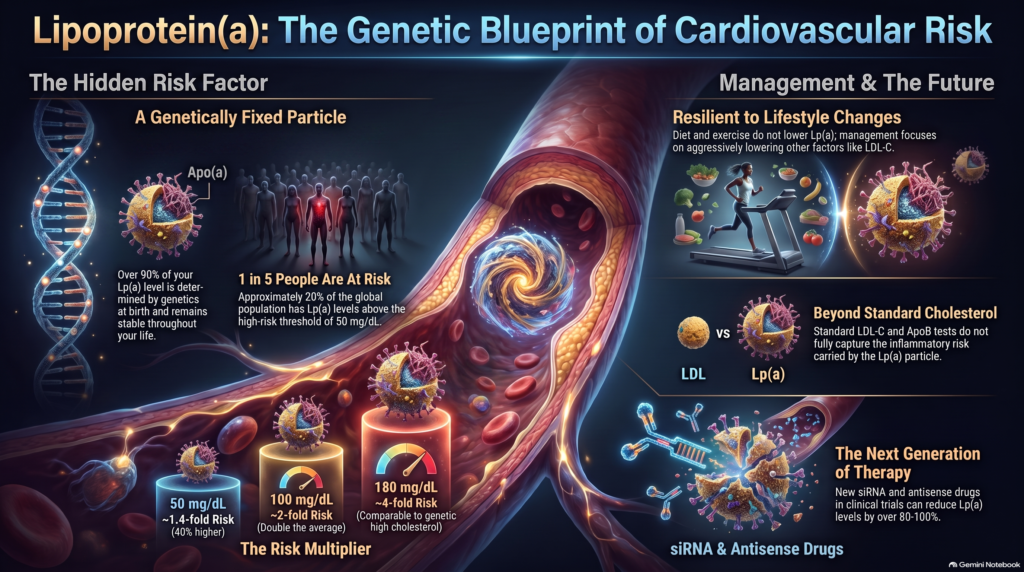
リポタンパク(a)リポタンパク(a)(Lp(a)と表記され、「L-P-リトル-a」と発音される)は、余分な粘着性のあるタンパク質が付着したLDL様粒子です。., abbreviated Lp(a), is a low-density リポタンパク質リポタンパク質とは、脂肪とコレステロールを血流に乗せて運ぶ小さなカプセルのことです。脂肪は水に溶けないため、移動するにはタンパク質の包みが必要です。. (LDLLDL(低密度リポ蛋白)は、コレステロールを血液中に運ぶ主要な粒子であり、動脈壁に詰まる主原因となるものです。.)–like particle containing one molecule of アポリポ蛋白アポリポ蛋白とは、血液中の脂肪を運ぶ粒子に結合しているタンパク質です。脂肪と水は混ざらないため、これらのタンパク質は脂肪が血流の中を安全に移動できるようにする包みのような役割を果たします。. B-100 (アポリポ蛋白BアポBは、動脈の壁に詰まってプラークを引き起こす可能性のあるコレステロール粒子のすべての外側に存在するタンパク質です。それらの粒子はそれぞれ、正確に1個のアポBを運んでいます。.) covalently linked to a second タンパク質タンパク質は、体内の筋肉や組織の構築と修復に使用される栄養素です。., apolipoprotein(a), or apo(a). Apo(a) is encoded by the LPA geneLPA is the gene that determines how much lipoprotein(a) you make. Your version is fixed at conception. and contains repeated kringle-IV domainsRepeated structural protein loops within apolipoprotein(a) whose number varies between individuals and is the primary genetic determinant of Lp(a) particle size and plasma concentration.; variation in the number and sequence of those repeats is a principal reason plasma concentrations differ by orders of magnitude between individuals.
Lp(a) concentration is predominantly genetically determined. The 2022 European 動脈硬化症動脈硬化は、ほとんど的心筋梗塞と多くの脳卒中の背景にある病気です。コレステロールの粒子が動脈の壁に入り込み、体がそれを掃除するために免疫細胞を送り込み、何年もかけてその堆積物が硬化してプラークになります。. Society (EAS) consensus statement attributes more than 90% of interindividual variation to genetic variability at the LPA locus [1]. Concentrations are generally stable enough that a single adult measurement is sufficient for risk assessment, although kidney, liver and thyroid disease, pregnancy, the 更年期Menopause is when a woman's periods stop permanently, usually around age 51, as estrogen levels fall. transition, and certain medications can alter measured levels [1,2].
Lp(a) is often somewhat higher in women after menopause, although the magnitude varies by population and study [1,2]. Median concentrations also differ among ancestry groups, with wide within-group distributions — addressed quantitatively in Section 6.
Lp(a) should not be treated as simply another LDL-C measurement. Every Lp(a) particle contains ApoB and can enter the arterial wall, while the attached apo(a) makes Lp(a) an important carrier of oxidized phospholipids that may promote inflammatory and calcific processes [1]. Conventional LDL-C and ApoB measurements therefore do not fully capture the cardiovascular risk associated with Lp(a).
Units: mg/dL versus nmol/L
Lp(a) is reported either as mass (mg/dL) or as particle concentration (nmol/L). Because apo(a) isoforms differ substantially in molecular mass, a particle carrying a large isoform weighs more than one carrying a small isoform. There is consequently no universally valid fixed conversion factor. Paired expressions such as “50 mg/dL ≈ 125 nmol/L” are epidemiological approximations used for risk communication — including by the 2026 guideline itself — not laboratory conversions. Preserve the laboratory’s reported units and do not apply a fixed mass-to-molar conversion.
2. Is Lp(a) Causal?
The evidence that elevated Lp(a) is causal rather than merely a risk marker is unusually strong for a バイオマーカーバイオマーカーとは、健康や病気の状態について教えてくれる、体内で測定可能なもののことであり、例えば、検査値、スキャン画像の結果、血圧の数値などが挙げられます。., resting on three converging lines: prospective 流行病学Epidemiology is the study of health patterns in large groups of people — who gets sick, where, and what they had in common., human 遺伝学Genetics is the study of what you inherit from your parents. including メンデルランダム化Mendelian randomization is a clever research method that uses the genes people were born with as a natural experiment., and a consistent dose–response relationship.
の Emerging Risk Factors CollaborationA large pooled prospective analysis combining data from 36 studies and 126,634 participants to quantify how novel biomarkers, including Lp(a), add to standard cardiovascular risk prediction; it reported an adjusted coronary heart disease risk ratio of 1.13 per 3.5-fold higher usual Lp(a)., 126,634 people from 36 prospective studies contributed approximately 1.3 million person-years of follow-up, during which 22,076 first major vascular or nonvascular outcomes were recorded, including 9,336 冠動脈疾患冠状動脈疾患は、アスケロスクレロティック・プラーク(動脈硬化性プラーク)の蓄積によって心筋に血液を供給する動脈が狭窄または閉塞する疾患であり、世界中で心筋梗塞および心臓死の主要な原因となっています。. (CHD) outcomes and 1,903 ischemic strokes虚血性脳卒中は、脳の一部への血流が遮断され、脳組織が壊死し始めることで起こります。.. The adjusted CHD risk ratio was 1.13 (95% CI 1.09–1.18) per 3.5-fold higher usual Lp(a) [3].
Genetic studies strengthen the causal inference because LPA alleles are assigned at conception and are not subject to 逆因果関係Reverse causation is when the arrow points the other way — the illness caused the exposure rather than the exposure causing the illness.. Across three Copenhagen studies totaling 40,486 participants, genetic analyses supported causality; in the Copenhagen City Heart Study the instrumental-variable ハザード比ハザード比は、2つのグループでイベントが起こる速さを比較するものです。比率が0.75の場合、治療群でのイベント発生率が4分の一減少し、対照群の4分の3であったことを意味します。. was 1.22 (95% CI 1.09–1.37) per genetically predicted doubling of Lp(a) [4]. In PROCARDISA European multicenter case-control study of coronary artery disease genetics in which two LPA variants (rs10455872 and rs3798220) were associated with per-allele coronary heart disease odds ratios of 1.70 and 1.92, strengthening the causal evidence for Lp(a)., the LPA variants rs10455872 and rs3798220 carried per-allele CHD odds ratios of 1.70 (95% CI 1.49–1.95) and 1.92 (95% CI 1.48–2.49) [5].
The distinction that matters clinically: this body of evidence strongly supports elevated Lp(a) as a causal contributor to ASCVD. It does not establish that lowering Lp(a) with a drug, begun in middle age, reverses enough of that risk to prevent events. That question is addressed in Sections 12 through 14.
3. How Much Does Lp(a) Increase Cardiovascular Risk?
The clearest contemporary population-level summary is Table 4 of the 2026 ACC/AHA Multisociety Dyslipidemia GuidelineA joint clinical practice guideline from the American Heart Association and American College of Cardiology that, among other recommendations, tabulates estimated ASCVD relative-risk increments at Lp(a) concentrations from 50 to 180 mg/dL, derived from UK Biobank modeling. [2]. Relative to a population median of approximately 20 nmol/L (about 7 mg/dL), the guideline estimates ASCVD risk as follows.
| Lp(a) level | Approx. percentile | Estimated relative ASCVD risk | 解釈 |
| <30 mg/dL (<75 nmol/L) | Not specifically stated in guideline table | 参照 | Lower Lp(a)-related risk range; not “zero risk” |
| 30–49 mg/dL (75–124 nmol/L) | Not precisely specified | ~1.2-fold | Modest relative-risk increment |
| 50 mg/dL (125 nmol/L) | ~80th | ~1.4-fold | About 40% greater relative estimated ASCVD risk than the reference median |
| 100 mg/dL (250 nmol/L) | ~95th | ~2-fold | Approximately double the estimated ASCVD risk |
| 150 mg/dL (350 nmol/L) | Not specifically stated; lies between the guideline’s ~95th-percentile (100 mg/dL) and ~99th-percentile (180 mg/dL) anchors | ~3-fold | Very high population-level risk estimate |
| 180 mg/dL (430 nmol/L) | ~99th | ~4-fold | Estimated risk comparable to heterozygous 家族性高コレステロール血症家族性高コレステロール血症(FH)は、肝臓が血液中からコレステロールを適切に除去できない遺伝性疾患です。出生時からコレステロール値が非常に高くなります。. |
Table 1. 2026 ACC/AHA guideline estimated relative ASCVD risk by Lp(a) concentration.
Essential caveats stated by the guideline itself: these values are derived from UKバイオバンクUK Biobank holds detailed genetic, lifestyle, and health data on half a million British volunteers, linked to their medical records., are intended as a general guide, may differ among other populations, and use only approximate equivalence between mg/dL and nmol/L [2]. They are population-level estimates, not a patient-specific risk calculatorA risk calculator estimates your chance of a heart attack or stroke over the next ten years, using your age, cholesterol, blood pressure, and a few other inputs..
These estimates are population averages, not destiny. They describe how event rates differ between groups of people at different Lp(a) concentrations; they do not forecast what will happen to any one person.
Lp(a) behaves as a continuous 危険因子危険因子とは、高コレステロール粒子、高血圧、喫煙、糖尿病、家族歴など、病気にかかる可能性を高めるものです。.. There is no biological cliff between 49 and 51 mg/dL; risk rises continuously rather than switching on at a single threshold. UK Biobank demonstrates this directly: among 460,506 participants followed for a median of 11.2 years, 22,401 incident ASCVD events occurred, median Lp(a) was 19.6 nmol/L, and risk increased approximately linearly at a hazard ratio of 1.11 (95% CI 1.10–1.12) per 50-nmol/L increment [6].
Separately, and at a different threshold, UK Biobank reported that among participants without previous ASCVD, 12.2% had Lp(a) ≥150 nmol/L, with an adjusted hazard ratio of 1.50 (95% CI 1.44–1.56); among those with preexisting ASCVD, prevalence was 20.3% and the hazard ratio 1.16 (95% CI 1.05–1.27) [6]. This ≥150 nmol/L figure must not be confused with, or used to corroborate, a 150 mg/dL (350 nmol/L) exposure — they are very different concentrations.
Why some studies report threefold to fourfold risk
Apparently divergent estimates can often be explained in substantial part by differences in endpoint, comparator, Lp(a) threshold, population, and statistical model rather than by direct contradiction.
In the Copenhagen City Heart Study, 9,330 participants were followed for 10 years and 498 developed 心筋梗塞詳しい項目については心臓発作をご覧ください。. (MI). Compared with Lp(a) below 5 mg/dL, adjusted MI hazard ratios in women were 1.1 (95% CI 0.6–1.9) at 5–29 mg/dL, 1.7 (1.0–3.1) at 30–84 mg/dL, 2.6 (1.2–5.9) at 85–119 mg/dL, and 3.6 (1.7–7.7) at 120 mg/dL or above. In men the corresponding figures were 1.5 (0.9–2.3), 1.6 (1.0–2.6), 2.6 (1.2–5.5), and 3.7 (1.7–8.0) [7].
It is therefore correct to say that extreme Lp(a) was associated with approximately threefold to fourfold higher MI risk in that cohort. It is not correct to equate that with the guideline’s approximately twofold estimate at 100 mg/dL: the Copenhagen extreme category was 120 mg/dL or above versus a very low comparator of under 5 mg/dL, with an MI-specific endpoint, whereas the guideline estimate is broad ASCVD at 100 mg/dL versus a population-median reference in UK Biobank-derived modeling.
4. Translating Relative Risk Into Absolute Terms
A hazard ratio of 1.4 denotes approximately 40% higher estimated instantaneous event hazard under the proportional-hazards model. It does not mean a 40% probability of having an event, and it is not mathematically identical to multiplying an individual’s 10-year event probability by 1.4.
The following table is an arithmetic illustration only, assuming the stated multiplier behaves as a simple risk ratio applied directly to a baseline probability.
| Hypothetical baseline 10-year risk | RR 1.2 | RR 1.4 | RR 1.7 | RR 2.0 |
| 5% | 6% | 7% | 8.5% | 10% |
| 10% | 12% | 14% | 17% | 20% |
| 20% | 24% | 28% | 34% | 40% |
| 30% | 36% | 42% | 51% | 60% |
Table 2. Pure arithmetic illustration assuming a risk ratio acts multiplicatively on baseline probability. These values are not individualized Lp(a)-adjusted risk predictions循環器医学におけるリスク予測とは、年齢、血圧、コレステロール値、喫煙の有無といった臨床的変数、あるいは画像診断などの直接的な測定値を用いて、一定期間内に個人が心筋梗塞や脳卒中を発症する確率を推定することを指す。..
These are arithmetic illustrations assuming the stated multiplier behaves as a risk ratio applied directly to baseline probability. They are not individualized predictions, and an individual’s risk should not be estimated by multiplying the output of a clinical risk calculator by a hazard ratio or odds ratio reported in a study. The 2026 guideline Lp(a) values are not validated multipliers for an individual clinical risk score.
The clinical point the table makes is nonetheless important: the same multiplier adds far more 絶対リスク絶対リスクとは、何かが自分に起こる実際の確率であり、パーセンテージで表されます。今後10年間の心臓発作の絶対リスクが12パーセントである場合、それはあなたと似た人100人のうち約12人が発作を起こすことを意味します。. to a person whose baseline is already high. Copenhagen provides real, study-specific absolute figures. Among 喫煙喫煙は血管の内壁を傷つけ、血圧を上げ、血液を凝固しやすくし、プラークの成長を早めます。., hypertensive participants older than 60, 10-year MI risk was approximately 20% in women and 35% in men with Lp(a) of 120 mg/dL or above, compared with approximately 10% and 19% respectively at under 5 mg/dL [7]. Even in that high-risk subgroup, elevated Lp(a) changed probability rather than making MI inevitable.
5. How Common Is Elevated Lp(a)?
Approximately one in five people has Lp(a) at or above commonly used high-risk thresholds of roughly 50 mg/dL or 125 nmol/L, depending on the assay and reporting units, making elevated Lp(a) very common worldwide [1]. The exact global burden depends on the threshold, the assay, and the demographic distribution examined, so a single precise headcount should be treated with caution. The 2026 guideline places 50 mg/dL near the 80th percentile, 100 mg/dL near the 95th, and 180 mg/dL near the 99th [2].
6. Ancestry
Lp(a) distributions differ by ancestry. In UK Biobank, median concentrations were approximately 19 nmol/L in White, 31 nmol/L in South Asian, 75 nmol/L in Black, and 16 nmol/L in Chinese participants. The association between rising Lp(a) and ASCVD was directionally similar across the major groups studied, with hazard ratios per 50 nmol/L of approximately 1.11, 1.10, and 1.07 in White, South Asian, and Black participants respectively; subgroup estimates outside the White group are less precise because of smaller sample sizes [6].
The 2026 guideline similarly notes that concentrations tend to be highest among people of African and South Asian ancestry, while the relative-risk association remains broadly similar across ancestry groups [2].
These are population distributions with wide within-group variation. They do not justify inferring an individual’s Lp(a) concentration or cardiovascular risk from ancestry alone. The only way to know a person’s Lp(a) is to measure it.
7. Lp(a) in People Who Already Have Cardiovascular Disease
In a Copenhagen secondary-prevention cohort of 2,527 people with prior 心血管疾患心血管疾患とは、心臓発作、脳卒中、下肢の動脈閉塞など、心臓や血管に関する問題の総称です。. followed for a median of five years, 493 experienced a major adverse cardiovascular event主要心血管イベント、またはMACEとは、心血管死、心筋梗塞、脳卒中など、研究においてまとめて集計される有害な転帰のグループのことである。. (MACE). Event rates were 29, 35, 42, and 54 per 1,000 person-years at Lp(a) under 10, 10–49, 50–99, and 100 mg/dL or above respectively. Relative to under 10 mg/dL, adjusted incidence-rate ratios were 1.28 (95% CI 1.03–1.58), 1.44 (95% CI 1.12–1.85), and 2.14 (95% CI 1.57–2.92) [8].
In UK Biobank, the relative association at Lp(a) ≥150 nmol/L was smaller in participants with established ASCVD (HR 1.16, 95% CI 1.05–1.27) than in those without prior ASCVD (HR 1.50, 95% CI 1.44–1.56), although absolute event risk was higher in 二次予防二次予防とは、すでに心臓発作、脳卒中、またはステント治療を経験した患者に対して、次の発作を防ぐために治療を行うことです。. [6].
Evidence from the PCSK9-inhibitor trials
イン フーリエFOURIER tested evolocumab, a PCSK9 inhibitor, in patients who already had cardiovascular disease and were on statins., 25,096 patients with established ASCVD had Lp(a) measured and were followed for a median of 2.2 years. Among placebo-treated participants, the highest Lp(a) quartileOne of four equal groups into which a population is divided when ranked by a measured variable; the article reports that individuals in the lowest fitness quartile had dramatically higher mortality than those in higher quartiles. carried an adjusted hazard ratio of 1.22 (95% CI 1.01–1.48) for coronary death, myocardial infarction, or urgent 血行再建術血行再建術とは、閉塞または狭窄した冠動脈の血流を回復させるために行われる医療または外科的処置(冠動脈バイパス術や経皮的冠動脈インターベンションなど)であり、根底にあるアテローム性動脈硬化のプロセスではなく、物理的な閉塞に対処するものである。. compared with the lowest quartile, independently of LDL-C. エボロクマブEvolocumab is an injectable cholesterol medicine in the PCSK9 inhibitor family, usually given every two to four weeks. reduced Lp(a) by a median of 26.9% [9].
In secondary analyses of that trial, patients with higher baseline Lp(a) appeared to derive greater coronary benefit: the hazard ratio was 0.77 (95% CI 0.67–0.88) above the median baseline Lp(a) versus 0.93 (95% CI 0.80–1.08) below it, with a three-year absolute risk reduction of 2.49% versus 0.95% and numbers needed to treat of 40 versus 105. The interaction P value was 0.07 and therefore did not reach conventional statistical significance. This is a subgroup finding within a randomized trial, not the primary randomized comparison [9].
イン オデッセイODYSSEY OUTCOMES tested alirocumab in patients recovering from a recent heart attack. OUTCOMES, 18,924 patients following an 急性冠症候群急性冠症候群(ACS)は、プラークの突然の破綻やびらんによって引き起こされる、不安定狭心症から完全な心筋梗塞に至るまで、心臓への血流が急激に低下する状態全般を指す包括的な用語です。. were followed for a median of 2.8 years on intensive スタチンスタチンは、肝臓がコレステロールを作るのに使う酵素の働きを遅らせます。肝臓は血液中からより多くのコレステロールを取り除くことでこれに反応し、そこに真の利益があります。. therapy. Baseline Lp(a) independently predicted recurrent events. In post-hoc analyses, alirocumab-associated reductions in Lp(a) were independently associated with fewer cardiovascular events; however, these analyses cannot establish that the Lp(a) reduction itself caused the event reduction, because アリロクマブプラルエントとして販売されているアリロクマブは、PCSK9を阻害する注射用抗体であり、2〜4週間ごとに投与される。. simultaneously produces large reductions in LDL-C and ApoB [10,11].
Both trials therefore support elevated Lp(a) as a marker of 残留リスクResidual risk is the risk that remains after you have done the obvious things — cholesterol treated, blood pressure controlled, not smoking. in treated patients, and both are consistent with — but do not prove — a benefit attributable to Lp(a) lowering itself.
8. Does Very Low LDL-C Eliminate the Risk?
Lowering LDL-C substantially reduces cardiovascular risk, but it does not appear to eliminate Lp(a)-associated residual risk. A 2025 participant-level analysis of 27,658 people in six placebo-controlled statin trials found that even in the lowest achieved-LDL-C quartile — 3.1 to 77.0 mg/dL — Lp(a) above 50 mg/dL was associated with an ASCVD hazard ratio of 1.38 (95% CI 1.06–1.79) compared with 50 mg/dL or below. The highest joint category of elevated Lp(a) and highest achieved LDL-C carried a hazard ratio of 1.90 (95% CI 1.46–2.48) [12].
Because that lowest quartile spans 3.1 to 77.0 mg/dL, the analysis demonstrates persistence of risk at relatively low achieved LDL-C but does not supply a dedicated estimate at LDL-C below 55 mg/dL. A specific residual-risk figure at that threshold should not be claimed from these data.
The defensible formulation: intensive LDL-C and ApoB lowering reduces overall absolute ASCVD risk, but available data do not establish an LDL-C concentration at which the association with elevated Lp(a) disappears.
9. Lp(a) and ApoB: Overlapping, Not Interchangeable
Plasma ApoB concentration is a practical proxy for the number of circulating ApoB-containing atherogenic lipoprotein particles, including LDL, VLDLVLDL(超低密度リポ蛋白)は、肝臓が中性脂肪を体内の他の部位へと送り出すために作り出す粒子です。. 残骸, IDLIDL(中等密度リポ蛋白)は、トリセリドを多く運ぶ大型の粒子が収縮してLDL粒子へと変化する過程の中間で形成される粒子です。., and Lp(a). Because every Lp(a) particle itself contains one アポB-100ApoB-100 is the full-length form of apolipoprotein B found on LDL, VLDL, IDL, and remnant lipoproteins; its positively charged amino-acid domains bind ionically to negatively charged proteoglycan side chains in the arterial wall, physically trapping the particle in the intima and initiating plaque formation. molecule, Lp(a) and ApoB are not separate biological pathways; they overlap.
What distinguishes Lp(a) is the additional apo(a)- and oxidized-phospholipid-related biology. Adjustment and mediation analyses suggest that conventional lipid and inflammatory markers — including LDL-C, non-HDL-C, ApoB, and hsCRP — explain only a minority of the association between Lp(a) and ASCVD [13].
A 2024 genetic analysis estimated that the CHD association per 50 nmol/L genetically proxied increase in Lp(a)-ApoB was substantially greater than the association for the same increment in LDL-ApoB, with an estimated per-particle ratio of approximately 6.6 (95% CI 5.1–8.8) [14]. This is a Mendelian-randomization effect-size estimate carrying methodological assumptions. It is not proof that any individual Lp(a) particle is literally 6.6 times as biologically harmful as an LDL particle.
The two findings reconcile: Lp(a) contributes to total ApoB while also carrying risk that is not adequately represented by conventional ApoB concentration alone.
10. Lp(a) and Calcific Aortic-Valve Stenosis
In 77,680 Copenhagen participants followed for as long as 20 years, 454 developed 大動脈弁狭窄症大動脈弁狭窄症とは、心臓の主要な流出弁である大動脈弁が狭くなったり硬くなったりして、左心室から大動脈への血流を阻害する疾患であり、高Lp(a)血症は石灰化大動脈弁狭窄症の第2の主要な原因として認識されています。.. Relative to Lp(a) under 5 mg/dL, adjusted hazard ratios rose to 1.6 (95% CI 1.1–2.4) at 20–64 mg/dL, 2.0 (95% CI 1.2–3.4) at 65–90 mg/dL, and 2.9 (95% CI 1.8–4.9) above 90 mg/dL. Genetic instrumental-variable analysis yielded a 相対リスク相対リスクは2つのグループを比較するもので、このグループの心臓発作の発生率は、あのグループよりも30パーセント低かった。. of 1.6 (95% CI 1.2–2.1) per 10-fold higher Lp(a), supporting a causal contribution [15].
In a separate Copenhagen analysis, each 10-fold higher Lp(a) was associated with an odds ratio of 1.62 (95% CI 1.48–1.77) for aortic-valve 石灰化石灰化とは、カルシウムがプラークに沈着し、その一部が硬く骨状になることです。. and a hazard ratio of 1.54 (95% CI 1.38–1.71) for aortic-valve 狭窄狭窄とは閉塞のことであり、通常は70%の閉塞といったようにパーセンテージで表されます。., with approximately 31% of the effect mediated through calcification [16].
Among patients who already had aortic stenosis, a prospective study of 145 patients found that higher Lp(a) and oxidized-phospholipid measures were associated with greater valve-calcification activity and faster CT-calcium and hemodynamic progression. Participants in the top Lp(a) tertile, compared with the lower two tertiles, had a higher risk of aortic-valve replacement or death (hazard ratio 1.87, 95% CI 1.13–3.08); related oxidized-phospholipid measures showed similar associations. Accompanying in-vitro experiments supported a procalcific mechanism [17]. These observational and mechanistic findings support the biological rationale but do not prove that pharmacologically lowering Lp(a) will slow established aortic stenosis. No randomized trial has yet shown that lowering Lp(a) prevents progression of aortic stenosis or reduces valve replacement.
Lp(a) is also linked to atherothrombosis and aortic-valve stenosis independent of 炎症炎症は、怪我や侵入物とみなしたものに対する免疫システムの反応です。これにより腫れや熱、そして浄化細胞がもたらされます。.. In 68,090 Copenhagen participants followed for a median of 8.1 years, Lp(a) of 70 mg/dL or above versus 6 mg/dL or below was associated with an ASCVD hazard ratio of 1.61 (95% CI 1.43–1.81) among those with C反応性タンパク質C反応性タンパク(CRP)は、体内のどこかで炎症が起きているときに肝臓が産生する物質です。この検査の高感度バージョンであるhs-CRPは、心疾患のリスクを評価するために使用されます。. under 2 mg/L and 1.57 (95% CI 1.36–1.82) among those with CRP of 2 mg/L or above, interaction P = 0.87 [18].
11. Does High Lp(a) Mean You Will Have a Heart Attack?
No. Lp(a) changes probability; it does not determine outcome. Even in the Copenhagen high-risk subgroup — smokers with 高血圧Hypertension is the medical term for high blood pressure. over age 60 and Lp(a) of 120 mg/dL or above — 10-year MI risk was approximately 20% in women and 35% in men, not 100% [7]. Other baseline-risk profiles differ substantially.
A person with high Lp(a) but excellent 血圧血圧とは、血液が動脈の壁を押す力ののことです。120/80のように2つの数字で表されます。上の数字は心臓が収縮するときの圧力で、下の数字は弛緩するときの圧力です。., no 糖尿病糖尿病は、体が十分なインスリンを作らないか、あるいは作られたインスリンに反応しなくなることで、血糖値が常に高すぎる状態になる疾患です。., no smoking, low ApoB and LDL-C, and favorable imaging may have a much lower absolute risk than someone with the same Lp(a) plus multiple major risk factors. Age, smoking, blood pressure, diabetes, 腎臓病Kidney disease means the kidneys have lost some of their ability to filter waste from your blood., cumulative ApoB and LDL exposure, 家族の歴史Family history means whether your close relatives developed heart disease, and how young they were when it happened., and existing atherosclerosis jointly determine absolute cardiovascular risk alongside Lp(a) [2].
12. Currently Available Treatments
The treatment section must distinguish three separate questions: does the treatment change Lp(a); does it reduce cardiovascular events overall; and has any event benefit been proven to result specifically from lowering Lp(a)? These are not interchangeable.
| セラピー | Effect on Lp(a) | Approximate LDL-C effect [2] | Evidence and safety | Cardiovascular outcome status |
| スタチン | On average a modest increase; pooled statin-to-placebo ratio of geometric means 1.11 (95% CI 1.07–1.14); statin-arm mean changes about +8.5% to +19.6% | Moderate-intensity ~30% to <50%; high-intensity ≥50% | Participant-level メタ分析メタアナリシスは、多数の個別研究の結果を統計的に統合して1つの全体的な推定値を算出します。., n = 5,256. Whether the modest rise independently affects outcomes is uncertain. | Substantial ASCVD benefit via LDL/ApoB lowering. Not a reason to withhold indicated statin therapy. |
| エゼチミブEzetimibe is a pill that blocks your intestines from absorbing cholesterol. | Small and inconsistent. A seven-trial meta-analysis of ezetimibe monotherapy reported −7.06% (95% CI −11.95 to −2.18) [19]; a broader analysis including combination therapy found no statistically significant reduction (−2.59%, 95% CI −8.26 to 3.08) [20] | Approximately 15–20% additional lowering when added to a statin | Estimates differ substantially between syntheses. | Its clinical role is LDL-C lowering, not targeted Lp(a) reduction; no Lp(a)-specific outcome evidence. |
| PCSK9PCSK9 is a protein made by your liver that destroys the docking ports your liver uses to pull cholesterol out of your blood. monoclonal antibodies | Mean approximately −27% (95% CI −29.8 to −24.1); evolocumab −29.35%, alirocumab −24.50% | Approximately 50–60% | Meta-analysis of 47 randomized trials, 67,057 participants [21]. | Overall event reduction proven; the incremental causal contribution of Lp(a) lowering is unproven. |
| インクリシランInclisiran is a cholesterol-lowering injection given just twice a year after the first two doses. | Modest — approximately 18–22% in pooled trial analyses [22,23] | Approximately 50%; pooled ORION-9/10/11 analysis (n = 3,660) placebo-corrected reduction −50.7% [23] | Injection-site adverse events 5.0% versus 0.7% with プラセボプラセボとは、本物の薬が実際にどのような効果をもたらすかを研究者が知るために投与される、偽の治療法(砂糖の錠剤や生理食塩水の注射など)である。. in the pooled ORIONThe ORION trials tested inclisiran, the twice-yearly injection that silences PCSK9 production inside liver cells. analysis [23]. | No dedicated proof that its modest Lp(a) reduction causes event reduction. |
| ナイアシンナイアシンはビタミンB3であり、非常におおむね高用量ではLDLを低下させ、HDLを上昇させます。. | Approximately −21% in the AIM-HIGH Lp(a) analysis [24] | Modest | HPS2-THRIVE: major vascular events 13.2% vs 13.7%, rate ratio 0.96 (95% CI 0.90–1.03), P = 0.29, with excess serious adverse events [25]. | No added benefit on contemporary therapy. Should not be prescribed solely to lower Lp(a). |
| Lipoprotein apheresis | Approximately −60% to −70% acutely; 68.1% mean single-treatment reduction in Pro(a)LiFe [26,27] | Large acute reduction per session, with rebound between sessions | Levels rebound between sessions, so the time-averaged reduction is smaller than the immediate post-procedure reduction. | Uncontrolled before-after cohorts report large event-rate reductions [26,27]; 交絡Confounding is when a hidden third factor makes two unrelated things look connected., selection, and regression to the mean prevent causal claims. |
Table 3. Effects of currently available therapies on Lp(a) and on cardiovascular outcomes.
On statins specifically: the pooled participant-level meta-analysis confirms a modest average increase in Lp(a) [28]. Whether that increase independently affects outcomes is uncertain, and it is not a reason to stop indicated statin therapy, because the LDL and ApoB lowering statins achieve has established cardiovascular benefit.
13. Investigational Lp(a)-Targeted Therapies
A new class of agents lowers Lp(a) far more dramatically than any conventional lipid therapy. These trials establish pharmacodynamic proof, not clinical-outcome proof.
The key distinction is that lowering a laboratory value is not the same as proving fewer 心臓発作心臓発作は、心筋の一部への血流が遮断され、その筋肉が壊死し始めることで起こります。. または 脳卒中脳卒中は、脳の一部への血流が詰まりまたは出血によって止まるときに起こります。..
A biomarker reduction of 90% must not be translated into an assumed 90% reduction in events.
| Agent (class) | Trial and size | Lp(a) reduction | Safety findings |
| ペラカルセンPelacarsen is an RNA-targeted therapy (an antisense oligonucleotide) designed to lower lipoprotein(a) by reducing its production in the liver; it is given by intravenous or subcutaneous injection every few weeks and is currently in late-stage trials to determine whether Lp(a) reduction translates into fewer cardiovascular events. (antisense oligonucleotide) | Phase 2, n = 286 [29] | Up to 80% mean reduction at the highest regimen | Injection-site reactions most common; no major platelet, liver, or renal imbalance in phase 2 |
| オルパシランOlpasiran is a small-interfering RNA (siRNA) drug in phase 3 clinical development that dramatically reduces circulating Lp(a) levels by silencing the gene responsible for its production in the liver. (siRNA) | OCEAN(a)-DOSE, n = 281 [30] | Placebo-adjusted −70.5%, −97.4%, −101.1%, and −100.5% by regimen at week 36 | Overall adverse events similar to placebo; injection-site reactions most common |
| Lepodisiran (siRNA) | ALPACA, n = 320 [31] | Pooled 400 mg: placebo-adjusted time-averaged −93.9% (95% CI −95.1 to −92.5), days 60–180 | 35 serious adverse events, none deemed treatment-related; generally mild injection-site reactions in up to 12% |
| Zerlasiran (siRNA) | ALPACAR-360, n = 178 [32] | Time-averaged −85.6%, −82.8%, and −81.3% by regimen (all >80%) | Mild injection-site pain in approximately 2.3–7.1%; 20 serious adverse events in 17 patients, none considered drug-related |
| Muvalaplin (oral small molecule) | KRAKEN, n = 233 [33] | Up to −85.8% using the intact-Lp(a) assay; approximately −70% by apo(a) assay | No major safety or tolerability concern reported over the trial period |
Table 4. Phase 2 biomarker results for Lp(a)-targeted agents.
Placebo-adjusted values slightly beyond 100% reflect the statistical adjustment calculation, not physically negative Lp(a) concentrations.
14. The Dedicated Outcomes Trials
These trials are the decisive tests of whether lowering Lp(a) prevents cardiovascular events. Lp(a)HORIZON’s registered primary endpoint is time to first expanded major adverse cardiovascular event in patients with established cardiovascular disease and Lp(a) ≥70 mg/dL, with a second primary analysis in those ≥90 mg/dL. Registry status is fast-moving content and must be re-verified immediately before publication.
| Trial (agent) | Registry ID | Status | Enrollment | Estimated primary completion |
| Lp(a)HORIZON (pelacarsen) | NCT04023552 | Active, not recruiting; no results posted; record last updated 6 May 2026 and last verified May 2026; sponsor Novartis | 8,323 (actual) | 30 June 2026 (estimated) |
| OCEAN(a)-Outcomes (olpasiran) | NCT05581303 | Active, not recruiting; no results posted; record updated 27 February 2026. Established ASCVD with Lp(a) ≥200 nmol/L; eligible ASCVD includes prior MI or PCI with stenting plus an additional risk factor; anticipated follow-up approximately four years | 7,297 (actual) | 31 March 2028 |
| ACCLAIM-Lp(a) (lepodisiran) | NCT06292013 | Active, not recruiting; no results posted; record updated 18 June 2026. Lp(a) ≥175 nmol/L; addendum adds approximately 1,700 participants | 17,300 (estimated) | March 2029 |
| MOVE-Lp(a) (muvalaplin) | NCT07157774 | Recruiting; no results posted; record updated 7 July 2026 | 10,450 (estimated); actual start 2 September 2025 | March 2031 |
Table 5. Dedicated Lp(a)-lowering cardiovascular-outcomes programs, per ClinicalTrials.gov as cited in the August 2026 audit.
A further pelacarsen study, ADD-VANTAGE (NCT06813911), is a recruiting phase 3 study of pelacarsen on a background of inclisiran in patients with elevated Lp(a) and established ASCVD. As checked on 28 August 2026, ClinicalTrials.gov listed the record as last updated 17 June 2026, with no results posted, estimated enrollment of 340, and estimated primary completion 3 February 2028. Its primary endpoint is change in Lp(a) rather than cardiovascular events, so it is a biomarker study and should not be grouped with the dedicated cardiovascular-outcomes trials in Table 5 [38].
As of 28 August 2026, the primary ClinicalTrials.gov records for the major dedicated Lp(a)-lowering cardiovascular-outcomes programs show no posted results. Selective pharmacologic Lp(a) lowering has therefore not yet been demonstrated in a dedicated randomized outcomes trial to reduce cardiovascular events.
Lp(a)HORIZON remains listed as active, not recruiting, despite a 30 June 2026 estimated primary-completion date; OCEAN(a)-Outcomes and ACCLAIM-Lp(a) remain active but not recruiting, and MOVE-Lp(a) is recruiting. A passed estimated date is not evidence that a trial should be described as completed or that any result exists.
15. How Much Would Lp(a) Need to Fall?
Two Mendelian-randomization analyses have estimated the lifelong genetically proxied Lp(a) difference associated with a CHD-risk difference comparable to that associated with 1 mmol/L (38.67 mg/dL) lower LDL-C. Burgess and colleagues estimated 101.5 mg/dL (95% CI 71.0–137.0), reporting an odds ratio of 0.942 per 10 mg/dL lower genetically predicted Lp(a) [39]. Lamina and Kronenberg estimated 65.7 mg/dL (95% CI 46.3–88.3) [40].
The estimates differ in important part because of differences in Lp(a) distributions, assay calibration, and analytical design across the underlying datasets. Both analyses used predominantly European-ancestry datasets and assay-dependent Lp(a) mass measurements.
Both imply that substantial absolute differences in lifelong Lp(a) exposure correspond to clinically meaningful differences in CHD risk. Neither establishes what reduction a drug must achieve over a finite treatment period, and neither should be presented as a validated pharmacologic target. Lifelong genetic exposure beginning at conception is not equivalent to years of drug therapy begun after 歯垢プラークとは、動脈の壁の内側にコレステロール、免疫細胞、瘢痕組織、カルシウムが蓄積したものです。. has accumulated.
A separate observational modeling projection from the Copenhagen secondary-prevention cohort estimated that lowering Lp(a) by approximately 50 mg/dL (105 nmol/L) over five years might correspond to 20% lower MACE, and approximately 99 mg/dL (212 nmol/L) to 40% lower MACE [8]. These are modeled projections from observational data, not trial-proven treatment effects.
16. Who Should Be Tested
The 2026 ACC/AHA Multisociety 脂質異常症Dyslipidemia is the medical word for an unhealthy pattern of fats in the blood. It can mean high LDL, high triglycerides, low HDL, or some combination. Guideline recommends measuring Lp(a) at least once in adulthood, and the EAS consensus supports the same approach [2,1]. Measurement is particularly informative in premature ASCVD, a strong family history of premature cardiovascular disease, familial 高コレステロール血症Hypercholesterolemia is an abnormally elevated level of cholesterol-carrying particles in the blood, typically caused in primate experiments by feeding a diet high in dietary cholesterol and saturated fat, and associated with accelerated plaque formation in artery walls., recurrent events despite well-controlled LDL-C, and calcific aortic stenosis.
Cascade Lp(a) testing of 一親等A biological family member who shares approximately 50 percent of an individual's genetic material, specifically parents, siblings, and children; cardiac events in first-degree relatives carry substantially more inherited risk signal than events in more distant relatives. is reasonable when markedly elevated Lp(a) is identified. In ordinary practice this means measuring the Lp(a) concentration in relatives, not genotyping them.
Repeat measurement is generally unnecessary, because Lp(a) is predominantly genetically determined and generally stable over time. Repeat testing may nevertheless be appropriate when disease, pregnancy or menopause-related changes, medications, assay uncertainty, or Lp(a)-directed therapy could materially alter the measured concentration.
17. What This Means for You
Lp(a) is an inherited, cholesterol-containing lipoprotein particle that can substantially increase the risk of heart attack, stroke, and aortic-valve disease. At around 50 mg/dL, average relative ASCVD risk is roughly 40% higher than at the guideline’s reference median; at very high levels around 180 mg/dL, average relative risk may be about four times higher [2]. That does not mean a heart attack is inevitable.
Because lifestyle change does not lower Lp(a) appreciably [1,2], healthy behavior should not be judged by whether the Lp(a) number falls. Exercise, avoiding tobacco, maintaining healthy body composition, controlling blood pressure and diabetes, and following a heart-healthy dietary pattern act on the other components of absolute risk. Lowering LDL-C and ApoB is a central evidence-based strategy, because these are modifiable causal exposures that add to the inherited Lp(a)-associated risk.
LDL-C goals should be individualized by risk category rather than applied uniformly. The 2026 guideline recommends LDL-C below 55 mg/dL for very-high-risk ASCVD and below 70 mg/dL for ASCVD not meeting very-high-risk criteria. In 一次予防一次予防とは、これまでに心臓発作や脳卒中を起こしたことのない人に対して治療を行い、最初の発作を防ぐことです。. ~と一緒に 無症候性動脈硬化症Subclinical atherosclerosis means plaque is present but has not yet caused any symptoms or events., progressively higher 冠動脈石灰化(CAC)冠動脈カルシウムは、冠動脈壁における石灰化プラークの沈着の測定値であり、CTスキャンで定量化されアガトストン・スコアとして表されます。スコアが高いほど、累積プラーク負荷が大きいことを示し、将来の心血管イベントを予測します。. burden supports progressively more intensive LDL-C lowering: CAC of 100–299 or at or above the 75th percentile supports LDL-C below 70 mg/dL; CAC of 300–999 supports below 70 mg/dL with at least a 50% reduction, and intensification toward below 55 mg/dL is reasonable in selected patients; CAC of 1000 or above supports below 55 mg/dL with at least a 50% reduction [2].
CAC scoring can be useful selectively — in selected primary-prevention adults for whom the treatment decision remains uncertain after conventional risk assessment and consideration of risk enhancers such as elevated Lp(a). Elevated Lp(a) by itself does not create a universal indication for a calcium scan [2].
Where CAC is obtained, it strongly modifies absolute risk in people with elevated Lp(a). In MESAMESA, the Multi-Ethnic Study of Atherosclerosis, followed thousands of adults with no known heart disease, scanning their arteries and tracking outcomes., elevated Lp(a) with a CAC score of zero was not significantly associated with higher ASCVD risk than low Lp(a) with CAC of zero (hazard ratio 1.31, 95% CI 0.73–2.35), whereas elevated Lp(a) together with CAC of 100 or above identified markedly higher risk (hazard ratio 4.71, 95% CI 3.01–7.40) [41]. A 2026 multicohort study of 11,319 participants followed for a mean of 14.8 years found that elevated Lp(a) above 50 mg/dL was associated with higher ASCVD risk even among people with a CAC score of zero (hazard ratio 1.28, 95% CI 1.01–1.60), although absolute event rates in that group remained low at 4.9 versus 3.8 per 1,000 person-years [42]. A CAC score of zero should therefore be read as low observed absolute plaque-related risk over the period studied, not as evidence that lifelong Lp(a)-associated risk has disappeared. CAC measures disease already present; Lp(a) measures a lifelong causal exposure [1,2].
Until dedicated outcome trials of Lp(a)-specific drugs report, the most evidence-based strategy is intensive, guideline-directed management of every modifiable cardiovascular risk factor, particularly LDL-C and ApoB.
18. Evidence Hierarchy
- Strong evidence: Lp(a) is a causal, continuously graded risk factor for ASCVD, supported by 前向きコホート前向きコホート研究は、健康な人々を登録し、その特徴を記録し、その後何が起こるかを待って観察する。., LPA genetics, Mendelian ランダム化無作為化とは、臨床試験の参加者を偶然によって治療群または対照群に割り当てるプロセスであり、既知および未知の交絡因子が均等に分散されることを保証するものです。しかし、PREDIMEDの研究で監査人が発見したように、無作為化が失敗した場合、両群間には治療効果の見かけを歪めるような違いが生じる可能性があります。., and dose–response. Lp(a) makes a causal contribution to calcific aortic-valve disease.
- Moderate-to-strong evidence: elevated Lp(a) remains associated with residual ASCVD risk in statin-treated and aggressively LDL-lowered populations. Conventional ApoB does not fully capture Lp(a)-associated risk. Elevated Lp(a) predicts recurrent events in established ASCVD.
- Moderate evidence: the genetically estimated per-particle atherogenicity of Lp(a) relative to LDL. Post-hoc PCSK9-inhibitor analyses suggesting greater absolute benefit at higher baseline Lp(a).
- Emerging evidence: whether pharmacologic Lp(a) lowering reduces cardiovascular events. Biomarker efficacy of the investigational agents is established; cardiovascular-outcome efficacy remains unproven in the audited primary data.
So, How Much Worse Does Lp(a) Make Heart Disease?
- Elevated Lp(a) is common: approximately one in five people has a concentration at or above commonly used high-risk thresholds of roughly 50 mg/dL or 125 nmol/L.
- Risk rises continuously rather than switching on at a threshold. The 2026 guideline estimates approximately 1.2-fold ASCVD risk at 30–49 mg/dL, 1.4-fold at 50 mg/dL, 2-fold at 100 mg/dL, 3-fold at 150 mg/dL, and 4-fold at 180 mg/dL, compared with a population median of about 7 mg/dL (20 nmol/L). These are UK Biobank-derived general-guide estimates.
- Extreme concentrations have been associated with roughly threefold to fourfold higher MI risk in some cohorts — in Copenhagen, at 120 mg/dL or above versus under 5 mg/dL, with an MI-specific endpoint. That is a different question from the guideline’s broad-ASCVD estimate at 100 mg/dL.
- In people who already have cardiovascular disease, higher Lp(a) predicts more recurrent events, with adjusted incidence-rate ratios rising to 2.14 at 100 mg/dL or above versus under 10 mg/dL.
- Low LDL-C does not eliminate the risk. Lp(a)-associated risk persisted in the lowest achieved-LDL-C quartile of pooled statin trials, and it is incompletely represented by conventional ApoB measurement — even though each Lp(a) particle itself contributes one ApoB-100 molecule.
- Very high Lp(a) is associated with roughly threefold higher incident aortic-stenosis risk in Copenhagen data, and genetic evidence supports a causal contribution to calcific aortic-valve disease.
- What patients can do now: measure Lp(a) once; if elevated, intensify guideline-directed control of every modifiable risk factor, with LDL-C goals set by risk category; consider CAC selectively when a primary-prevention treatment decision remains uncertain; and arrange cascade testing of first-degree relatives.
- What remains unknown: whether profoundly lowering Lp(a) prevents cardiovascular events. As of 28 August 2026, no dedicated phase 3 Lp(a)-lowering outcomes result had been posted. Lp(a)HORIZON, OCEAN(a)-Outcomes, ACCLAIM-Lp(a), and MOVE-Lp(a) are designed to answer that question, with estimated primary completions from 2026 through 2031.
参考文献
- Kronenberg F, Mora S, Stroes ESG, et al. Lipoprotein(a) in atherosclerotic cardiovascular disease and aortic stenosis: a European Atherosclerosis Society consensus statement. Eur Heart J. 2022;43(39):3925–3946. DOI: 10.1093/eurheartj/ehac361. PMID: 36036785.
- 2026 ACC/AHA/AACVPR/ABC/ACPM/ADA/AGS/APhA/ASPC/NLA/PCNA Guideline on the Management of Dyslipidemia. Circulation. 2026. DOI: 10.1161/CIR.0000000000001423. PMID: 41824590.
- Erqou S, Kaptoge S, Perry PL, et al; Emerging Risk Factors Collaboration. Lipoprotein(a) concentration and the risk of coronary heart disease, stroke, and nonvascular mortality. JAMA. 2009;302(4):412–423. DOI: 10.1001/jama.2009.1063. PMID: 19622820.
- Kamstrup PR, Tybjærg-Hansen A, Steffensen R, Nordestgaard BG. Genetically elevated lipoprotein(a) and increased risk of myocardial infarction. JAMA. 2009;301(22):2331–2339. DOI: 10.1001/jama.2009.801. PMID: 19509380.
- Clarke R, Peden JF, Hopewell JC, et al; PROCARDIS Consortium. Genetic variants associated with Lp(a) lipoprotein level and coronary disease. N Engl J Med. 2009;361(26):2518–2528. DOI: 10.1056/NEJMoa0902604. PMID: 20032323.
- Patel AP, Wang M, Pirruccello JP, et al. Lp(a) concentrations and incident atherosclerotic cardiovascular disease: new insights from a large national biobank. Arterioscler Thromb Vasc Biol. 2021;41(1):465–474. DOI: 10.1161/ATVBAHA.120.315291. PMID: 33115266.
- Kamstrup PR, Benn M, Tybjærg-Hansen A, Nordestgaard BG. Extreme lipoprotein(a) levels and risk of myocardial infarction in the general population: the Copenhagen City Heart Study. Circulation. 2008;117(2):176–184. DOI: 10.1161/CIRCULATIONAHA.107.715698. PMID: 18086931.
- Madsen CM, Kamstrup PR, Langsted A, Varbo A, Nordestgaard BG. Lipoprotein(a)-lowering by 50 mg/dL (105 nmol/L) may be needed to reduce cardiovascular disease 20% in secondary prevention. Arterioscler Thromb Vasc Biol. 2020;40(1):255–266. DOI: 10.1161/ATVBAHA.119.312951. PMID: 31578080.
- O’Donoghue ML, Fazio S, Giugliano RP, et al. Lipoprotein(a), PCSK9 inhibition, and cardiovascular risk: insights from the FOURIER trial. Circulation. 2019;139(12):1483–1492. DOI: 10.1161/CIRCULATIONAHA.118.037184. PMID: 30586750.
- Bittner VA, Szarek M, Aylward PE, et al; ODYSSEY OUTCOMES Committees and Investigators. Effect of alirocumab on lipoprotein(a) and cardiovascular risk after acute coronary syndrome. J Am Coll Cardiol. 2020;75(2):133–144. DOI: 10.1016/j.jacc.2019.10.057. PMID: 31948641.
- Szarek M, Bittner VA, Aylward P, et al; ODYSSEY OUTCOMES Investigators. Lipoprotein(a) lowering by alirocumab reduces the total burden of cardiovascular events independent of low-density lipoprotein cholesterol lowering. Eur Heart J. 2020;41(44):4245–4255. DOI: 10.1093/eurheartj/ehaa649. PMID: 33051646.
- Bhatia HS, Wandel S, Willeit P, et al. Independence of lipoprotein(a) and LDL cholesterol-mediated cardiovascular risk: a participant-level meta-analysis. Circulation. 2025;151(4):312–321. DOI: 10.1161/CIRCULATIONAHA.124.069556. PMID: 39492722.
- Thomas PE, Vedel-Krogh S, Kamstrup PR, Nordestgaard BG. Lipoprotein(a) cardiovascular risk explained by LDL cholesterol, non-HDL cholesterol, apoB, or hsCRP is minimal. J Am Coll Cardiol. 2025;85(21):2046–2051. DOI: 10.1016/j.jacc.2025.02.024. PMID: 40266171.
- Björnson E, Adiels M, Taskinen MR, et al. Lipoprotein(a) is markedly more atherogenic than LDL: an apolipoprotein B-based genetic analysis. J Am Coll Cardiol. 2024;83(3):385–395. DOI: 10.1016/j.jacc.2023.10.039. PMID: 38233012.
- Kamstrup PR, Tybjærg-Hansen A, Nordestgaard BG. Elevated lipoprotein(a) and risk of aortic valve stenosis in the general population. J Am Coll Cardiol. 2014;63(5):470–477. DOI: 10.1016/j.jacc.2013.09.038. PMID: 24161338.
- Kaltoft M, Langsted A, Nordestgaard BG. Elevated lipoprotein(a) in mitral and aortic valve calcification and disease: the Copenhagen General Population Study. Atherosclerosis. 2022;349:166–174. DOI: 10.1016/j.atherosclerosis.2021.11.029. PMID: 34903381.
- Zheng KH, Tsimikas S, Pawade T, et al. Lipoprotein(a) and oxidized phospholipids promote valve calcification in patients with aortic stenosis. J Am Coll Cardiol. 2019;73(17):2150–2162. DOI: 10.1016/j.jacc.2019.01.070. PMID: 31047003.
- Thomas PE, Vedel-Krogh S, Kamstrup PR, Nordestgaard BG. Lipoprotein(a) is linked to atherothrombosis and aortic valve stenosis independent of C-reactive protein. Eur Heart J. 2023;44(16):1449–1460. DOI: 10.1093/eurheartj/ehad055. PMID: 36805188.
- Awad K, Mikhailidis DP, Katsiki N, Muntner P, Banach M; Lipid and Blood Pressure Meta-Analysis Collaboration (LBPMC) Group. Effect of ezetimibe monotherapy on plasma lipoprotein(a) concentrations in patients with primary hypercholesterolemia: a systematic review and meta-analysis of randomized controlled trials. Drugs. 2018;78(4):453–462. DOI: 10.1007/s40265-018-0870-1. PMID: 29396832.
- Sahebkar A, Simental-Mendía LE, Pirro M, Banach M, Watts GF, Sirtori C, Al-Rasadi K, Atkin SL. Impact of ezetimibe on plasma lipoprotein(a) concentrations as monotherapy or in combination with statins: a systematic review and meta-analysis of randomized controlled trials. Sci Rep. 2018;8(1):17887. DOI: 10.1038/s41598-018-36204-7. PMID: 30552391.
- Rivera FB, Cha SW, Louisse CL, et al. Impact of proprotein convertase subtilisin/kexin type 9 inhibitors on lipoprotein(a): a meta-analysis and meta-regression of randomized controlled trials. JACC Adv. 2025;4(2):101549. DOI: 10.1016/j.jacadv.2024.101549. PMID: 39877671.
- Ray KK, Wright RS, Kallend D, et al; ORION-10 and ORION-11 Investigators. Two phase 3 trials of inclisiran in patients with elevated LDL cholesterol. N Engl J Med. 2020;382(16):1507–1519. DOI: 10.1056/NEJMoa1912387. PMID: 32187462.
- Wright RS, Ray KK, Raal FJ, et al. Pooled patient-level analysis of inclisiran trials in patients with familial hypercholesterolemia or atherosclerosis. J Am Coll Cardiol. 2021;77(9):1182–1193. DOI: 10.1016/j.jacc.2020.12.058. PMID: 33663735.
- Albers JJ, Slee A, O’Brien KD, et al. Relationship of apolipoproteins A-1 and B, and lipoprotein(a) to cardiovascular outcomes: the AIM-HIGH trial. J Am Coll Cardiol. 2013;62(17):1575–1579. DOI: 10.1016/j.jacc.2013.06.051. PMID: 23973688.
- HPS2-THRIVE Collaborative Group. Effects of extended-release niacin with laropiprant in high-risk patients. N Engl J Med. 2014;371(3):203–212. DOI: 10.1056/NEJMoa1300955. PMID: 25014686.
- Leebmann J, Roeseler E, Julius U, et al. Lipoprotein apheresis in patients with maximally tolerated lipid-lowering therapy, lipoprotein(a)-hyperlipoproteinemia, and progressive cardiovascular disease. Circulation. 2013;128(24):2567–2576. DOI: 10.1161/CIRCULATIONAHA.113.002432. PMID: 24056686.
- Roeseler E, Julius U, Heigl F, et al; Pro(a)LiFe-Study Group. Lipoprotein apheresis for lipoprotein(a)-associated cardiovascular disease: prospective 5-year results. Arterioscler Thromb Vasc Biol. 2016;36(9):2019–2027. DOI: 10.1161/ATVBAHA.116.307983. PMID: 27417585.
- Tsimikas S, Gordts PLSM, Nora C, Yeang C, Witztum JL. Statin therapy increases lipoprotein(a) levels. Eur Heart J. 2020;41(24):2275–2284. DOI: 10.1093/eurheartj/ehz310. PMID: 31111151.
- Tsimikas S, Karwatowska-Prokopczuk E, Gouni-Berthold I, et al. Lipoprotein(a) reduction in persons with cardiovascular disease. N Engl J Med. 2020;382(3):244–255. DOI: 10.1056/NEJMoa1905239. PMID: 31893580.
- O’Donoghue ML, Rosenson RS, Gencer B, et al. Small interfering RNA to reduce lipoprotein(a) in cardiovascular disease. N Engl J Med. 2022;387(20):1855–1864. DOI: 10.1056/NEJMoa2211023. PMID: 36342163.
- Nissen SE, Ni W, Shen X, et al; ALPACA Trial Investigators. Lepodisiran — a long-duration small interfering RNA targeting lipoprotein(a). N Engl J Med. 2025;392(17):1673–1683. DOI: 10.1056/NEJMoa2415818. PMID: 40162643.
- Nissen SE, Wang Q, Nicholls SJ, et al. Zerlasiran — a small-interfering RNA targeting lipoprotein(a): a phase 2 randomized clinical trial (ALPACAR-360). JAMA. 2024;332(23):1992–2002. DOI: 10.1001/jama.2024.21957. PMID: 39556769.
- Nicholls SJ, Ni W, Rhodes GM, et al. Oral muvalaplin for lowering of lipoprotein(a): a randomized clinical trial (KRAKEN). JAMA. 2025;333(3):222–231. DOI: 10.1001/jama.2024.24017. PMID: 39556768.
- Lp(a)HORIZON (pelacarsen). ClinicalTrials.gov identifier NCT04023552. https://clinicaltrials.gov/study/NCT04023552
- OCEAN(a)-Outcomes (olpasiran). ClinicalTrials.gov identifier NCT05581303. https://clinicaltrials.gov/study/NCT05581303
- ACCLAIM-Lp(a) (lepodisiran). ClinicalTrials.gov identifier NCT06292013. https://clinicaltrials.gov/study/NCT06292013
- MOVE-Lp(a) (muvalaplin). ClinicalTrials.gov identifier NCT07157774. https://clinicaltrials.gov/study/NCT07157774
- ADD-VANTAGE (pelacarsen on a background of inclisiran). ClinicalTrials.gov identifier NCT06813911. https://clinicaltrials.gov/study/NCT06813911
- Burgess S, Ference BA, Staley JR, et al. Association of LPA variants with risk of coronary disease and the implications for lipoprotein(a)-lowering therapies: a Mendelian randomization analysis. JAMA Cardiol. 2018;3(7):619–627. DOI: 10.1001/jamacardio.2018.1470. PMID: 29926099.
- Lamina C, Kronenberg F; Lp(a)-GWAS-Consortium. Estimation of the required lipoprotein(a)-lowering therapeutic effect size for reduction in coronary heart disease outcomes: a Mendelian randomization analysis. JAMA Cardiol. 2019;4(6):575–579. DOI: 10.1001/jamacardio.2019.1041. PMID: 31017618.
- Mehta A, Vasquez N, Ayers CR, Patel J, et al. Independent association of lipoprotein(a) and coronary artery calcification with atherosclerotic cardiovascular risk. J Am Coll Cardiol. 2022;79(8):757–768. DOI: 10.1016/j.jacc.2021.11.058. PMID: 35210030.
- Bhatia HS, Fan Y, Dharmavaram G, Zou H, et al. Use of coronary artery calcium scoring in individuals with elevated lipoprotein(a): a multicohort study. J Am Coll Cardiol. 2026;87(20):2864–2872. DOI: 10.1016/j.jacc.2026.02.5067. PMID: 41837904. PMCID: PMC13221166.