
आधे दिल के दौरे बिना चेतावनी के होते हैं – यहाँ जानिए क्यों
यदि आप कल सुबह उठकर अपनी त्वचा पर कोई अजीब तिल देखें या अपनी गर्दन में कोई दर्दनाक गांठ महसूस करें, तो शायद आप इसे नजरअंदाज नहीं करेंगे। आप इसे देखेंगे, इसके बारे में चिंता करेंगे, और संभवतः डॉक्टर को फोन करेंगे। यह प्रतिक्रिया पूरी तरह से स्वाभाविक है। इंसानों के रूप में, हम उन चीजों पर प्रतिक्रिया देने के लिए बने हैं जिन्हें हम देख और महसूस कर सकते हैं। दिखने वाली समस्याएं हमारा ध्यान खींचती हैं और तात्कालिकता पैदा करती हैं।.
लेकिन हृदय रोग ऐसा नहीं होता।.
कोई ऐसा आईना नहीं है जो दिखा सके कि आपकी धमनियों के अंदर क्या हो रहा है। कोई दिखाई देने वाला चेतावनी संकेत नहीं है, कोई शुरुआती दर्द नहीं, कोई स्पष्ट संकेत नहीं कि कुछ गलत है। इसके बजाय, पट्टिका—वह संचय जो कारण बनता है दिल के दौरे—कई वर्षों में धीरे-धीरे और चुपचाप बनता है। आप तब भी बिल्कुल ठीक महसूस कर सकते हैं जब यह प्रक्रिया पहले से ही अच्छी तरह चल रही हो। इससे एक खतरनाक गलतफहमी पैदा होती है: हम मान लेते हैं कि अगर हमें स्वस्थ महसूस होता है, तो हम स्वस्थ हैं।.
इसे ही “ कहा जा सकता है।“दृश्यता पूर्वाग्रह.हम उस पर भरोसा करते हैं जिसे हम देख सकते हैं और जिसे हम नहीं देख सकते उसे अनदेखा कर देते हैं। दुर्भाग्यवश, जब हृदय रोग की बात आती है, तो यह सहज प्रवृत्ति हमें गलत दिशा में ले जा सकती है। आपके स्वास्थ्य के लिए सबसे गंभीर खतरा पूरी तरह अदृश्य हो सकता है।.
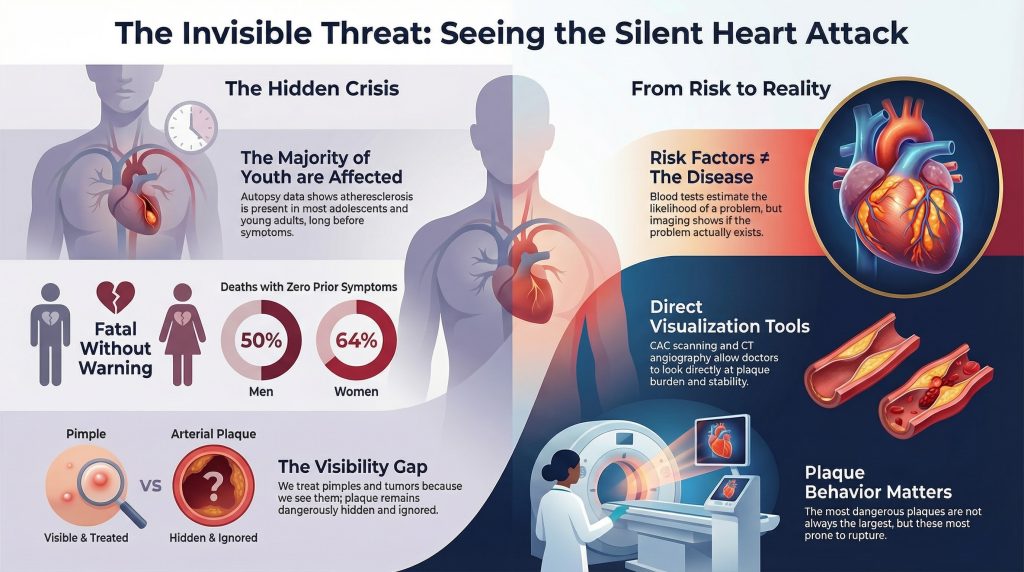
हृदय रोग अचानक होने वाली घटना नहीं है। यह एक धीमी, निरंतर चलने वाली प्रक्रिया है जो अक्सर लक्षणों के प्रकट होने से बहुत पहले ही शुरू हो जाती है। वास्तव में, शोध से पता चलता है कि यह अधिकांश लोगों के सोचने से कहीं पहले ही शुरू हो सकती है। हम में से कई लोग हृदय रोग को जीवन के बाद के पड़ाव में होने वाली बीमारी मानते हैं, शायद अपने 50 या 60 के दशक में। लेकिन अध्ययनों से पता चला है कि प्लाक का जमाव, जिसे कहा जाता है धमनी काठिन्य, बचपन या किशोरावस्था में शुरू हो सकता है। पीडीएवाई अध्ययन, जिसने असंबंधित कारणों से मरने वाले युवा व्यक्तियों का अध्ययन किया, पाया कि अधिकांश में पहले से ही के शुरुआती लक्षण थे। धमनी बीमारी—हालाँकि उनमें बिल्कुल भी लक्षण नहीं थे [1].
यह निष्कर्ष हृदय स्वास्थ्य के बारे में हमारी सोच बदल देता है। इसका मतलब है कि हृदय रोग केवल “बुढ़ापे” की समस्या नहीं है। यह एक आजीवन प्रक्रिया है जो दशकों में धीरे-धीरे विकसित होती है। जब तक कोई व्यक्ति मध्य आयु तक पहुँचता है, तब तक इस बीमारी की नींव पहले से ही तैयार हो चुकी होती है। लक्षणों के प्रकट होने तक इंतजार करना ठीक वैसा ही है जैसे एक छोटी सी रिसाव को तब तक अनदेखा करना जब तक वह पूरे घर में बाढ़ न ले आए। जब तक यह स्पष्ट रूप से दिखाई देता है, तब तक क्षति पहले ही काफी बढ़ चुकी होती है।.
इससे भी अधिक चिंताजनक यह है कि हृदय रोग अक्सर कोई चेतावनी ही नहीं देता। कई लोग मानते हैं कि वे सुरक्षित हैं क्योंकि उन्हें अच्छा महसूस होता है, वे नियमित रूप से व्यायाम करते हैं, या उन्हें सीने में दर्द नहीं होता। लेकिन लक्षणों का अभाव इस बात का संकेत नहीं कि बीमारी नहीं है। वास्तव में, आँकड़े बताते हैं कि कई लोगों के लिए हृदय रोग का पहला संकेत हृदयाघात या अचानक मृत्यु जैसी कोई बड़ी घटना होती है। अमेरिकन हार्ट एसोसिएशन के अनुसार, लगभग 50% पुरुष और 64% महिलाएँ जो से मर जाती हैं कोरोनरी हृदय रोग पहले कोई लक्षण नहीं थे [3]. वे ठीक महसूस कर रहे थे—जब तक कि वे ठीक महसूस नहीं कर रहे थे।.
यह इसलिए होता है क्योंकि हृदयाघात हमेशा धीमी, क्रमिक रुकावट के कारण नहीं होते। इसके बजाय, कई हृदयाघात धमनी के भीतर एक प्लाक के अचानक फटने से होते हैं। एक ऐसा प्लाक जो ध्यान देने योग्य समस्याएँ पैदा करने के लिए पर्याप्त बड़ा नहीं था, अचानक फट सकता है, जिससे एक तीव्र गठन हो जाता है। खून का थक्का जो धमनी को पूरी तरह से बंद कर देता है [2जब ऐसा होता है, तो कोई चेतावनी अवधि नहीं होती। घटना तत्काल होती है और अक्सर गंभीर होती है।.
यह एक और आम धारणा को चुनौती देता है—कि हृदय रोग केवल बंद नलिकाओं का मामला है। कई लोग धमनियों को प्लंबिंग की तरह कल्पना करते हैं, जहाँ खतरा केवल बड़ी रुकावटों से आता है। लेकिन आधुनिक शोध दिखाता है कि प्लाक का आकार से अधिक उसकी जैविक संरचना मायने रखती है। कुछ प्लाक स्थिर होते हैं और वर्षों तक हानिरहित रह सकते हैं। अन्य अस्थिर, सूजी हुई और फटने के प्रति प्रवृत्त होते हैं। ये अस्थिर प्लाक वे असली खतरा हैं, और वे हमेशा सबसे बड़े नहीं होते।.
वास्तव में, कुछ सबसे खतरनाक प्लाक अपेक्षाकृत छोटे होते हैं। वे लक्षण उत्पन्न करने या पर दिखाई देने के लिए रक्त प्रवाह को पर्याप्त रूप से प्रतिबंधित नहीं कर सकते। तनाव परीक्षण. लेकिन अगर ये फट जाएँ, तो वे अचानक और विनाशकारी घटना का कारण बन सकते हैं। यही वजह है कि बहुत स्वस्थ दिखने वाले लोग—अथलीटों सहित—कभी-कभी अचानक दिल का दौरा झेल सकते हैं। समस्या सिर्फ इस बात की नहीं है कि कितनी प्लाक मौजूद है, बल्कि यह भी कि वह कितनी सक्रिय और अस्थिर है।.
कई वर्षों से, डॉक्टरों ने रक्त परीक्षणों पर बहुत अधिक निर्भरता की है, विशेष रूप से कोलेस्ट्रॉल स्तरों का उपयोग हृदय रोग के जोखिम का अनुमान लगाने के लिए किया जाता है। ये परीक्षण उपयोगी हैं, लेकिन इनमें महत्वपूर्ण सीमाएँ हैं। ये वास्तव में यह नहीं दिखाते कि धमनियों में प्लाक मौजूद है या नहीं। इसके बजाय, ये उन परिस्थितियों को मापते हैं जो प्लाक बनने की संभावना बढ़ाती हैं। आप इसे इस तरह समझ सकते हैं कि मिट्टी की गुणवत्ता का आकलन करना, बिना यह जाने कि उसमें वास्तव में कुछ उग रहा है या नहीं।.
इसका मतलब है कि किसी के पास उच्च कोलेस्ट्रॉल हो सकता है लेकिन बहुत कम या बिल्कुल भी प्लाक नहीं, जबकि किसी अन्य व्यक्ति के कोलेस्ट्रॉल स्तर सामान्य होने पर भी महत्वपूर्ण जमाव हो सकता है। रक्त परीक्षण संभावनाएँ प्रदान करते हैं, निश्चितता नहीं। ये बड़े समूहों में जोखिम का अनुमान लगाने में मदद करते हैं, लेकिन ये हमेशा यह नहीं दर्शाते कि किसी व्यक्ति के शरीर के अंदर क्या हो रहा है।4].
यहीं आधुनिक इमेजिंग काम आती है। आज हमारे पास धमनियों के अंदर सीधे देखने और यह पता लगाने की क्षमता है कि क्या वास्तव में प्लाक मौजूद है। यह हृदय रोग के प्रति हमारे दृष्टिकोण में एक बड़ा बदलाव है—केवल अनुमान लगाने के बजाय जोखिम कारक वास्तव में स्वयं रोग की कल्पना करने तक।.
सबसे आम उपकरणों में से एक है कोरोनरी धमनी कैल्शियम स्कैन। यह एक त्वरित, गैर-आक्रामक परीक्षण जो धमनियों में कठोर प्लैक का पता लगाता है और एक उत्पन्न करता है कैल्शियम स्कोर. यह स्कोर केवल रक्त परीक्षणों की तुलना में रोग का अधिक प्रत्यक्ष माप प्रदान करता है और इसमें काफी सुधार कर सकता है। जोखिम पूर्वानुमान [5एक अन्य उपकरण, सीटी कोरोनरी एंजियोग्राफी, एक कदम और आगे जाकर कैल्सीफाइड और नरम, अधिक खतरनाक प्लाक दोनों को दिखाता है। इससे डॉक्टरों को यह देखने में मदद मिलती है कि न केवल कितनी प्लाक मौजूद है, बल्कि वह किस प्रकार की है।.
ये इमेजिंग तकनीकें आपकी धमनियों के लिए एक “दर्पण” की तरह काम करती हैं। ये आपको और आपके डॉक्टर को वह दिखाती हैं जो पहले अदृश्य था। अप्रत्यक्ष संकेतों पर निर्भर रहने के बजाय, आप अपने वास्तविक हृदय-रक्तवाहिनी स्वास्थ्य की एक स्पष्ट तस्वीर प्राप्त कर सकते हैं।.
बेशक, सभी को उन्नत इमेजिंग की आवश्यकता नहीं होती। लेकिन कुछ लोगों के लिए यह विशेष रूप से मूल्यवान हो सकता है। इसमें वे लोग शामिल हैं जिनके पास एक दिल की बीमारी का पारिवारिक इतिहास, सीमांत या अस्पष्ट कोलेस्ट्रॉल स्तर वाले व्यक्ति, लोग जिनके साथ मधुमेह या अन्य चयापचय संबंधी स्थितियों वाले व्यक्तियों, और लगभग 40 वर्ष या उससे अधिक आयु के वयस्कों के लिए जो अपने जोखिम की अधिक निश्चित समझ चाहते हैं। इन मामलों में, इमेजिंग अनिश्चितता को दूर करने और रोकथाम तथा उपचार के बारे में अधिक व्यक्तिगत निर्णय लेने में मार्गदर्शन कर सकती है।.
रोग को सीधे देखने का एक शक्तिशाली मनोवैज्ञानिक लाभ भी होता है। जब लोग अपनी धमनियों में वास्तविक प्लाक देखते हैं, तो यह जोखिम अक्सर उस तरह वास्तविक लगता है जैसा कि प्रयोगशाला की रिपोर्ट में दिए गए आंकड़े नहीं दिखा सकते। इससे जीवनशैली में सार्थक बदलाव करने की प्रेरणा मिलती है और सुधार होता है। अनुपालन उपचार के लिए.
अंततः, हृदय रोग इतना खतरनाक इसलिए नहीं रहता कि हमारे पास ज्ञान की कमी है, बल्कि इसलिए कि इसे अनदेखा करना बहुत आसान है। यह चुपचाप, बिना लक्षणों के विकसित होता है, और अक्सर तब तक पता नहीं चलता जब तक बहुत देर न हो जाए। लेकिन अब हमारे पास इसे बदलने के लिए उपकरण हैं। हम समझते हैं कि यह प्रक्रिया जल्दी शुरू होती है, लक्षण भरोसेमंद नहीं होते, और पारंपरिक परीक्षण केवल कहानी का एक हिस्सा ही बताते हैं।.
हमारे पास धमनियों को सीधे देखने और वास्तव में क्या हो रहा है, यह जानने की क्षमता भी है।.
हृदय रोग कोई आकस्मिक घटना नहीं है। यह एक धीमी, पूर्वानुमेय प्रक्रिया है। असली सवाल अब यह नहीं है कि यह शुरू हो चुका है या नहीं—क्योंकि कई लोगों के लिए यह पहले ही शुरू हो चुका है।.
वास्तविक सवाल यह है कि क्या आप देखने का चुनाव करते हैं।.
संदर्भ
- McGill HC Jr, McMahan CA, Herderick EE, Malcom GT, Tracy RE, Strong JP. Origin of atherosclerosis in childhood and adolescence. Am J Clin Nutr. 2000 Nov;72(5 Suppl):1307S-1315S.
- Libby P. Mechanisms of acute coronary syndromes and their implications for therapy.
- American Heart Association, “Heart Disease and Stroke Statistics,” 2024.
- Sunkara N, Wong ND, Malik S. Role of coronary artery calcium in cardiovascular risk assessment. Expert Rev Cardiovasc Ther. 2014;12(1):87-94.
- Grundy SM, Stone NJ, Bailey AL, et al. 2018 AHA/ACC Guideline on the Management of Blood Cholesterol. Circulation.