1. Introduction: Challenging the Paradigm of Permanent Progression
の経営陣 冠動脈疾患冠状動脈疾患は、心筋に栄養を送る動脈にプラークが蓄積する病気です。. (CAD) has traditionally been viewed through the lens of “risk management.” In this paradigm, pharmacological interventions such as スタチンスタチンは、肝臓がコレステロールを作るのに使う酵素の働きを遅らせます。肝臓は血液中からより多くのコレステロールを取り除くことでこれに反応し、そこに真の利益があります。. and procedural approaches such as Percutaneous Coronary Intervention (PCI)経皮的冠動脈インターベンションは低侵襲の手術であり、一般にはステント留置の有無を問わず血管形成術として知られ、カテーテルを用いて閉塞した冠動脈を開通させるものです。これは、看護師健康調査(Nurses' Health Study)の分析において追跡された複合主要心血管疾患(CVD)エンドポイントの4つの構成要素の1つとして、記事に含まれています。. または Coronary Artery Bypass Grafting (CABG)CABGは開心術の一つであり、外科医が体の他の部位(通常は脚の静脈や胸壁の動脈)から採取した血管を使用して、閉塞した冠状動脈を迂回して血液を流す新しい経路を作る手術です。. are deployed to slow the expected progression of disease. However, these approaches primarily address late-stage manifestations—the “downstream” consequences—rather than the “upstream” cellular and molecular drivers of 歯垢プラークとは、動脈の壁の内側にコレステロール、免疫細胞、瘢痕組織、カルシウムが蓄積したものです。. formation and instability [1], [9].
The emerging clinical consensus among lifestyle medicineLifestyle medicine uses everyday behavior — food, movement, sleep, stress, not smoking — to prevent and treat disease. researchers is that CAD is not an inevitable consequence of aging, but a reversible condition strongly modulated by nutritional choices. Central to this 反転REVERSAL compared moderate and intensive statin therapy, using intravascular ultrasound to measure what happened to coronary plaque. is the implementation of an ultra-low-fat (approximately 10% of total calories), oil-free, whole-food plant-based (WFPB) diet [3], [7]. This report examines why the 10% threshold is biologically meaningful and how modern dietary “indiscretions” can halt—or reverse—the healing trajectory of the arterial wall.
2. The Quantitative Foundations of Coronary Reversal
The clinical validation of atherosclerotic regressionThe measurable reduction in the size or lipid content of coronary artery plaques, documented by angiography or imaging; it requires a sustained biochemical environment of low circulating LDL and low inflammatory signaling so that cholesterol efflux from the arterial wall exceeds influx. was established most rigorously by the ライフスタイル心臓トライアルディーン・オーニッシュが率いたライフスタイル・ハート・トライアルは、連続冠動脈造影を用いて、超低脂肪の植物ベースの食生活、運動、ストレス管理、グループサポートという集中的なライフスタイル介入を検証した小規模な無作為化試験である。介入群では測定された動脈狭窄がわずかに改善した一方で、対照群では悪化したが、造影法の技術的限界や、参照セグメントの狭小…, a landmark prospective, randomized controlled study designed to test whether intensive lifestyle modification could affect the progression of coronary 病変循環器学において、病変とは冠動脈を狭窄させるアテローム性動脈硬化プラークの不連続な領域を指し、通常はそれが引き起こす内腔閉塞のパーセンテージによって記述される。この記事では、最も重要な病変が治療された後、血管径が小さすぎてステントを受け入れることができない4つの遺残病変について述べている。. without lipid-lowering medications [1].
2.1 The オーニッシュ・ライフスタイル心臓治験A randomized controlled trial led by Dean Ornish that tested whether a comprehensive lifestyle program—including a very low-fat, whole-food, plant-based diet, moderate exercise, stress management, and social support—could halt or reverse coronary atherosclerosis without lipid-lowering drugs; 82% of intervention participants showed measurable plaque regression at one year.
The experimental group in this trial adhered to a nutritional protocol consisting of a 10% fat whole-foods ベジタリアン食菜食主義(ベジタリアン)の食事には肉が含まれず、ヴィーガンの食事にはすべての動物性製品が含まれません。., supplemented by 有酸素運動有酸素運動は、早歩き、サイクリング、水泳、ジョギングのように、しばらくの間呼吸が激しくなるような持続的な運動のことです。., stress management training, and 喫煙喫煙は血管の内壁を傷つけ、血圧を上げ、血液を凝固しやすくし、プラークの成長を早めます。. 中止 [1], [3]. Using 冠動脈定量解析法冠動脈形態定量解析は、血管造影画像の狭窄を、目視ではなく正確に測定する方法です。. (QCA), investigators demonstrated a clear divergence between the experimental and control groups.
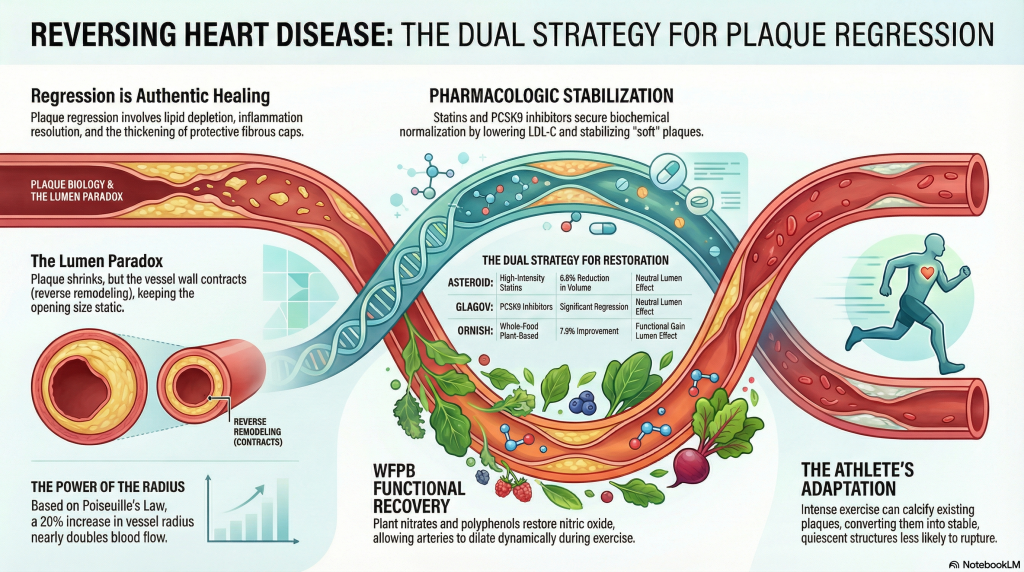
In the first year, the experimental group showed an average 直径狭窄症直径狭窄率は、冠動脈の内腔がプラークによってどの程度狭められたかを血管元の直径に対するパーセンテージで表した血管造影上の測定値であり、臨床試験においてプラークの進行または退縮の客観的指標として使用される。. regression from 40.0% to 37.8%. In contrast, the control group—following a “moderate” 30% fat diet consistent with standard recommendations at the time—showed progression from 42.7% to 46.1% [1]. When extended to five years, the experimental group sustained regression to 37.3%, while the control group worsened to 51.9% [5]. This finding underscores that “moderate” changes do not yield moderate regression; in advanced disease, they often yield no regression at all [6].
2.2 The Esselstyn Longitudinal Study曝露や特性が数年または数十年後の死亡率などの結果とどのように関連しているかを観察するために、長期間にわたって同じ個人を追跡する研究デザイン。.
Dr. Caldwell Esselstyn’s work at the Cleveland Clinic further refined the WFPB protocol by removing all oils and animal products entirely. His 12-year longitudinal study followed patients with advanced CAD who had been told they were “end-stage.” By maintaining total serum コレステロールコレステロールは、体が必要とするロウ状の物質です。細胞壁、ホルモン、ビタミンD、そして食べ物を消化する胆汁の材料となります。コレステロールがなければ私たちは生きていけません。. below 150 mg/dL and LDLコレステロールLDLコレステロール(LDL-C)は、LDL粒子内に存在するコレステロールの量です。これは、ほとんどすべての標準的な検査報告書に記載されている数値です。. below 80 mg/dL through nutrition alone, 73% of adherent patients experienced disease reversal as assessed by angiography and clinical outcomes [2].
| Study Cohort | Intervention Type | ベースライン 狭窄狭窄とは閉塞のことであり、通常は70%の閉塞といったようにパーセンテージで表されます。. (%) | 成果 |
| Ornish Experimental | 10% Fat WFPB + Lifestyle | 40.0 | Significant Regression [1] |
| Ornish Control | Standard Care (~30% Fat) | 42.7 | Progressive Stenosis [1] |
| Esselstyn Cohort | Oil-Free WFPB Diet | 深刻な | Cessation of 狭心症狭心症は、心筋に十分な酸素が供給されていないときに起こる胸の不快感です。圧迫感、締めつけ感、絞られるような感じ、または灼熱感と表現され、腕、首、または顎に広がることがあります。. / Regression [2] |
| コディオプレブCORDIOPREV compared a Mediterranean diet against a low-fat diet in people who already had coronary disease, following them for seven years. | Mediterranean vs Low-Fat (二次予防二次予防とは、すでに心臓発作、脳卒中、またはステント治療を経験した患者に対して、次の発作を防ぐために治療を行うことです。.) | CHD baseline | Reduced events vs comparator diet [8] |
3. The Lipid–Immune Interface: Mechanisms of Plaque Stability
To understand why fat must be restricted so severely for regression, one must appreciate the “concentration gradient” across the arterial wall. Atherosclerotic plaque is initiated by the retention, accumulation, and modification of low-density リポタンパク質リポタンパク質とは、脂肪とコレステロールを血流に乗せて運ぶ小さなカプセルのことです。脂肪は水に溶けないため、移動するにはタンパク質の包みが必要です。. (LDLLDL(低密度リポ蛋白)は、コレステロールを血液中に運ぶ主要な粒子であり、動脈壁に詰まる主原因となるものです。.) particles within the sub-endothelial space [9], [10].
3.1 The Concentration Gradient and Efflux
When circulating LDL levels are high, the gradient favors movement of LDL into the arterial wall. Once retained, LDL becomes modified through oxidation and related biochemical processes [9]. Modified LDL is recognized by the innate immune system as a danger signal. Monocytes are recruited and differentiate into マクロファージマクロファージは、ゴミや侵入者を飲み込む大きなどん欲な免疫細胞です。その名前は文字通り「大食い」を意味します。", which ingest modified LDL and become lipid-laden “泡沫細胞A foam cell is an immune cell that has eaten so much trapped cholesterol that it swells up and looks foamy under a microscope.,” a hallmark of plaque development [10].
Regression becomes possible when circulating LDL falls low enough (often below ~70 mg/dL) that the gradient reverses, enabling net efflux of cholesterol out of the arterial wall through コレステロール逆転送Reverse cholesterol transport is the process of moving cholesterol out of tissues, including artery walls, and back to the liver for disposal. HDL particles do the hauling. [4]. In clinical practice, an ultra-low-fat dietary pattern is often necessary to achieve these LDL levels without high-dose statin dependence [2].
3.2 MetaflammationA chronic, low-grade inflammatory state driven by excess nutrients—particularly saturated fat—that activates innate immune receptors such as TLR4, producing sustained cytokine signaling in the absence of infection; distinct from classical acute inflammation. and TLR4
High-fat meals do more than elevate LDL; they can initiate “metaflammation.” Saturated fatty acids (SFAs)飽和脂肪酸は炭素間の二重結合を持たない脂肪分子で、バター、ココナッツオイル、脂身の多い肉に豊富に含まれており、不飽和の植物油よりもLDLコレステロールやApoB含有リポ蛋白のレベルを上昇させるため、これらを不飽和脂肪に置き換えることが公衆衛生上の中心的な推奨事項となっている。. can activate Toll-like receptor 4 (TLR4), a pattern-recognition receptor best known for detecting microbial toxins [11]. TLR4 activation promotes NF-κB signaling and increases cytokine production such as IL-6Interleukin-6, or IL-6, is a signaling molecule the immune system uses to spread an inflammatory message through the body. and TNF-α [11]. These inflammatory mediators can destabilize plaque by weakening the 線維性被膜The fibrous cap is the tough layer of tissue covering a plaque, separating its greasy core from the bloodstream., increasing vulnerability to rupture and 血栓症血栓症とは、血管内で血液が固まって血栓ができることです。. [9].
4. The “Irritant” Effect: Endothelial Dysfunction
Patients commonly describe a feeling of “irritation” or “sluggishness” after high-fat meals. This is not merely subjective; it reflects acute 内皮機能障害血管内皮機能障害とは、その薄い内側の裏打ちが十分に機能しなくなる状態です。血管が適切に拡張せず、バリア機能がより漏れやすくなります。..
4.1 Nitric Oxide Bioavailability内皮が、血管を拡張させ、血小板の凝集を抑制し、炎症細胞が動脈壁に付着するのを防ぐシグナル伝達分子である一酸化窒素を、どの程度産生し、適切なレベルに維持できるかという度合い。.
その 内皮内皮は、すべての血管の内側にある極めて薄く滑らかな裏地であり、厚さはわずか1細胞分です。.—the single-cell layer lining blood vessels—produces 一酸化窒素一酸化窒素は、血管の内壁が血管に弛緩して広がるよう伝えるために産生するガスです。. (NO), a key mediator of vasodilation and vascular “non-stick” signaling. NO reduces 白血球接着The process by which white blood cells attach to the endothelial surface of blood vessels, a key early step in atherogenesis; nitric oxide and an intact glycocalyx normally suppress this adhesion. and platelet activation, helping maintain an anti-atherogenic surface [13].
After a high-fat meal (including meals high in animal fat or refined plant oils), triglyceride-rich lipoproteins rise in circulation, producing 食後高脂血症Postprandial lipemia is the surge of fat particles in your blood in the hours after eating a meal containing fat. and increased 酸化ストレス酸化ストレスとは、有害な活性分子と、それらを中和する身体の能力との間の不均衡です。. [14]. 活性酸素種Reactive oxygen species are unstable oxygen-containing molecules produced as a by-product of normal metabolism. neutralize NO, converting it into peroxynitriteA reactive nitrogen species formed when nitric oxide is neutralized by superoxide radicals; its production during postprandial oxidative stress sharply reduces the bioavailable nitric oxide needed for arterial dilation and anti-atherogenic vascular function. and sharply reducing functional vasodilatory signaling [12], [13].
4.2 血流依存性血管拡張反応血流依存性血管拡張反応(FMD)は、血流増加に対する導管動脈(通常は上腕動脈)の拡張の程度を非侵襲的な超音波検査で測定したものであり、内皮由来の一酸化窒素シグナル伝達および血管内皮機能のマーカーとして機能する。.
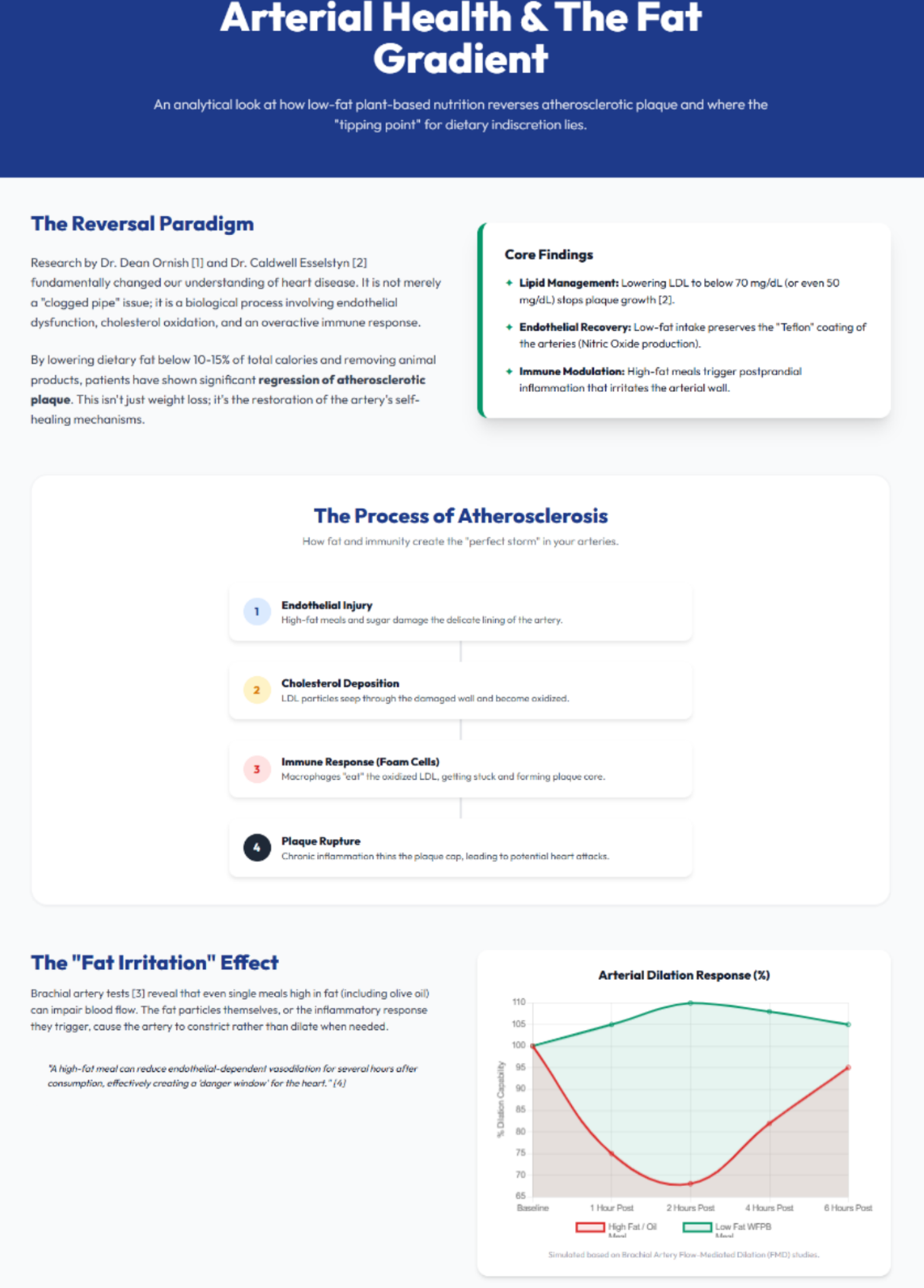
Flow-Mediated Dilation (FMD) studies show that within approximately 2 to 4 hours of a single high-fat meal, arterial dilation capacity can decline by roughly 50% [13]. This impairment can persist for up to 6 hours. With multiple high-fat meals per day, the vasculature can remain in a near-continuous state of impaired dilation and inflammatory tone [14].
5. The Biological Barrier: The Endothelial Glycocalyx
A critical but often overlooked component of vascular health is the 内皮グリコカリックスThe endothelial glycocalyx is a thin, gel-like layer of glycoproteins and proteoglycans lining the inner surface of blood vessels; it acts as a selective barrier that limits direct contact between circulating lipoproteins and the arterial wall, and is vulnerable to disruption by disturbed or high-velocity blood flow.—a delicate, gel-like surface layer that coats the luminal side of blood vessels. It functions as both a mechanotransducer and a physical barrier limiting LDL and immune cell interactions with endothelial membranes [15], [19].
When intact, the グリコカリックスThe glycocalyx is a delicate sugar-rich coating on the inner surface of blood vessels, a kind of gel layer between the blood and the cells. reduces leukocyte adhesion and helps prevent LDL infiltration. However, metabolic stressors such as 高血糖Abnormally elevated blood glucose concentration; included as one of the modifiable risk factors in the PDAY scoring system because it accelerates arterial lesion progression in adolescents and young adults. and inflammatory signals can cause the glycocalyx to shed into circulation [17]. Experimental evidence also demonstrates that exposure to 酸化LDL酸化LDLは、動脈壁に付着した後に化学的損傷を受けたLDL粒子です。. rapidly reduces glycocalyx thickness, leaving the vessel surface more adhesive and vulnerable to injury [16]. Dietary patterns that drive recurrent 食後の食後とは「食事の後」を意味し、食後研究では、絶食時の基準値における測定ではなく、食事摂取直後の数時間における体(血管、脂質レベル、炎症マーカーなど)の反応を測定します。. lipemia and oxidative stress can therefore contribute to glycocalyx dysfunction and impaired vascular recovery [18]. Restoration of glycocalyx integrity is a plausible mechanistic target of sustained ultra-low-fat, whole-food nutritional protocols [19].
6. Epidemiological Evidence: Lessons from Okinawa and Rural China
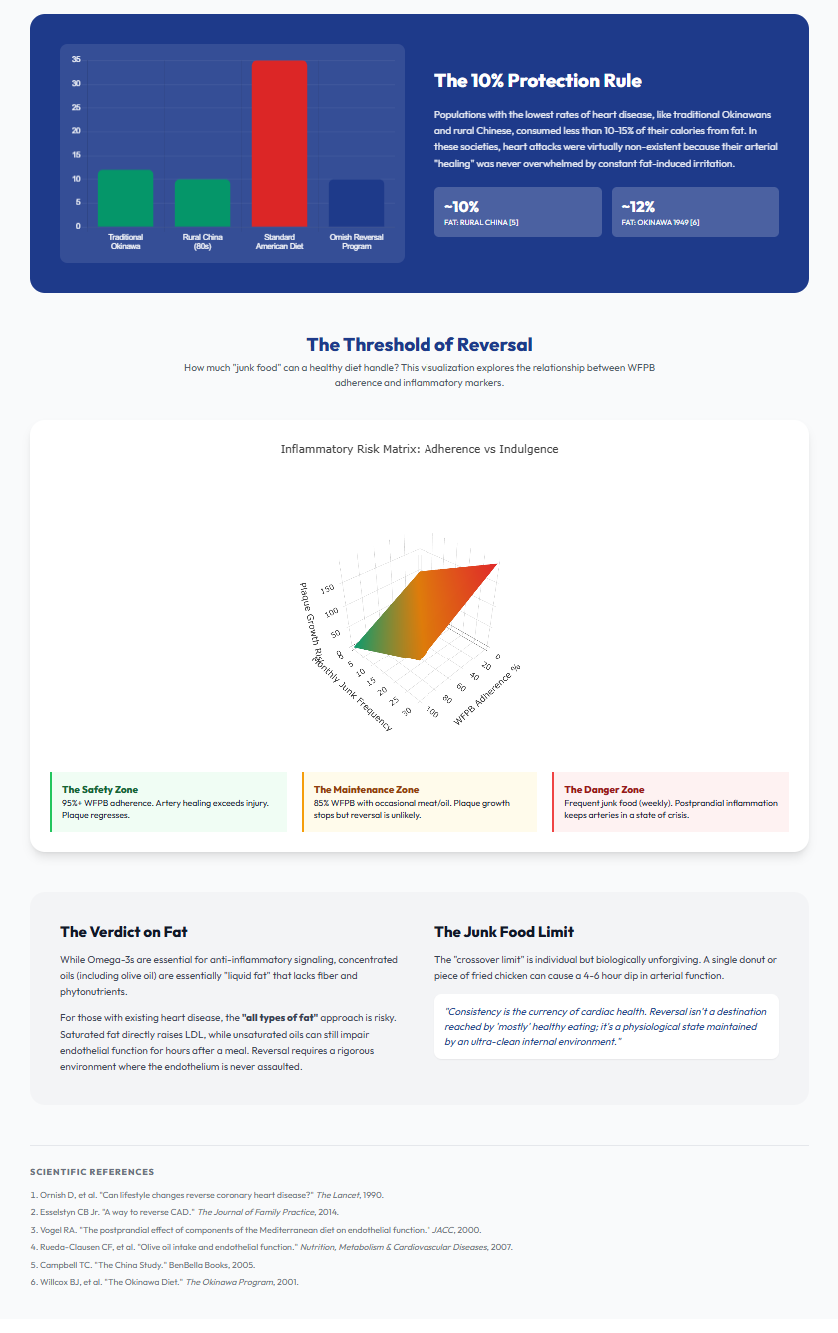
The historical diets of Okinawans and rural Chinese provide population-level evidence of the capacity to live with minimal coronary disease.
6.1 The Traditional Okinawan DietThe traditional dietary pattern of Okinawa, Japan—historically comprising approximately 69% sweet potatoes with very low animal product consumption—associated with one of the world's highest concentrations of centenarians.
Before Westernization, Okinawans had among the highest life expectancy and lowest rates of 心血管疾患心血管疾患とは、心臓発作、脳卒中、下肢の動脈閉塞など、心臓や血管に関する問題の総称です。. globally [21]. Analyses of their traditional pre-1960 diet indicate macronutrient distribution of approximately 85% 炭水化物炭水化物は、パン、米、パスタ、果物、ジャガイモ、お菓子などの、食べ物に含まれる糖分やデンプンです。., 9% タンパク質タンパク質は、体内の筋肉や組織の構築と修復に使用される栄養素です。., and 6% fat [21]. The primary staple was the purple sweet potato, rich in ファイバー食物繊維は、体内で消化できない植物性食品の部分です。豆類、オーツ麦、野菜、果物、全粒穀物に含まれています。. そして 抗酸化物質抗酸化物質とは、体内にある有害な分子を取り除く物質です。ビタミンEやベータカロテンはその例です。. phytochemicals [21].
6.2 チャイナ・スタディA 2005 book by T. Colin Campbell summarizing decades of epidemiological research, including the China-Cornell-Oxford Project, that links diets high in animal protein and fat to higher rates of chronic disease including cardiovascular disease; it is widely cited in plant-based nutrition literature.
In rural China during the 1970s and 1980s, investigators reported that in some counties the death rate from heart disease was extremely low [20]. Average fat intake was often below 10%, and mean serum cholesterol was approximately 127 mg/dL—levels considered “low” by Western standards, yet associated with markedly reduced rates of Western chronic disease patterns [20].
| Population | Fat Intake (%) | Primary Carb | CAD Mortality (vs US) |
| Rural China | <10 | Grains/Legumes | 1/17th [20] |
| Traditional Okinawa | 6 | Sweet Potato | Extremely Low [21] |
| Modern USA | 35+ | Refined Sugars | 高 [21] |
7. The “Crossover Limit”: The Danger of Nutritional Indiscretion
A common question is whether a “cheat meal”—such as fried chicken or a donut—is truly damaging. From the standpoint of regression biology, these indiscretions can temporarily halt arterial healing and reintroduce biochemical conditions that favor dysfunction.
- The 6-Hour Window: A single high-fat meal can induce approximately 6 hours of impaired endothelial responsiveness [12], [13].
- Glycocalyx Damage: Metabolic stressors—including hyperglycemia and oxidative stress—promote shedding of the protective glycocalyx [17], [18].
- Immune Re-Activation: For a patient in a “cooling” phase of プラーク安定化プラークの安定化とは、既存のプラークが破裂しにくくすることであり、被膜を厚くし、脂質のコアを縮小させ、内部の炎症を鎮めることである。., a high-fat meal may re-activate TLR4 signaling and amplify inflammatory cascades that undermine cap stability [11].
For individuals with severe CAD, the “crossover limit” is low. Regression requires a stable biochemical environment. Frequent dietary “cheats” can prevent sustained low LDL and low inflammatory pressure, limiting the body’s ability to clear lipid burden from lesions and restore 血管内皮機能血管の内側を覆う内膜が血管の緊張、炎症、血液凝固を調節する能力。健康な内視細胞は一酸化窒素を放出し、動脈をリラックスさせ、プラーク形成に対する抵抗力を保ちます。. [2], [4].
8. Strategic Conclusions and Clinical Synthesis
The evidence from 臨床試験臨床試験とは、研究者が一方のグループに治療法を施し、もう一方のグループにはプラセボ(偽薬)または標準治療を施して、その結果を比較する研究のことです。., epidemiological observation, and vascular biology supports the conclusion that the 10% fat threshold can be a critical determinant of atherosclerotic regression. Moderate-fat diets (25–30% fat) may support 一次予防一次予防とは、これまでに心臓発作や脳卒中を起こしたことのない人に対して治療を行い、最初の発作を防ぐことです。. and risk reduction, but often lack the biochemical intensity required for regression in established lesions [7], [8].
The vascular “irritation” described by patients reflects real postprandial physiology: oxidative stress, impaired nitric oxide bioavailability, and endothelial surface layer vulnerability. For the patient seeking regression, the clinical objective is a sustained environment of low LDL, reduced inflammatory signaling, and minimal postprandial lipid burden. This is achieved through a nutritional pattern that is not merely “mostly plants,” but strictly low in total fat and free of refined oils [2], [3]. By addressing root drivers—cholesterol retention and immune activation—rather than managing symptoms alone, an ultra-low-fat WFPB protocol provides a credible, non-surgical pathway toward comprehensive cardiovascular health.
参考文献
- Ornish D, Brown SE, Scherwitz LW, et al. Can lifestyle changes reverse coronary heart disease? The Lifestyle Heart Trial. Lancet. 1990;336(8708):129-133. doi:10.1016/0140-6736(90)91656-u
- Esselstyn CB Jr, Ellis SG, Medendorp SV, Crowe TD. A strategy to arrest and reverse coronary artery disease: a 5-year longitudinal study of a single physician’s practice. J Fam Pract. 1995;41(6):560-568.
- Ornish D, Scherwitz LW, Billings JH, et al. Intensive lifestyle changes for reversal of coronary heart disease. JAMA. 1998;280(23):2001-2007. doi:10.1001/jama.280.23.2001
- Roberts WC. It’s the cholesterol, stupid!. Am J Cardiol. 2010;106(9):1364-1366. doi:10.1016/j.amjcard.2010.09.022
- Gould KL, Ornish D, Scherwitz L, et al. Changes in myocardial perfusion abnormalities by positron emission tomography after long-term, intense risk factor modification. JAMA. 1995;274(11):894-901. doi:10.1001/jama.1995.03530110056036
- Varady KA, Lamarche B, Santosa S, Demonty I, Charest A, Jones PJ. Effect of weight loss resulting from a combined low-fat diet/exercise regimen on low-density lipoprotein particle size and distribution in obese women. Metabolism. 2006;55(10):1302-1307. doi:10.1016/j.metabol.2006.05.014
- Choi EY, Allen K, McDonnough M, Massera D, Ostfeld RJ. A plant-based diet and heart failure: case report and literature review. J Geriatr Cardiol. 2017;14(5):375-378. doi:10.11909/j.issn.1671-5411.2017.05.003
- Delgado-Lista J, Alcala-Diaz JF, Torres-Peña JD, et al. Long-term secondary prevention of cardiovascular disease with a Mediterranean diet and a low-fat diet (CORDIOPREV): a randomised controlled trial. Lancet. 2022;399(10338):1876-1885. doi:10.1016/S0140-6736(22)00122-2
- Libby P. The changing landscape of atherosclerosis. Nature. 2021;592(7855):524-533. doi:10.1038/s41586-021-03392-8
- Glass CK, Witztum JL. Atherosclerosis. the road ahead. Cell. 2001;104(4):503-516. doi:10.1016/s0092-8674(01)00238-0
- Rocha VZ, Libby P. Obesity, inflammation, and atherosclerosis. Nat Rev Cardiol. 2009;6(6):399-409. doi:10.1038/nrcardio.2009.55
- Rouyer O, Auger C, Charles AL, et al. Effects of a High Fat Meal Associated with Water, Juice, or Champagne Consumption on Endothelial Function and Markers of Oxidative Stress and Inflammation in Young, Healthy Subjects. J Clin Med. 2019;8(6):859. Published 2019 Jun 15. doi:10.3390/jcm8060859
- Lefèbvre PJ, Scheen AJ. The postprandial state and risk of cardiovascular disease. Diabet Med. 1998;15 Suppl 4:S63-S68. doi:10.1002/(sici)1096-9136(1998120)15:4+3.3.co;2-z
- Plotnick GD, Corretti MC, Vogel RA. Effect of antioxidant vitamins on the transient impairment of endothelium-dependent brachial artery vasoactivity following a single high-fat meal. JAMA. 1997;278(20):1682-1686.
- Milusev A, Rieben R, Sorvillo N. The Endothelial Glycocalyx: A Possible Therapeutic Target in Cardiovascular Disorders. Front Cardiovasc Med. 2022;9:897087. Published 2022 May 13. doi:10.3389/fcvm.2022.897087
- Vink H, Constantinescu AA, Spaan JA. Oxidized lipoproteins degrade the endothelial surface layer : implications for platelet-endothelial cell adhesion. Circulation. 2000;101(13):1500-1502. doi:10.1161/01.cir.101.13.1500
- Nieuwdorp M, van Haeften TW, Gouverneur MC, et al. Loss of endothelial glycocalyx during acute hyperglycemia coincides with endothelial dysfunction and coagulation activation in vivo. Diabetes. 2006;55(2):480-486. doi:10.2337/diabetes.55.02.06.db05-1103
- Calles-Escandon J, Cipolla M. Diabetes and endothelial dysfunction: a clinical perspective. Endocr Rev. 2001;22(1):36-52. doi:10.1210/edrv.22.1.0417
- Broekhuizen LN, Lemkes BA, Mooij HL, et al. Effect of sulodexide on endothelial glycocalyx and vascular permeability in patients with type 2 diabetes mellitus. Diabetologia. 2010;53(12):2646-2655. doi:10.1007/s00125-010-1910-x
- Gates JR, Parpia B, Campbell TC, Junshi C. Association of dietary factors and selected plasma variables with sex hormone-binding globulin in rural Chinese women. Am J Clin Nutr. 1996;63(1):22-31. doi:10.1093/ajcn/63.1.22
- Willcox BJ, Willcox DC, Todoriki H, et al. Caloric restriction, the traditional Okinawan diet, and healthy aging: the diet of the world’s longest-lived people and its potential impact on morbidity and life span. Ann N Y Acad Sci. 2007;1114:434-455. doi:10.1196/annals.1396.037