
The Lifecourse Continuum of Human Atherosclerosis: Onset, Prevalence, Apolipoprotein B Causality, and Dietary Modification
抄録
人間 動脈硬化動脈硬化は、ほとんど的心筋梗塞と多くの脳卒中の背景にある病気です。コレステロールの粒子が動脈の壁に入り込み、体がそれを掃除するために免疫細胞を送り込み、何年もかけてその堆積物が硬化してプラークになります。. is commonly managed as a disease of aging, yet the pathological record places its earliest 病変循環器学において、病変とは冠動脈を狭窄させるアテローム性動脈硬化プラークの不連続な領域を指し、通常はそれが引き起こす内腔閉塞のパーセンテージによって記述される。この記事では、最も重要な病変が治療された後、血管径が小さすぎてステントを受け入れることができない4つの遺残病変について述べている。. before birth and its imaging-detectable expression in a large proportion of middle-aged adults. This paper synthesizes the fetal, pediatric, autopsy, and population-imaging literature to establish when the disease begins, how prevalent it becomes, and what separates genuine pathology from normal arterial development. We argue that adaptive intimal thickening適応性内膜肥厚とは、血流の乱れに対する反応として屈曲部や分岐部で生じる、動脈最内層の正常かつ非病理的な限局的肥厚であり、プロテオグリカン-コラーゲン基質中の平滑筋細胞を特徴とし、アスケロスレローシス(動脈硬化)病変とは異なり、脂質の蓄積や炎症性泡沫細胞の浸潤を伴わない。. must be distinguished categorically from lipid-retaining lesions, and that failure to draw this distinction explains much of the disagreement in the historical autopsy literature, including the apparent sixty-year decline in coronary atherosclerosis among young military decedents. We then examine the evidence identifying アポリポ蛋白アポリポ蛋白とは、血液中の脂肪を運ぶ粒子に結合しているタンパク質です。脂肪と水は混ざらないため、これらのタンパク質は脂肪が血流の中を安全に移動できるようにする包みのような役割を果たします。. B-containing リポタンパク質リポタンパク質とは、脂肪とコレステロールを血流に乗せて運ぶ小さなカプセルのことです。脂肪は水に溶けないため、移動するにはタンパク質の包みが必要です。. as the necessary initiating substrate and the cumulative-exposure model unifying メンデルランダム化Mendelian randomization is a clever research method that uses the genes people were born with as a natural experiment., pediatric 家族性高コレステロール血症家族性高コレステロール血症(FH)は、肝臓が血液中からコレステロールを適切に除去できない遺伝性疾患です。出生時からコレステロール値が非常に高くなります。. cohorts, and randomized lipid-lowering trials. Comparative evidence from subsistence-living populations and preindustrial mummified remains is used to test the claim that atherosclerosis is an inevitable consequence of aging. We review dietary strategies for lowering lifetime アポBアポBは、動脈の壁に詰まってプラークを引き起こす可能性のあるコレステロール粒子のすべての外側に存在するタンパク質です。それらの粒子はそれぞれ、正確に1個のアポBを運んでいます。. exposure in children and adults, address the contested question of polyunsaturated vegetable oils, and state explicitly what the high prevalence of subclinical lesions does and does not imply. An appendix documents source-verification findings, including corrected figures for claims frequently mis-reported in the secondary literature.
Index Terms
apolipoprotein B, atherosclerosis, 累積暴露Cumulative exposure is the total amount of harmful cholesterol particles your arteries have been soaked in across your entire life — how high, multiplied by how long., dietary fat, familial 高コレステロール血症Hypercholesterolemia is an abnormally elevated level of cholesterol-carrying particles in the blood, typically caused in primate experiments by feeding a diet high in dietary cholesterol and saturated fat, and associated with accelerated plaque formation in artery walls., fetal origins, 内膜肥厚内膜肥厚は、動脈の内層(内膜)の厚さにおける初期の適応的または病的な増加であり、正常な発達的変化、あるいは明白なプラーク形成に先行する平滑筋細胞、脂質、炎症性細胞の蓄積のいずれかを反映しうる。これは、頸動脈内膜中膜複合体厚の超音波検査によって非侵襲的に測定可能である。., low-density lipoprotein, preventive cardiology.
I. Introduction
ATHEROSCLEROSIS is commonly managed as a disease of later life. The pathological record does not support that framing. The earliest lesions appear before birth, and by the third decade a substantial fraction of the population carries lesions capable of progression [5], [6]. The disease is a lifelong continuum, not a late event.
This creates a conceptual problem. If arterial lesions become very common by later life, in what sense is atherosclerosis a disease at all? Answering that requires two things: a histological boundary between adaptation and pathology, and a causal model explaining why the process runs quickly in some populations and slowly in others.
Sections II and III establish the histological framework and the autopsy evidence, including the methodological heterogeneity that has distorted interpretation of the historical military series. Section IV develops the apolipoprotein B (apoB) cumulative-exposure model. Section V evaluates the evolutionary hypothesis. Sections VI and VII address dietary modification. Section VIII states what the ubiquity of subclinical lesions does and does not mean. Numerical claims have been verified against primary sources; discrepancies are documented in the Appendix.
II. Distinguishing Arterial Adaptation From Disease
A. The Histological Boundary
The arterial wall comprises three layers: the 内膜内膜は動脈壁の一番内側の層であり、平滑な内壁のすぐ下に位置しています。., lined by a monolayer of 内皮細胞すべての血管の内面を覆う薄い細胞層であり、血管緊張の調節、血液凝固の防止、および動脈壁への物質の通過の制御を行います。また、その機能障害はアテローム性動脈硬化における初期の極めて重要な段階です。.; the muscular media; and the outer 外膜外膜は動脈の最も外側の頑丈な層であり、主に結合組織、神経、および血管壁に栄養を供給する微小血管で構成されている。.. Early in postnatal life, and in nearly all adults, the intima thickens focally at branch points and bends where flow becomes disturbed. Adaptive intimal thickening is characterized predominantly by 平滑筋細胞平滑筋細胞は動脈の中膜を構成しており、血管の収縮や弛緩の程度を調節しています。. within a proteoglycan-collagen matrix and, unlike lipid-retaining atherosclerotic lesions, lacks the defining features of lipid accumulation and inflammatory foam-cell infiltration [1], [2].
The classification developed by Stary for the American Heart Association [1] and refined by Virmani and colleagues [2] arranges subsequent lesions along a progression. The intimal xanthomaIntimal xanthoma is the histological term for what is commonly called a fatty streak—the earliest true atherosclerotic lesion, in which apoB-containing lipoprotein particles are retained in the subendothelial matrix and engulfed by macrophages to form lipid-laden foam cells., historically termed the 脂肪線条脂肪条斑はアテローム性動脈硬化の最も初期の目に見える段階であり、動脈の内壁のすぐ下にある、コレステロールを含んだ免疫細胞の平らな黄色いしみである。., is the first lesion involving lipid: アポB含有リポ蛋白リポタンパク質(LDL、IDL、VLDLおよびそれらの残渣を含む)は、それぞれ表面に1分子のアポリポタンパク質Bを結合している。各粒子が動脈壁に捕捉される可能性があるため、コレステロールの質量そのものではなく、粒子数がアテローム性動脈硬化症の主要な要因となっている。. cross the 内皮内皮は、すべての血管の内側にある極めて薄く滑らかな裏地であり、厚さはわずか1細胞分です。., are retained in the subendothelial matrix, and are engulfed by マクロファージマクロファージは、ゴミや侵入者を飲み込む大きなどん欲な免疫細胞です。その名前は文字通り「大食い」を意味します。" that become lipid-laden 泡沫細胞A foam cell is an immune cell that has eaten so much trapped cholesterol that it swells up and looks foamy under a microscope.. Pathologic intimal thickening follows, characterized by acellular extracellular lipid pools in the deep intima and localized smooth muscle cell loss. The 線維粥腫A fibroatheroma is an intermediate-to-advanced atherosclerotic lesion defined by the presence of a true necrotic core beneath a fibrous cap; it represents progression beyond the fatty streak and pathologic intimal thickening stages toward the plaque architecture associated with clinical events. is the first lesion with a true 壊死核壊死性コアは、捕捉されたコレステロールを食べてその場で死亡した免疫細胞から形成された、進行したプラークの死滅したドロドロとした中心部である。. beneath a 線維性被膜The fibrous cap is the tough layer of tissue covering a plaque, separating its greasy core from the bloodstream.. 。 薄い線維性被膜を伴う粥腫A thin-cap fibroatheroma is an advanced atherosclerotic lesion in which inflammatory proteolysis has reduced the fibrous cap thickness to below 65 micrometers over a necrotic core, making it the plaque phenotype most associated with rupture and acute coronary thrombosis., in which inflammatory proteolysis has reduced cap thickness below 65 micrometers, is the phenotype most associated with rupture and acute 冠動脈血栓症Coronary thrombosis is the formation of a blood clot inside a coronary artery, blocking blood flow to the heart muscle — the underlying event in most heart attacks. It was first described as a recognisable clinical syndrome in a living patient in 1912. [2]. Fig. 1 summarizes this progression against the evidence base.
For purposes of this review, the operational criterion is that a vascular finding constitutes pathology when it involves retention and modification of apoB-containing lipoproteins accompanied by cellular injury or inflammatory infiltration, irrespective of whether the lesion is microscopic, asymptomatic, or reversible. Adaptive intimal thickening does not meet this criterion; the intimal xanthomaA xanthoma is a yellowish deposit of cholesterol that builds up in the skin or in tendons, most often around the knuckles, elbows, knees, or the Achilles tendon. does.
B. Why the Distinction Governs Interpretation
This boundary is not merely taxonomic. A pathologist scoring any intimal thickening as atherosclerosis will report substantially higher prevalence than one scoring only lipid-retaining, inflammatory lesions. Because the historical autopsy literature spans decades of evolving criteria and preparation methods, prevalence figures from different eras are not directly commensurable without accounting for differences in definitions, preparation, and grading. Section III examines the consequences.
III. Autopsy Evidence Across the Lifespan
A. Fetal and Early Childhood Lesions
Napoli and colleagues examined 82 fetal aortasThe aorta is the biggest artery in your body. It carries blood out of the heart and down through the chest and belly, sending branches everywhere. from spontaneous abortions and premature newborns dying within twelve hours of birth, mean fetal age 6.2 ± 1.3 months [3]. Specimens were grouped by maternal コレステロールコレステロールは、体が必要とするロウ状の物質です。細胞壁、ホルモン、ビタミンD、そして食べ物を消化する胆汁の材料となります。コレステロールがなければ私たちは生きていけません。. status: 22 from normocholesterolemic mothers, 33 from hypercholesterolemic mothers, and 27 from mothers hypercholesterolemic only during gestation. Fatty streaks containing native and oxidized low-density lipoprotein (LDLLDL(低密度リポ蛋白)は、コレステロールを血液中に運ぶ主要な粒子であり、動脈壁に詰まる主原因となるものです。.) were present in fetal aortas, and lesion extent was greater in fetuses of hypercholesterolemic mothers. In fetuses younger than six months, fetal plasma cholesterol correlated with maternal cholesterol (R = 0.86, P = 0.001), and fetal cholesterol declined with gestational age (R = −0.88). LDL accumulation and oxidative modification preceded monocyte recruitment, consistent with a response-to-retention rather than a response-to-injury initiating sequence [3].
These are true pathological lesions by the criterion of Section II-A. They are not, however, evidence that fetal lipid accumulation inevitably progresses to clinical disease. The Fate of Early Lesions in Children (FELIC) study examined aortas from 156 normocholesterolemic children aged 1 to 13 years and found that lesions in the youngest children were smaller than those in corresponding fetuses, consistent with postnatal regression after the intrauterine exposure ends [4]. Lesion size then increased with age in both exposure groups, and progressed faster in children of hypercholesterolemic mothers despite normal cholesterol in the children themselves. The trajectory of an early lesion is therefore strongly influenced by subsequent exposure and is not fixed at its formation.
B. Adolescence and Young Adulthood
The Pathobiological Determinants of Atherosclerosis in Youth (PDAYPDAY(Pathobiological Determinants of Atherosclerosis in Youthの略)は、他の原因で死亡した15歳から34歳までの若者の動脈を調査した。.) program examined arteries from individuals aged 15 to 34 years dying of external causes. Reported sample sizes differ across PDAY publications and are a recurrent source of confusion: the 1993 natural-history analysis reported 1,532 subjects [5], the 2000 topographic analysis 2,876 [6]. Both are correct for their respective analyses.
In the youngest PDAY stratum, aged 15 to 19 years, all thoracic and abdominal aortas and about half of right 冠動脈冠動脈とは、心臓の外側を囲むように走っている細い血管で、心筋そのものに血液を供給するものです。. carried grossly visible sudanophilic lesions [5]. Lesion extent increased monotonically with age, and lesion burden was associated with post-mortem markers of 非HDLコレステロールNon-HDL cholesterol is a simple calculation: your total cholesterol minus your HDL. What's left is the cholesterol riding in all the particles that can harm your arteries., 喫煙喫煙は血管の内壁を傷つけ、血圧を上げ、血液を凝固しやすくし、プラークの成長を早めます。. indexed by serum thiocyanate, adiposity, and glycemia [6]. Black subjects exhibited more extensive fatty streaks than white subjects, whereas progression to raised lesions tracked conventional 危険因子危険因子とは、高コレステロール粒子、高血圧、喫煙、糖尿病、家族歴など、病気にかかる可能性を高めるものです。..
The PDAY risk score, derived from these post-mortem associations, subsequently predicted clinical outcomes in living cohorts. In the CARDIACARDIA has followed young adults from their twenties into later life, tracking fitness, cholesterol, blood pressure, and what eventually happened to them. study, each standard-deviation increase in score predicted cardiovascular events with ハザード比ハザード比は、2つのグループでイベントが起こる速さを比較するものです。比率が0.75の場合、治療群でのイベント発生率が4分の一減少し、対照群の4分の3であったことを意味します。. of 1.74 to 2.04 over fifteen years, with C-statistics of 0.77 to 0.79 [7]. The score also predicted carotid 中内膜厚Intima-media thickness, or IMT, is a measurement of how thick the inner layers of an artery have become, usually taken in the neck with ultrasound. in the Cardiovascular Risk in Young Finns cohort [39]. This supports biological continuity between lesions observed at autopsy in youth and clinically manifest disease decades later.
その ボガルサ心臓研究ボガルサ・ハート・スタディは、ルイジアナ州の町で事故により死亡した子どもや若年成人の動脈を調査した。. linked prospectively measured antemortem risk factors to autopsy pathology in 204 individuals aged 2 to 39 years, of whom 93 had prior risk-factor data [8]. Lesion burden increased stepwise with the number of risk factors. With 0, 1, 2, and 3 to 4 risk factors, aortic intimal surface covered by fatty streaks was 19.1, 30.3, 37.9, and 35.0 percent; coronary fatty streak values were 1.3, 2.5, 7.9, and 11.0 percent; and coronary fibrous 歯垢プラークとは、動脈の壁の内側にコレステロール、免疫細胞、瘢痕組織、カルシウムが蓄積したものです。. involvement rose from 0.6 to 7.2 percent. Abbreviated citations of this study frequently report only the endpoints of the coronary series, obscuring the intermediate strata.
C. The Military Series and the Problem of Comparability
Enos and colleagues reported gross evidence of coronary disease in 77.3 percent of 300 American soldiers killed in Korea, mean age 22.1 years [9]. A subsequent series of 105 Vietnam-era casualties reported coronary atherosclerosis in 45 percent, with severe disease in 5 percent [10]. Webber and colleagues, examining 3,832 service members who died in Iraq and Afghanistan at mean age 25.9 years, reported any coronary atherosclerosis in 8.5 percent, severe in 2.3 percent, moderate in 4.7 percent, and minimal in 1.5 percent [11]. A 2021 analysis of special operations personnel found coronary or aortic atherosclerosis in 17.4 percent, with severe coronary disease in 5.1 percent [12].
The decline from 77.3 to 8.5 percent across six decades may reflect genuine change in exposure, methodological difference between series, or both [11]. It cannot be apportioned between them from these autopsy series alone, because case selection, preparation, and grading criteria differ across them. The Enos series used gross visual assessment of unfixed, collapsed arteries with a disease threshold extending from fibrous intimal thickening to occlusive plaque; by contemporary criteria that threshold may have captured findings that would now be classified as adaptive intimal thickening rather than atherosclerosis. PDAY used standardized fixation in 10 percent neutral buffered formalin with central-laboratory Sudan IV staining and independent grading by three pathologists [5], and the modern military series applied different severity thresholds again. Webber and colleagues attributed the decline to either real or artifactual phenomena [11]. The conclusion that coronary atherosclerosis has nearly disappeared among young adults is not supported at the magnitude the raw comparison suggests.
D. Middle and Later Life
の PESA cohortPESA (Progression of Early Subclinical Atherosclerosis) is a Spanish prospective cohort of asymptomatic adults aged 40 to 54 in which multisite vascular imaging detected subclinical atherosclerosis in 63 percent of participants, demonstrating the high burden of silent arterial disease in middle age. of asymptomatic adults aged 40 to 54 years, 無症候性動脈硬化症Subclinical atherosclerosis means plaque is present but has not yet caused any symptoms or events. was detected in 63 percent across all territories examined [13]. In スカピスSCAPIS(Swedish CArdioPulmonary bioImage Study)は、既知の冠動脈疾患を持たない50歳から64歳のスウェーデン人成人の25,000人以上を対象とした大規模な集団イメージング研究であり、冠動脈CT血管造影を用いて、参加者の42%に動脈硬化を、約5%に有意な狭窄を検出しました。., comprising more than 25,000 Swedish adults aged 50 to 64 without known coronary disease, coronary computed tomographic angiography detected atherosclerosis in 42.1 percent, with significant 狭窄狭窄とは閉塞のことであり、通常は70%の閉塞といったようにパーセンテージで表されます。. in 5.2 percent; 5.5 percent of individuals with a coronary カルシウムスコアカルシウムスコア(冠動脈カルシウムスコア)とは、CTスキャンから算出される数値であり、冠動脈内の石灰化したプラークの総量を数値化したものです。スコアがゼロの場合は検出可能な石灰化プラークがないことを示し、より高いスコアはプラークの蓄積が多く、心血管疾患のリスクが高いことを反映しています。. of zero nonetheless had detectable coronary atherosclerosis [14]. Intravascular ultrasound血管内超音波(IVUS)は、冠動脈の内部に通した極小の超音波プローブを使用し、内側から血管壁を撮影する検査です。. of coronary arteries from healthy heart transplant donors demonstrated atherosclerosis in 17 percent of donors under 20 years, 60 percent of those in their fourth decade, and 85 percent of those aged 50 and older [15]. Table I summarizes the principal studies.
Two distinctions must be preserved. First, any atherosclerosis, obstructive stenosis, and clinically manifest disease are not interchangeable endpoints: SCAPIS found 5.2 percent significant stenosis in a population in which 42.1 percent had detectable plaque [14]. Second, prevalence depends on modality, and calcium scoring in particular is specific but insensitive for early and noncalcified disease [14]. The substantially higher obstructive-stenosis prevalence estimates identified during source verification could not be reconciled with the population imaging literature reviewed here (Appendix, item 10).
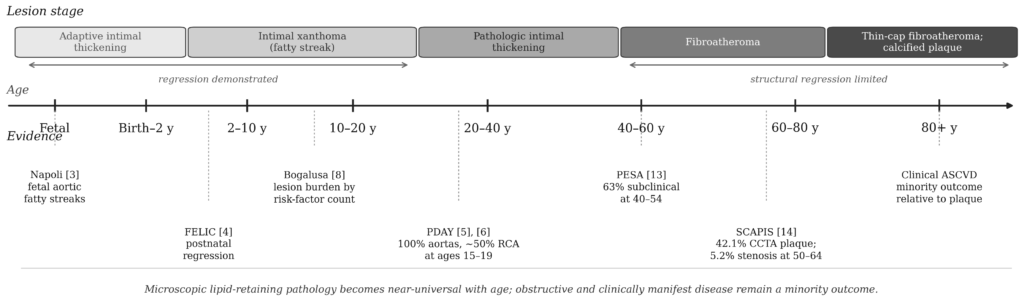
Fig. 1. Lesion stage progression and supporting evidence across the human lifespan. Adaptive intimal thickening (upper band, left) is a physiological response to hemodynamic stress and is not disease [1], [2]. Pathology begins with the intimal xanthoma, in which apoB-containing lipoproteins are retained and modified [2], [16]. Regression has been demonstrated for early lipid-retaining lesions [4]. Bracketed numerals refer to the reference list. The age axis is compressed and not linear.
TABLE I
Principal Autopsy and Imaging Studies of Atherosclerosis Onset and Prevalence
| 勉強 | Design and country | Sample and age | 方法 | Principal finding |
| Napoli et al. [3] | Fetal autopsy series; Italy | 82 aortas; mean fetal age 6.2 mo | Histology; immunostaining for apoB, oxLDL, CD68 | Fatty streaks present in fetal aortas; extent greater with maternal hypercholesterolemia; lipid retention and oxidation preceded monocyte recruitment |
| FELIC [4] | Child autopsy series; Italy | 156 children aged 1–13 y | Computer-assisted morphometry | Lesions smaller in youngest children than in corresponding fetuses, indicating postnatal regression; faster progression with maternal hypercholesterolemia |
| PDAY [5], [6] | Multicenter autopsy program; USA | 1,532 (1993); 2,876 (2000); ages 15–34 | Standardized formalin fixation; Sudan IV; central grading | All aortas and about half of right coronary arteries had lesions at ages 15–19; burden tracked non-HDL cholesterol, smoking, adiposity, glycemia |
| Bogalusa [8] | Cohort linked to autopsy; USA | 204 autopsies aged 2–39; 93 with antemortem data | Gross staining; morphometry | Stepwise increase in lesion burden with number of childhood risk factors; coronary fibrous plaque 0.6% to 7.2% |
| Enos et al. [9] | Combat casualty autopsy; Korea | 300 males; mean age 22.1 y | Gross visual assessment; unfixed arteries | Coronary disease in 77.3%; grading threshold included fibrous intimal thickening and may therefore yield higher prevalence than contemporary lesion definitions |
| Webber et al. [11] | Casualty autopsy registry; USA | 3,832; mean age 25.9 y | Standardized autopsy grading | Any coronary atherosclerosis 8.5%; severe 2.3%; historical decline may reflect both secular and methodological differences |
| Tuzcu et al. [15] | Transplant donor imaging; USA | Donor hearts across adult age range | Intravascular ultrasound | Atherosclerosis in 17% of donors under 20 y, 60% in fourth decade, 85% at 50 y and older |
| PESA [13] | Asymptomatic cohort; Spain | Adults aged 40–54 y | Multiterritorial ultrasound and calcium scoring | Subclinical atherosclerosis in 63% in at least one territory |
| SCAPIS [14] | Population cohort; Sweden | >25,000 adults aged 50–64 y | 冠動脈CT検査冠動脈CTアンギオグラフィー(CCTA)は、静脈に造影剤を入れて行うCT検査であり、心臓の動脈の詳細な画像を作成します。. | Coronary atherosclerosis 42.1%; significant stenosis 5.2%; 5.5% of those with calcium score zero had plaque |
IV. Apolipoprotein B and Cumulative Exposure
A. The Initiating Substrate
Every atherogenic lipoprotein particle — LDL, its precursors VLDLVLDL(超低密度リポ蛋白)は、肝臓が中性脂肪を体内の他の部位へと送り出すために作り出す粒子です。. そして IDLIDL(中等密度リポ蛋白)は、トリセリドを多く運ぶ大型の粒子が収縮してLDL粒子へと変化する過程の中間で形成される粒子です。., 、および リポ蛋白(a)リポタンパク(a)(Lp(a)と表記され、「L-P-リトル-a」と発音される)は、余分な粘着性のあるタンパク質が付着したLDL様粒子です。. — carries a single molecule of apolipoprotein B. Measurement of LDLコレステロールLDLコレステロール(LDL-C)は、LDL粒子内に存在するコレステロールの量です。これは、ほとんどすべての標準的な検査報告書に記載されている数値です。. quantifies the cholesterol mass transported; measurement of apoB quantifies particle number. Because atherosclerosis is initiated by arterial retention of apoB-containing particles, particle number rather than cholesterol cargo is the mechanistically relevant exposure variable [16], [41].
We state the causal claim precisely. Arterial retention of apoB-containing lipoproteins is a necessary initiating event in the prevailing causal model of atherosclerosis [16], [41]; local vascular biology — endothelial permeability, proteoglycan composition, disturbed flow, and inflammatory signaling — determines where and when retention occurs. This formulation preserves the causal argument while acknowledging that lesion localization is not explained by particle concentration alone. It is consistent with the observation that lesions form preferentially at branch points and bends, where adaptive intimal thickening and disturbed flow coincide.
Three independent evidence streams converge on this conclusion: mechanistic studies of retention and oxidative modification within the arterial wall [41]; genetic studies showing that lifelong lower exposure to apoB-containing lipoproteins is associated with substantially lower coronary risk [42]; and randomized trials of pharmacological LDL reduction demonstrating event reduction proportional to absolute LDL lowering [43]. These streams are synthesized in [16] and [17].
B. The Cumulative-Exposure Model
Because retained particles accumulate over time, プラーク負荷プラーク負荷とは、単に最も状態の悪い一箇所だけでなく、動脈全体に存在するプラークの総量のことです。. reflects the integral of apoB concentration over years of exposure, expressed as コレステロール年数Cholesterol-years is a cumulative-exposure metric that multiplies a person's average LDL-C level (in mg/dL) by the number of years they have carried that level, analogous to pack-years for tobacco. The concept holds that it is the total lifetime burden of apoB-containing lipoproteins, not any single reading, that determines when and how severely atherosclerosis develops. または アポB年ApoB-years(アポB年)は、時間経過に伴うアポBの累積曝露量を表す提案中の研究用指標であり、mg/dL・年単位のアポB対年齢曲線の下面積として表されます。これは、単一の測定値よりも直接的に統合された動脈硬化惹起性粒子の負荷をとらえることを目的としていますが、臨床ツールや治療閾値としてはまだ検証されていません。. by explicit analogy with パック・イヤーPack-years is a standardized measure of cumulative tobacco exposure calculated by multiplying the number of packs smoked per day by the number of years of smoking; the article uses it as the conceptual model for thinking about cumulative apoB exposure, noting that both metrics are imperfect summaries of lifetime exposure that carry more prognostic weight than a single current measurement. of cigarette exposure [17]; the empirical support for that model is set out in [18] and [19] below. Pooled cohort analysis shows that cumulative LDL-C exposure during young adulthood and middle age predicts later cardiovascular events independently of midlife LDL-C level [18]. In CARDIA, among 4,366 participants followed from ages 18 to 40, each standard-deviation increase in cumulative apoB exposure was associated with a hazard ratio of 1.53 (95 percent 信頼区間信頼区間とは、ある研究の結果と統計的に整合する値の範囲のことです。. 1.36 to 1.72) for incident atherosclerotic 心血管疾患心血管疾患とは、心臓発作、脳卒中、下肢の動脈閉塞など、心臓や血管に関する問題の総称です。. after age 40, attenuating to approximately 1.30 after covariate adjustment [19].
The model supports an empirical inflection rather than a fixed threshold: in the same cohort, hazard increased above a usual apoB exposure of about 75 mg/dL per year across ages 18 to 40 [19]. This is a cohort-derived value, not a biological constant, and the authors present it as a potential clinical target requiring validation. The larger round numbers frequently quoted in secondary literature — 5,000 to 6,000 mg/dL-years of cumulative LDL, or 1,300 to 1,500 mg/dL-years of apoB — are modeling heuristics without direct empirical derivation. The associated milestones, namely that ホモ接合体性家族性高コレステロール血症Homozygous familial hypercholesterolemia, or HoFH, is the rare and severe form of inherited high cholesterol, where a child inherits the faulty gene from both parents instead of one. crosses such a threshold in childhood, heterozygous familial hypercholesterolemia in early adulthood, and average Western exposure near midlife, are illustrative consequences of the model and broadly consistent with observed 流行病学Epidemiology is the study of health patterns in large groups of people — who gets sick, where, and what they had in common.; the specific ages are not measured values.
C. Evidence From Early Intervention
The twenty-year follow-up of スタチンスタチンは、肝臓がコレステロールを作るのに使う酵素の働きを遅らせます。肝臓は血液中からより多くのコレステロールを取り除くことでこれに反応し、そこに真の利益があります。. therapy initiated in childhood for familial hypercholesterolemia provides one of the strongest available human demonstrations of the exposure model [20]. Treated patients exhibited carotid intima-media thickness progression comparable to unaffected siblings. At age 39, cumulative incidence of cardiovascular events was 1 percent among treated patients versus 26 percent among their affected parents, and cardiovascular mortality was 0 versus 7 percent.
This result is often summarized as a twenty-five-fold reduction in adult coronary events. That framing overstates the inferential strength of the design: the comparison is between treated offspring and their untreated parents, a non-randomized cross-generational contrast confounded by secular improvement in cardiovascular care. The findings strongly support benefit from early treatment, but the cross-generational comparison should not be interpreted as a causal fold-reduction estimate.
V. The Evolutionary Hypothesis
The material in this section is hypothesis rather than established explanation, and is presented at a lower evidentiary tier than Sections III and IV. It is included because it bears on the interpretive question of whether atherosclerosis is inevitable, but no part of the causal argument depends on it.
A. Antagonistic Pleiotropy
The apoB transport system serves essential functions in cholesterol transport and hepatic lipid export [41]. A role in innate host defense has also been described: apoB binds and sequesters a Staphylococcus aureus quorum-sensing peptide, limiting expression of the virulence genes required for invasive infection [44]. One proposed evolutionary interpretation of the late-life costs of such a system invokes antagonistic pleiotropy拮抗多面発現は、ある遺伝子や生物学的形質が若年期には生存や生殖上有利な点をもたらす一方で、後年には有害になるという進化仮説であり、これを心血管疾患に当てはめると、祖先の環境では利益をもたらした可能性のある脂質輸送システムが、カロリーが豊富な現代の長期的な寿命の中では不利に働くことを示唆している。., under which selection favors variants maximizing fitness during the reproductive period even when those variants impose costs over a post-reproductive interval where selection pressure is attenuated [45]. Such traits have been hypothesized to confer advantages under infectious and nutritional pressures, becoming maladaptive under sustained apoB elevation across an extended modern lifespan. This account is coherent and consistent with the comparative data below, but it has not been tested directly in humans and should not be treated as demonstrated.
B. Comparative Population Evidence
その チマネThe Tsimane are an indigenous forager-horticulturalist population of the Bolivian Amazon whose traditional lifestyle—characterized by high physical activity and low average LDL cholesterol of around 91 mg/dL—is associated with markedly low rates of coronary calcification, with 85 percent of adults over 40 showing no detectable coronary calcium., a forager-horticulturalist population of the Bolivian Amazon, provide striking evidence that low lifetime exposure is compatible with near-absence of coronary 石灰化石灰化とは、カルシウムがプラークに沈着し、その一部が硬く骨状になることです。. in old age. Among 705 adults aged 40 years and older, 85 percent had a 冠動脈石灰化スコア冠動脈カルシウムスコア、またはCACスコアは、心臓の動脈にどれだけの硬化したプラークがあるかを測定する迅速なCTスキャンから得られます。造影剤も注射針も使わず、約10分で終わります。. of zero; among those older than 75 years, 65 percent had a score of zero and 8 percent had a score of 100 or greater [21]. This is a five-fold lower prevalence of significant coronary calcification than the MESAMESA, the Multi-Ethnic Study of Atherosclerosis, followed thousands of adults with no known heart disease, scanning their arteries and tracking outcomes. reference population, observed despite substantial infectious and inflammatory burden [21].
O’Keefe and colleagues [22] have argued that physiologically normal LDL cholesterol for humans lies between 50 and 70 mg/dL, drawing comparisons with values reported in human neonates, wild non-human primates, and the least-exposed human populations. On this view, conventional laboratory reference intervals describe a population with pathological exposure rather than a healthy reference state. That argument is advanced in a ナラティブレビューA narrative review is a type of scientific article that synthesizes existing research on a topic through expert selection and interpretation rather than through a pre-registered, exhaustive search with formal bias scoring; unlike a systematic review or meta-analysis, its conclusions can reflect the authors' editorial judgment in choosing which studies to emphasize. and opinion article rather than original research, and several of its comparative lipid values are asserted with limited primary documentation. It is cited here as a synthesis of a position, not as primary evidence, and the underlying comparative values warrant independent verification.
Countervailing evidence comes from the ホルス・スタディThe Horus study used CT imaging to assess 137 mummies from four ancient populations spanning more than 4,000 years, finding probable or definite atherosclerosis in 34 percent, demonstrating that arterial disease predates modern industrialized diet and lifestyle., which performed whole-body コンピュータ断層撮影コンピューター断層撮影法(CT)は、さまざまな角度からX線を照射し、それを再構成して体の断面画像を作成します。. on 137 mummified remains from four preindustrial cultures spanning more than four millennia [23]. Arterial calcificationThe deposition of calcium crystals within the arterial wall, which stiffens the vessel and in coronary arteries is used as a marker of atherosclerotic burden; some evidence suggests vitamin K2 may help inhibit its progression. was identified in 47 of 137 remains, 34 percent, in all four populations including the Unangan hunter-gatherer group. Mean age at death was higher among affected than unaffected individuals, reproducing the age association seen in living populations.
These findings are reconcilable. Interpretation is limited by potential selection of preserved remains, uncertain representativeness of the sampled populations, and incomplete information regarding historical environmental exposures. Calcification detected by computed tomography is a late marker insensitive to early disease. The defensible synthesis is that atherosclerosis is an inherent potential of the human 動脈動脈は、心臓から全身へ血液を送り出す血管です。. whose rate and clinical expression are strongly modifiable, with lifetime exposure to apoB-containing lipoproteins a major modifiable determinant.
VI. Dietary Modification of Lifetime Exposure
A. Patterns With Established LDL Effect
The dietary portfolio approach, combining viscous soluble ファイバー食物繊維は、体内で消化できない植物性食品の部分です。豆類、オーツ麦、野菜、果物、全粒穀物に含まれています。., plant ステロールステロールは、同じ4つの環状構造を基盤とするワックス状の分子のグループです。コレステロールは動物が作るものであり、植物は独自のステロールを作り出します。., soy タンパク質タンパク質は、体内の筋肉や組織の構築と修復に使用される栄養素です。., and tree nuts within a plant-based pattern, produces LDL reduction approaching that of a low-dose first-generation statin [24]. The Mediterranean pattern, tested in PREDIMEDPREDIMED randomly assigned thousands of high-risk Spanish adults to a Mediterranean diet with extra olive oil, the same diet with extra nuts, or a low-fat control diet., a large dietary intervention trial whose 2018 report reanalyzed the data after documented departures from the ランダム化無作為化とは、臨床試験の参加者を偶然によって治療群または対照群に割り当てるプロセスであり、既知および未知の交絡因子が均等に分散されることを保証するものです。しかし、PREDIMEDの研究で監査人が発見したように、無作為化が失敗した場合、両群間には治療効果の見かけを歪めるような違いが生じる可能性があります。. protocol at some sites, reduced cardiovascular events, with benefit observed despite high total fat intake from オリーブオイルオリーブオイルは地中海式食生活における主要な脂肪であり、一価不飽和脂肪が豊富で、エキストラバージンオイルの形態では、ポリフェノールと呼ばれる植物化合物も豊富に含まれています。. and nuts rather than through fat restriction [25]. Vegetarian and vegan patterns lower LDL cholesterol relative to omnivorous comparators in randomized trials [46].
B. Pediatric Safety
Two randomized trials address the principal objection to lipid-lowering diets in children, namely impairment of growth or neurodevelopment. The Dietary Intervention Study in Children randomized 663 children aged 8 to 10 years with elevated LDL to a reduced-fat, reduced-cholesterol pattern for a mean of seven years, observing LDL reduction with no adverse effect on height, growth velocity, iron status, or sexual maturation [26]. The Special Turku Coronary Risk Factor Intervention Project initiated dietary counseling at seven months of age and reported cholesterol reduction without impairment of growth [27]; a separate analysis within the same cohort found no adverse effect on neurologic development at age five [40]. Pediatric guidelines nonetheless caution against fat restriction in infancy. The current U.S. integrated pediatric guideline recommends human milk or iron-fortified formula through the first year without fat modification, and for toddlers aged 12 to 24 months with a 家族の歴史Family history means whether your close relatives developed heart disease, and how young they were when it happened. の 肥満肥満とは、健康に影響を及ぼすほど過剰な体脂肪を蓄えている状態を意味します。., cardiovascular disease, or hypercholesterolemia, transition to reduced-fat milk only after discussion with the pediatric care provider and only within an overall diet supplying about 30 percent of calories from fat [47].
C. Very-Low-Fat and Added-Oil-Restricted Patterns
Patterns restricting total fat and eliminating added oils, including oils incorporated into prepared foods, rest on a different evidentiary basis. The ライフスタイル心臓トライアルディーン・オーニッシュが率いたライフスタイル・ハート・トライアルは、連続冠動脈造影を用いて、超低脂肪の植物ベースの食生活、運動、ストレス管理、グループサポートという集中的なライフスタイル介入を検証した小規模な無作為化試験である。介入群では測定された動脈狭窄がわずかに改善した一方で、対照群では悪化したが、造影法の技術的限界や、参照セグメントの狭小… reported 血管造影上の退縮冠動脈造影上の退縮とは、冠動脈のX線撮影で見られる、冠動脈の閉塞サイズの測定可能な縮小を指し、この記事は、厳格な植物性食生活と生活習慣の改善がこの効果をもたらす可能性があることをライフスタイル・ハート試験が実証したと引用しています。. of coronary stenosis under a very-low-fat プラントベースの食事プラントベース(植物性中心)の食事は、動物性食品を控えるか一切摂らず、野菜、果物、豆類、全粒穀物、ナッツ、種子類を中心に構成されます。. [28], but delivered the diet within a bundle including exercise, stress management, and smoking cessation, so the independent contribution of oil restriction cannot be isolated; supporting clinical work in this tradition includes uncontrolled case-series evidence such as [29]. Their cardiovascular plausibility rests principally on favorable effects on established risk factors, including LDL-C and apoB. The position exceeds the evidence when it asserts that dietary oils are uniquely harmful beyond their energy densityThe number of calories per gram (or per unit volume) of a food; high-fibre, water-rich plant foods have low energy density, meaning larger volumes can be eaten for fewer calories, promoting satiety and spontaneous calorie reduction without deliberate restriction., or that very-low-fat patterns outperform higher-fat Mediterranean patterns for hard endpoints; the available randomized cardiovascular-outcome evidence does not establish that hierarchy.
VII. Polyunsaturated Vegetable Oils
Substitution of polyunsaturated for 飽和脂肪酸飽和脂肪酸は、バター、赤身肉の脂肪、ココナッツオイル、パーム油など、室温で固体のままでいる種類の脂肪です。. remains a prominent contemporary dietary debate about how to lower lifetime apoB exposure, and is addressed here for that reason. The supporting evidence is substantial. The Cochrane review of saturated fat reduction included 15 randomized trials and 56,675 participants; in the 12 trials contributing 53,758 participants to the combined cardiovascular events analysis, reducing saturated fat produced a 17 percent relative reduction (risk ratio 0.83; 95 percent confidence interval 0.70 to 0.98; 等級GRADE (Grading of Recommendations, Assessment, Development and Evaluations) is a widely used framework for rating the certainty of evidence behind a clinical finding, classifying it as high, moderate, low, or very low based on factors such as study design, risk of bias, consistency, directness, and precision of results. moderate-quality evidence). The review concluded that replacing saturated fat with 多価不飽和脂肪酸多価不飽和脂肪酸は、種子油、ナッツ、種子、魚に含まれています。オメガ3脂肪酸とオメガ6脂肪酸のどちらもこのグループに属します。. or with 炭水化物炭水化物は、パン、米、パスタ、果物、ジャガイモ、お菓子などの、食べ物に含まれる糖分やデンプンです。. each appeared useful, that subgrouping did not suggest significant differences between replacement with polyunsaturated fat and replacement with carbohydrate, and that data on replacement with monounsaturated fat一価不飽和脂肪は、オリーブオイル、アボカド、およびほとんどのナッツ類に含まれる主な脂肪です。. and protein were very limited [30]. The American Heart Association Presidential Advisory estimated, in its synthesis of those trials, a reduction in cardiovascular disease of approximately 30 percent [31]. A pooled analysis of 30 前向きコホート前向きコホート研究は、健康な人々を登録し、その特徴を記録し、その後何が起こるかを待って観察する。. found higher circulating リノール酸リノール酸は、大豆油、ヒマワリ油、コーン油などの種子油に含まれる主な多価不飽和脂肪です。体内では合成できないため、食事から摂取する必要があります。. associated with lower incident disease and mortality [32], and controlled feeding trials have not demonstrated significant increases in C反応性タンパク質C反応性タンパク(CRP)は、体内のどこかで炎症が起きているときに肝臓が産生する物質です。この検査の高感度バージョンであるhs-CRPは、心疾患のリスクを評価するために使用されます。., interleukin-6, or tumor necrosis factor alpha with increased linoleic acid intake [33], [34].
Two lines of evidence raise concern. A single high-fat meal transiently impairs brachial artery flow-mediated dilation, resolving within about six hours [35]; the effect is not specific to seed oilsシードオイルは、ダイズ、ヒマワリ、キャノーラ、トウモロコシ、ベニバナなど、種子から搾油された調理用油です。., since the same investigators observed it following olive oil meals [36]. Separately, reanalyses of recovered data from two historical trials found higher mortality in the intervention arms: the Sydney Diet Heart Study reported 全因死亡率全死因死亡とは、心疾患に限らず、あらゆる原因による死亡を意味し、研究が測定できる最も広範で、ごまかしが最も効かない結果です。. of 17.6 versus 11.8 percent [37], and the Minnesota Coronary Experiment found greater cholesterol reduction associated with higher mortality [38]. Both recovered-data analyses carry important design and data limitations, including incomplete recovery of original records [37], [38]. Trans fatトランス脂肪酸は、かつて加工食品の賞味期限を延ばすために使用されていた、人工的に改変された脂肪である。. exposure from period-typical margarines is a plausible contributor but was not measured between groups and remains debated, including by the authors of the reanalyses; it should not be presented as an established explanation. The Sydney intervention used safflower oil, which contains no オメガ3脂肪酸Omega-3s are fats found mainly in oily fish, walnuts, and flaxseed..
The two bodies of evidence are asymmetric. The apoB-lowering mechanism is supported by mechanistic, human genetic, and randomized outcome evidence [16], [41]-[43]; the 食後の食後とは「食事の後」を意味し、食後研究では、絶食時の基準値における測定ではなく、食事摂取直後の数時間における体(血管、脂質レベル、炎症マーカーなど)の反応を測定します。. signal rests on a transient surrogate that has not been shown to predict hard outcomes when elicited by a meal. The trial reanalyses are genuinely discordant and should not be dismissed, but their methodological limitations render them insufficient, in isolation, to outweigh the aggregate randomized and prospective evidence. Taken together, the evidence supports dietary patterns that reduce lifetime apoB exposure and does not establish polyunsaturated vegetable oils as a primary vascular hazard [30]-[34], [37], [38].
VIII. What “Everyone Has Atherosclerosis” Means
The claim that atherosclerosis is universal is frequently deployed to argue that it is therefore normal. The evidence assembled here supports a more specific statement.
Lipid-retaining arterial lesions become very common with advancing age. The stronger claim that nearly all adults eventually develop microscopic lipid-retaining pathology is not established by the imaging cohorts cited here and would require direct age-spanning histopathologic evidence. Such lesions should not be conflated with obstructive coronary disease, プラーク破裂Plaque rupture is when the protective cap over a plaque tears open, spilling its contents into the bloodstream., or clinical cardiovascular events, which remain minority outcomes relative to the prevalence of plaque. SCAPIS found detectable coronary atherosclerosis in 42.1 percent of adults aged 50 to 64 but significant stenosis in 5.2 percent [14]. Lifetime exposure to apoB-containing particles is a major determinant of lesion initiation and progression, although local vascular biology and other risk factors influence lesion fate.
Statistical ubiquity is therefore not evidence of physiological normality. 高血圧Hypertension is the medical term for high blood pressure. そして インスリン抵抗性インスリン抵抗性とは、細胞がインスリンに対して十分に応答しなくなる状態のことであり、そのため膵臓は同じ働きをするためにますます多くのインスリンを分泌し続けなければならなくなります。. are also common in aging Western populations without thereby constituting healthy reference states. The Tsimane findings argue against coronary calcification being an unavoidable consequence of human aging [21], although no single observational cohort is definitive. The FELIC observation of postnatal lesion regression indicates that early lesions are not committed to progression [4].
IX. Conclusion
The capacity for atherosclerosis is intrinsic to the human artery. Sustained exposure to apoB-containing lipoproteins promotes intimal lipid retention over time [16]; fetal aortic histology demonstrates that this can begin before birth [3], and the preindustrial mummy record shows that it is not uniquely modern [23]. In this limited sense the susceptibility is universal; the resulting lipid-retaining lesion is nonetheless pathological.
The rate of progression and its clinical expression are not fixed. The Tsimane population demonstrates that advanced age can occur with remarkably low coronary artery calcium burden [21], and individuals with familial hypercholesterolemia treated from childhood exhibit vascular trajectories approximating unaffected siblings [20]. Because cumulative exposure to apoB-containing particles is a major causal and modifiable determinant of disease burden [16]-[19], the high prevalence of atherosclerosis in later life is an argument for early and sustained exposure reduction rather than for therapeutic fatalism.
Appendix: Source Verification Record
The following documents discrepancies, unverifiable claims, and overstatements identified during verification. Items are retained because several affected claims circulate widely in secondary literature.
1) Napoli et al., fetal aortas. Sample composition, mean fetal age, and both correlation coefficients confirmed. Not confirmed: whether the primary report gives lesion prevalence percentages (commonly cited as 30 percent versus up to 90 percent by maternal status) or only lesion area; the abstract emphasizes area and extent. Correction to an earlier verification note: the lesion-composition values of 17.3 percent (native LDL only), 13.3 percent (酸化LDL酸化LDLは、動脈壁に付着した後に化学的損傷を受けたLDL粒子です。. without macrophages), and 58.6 percent (both) are stated in the published abstract and are not suspect. They are percentages of immunopositive atherogenic sites, not of fetuses, which is the denominator most often lost in secondary citation. They are therefore omitted from prevalence statements in this paper.
2) FELIC lesion regression magnitude. Postnatal regression is reported in the primary study and is stated qualitatively here. The specific figure of 64 percent smaller lesions in children under three years, frequently quoted in secondary sources, was not verified against the primary text and is not asserted.
3) PDAY sample size. The discrepant values of 1,532 and 2,876 are both correct, corresponding to the 1993 natural-history and 2000 topographic analyses. The exact intimal-surface pairs sometimes quoted (2.2 to 12.2 percent in white men; 3.1 to 15.4 percent in black men) were not verified against source tables and are not reported numerically.
4) Bogalusa risk-factor gradient. All four-value series confirmed as reported in Section III-B. Abbreviated citations reporting only the endpoints of the coronary fatty streak series omit the intermediate strata.
5) Enos severity breakdown. The overall 77.3 percent figure and mean age are confirmed. The severity breakdown sometimes quoted (35 percent fibrous thickening, 26 percent narrowing of 10 to 49 percent, 15 percent severe) is consistent with secondary sources but was not verified against the 1953 report and is not stated in the body.
6) Adaptive intimal thickening in the Korean War series. The claim that the Enos series classified adaptive intimal thickening as atherosclerosis is an inference from the reported grading criteria, not a statement by the original investigators. It is presented in Section III-C as a methodological caveat.
7) Tsimane calcium prevalence. Correct values are 85 percent with calcium score zero at ages 40 and above, 65 percent at ages 75 and above, and 8 percent with score of 100 or greater in the older stratum. Secondary tables reporting 15 percent and 35 percent Tsimane prevalence in calcified-plaque columns are inversions of the calcium-score-zero data and are erroneous.
8) Familial hypercholesterolemia follow-up. Event rates of 1 versus 26 percent and mortality of 0 versus 7 percent are confirmed. The derived twenty-five-fold reduction framing is not a valid causal effect estimate, for the reasons given in Section IV-C.
9) ApoB-years thresholds. The cumulative-exposure concept is well established, and a cohort-derived inflection near 75 mg/dL per year of usual apoB exposure is reported in CARDIA [19]. The larger round thresholds circulating in secondary literature (5,000 to 6,000 mg/dL-years LDL; 1,300 to 1,500 mg/dL-years apoB) could not be traced to a primary derivation and are identified as heuristics in Section IV-B. An earlier draft of this paper attributed a hazard ratio of 1.05 per 100 mg/dL-years to this literature; that figure could not be located in any primary source and has been replaced with the reported effect estimates.
10) Late-life prevalence figures. PESA and SCAPIS values are confirmed. Not independently verified: carotid plaque of 87 percent at ages 63 to 65 in the ACE 1950 cohort; pooled ARICARIC, the Atherosclerosis Risk in Communities study, has followed thousands of American adults since the late 1980s. and MESA figures of 11 percent with calcium score zero at ages 75 and above and calcium present in 95 percent at ages 90 and above; and 11 percent 非石灰化プラーク動脈壁内のまだ石灰化していないアテローム性沈着物。軟らかいプラークとも呼ばれ、脂質に富み構造的に不安定であるため、石灰化プラークに比べて破裂しやすく、急性血栓症を引き起こしやすい病変。. prevalence among symptomatic patients with calcium score zero. Overstated and not used: obstructive stenosis prevalences of 45 percent at ages 60 to 80 and 65 percent above age 80, microscopic disease approaching 100 percent, and symptomatic disease of 15 to 25 percent.
11) Stary lesion frequencies in infancy and puberty. Commonly cited values (isolated macrophage foam cells in 45 percent of infants within the first eight months; 65 percent with fatty-streak lesions and 8 percent at preatheroma or 粉瘤Atheroma is another word for the fatty deposit inside an artery wall — essentially a synonym for plaque, used more often in research writing. stage in the 12 to 14 year stratum) are consistent with the published series but were not verified against original tables and are not stated numerically.
12) O’Keefe comparative lipid values. Reference [22] is a narrative review and opinion article, not original research. Its reported lipid values for hunter-gatherer populations and wild primates are asserted with limited primary citation and were not independently verified. It is cited in Section V-B as a synthesis of a position rather than as primary evidence.
13) Adaptive intimal thickening prevalence in newborns. The repeated figure of up to 30 percent of newborns could not be traced to a primary source and is not asserted.
14) Pediatric fat restriction threshold. Earlier drafts left unresolved whether fat restriction is contraindicated below 12 months or below two years of age. The apparent conflict reflects two provisions of the same guideline: no fat modification during the first year, and reduced-fat milk permitted between 12 and 24 months for selected children only, within a diet still supplying about 30 percent of calories from fat [47]. Both are now stated in Section VI-B.
Acknowledgment and Disclosures
The author is the founder and sole operator of Curing Heart Disease, LLC, which operates a cardiovascular health education platform and derives revenue from that activity. No external funding was received for this work, and no industry sponsor participated in its design, analysis, or drafting. The author reports no other financial relationships relevant to the subject matter.
This paper is a narrative synthesis of published literature. It involved no new human or animal subjects research and required no ethics approval. It is intended for scientific and professional audiences and does not constitute medical advice.
参考文献
- Stary HC, Chandler AB, Dinsmore RE, et al. A definition of advanced types of atherosclerotic lesions and a histological classification of atherosclerosis. A report from the Committee on Vascular Lesions of the Council on Arteriosclerosis, American Heart Association. Circulation. 1995;92(5):1355-1374. doi:10.1161/01.cir.92.5.1355
- Virmani R, Kolodgie FD, Burke AP, Farb A, Schwartz SM. Lessons from sudden coronary death: a comprehensive morphological classification scheme for atherosclerotic lesions. Arterioscler Thromb Vasc Biol. 2000;20(5):1262-1275. doi:10.1161/01.atv.20.5.1262
- Napoli C, D’Armiento FP, Mancini FP, et al. Fatty streak formation occurs in human fetal aortas and is greatly enhanced by maternal hypercholesterolemia. Intimal accumulation of low density lipoprotein and its oxidation precede monocyte recruitment into early atherosclerotic lesions. J Clin Invest. 1997;100(11):2680-2690. doi:10.1172/JCI119813
- Napoli C, Glass CK, Witztum JL, Deutsch R, D’Armiento FP, Palinski W. Influence of maternal hypercholesterolaemia during pregnancy on progression of early atherosclerotic lesions in childhood: Fate of Early Lesions in Children (FELIC) study. Lancet. 1999;354(9186):1234-1241. doi:10.1016/S0140-6736(99)02131-5
- Natural history of aortic and coronary atherosclerotic lesions in youth. Findings from the PDAY Study. Pathobiological Determinants of Atherosclerosis in Youth (PDAY) Research Group. Arterioscler Thromb. 1993;13(9):1291-1298. doi:10.1161/01.atv.13.9.1291
- McGill HC Jr, McMahan CA, Herderick EE, et al. Effects of coronary heart disease risk factors on atherosclerosis of selected regions of the aorta and right coronary artery. PDAY Research Group. Pathobiological Determinants of Atherosclerosis in Youth. Arterioscler Thromb Vasc Biol. 2000;20(3):836-845. doi:10.1161/01.atv.20.3.836
- Gidding SS, Colangelo LA, Nwabuo CC, et al. PDAY risk score predicts cardiovascular events in young adults: the CARDIA study. Eur Heart J. 2022;43(30):2892-2900. doi:10.1093/eurheartj/ehac009
- Berenson GS, Srinivasan SR, Bao W, Newman WP 3rd, Tracy RE, Wattigney WA. Association between multiple cardiovascular risk factors and atherosclerosis in children and young adults. The Bogalusa Heart Study. N Engl J Med. 1998;338(23):1650-1656. doi:10.1056/NEJM199806043382302
- Enos WF, Holmes RH, Beyer J. Coronary disease among United States soldiers killed in action in Korea; preliminary report. J Am Med Assoc. 1953;152(12):1090-1093. doi:10.1001/jama.1953.03690120006002
- McNamara JJ, Molot MA, Stremple JF, Cutting RT. Coronary artery disease in combat casualties in Vietnam. JAMA. 1971;216(7):1185-1187. doi:10.1001/jama.1971.03180330061012
- Webber BJ, Seguin PG, Burnett DG, Clark LL, Otto JL. Prevalence of and risk factors for autopsy-determined atherosclerosis among US service members, 2001-2011. JAMA. 2012;308(24):2577-2583. doi:10.1001/jama.2012.70830
- Kotwal RS, Mazuchowski EL, Howard JT, et al. Autopsy-Determined Atherosclerosis in Elite US Military Special Operations Forces. J Spec Oper Med. 2021;21(2):19-24. doi:10.55460/RLN9-UQ2X
- Fernández-Friera L, Peñalvo JL, Fernández-Ortiz A, et al. Prevalence, Vascular Distribution, and Multiterritorial Extent of Subclinical Atherosclerosis in a Middle-Aged Cohort: The PESA (Progression of Early Subclinical Atherosclerosis) Study. Circulation. 2015;131(24):2104-2113. doi:10.1161/CIRCULATIONAHA.114.014310
- Bergström G, Persson M, Adiels M, et al. Prevalence of Subclinical Coronary Artery Atherosclerosis in the General Population. Circulation. 2021;144(12):916-929. doi:10.1161/CIRCULATIONAHA.121.055340
- Tuzcu EM, Kapadia SR, Tutar E, et al. High prevalence of coronary atherosclerosis in asymptomatic teenagers and young adults: evidence from intravascular ultrasound. Circulation. 2001;103(22):2705-2710. doi:10.1161/01.cir.103.22.2705
- Ference BA, Ginsberg HN, Graham I, et al. Low-density lipoproteins cause atherosclerotic cardiovascular disease. 1. Evidence from genetic, epidemiologic, and clinical studies. A consensus statement from the European Atherosclerosis Society Consensus Panel. Eur Heart J. 2017;38(32):2459-2472. doi:10.1093/eurheartj/ehx144
- Ference BA, Braunwald E, Catapano AL. The LDL cumulative exposure hypothesis: evidence and practical applications. Nat Rev Cardiol. 2024;21(10):701-716. doi:10.1038/s41569-024-01039-5
- Zhang Y, Pletcher MJ, Vittinghoff E, et al. Association Between Cumulative Low-Density Lipoprotein Cholesterol Exposure During Young Adulthood and Middle Age and Risk of Cardiovascular Events. JAMA Cardiol. 2021;6(12):1406-1413. doi:10.1001/jamacardio.2021.3508
- Zheutlin AR, Handoo F, Luebbe S, et al. Cumulative exposure to atherogenic lipoprotein particles in young adults and subsequent incident atherosclerotic cardiovascular disease. Eur Heart J. 2025;46(41):4302-4312. doi:10.1093/eurheartj/ehaf472
- Luirink IK, Wiegman A, Kusters DM, et al. 20-Year Follow-up of Statins in Children with Familial Hypercholesterolemia. N Engl J Med. 2019;381(16):1547-1556. doi:10.1056/NEJMoa1816454
- Kaplan H, Thompson RC, Trumble BC, et al. Coronary atherosclerosis in indigenous South American Tsimane: a cross-sectional cohort study. Lancet. 2017;389(10080):1730-1739. doi:10.1016/S0140-6736(17)30752-3
- O’Keefe JH Jr, Cordain L, Harris WH, Moe RM, Vogel R. Optimal low-density lipoprotein is 50 to 70 mg/dl: lower is better and physiologically normal. J Am Coll Cardiol. 2004;43(11):2142-2146. doi:10.1016/j.jacc.2004.03.046
- Thompson RC, Allam AH, Lombardi GP, et al. Atherosclerosis across 4000 years of human history: the Horus study of four ancient populations. Lancet. 2013;381(9873):1211-1222. doi:10.1016/S0140-6736(13)60598-X
- Jenkins DJ, Kendall CW, Marchie A, et al. Effects of a dietary portfolio of cholesterol-lowering foods vs lovastatin on serum lipids and C-reactive protein. JAMA. 2003;290(4):502-510. doi:10.1001/jama.290.4.502
- Estruch R, Ros E, Salas-Salvadó J, et al. Primary Prevention of Cardiovascular Disease with a Mediterranean Diet Supplemented with Extra-Virgin Olive Oil or Nuts. N Engl J Med. 2018;378(25):e34. doi:10.1056/NEJMoa1800389
- Obarzanek E, Kimm SY, Barton BA, et al. Long-term safety and efficacy of a cholesterol-lowering diet in children with elevated low-density lipoprotein cholesterol: seven-year results of the Dietary Intervention Study in Children (DISC). Pediatrics. 2001;107(2):256-264. doi:10.1542/peds.107.2.256
- Niinikoski H, Lagström H, Jokinen E, et al. Impact of repeated dietary counseling between infancy and 14 years of age on dietary intakes and serum lipids and lipoproteins: the STRIP study. Circulation. 2007;116(9):1032-1040. doi:10.1161/CIRCULATIONAHA.107.699447
- Ornish D, Brown SE, Scherwitz LW, et al. Can lifestyle changes reverse coronary heart disease? The Lifestyle Heart Trial. Lancet. 1990;336(8708):129-133. doi:10.1016/0140-6736(90)91656-u
- Esselstyn CB Jr, Gendy G, Doyle J, Golubic M, Roizen MF. A way to reverse CAD? J Fam Pract. 2014;63(7):356-364b.
- Hooper L, Martin N, Jimoh OF, Kirk C, Foster E, Abdelhamid AS. Reduction in saturated fat intake for cardiovascular disease. Cochrane Database Syst Rev. 2020;8(8):CD011737. Published 2020 Aug 21. doi:10.1002/14651858.CD011737.pub3
- Sacks FM, Lichtenstein AH, Wu JHY, et al. Dietary Fats and Cardiovascular Disease: A Presidential Advisory From the American Heart Association. Circulation. 2017;136(3):e1-e23. doi:10.1161/CIR.0000000000000510
- Marklund M, Wu JHY, Imamura F, et al. Biomarkers of Dietary Omega-6 Fatty Acids and Incident Cardiovascular Disease and Mortality. Circulation. 2019;139(21):2422-2436. doi:10.1161/CIRCULATIONAHA.118.038908
- Johnson GH, Fritsche K. Effect of dietary linoleic acid on markers of inflammation in healthy persons: a systematic review of randomized controlled trials. J Acad Nutr Diet. 2012;112(7):1029-1041.e10415. doi:10.1016/j.jand.2012.03.029
- Su H, Liu R, Chang M, Huang J, Wang X. Dietary linoleic acid intake and blood inflammatory markers: a systematic review and meta-analysis of randomized controlled trials. Food Funct. 2017;8(9):3091-3103. doi:10.1039/c7fo00433h
- Vogel RA, Corretti MC, Plotnick GD. Effect of a single high-fat meal on endothelial function in healthy subjects. Am J Cardiol. 1997;79(3):350-354. doi:10.1016/s0002-9149(96)00760-6
- Vogel RA, Corretti MC, Plotnick GD. The postprandial effect of components of the Mediterranean diet on endothelial function. J Am Coll Cardiol. 2000;36(5):1455-1460. doi:10.1016/s0735-1097(00)00896-2
- Ramsden CE, Zamora D, Leelarthaepin B, et al. Use of dietary linoleic acid for secondary prevention of coronary heart disease and death: evaluation of recovered data from the Sydney Diet Heart Study and updated meta-analysis. BMJ. 2013;346:e8707. Published 2013 Feb 4. doi:10.1136/bmj.e8707
- Ramsden CE, Zamora D, Majchrzak-Hong S, et al. Re-evaluation of the traditional diet-heart hypothesis: analysis of recovered data from Minnesota Coronary Experiment (1968-73). BMJ. 2016;353:i1246. Published 2016 Apr 12. doi:10.1136/bmj.i1246
- McMahan CA, Gidding SS, Viikari JS, et al. Association of Pathobiologic Determinants of Atherosclerosis in Youth risk score and 15-year change in risk score with carotid artery intima-media thickness in young adults (from the Cardiovascular Risk in Young Finns Study). Am J Cardiol. 2007;100(7):1124-1129. doi:10.1016/j.amjcard.2007.05.035
- Rask-Nissilä L, Jokinen E, Terho P, et al. Effects of diet on the neurologic development of children at 5 years of age: the STRIP project. J Pediatr. 2002;140(3):328-333. doi:10.1067/mpd.2002.122393
- Boren J, Chapman MJ, Krauss RM, et al. Low-density lipoproteins cause atherosclerotic cardiovascular disease: pathophysiological, genetic, and therapeutic insights: a consensus statement from the European Atherosclerosis Society Consensus Panel. Eur Heart J. 2020;41(24):2313-2330. doi:10.1093/eurheartj/ehz962
- Ference BA, Yoo W, Alesh I, et al. Effect of long-term exposure to lower low-density lipoprotein cholesterol beginning early in life on the risk of coronary heart disease: a Mendelian randomization analysis. J Am Coll Cardiol. 2012;60(25):2631-2639. doi:10.1016/j.jacc.2012.09.017
- Cholesterol Treatment Trialists’ (CTT) Collaboration. Efficacy and safety of more intensive lowering of LDL cholesterol: a meta-analysis of data from 170,000 participants in 26 randomised trials. Lancet. 2010;376(9753):1670-1681. doi:10.1016/S0140-6736(10)61350-5
- Peterson MM, Mack JL, Hall PR, et al. Apolipoprotein B is an innate barrier against invasive Staphylococcus aureus infection. Cell Host Microbe. 2008;4(6):555-566. doi:10.1016/j.chom.2008.10.001
- Williams GC. Pleiotropy, natural selection, and the evolution of senescence. Evolution. 1957;11(4):398-411. doi:10.1111/j.1558-5646.1957.tb02911.x
- Wang F, Zheng J, Yang B, Jiang J, Fu Y, Li D. Effects of vegetarian diets on blood lipids: a systematic review and meta-analysis of randomized controlled trials. J Am Heart Assoc. 2015;4(10):e002408. doi:10.1161/JAHA.115.002408
- Expert Panel on Integrated Guidelines for Cardiovascular Health and Risk Reduction in Children and Adolescents; National Heart, Lung, and Blood Institute. Expert panel on integrated guidelines for cardiovascular health and risk reduction in children and adolescents: summary report. Pediatrics. 2011;128(Suppl 5):S213-S256. doi:10.1542/peds.2009-2107C