
Cardiovascular Disease Prevention via Resistance Training: Epidemiological Foundations, Clinical Comparative Analyses, and Biomolecular Mechanisms
Epidemiological Foundations of Strength Training and Cardiovascular Longevity in Women
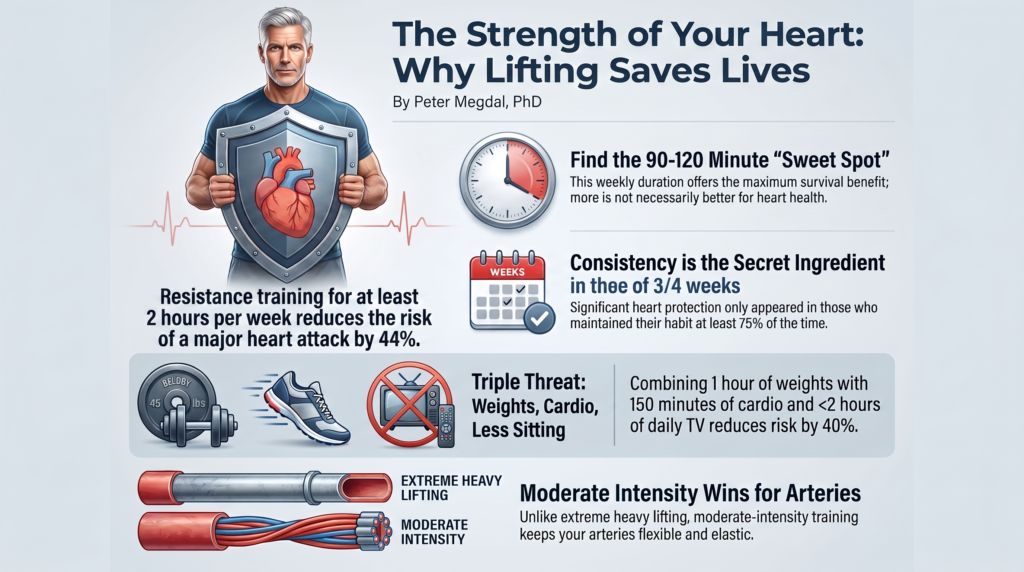
The clinical paradigm of cardiovascular disease (CVD) prevention has historically prioritized aerobic exercise prescriptions1. However, large-scale prospective cohort data has established resistance training as an independent and highly potent modulator of cardiovascular health, particularly in women1. A prospective cohort analysis published in the Journal of the American College of Cardiology (JACC) pooled data from 117,025 female registered nurses in the United States, drawn from the Nurses’ Health Study (NHS, n = 45,669, mean baseline age of 66.8 years) and the Nurses’ Health Study II (NHS II, n = 71,356, mean baseline age of 48.1 years)1. Over an average follow-up of 14.5 years (totaling 1,630,964 person-years), investigators tracked the incidence of major cardiovascular events, defined as a composite endpoint of nonfatal or fatal myocardial infarction (MI), stroke, coronary artery bypass grafting (CABG), or percutaneous coronary intervention (PCI)1.
The core findings of this investigation reveal that women who perform at least 2 hours of resistance training per week experience a 20% lower risk of incident major CVD compared to those who engage in no resistance training, corresponding to a multivariable-adjusted hazard ratio (HR) of 0.80 (95% CI: 0.69–0.92, Pₜtrend = 0.007)1. When these models were adjusted for body mass index (BMI) and metabolic conditions—such as type 2 diabetes, hypertension, hypercholesterolemia, and their respective pharmacological treatments—the association remained statistically significant, yielding a hazard ratio of HR = 0.86 (95% CI: 0.75–0.98)1. This indicates that the cardioprotection associated with muscular resistance exercise is unlikely to be fully explained by differences in adiposity or metabolic disease alone; however, as an observational association, it cannot by itself establish an independent causal mechanism, and residual confounding remains possible1.
| Clinical Cohort Parameter | Nurses’ Health Study (NHS) | Nurses’ Health Study II (NHS II) | Pooled Cohort Analysis |
| Cohort Size (n) | 45,669 women1 | 71,356 women1 | 117,025 women1 |
| Mean Age at Baseline | 66.8 years1 | 48.1 years1 | — |
| Follow-up Duration | 18 years (2002–2020)1 | 14 years (2003–2017)1 | 14.5 years (mean)1 |
| Total Person-Years | — | — | 1,630,964 person-years1 |
| Incident Major CVD Events | — | — | 5,459 cases1 |
| Primary Exposure Assessment | Arm/leg resistance hours every 4 years1 | Arm/leg resistance hours every 4 years1 | Time-varying cumulative average1 |
| CVD Hazard Ratio (≥2 h/wk vs. None) | — | — | HR = 0.80 (95% CI: 0.69–0.92)1 |
| MI Hazard Ratio (≥2 h/wk vs. None) | — | — | HR = 0.56 (95% CI: 0.41–0.76)1 |
| Stroke Hazard Ratio (≥2 h/wk vs. None) | — | — | HR = 0.99 (95% CI: 0.80–1.23)1 |
Table 1. Pooled cohort characteristics and primary cardiovascular endpoints (JACC / Nurses’ Health Studies).
Crucially, a distinct divergence appears when examining specific cardiovascular endpoints. The protective association of resistance training is exceptionally pronounced for myocardial infarction, with ≥2 hours/week associated with a 44% lower risk (HR = 0.56, 95% CI: 0.41–0.76)1. Conversely, no statistically significant association is observed for stroke risk (HR = 0.99, 95% CI: 0.80–1.23)1. This clinical bifurcation is compatible with the metabolic, lipidemic, and systemic effects of strength training exerting more influence on coronary than cerebrovascular disease, but the null stroke finding may equally reflect limited statistical power for stroke-specific analyses, competing stroke subtypes (including cardioembolic and hemorrhagic mechanisms), or residual confounding; the underlying explanation remains uncertain1.
Furthermore, the temporal characteristics of the physical activity exposure reveal a consistency pattern. A lower risk of major CVD was observed only among women who achieved a cumulative average of ≥1 hour/week of resistance training and consistently maintained this habit across ≥75% of the follow-up cycles1. Women with moderate or low consistency (meeting the training threshold in fewer than 75% of assessment cycles) did not show a statistically significant reduction in cardiovascular events within this cohort1. The marked reduction in myocardial infarction risk may result from improvements in multiple cardiovascular risk factors—including blood pressure, insulin sensitivity, body composition, inflammation, endothelial function, and lipid metabolism—rather than from any directly demonstrated effect on coronary plaque biology, which this observational study did not measure1.
In terms of training volume, each additional weekly hour of resistance training was associated with a 5% lower risk of major CVD (HR = 0.95, 95% CI: 0.92–0.99) and a 14% lower risk of myocardial infarction (HR = 0.86, 95% CI: 0.76–0.97)1. Anatomical analysis revealed that programs incorporating both upper-body (arm) and lower-body (leg) muscle groups yielded significantly stronger inverse associations with cardiovascular risk compared to isolated, single-limb training protocols1.
Integrated Movement Patterns and the Synergy of Physical Activity Modalities
A key insight from modern epidemiologic surveillance is that cardiovascular risk must be evaluated through the lens of integrated movement patterns rather than isolating single exercise behaviors1. The JACC cohort study investigated the joint effects of resistance training, aerobic activity, and sedentary behavior (represented by television viewing time as a validated proxy for leisure-time sitting)1. The absolute lowest risk of major CVD was observed in the group of women who simultaneously satisfied three behavioral recommendations: performing ≥15 metabolic equivalent of task (MET)-hours/week of aerobic activity (roughly equivalent to 150 minutes/week of moderate-to-vigorous exercise), engaging in regular resistance training for ≥1 hour/week, and limiting sedentary television viewing to <2 hours/day1. This optimal subgroup exhibited a 40% reduction in major CVD risk (HR = 0.60, 95% CI: 0.53–0.69) compared to inactive, sedentary peers who met none of the recommendations1.
In contrast, women who met both the aerobic and low-sedentary targets but completely omitted resistance training experienced a less pronounced risk reduction of 27% (HR = 0.73, 95% CI: 0.67–0.80)1. This pattern is consistent with an additional cardiovascular benefit associated with resistance training beyond aerobic activity alone1. Conversely, the combination of resistance training and low sedentary time remained protective even in the absence of meeting aerobic guidelines, reducing major CVD risk by 31% (HR = 0.69, 95% CI: 0.56–0.85) and myocardial infarction risk by 44% (HR = 0.56, 95% CI: 0.38–0.85)1.
| Behavioral Adherence Subgroup | Aerobic Target (≥15 MET-h/wk) | Resistance Target (≥1 h/wk) | Sedentary TV Target (<2 h/d) | Major CVD HR (95% CI) | MI HR (95% CI) |
| Sedentary / Inactive (Referent) | No | No | No | 1.00 | 1.001 |
| Aerobic + Low TV (No Strength) | Yes | No | Yes | HR = 0.73 (0.67–0.80) | —1 |
| Strength + Low TV (No Aerobic) | No | Yes | Yes | HR = 0.69 (0.56–0.85) | HR = 0.56 (0.38–0.85)1 |
| Fully Compliant (All 3 Targets) | Yes | Yes | Yes | HR = 0.60 (0.53–0.69) | Greatest observed reduction1 |
Table 2. Joint behavioral adherence subgroups and cardiovascular hazard ratios.
The physiological synergy between these modalities is further illustrated by the joint analysis of resistance training and aerobic volume1. Women who achieved ≥2 hours/week of resistance training combined with ≥150 minutes/week of aerobic activity demonstrated a 45% lower risk of myocardial infarction compared to completely inactive individuals, establishing that resistance work acts additively to, rather than as a substitute for, traditional cardiovascular conditioning1.
Long-Term Mortality Dynamics and Dose-Response Thresholds
To evaluate the impact of resistance training on all-cause and cause-specific mortality over extended follow-up, researchers have analyzed long-term behavioral data spanning three decades2. A comprehensive cohort evaluation published in the British Journal of Sports Medicine (BJSM) analyzed a sample of 147,374 participants, consisting of 31,540 men and 115,834 women from the Health Professionals Follow-up Study (HPFS, followed from 1992 to 2022), the Nurses’ Health Study (NHS, followed from 2002 to 2021), and the Nurses’ Health Study II (NHS II, followed from 2003 to 2021)2. Over up to 30 years of follow-up, during which 35,798 deaths were recorded, investigators observed a highly nuanced, non-linear dose-response relationship2.
The data demonstrates that a moderate volume of resistance training, specifically between 90 and 120 minutes per week, represents the optimal operational range for maximizing survival benefits2. This range was associated with a 13% lower risk of all-cause mortality (HR = 0.87, 95% CI: 0.81–0.95), a 19% lower risk of cardiovascular disease mortality (HR = 0.81, 95% CI: 0.67–0.97), and a 27% lower risk of dying from neurological diseases, primarily driven by neurodegenerative conditions such as Alzheimer’s disease (HR = 0.73, 95% CI: 0.58–0.92)2.
A critical finding of the dose-response curve is the plateau effect observed at ≥120 minutes/week2. Beyond approximately 120 minutes/week, no statistically significant additional reduction in all-cause, cardiovascular, or neurological mortality was observed—an absence of further measurable benefit rather than proof that none exists2. Several explanations are possible for this apparent plateau, including biological saturation of the adaptive response, exposure misclassification, regression dilution, and residual confounding; the study was observational and did not test mechanism1.
In contrast, cancer mortality exhibits a unique quadratic relationship where protective associations are restricted exclusively to minimal training volumes2. Specifically, 1 to 29 minutes/week of resistance training was associated with a 9% lower risk of cancer death (HR = 0.91, 95% CI: 0.86–0.97), and 30 to 59 minutes/week was associated with a 12% lower risk (HR = 0.88, 95% CI: 0.81–0.97)2. Higher weekly durations showed no protective association against cancer mortality2. The mechanisms underlying this low-dose pattern were not evaluated within the cohort and remain hypothetical; one proposed explanation is that brief bouts of acute muscular stress may enhance immune surveillance and natural killer cell activity, whereas higher volumes could promote chronic inflammatory or oxidative states, but these mechanisms are drawn from separate experimental work rather than demonstrated in this study3.
To further analyze sex-specific variations within this population, data from the BJSM study’s supplementary analyses can be compared directly2. Under the multivariable-adjusted model that accounted for total aerobic physical activity, the mortality risk profiles for men and women across varying levels of weekly resistance training show subtle divergences, as detailed below2:
| Resistance Training Volume | Male All-Cause Mortality HR (95% CI) | Female All-Cause Mortality HR (95% CI) | Male CVD Mortality HR (95% CI) | Female CVD Mortality HR (95% CI) |
| 0 min/week (Referent) | 1.00 | 1.00 | 1.00 | 1.002 |
| 1 to <30 min/week | 0.95 (0.92–0.99) | 0.94 (0.91–0.98) | 1.00 (0.93–1.07) | 0.99 (0.91–1.09)2 |
| 30 to <60 min/week | 0.92 (0.86–0.97) | 0.90 (0.85–0.96) | 0.98 (0.88–1.09) | 0.90 (0.78–1.05)2 |
| 60 to <120 min/week | 0.92 (0.86–0.98) | 0.89 (0.83–0.95) | 0.89 (0.78–1.02) | 0.93 (0.79–1.09)2 |
| ≥120 min/week | 0.91 (0.82–1.01) | 0.95 (0.87–1.03) | 0.87 (0.71–1.07) | 0.90 (0.73–1.11)2 |
Table 3. Sex-specific dose-response hazard ratios for all-cause and CVD mortality (BJSM supplementary analysis).
Clinical Discrepancies and the J-Shaped Mortality Hazard in Older Women
While the JACC and BJSM cohorts highlight the clinical benefits of moderate resistance training, a vital piece of epidemiological contrast is found in the Women’s Health Study (WHS) published by the American Heart Association4. This prospective cohort evaluated 28,879 initially healthy older women (average baseline age of 62.2 years) over an average of 12.0 years, documenting 3,055 deaths (411 from CVD and 748 from cancer)4. After robust adjustment for baseline demographics, smoking, diet, and aerobic exercise, the investigators identified a statistically significant, non-linear J-shaped association between strength training and all-cause mortality (Pₜquadratic < 0.001, Pₜspline = 0.020)4.
According to the WHS spline models, the hazard ratios for mortality were significantly below 1.00 for weekly strength training durations between 1 and 145 minutes compared to no training4. However, for women performing ≥146 minutes/week of strength training, the hazard ratio crossed the threshold of 1.00, indicating that excessive volumes were associated with similar or potentially higher risks of all-cause and cardiovascular mortality compared to performing no strength training at all4. This J-shaped curve was also highly significant for cardiovascular disease death (Pₜquadratic = 0.007), but was absent for cancer death (Pₜquadratic = 0.41)4.
One possible explanation is that excessive resistance training volume may interact unfavorably with age-related cardiovascular physiology4. In postmenopausal and elderly women, central arteries undergo progressive structural remodeling characterized by elastin fragmentation and collagen accumulation5. It is biologically plausible that when such stiffened vessels are repeatedly subjected to the high-pressure hemodynamic surges of high-volume or high-intensity resistance training, the acute vascular wall stress could contribute to arterial damage, increased left ventricular afterload, or subclinical myocardial fibrosis and arrhythmias5. This mechanism was not tested in the Women’s Health Study, however, and alternative explanations for the upturn in risk—including reverse causation, residual confounding, differences in underlying health status, and measurement error—remain equally plausible. Taken together, the data support a cautious interpretation: a moderate threshold (≈60 to 120 minutes/week) appears to be the range most consistently associated with lower mortality in older women, and there is no clear evidence that substantially higher volumes confer additional benefit4.
Direct Comparative and Synergistic Clinical Trials
To directly assess whether resistance training can match or enhance the cardiorespiratory and metabolic effects of aerobic exercise, randomized controlled trials have examined modifications in composite cardiovascular risk profiles6. The Comparison of the Cardiovascular Benefits of Resistance, Aerobic, and Combined Exercise (CardioRACE) trial randomized 406 inactive, non-smoking adults aged 35–70 years with overweight or obesity (BMI of 25–40 kg/m²) and elevated blood pressure into four parallel, time-matched groups: a resistance exercise group (n = 102), an aerobic exercise group (n = 101), a combined resistance plus aerobic exercise group (n = 101), or a non-exercising control group (n = 102)7. The active exercise cohorts performed supervised training for approximately 1 hour three times per week for 1 year, with the combined group executing 25 minutes of resistance and 25 minutes of aerobic exercise per session7.
The primary endpoint was a composite cardiovascular risk-factor score—comprising systolic blood pressure, LDL cholesterol, fasting glucose, and percent body fat—rather than clinical cardiovascular events; the trial measured change in this composite Z-score from baseline to 1 year7. Compared to the control group, the composite Z-score decreased significantly in the aerobic group (ΔZ = −0.15, 95% CI: −0.27 to −0.04, P = 0.01) and the combined group (ΔZ = −0.16, 95% CI: −0.27 to −0.04, P = 0.01), but did not decrease significantly in the resistance-only group (ΔZ = −0.02, 95% CI: −0.14 to 0.09, P = 0.69)7. These findings suggest that for individuals with elevated blood pressure and excess body weight, resistance training alone is less effective than aerobic-containing regimens at improving a broad, multi-factor risk profile7.
However, examining individual risk factors reveals modality-specific strengths7. Percent body fat decreased significantly and uniformly by ~1.0% across all three exercise groups compared to the control (P ≤ 0.001), indicating that resistance training is effective at modifying body composition7. Cardiorespiratory fitness (VO₂peak) improved in all active groups, but the increase was significantly greater in the aerobic (+3.5 mL/kg/min) and combined (+2.7 mL/kg/min) groups compared to the resistance-only group (+1.3 mL/kg/min)7. Conversely, muscle strength (1RM chest and leg press) and lean body mass increased significantly only in the resistance-only group (+1.2 kg, P < 0.001) and the combined group, with the resistance-only group demonstrating the largest gains7. These results indicate that combined training provides a more balanced adaptation profile, capturing the cardiorespiratory benefits of aerobic work alongside the musculoskeletal and strength adaptations of resistance training within the same total exercise time2.
These findings align with the broader body of comparative clinical evidence6. A randomized controlled trial in adults at elevated cardiovascular risk found that combined aerobic-plus-resistance training reduced both peripheral and central diastolic blood pressure and increased upper- and lower-body strength, whereas neither aerobic nor resistance training alone produced a statistically significant reduction in resting blood pressure6. Systematic reviews and meta-analyses similarly report that combined training tends to yield greater improvements across multiple risk factors—resting blood pressure, body composition, and muscular strength—than either modality performed in isolation, consistent with the additive adaptation profile observed in CardioRACE8.
Furthermore, resistance training plays a vital role in weight management and body composition preservation9. American Heart Association scientific statements note that weight loss achieved through calorie restriction alone often leads to a concurrent loss of skeletal muscle mass9. Adding resistance training to caloric restriction helps preserve critical lean muscle mass, especially in middle-aged and older adults9. Preserving muscle is not merely a matter of physical strength; it is essential for maintaining mobility, metabolic rate, and blood glucose control9. Such statements also note that exercise alone, without concurrent dietary change, rarely produces clinically significant weight loss unless activity volumes are high, whereas consistently higher activity levels support long-term weight-loss maintenance; resistance training contributes by helping sustain lean mass and metabolic rate during periods of weight change9.
Vascular Hemodynamics and the Mechanics of Arterial Stiffness
Arterial stiffness, a major predictor of cardiovascular morbidity and mortality, refers to the progressive loss of elasticity in large conduit arteries, which is a key feature of vascular aging5. At the structural level, this stiffening is characterized by the degradation and fragmentation of elastin fibers, the compensatory accumulation of stiffer collagen fibers, chronic vascular wall inflammation, and microvascular calcification5. These changes vary across different regions of the arterial network, which are categorized into central arterial stiffness (typically assessed using carotid-femoral pulse wave velocity, cfPWV), peripheral arterial stiffness (assessed via foot-to-brachial pulse wave velocity, faPWV), and systemic arterial stiffness (evaluated using comprehensive indices like the cardio-ankle vascular index, CAVI)5.
| Arterial Stiffness Domain | Anatomical Focus | Gold-Standard Metric | Primary Pathophysiological Drivers | Exercise Modality Response |
| Central Stiffness | Large elastic arteries (Aorta, Carotids) | cfPWV (Carotid-femoral Pulse Wave Velocity)10 | Elastin degradation, collagen cross-linking, chronic inflammation10 | Responds to long-term aerobic and moderate RT; transiently increased by high-intensity RT5 |
| Peripheral Stiffness | Muscular conduit arteries (Femoral, Brachial) | faPWV (Foot-to-brachial Pulse Wave Velocity)10 | Sympathetic nervous system overactivation, hyperinsulinemia10 | Highly responsive to short-term metabolic shifts, stretching, and low-intensity RT5 |
| Systemic Stiffness | Entire arterial tree | CAVI (Cardio-ankle Vascular Index)10 | Endothelial dysfunction, impaired smooth muscle relaxation, aging5 | Responds to combined aerobic-resistance training and low-intensity squats5 |
Table 4. Regional domains of arterial stiffness and their exercise-modality responses.
Historically, clinical trials evaluating the impact of resistance training on vascular health have reported conflicting results5. Some studies suggested that chronic resistance training could impair vascular compliance, showing that intense resistance training (≥80% 1RM) can cause transient, acute increases in central arterial stiffness in young and middle-aged men5. This acute vascular stiffening is driven by severe intra-thoracic pressure spikes (often exacerbated by the Valsalva maneuver), transient elevations in systemic blood pressure, and heightened sympathetic nervous system activity during heavy lifts5.
However, systematic reviews and meta-regressions have demonstrated that training intensity is the primary variable governing vascular responses11. Low-to-moderate-intensity resistance training effectively improves arterial compliance and endothelial function5. Meta-regression analysis revealed a significant correlation (P = 0.042) between resistance training intensity and changes in pulse wave velocity11. Specifically, low-to-moderate-intensity resistance training significantly decreased pulse wave velocity in both young (SMD = −0.41, P = 0.03) and middle-aged adults (SMD = −0.32, P = 0.0007), whereas high-intensity resistance training did not produce a statistically significant overall reduction in arterial stiffness in either age group11. For example, low-intensity resistance training with a short inter-set rest period (LSR) was shown to reduce systemic arterial stiffness and improve flow-mediated dilation (FMD)5.
Furthermore, research has identified a critical vascular interaction based on exercise order5. Performing aerobic exercise after resistance training has been reported to attenuate the transient increase in central carotid artery stiffness that follows resistance exercise, with the degree of effect varying across studies5. In contrast, performing aerobic exercise before resistance training does not prevent central carotid stiffening5. This exercise-order effect suggests that the sustained, moderate shear-stress-mediated nitric oxide release during subsequent aerobic work helps dilate and relax central vessels, counteracting the acute muscular pressure spikes of preceding resistance training5.
Similarly, the order of resistance training intensities can influence vascular responses12. Performing low-intensity resistance training before high-intensity resistance training was shown to increase arterial stiffness12. Conversely, performing high-intensity resistance training before low-intensity resistance training resulted in no change in arterial stiffness12. This suggests that completing low-intensity exercise after heavy lifts can help mitigate central stiffening, whereas reversing this order negates the potential vascular benefits of the low-intensity component12.
Vascular responses are also influenced by anatomical regionality and baseline health status13. Resistance training of the upper limbs has been shown to increase central arterial stiffness, whereas lower-limb resistance training does not alter central compliance12. A proposed explanation is that the smaller vascular bed of the upper body may generate higher relative peripheral resistance and greater arterial wave reflection toward the aorta during contraction, although the precise physiological explanation remains uncertain13. Additionally, prehypertensive and hypertensive patients often demonstrate a more pronounced increase in central arterial stiffness following resistance training compared to normotensive individuals, reflecting compromised adaptive vascular compliance and heightened baseline sympathetic tone in hypertensive states12.
Biomolecular Signaling: Myokine Transduction and Epigenetic Plasticity
At the cellular and molecular levels, the systemic effects of resistance training involve genetic, epigenetic, and endocrinological signaling pathways14. Experimental studies suggest that chronic resistance training may influence gene expression in cardiac and vascular tissues through altered DNA methylation, histone modification, and non-coding RNA expression, in ways that could promote favorable cardiovascular remodeling and reduced vascular inflammation—though the clinical significance of these findings in humans remains under investigation14.
Concurrently, contracting skeletal muscle acts as an active endocrine organ, synthesizing and secreting signaling peptides termed myokines directly into circulation15. Key myokines linked to metabolic and cardiovascular health include Interleukin-6 (IL-6), irisin, fibroblast growth factor 21 (FGF21), myostatin, follistatin, and decorin15. Much of the mechanistic detail below is derived from animal models, cell-culture systems, and short-term human physiological studies rather than cardiovascular outcome trials, and should be read as biologically plausible signaling rather than established clinical mechanism.
[ Skeletal Muscle Contraction ] (mechanisms largely from animal / cell / short-term studies)
|
|-> Epigenetic Adaptations (DNA Methylation, Histone Modifications, non-coding RNAs)
| |-> Potential Cardiovascular Adaptations
|
|-> Myokine Secretion:
| |-> IL-6 (Rapid peak) ——> Anti-inflammatory & metabolic signaling
| |-> Irisin —————-> Potential white adipose tissue browning
| |-> FGF21 (RT > HIIT) ——> May influence insulin sensitivity & glucose uptake
| |-> Decorin —————> Experimental interaction with resistin pathways
|
|-> Follistatin (FST) Activation
|-> May inhibit Myostatin (TGF-beta family)
|-> Possible reduced preadipocyte proliferation –> Potential lower visceral adiposity
These myokines exhibit distinct kinetic patterns depending on the exercise modality15. Acute resistance training, for instance, induces a significantly greater area under the curve (AUC) concentration for FGF21 compared to high-intensity interval training (HIIT)16. FGF21 is thought to contribute to glucose regulation and lipid utilization and may support insulin sensitivity and AMP-activated protein kinase (AMPK) activation in muscle tissue, though most of this evidence derives from animal models, cell culture, or short-term physiological studies15. In obesity and type 2 diabetes, individuals often exhibit “FGF21 resistance,” characterized by high baseline circulating levels but impaired receptor signaling15. Chronic exercise helps restore tissue sensitivity, lowering compensatory resting FGF21 levels over time while facilitating transient, acute post-exercise spikes that support immediate metabolic homeostasis15.
Conversely, HIIT has been shown to induce a significantly greater AUC for follistatin compared to resistance training16. Follistatin (FST) and follistatin-like proteins act as inhibitors of myostatin, a member of the transforming growth factor-beta (TGF-β) family that negatively regulates muscle hypertrophy17. Because myostatin is expressed in both skeletal muscle and adipose tissue, experimental studies suggest that its inhibition by follistatin may limit preadipocyte differentiation and proliferation17. Such a reduction in fat-cell development could in turn help limit visceral adiposity—a major contributor to systemic inflammation, sympathetic overactivation, and renin-angiotensin-aldosterone system (RAAS) dysfunction—though this pathway is largely derived from experimental models rather than human outcome data15.
The contraction-induced myokine decorin also plays a key role in metabolic health17. Experimental evidence indicates that decorin is released from the extracellular matrix during skeletal muscle contraction17. In laboratory and translational models it appears to interact with resistin at adipocyte precursors, which may modulate adipocyte metabolism and reduce pro-inflammatory signaling associated with obesity17. These studies also suggest that decorin can upregulate follistatin and suppress TGF-β1, a pro-inflammatory cytokine that correlates positively with adiposity and is elevated in overweight and obese individuals; these pathways are largely derived from experimental systems rather than human cardiovascular outcome data17.
To assess how these biomolecular pathways respond to different training intensities, a clinical trial evaluated obese males undergoing a 12-week supervised program of interval resistance training (IRT, 70 minutes/session, 3 days/week)17. Participants were randomized to low-intensity (LIIRT), medium-intensity (MIIRT), or high-intensity (HIIRT) interval resistance training17. The results demonstrated that all three intensities produced beneficial increases in decorin and follistatin, along with significant decreases in myostatin and TGF-β117. These molecular shifts correlated with favorable improvements in clinical lipid profiles, including decreases in total cholesterol, triglycerides, and LDL, and increases in HDL17. However, the changes in these myokines and in systemic cardiometabolic risk factors were more pronounced in the MIIRT and HIIRT groups than in the LIIRT group, suggesting that moderate-to-high-intensity resistance training may drive more favorable cellular and lipid adaptations17. These findings should be interpreted cautiously: the intervention was short (12 weeks) with a small sample, and the outcomes were surrogate biomarkers rather than cardiovascular events17.
These acute clinical trials also highlight the physiological stress of a resistance workout3. A single strength training session causes marked acute disruptions in homeostasis, including significant elevations in heart rate, blood lactate concentration, and rate of perceived exertion (RPE)3. Predominantly concentric strength exercises trigger a transient immunomodulatory response, increasing total white blood cells and circulating neutrophils 2 hours post-exercise3. In contrast, a 1:5 work-to-rest concentric protocol led to a decrease in circulating lymphocytes 2 hours after the session3. Predominantly eccentric resistance sessions did not alter circulating Th1 or Th2 cytokines or soluble tumor necrosis factor receptors (sTNFR1, sTNFR2) 2 hours post-exercise, indicating that the acute immune response depends on the specific type of muscle action performed3. These are transient acute-exercise responses, and their clinical implications for cardiovascular or immune outcomes remain uncertain3.
Public Health Guidelines and Clinical Translation
The clinical and epidemiological evidence has driven a major shift in physical activity guidelines from leading health organizations, including the World Health Organization (WHO), the American Heart Association (AHA), the American College of Sports Medicine (ACSM), and the Centers for Disease Control and Prevention (CDC)18. Current guidelines recommend that adults accumulate at least 150 to 300 minutes of moderate-intensity (or 75 to 150 minutes of vigorous-intensity) aerobic physical activity per week18. Crucially, all these organizations emphasize that aerobic exercise should be combined with moderate-to-high-intensity muscle-strengthening activities involving all major muscle groups on ≥2 days per week18.
To translate these recommendations into practical clinical targets, health professionals can utilize the “talk test” to help patients monitor exercise intensity without specialized equipment19. During moderate-intensity activity, an individual should be able to talk but not sing19. During vigorous-intensity activity, the individual will breathe heavily and will not be able to speak more than a few words without pausing for breath19.
For patients initiating a program, clinical counseling should focus on a gradual progression19. This is particularly important for special populations, such as individuals with spinal cord injury (SCI), for whom published exercise guidelines note that a greater relative intensity and duration of physical activity may be needed to achieve cardiometabolic benefit; clinicians should apply population-specific guidance rather than extrapolating directly from general adult targets18. Rather than prescribing rigid training regimens, clinicians should encourage patients to build sustainable movement habits, starting with simple bodyweight exercises—such as modified pushups, planks, and squats—and progressing to resistance bands or free weights as capacity improves9. The ultimate clinical goal is to help patients establish consistent, long-term movement patterns that integrate both aerobic and resistance modalities while actively reducing prolonged sedentary sitting throughout the day1.
Broader Clinical Applications
Beyond primary prevention, resistance training is relevant across several clinical domains, although the strength of evidence varies by outcome. Meta-analyses of randomized trials indicate that resistance training produces modest reductions in resting blood pressure—on the order of roughly 3 to 5 mmHg systolic and 2 to 3 mmHg diastolic, with larger effects generally seen in hypertensive individuals—which are clinically meaningful at a population level20. In people with, or at risk for, type 2 diabetes, resistance training is associated with improved insulin sensitivity and modest reductions in HbA1c, typically as part of a combined-exercise approach9. Resistance training is now an established component of contemporary cardiac rehabilitation after myocardial infarction, coronary bypass surgery, or percutaneous coronary intervention, and is incorporated into exercise-based management of selected patients with stable heart failure, where it is used chiefly to restore muscular strength and functional capacity; the American Heart Association, the American Association of Cardiovascular and Pulmonary Rehabilitation, and the American College of Sports Medicine recommend progressive resistance exercise following appropriate aerobic conditioning and medical evaluation9. In older adults, resistance training is a first-line countermeasure against sarcopenia and its downstream consequences—reduced mobility, falls, and loss of independence—and preserves lean mass, grip strength, gait speed, chair-rise performance, and balance, the major functional endpoints in geriatric care9. Resistance and other weight-bearing training also help maintain bone mineral density, attenuate age-related bone loss, and thereby contribute to reducing osteoporosis and fracture risk, a benefit of particular importance in older women9. Across these domains, resistance training is best positioned as a complement to—rather than a replacement for—aerobic exercise and guideline-based medical therapy9.
Taken together, the current evidence supports resistance training as a fundamental component of cardiovascular prevention. Although the strongest evidence for long-term cardiovascular events remains observational, randomized trials consistently show improvements in multiple established cardiovascular risk factors. Accordingly, contemporary guidelines recommend resistance exercise as a complement to—not a replacement for—aerobic exercise, healthy nutrition, smoking cessation, and evidence-based medical therapy9.
References
- Zhang T, Zhang Y, Lee DH, et al. Resistance Training, Aerobic Activity, Television Viewing, and Risk of Major Cardiovascular Events in U.S. Women. J Am Coll Cardiol. Published online May 25, 2026. doi:10.1016/j.jacc.2026.04.036
- Zhang Y, Lee DH, Rezende LFM, Ma Y, Giovannucci E. Long-term resistance training with all-cause and cause-specific mortality: assessing dose-response and joint associations with aerobic physical activity. Br J Sports Med. 2026;60(12):874-883. Published 2026 Jun 12. doi:10.1136/bjsports-2025-110503
- Fortunato AK, Pontes WM, De Souza DMS, et al. Strength Training Session Induces Important Changes on Physiological, Immunological, and Inflammatory Biomarkers. J Immunol Res. 2018;2018:9675216. Published 2018 Jun 26. doi:10.1155/2018/9675216
- Kamada M, Shiroma EJ, Buring JE, Miyachi M, Lee IM. Strength Training and All-Cause, Cardiovascular Disease, and Cancer Mortality in Older Women: A Cohort Study. J Am Heart Assoc. 2017;6(11):e007677. Published 2017 Oct 31. doi:10.1161/JAHA.117.007677
- Jurik R, Żebrowska A, Stastny P. Effect of an Acute Resistance Training Bout and Long-Term Resistance Training Program on Arterial Stiffness: A Systematic Review and Meta-Analysis. J Clin Med. 2021;10(16):3492. Published 2021 Aug 7. doi:10.3390/jcm10163492
- Schroeder EC, Franke WD, Sharp RL, Lee DC. Comparative effectiveness of aerobic, resistance, and combined training on cardiovascular disease risk factors: A randomized controlled trial. PLoS One. 2019;14(1):e0210292. Published 2019 Jan 7. doi:10.1371/journal.pone.0210292
- Lee DC, Brellenthin AG, Lanningham-Foster LM, Kohut ML, Li Y. Aerobic, resistance, or combined exercise training and cardiovascular risk profile in overweight or obese adults: the CardioRACE trial. Eur Heart J. 2024;45(13):1127-1142. doi:10.1093/eurheartj/ehad827
- Alemayehu A, Teferi G. Effectiveness of Aerobic, Resistance, and Combined Training for Hypertensive Patients: A Randomized Controlled Trial. Ethiop J Health Sci. 2023;33(6):1063-1074. doi:10.4314/ejhs.v33i6.17
- Paluch AE, Boyer WR, Franklin BA, et al. Resistance Exercise Training in Individuals With and Without Cardiovascular Disease: 2023 Update: A Scientific Statement From the American Heart Association. Circulation. 2024;149(3):e217-e231. doi:10.1161/CIR.0000000000001189
- Lan Y, Wu R, Feng Y, et al. Effects of Exercise on Arterial Stiffness: Mechanistic Insights into Peripheral, Central, and Systemic Vascular Health in Young Men. Metabolites. 2025;15(3):166. Published 2025 Mar 1. doi:10.3390/metabo15030166
- Zhang Y, Zhang YJ, Ye W, Korivi M. Low-to-Moderate-Intensity Resistance Exercise Effectively Improves Arterial Stiffness in Adults: Evidence From Systematic Review, Meta-Analysis, and Meta-Regression Analysis. Front Cardiovasc Med. 2021;8:738489. Published 2021 Oct 11. doi:10.3389/fcvm.2021.738489
- Figueroa A, Okamoto T, Jaime SJ, Fahs CA. Impact of high- and low-intensity resistance training on arterial stiffness and blood pressure in adults across the lifespan: a review. Pflugers Arch. 2019;471(3):467-478. doi:10.1007/s00424-018-2235-8
- García-Mateo P, García-de-Alcaraz A, Rodríguez-Peréz MA, Alcaraz-Ibáñez M. Effects of Resistance Training on Arterial Stiffness in Healthy People: A Systematic Review. J Sports Sci Med. 2020;19(3):444-451. Published 2020 Aug 13.
- Silva JG, Rodrigues LF, Torres T, Improta-Caria AC, Oliveira EM, Fernandes T. Resistance training and cardiovascular health: epigenetic regulation. Front Physiol. 2026;16:1701689. Published 2026 Jan 15. doi:10.3389/fphys.2025.1701689
- Zhang Y, Qiu Y. Exercise-Induced Myokines in Obesity-Related Metabolic Disorders and Cardiovascular Protection: A Narrative Review. Sports (Basel). 2026;14(5):212. Published 2026 May 21. doi:10.3390/sports14050212
- He Z, Tian Y, Valenzuela PL, et al. Myokine Response to High-Intensity Interval vs. Resistance Exercise: An Individual Approach. Front Physiol. 2018;9:1735. Published 2018 Dec 3. doi:10.3389/fphys.2018.01735
- Ataeinosrat A, Saeidi A, Abednatanzi H, et al. Intensity Dependent Effects of Interval Resistance Training on Myokines and Cardiovascular Risk Factors in Males With Obesity. Front Endocrinol (Lausanne). 2022;13:895512. Published 2022 Jun 10. doi:10.3389/fendo.2022.895512
- Bull FC, Al-Ansari SS, Biddle S, et al. World Health Organization 2020 guidelines on physical activity and sedentary behaviour. Br J Sports Med. 2020;54(24):1451-1462. doi:10.1136/bjsports-2020-102955
- Piercy KL, Troiano RP, Ballard RM, et al. The Physical Activity Guidelines for Americans. JAMA. 2018;320(19):2020-2028. doi:10.1001/jama.2018.14854
- Cornelissen VA, Fagard RH, Coeckelberghs E, Vanhees L. Impact of resistance training on blood pressure and other cardiovascular risk factors: a meta-analysis of randomized, controlled trials. Hypertension. 2011;58(5):950-958. doi:10.1161/HYPERTENSIONAHA.111.177071