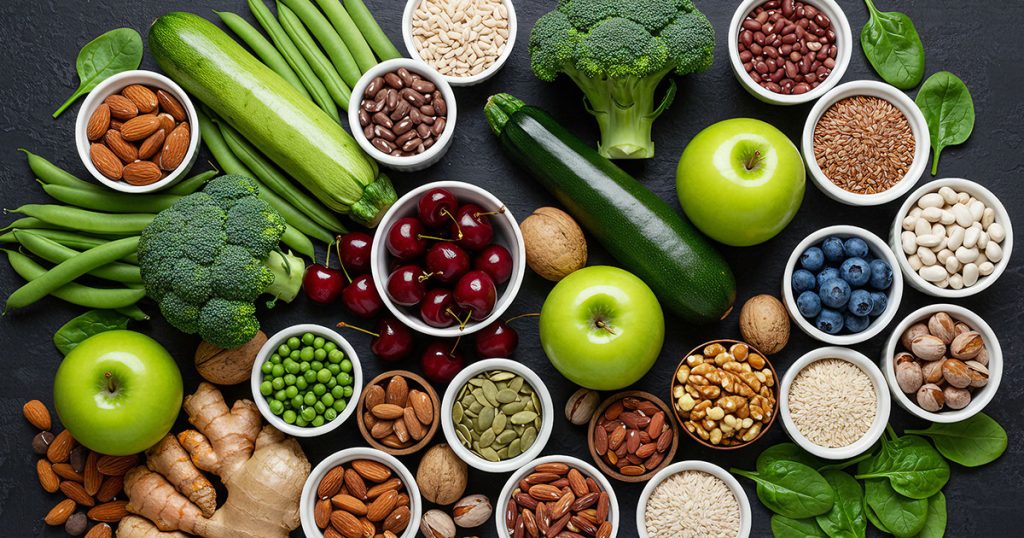
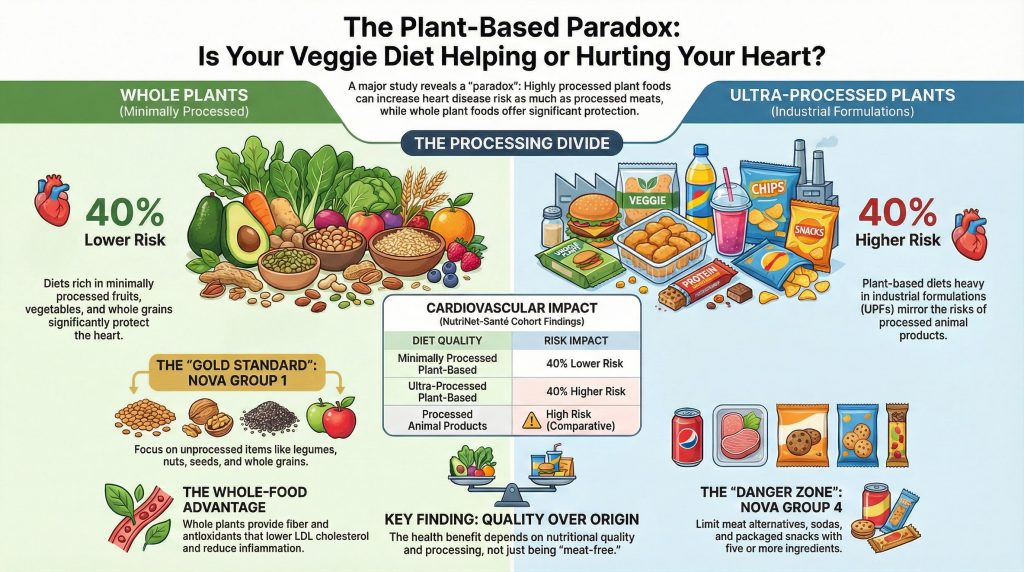
For years, we’ve heard the chorus: “Eat more plants for a healthier heart!” And largely, that advice holds true. Numerous studies have championed the benefits of plant-forward eating patterns in reducing the risk of cardiovascular diseaseCardiovascular disease is the umbrella term for problems with the heart and blood vessels, including heart attacks, strokes, and blocked leg arteries.. But a recent study from the robust NutriNet-Santé cohort in France has introduced a crucial nuance, revealing that the type of plant-based dietA plant-based, or plant-predominant, diet is built mostly around vegetables, fruit, beans, whole grains, nuts, and seeds, with animal foods limited or absent. matters — a lot. Simply going “plant-based” might not be enough if your plate is piled high with highly processed foods.
The Nuance: Not All Plant-Based Diets Are Equal
The French study, published in The Lancet Regional Health – Europe, followed over 63,000 adults for an average of nine years. What made this research particularly insightful was its detailed approach. Instead of just categorizing diets as “plant-based” or “non-plant-based,” the researchers used a sophisticated scoring system that considered three critical dimensions:
- Proportion of Plant vs. Animal Products: How much of the diet was truly plant-derived?
- Nutritional Quality: Was the diet rich in healthy nutrients or empty calories?
- Degree of Industrial Processing (NOVA Classification): This was the game-changer. Were the plant foods whole and minimally processed, or ultra-processed?
The findings were stark:
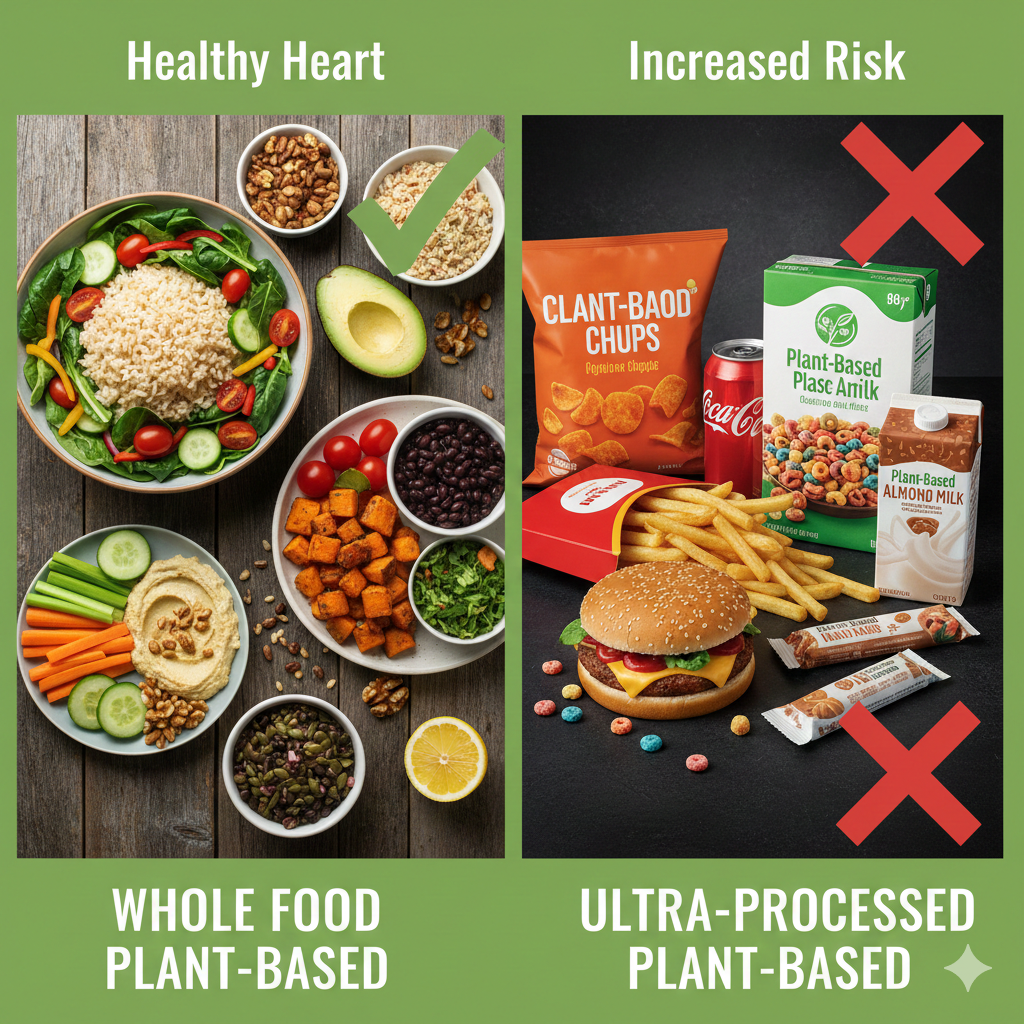
- Those who consumed a healthy plant-based diet rich in minimally processed foods (fruits, vegetables, whole grains, nuts, seeds, legumes) had an impressive 40% lower risk of cardiovascular disease.
- In contrast, individuals whose plant-based diets were high in ultra-processed plant-based foods actually saw a 40% higher risk of cardiovascular disease, mirroring the risks associated with diets high in processed animal products.
This study directly addresses a common critique of “plant-based” messaging: the assumption that all foods derived from plants are inherently healthy.
Beyond the Buzzword: Ultra-Processed Plant Foods
This new research isn’t an isolated finding; it aligns with a growing body of evidence highlighting the dangers of ultra-processed foodsIndustrial food products formulated from refined ingredients and additives—such as emulsifiers, colorings, and flavor enhancers—with little resemblance to whole foods; both plant-based and animal-based ultra-processed products are associated with increased cardiovascular risk, validating the article's argument that processing level matters as much as food source., regardless of their origin.
- The NOVA Classification: This system categorizes foods based on the extent and purpose of industrial processing.
- NOVA Group 1: Unprocessed or minimally processed foods (fruits, vegetables, grains, legumes, meat, fish, eggs, milk).
- NOVA Group 2: Processed culinary ingredients (salt, sugar, oils, butter).
- NOVA Group 3: Processed foods (canned vegetables, simple breads, cheeses, cured meats).
- NOVA Group 4: Ultra-processed foods (UPFs): Industrial formulations typically containing five or more ingredients, often including additives like flavors, colors, emulsifiers, and thickeners. These include many breakfast cereals, sodas, packaged snacks, instant noodles, reconstituted meat products, and, crucially, many plant-based meat alternatives and dairy alternatives.
- Existing Research on UPFs: Prior studies have consistently linked high consumption of UPFs to increased risks of obesityObesity means carrying enough excess body fat to affect health., type 2 diabetesDiabetes is a condition where blood sugar stays too high, either because the body makes too little insulin or because it stops responding to the insulin it makes., certain cancers, and cardiovascular disease, as detailed in reviews and analyses in journals like BMJ and JAMA Internal Medicine [1, 2]. The issue isn’t just about the nutrients (or lack thereof) but also the additives, the food matrixThe food matrix refers to the physical and chemical structure of a whole food—cell walls, fiber, protein networks—that surrounds and interacts with its nutrients; fats consumed within an intact food matrix, such as whole almonds versus almond oil, are absorbed more slowly and less completely than the same fats in extracted, purified form., and how these foods are engineered to be hyper-palatable and lead to overconsumption.
The “Healthy User” Effect and Confounders
The strength of the NutriNet-Santé study lies in its robust adjustments for confoundingConfounding is when a hidden third factor makes two unrelated things look connected. factors. As you rightly pointed out, people who adopt healthier diets often have healthier lifestyles overall – a phenomenon known as the “healthy user effect.” The researchers meticulously accounted for socio-demographic factors, smokingSmoking damages the lining of your blood vessels, raises blood pressure, makes blood clot more easily, and speeds up plaque growth. status, physical activity levels, medical history, and total energy intake. This allowed them to isolate the impact of dietary choices more effectively, confirming that even after controlling for these variables, the distinction between healthy and unhealthy plant-based diets remained significant.
The Takeaway: Prioritize Whole, Unprocessed Plants
The message is clear: when adopting a plant-based diet for heart health, focus on whole, unprocessed foods. Think colorful fruits and vegetables, robust whole grains, diverse legumes, nuts, and seeds. While plant-based convenience foods have their place, they should not form the foundation of your diet.
Q&A: Low-Fat Plant-Based Diets and Heart Disease
Q1: What is the value of a low-fat plant-based diet in preventing and reversing heart disease?
A1: A low-fat, whole-food plant-based (WFPB) diet has shown significant value in both preventing and, in some cases, reversing heart disease. Pioneering work by Dr. Dean Ornish and Dr. Caldwell Esselstyn demonstrated that very low-fat WFPB diets, combined with lifestyle changes (like stress management and exercise), could not only halt the progression of coronary artery diseaseCoronary artery disease is plaque buildup in the arteries feeding the heart muscle. but also lead to the regression of atherosclerotic plaquesPlaque is the buildup of cholesterol, immune cells, scar tissue, and calcium inside an artery wall. in many patients [3, 4].
The benefits stem from several factors:
- Reduced Saturated and Trans FatsTrans fat is an artificially altered fat once used to make processed foods last longer on the shelf.: WFPB diets are naturally very low in saturated fatSaturated fat is the kind that stays solid at room temperature — butter, the fat in red meat, coconut oil, and palm oil. (found primarily in animal products) and cholesterolCholesterol is a waxy substance your body needs. It goes into cell walls, hormones, vitamin D, and the bile that digests your food. You would die without it., both major contributors to plaque formation.
- High FiberFiber is the part of plant food your body cannot digest. It is found in beans, oats, vegetables, fruit, and whole grains. Content: Soluble fiber (abundant in fruits, vegetables, oats, beans) helps lower LDLLDL, or low-density lipoprotein, is the main particle that carries cholesterol through your blood — and the main one that gets stuck in artery walls. (“bad”) cholesterol by binding to it and aiding its excretion. Insoluble fiber promotes gut health and satietyThe feeling of fullness and suppression of appetite following a meal; protein is the most satiating macronutrient per calorie, and higher-protein diets exploit this property to reduce total energy intake and support weight loss..
- Rich in AntioxidantsAn antioxidant is a substance that mops up damaging molecules in the body. Vitamin E and beta-carotene are examples. and Phytonutrients: Plants are packed with compounds that reduce inflammationInflammation is your immune system's response to injury or something it treats as an invader. It brings swelling, heat, and cleanup cells. and oxidative stressOxidative stress is an imbalance between damaging reactive molecules and the body's ability to neutralize them., both critical factors in the development of heart disease.
- Weight Management: WFPB diets are generally lower in caloric density and higher in fiber, promoting satiety and making weight lossWeight loss means reducing body fat, whether through food changes, exercise, medication, or surgery. and maintenance easier, which in turn reduces cardiac strain.
- Improved Blood PressureBlood pressure is the force of blood pushing against your artery walls. It is written as two numbers, like 120/80. The top number is the pressure when your heart squeezes, the bottom is when it relaxes.: The high potassium content and absence of cholesterol, combined with overall healthier body weight, often lead to lower blood pressure.
Q2: Does “low-fat” mean avoiding all fats, even healthy plant fats?
A2: Not necessarily. While the most aggressive heart disease reversalREVERSAL compared moderate and intensive statin therapy, using intravascular ultrasound to measure what happened to coronary plaque. protocols (like those by Ornish and Esselstyn) advocate for very low-fat intake (often 10-15% of calories from fat), for general prevention and maintenance, many healthy plant-based diets include moderate amounts of healthy fats from whole food sources. These include:
- Avocado
- Nuts (walnuts, almonds)
- Seeds (chia, flax, hemp)
- Olives (and olive oilOlive oil is the main fat of the Mediterranean diet, rich in monounsaturated fat and, in the extra virgin form, in plant compounds called polyphenols. in moderation)
These fats are rich in monounsaturated and polyunsaturated fatty acids (including omega-3s), which are beneficial for heart health. The key is to consume these in moderation and as part of a diet centered on whole, unprocessed plants, rather than relying on extracted oils or processed foods that might also contain unhealthy fats. For severe existing heart disease, a stricter very low-fat approach may be recommended by a physician.
References
- Dicken SJ, Batterham RL. Ultra-processed Food and Obesity: What Is the Evidence?. Curr Nutr Rep. 2024;13(1):23-38. doi:10.1007/s13668-024-00517-z
- Rico-Campà A, Martínez-González MA, Alvarez-Alvarez I, et al. Association between consumption of ultra-processed foods and all cause mortality: SUN prospective cohort study. BMJ. 2019;365:l1949. Published 2019 May 29. doi:10.1136/bmj.l1949
- Ornish D, Scherwitz LW, Billings JH, et al. Intensive lifestyle changes for reversal of coronary heart disease. JAMA. 1998;280(23):2001-2007. doi:10.1001/jama.280.23.2001
- Esselstyn CB Jr. Resolving the Coronary Artery Disease Epidemic Through Plant-Based Nutrition. Prev Cardiol. 2001;4(4):171-177. doi:10.1111/j.1520-037x.2001.00538.x
- Prioux C, Kesse-Guyot E, Srour B, et al. Cardiovascular disease risk and the balance between animal-based and plant-based foods, nutritional quality, and food processing level in the French NutriNet-Santé cohort: a longitudinal observational study. Lancet Reg Health Eur. 2025;59:101470. Published 2025 Oct 6. doi:10.1016/j.lanepe.2025.101470