ملخص
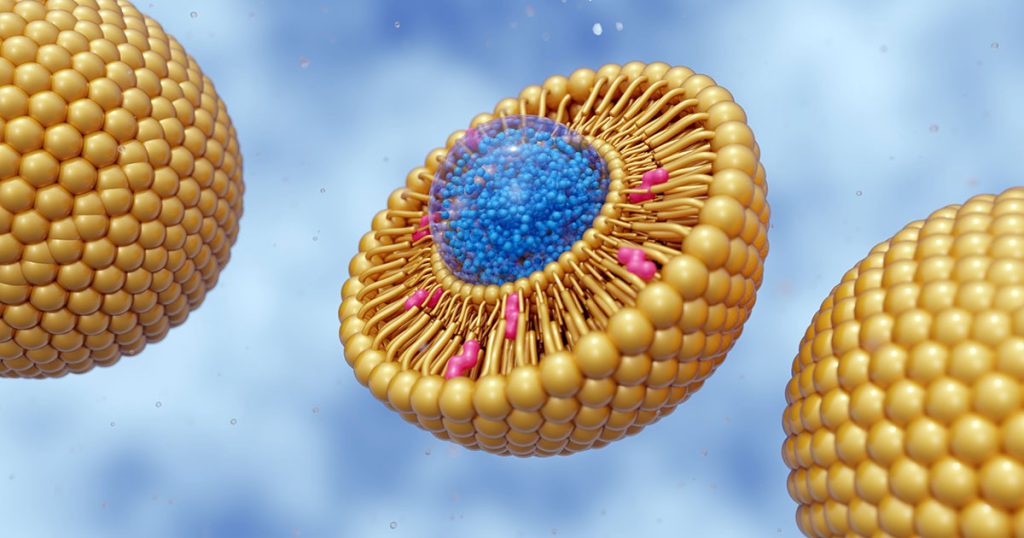
The management of low-density بروتين دهنيالبروتين الدهني عبارة عن حزمة صغيرة تحمل الدهون والكوليسترول عبر مجرى الدم. وبما أن الدهون لا تذوب في الماء، فإنها تحتاج إلى غلاف بروتيني لتنتقل. كوليسترولالكوليسترول هو مادة شمعية يحتاجها جسمك. وهو يدخل في تكوين جدران الخلايا، والهرمونات، وفيتامين د، والصفراء التي تهضم طعامك. كنت ستتموت دونه. (LDL-C) has transitioned into an intensive paradigm emphasizing sustained lowering, often summarized as “lower for longer.”Central to this shift is the therapeutic targeting of كونفيرتاز البروتيين الطليعيProprotein convertases are enzymes that activate other proteins by cutting them. PCSK9 belongs to this family — its full name is proprotein convertase subtilisin/kexin type 9. subtilisin/kexin type 9(PCSK9PCSK9 هو بروتين ينتجه الكبد يعمل على تدمير مواقع الإرساء التي يستخدمها الكبد لسحب الكوليسترول من دمك.). While cardiovascular benefits are well-established, concerns regarding neurocognitive safety at extremely low LDL-C levels have persisted. This review synthesizes genetic,mechanistic, and clinical evidence addressing the relationship between PCSK9 modulation,lifelong lipid exposure, and neurodegenerative risk, specifically Alzheimer’s disease (AD).
1. مقدمة
The discovery of PCSK9 as a key regulator of مستقبل البروتين الدهني منخفض الكثافةمستقبل البروتين الدهني منخفض الكثافة (LDL) هو نقطة إرساء على خلايا الكبد تلتقط جزيئات البروتين الدهني منخفض الكثافة من الدم وتجذبها للداخل لتفكيكها. (مستقبل بروتين دهني منخفض الكثافةLDLR هو الجين الذي يبني مستقبل LDL، وهو بوابة الالتحام التي يستخدمها الكبد لسحب جزيئات الكوليسترول من الدورة الدموية.) density has revolutionized lipidology [1-3]. Monoclonal antibodies and gene-editing techniques targeting PCSK9 allow for LDL-C reductions exceeding 60%, often reaching levels below 20 mg/dL [15]. Given the high cholesterol content of the brain, the safety of such profound systemic depletion remains acritical area of longitudinal analysis.
2. Biochemical Regulation of the PCSK9 Axis
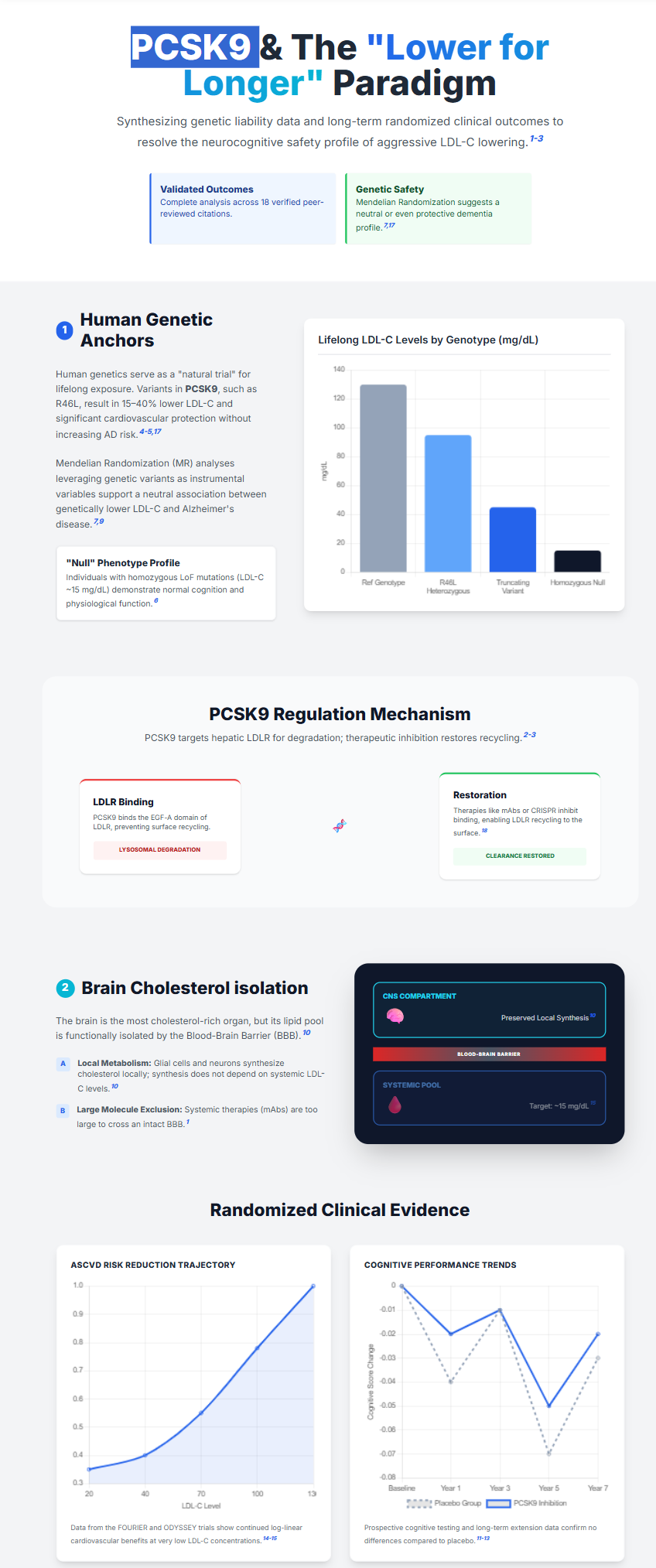
PCSK9 is a بروتياز السيرينA class of enzymes that cleave protein bonds using a serine residue in their active site; PCSK9 belongs to this class and uses this activity to target LDL receptors for degradation. that binds to the epidermal growth factor-like repeat A (EGF-A) domain of the hepatic LDLR [2]. Under physiological conditions, this binding targets the receptor for lysosomal degradation, preventing its recycling to the cell surface and thereby increasing circulating LDL-C. Pharmacological inhibition—via monoclonal antibodies or newer strategies like CRISPR-based base editing—interrupts this interaction, restoring LDLR availability and enhancing البروتين الدهني منخفض الكثافةإن البروتينات الدهنية منخفضة الكثافة (LDL)، أو ما يُعرف بالبروتين الدهني منخفض الكثافة، هي الجسيم الرئيسي الذي ينقل الكوليسترول عبر الدم، والجسيم الرئيسي الذي يترسب في جدران الشرايين. clearance from the plasma [3, 18].
3. Genetic Variation and Lifelong Exposure
إنسان علم الوراثةعلم الوراثة هو دراسة ما ترثه من والديك. provide a “natural experiment” to assess long-term PCSK9 modulation. Loss-of-function (LoF) variants, such as the R46L variant common in European populations, lead to lifelong lower LDL-C and significant protection against atherosclerotic أمراض القلب والأوعية الدمويةأمراض القلب والأوعية الدموية هي مصطلح شامل للمشكلات المتعلقة بالقلب والأوعية الدموية، بما في ذلك النوبات القلبية، والسكتات الدماغية، وانسداد شرايين الساق.(ASCVD) [4-5]. Importantly, rare individuals with homozygous “null” phenotypes exhibit LDL-Clevels as low as 15 mg/dL without overt neurocognitive impairment, suggesting that systemicLDL-C depletion is compatible with normal human physiology [6].
4. Brain Cholesterol Homeostasis and the Blood–Brain Barrier
A critical mechanistic safeguard for neurocognitive health is the isolation of brain cholesterol metabolism. Approximately 25% of the body’s cholesterol is located in the CNS, yet it is functionally separated from systemic pools by the حاجز دماغي دمويThe blood–brain barrier is a highly selective cellular interface lining the brain's blood vessels that blocks lipoprotein particles from entering the central nervous system, meaning the brain must synthesize all of its own cholesterol locally. (BBB) [10]. Brain cholesterol is synthesized de novo primarily by الخنجين الدبقيAstrocytes are a type of support cell (glia) in the brain that act as the primary cholesterol-manufacturing cells of the central nervous system, supplying cholesterol to neurons for membrane maintenance and myelin support. Because lipoproteins in the blood cannot cross the blood–brain barrier, the brain depends almost entirely on astrocyte-derived cholesterol synthesis. and neurons; it does not depend on circulating LDL-C particles [10]. Furthermore, monoclonal antibodies targeting PCSK9 are largemolecules that do not cross an intact BBB, precluding direct CNS interaction [1].
5. Mendelian Randomization and Alzheimer’s Risk
Early الترحث العشوائي المندليالتكاثر العشوائي المندلي هو طريقة بحث ذكية تستخدم الجينات التي ولِد بها الأشخاص كتجربة طبيعية. (MR) studies raised speculative concerns regarding a possible increase in AD risk associated with lower LDL-C [9]. However, subsequent large-scale MR analyses involving over 115,000 individuals and higher-powered meta-analyses effectively refute these signals [9, 17]. Specifically, studies targeting LDL-C-lowering variants in the PCSK9 and HMGCRHMGCR is the gene for HMG-CoA reductase, the enzyme that performs the rate-limiting step in making cholesterol. It is the exact target of every statin. loci show a neutral odds ratio (OR ≈ 0.97) for AD, and some data suggest potential protective effects when الكوليسترول المرتبط بالبروتين الدهني غير عالي الكثافةNon-HDL cholesterol is a simple calculation: your total cholesterol minus your HDL. What's left is the cholesterol riding in all the particles that can harm your arteries. is lowered over a lifetime [16-17].
6. Clinical Trial Outcomes
Randomized controlled trialsتُخصِّص التجربة العشوائية ذات الشواهد الأفراد لمجموعة علاج أو مجموعة مقارنة بحتةً عن طريق الصدفة، ثم تتابع المجموعتين. (RCTs) provide the most direct evidence of safety. The EBBINGHAUS studyA prospective neurocognitive substudy of the FOURIER trial that used objective cognitive testing in nearly 2,000 patients to assess whether evolocumab-driven LDL lowering affected memory or cognition, finding no meaningful difference versus placebo over a median follow-up of 19 months., a prospective neurocognitive substudy of the تجربة فوريرتقييم تجربة FOURIER مثبط PCSK9 إيفولوكوماب المضاف إلى علاج الستاتين وأثبت أن خفض الجسيمات المحتوية على ApoB بشكل عدواني قلل من الأحداث القلبية الوعائية؛ كما أظهر التحليل أن المرضى الذين حققوا مستوى منخفض جداً من LDL-C لكنهم احتفظوا بمستوى مرتفع من hs-CRP ما زالوا يواجهون خطراً متبقياً مرتفعاً، مما يدعم نموذج المخاطر المزدوجة لتكون العصيدة., utilized objective cognitive testing in nearly 2,000 patients [11]. Over a median follow-up of 19 months,no differences were observed between إيفولوكومابإيفولوكوماب هو دواء لخفض الكوليسترول يتم حقنه، ينتمي إلى عائلة مثبطات PCSK9، وعادة ما يُعطى كل أسبوعين إلى أربعة أسابيع. و دواء موهمالعلاج الوهمي (البلاسيبو) هو علاج شكلي - كحبة سكر أو حقنة محلول ملحي - يتم إعطاؤه لكي يتمكن الباحثون من معرفة ما يفعله الدواء الحقيقي بالفعل.. Long-term extension data(فورييه-أوليThe open-label extension of the FOURIER trial, which tracked patients treated with evolocumab for seven or more years and found sustained cognitive stability even among those maintaining LDL-C below 20 mg/dL.) reached follow-up durations of 7+ years, demonstrating sustained cognitivestability even among those achieving LDL-C levels < 20 mg/dL [12, 15]. Similar safety profileshave been established for أليروكومابأليροكوماب، الذي يُباع تحت اسم برالونت، هو جسم مضاد حقني يمنع PCSK9، ويُعطى كل أسبوعين إلى أربعة أسابيع. في ODYSSEY OUTCOMES trialA large randomized controlled trial evaluating alirocumab in patients after an acute coronary syndrome; its cognitive safety data, alongside meta-analyses, showed no increased dementia risk with profound LDL lowering. and subsequent meta-analyses [13].
7. Cardiovascular Benefits vs. Neurocognitive Neutrality
الـ علاقة لوغاريتمية خطيةإن العلاقة اللوغاريتمية الخطية بين الكوليسترول منخفض الكثافة (LDL-C) والخطر القلب والأوعية الدموية تعني أن كل انخفاض متتالٍ ومتساوٍ في الكوليسترول منخفض الكثافة ينتج عنه انخفاض نسبي متسق بنسبة مئوية في أمراض القلب، مع عدم وجود عتبة يتوقف عندها المزيد من خفض الكوليسترول عن كونه مفيداً، مما يدعم مبدأ 'كلما كان انخفاضه أفضل'. between LDL-C reduction and ASCVD risk reduction remains consistent across the therapeutic spectrum [14]. Clinical evidence suggests that the benefit of aggressive lowering continues without a plateau, while safety markers for dementia and cognitive decline remain flat [15].
8. Conclusion
Comprehensive analysis of genetic علم الوبائياتعلم الأوبئة هو دراسة أنماط الصحة في مجموعات كبيرة من الناس — من يمرض، وأين، وما الذي كان مشتركاً بينهم., mechanistic biology, and randomized التجارب السريريةالتجربة السريرية هي دراسة يقوم فيها الباحثون بإعطاء مجموعة واحدة علاجاً ومجموعة أخرى دواءً وهمياً أو رعاية قياسية، ثم يقارنون بين ما يحدث. consistently supports the conclusion that PCSK9 inhibition and extremely low LDL-C do not increase the risk of Alzheimer’s disease or other dementias. Local regulation of CNS تصنيع الكوليسترولCholesterol synthesis is your body making its own cholesterol, mostly in the liver. Almost every cell can do it. and BBB isolation provide a biological basis for systemic lipid management without neurocognitive consequence.
المراجع
- Katzmann JL, Gouni-Berthold I, Laufs U. PCSK9 Inhibition: Insights From Clinical Trials and Future Prospects. Front Physiol. 2020;11:595819. Published 2020 Nov 16. doi:10.3389/fphys.2020.595819
- Lambert G, Sjouke B, Choque B, Kastelein JJ, Hovingh GK. The PCSK9 decade. J Lipid Res. 2012;53(12):2515-2524. doi:10.1194/jlr.R026658
- Seidah NG, Prat A, Pirillo A, Catapano AL, Norata GD. Novel strategies to target proprotein convertase subtilisin kexin 9: beyond monoclonal antibodies. Cardiovasc Res. 2019;115(3):510-518. doi:10.1093/cvr/cvz003
- Cohen JC, Boerwinkle E, Mosley TH Jr, Hobbs HH. Sequence variations in PCSK9, low LDL, and protection against coronary heart disease. N Engl J Med. 2006;354(12):1264-1272. doi:10.1056/NEJMoa054013
- Langsted A, Nordestgaard BG, Benn M, Tybjærg-Hansen A, Kamstrup PR. PCSK9 R46L Loss-of-Function Mutation Reduces Lipoprotein(a), LDL Cholesterol, and Risk of Aortic Valve Stenosis. J Clin Endocrinol Metab. 2016;101(9):3281-3287. doi:10.1210/jc.2016-1206
- Sabatine MS. PCSK9 inhibitors: clinical evidence and implementation. Nat Rev Cardiol. 2019;16(3):155-165. doi:10.1038/s41569-018-0107-8
- Davey Smith G, Hemani G. Mendelian randomization: genetic anchors for causal inference in epidemiological studies. Hum Mol Genet. 2014;23(R1):R89-R98. doi:10.1093/hmg/ddu328
- Larsson SC, Butterworth AS, Burgess S. Mendelian randomization for cardiovascular diseases: principles and applications. Eur Heart J. 2023;44(47):4913-4924. doi:10.1093/eurheartj/ehad736
- Benn M, Nordestgaard BG, Frikke-Schmidt R, Tybjærg-Hansen A. Low LDL cholesterol, PCSK9 and HMGCR genetic variation, and risk of Alzheimer’s disease and Parkinson’s disease: Mendelian randomisation study. BMJ. 2017;357:j1648. Published 2017 Apr 24. doi:10.1136/bmj.j1648
- Björkhem I, Meaney S. Brain cholesterol: long secret life behind a barrier. Arterioscler Thromb Vasc Biol. 2004;24(5):806-815. doi:10.1161/01.ATV.0000120374.59826.1b
- Giugliano RP, Mach F, Zavitz K, et al. Cognitive Function in a Randomized Trial of Evolocumab. N Engl J Med. 2017;377(7):633-643. doi:10.1056/NEJMoa1701131
- Zimerman A, O’Donoghue ML, Ran X, et al. Long-Term Cognitive Safety of Achieving Very Low LDL Cholesterol with Evolocumab. NEJM Evid. 2025;4(1):EVIDoa2400112. doi:10.1056/EVIDoa2400112
- Tomlinson B, Hu M, Zhang Y, Chan P, Liu ZM. Alirocumab for the treatment of hypercholesterolemia. Expert Opin Biol Ther. 2017;17(5):633-643. doi:10.1080/14712598.2017.1305354
- Cholesterol Treatment Trialists’ (CTT) Collaboration, Baigent C, Blackwell L, et al. Efficacy and safety of more intensive lowering of LDL cholesterol: a meta-analysis of data from 170,000 participants in 26 randomised trials. Lancet. 2010;376(9753):1670-1681. doi:10.1016/S0140-6736(10)61350-5
- Gaba P, O’Donoghue ML, Park JG, et al. Association Between Achieved Low-Density Lipoprotein Cholesterol Levels and Long-Term Cardiovascular and Safety Outcomes: An Analysis of FOURIER-OLE. Circulation. 2023;147(16):1192-1203. doi:10.1161/CIRCULATIONAHA.122.063399
- Willeit P, Kiechl S, Kronenberg F, et al. Discrimination and net reclassification of cardiovascular risk with lipoprotein(a): prospective 15-year outcomes in the Bruneck Study. J Am Coll Cardiol. 2014;64(9):851-860. doi:10.1016/j.jacc.2014.03.061
- Tan JS, Hu MJ, Yang YM, Yang YJ. Genetic Predisposition to Low-Density Lipoprotein Cholesterol May Increase Risks of Both Individual and Familial Alzheimer’s Disease. Front Med (Lausanne). 2022;8:798334. Published 2022 Jan 11. doi:10.3389/fmed.2021.798334
- Musunuru K, Chadwick AC, Mizoguchi T, et al. In vivo CRISPR base editing of PCSK9 durably lowers cholesterol in primates. Nature. 2021;593(7859):429-434. doi:10.1038/s41586-021-03534-y