これは、あらゆるフィットネスウォッチに搭載されているステータスを示す指標であり、活力の重要な目安となっています。.
しかし、VO₂ maxが高いと 実は 長生きできるのでしょうか?それとも、単にあなたがすでに正しいことを実践しているという証拠に過ぎないのでしょうか?
医療エンジニア(博士号取得)であり、生涯を通じてアスリートとしても活動してきた私は、数十年にわたりパフォーマンスの生物学的メカニズムについて研究してきました。その証拠は説得力がありますが、同時に微妙なニュアンスも含まれています。.
その科学的根拠を詳しく見ていきましょう: 相関と. 因果関係.
否定できない関連性
数十年にわたる研究を通じて、VO₂ maxが高いほど 強く …の低下と関連している 全因死亡率.
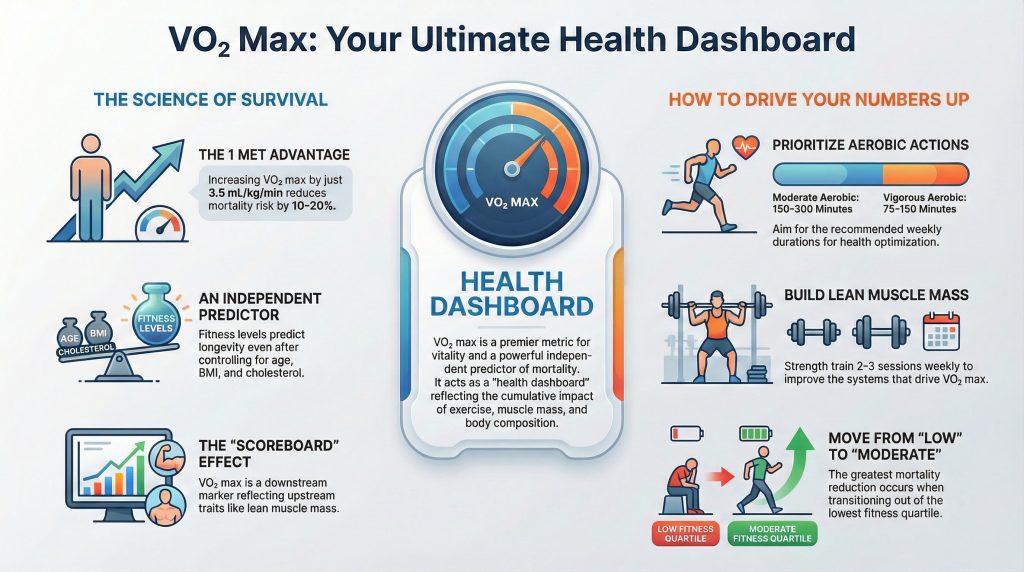
- 独立した予測変数: 年齢、BMI、およびその他の要因を調整した後でも、これが死亡率の強力な予測因子であることが示されています。 コレステロール.
- 膨大なデータ: 12万2000人の患者を対象としたある画期的な研究によると、フィットネスレベルが最も低い 四分位 死亡率が劇的に高かった。.
- 定量化されたメリット: 最大酸素摂取量(VO₂ max)がわずか1 MET(≈3.5 mL/kg/min)増加するだけで、死亡リスクがおよそ10~20%低下することが示されている。.
生理学的には、これは理にかなっています。最大酸素摂取量(VO₂ max)は、心臓、肺、血管、筋肉がどれほどうまく連携して機能しているかを示す指標です。.
核心となる問い:マーカーか、ムーバーか?
ここで、科学的な核心となる点は次の通りです: 相関関係は因果関係ではない。.
最大酸素摂取量(VO₂ max)が高い人は、長生きする傾向があります。しかし、その数値は それ自体 長寿をもたらすのか、それとも単に 鏡 (運動、バランスの取れた食事、適正体重)といったライフスタイルとは?
つまり、VO₂ maxは必ずしも レバー—もしかすると、それは スコアボード.
介入研究と遺伝学的研究が明らかにしたこと
完璧な実験などあり得ないものの、確かな手がかりはいくつかあります:
- 心臓リハビリテーション: 以下の後にVO₂maxが向上した患者は、 心臓発作 する 死亡率が低い。これが、最も明確な因果関係の示唆である(もっとも、彼らは一度に多くの行動を変えているが)。.
- 縦断研究: 〜する人々 改善する 長期的に見て、体力を維持している人々は、体力を維持していない人々に比べて死亡率が著しく低い。これは因果関係を裏付けるものである。.
- 遺伝学 (『ザ・ツイスト』): 最近の メンデルランダム化 研究では、~は認められなかった 直接 遺伝的関連。むしろ、最大酸素摂取量(VO₂ max)が高いことに関連する遺伝子は、 上流 体脂肪率が低いことや、より高いといった特徴 除脂肪体重—つまり また 長寿命化を図る。.
このことは、VO₂maxが強力な指標であることを示唆している 下流マーカー, 、根本的な原因ではありません。.
私の見解:VO₂ Maxは「ダッシュボード」であり、「最終目標」ではない。.
もう 実証済み 最大酸素摂取量(VO₂ max)を高めることで寿命が延びるというのでしょうか? 直接的にはそうではありません。.
しかし、介入策を講じてそれを引き上げれば 実証済み 健康増進(継続的なトレーニング、筋力トレーニング、体重管理)に努めれば、死亡リスクをほぼ確実に低下させることができるでしょう。.
科学的な知見を実践に活かす方法は次のとおりです:
1️⃣ 「数」ではなく「行動」を優先する
週に150~300分の中程度の運動、または週に75~150分の激しい運動を目標にしましょう 有酸素運動.
2️⃣ 筋肉を鍛え、維持する
週に2~3回、筋力トレーニングを行いましょう。除脂肪体重は、最大酸素摂取量(VO₂ max)と長寿の両方にとって、重要な上流要因です。.
3️⃣ 体組成を最適化する
余分な体脂肪を減らすことで、有酸素運動の効率と寿命の両方が向上します。.
4️⃣ VO₂ Maxを健康ダッシュボードとして活用する
その数値を追跡しましょう。数値が上昇していれば、システムは改善しています。下降している場合は、見直しが必要な時期です。.
5️⃣ 最大の勝利がどこにあるかを見極める
死亡率の低下が最も顕著に現れるのは、フィットネスレベルが「低」から「中」へと向上したときです。長寿に大きな効果を得るために、エリートアスリート並みの最大酸素摂取量(VO₂ max)は必要ありません。.
まとめ
VO₂ maxは、最も有力な指標の一つです バイオマーカー 私たちにはそれがあります。それは、あなたの選択、習慣、そして生理的特徴のすべてを反映したものです。.
~を改善する システム それを高めるための方法――もっと体を動かし、スリムな体型を維持し、筋力を鍛える――を実践すれば、数字も自然とついてくる。.
あなたの寿命もそうなるでしょう。.
皆さんはどうお考えですか?最大酸素摂取量(VO₂ max)を記録していますか?それを目指すべき目標として捉えていますか、それとも単なるトレーニングの成果の反映として捉えていますか?
参考文献
- Blair SN, Kohl HW 3rd, Paffenbarger RS Jr, Clark DG, Cooper KH, Gibbons LW. Physical fitness and all-cause mortality. A prospective study of healthy men and women. JAMA. 1989;262(17):2395-2401. doi:10.1001/jama.262.17.2395
- Kodama S, Saito K, Tanaka S, et al. Cardiorespiratory fitness as a quantitative predictor of all-cause mortality and cardiovascular events in healthy men and women: a meta-analysis. JAMA. 2009;301(19):2024-2035. doi:10.1001/jama.2009.681
- Levine BD. .VO2max: what do we know, and what do we still need to know?. J Physiol. 2008;586(1):25-34. doi:10.1113/jphysiol.2007.147629
- Mandsager K, Harb S, Cremer P, Phelan D, Nissen SE, Jaber W. Association of Cardiorespiratory Fitness With Long-term Mortality Among Adults Undergoing Exercise Treadmill Testing. JAMA Netw Open. 2018;1(6):e183605. Published 2018 Oct 5. doi:10.1001/jamanetworkopen.2018.3605
- Myers J, Kaminsky LA, Lima R, Christle JW, Ashley E, Arena R. A Reference Equation for Normal Standards for VO2 Max: Analysis from the Fitness Registry and the Importance of Exercise National Database (FRIEND Registry). Prog Cardiovasc Dis. 2017;60(1):21-29. doi:10.1016/j.pcad.2017.03.002
- Ross R, Blair SN, Arena R, et al. Importance of Assessing Cardiorespiratory Fitness in Clinical Practice: A Case for Fitness as a Clinical Vital Sign: A Scientific Statement From the American Heart Association. Circulation. 2016;134(24):e653-e699. doi:10.1161/CIR.0000000000000461