
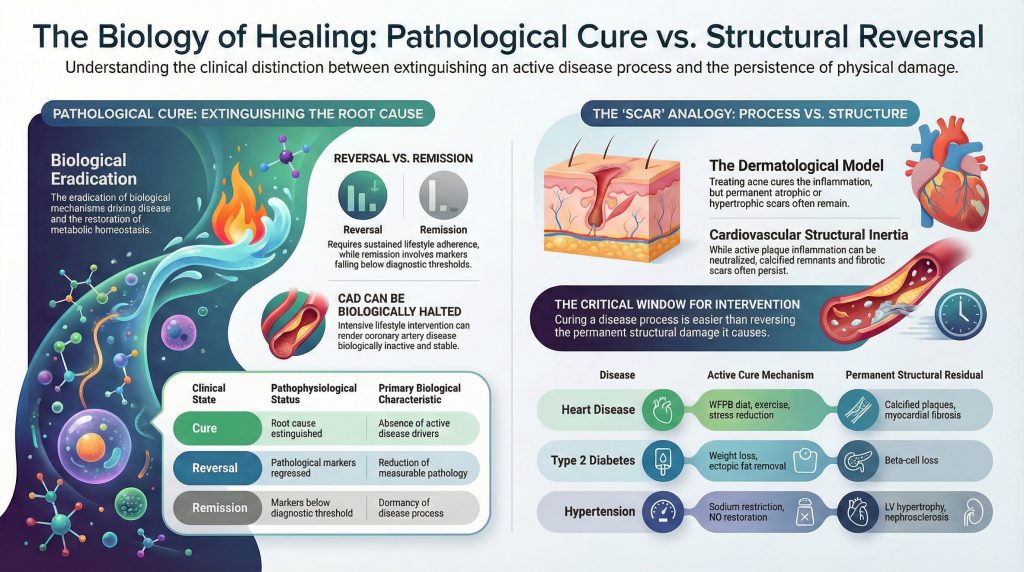
疾患治癒の臨床パラダイム:病理学的プロセスの治療と構造的損傷の可逆性における生物学的差異
The medical community has historically distinguished between the resolution of acute illness and the long-term management of chronic disease. As lifestyle medicineLifestyle medicine uses everyday behavior — food, movement, sleep, stress, not smoking — to prevent and treat disease. has matured into a formal clinical discipline, it has exposed a critical gap in medical taxonomy: the failure to clearly differentiate between the cure of an active pathological process and the 反転REVERSAL compared moderate and intensive statin therapy, using intravascular ultrasound to measure what happened to coronary plaque. of structural damage produced by that process. Within dominant clinical paradigms, most chronic diseases are treated through symptom control, risk reduction, and delay of complications rather than through complete elimination of all underlying biological drivers.¹ Nevertheless, a growing body of empirical evidence—most prominently from the longitudinal work of Dean Ornish and Caldwell Esselstyn—demonstrates that 冠動脈疾患冠状動脈疾患は、心筋に栄養を送る動脈にプラークが蓄積する病気です。. (CAD), a major cause of global mortality, can in some patients show halted progression, improved vascular function, プラーク安定化プラークの安定化とは、既存のプラークが破裂しにくくすることであり、被膜を厚くし、脂質のコアを縮小させ、内部の炎症を鎮めることである。., and even modest regression when cardiovascular 危険因子危険因子とは、高コレステロール粒子、高血圧、喫煙、糖尿病、家族歴など、病気にかかる可能性を高めるものです。. are intensively controlled through comprehensive lifestyle and risk-factor intervention.² This state can reasonably be described, within the conceptual framework developed here, as a functional or pathophysiological “cure” of active disease, even though it does not invariably result in complete restoration of normal vascular anatomy or elimination of pre-existing structural injury.⁵ This use of “cure,” however, is not standard terminology in contemporary cardiovascular guidelines.
The conceptual challenge of distinguishing cure from reversal is well illustrated by the dermatological example of severe acne vulgaris. In acne, the disease process consists of 炎症炎症は、怪我や侵入物とみなしたものに対する免疫システムの反応です。これにより腫れや熱、そして浄化細胞がもたらされます。. associated with follicular hyperkeratinization, excess sebum production, Cutibacterium acnes activity, and host inflammatory responses.⁷ When treated effectively, this process can resolve, resulting in the cessation of new 病変循環器学において、病変とは冠動脈を狭窄させるアテローム性動脈硬化プラークの不連続な領域を指し、通常はそれが引き起こす内腔閉塞のパーセンテージによって記述される。この記事では、最も重要な病変が治療された後、血管径が小さすぎてステントを受け入れることができない4つの遺残病変について述べている。.. Yet many patients are left with permanent atrophic or hypertrophic scars—structural alterations of the skin that no longer represent active disease.¹⁰ This distinction provides a clinically useful analogy and conceptual framework for cardiovascular medicine: a patient may achieve substantial suppression or stabilization of active atherosclerotic disease and experience substantially reduced risk of acute coronary events while still retaining 石灰化プラークCalcified plaque is the hardened, calcium-filled part of a plaque. It shows up brightly on a CT scan, which is what a calcium scan measures. or ischemic limitations that represent historical damage and may coexist with residual disease activity and cardiovascular risk.⁶
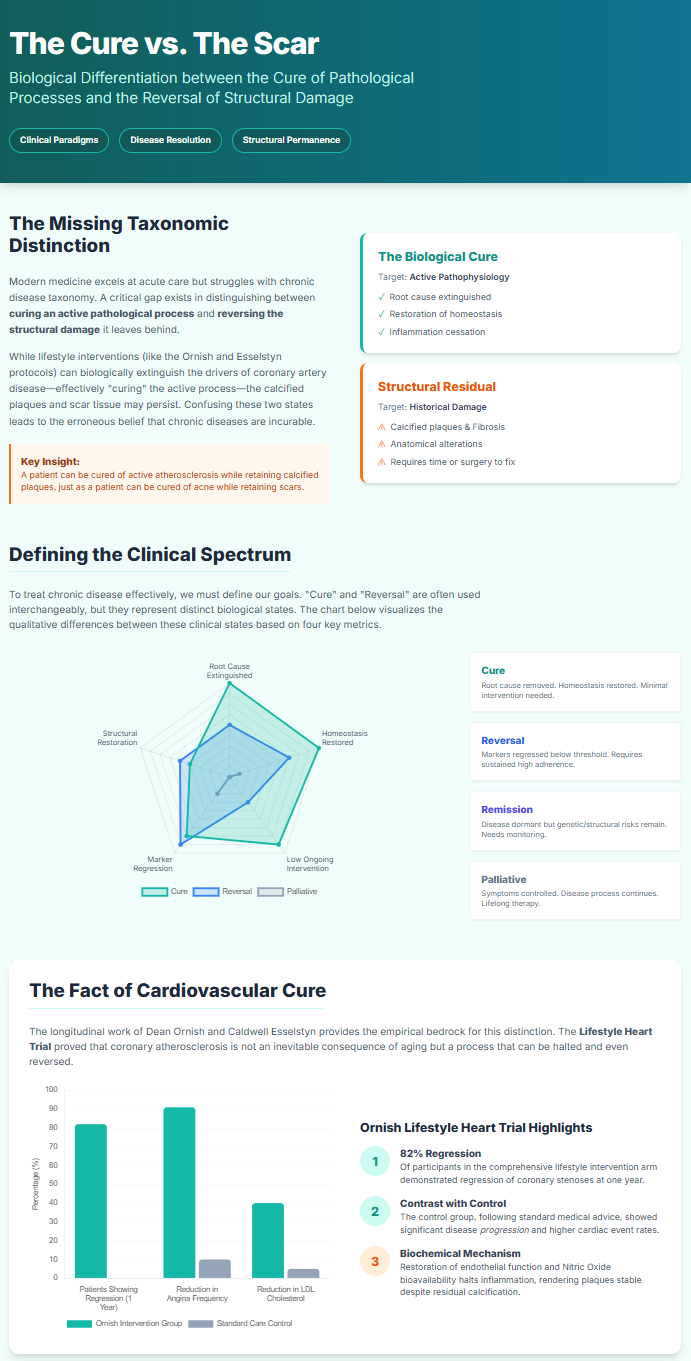
Taxonomic Definitions in Chronic Disease Management
To navigate chronic disease resolution with precision, clinicians must distinguish the status of the pathological process from the condition of the affected organ’s structure. For purposes of the conceptual framework proposed in this paper, the following terms distinguish suppression of an active pathological process from regression of established structural pathology. These definitions should not be interpreted as universally accepted clinical definitions. A cure within this framework denotes durable suppression or elimination of the dominant biological processes driving disease, with restoration toward physiological homeostasis. In chronic cardiometabolic disease, continued control of causal risk factors may still be required to maintain this state.¹⁴ Reversal, in contrast, refers to regression of measurable disease markers—such as 高血糖Abnormally elevated blood glucose concentration; included as one of the modifiable risk factors in the PDAY scoring system because it accelerates arterial lesion progression in adolescents and young adults. or arterial 狭窄狭窄とは閉塞のことであり、通常は70%の閉塞といったようにパーセンテージで表されます。.—toward or below clinically defined thresholds, typically requiring sustained behavioral 固守服薬遵守とは、処方されたとおりに日々、実際に薬を服用することを意味します。. to prevent recurrence.³
Clinical State | Pathophysiological Status | Required Intervention Post-Resolution | Primary Biological Characteristic
Cure | Dominant disease-driving processes durably suppressed or eliminated | Continued risk-factor control may be necessary | Absence or marked suppression of measurable active disease drivers
Reversal | Pathological markers regressed | Sustained lifestyle adherence | Reduction of measurable pathology
Remission | Markers below diagnostic threshold | Continuous monitoring | Absence of currently detectable disease activity or expression without assurance of permanent eradication
Palliative | Symptoms and disease burden managed; underlying disease may persist | Ongoing supportive treatment | Relief without curative intent
This distinction is particularly relevant in type 2 糖尿病糖尿病は、体が十分なインスリンを作らないか、あるいは作られたインスリンに反応しなくなることで、血糖値が常に高すぎる状態になる疾患です。. mellitus (T2D). Remission is defined as an A1C below 6.5% for at least three months without pharmacologic therapy, yet the condition is rarely labeled a cure because genetic susceptibility and residual beta-cell dysfunctionImpaired capacity of the insulin-secreting beta cells of the pancreatic islets to produce sufficient insulin in response to rising blood glucose; in type 2 diabetes, prolonged metabolic stress can cause irreversible beta-cell loss that limits the degree of disease reversal possible. persist.²² International expert consensus therefore favors the term “remission” rather than “cure.”²² Environmental stressors, such as weight regain, can reactivate the disease process.¹⁵ Similarly, in CAD, patients may achieve biological stability in which 歯垢プラークとは、動脈の壁の内側にコレステロール、免疫細胞、瘢痕組織、カルシウムが蓄積したものです。. inflammation and rupture risk are substantially reduced, even though calcified or fibrotic remnants of prior disease remain.⁶
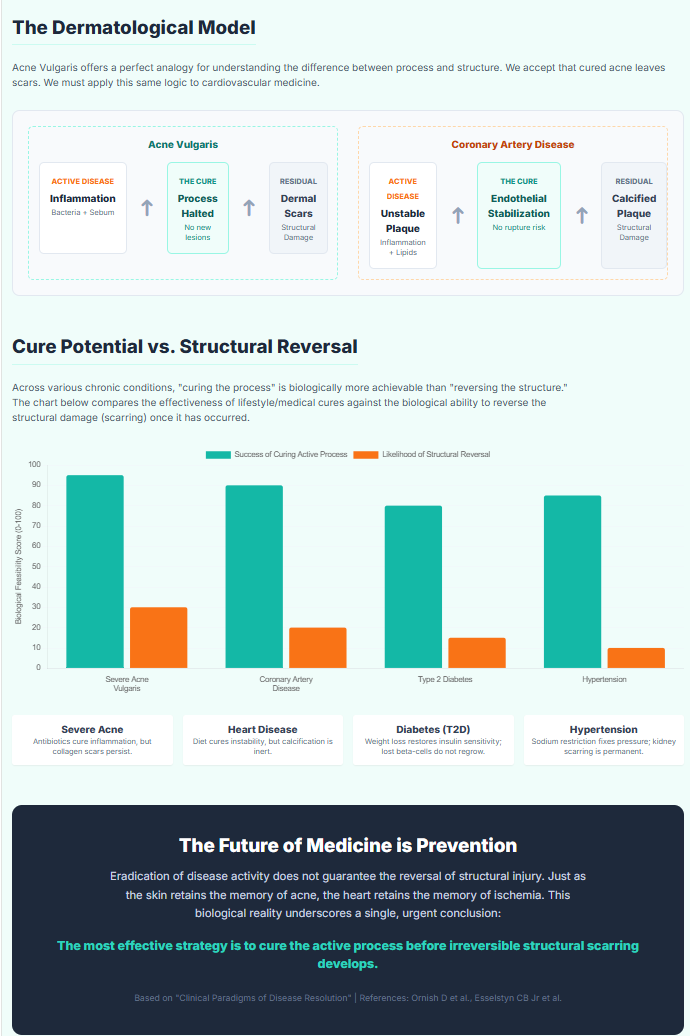
The Dermatological Model: Curing the Process versus Reversing the Scar
The analogy between acne and 動脈硬化動脈硬化は、ほとんど的心筋梗塞と多くの脳卒中の背景にある病気です。コレステロールの粒子が動脈の壁に入り込み、体がそれを掃除するために免疫細胞を送り込み、何年もかけてその堆積物が硬化してプラークになります。. is biologically informative because both disorders involve mechanisms of inflammation-driven tissue remodeling. Acne targets the pilosebaceous unitThe anatomical structure consisting of a hair follicle and its associated sebaceous (oil) gland; in acne vulgaris, excess sebum production, follicular keratin plugging, and bacterial activity within this unit trigger the inflammation that can ultimately scar the skin., where Cutibacterium acnes can contribute to immune cascades that may culminate in follicular rupture and dermal injury.⁹ When treated with retinoids, antibiotics, or hormonal modulation, the active inflammatory process can resolve or enter sustained remission as pathogenic mechanisms are suppressed.⁷
Despite resolution of the active inflammatory process, structural sequelae often remain. These scars are classified by collagen dynamics:
Atrophic scars (ice‑pick, boxcar, rolling) result from collagen loss and dermal matrix destruction during intense inflammation.⁸
Hypertrophic scars and keloids reflect excessive collagen deposition, sometimes extending beyond the original lesion.⁸
These residual structural changes may exert lasting psychological and functional effects long after the active disease process has resolved.¹¹ Analogously, individuals with stabilized CAD may retain fixed stenoses or myocardial scars that impair perfusion despite substantial reduction in plaque instability and associated inflammatory activity.⁵ Thus, suppressing or resolving an inflammatory disease process is biologically more achievable than reversing the structural damage it leaves behind.
The Evidence for 心血管疾患心血管疾患とは、心臓発作、脳卒中、下肢の動脈閉塞など、心臓や血管に関する問題の総称です。. Resolution: Ornish and Esselstyn Paradigms
Contrary to the belief that CAD is an inevitable consequence of aging, extensive clinical research demonstrates that atherosclerosis is a multifactorial disease strongly influenced by modifiable metabolic and lifestyle risk factors, and that its progression can be substantially slowed and, in some selected populations receiving intensive intervention, may be halted or partially reversed.¹² This conclusion is supported by decades of peer-reviewed investigation.
The Ornish Lifestyle Heart Trial
Dean Ornish provided important early randomized evidence that coronary atherosclerosis progression could, in some participants, be halted or modestly reversed without lipid-lowering drugs.² Using quantitative coronary arteriographyA computer-assisted technique that measures the diameter of coronary artery segments from X-ray angiographic images, providing objective, numerical data on the degree of stenosis and plaque burden over time. そして positron emission tomography陽電子放出断層撮影(PET)は、わずかに放射性のあるトレーサーを使用して、どの組織が代謝的に活発であるかを示します。., 、 ライフスタイル心臓トライアルディーン・オーニッシュが率いたライフスタイル・ハート・トライアルは、連続冠動脈造影を用いて、超低脂肪の植物ベースの食生活、運動、ストレス管理、グループサポートという集中的なライフスタイル介入を検証した小規模な無作為化試験である。介入群では測定された動脈狭窄がわずかに改善した一方で、対照群では悪化したが、造影法の技術的限界や、参照セグメントの狭小… evaluated the effects of a comprehensive intervention including a low-fat, whole-food, プラントベースの食事プラントベース(植物性中心)の食事は、動物性食品を控えるか一切摂らず、野菜、果物、豆類、全粒穀物、ナッツ、種子類を中心に構成されます。., moderate exercise, stress management, and social support.² Eighty-two percent of participants in the intervention arm demonstrated measurable regression in coronary atherosclerosis at one year.² At five years, this group exhibited further average 血管造影上の退縮冠動脈造影上の退縮とは、冠動脈のX線撮影で見られる、冠動脈の閉塞サイズの測定可能な縮小を指し、この記事は、厳格な植物性食生活と生活習慣の改善がこの効果をもたらす可能性があることをライフスタイル・ハート試験が実証したと引用しています。. and significantly fewer 心臓発作心血管系を対象とした臨床試験において、心筋梗塞、不安定狭心症、心臓死などの臨床的に重要な心血管関連事象を評価項目として使用する。. than controls receiving standard dietary advice.²³
The Esselstyn Protocol and Endothelial Stabilization
Caldwell Esselstyn’s work emphasized nutritional primacy in restoring 血管内皮機能血管の内側を覆う内膜が血管の緊張、炎症、血液凝固を調節する能力。健康な内視細胞は一酸化窒素を放出し、動脈をリラックスさせ、プラーク形成に対する抵抗力を保ちます。..⁴ By eliminating animal products and added oils, his protocol aims to normalize 一酸化窒素の生体利用能内皮が、血管を拡張させ、血小板の凝集を抑制し、炎症細胞が動脈壁に付着するのを防ぐシグナル伝達分子である一酸化窒素を、どの程度産生し、適切なレベルに維持できるかという度合い。. and suppress endothelial inflammation.¹² Long-term observational follow-up of patients with advanced CAD demonstrated a very low rate of recurrent major cardiovascular events among adherent participants.¹³ These findings are clinically notable but should be interpreted cautiously because the evidence is observational rather than derived from a 無作為化比較試験ランダム化比較試験では、人々を完全な偶然によって治療群または比較群に割り付け、その後両群を追跡調査します。.. Esselstyn has proposed that very low LDLLDL(低密度リポ蛋白)は、コレステロールを血液中に運ぶ主要な粒子であり、動脈壁に詰まる主原因となるものです。. levels together with improved endothelial function may markedly suppress the biological processes responsible for atherosclerotic progression.¹²
Biological Mechanisms Underlying Disease Stabilization
Lifestyle-mediated risk reduction and disease stabilization reflect coordinated biochemical shifts rather than isolated pharmacologic effects. Endothelial 一酸化窒素一酸化窒素は、血管の内壁が血管に弛緩して広がるよう伝えるために産生するガスです。. restoration improves vasodilation, inhibits 白血球接着The process by which white blood cells attach to the endothelial surface of blood vessels, a key early step in atherogenesis; nitric oxide and an intact glycocalyx normally suppress this adhesion., and reduces thrombogenicity.¹² Some studies have shown that high-fat meals can acutely impair endothelial function, whereas nitrate-rich plant foods can enhance nitric oxide bioavailability.¹²
Trimethylamine N-oxide (TMAOTMAO is a compound your gut bacteria produce from nutrients found in red meat, eggs, and some fish. Higher blood levels have been linked to heart disease.) has emerged as a diet-related バイオマーカーバイオマーカーとは、健康や病気の状態について教えてくれる、体内で測定可能なもののことであり、例えば、検査値、スキャン画像の結果、血圧の数値などが挙げられます。. associated with increased cardiovascular risk.¹⁷ TMAO production depends on gut microbial metabolism of dietary precursors including カルニチンCarnitine is a nutrient found mostly in red meat. Your body also makes some on its own. そして コリンCholine is a nutrient found in eggs, red meat, and liver. Your body genuinely needs it, especially for the brain., which are present in varying amounts in both animal-derived and plant-derived foods, with carnitine particularly abundant in 赤身肉Red meat includes beef, pork, and lamb. and choline present in several animal and plant sources. Individuals adhering to strict plant-based diets demonstrate markedly reduced TMAO generation, although whether lowering TMAO itself independently mediates cardiovascular event reduction remains uncertain.¹⁷
Why Disease Stabilization Outpaces Structural Reversal
While inflammatory アテローム発生アテローム性動脈硬化形成は、プラークが形成される段階的なプロセスです。. can respond to intensive modification of metabolic risk factors, structural damage exhibits biological inertiaThe tendency of established structural damage—such as calcified plaques or myocardial scar tissue—to persist even after the active disease process driving that damage has been halted, because the biochemical and cellular remodeling involved is largely irreversible.. Plaque calcificationA process in which calcium phosphate crystals are deposited within atherosclerotic plaques, driven by osteogenic-like differentiation of vascular smooth muscle cells; calcified plaques are structurally stable but largely irreversible even when active disease is suppressed. represents a regulated, osteogenic-like process involving, among other mechanisms, vascular 平滑筋細胞平滑筋細胞は動脈の中膜を構成しており、血管の収縮や弛緩の程度を調節しています。. phenotypic differentiation.⁵ Early 脂質豊富なプラーク中心がカルシウムや線維組織ではなくコレステロールエステルや炎症性脂質を主体とするアテローム性動脈硬化性病変。この記事では、このようなプラークは集中的な治療に対して非常に反応性が高く、対角枝分岐部における65パーセントポイントという劇的な退縮は脂質が豊富な病変の改善と一致していると指摘している。. are more amenable to regression, whereas mature calcified lesions often persist despite disease quiescence.¹⁶ Genomic studies demonstrate that early and advanced plaques are governed by distinct regulatory networks, limiting reversibility in late-stage disease.¹⁸
Myocardial infarction詳しい項目については心臓発作をご覧ください。. further illustrates this principle: necrotic 心筋The myocardium is the muscular wall of the heart — the part that actually squeezes to push blood around your body. is replaced by fibrotic scar tissue that lacks normal myocardial contractile function.¹⁹ Comprehensive 二次予防二次予防とは、すでに心臓発作、脳卒中、またはステント治療を経験した患者に対して、次の発作を防ぐために治療を行うことです。., including lifestyle intervention, can reduce the risk of subsequent infarction but cannot readily regenerate lost myocardium, leading to chronic ischemic limitations.²⁰
Residual Cardiovascular Risk
Residual cardiovascular riskThe continuing probability of major cardiovascular events that remains even after recognized risk factors such as LDL cholesterol and blood pressure have been brought under control, attributable to persistent calcification, arterial stiffness, low-grade inflammation, and incomplete plaque stabilization. refers to the continuing risk of cardiovascular events despite treatment and control of major recognized risk factors.⁶ Contributors include persistent 石灰化石灰化とは、カルシウムがプラークに沈着し、その一部が硬く骨状になることです。., arterial stiffnessArterial stiffness is a measure of how much an artery's wall resists expansion with each pulse of blood; it increases with age as elastin is lost and collagen accumulates, and manifests clinically as a rising systolic blood pressure alongside a falling or stable diastolic blood pressure after about age 60., incomplete plaque stabilization, and low-grade inflammation.⁶ These risks are potentially attributable to both persistent structural abnormalities and ongoing biological processes, including residual inflammatory, thrombotic, lipid-related, and metabolic risk. In this respect, persistent cardiovascular damage partially parallels residual structural sequelae in other chronic diseases.
Comparative Disease Models
This active-disease-versus-residual-damage distinction recurs throughout medicine. In T2D, substantial loss of ectopic hepatic and pancreatic fat can restore インスリン感受性インスリン感受性とは、細胞がインスリンに対してどれだけよく反応するかということです。それはインスリン抵抗性の反対です。. and improve beta-cell function in some patients, yet prolonged disease may result in irreversible beta-cell loss.³ In 高血圧Hypertension is the medical term for high blood pressure., 血圧血圧とは、血液が動脈の壁を押す力ののことです。120/80のように2つの数字で表されます。上の数字は心臓が収縮するときの圧力で、下の数字は弛緩するときの圧力です。. normalization may not fully reverse 左室肥大Pathological thickening of the muscular wall of the left ventricle, most commonly caused by sustained high blood pressure forcing the heart to work harder; even after blood pressure is normalized, some degree of structural hypertrophy may persist. or nephrosclerosis once structural remodeling has occurred.²¹
Disease | Mechanism of Disease Control/Resolution | Permanent Structural Residual
Severe Acne | Anti-inflammatory, keratinization-directed, antimicrobial, and/or hormonal therapy | Dermal scarring
Heart Disease | Comprehensive risk-factor modification, including dietary improvement, exercise, 喫煙喫煙は血管の内壁を傷つけ、血圧を上げ、血液を凝固しやすくし、プラークの成長を早めます。. cessation when applicable, stress management, and evidence-based medical therapy | Calcified plaques, myocardial fibrosis
Type 2 Diabetes | Substantial 体重減少Weight loss means reducing body fat, whether through food changes, exercise, medication, or surgery., reduction of ectopic liver/pancreatic fat, and restoration of metabolic function | Beta-cell loss
Hypertension | Blood-pressure control through dietary modification, physical activity, weight management, sodium reduction, and 降圧薬An antihypertensive is any drug used to lower high blood pressure. The article distinguishes antihypertensives — which became widely used from the 1970s onward — from statins, noting that blood-pressure drugs contributed to coronary mortality decline well before statin therapy was available. therapy when indicated | LV hypertrophy, nephrosclerosis
結論
冠状動脈 動脈動脈は、心臓から全身へ血液を送り出す血管です。. disease is not necessarily an inexorably progressive condition. Intensive lifestyle and risk-factor intervention can halt progression in some patients, promote plaque stabilization, improve vascular function, and in selected cases produce measurable regression of coronary atherosclerosis.² However, successful suppression of disease activity does not guarantee reversal of structural injury. As with resolved inflammatory acne leaving dermal scars, the stabilized heart may retain calcified lesions, myocardial scar, fixed stenoses, or other structural sequelae of prior disease.⁵ If “cure” is defined narrowly as durable control or resolution of the active pathological process rather than restoration of pristine anatomy or permanent elimination of susceptibility, these findings provide a biological basis for considering the concept of a functional or pathophysiological cure. This terminology, however, extends beyond the conventional language of current cardiovascular guidelines and should not be interpreted as meaning that established CAD requires no continuing prevention, monitoring, or treatment. This reality underscores the urgency of early intervention: the most effective strategy is to suppress the disease process before irreversible structural damage develops.¹⁶ The future of medicine lies not in managing inevitable decline, but in applying effective disease-modifying interventions early enough to prevent permanent damage from forming.
参考文献
- Can we say “cure”? J Eval Clin Pract. Accessed via PubMed Central.
- Ornish D, Brown SE, Scherwitz LW, et al. Can lifestyle changes reverse coronary atherosclerosis? The Lifestyle Heart Trial. Lancet. 1990;336(8708):129-133.
- Joslin Diabetes Center. Can type 2 diabetes be reversed? Accessed online.
- Esselstyn CB Jr, Gendy G, Doyle J, Golubic M, Roizen MF. A way to reverse CAD? J Fam Pract. 2014;63(7):356-364.
- Demer LL, Tintut Y. Calcification: a physiologic defense? In: Inflammatory Atherosclerosis. NCBI Bookshelf.
- Libby P. Residual cardiovascular risk—Is inflammation the primary cause? Am J Cardiol. Accessed via PubMed Central.
- Fabbrocini G, Annunziata MC, D’Arco V, et al. Acne scarring: pathogenesis, evaluation, and treatment options. Clin Cosmet Investig Dermatol. Accessed via PubMed Central.
- Goodman GJ, Baron JA. Acne scars: pathogenesis, classification and treatment. Dermatol Surg. Accessed via PubMed Central.
- Tan J, Bhate K. Acne vulgaris and the epidermal barrier. Clin Dermatol. Accessed via PubMed Central.
- DermNet NZ. Acne scarring. https://dermnetnz.org.
- Tan JK, Bhate K. The psychological impact of acne scarring. Medicine Today.
- Esselstyn CB Jr. Resolving the coronary artery disease epidemic through plant-based nutrition. Prev Cardiol. Accessed via PubMed Central.
- Esselstyn CB Jr, et al. Long-term outcomes of plant-based nutrition in coronary artery disease. J Fam Pract.
- Beyond Type 1. Diabetes remission vs cure vs reversal. Accessed online.
- Liv Hospital. Can type 2 diabetes be reversed? Accessed online.
- Shanahan CM, Cary NR, Salisbury JR, Proudfoot D, Weissberg PL, Edmonds ME. Mechanisms and clinical consequences of vascular calcification. Lancet. Accessed via PubMed Central.
- Tang WHW, Hazen SL. Microbiome, trimethylamine N-oxide, and cardiovascular risk. Circ Res. Accessed via PubMed Central.
- Fisher EA, et al. Distinct mechanisms of early versus late atherosclerosis regression. Icahn School of Medicine at Mount Sinai.
- Sutton MG, Sharpe N. Left ventricular remodeling after myocardial infarction. Circulation. Accessed via PubMed Central.
- Velazquez EJ, et al. Outcomes in ischemic cardiomyopathy. N Engl J Med. Accessed via PubMed Central.
- Bidani AK, Griffin KA. Pathophysiology of hypertensive renal damage. Hypertension. Accessed via PubMed Central.
- Riddle MC, Cefalu WT, Evans PH, et al. Consensus report: definition and interpretation of remission in type 2 diabetes. Diabetes Care. 2021;44(10):2438-2444.
- Ornish D, Scherwitz LW, Billings JH, et al. Intensive lifestyle changes for reversal of coronary heart disease. JAMA. 1998;280(23):2001-2007.