Homocysteine and Atherosclerotic Cardiovascular Disease: What the Evidence Supports
1. Scope and Framing
Cardiovascular prevention rests on a small number of interventions with demonstrated effects on hard outcomes: lowering ApoB-containing リポタンパク質, controlling 血圧, 喫煙 cessation, glycemic management, and dietary and activity optimization. Homocysteine occupies a different category, and the purpose of this article is to define that category precisely.
Four questions are routinely collapsed into one and need to be separated:
- Does homocysteine predict cardiovascular risk?
- Does homocysteine cause 心血管疾患?
- Does 低下 it change outcomes?
- Do the specific formulations sold for this purpose offer any advantage?
The answers differ. The first is broadly yes. The second is concentration-dependent, and this turns out to be the pivotal distinction in the entire literature. The third is no for coronary events and unsettled for 脳卒中. The fourth is no.

2. Biochemistry: Two Exit Routes
Homocysteine is a sulfur-containing amino acid formed during メチオニン metabolism. It is an intermediate, not an end product, and it is cleared by two pathways.
Remethylation returns homocysteine to methionine. This requires 5-methyltetrahydrofolate (5-MTHF) as the methyl donor and methylcobalamin as cofactor for methionine synthase. A parallel betaine-dependent route operates chiefly in liver and kidney.
Transsulfuration converts homocysteine to cystathionine via cystathionine β-synthase (CBS), with pyridoxal-5-phosphate (P-5-P) as cofactor. This route is irreversible and represents true disposal rather than recycling.

Figure 1. Homocysteine is cleared by two routes with different vitamin requirements. Remethylation recycles it back to methionine and depends on folate and vitamin B-12; transsulfuration disposes of it irreversibly and depends on vitamin B-6.
Supplying folate, B-12 and B-6 supports both routes. Across the randomized literature this produces a consistent fall in plasma homocysteine on the order of 20 to 25 percent. That biochemical effect is not in dispute anywhere in this article.
3. Why the Number Rises
Interpreting an elevated homocysteine requires knowing what drives it. The principal determinants are:
- Folate and B-12 status. The dominant nutritional determinants, and the most clinically actionable. B-12 deficiency becomes more prevalent with age and is more frequent with metformin, long-term acid suppression, and prior gastric surgery [26].
- Renal function. Homocysteine rises substantially as 糸球体ろ過 falls.
- Levels drift upward across the lifespan.
- MTHFR C677T homozygosity modestly raises levels, more so when folate status is marginal.
- Methotrexate, anticonvulsants, sulfasalazine, metformin and long-term proton pump inhibitors all contribute through different mechanisms.
- Thyroid status and other conditions. Hypothyroidism raises levels.
- Pre-analytical handling. Plasma must be separated from cells promptly. Delayed processing raises measured values artifactually, and an unexpected result deserves a repeat before it is acted upon.
The renal contribution deserves emphasis, because renal impairment is simultaneously a potent cause of elevated homocysteine and a potent independent cardiovascular 危険因子. Renal function is therefore an important potential source of residual 交絡 in every 観察研究 of homocysteine and vascular outcomes.
4. The Observational Evidence
Prospective cohort data pooled by the Homocysteine Studies Collaboration found that after adjustment for established risk factors, a 25 percent lower homocysteine level — roughly 3 µmol/L — was associated with approximately 11 percent lower 虚血性心疾患 risk and approximately 19 percent lower stroke risk [3].
A 2022 システマティックレビュー そして メタ分析 put the figure in more familiar terms: each 5 µmol/L increment in plasma homocysteine was associated with roughly 22 percent higher 冠動脈疾患 risk [39].
Two features of these results are worth noting. The associations are modest. And they shrank substantially with adjustment, a pattern that typically signals confounding rather than causation. Given the confounding structure described above, the residual association is exactly what one would expect if homocysteine were a marker of other processes rather than a driver of disease.
This is enough to make homocysteine a legitimate risk marker. It is not enough to make it a treatment target.
5. The Central Distinction: Concentration Matters
The single most important idea in this literature is that homocysteine behaves as two different exposures depending on its concentration, and that evidence from one range does not transfer to the other.
The conventional classification is worth stating explicitly, because most public discussion collapses it. Normal plasma homocysteine is approximately 5–15 µmol/L; mild hyperhomocysteinemia is 15–30 µmol/L; moderate is 30–100 µmol/L; severe is above 100 µmol/L [38]. Essentially all supplement marketing, and essentially all of the negative trial literature, concerns the mild band.
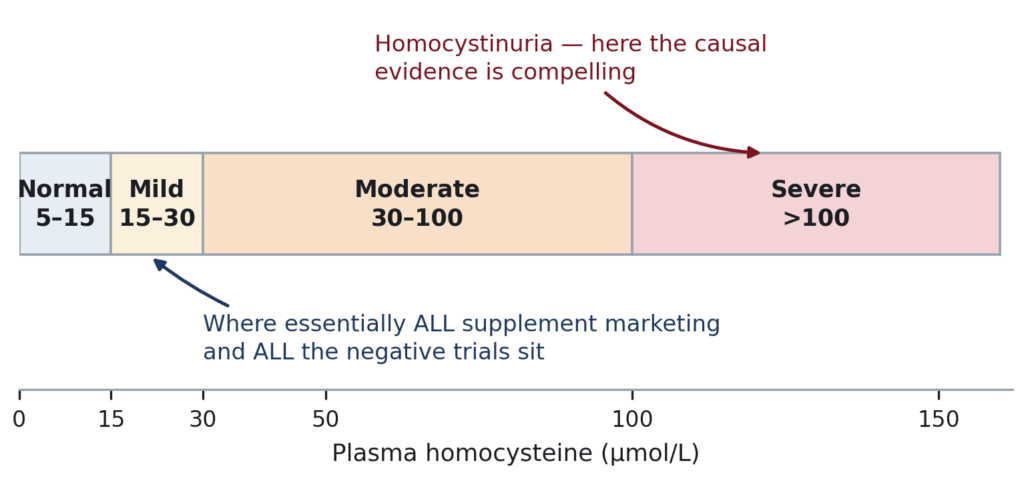
Figure 2. Plasma homocysteine concentration bands. The causal evidence is compelling at the severe end and has not been established in the mild band, which is where routine testing, supplement marketing, and the negative randomized trials all sit.
Severe hyperhomocysteinemia. Cystathionine β-synthase deficiency — classical homocystinuria — is the paradigm cause and can produce plasma concentrations above 100 µmol/L. The natural history is unambiguous. Untreated patients develop severe premature vascular disease and thromboembolism, with a large proportion experiencing a major vascular event by roughly age 30 [16]. Chronic biochemical treatment markedly reduces that event rate [17]. This provides compelling evidence that severe hyperhomocysteinemia is causally related to vascular disease.
Mild-to-moderate elevation. This is the range measured in prevention clinics, and it is where the causal case fails. A substantial causal effect at these concentrations has not been established, for two independent reasons developed in sections 6 and 8 below: randomized lowering does not reduce coronary events, and lifelong genetically-determined elevation does not raise coronary risk.
The parallel with lipids is instructive. Homozygous familial hypercholesterolemia establishes beyond argument that LDL can cause premature 動脈硬化 — but the quantitative relationship at extreme concentrations does not by itself tell you the effect of moving an LDL of 105 to 95. In the homocysteine case, the two ranges do not merely differ in magnitude; the mild range has been tested directly and returned null.
Mechanistic considerations. Cell and animal work suggests that elevated homocysteine can promote 酸化ストレス, impair endothelium-dependent vasodilation, and shift hemostatic balance toward 血栓症; these pathways have been reviewed in detail [24,25]. These findings are real and worth continued study. They do not, by themselves, establish that mild elevation contributes measurably to human プラーク負荷.
What does initiate 歯垢. A central initiating event in atherosclerosis is the retention of ApoB-containing lipoproteins within the arterial 内膜. The causal role of these particles is established by concordant evidence from メンデルランダム化, prospective cohorts, and randomized trials across multiple mechanistically distinct drug classes — the standard of evidence homocysteine has not met [1,2].
6. Randomized Trials: Coronary Outcomes
Randomized trials have not demonstrated coronary-event reduction from homocysteine lowering.
A collaborative meta-analysis of eight randomized trials including 37,485 participants found that B-vitamin therapy lowered homocysteine by approximately 25 percent with no significant reduction, in that meta-analysis, in major vascular events (rate ratio 1.01, 95% CI 0.97–1.05), major coronary events (1.03, 95% CI 0.97–1.10), stroke, cancer incidence, or cause-specific mortality over a median 5 years of follow-up [4].
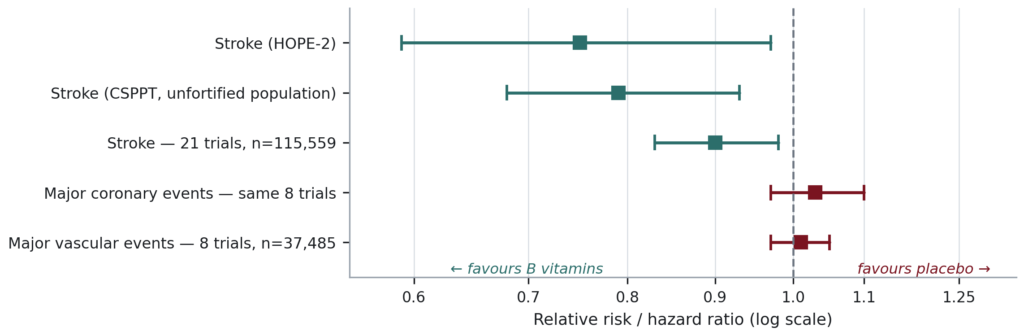
Figure 3. Randomized evidence separates cleanly by outcome. Coronary and composite vascular endpoints cluster on the null; every stroke estimate falls below it. Values are those reported by the cited sources.
The individual trials are concordant:
| Trial | Population | n | 期間 | Result |
| VISP (2004) | Ischemic stroke | 3,680 | 2 years | Neutral; recurrent stroke ~9% in both arms [7] |
| HOPE-2 (2006) | Vascular disease or 糖尿病 | 5,522 | ~5 years | Neutral primary composite [8] |
| NORVIT (2006) | Post-myocardial infarction | 3,749 | Median 40 months | Neutral; borderline harm signal with folic acid + B-12 + B-6 (RR 1.22, P = .05) [9] |
The NORVIT signal arose in a secondary comparison within the trial’s factorial design. It is worth knowing and worth not overreading: it is not evidence that B vitamins are generally harmful.
The 2017 Cochrane review of homocysteine-lowering interventions reached the same conclusion for 心筋梗塞 and death.
A 2025 outcome-wide umbrella review — pooling 135 observational meta-analyses, 106 Mendelian ランダム化 studies and 26 interventional meta-analyses — reinforces the point in a way worth stating precisely. Coronary artery disease was among the outcomes for which the genetic evidence had greater than 80 percent 統計的検出力 and still did not reach significance [28]. This is a well-powered null rather than an absence of data, which is a materially stronger position than “no benefit demonstrated.”
A 2025 ナラティブレビュー devoted specifically to homocysteine in the cardiovascular setting reached a concordant conclusion: elevated homocysteine remains a reproducible risk バイオマーカー, but current evidence does not support routine intervention in unselected populations [32].
A dedicated trial in advanced 慢性腎臓病 and end-stage renal disease — the population with the highest homocysteine concentrations outside inborn errors of metabolism — likewise found that high-dose B-vitamin therapy lowered homocysteine without improving mortality or vascular outcomes [13]. This is an important negative result, because it tests the hypothesis in the group where an effect should have been easiest to detect.
7. Imaging and Surrogate Endpoints: Testing the Plaque Question Directly
Because this article’s title asks about atherosclerosis and plaque rather than events, the imaging literature deserves separate treatment. Randomized trials using anatomical endpoints exist, and their results are mixed in a way that is itself informative.
Carotid 中内膜厚. The B-Vitamin Atherosclerosis Intervention Trial (BVAIT) randomized 506 participants with baseline tHcy >8.5 µmol/L to high-dose B vitamins (5 mg folic acid, 0.4 mg B-12, 50 mg B-6) or プラセボ for 3.1 years [40]. The primary endpoint was negative: carotid IMT progression did not differ significantly between groups (P = 0.31). A post-hoc subgroup with baseline tHcy ≥9.1 µmol/L showed slower progression (P = 0.02, interaction P = 0.02) — hypothesis-generating rather than confirmatory. Smaller randomized studies have reported favorable results — one trial of 103 patients with at least one cardiovascular risk factor found significant carotid IMT regression over 18 months on 5 mg/day folic acid (0.961 to 0.933 mm, P < 0.001) against progression on placebo [46] — while a substudy of VITATOPS with accompanying meta-analysis found no long-term benefit on IMT or flow-mediated dilation [45].
The carotid literature pooled. A meta-analysis of ten randomized folic acid trials including 2,052 subjects found that folic acid supplementation significantly reduced carotid IMT progression overall (weighted mean difference −0.04 mm, 95% CI −0.07 to −0.02, P < 0.001) [47]. The subgroup structure is what matters. The effect was concentrated in chronic 腎臓病 (−0.16 mm, 95% CI −0.26 to −0.07, P = 0.0006) and, more weakly, in subjects at high cardiovascular risk (−0.05 mm, 95% CI −0.11 to 0.00, P = 0.06). In generally healthy subjects whose only abnormality was elevated homocysteine, the effect was exactly null (0.00 mm, 95% CI −0.01 to 0.01).

Figure 4. Carotid IMT progression by subgroup in a meta-analysis of ten folic acid trials. The favorable pooled effect is carried by chronic kidney disease; in otherwise-healthy people with isolated hyperhomocysteinemia the effect is exactly null. Grey intervals cross zero.
That last subgroup is the population most readers of this article resemble, and it is also BVAIT’s population — which explains BVAIT’s null primary result rather than contradicting it. It is worth pairing this with the outcome data: chronic kidney disease is precisely where the carotid surrogate looks best, and it is also where a dedicated randomized trial of high-dose B vitamins found no reduction in mortality or vascular events [13]. Surrogate improvement and outcome benefit came apart in the same population.
Coronary and aortic calcium. BVAIT found no effect of B-vitamin supplementation on aortic or coronary 動脈 calcium progression, overall or within subgroups [40].
Coronary angiography. The most direct test available. A substudy of the Western Norway B Vitamin Intervention Trial (WENBIT) performed serial 冠動脈定量解析法 in 348 patients [41]. Folic acid plus B-12 lowered tHcy by 22 percent. There was no effect on minimum ルーメン diameter or diameter stenosis. A post-hoc analysis found folic acid/B-12 treatment associated with もっと rapid progression (OR 1.84, 95% CI 1.07–3.18).
Restenosis after coronary intervention — a cautionary sequence. The Swiss Heart Study reported that homocysteine-lowering B-vitamin therapy markedly reduced restenosis after 経皮的冠動脈形成術 [43]. The Folate After Coronary Intervention Trial then randomized 636 patients after coronary stenting and found the opposite: minimum luminal diameter was smaller in the folate group (1.59 ± 0.62 vs 1.74 mm, P = .004), restenosis was more frequent (34.5% vs 26.5%, P = .05), and target-vessel 血行再建術 was more often required (15.8% vs 10.6%, P = .05) — despite substantial homocysteine lowering [42]. The two trials differed in vitamin doses, 病変 characteristics and procedure type, and the 反転 has never been fully explained.
Synthesis. The honest summary is narrower and more structured than “plaque reduction has not been shown.”
Homocysteine-lowering B-vitamin therapy has ではない convincingly been shown to slow or reverse coronary atherosclerosis. On the carotid surrogate the evidence is genuinely mixed and in pooled analysis favorable — but that favorable pooled effect is carried by chronic kidney disease and high-risk populations and is null in otherwise-healthy people with isolated hyperhomocysteinemia. On coronary endpoints — angiographic 狭窄, coronary and aortic calcium, and in-stent restenosis — randomized evidence has not demonstrated benefit and has in places suggested the reverse.
Two conclusions follow. The first is that carotid IMT and coronary anatomy are not interchangeable, and a favorable result on the former does not license a claim about the latter. The second is that even where the surrogate improves, the outcome has not: the CKD subgroup shows the largest carotid effect in the literature and the clearest absence of clinical benefit in a dedicated trial. This is a stronger position than a bare negative, because it engages the favorable data rather than appearing unaware of it.
8. Randomized Trials: Stroke
Stroke is the one outcome where the evidence diverges sharply from the coronary picture, and it deserves to be stated more strongly than it commonly is.
The randomized evidence is positive, with an important qualification. A 2024 systematic review and meta-analysis pooled 21 ランダム化比較試験 totalling 115,559 participants and found that folic acid supplementation reduced stroke risk by 10 percent (RR 0.90, 95% CI 0.83–0.98) [27]. This analysis postdates — and substantially extends — both the 2010 B-Vitamin Treatment Trialists’ meta-analysis [4] and the 2017 Cochrane review [12], each of which rested on a much smaller trial base. A companion 2024 analysis examined dosage across combined B-vitamin regimens [33].
The qualification is that the pooled effect was not uniform. Benefit was concentrated in regions without grain fortification; in fortified populations the estimate was essentially neutral [21]. The overall figure should therefore not be read as an expected effect for an individual reader in the United States.
The evidence converges across study designs. The 2025 統合レビュー found that stroke and small-vessel 閉塞 stroke were among only four outcomes in the entire homocysteine literature satisfying both P < 0.01 and greater than 80 percent statistical power in Mendelian randomization [28]. Its overall conclusion was that homocysteine is a causal risk factor for stroke and that homocysteine lowering with folic acid may be an effective intervention. Stroke is therefore supported observationally, genetically, and by intervention meta-analysis — the triad that coronary disease conspicuously fails.
The individual trials are consistent. HOPE-2 reported a stroke reduction (RR 0.75, 95% CI 0.59–0.97) despite a neutral primary endpoint [8,10]. The China Stroke 一次予防 Trial (CSPPT) randomized 20,702 hypertensive adults in a country without folic acid fortification to enalapril plus folic acid versus enalapril alone, and found first stroke reduced from 3.4 percent to 2.7 percent (HR 0.79, 95% CI 0.68–0.93) [11].
Folate status is a genuine effect modifier, not merely a plausible one. A meta-analysis of genetic studies and randomized trials published in ランセット found that the association between MTHFR genotype, homocysteine and stroke risk was modified by population dietary folate: the genotype–stroke association was present in low-folate populations and absent in regions with folic acid fortification [29]. A subsequent prospective study of 156,000 Chinese adults examined the same question in a low-folate population directly [34]. This is genetic evidence for effect modification, and it converts an inference drawn from trial heterogeneity into a mechanistically coherent finding.
Guideline position. The 2024 AHA/ASA Guideline for the Primary Prevention of Stroke addresses this directly, classifying folic acid and B-complex supplementation for stroke risk reduction as not well established (Class 2b). That is a deliberately cautious reading, and it is the correct one for a fortified population.
The practical implication remains narrow but is no longer null. The evidence supports adequate folate status, and plausibly folic acid supplementation, in populations where dietary folate intake is genuinely low. In a fortified population such as the United States, the incremental margin is smaller and the case for homocysteine-directed supplementation as stroke prevention remains unproven. The distinction between these two settings is the whole of the practical guidance.
9. Genetic Evidence
Mendelian randomization addresses the objection that 臨床試験 are too brief to reverse decades of vascular exposure, and it is the reason the duration argument cannot carry the causal case for coronary disease.
The design. Genotype at MTHFR C677T is assigned at conception, is generally less susceptible to conventional confounding by factors such as renal function and lifestyle provided the instrumental-variable assumptions hold, and produces a lifelong difference in homocysteine concentration. If lifelong moderate elevation caused coronary disease, TT homozygotes should show excess coronary events. When its assumptions are satisfied, this approximates a lifelong natural experiment.
The result. A meta-analysis of MTHFR case-control studies encompassing 48,175 coronary heart disease cases and 67,961 controls, explicitly designed to avoid publication bias, found an odds ratio of 1.02 (95% CI 0.98–1.07) for TT versus CC genotype — consistent with little or no effect [5]. The authors demonstrated that earlier positive genetic meta-analyses [48] were materially influenced by publication bias, with small positive studies overrepresented in the literature.
Subsequent Mendelian randomization analyses using multiple homocysteine-associated loci have found no evidence supporting a causal association with coronary artery disease or myocardial infarction, including a two-sample analysis in which none of nine genome-wide significant homocysteine-associated variants was associated with either outcome [6]. A separate multi-outcome Mendelian randomization analysis of homocysteine and B vitamins likewise found no coronary association while reporting suggestive evidence for stroke — the same asymmetry that runs through the trial literature.
The consequence. Because Mendelian randomization already models lifelong exposure and returns a null for coronary heart disease, it substantially weakens the argument that short trial duration alone explains the null coronary results. The duration hypothesis retains some standing for stroke, where both the genetic and trial literatures are somewhat more favorable, but it should be presented as one unproven explanation among several rather than as the explanation for trial failure.
10. Active Versus Standard Vitamin Forms
Superiority of the active forms is not established, and it has not been demonstrated for cardiovascular outcomes.
What is established. 5-MTHF is the circulating, biologically usable folate form and bypasses the MTHFR-catalyzed reduction step. In a randomized placebo-controlled comparison at low dose, L-5-MTHF was at least as effective as folic acid at lowering plasma homocysteine [14].
What is not established:
- That active forms lower homocysteine substantially more than standard forms at equivalent doses.
- That active forms produce better cardiovascular outcomes. No randomized cardiovascular-outcome trial has established superiority of active forms over standard forms.
- That MTHFR variant carriers fail to respond to folic acid. They respond. The C677T variant reduces enzyme activity; it does not abolish the pathway. The American College of Medical 遺伝学 recommends against routine MTHFR polymorphism testing because the polymorphism has limited clinical utility [15].
- That active forms “bypass absorption issues.” They bypass a metabolic conversion step. Gastrointestinal malabsorption is a separate problem that active forms do not address.
One genuine counter-example, worth stating. In a small double-blind placebo-controlled trial in orthotopic liver transplant recipients, L-5-MTHF significantly reduced total serum homocysteine while folic acid did not [35]. This is the strongest published case for the active form. Impaired hepatic conversion is an appealing explanation, since dihydrofolate reductase activity is hepatic and 5-MTHF bypasses that step — but the trial did not test the mechanism, and the inference should not be presented as established. What can be said is that the population was small and highly selected, and that the trial establishes nothing about cardiovascular outcomes.
A second asymmetry. Cyanocobalamin requires intracellular processing to active cobalamin forms, and in specific inborn errors of cobalamin metabolism this matters. In the general population, cyanocobalamin corrects deficiency effectively.
11. Dosing and Safety
The doses below are commonly used supplemental amounts. They are not established cardiovascular therapeutic doses, because no such doses exist.
| Nutrient | Common supplemental dose | Notes |
| 5-MTHF (or folic acid) | 400–800 µg/day | Comparable homocysteine effect at low dose |
| Methylcobalamin (or cyanocobalamin) | Depends on B-12 status and absorption | High oral doses (1,000 µg+) are used when absorption is impaired; routine high dosing in replete individuals is not evidence-based |
| P-5-P (or pyridoxine) | 2–5 mg/day | Keep low; upper limits differ by jurisdiction — see below |
Vitamin B-6 adds little or nothing to fasting homocysteine lowering. The Homocysteine Lowering Trialists’ Collaboration meta-analysis found that folic acid–based supplementation reduced plasma homocysteine by approximately 25 percent, that adding vitamin B-12 produced a further 7 percent reduction, and that adding vitamin B-6 did not significantly lower fasting homocysteine further [31].
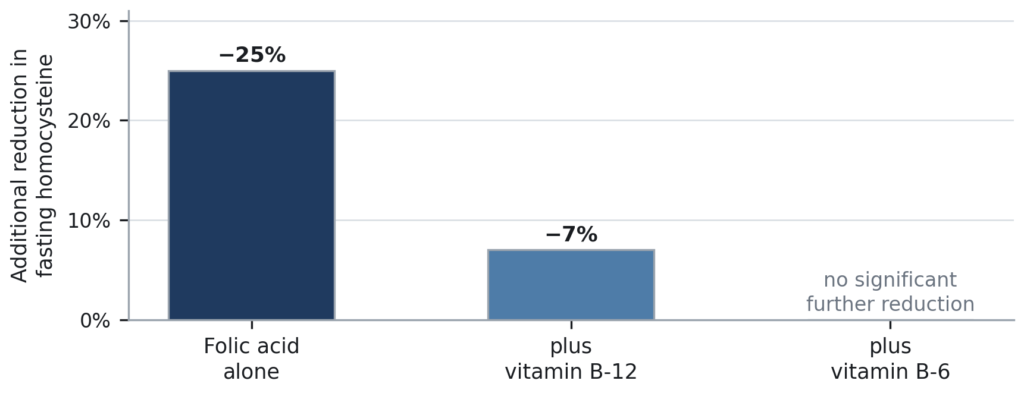
Figure 5. Contribution of each vitamin to fasting homocysteine lowering in the Homocysteine Lowering Trialists’ meta-analysis. Folate does nearly all of the work; B-12 adds a further reduction; B-6 adds no significant further reduction.
The precision matters. Those trials did not assess post-methionine-load homocysteine, where B-6-dependent transsulfuration is more likely to be rate-limiting, and the finding does not mean B-6 is biochemically inert. Direct trial data illustrate the distinction: in a WENBIT substudy, folic acid plus B-12 lowered basal tHcy by 31 percent and post-load tHcy by 22 percent, whereas B-6 did not change basal tHcy and had a significant but limited effect on post-load tHcy — while markedly lowering basal and post-load cystathionine, by 31 and 42 percent respectively [44]. B-6 is doing something; it is not doing the thing being measured on a fasting panel.
The practical implication for the three-vitamin formulations marketed for homocysteine management still holds: the component carrying the greatest toxicity risk contributes least to the fasting endpoint those products are sold to change. B-6 remains appropriate for documented deficiency and is a required cofactor for transsulfuration.
Vitamin B-6 toxicity. Chronic excessive vitamin B-6 intake causes sensory peripheral neuropathy. Regulatory limits differ and have diverged: the U.S. Institute of Medicine tolerable upper intake level for adults is 100 mg/day [19], while the European Food Safety Authority reassessed the evidence in 2023 and established an adult UL of 12 mg/day, derived from a reference point of 50 mg/day with an uncertainty factor of 4 [23]. Neuropathy has been reported at chronic intakes below the older U.S. limit [18,23].
P-5-P is frequently characterized as substantially safer than pyridoxine. This is not established. There is insufficient evidence to regard P-5-P as exempt from vitamin B-6 toxicity limits, which apply to total B-6 intake irrespective of formulation.
Folate upper limit and unmetabolized folic acid. The tolerable upper intake level for folic acid in adults is 1,000 µg/day. Folic acid requires two-step reduction by dihydrofolate reductase before entering the active folate pool; when intake exceeds enzymatic capacity, unmetabolized folic acid (UMFA) accumulates in plasma. One trial administering 5 mg/day for 90 days to healthy adults reported increased serum UMFA together with reduced natural killer cell cytotoxicity [36]. The clinical significance of circulating UMFA remains unresolved, but this is the one substantive mechanistic argument favouring reduced folate forms, and it argues primarily for keeping folic acid doses modest rather than for changing form.
Vitamin B-12 form. A 2024 meta-regression analysis of 21 randomized trials found B-12 supplementation effective for homocysteine lowering particularly at doses above 500 µg/day and durations of 12 weeks or more [37]. Subgroup and meta-regression analyses also suggested greater reductions in studies using hydroxocobalamin. These are indirect comparisons across heterogeneous trials rather than head-to-head randomized comparisons, and they do not establish that hydroxocobalamin is superior to methylcobalamin or cyanocobalamin.
Folate and B-12 sequencing. High folate intake can complicate recognition of B-12 deficiency by partially correcting the megaloblastic anemia that would otherwise prompt investigation. Assess B-12 status when deficiency is possible, and particularly before initiating high-dose folate treatment [20].
Folic acid and cancer. Long-term high-dose folic acid supplementation has been examined for effects on cancer incidence. This supports avoiding unnecessary pharmacologic-dose supplementation without an indication, while recognizing that pooled trial evidence has not demonstrated a significant increase in cancer.
12. Populations Requiring Clinician Involvement
- Pregnancy or breastfeeding. Folate requirements differ and are governed by separate guidance.
- Chronic kidney disease. Homocysteine is elevated in CKD, but as noted in section 6, a dedicated randomized trial found no mortality or vascular benefit from high-dose B-vitamin therapy. CKD warrants evaluation, not automatic supplementation.
- Folate-antagonist medications. Methotrexate, anticonvulsants, sulfasalazine and others.
- Unexplained neuropathy or anemia. These require diagnostic evaluation before empiric treatment.
- Suspected homocystinuria or an inborn error of cobalamin metabolism, whether from personal or 家族の歴史.
13. Testing and Monitoring in Practice
What follows is a pragmatic clinical approach rather than a guideline recommendation. Homocysteine has not been incorporated into subsequent U.S. cardiovascular risk-assessment guidance as a recommended test in asymptomatic adults; the 2010 ACCF/AHA risk-assessment guideline, now of historical standing, addressed novel biomarkers directly [22]. The most current directly relevant statement is the 2024 AHA/ASA Guideline for the Primary Prevention of Stroke, which classifies folic acid and B-complex supplementation for stroke risk reduction as not well established (Class 2b, B-NR) [30].
When testing is clinically indicated, the clearest reason is suspected B-12 or folate deficiency, including unexplained anemia or unexplained neurological symptoms. Homocysteine is not part of standard thrombophilia evaluation for ordinary venous thromboembolism, and it is not an established test for working up a premature family history.
Baseline evaluation of an elevated result: plasma homocysteine, serum B-12 (with methylmalonic acid if B-12 is borderline), serum folate, creatinine/eGFR, a medication review, and TSH when thyroid disease is suspected. Consider repeating the homocysteine with attention to sample handling before acting on an unexpected value.
Follow-up at 8 to 12 weeks if treatment was initiated for a defined reason.
Non-response: reassess 固守; absorption (celiac disease, atrophic gastritis, bariatric surgery); medication-related contributors (metformin, proton pump inhibitors, folate antagonists); and renal function.
14. Product Quality
Independent certification programs — USP, NSF, ConsumerLab, Informed Choice — provide meaningful additional assurance, though their scopes differ and none is a comprehensive guarantee. ConsumerLab and Labdoor publish comparative analyses.
A Certificate of Analysis documents manufacturer-reported testing for a specific lot against specified limits. It records testing performed; it does not prove absence of contaminants. Labels should list specific compounds and doses rather than proprietary blends.
CoA request template
Subject: Request for Certificate of Analysis (CoA) — [Product Name & Lot #]
To [Manufacturer Name], Quality Assurance:
I recently purchased [Product Name] (Lot #: ____). Please provide the Certificate of Analysis for this specific lot, including assay results for the labeled active ingredients and screening results for heavy metals and microbial contaminants, with the testing methods and specification limits used.
Thank you,
[Your Name]
This section is practical consumer guidance rather than evidence-based medicine, and no primary reference is claimed for it.
15. Clinical Implementation
- Optimize interventions with demonstrated outcome benefit: ApoB-lowering therapy to risk-appropriate targets, blood pressure control, smoking cessation, glycemic management, dietary pattern, and physical activity.
- Test selectively. Measure homocysteine when there is a specific clinical question, not as routine screening.
- Evaluate before treating. An elevated homocysteine is a finding to explain — B-12 and folate status, renal function, medications, thyroid where suspected, sample handling — not an automatic indication for supplementation.
- Treat the identified cause. Repletion of demonstrated B-12 or folate deficiency is indicated on its own merits. Severe elevation warrants specialist evaluation.
- Monitor and contextualize. Recheck at 8 to 12 weeks if treated. Communicate clearly that biochemical normalization is not equivalent to demonstrated cardiovascular risk reduction.
Checklist
☐ Established risk factors addressed first (アポリポ蛋白B, BP, smoking, glycemia, Lp(a) measured once)
☐ Homocysteine measured only for a defined clinical reason
☐ If elevated: B-12, folate, eGFR, medication review, TSH if thyroid disease suspected, consider repeat with proper sample handling
☐ Supplementation directed at an identified deficiency or defined indication
☐ B-6 kept at low supplemental dose; total intake well below the applicable upper limit (EFSA 12 mg/day; U.S. 100 mg/day)
☐ B-12 status assessed where deficiency is possible, particularly before high-dose folate
☐ Retest at 8 to 12 weeks; audit adherence and absorption if unchanged
16. Conclusion
Elevated homocysteine is an established cardiovascular risk marker and a biologically plausible vascular stressor. Folate lowers it substantially; B-12 provides additional lowering; B-6 generally adds little further reduction in fasting homocysteine in replete populations. Correcting genuine deficiency is unambiguously worthwhile.
Beyond that:
- Randomized trials encompassing tens of thousands of participants have ではない demonstrated prevention of myocardial infarction or major coronary events.
- Homocysteine-lowering B-vitamin therapy has not convincingly been shown to slow or reverse coronary atherosclerosis. Surrogate carotid measures have produced mixed results including some favorable findings, whereas randomized coronary angiographic, coronary-calcium and restenosis studies have not demonstrated benefit.
- Modern Mendelian randomization does ではない establish mild-to-moderate homocysteine as a major causal determinant of coronary heart disease, and this design already accounts for lifelong exposure.
- Evidence for stroke is substantively different and substantively better: a 2024 meta-analysis of 21 trials and 115,559 participants found a 10 percent reduction in stroke with folic acid, and stroke is supported concurrently by observational, genetic and interventional evidence. The effect is modified by population folate status, and the margin in a fortified population is correspondingly smaller; current guideline language remains “not well established.”
- Active vitamin forms have not been shown superior to standard forms for cardiovascular outcomes.
- Severe homocystinuria is a genuinely causal and genuinely treatable condition, and its biology should not be extrapolated to mild elevation.
Homocysteine testing and treatment belong in cardiovascular care as a targeted tool for specific clinical questions — not as a routine addition to a prevention panel, a position consistent with major risk-assessment guidance, and not as a substitute for the ApoB-centered interventions that carry the evidence.
参考文献
- Blumenthal RS, Morris PB, Gaudino M, et al. 2026 ACC/AHA/AACVPR/ABC/ACPM/ADA/AGS/APhA/ASPC/NLA/PCNA Guideline on the Management of Dyslipidemia: a report of the American College of Cardiology/American Heart Association Joint Committee on Clinical Practice Guidelines. J Am Coll Cardiol. 2026;87(19):2624-2757. doi:10.1016/j.jacc.2025.11.016
- Ference BA, Ginsberg HN, Graham I, et al. Low-density lipoproteins cause atherosclerotic cardiovascular disease. 1. Evidence from genetic, epidemiologic, and clinical studies. A consensus statement from the European Atherosclerosis Society Consensus Panel. Eur Heart J. 2017;38(32):2459-2472. doi:10.1093/eurheartj/ehx144
- Homocysteine Studies Collaboration. Homocysteine and risk of ischemic heart disease and stroke: a meta-analysis. 2002;288(16):2015-2022. doi:10.1001/jama.288.16.2015
- Clarke R, Halsey J, Lewington S, et al; B-Vitamin Treatment Trialists’ Collaboration. Effects of lowering homocysteine levels with B vitamins on cardiovascular disease, cancer, and cause-specific mortality: meta-analysis of 8 randomized trials involving 37,485 individuals. Arch Intern Med. 2010;170(18):1622-1631. doi:10.1001/archinternmed.2010.348
- Clarke R, Bennett DA, Parish S, et al; MTHFR Studies Collaborative Group. Homocysteine and coronary heart disease: meta-analysis of MTHFR case-control studies, avoiding publication bias. PLoS Med. 2012;9(2):e1001177. doi:10.1371/journal.pmed.1001177
- van Meurs JB, Pare G, Schwartz SM, et al. Common genetic loci influencing plasma homocysteine concentrations and their effect on risk of coronary artery disease. Am J Clin Nutr. 2013;98(3):668-676. doi:10.3945/ajcn.112.044545
- Toole JF, Malinow MR, Chambless LE, et al. Lowering homocysteine in patients with ischemic stroke to prevent recurrent stroke, myocardial infarction, and death: the Vitamin Intervention for Stroke Prevention (VISP) randomized controlled trial. 2004;291(5):565-575. doi:10.1001/jama.291.5.565
- Lonn E, Yusuf S, Arnold MJ, et al; Heart Outcomes Prevention Evaluation (HOPE) 2 Investigators. Homocysteine lowering with folic acid and B vitamins in vascular disease. N Engl J Med. 2006;354(15):1567-1577. doi:10.1056/NEJMoa060900
- Bønaa KH, Njølstad I, Ueland PM, et al; NORVIT Trial Investigators. Homocysteine lowering and cardiovascular events after acute myocardial infarction. N Engl J Med. 2006;354(15):1578-1588. doi:10.1056/NEJMoa055227
- Saposnik G, Ray JG, Sheridan P, McQueen M, Lonn E; Heart Outcomes Prevention Evaluation 2 Investigators. Homocysteine-lowering therapy and stroke risk, severity, and disability: additional findings from the HOPE 2 trial. 2009;40(4):1365-1372. doi:10.1161/STROKEAHA.108.529503
- Huo Y, Li J, Qin X, et al; CSPPT Investigators. Efficacy of folic acid therapy in primary prevention of stroke among adults with hypertension in China: the CSPPT randomized clinical trial. 2015;313(13):1325-1335. doi:10.1001/jama.2015.2274
- Martí-Carvajal AJ, Solà I, Lathyris D, Dayer M. Homocysteine-lowering interventions for preventing cardiovascular events. Cochrane Database Syst Rev. 2017;8(8):CD006612. doi:10.1002/14651858.CD006612.pub5
- Jamison RL, Hartigan P, Kaufman JS, et al; Veterans Affairs Site Investigators. Effect of homocysteine lowering on mortality and vascular disease in advanced chronic kidney disease and end-stage renal disease: a randomized controlled trial. 2007;298(10):1163-1170. doi:10.1001/jama.298.10.1163
- Venn BJ, Green TJ, Moser R, Mann JI. Comparison of the effect of low-dose supplementation with L-5-methyltetrahydrofolate or folic acid on plasma homocysteine: a randomized placebo-controlled study. Am J Clin Nutr. 2003;77(3):658-662. doi:10.1093/ajcn/77.3.658
- Hickey SE, Curry CJ, Toriello HV. ACMG Practice Guideline: lack of evidence for MTHFR polymorphism testing. Genet Med. 2013;15(2):153-156. doi:10.1038/gim.2012.165
- Mudd SH, Skovby F, Levy HL, et al. The natural history of homocystinuria due to cystathionine beta-synthase deficiency. Am J Hum Genet. 1985;37(1):1-31.
- Yap S, Boers GH, Wilcken B, et al. Vascular outcome in patients with homocystinuria due to cystathionine beta-synthase deficiency treated chronically: a multicenter observational study. Arterioscler Thromb Vasc Biol. 2001;21(12):2080-2085. doi:10.1161/hq1201.100225
- Schaumburg H, Kaplan J, Windebank A, et al. Sensory neuropathy from pyridoxine abuse: a new megavitamin syndrome. N Engl J Med. 1983;309(8):445-448. doi:10.1056/NEJM198308253090801
- Institute of Medicine, Standing Committee on the Scientific Evaluation of Dietary Reference Intakes. Dietary Reference Intakes for Thiamin, Riboflavin, Niacin, Vitamin B6, Folate, Vitamin B12, Pantothenic Acid, Biotin, and Choline. Washington, DC: National Academies Press; 1998.
- Green R. Vitamin B12 deficiency from the perspective of a practicing hematologist. 2017;129(19):2603-2611. doi:10.1182/blood-2016-10-569186
- Crider KS, Bailey LB, Berry RJ. Folic acid food fortification — its history, effect, concerns, and future directions. 2011;3(3):370-384. doi:10.3390/nu3030370
- Greenland P, Alpert JS, Beller GA, et al. 2010 ACCF/AHA guideline for assessment of cardiovascular risk in asymptomatic adults: a report of the American College of Cardiology Foundation/American Heart Association Task Force on Practice Guidelines. 2010;122(25):e584-e636. doi:10.1161/CIR.0b013e3182051b4c
- EFSA Panel on Nutrition, Novel Foods and Food Allergens (NDA); Turck D, Bohn T, Castenmiller J, et al. Scientific opinion on the tolerable upper intake level for vitamin B6. EFSA J. 2023;21(5):e08006. doi:10.2903/j.efsa.2023.8006
- Lentz SR. Mechanisms of homocysteine-induced atherothrombosis. J Thromb Haemost. 2005;3(8):1646-1654. doi:10.1111/j.1538-7836.2005.01364.x
- Weiss N, Keller C, Hoffmann U, Loscalzo J. Endothelial dysfunction and atherothrombosis in mild hyperhomocysteinemia. Vasc Med. 2002;7(3):227-239. doi:10.1191/1358863x02vm428ra
- Allen LH. How common is vitamin B-12 deficiency? Am J Clin Nutr. 2009;89(2):693S-696S. doi:10.3945/ajcn.2008.26947A
- Zhang N, Zhou Z, Chi X, et al. Folic acid supplementation for stroke prevention: a systematic review and meta-analysis of 21 randomized clinical trials worldwide. Clin Nutr. 2024;43(7):1706-1716. doi:10.1016/j.clnu.2024.05.034
- Zhou F, He Y, Xie X, Guo N, Chen W, Zhao Y. Homocysteine and multiple health outcomes: an outcome-wide umbrella review of meta-analyses and Mendelian randomization studies. Adv Nutr. 2025;16(6):100434. doi:10.1016/j.advnut.2025.100434
- Holmes MV, Newcombe P, Hubacek JA, et al. Effect modification by population dietary folate on the association between MTHFR genotype, homocysteine, and stroke risk: a meta-analysis of genetic studies and randomised trials. 2011;378(9791):584-594. doi:10.1016/S0140-6736(11)60872-6
- Bushnell C, Kernan WN, Sharrief AZ, et al. 2024 guideline for the primary prevention of stroke: a guideline from the American Heart Association/American Stroke Association. 2024;55(12):e344-e424. doi:10.1161/STR.0000000000000475
- Homocysteine Lowering Trialists’ Collaboration. Lowering blood homocysteine with folic acid based supplements: meta-analysis of randomised trials. 1998;316(7135):894-898. doi:10.1136/bmj.316.7135.894
- D’Elia S, Morello M, Titolo G, et al. Homocysteine in the cardiovascular setting: what to know, what to do, and what not to do. J Cardiovasc Dev Dis. 2025;12(10):383. doi:10.3390/jcdd12100383
- Zhang N, Wu Z, Bai X, et al. Dosage exploration of combined B-vitamin supplementation in stroke prevention: a meta-analysis and systematic review. Am J Clin Nutr. 2024;119(3):821-828. doi:10.1016/j.ajcnut.2023.12.021
- Bennett DA, Parish S, Millwood IY, et al. MTHFR and risk of stroke and heart disease in a low-folate population: a prospective study of 156,000 Chinese adults. Int J Epidemiol. 2023;52(6):1862-1869. doi:10.1093/ije/dyad091
- Akoglu B, Schrott M, Bolouri H, et al. The folic acid metabolite L-5-methyltetrahydrofolate effectively reduces total serum homocysteine level in orthotopic liver transplant recipients: a double-blind placebo-controlled study. Eur J Clin Nutr. 2008;62(6):796-801. doi:10.1038/sj.ejcn.1602778
- Paniz C, Bertinato JF, Lucena MR, et al. A daily dose of 5 mg folic acid for 90 days is associated with increased serum unmetabolized folic acid and reduced natural killer cell cytotoxicity in healthy Brazilian adults. J Nutr. 2017;147(9):1677-1685. doi:10.3945/jn.117.247445
- Sohouli MH, Almuqayyid F, Alfardous Alazm A, et al. A comprehensive review and meta-regression analysis of randomized controlled trials examining the impact of vitamin B12 supplementation on homocysteine levels. Nutr Rev. 2024;82(6):726-737. doi:10.1093/nutrit/nuad091
- Kumar A, Palfrey HA, Pathak R, Kadowitz PJ, Gettys TW, Murthy SN. The metabolism and significance of homocysteine in nutrition and health. Nutr Metab (Lond). 2017;14:78. doi:10.1186/s12986-017-0233-z
- Wang B, Mo X, Wu Z, Guan X. Systematic review and meta-analysis of the correlation between plasma homocysteine levels and coronary heart disease. J Thorac Dis. 2022;14(3):646-653. doi:10.21037/jtd-22-78
- Hodis HN, Mack WJ, Dustin L, et al. High-dose B vitamin supplementation and progression of subclinical atherosclerosis: a randomized controlled trial. 2009;40(3):730-736. doi:10.1161/STROKEAHA.108.526798
- Løland KH, Bleie Ø, Blix AJ, et al. Effect of homocysteine-lowering B vitamin treatment on angiographic progression of coronary artery disease: a Western Norway B Vitamin Intervention Trial (WENBIT) substudy. Am J Cardiol. 2010;105(11):1577-1584. doi:10.1016/j.amjcard.2010.01.019
- Lange H, Suryapranata H, De Luca G, et al. Folate therapy and in-stent restenosis after coronary stenting. N Engl J Med. 2004;350(26):2673-2681. doi:10.1056/NEJMoa032845
- Schnyder G, Roffi M, Pin R, et al. Decreased rate of coronary restenosis after lowering of plasma homocysteine levels. N Engl J Med. 2001;345(22):1593-1600. doi:10.1056/NEJMoa011364
- Bleie Ø, Refsum H, Ueland PM, et al. Changes in basal and postmethionine load concentrations of total homocysteine and cystathionine after B vitamin intervention. Am J Clin Nutr. 2004;80(3):641-648. doi:10.1093/ajcn/80.3.641
- Potter K, Hankey GJ, Green DJ, Eikelboom J, Jamrozik K, Arnolda LF. The effect of long-term homocysteine-lowering on carotid intima-media thickness and flow-mediated vasodilation in stroke patients: a randomized controlled trial and meta-analysis. BMC Cardiovasc Disord. 2008;8:24. doi:10.1186/1471-2261-8-24
- Ntaios G, Savopoulos C, Karamitsos D, et al. The effect of folic acid supplementation on carotid intima-media thickness in patients with cardiovascular risk: a randomized, placebo-controlled trial. Int J Cardiol. 2010;143(1):16-19. doi:10.1016/j.ijcard.2009.01.023
- Qin X, Xu M, Zhang Y, et al. Effect of folic acid supplementation on the progression of carotid intima-media thickness: a meta-analysis of randomized controlled trials. 2012;222(2):307-313. doi:10.1016/j.atherosclerosis.2011.12.007
- Wald DS, Law M, Morris JK. Homocysteine and cardiovascular disease: evidence on causality from a meta-analysis. 2002;325(7374):1202. doi:10.1136/bmj.325.7374.1202 (historical; superseded on the genetic-causality question by reference 5)
透明性に関する注記: This article was prepared with assistance from AI tools. The final content has been reviewed and edited by the author, who is responsible for its accuracy. The information is for educational purposes only and does not constitute medical advice.