Omocisteina e malattie cardiovascolari aterosclerotiche: cosa emerge dall’evidenza scientifica
1. Ambito di applicazione e inquadramento
La prevenzione cardiovascolare si basa su un numero limitato di interventi con effetti comprovati sugli esiti clinici oggettivi: la riduzione dei livelli di ApoB lipoproteine, controllando pressione sanguigna, fumo smettere di fumare, controllo della glicemia e ottimizzazione dell’alimentazione e dell’attività fisica. Omocisteina rientra in una categoria diversa, e lo scopo di questo articolo è proprio quello di definire con precisione tale categoria.
Quattro domande vengono sistematicamente raggruppate in un’unica domanda e devono essere separate:
- L'omocisteina prevedere rischio cardiovascolare?
- L'omocisteina causa malattia cardiovascolare?
- È vero che abbassamento Questo cambia i risultati?
- Le formulazioni specifiche vendute a questo scopo offrono qualche vantaggio?
Le risposte variano. Alla prima domanda, la risposta è sostanzialmente sì. Alla seconda, dipende dalla concentrazione, e questa risulta essere la distinzione fondamentale in tutta la letteratura. Alla terza, la risposta è no per gli eventi coronarici e non è chiara per ictus. Il quarto è no.

2. Biochimica: due percorsi di uscita
L'omocisteina è un amminoacido contenente zolfo che si forma durante metionina metabolismo. Si tratta di un prodotto intermedio, non di un prodotto finale, e viene eliminato attraverso due vie.
Rimetilazione riconverte l'omocisteina in metionina. Ciò richiede 5-metiltetraidrofolato (5-MTHF) come donatore di metile e metilcobalamina come cofattore per metionina sintasi. Una via parallela, dipendente dalla betaina, opera principalmente nel fegato e nei reni.
Transsolfurazione converte l'omocisteina in cistationina tramite cistationina β-sintasi (CBS), con piridossal-5-fosfato (P-5-P) come cofattore. Questo processo è irreversibile e rappresenta un vero e proprio smaltimento piuttosto che un riciclaggio.

Figura 1. L'omocisteina viene eliminata attraverso due vie che richiedono apporti vitaminici diversi. La rimetilazione la ricicla in metionina e dipende dal folato e dalla vitamina B-12; la transsolfurazione la elimina in modo irreversibile e dipende dalla vitamina B-6.
L’apporto di folati, vitamina B-12 e vitamina B-6 favorisce entrambi i meccanismi. Nella letteratura relativa agli studi randomizzati, ciò determina una riduzione costante dell’omocisteina plasmatica dell’ordine del 20-25%. Tale effetto biochimico non è messo in discussione in nessuna parte del presente articolo.
3. Perché il numero aumenta
Per interpretare un livello elevato di omocisteina è necessario conoscere le cause che lo determinano. I fattori determinanti principali sono:
- Livelli di folati e vitamina B-12. I fattori nutrizionali determinanti principali e quelli su cui è più possibile intervenire dal punto di vista clinico. La carenza di vitamina B-12 diventa più diffusa con l’avanzare dell’età ed è più frequente in caso di trattamento con metformina, terapia di soppressione acida a lungo termine e precedenti interventi chirurgici allo stomaco [26].
- Funzionalità renale. L'omocisteina aumenta notevolmente quando filtrazione glomerulare cade.
- I livelli tendono ad aumentare nel corso della vita.
- MTHFR L’omozigosi per il polimorfismo C677T determina un modesto aumento dei livelli, che risulta più marcato in caso di livelli marginali di folati.
- Il metotrexato, gli anticonvulsivanti, la sulfasalazina, la metformina e gli inibitori della pompa protonica assunti a lungo termine contribuiscono tutti a questo effetto attraverso meccanismi diversi.
- Stato della tiroide e altre patologie. L'ipotiroidismo fa aumentare i livelli.
- Gestione preanalitica. Il plasma deve essere separato dalle cellule tempestivamente. Un ritardo nel trattamento comporta un aumento artificiale dei valori misurati; pertanto, un risultato inaspettato deve essere verificato mediante una ripetizione dell’analisi prima di poter agire di conseguenza.
Il ruolo dei reni merita di essere sottolineato, poiché l’insufficienza renale è al tempo stesso una potente causa di livelli elevati di omocisteina e un potente fattore di rischio cardiovascolare indipendente fattore di rischio. La funzionalità renale rappresenta quindi un’importante fonte potenziale di fattori di confondimento residui in ogni studio osservazionale tra l'omocisteina e gli esiti vascolari.
4. Le prove osservazionali
Coorte prospettica I dati aggregati dall’Homocysteine Studies Collaboration hanno evidenziato che, dopo aver tenuto conto dei fattori di rischio consolidati, un livello di omocisteina inferiore del 25% — pari a circa 3 µmol/L — era associato a una riduzione di circa l’11% cardiopatia ischemica rischio e un rischio di ictus inferiore di circa il 19% [3].
Un 2022 revisione sistematica e meta-analisi Per esprimere il dato in termini più comprensibili: ogni aumento di 5 µmol/L dell’omocisteina plasmatica era associato a un aumento di circa il 22 per cento malattia coronarica rischio [39].
Due aspetti di questi risultati meritano di essere sottolineati. Le associazioni sono modeste. Inoltre, si sono ridotte in modo sostanziale in seguito all’aggiustamento, un andamento che in genere indica confondente piuttosto che causalità. Data la struttura di confondimento sopra descritta, l’associazione residua è esattamente quella che ci si aspetterebbe se l’omocisteina fosse un marcatore di altri processi piuttosto che un fattore causale della malattia.
Questo basta a rendere l’omocisteina un vero e proprio indicatore di rischio. Non basta renderlo un obiettivo terapeutico.
5. La distinzione fondamentale: la concentrazione è importante
L'idea fondamentale emersa da questa letteratura è che l'omocisteina si comporti come due diverse forme di esposizione a seconda della sua concentrazione, e che i dati relativi a un intervallo non siano trasferibili all'altro.
Vale la pena precisare esplicitamente la classificazione convenzionale, poiché nella maggior parte dei dibattiti pubblici essa viene ignorata. Il livello normale di omocisteina nel plasma è di circa 5–15 µmol/L; lieve iperomocisteinemia è compreso tra 15 e 30 µmol/L; moderato è compreso tra 30 e 100 µmol/L; grave è superiore a 100 µmol/L [38]. Praticamente tutto il marketing relativo agli integratori, così come praticamente tutta la letteratura scientifica negativa, riguarda la fascia di effetti lievi.
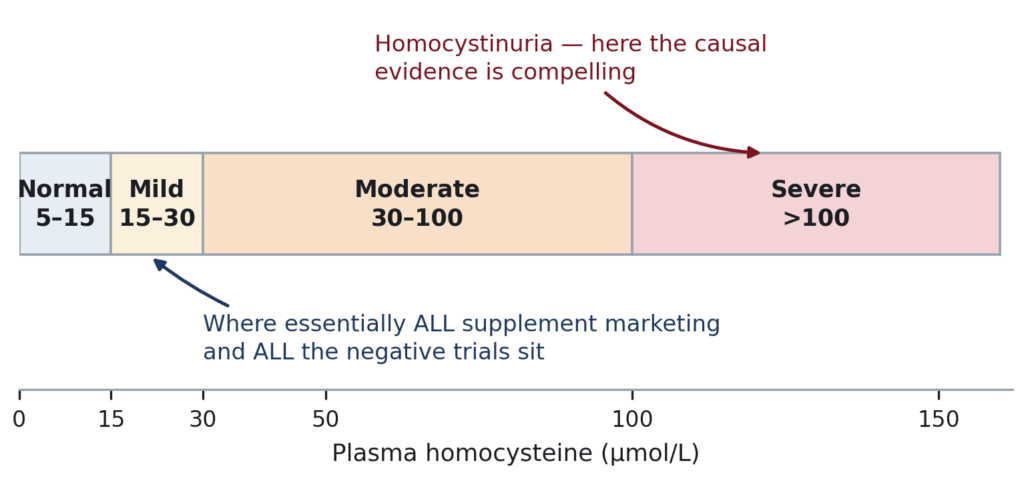
Figura 2. Fasce di concentrazione plasmatica di omocisteina. L’evidenza causale è convincente nella fascia grave e non è stata ancora stabilita nella fascia lieve, dove si collocano gli esami di routine, la commercializzazione degli integratori e gli studi randomizzati con esito negativo.
Iperomocisteinemia grave. Deficit di cistationina β-sintasi — forma classica omocistinuria — è la causa più comune e può determinare concentrazioni plasmatiche superiori a 100 µmol/L. Il decorso naturale della malattia è inequivocabile. I pazienti non trattati sviluppano una grave malattia vascolare precoce e tromboembolia; una percentuale elevata di essi subisce un evento vascolare grave all’incirca entro i 30 anni [16]. Il trattamento biochimico cronico riduce notevolmente il tasso di tali eventi [17]. Ciò fornisce prove convincenti del fatto che l’iperomocisteinemia grave sia causalmente correlata alle malattie vascolari.
Dislivello da leggero a moderato. Si tratta dell'intervallo rilevato negli ambulatori di prevenzione, ed è proprio qui che la tesi causale non regge. Non è stato dimostrato un effetto causale significativo a queste concentrazioni, per due ragioni indipendenti illustrate nelle sezioni 6 e 8 riportate di seguito: la riduzione randomizzata dei livelli non riduce gli eventi coronarici e l'elevazione geneticamente determinata per tutta la vita non aumenta il rischio coronarico.
Il parallelo con i lipidi è illuminante. Ipercolesterolemia familiare omozigote dimostra in modo indiscutibile che LDL può causare un prematuro aterosclerosi — ma la relazione quantitativa a concentrazioni estreme non basta di per sé a indicare l’effetto derivante dal passaggio da un valore di LDL pari a 105 a uno pari a 95. Nel caso dell’omocisteina, i due intervalli non differiscono semplicemente per entità; l’intervallo “lieve” è stato testato direttamente e ha dato esito nullo.
Considerazioni di natura meccanicistica. Studi su cellule e animali suggeriscono che livelli elevati di omocisteina possano favorire stress ossidativo, compromettono la vasodilatazione endotelio-dipendente e spostano l’equilibrio emostatico verso trombosi; tali percorsi sono stati esaminati in dettaglio [24,25]. Questi risultati sono reali e meritano di essere approfonditi. Di per sé, tuttavia, non dimostrano che un lieve aumento contribuisca in modo misurabile all’umano carico di placca.
Cosa significa “iniziare”? placca. Un evento scatenante fondamentale nell'aterosclerosi è la ritenzione delle lipoproteine contenenti ApoB all'interno delle arterie intima. Il ruolo causale di queste particelle è dimostrato da prove concordanti provenienti da Randomizzazione mendeliana, coorti prospettiche e studi randomizzati su diverse classi di farmaci con meccanismi d’azione distinti — l’omocisteina non ha soddisfatto gli standard di evidenza [1,2].
6. Studi randomizzati: esiti coronarici
Gli studi randomizzati non hanno dimostrato una riduzione degli eventi coronarici grazie alla riduzione dei livelli di omocisteina.
Una meta-analisi collaborativa di otto studi randomizzati che includono 37.485 partecipanti ha rilevato che la terapia a base di vitamine del gruppo B ha ridotto i livelli di omocisteina di circa il 25%, senza che, in quella meta-analisi, si osservasse una riduzione significativa degli eventi vascolari maggiori (rapporto di incidenza 1,01, IC 95% 0,97–1,05), degli eventi coronarici gravi (1,03, IC 95% 0,97–1,10), dell’ictus, dell’incidenza di tumori o della mortalità per cause specifiche durante un periodo mediano di follow-up di 5 anni [4].
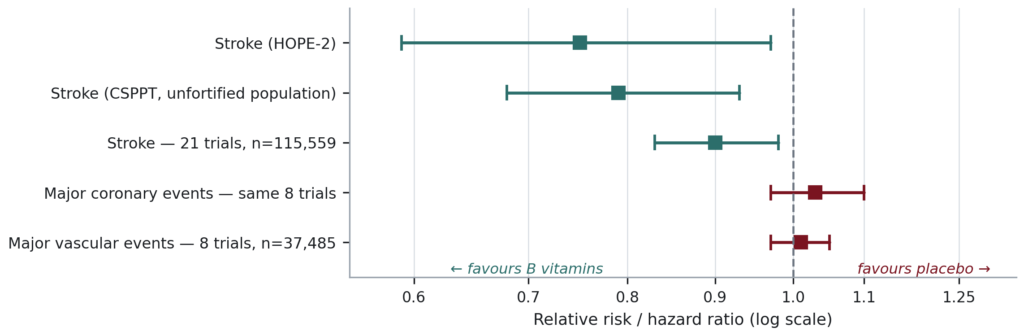
Figura 3. I dati provenienti da studi randomizzati si distinguono chiaramente in base all’esito. Gli endpoint coronarici e vascolari compositi si raggruppano attorno al valore nullo; tutte le stime relative all’ictus si collocano al di sotto di esso. I valori riportati sono quelli indicati dalle fonti citate.
I singoli studi sono concordi:
| Processo | Popolazione | n | Durata | Risultato |
| VISP (2004) | Ictus ischemico | 3,680 | 2 anni | Neutro; ictus ricorrente ~9% in entrambi i bracci [7] |
| HOPE-2 (2006) | Malattia vascolare o diabete | 5,522 | circa 5 anni | Composito primario neutro [8] |
| NORVIT (2006) | Post-infarto miocardico | 3,749 | Mediana: 40 mesi | Neutro; segnale di rischio al limite con acido folico + vitamina B-12 + vitamina B-6 (RR 1,22, P = .05) [9] |
Il segnale NORVIT è emerso da un confronto secondario nell'ambito del disegno fattoriale dello studio. È importante esserne consapevoli, ma senza attribuirgli un'importanza eccessiva: non costituisce una prova del fatto che le vitamine del gruppo B siano generalmente dannose.
La revisione Cochrane del 2017 sugli interventi volti a ridurre i livelli di omocisteina è giunta alla stessa conclusione per quanto riguarda infarto miocardico e la morte.
A 2025 revisione ombrello che copre tutti i risultati — che riunisce 135 meta-analisi osservazionali, 106 mendeliane randomizzazione studi e 26 meta-analisi interventistiche — rafforza questo concetto in un modo che vale la pena precisare. Malattia coronarica era tra i risultati per i quali le prove genetiche avevano superiore all'80 per cento potenza statistica e comunque non ha raggiunto la significatività [28]. Si tratta di un’ipotesi nulla supportata da dati sufficienti, piuttosto che di un’assenza di dati, il che rappresenta una posizione sostanzialmente più solida rispetto all’affermazione “nessun beneficio dimostrato”.”
A 2025 revisione narrativa Gli studi dedicati specificatamente all’omocisteina in ambito cardiovascolare sono giunti a una conclusione unanime: livelli elevati di omocisteina rimangono un fattore di rischio riproducibile biomarcatore, ma le prove attualmente disponibili non giustificano un intervento di routine in popolazioni non selezionate [32].
Uno studio clinico specifico sul cancro in stadio avanzato malattia renale cronica e la malattia renale allo stadio terminale — la popolazione con le concentrazioni più elevate di omocisteina, ad eccezione degli errori congeniti del metabolismo — ha anch’essa riscontrato che la terapia a dosi elevate di vitamine del gruppo B riduceva i livelli di omocisteina senza migliorare la mortalità o gli esiti vascolari [13]. Si tratta di un risultato negativo significativo, poiché verifica l’ipotesi proprio nel gruppo in cui l’effetto avrebbe dovuto essere più facile da rilevare.
7. Imaging ed endpoint surrogati: verificare direttamente l’ipotesi relativa alla placca
Poiché il titolo di questo articolo verte sull’aterosclerosi e sulla placca piuttosto che sugli eventi clinici, la letteratura relativa alle tecniche di imaging merita un trattamento a parte. Esistono studi randomizzati che utilizzano endpoint anatomici, e i loro risultati sono contrastanti in un modo che di per sé è significativo.
Carotide spessore intima-media. Lo studio B-Vitamin Atherosclerosis Intervention Trial (BVAIT) ha effettuato una randomizzazione 506 partecipanti con livelli basali di tHcy >8,5 µmol/L a dosi elevate di vitamine del gruppo B (5 mg di acido folico, 0,4 mg di vitamina B12, 50 mg di vitamina B6) oppure placebo per 3,1 anni [40]. L’endpoint primario ha dato esito negativo: la progressione dell’IMT carotideo non ha mostrato differenze significative tra i gruppi (P = 0,31). Un sottogruppo post hoc con tHcy basale ≥9,1 µmol/L ha mostrato una progressione più lenta (P = 0,02, interazione P = 0,02) — un risultato che genera ipotesi piuttosto che confermarle. Studi randomizzati su scala più ridotta hanno riportato risultati favorevoli: uno studio condotto su 103 pazienti con almeno un fattore di rischio cardiovascolare ha riscontrato una significativa regressione dell’IMT carotideo nell’arco di 18 mesi con 5 mg/giorno di acido folico (da 0,961 a 0,933 mm, P < 0,001) rispetto alla progressione osservata con il placebo [46] — mentre uno studio secondario di VITATOPS, accompagnato da una meta-analisi, non ha riscontrato alcun beneficio a lungo termine sull’IMT o sulla dilatazione mediata dal flusso [45].
Una rassegna della letteratura sulle carotidi. Una meta-analisi di dieci studi randomizzati sull’acido folico, che hanno coinvolto 2.052 soggetti, ha rilevato che l’integrazione di acido folico ha ridotto significativamente la progressione dello spessore intima-media carotideo (IMT) nel complesso (differenza media ponderata −0,04 mm, IC 95% da −0,07 a −0,02, P < 0,001) [47]. Ciò che conta è la struttura dei sottogruppi. L'effetto era concentrato nei casi cronici malattia renale (−0,16 mm, IC 95% da −0,26 a −0,07, P = 0,0006) e, in misura minore, nei soggetti ad alto rischio cardiovascolare (−0,05 mm, IC 95% da −0,11 a 0,00, P = 0,06). Nei soggetti generalmente sani la cui unica anomalia era rappresentata da livelli elevati di omocisteina, l’effetto era esattamente zero (0,00 mm, 95% CI da −0,01 a 0,01).

Figura 4. Progressione dello spessore intima-media carotideo (IMT) per sottogruppo in una meta-analisi di dieci studi sull’acido folico. L’effetto complessivo favorevole è determinato dalla malattia renale cronica; nelle persone altrimenti sane con iperomocisteinemia isolata l’effetto è esattamente nullo. Gli intervalli in grigio attraversano lo zero.
Quest’ultimo sottogruppo è quello a cui assomigliano la maggior parte dei lettori di questo articolo, ed è anche la popolazione dello studio BVAIT — il che spiega il risultato primario nullo dello studio BVAIT, anziché contraddirlo. Vale la pena mettere in relazione questo dato con i risultati clinici: la malattia renale cronica è proprio il contesto in cui il surrogato carotideo sembra dare i risultati migliori, ed è anche quello in cui uno studio randomizzato specifico sulle vitamine del gruppo B ad alto dosaggio non ha riscontrato alcuna riduzione della mortalità o degli eventi vascolari [13]. Nella stessa popolazione, il miglioramento degli indicatori surrogati e il beneficio in termini di esiti si sono rivelati non correlati.
Calcio coronarico e aortico. Lo studio BVAIT non ha riscontrato alcun effetto dell'integrazione con vitamine del gruppo B sull'aorta o sulle coronarie arteria progressione del calcio, complessiva o all’interno dei sottogruppi [40].
Angiografia coronarica. Il test più diretto disponibile. Uno studio secondario del Western Norway B Vitamin Intervention Trial (WENBIT) ha effettuato una serie di angiografia coronarica quantitativa in 348 pazienti [41]. L’acido folico associato alla vitamina B12 ha ridotto la tHcy del 22%. Non si è osservato alcun effetto sul valore minimo lumen diametro oppure stenosi diametricale. Un’analisi post hoc ha rilevato che il trattamento con acido folico e vitamina B12 era associato a di più progressione rapida (OR 1,84; IC al 95% 1,07–3,18).
Restenosi dopo un intervento coronarico: una sequenza che invita alla cautela. Lo Swiss Heart Study ha riportato che la terapia a base di vitamine del gruppo B, volta a ridurre i livelli di omocisteina, ha ridotto significativamente la restenosi dopo angioplastica [43]. Lo studio “Folate After Coronary Intervention Trial” ha quindi effettuato una randomizzazione 636 pazienti dopo l'impianto di uno stent coronarico e hanno riscontrato il contrario: il diametro luminale minimo era inferiore nel gruppo trattato con folati (1,59 ± 0,62 contro 1,74 mm, P = 0,004), la restenosi era più frequente (34,5% contro 26,5%, P = 0,05) e il vaso bersaglio rivascolarizzazione è stato richiesto più spesso (15,81 TP9T contro 10,61 TP9T, P = 0,05) — nonostante una significativa riduzione dei livelli di omocisteina [42]. I due studi differivano per quanto riguarda le dosi di vitamine, lesione caratteristiche e tipo di procedura, nonché il inversione non è mai stato spiegato del tutto.
Sintesi. Questa sintesi obiettiva è più circoscritta e meglio strutturata rispetto all’affermazione secondo cui “non è stata dimostrata la riduzione della placca”.”
La terapia a base di vitamine del gruppo B volta a ridurre i livelli di omocisteina ha non è stato dimostrato in modo convincente che rallenta o inverte l’aterosclerosi coronarica. Per quanto riguarda il parametro surrogato carotideo, i dati sono decisamente contrastanti e, nell’analisi aggregata, favorevoli — ma tale effetto favorevole nell’analisi aggregata è attribuibile alla malattia renale cronica e alle popolazioni ad alto rischio ed è nullo nelle persone altrimenti sane con iperomocisteinemia isolata. Per quanto riguarda gli endpoint coronarici — angiografici stenosi, calcio coronarico e aortico e restenosi intra-stent: gli studi randomizzati non hanno dimostrato alcun beneficio e, in alcuni casi, hanno addirittura suggerito il contrario.
Ne derivano due conclusioni. La prima è che lo spessore intima-media carotideo (IMT) e l’anatomia coronarica non sono intercambiabili, e un risultato favorevole nel primo caso non giustifica un’affermazione riguardo al secondo. La seconda è che, anche laddove l’indicatore surrogato migliori, l’esito non migliora: il sottogruppo con CKD mostra l’effetto carotideo più marcato riportato in letteratura e la più evidente assenza di beneficio clinico in uno studio dedicato. Si tratta di una posizione più solida rispetto a un semplice risultato negativo, poiché tiene conto dei dati favorevoli anziché ignorarli.
8. Studi randomizzati: ictus
L'ictus è l'unico esito in cui i dati scientifici si discostano nettamente dal quadro clinico delle malattie coronariche, e questo aspetto merita di essere sottolineato con maggiore enfasi di quanto non avvenga di solito.
I dati provenienti dagli studi randomizzati sono positivi, con un’importante precisazione. Una revisione sistematica e una meta-analisi del 2024 hanno raggruppato 21 studi clinici randomizzati controllati per un totale di 115.559 partecipanti e hanno riscontrato che l’integrazione di acido folico riduceva il rischio di ictus del 10% (RR 0,90, IC al 95% 0,83–0,98) [27]. Questa analisi è successiva — e amplia in modo sostanziale — sia la meta-analisi del 2010 del B-Vitamin Treatment Trialists [4] e la revisione Cochrane del 2017 [12], ciascuno dei quali si basava su un campione di pazienti molto più ridotto. Un’analisi complementare del 2024 ha esaminato il dosaggio nei regimi combinati a base di vitamine del gruppo B [33].
La precisazione è che l’effetto complessivo non era uniforme. I benefici erano concentrati nelle regioni in cui non era in vigore l’arricchimento dei cereali; nelle popolazioni in cui tale pratica era in vigore, la stima risultava sostanzialmente neutra [21]. Il dato complessivo non va quindi interpretato come un effetto previsto per un singolo lettore negli Stati Uniti.
I risultati sono coerenti tra i diversi modelli di studio. Il 2025 umbrella review: revisione ombrello ha rilevato che l'ictus e le malattie dei piccoli vasi occlusione L’ictus era uno dei soli quattro esiti riportati nell’intera letteratura sull’omocisteina a soddisfare sia il criterio P < 0,01 sia una potenza statistica superiore all’80% nella randomizzazione mendeliana [28]. La conclusione generale era che l’omocisteina costituisce un fattore di rischio causale per l’ictus e che la riduzione dei livelli di omocisteina mediante l’acido folico può rappresentare un intervento efficace. L’ictus è quindi supportato da studi osservazionali, genetici e da meta-analisi di interventi — la triade in cui la malattia coronarica fallisce in modo evidente.
I singoli studi sono coerenti tra loro. Lo studio HOPE-2 ha riportato una riduzione dell’incidenza di ictus (RR 0,75, IC al 95% 0,59–0,97) nonostante un endpoint primario neutro [8,10]. L’ictus in Cina Prevenzione primaria Studio clinico (CSPPT) randomizzato 20.702 adulti ipertesi in un Paese in cui non viene effettuata l’arricchimento con acido folico, confrontando il trattamento con enalapril più acido folico rispetto all’enalapril da solo, e ha riscontrato una riduzione dell’incidenza del primo ictus dal 3,4% al 2,7% (HR 0,79, IC 95% 0,68–0,93) [11].
Lo stato dei folati è un vero e proprio fattore che modifica l'effetto, non solo un fattore plausibile. Una meta-analisi di studi genetici e studi clinici randomizzati pubblicata su The Lancet ha rilevato che l'associazione tra MTHFR L’associazione tra genotipo, omocisteina e rischio di ictus era influenzata dall’apporto di folati nella dieta della popolazione: tale associazione era presente nelle popolazioni con basso apporto di folati ed era assente nelle regioni in cui si praticava l’arricchimento con acido folico [29]. Un successivo studio prospettico condotto su 156.000 adulti cinesi ha esaminato direttamente la stessa questione in una popolazione con bassi livelli di folati [34]. Si tratta di una prova genetica a sostegno della modificazione dell’effetto, che trasforma un’inferenza tratta dall’eterogeneità degli studi clinici in un risultato coerente dal punto di vista meccanicistico.
Posizione di riferimento. Le Linee guida AHA/ASA del 2024 per la prevenzione primaria dell’ictus affrontano direttamente questo tema, classificando l’integrazione di acido folico e del complesso B per la riduzione del rischio di ictus come non ben consolidato (Classe 2b). Si tratta di un’interpretazione volutamente prudente, ed è quella corretta nel caso di una popolazione fortificata.
L'implicazione pratica rimane limitata, ma non è più nulla. I dati scientifici sostengono l’importanza di livelli adeguati di folati e, plausibilmente, dell’integrazione di acido folico, nelle popolazioni in cui l’assunzione di folati con la dieta è effettivamente bassa. In una popolazione in cui gli alimenti sono fortificati, come quella degli Stati Uniti, il margine di miglioramento è minore e l’efficacia di un’integrazione mirata all’omocisteina come misura di prevenzione dell’ictus rimane da dimostrare. La distinzione tra queste due situazioni costituisce l’essenza delle linee guida pratiche.
9. Prove genetiche
La randomizzazione mendeliana risponde all'obiezione secondo cui studi clinici sono troppo brevi per invertire decenni di esposizione vascolare, ed è proprio questo il motivo per cui l’argomento della durata non può sostenere la tesi causale della malattia coronarica.
Il design. Genotipo a MTHFR Il genotipo C677T viene determinato al momento del concepimento, è generalmente meno soggetto a fattori di confondimento convenzionali quali la funzionalità renale e lo stile di vita, a condizione che le ipotesi relative alle variabili strumentali siano valide, e determina una differenza nella concentrazione di omocisteina che persiste per tutta la vita. Se un aumento moderato e permanente di tale concentrazione causasse la malattia coronarica, gli omozigoti TT dovrebbero presentare un’incidenza maggiore di eventi coronarici. Quando tali ipotesi sono soddisfatte, ciò si avvicina a un esperimento naturale che dura tutta la vita.
Il risultato. Una meta-analisi di MTHFR studi caso-controllo che comprendono 48.175 casi di cardiopatia coronarica e 67.961 soggetti di controllo, progettato espressamente per evitare distorsione da pubblicazione, ha rilevato un odds ratio pari a 1,02 (95% CI 0,98–1,07) per il genotipo TT rispetto al genotipo CC — in linea con un effetto minimo o nullo [5]. Gli autori hanno dimostrato che precedenti meta-analisi genetiche positive [48] sono stati influenzati in modo significativo dal bias di pubblicazione, con una sovrarappresentazione nella letteratura degli studi di piccole dimensioni che hanno riportato risultati positivi.
Successive analisi di randomizzazione mendeliana, condotte utilizzando più loci associati all’omocisteina, non hanno individuato alcuna evidenza a sostegno di un’associazione causale con la malattia coronarica o l’infarto miocardico, compresa un’analisi a due campioni in cui nessuna delle nove varianti associate all’omocisteina, significative a livello genomico, è risultata associata a nessuno dei due esiti [6]. Anche un’analisi separata di randomizzazione mendeliana a esiti multipli sull’omocisteina e sulle vitamine del gruppo B non ha riscontrato alcuna associazione con le malattie coronariche, pur riportando prove indicative di un rischio di ictus — la stessa asimmetria che caratterizza la letteratura relativa agli studi clinici.
La conseguenza. Poiché la randomizzazione mendeliana modella già l’esposizione nel corso dell’intera vita e restituisce un risultato nullo per la cardiopatia coronarica, essa indebolisce notevolmente l’argomentazione secondo cui la sola breve durata degli studi spiegherebbe i risultati nulli relativi alla cardiopatia coronarica. L’ipotesi della durata mantiene una certa validità per l’ictus, ambito in cui sia la letteratura genetica che quella relativa agli studi clinici sono leggermente più favorevoli, ma dovrebbe essere presentata come una delle diverse spiegazioni non dimostrate, piuttosto che come la causa del fallimento degli studi.
10. Forme attive e standard delle vitamine
La superiorità delle forme attive non è stata accertata, né è stata dimostrata per quanto riguarda gli esiti cardiovascolari.
Cosa è stato stabilito. Il 5-MTHF è la forma di folato circolante e biologicamente utilizzabile e aggira la fase di riduzione catalizzata dall’enzima MTHFR. In uno studio randomizzato controllato con placebo condotto a basse dosi, l’L-5-MTHF si è dimostrato almeno altrettanto efficace dell’acido folico nel ridurre i livelli plasmatici di omocisteina [14].
Ciò che non è stato accertato:
- Che le forme attive riducono l'omocisteina in misura sostanzialmente maggiore rispetto alle forme standard a dosi equivalenti.
- Le forme attive producono esiti cardiovascolari migliori. Nessuno studio randomizzato sugli esiti cardiovascolari ha dimostrato la superiorità delle forme attive rispetto a quelle standard.
- Quello MTHFR I portatori della variante non rispondono all'acido folico. In realtà rispondono. La variante C677T riduce l'attività enzimatica, ma non blocca completamente la via metabolica. L'American College of Medical Genetica sconsiglia di farlo di routine MTHFR test di polimorfismo, poiché il polimorfismo ha un’utilità clinica limitata [15].
- Le forme attive “aggirano i problemi di assorbimento”. Esse aggirano una fase di conversione metabolica. Il malassorbimento gastrointestinale è un problema a sé stante che le forme attive non risolvono.
Un vero e proprio controesempio, che vale la pena menzionare. In un piccolo studio clinico in doppio cieco controllato con placebo condotto su pazienti sottoposti a trapianto ortotopico di fegato, l’L-5-MTHF ha ridotto significativamente i livelli sierici totali di omocisteina, mentre l’acido folico non ha avuto alcun effetto [35]. Questo è il caso più convincente pubblicato a sostegno della forma attiva. Una conversione epatica compromessa rappresenta una spiegazione plausibile, poiché l’attività della diidrofolato reduttasi è di natura epatica e il 5-MTHF aggira tale fase — ma lo studio non ha verificato il meccanismo e tale deduzione non dovrebbe essere presentata come un dato di fatto. Ciò che si può affermare è che la popolazione era esigua e altamente selezionata, e che lo studio non fornisce alcuna prova riguardo agli esiti cardiovascolari.
Una seconda asimmetria. La cianocobalamina richiede una trasformazione intracellulare per assumere le forme attive della cobalamina, e ciò è rilevante in caso di specifici errori congeniti del metabolismo della cobalamina. Nella popolazione generale, la cianocobalamina corregge efficacemente la carenza.
11. Posologia e sicurezza
Le dosi riportate di seguito corrispondono alle quantità comunemente utilizzate come integratori. Non si tratta di dosi terapeutiche stabilite per le patologie cardiovascolari, poiché tali dosi non esistono.
| Nutriente | Dose supplementare abituale | Note |
| 5-MTHF (o acido folico) | 400–800 µg al giorno | Effetto comparabile dell'omocisteina a basse dosi |
| Metilcobalamina (o cianocobalamina) | Dipende dai livelli di vitamina B-12 e dal suo assorbimento | Si ricorre a dosi orali elevate (1.000 µg+) in caso di assorbimento compromesso; la somministrazione sistematica di dosi elevate in soggetti con livelli adeguati non è supportata da evidenze scientifiche |
| P-5-P (o piridossina) | 2–5 mg al giorno | Rimanete al di sotto di tale soglia; i limiti massimi variano a seconda della giurisdizione — vedi sotto |
La vitamina B-6 contribuisce in misura minima o nulla alla riduzione dei livelli di omocisteina a digiuno. La meta-analisi condotta dalla Homocysteine Lowering Trialists’ Collaboration ha rilevato che l’integrazione a base di acido folico ha ridotto l’omocisteina plasmatica di circa il 25 per cento, che l’aggiunta di vitamina B-12 ha determinato un’ulteriore riduzione del 7 per cento e che l'aggiunta di vitamina B-6 non ha determinato un’ulteriore riduzione significativa dei livelli di omocisteina a digiuno [31].
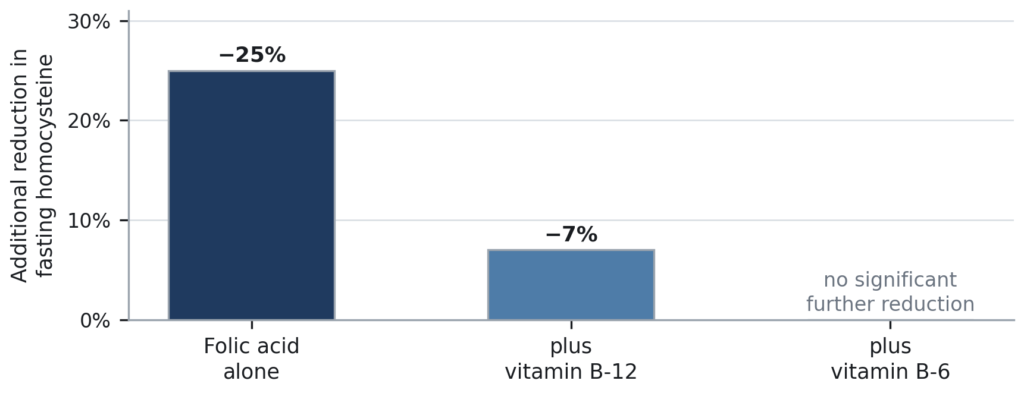
Figura 5. Contributo di ciascuna vitamina alla riduzione dell’omocisteina a digiuno nella meta-analisi degli Homocysteine Lowering Trialists. Il folato svolge quasi tutto il lavoro; la vitamina B-12 apporta un’ulteriore riduzione; la vitamina B-6 non apporta alcuna ulteriore riduzione significativa.
La precisione è fondamentale. Quegli studi non hanno valutato l’omocisteina post-carica di metionina, dove la transsolfurazione dipendente dalla vitamina B-6 è più probabilmente il fattore limitante, e il risultato non significa che la vitamina B-6 sia biochimicamente inerte. I dati diretti degli studi illustrano la distinzione: in un sottostudio del WENBIT, l’acido folico in combinazione con la vitamina B-12 ha ridotto l’omocisteina basale (tHcy) del 31% e quella post-carico del 22%, mentre la vitamina B-6 non ha modificato l’omocisteina basale e ha avuto un effetto significativo ma limitato sull’omocisteina post-carico — pur riducendo marcatamente la cistationina basale e post-carico, rispettivamente del 31 e del 42 per cento [44]. La vitamina B-6 ha un effetto; non è però quella che viene misurata nel profilo ematico a digiuno.
L'implicazione pratica per le formulazioni a base di tre vitamine commercializzate per la gestione dell'omocisteina rimane valida: il componente che presenta il maggior rischio di tossicità contribuisce in misura minore al parametro a digiuno che tali prodotti sono destinati a modificare. La vitamina B-6 rimane indicata in caso di carenza documentata ed è un cofattore indispensabile per la transsolfurazione.
Tossicità da vitamina B-6. Un’assunzione cronica eccessiva di vitamina B-6 provoca neuropatia sensoriale periferica. I limiti normativi variano e si sono discostati: il livello massimo di assunzione tollerabile (UL) per gli adulti stabilito dall’Istituto di Medicina degli Stati Uniti è di 100 mg/giorno [19], mentre l’Autorità europea per la sicurezza alimentare ha rivalutato le evidenze nel 2023 e ha fissato un UL per gli adulti pari a 12 mg al giorno, calcolato a partire da un valore di riferimento di 50 mg/giorno con un fattore di incertezza pari a 4 [23]. Sono stati segnalati casi di neuropatia in seguito ad assunzioni croniche inferiori al precedente limite statunitense [18,23].
Il P-5-P viene spesso descritto come sostanzialmente più sicuro della piridossina. Ciò non è stato dimostrato. Non vi sono prove sufficienti per considerare il P-5-P esente dai limiti di tossicità della vitamina B-6, che si applicano all’assunzione totale di vitamina B-6 indipendentemente dalla formulazione.
Limite massimo di folati e acido folico non metabolizzato. Il livello massimo di assunzione tollerabile di acido folico negli adulti è di 1.000 µg/giorno. L’acido folico richiede una riduzione in due fasi da parte della diidrofolato reduttasi prima di entrare nel pool dei folati attivi; quando l’assunzione supera la capacità enzimatica, l’acido folico non metabolizzato (UMFA) si accumula nel plasma. Uno studio in cui sono stati somministrati 5 mg/giorno per 90 giorni ad adulti sani ha riportato un aumento dell’UMFA sierico accompagnato da una riduzione della citotossicità delle cellule natural killer [36]. Il significato clinico degli UMFA circolanti rimane ancora da chiarire, ma questo è l’unico argomento meccanicistico di rilievo a favore delle forme ridotte di folati e sostiene principalmente la necessità di mantenere modeste le dosi di acido folico piuttosto che di cambiarne la forma.
Forma della vitamina B-12. Un’analisi di meta-regressione del 2024, condotta su 21 studi randomizzati, ha rilevato che l’integrazione di vitamina B-12 è efficace nel ridurre i livelli di omocisteina, in particolare a dosi superiori a 500 µg/giorno e per periodi di almeno 12 settimane [37]. Anche le analisi dei sottogruppi e di meta-regressione hanno suggerito riduzioni maggiori negli studi in cui è stata utilizzata l’idrossocobalamina. Si tratta di confronti indiretti tra studi eterogenei piuttosto che di confronti randomizzati diretti, e non dimostrano che l’idrossocobalamina sia superiore alla metilcobalamina o alla cianocobalamina.
Sequenziamento del folato e della vitamina B-12. Un elevato apporto di folati può rendere più difficile individuare una carenza di vitamina B-12, poiché corregge parzialmente l’anemia megaloblastica che altrimenti richiederebbe ulteriori accertamenti. È opportuno valutare lo stato della vitamina B-12 nei casi in cui sia sospettabile una carenza, in particolare prima di iniziare un trattamento con dosi elevate di folati [20].
Acido folico e cancro. Sono stati esaminati gli effetti dell’integrazione a lungo termine con dosi elevate di acido folico sull’incidenza del cancro. Ciò avvalora l’opportunità di evitare un’integrazione con dosi farmacologiche non necessarie in assenza di indicazioni cliniche, pur riconoscendo che i dati aggregati provenienti dagli studi clinici non hanno dimostrato un aumento significativo dell’incidenza del cancro.
12. Popolazioni che richiedono il coinvolgimento di un medico
- Gravidanza o allattamento. Il fabbisogno di folati varia e è disciplinato da linee guida specifiche.
- Malattia renale cronica. L’omocisteina è elevata nella malattia renale cronica (CKD), ma, come osservato nella sezione 6, uno studio randomizzato specifico non ha riscontrato alcun beneficio in termini di mortalità o di salute vascolare derivante dalla terapia con dosi elevate di vitamine del gruppo B. La CKD richiede una valutazione, non una suplementazione automatica.
- Farmaci antagonisti del folato. Metotrexato, anticonvulsivanti, sulfasalazina e altri.
- Neuropatia o anemia di origine sconosciuta. Questi casi richiedono una valutazione diagnostica prima di procedere al trattamento empirico.
- Sospetta omocistinuria o difetto congenito del metabolismo della cobalamina, sia che si tratti di motivi personali o storia familiare.
13. Test e monitoraggio nella pratica
Quello che segue è un approccio clinico pragmatico piuttosto che una raccomandazione contenuta nelle linee guida. L’omocisteina non è stata inclusa nelle successive linee guida statunitensi sulla valutazione del rischio cardiovascolare come esame raccomandato negli adulti asintomatici; le linee guida ACCF/AHA del 2010 sulla valutazione del rischio, ormai di carattere storico, affrontavano direttamente i nuovi biomarcatori [22]. La dichiarazione più recente e direttamente pertinente è la Linea guida AHA/ASA del 2024 per la prevenzione primaria dell’ictus, che classifica l’integrazione di acido folico e del complesso B per la riduzione del rischio di ictus come non ben consolidata (Classe 2b, B-NR) [30].
Quando gli esami sono clinicamente indicati, la causa più evidente è un sospetto deficit di vitamina B-12 o di folati, compresa l’anemia di origine sconosciuta o i sintomi neurologici di origine sconosciuta. L’omocisteina non rientra nella valutazione standard della trombofilia per la tromboembolia venosa comune e non costituisce un esame consolidato per l’analisi di una storia familiare precoce.
Valutazione iniziale di un risultato elevato: omocisteina plasmatica, vitamina B-12 sierica (con acido metilmalonico se il valore della vitamina B-12 è al limite), folati sierici, creatinina/eGFR, una revisione della terapia farmacologica e TSH in caso di sospetta patologia tiroidea. Valutare la possibilità di ripetere il dosaggio dell’omocisteina, prestando attenzione alla manipolazione del campione, prima di intervenire in caso di valori inattesi.
Follow-up da 8 a 12 settimane, se il trattamento è stato avviato per un motivo specifico.
Mancata risposta: rivalutare adesione; assorbimento (celiachia, gastrite atrofica, chirurgia bariatrica); fattori correlati ai farmaci (metformina, inibitori della pompa protonica, antagonisti del folato); e funzionalità renale.
14. Qualità del prodotto
I programmi di certificazione indipendenti — USP, NSF, ConsumerLab, Informed Choice — offrono un’ulteriore garanzia significativa, sebbene i loro ambiti di applicazione differiscano e nessuno di essi costituisca una garanzia completa. ConsumerLab e Labdoor pubblicano analisi comparative.
Un certificato di analisi documenta i test effettuati dal produttore su un lotto specifico rispetto ai limiti specificati. Esso riporta i test effettuati, ma non dimostra l’assenza di contaminanti. Le etichette dovrebbero indicare composti e dosi specifici anziché miscele brevettate.
Modello di richiesta di CoA
Oggetto: Richiesta di certificato di analisi (CoA) — [Nome del prodotto e lotto #]
A [Nome del produttore], Ufficio Controllo Qualità:
Recentemente ho acquistato [Nome del prodotto] (Lotto #: ____). Vi prego di fornirmi il certificato di analisi relativo a questo specifico lotto, comprensivo dei risultati delle analisi relative ai principi attivi indicati in etichetta e dei risultati dello screening per i metalli pesanti e i contaminanti microbici, con l'indicazione dei metodi di analisi e dei limiti di specifica utilizzati.
Grazie,
[Il tuo nome]
Questa sezione costituisce una guida pratica per i consumatori piuttosto che una guida basata su dati scientifici, e non si fa riferimento ad alcuna fonte primaria a sostegno di quanto riportato.
15. Applicazione clinica
- Ottimizzare gli interventi con benefici comprovati in termini di esiti: terapia per la riduzione dei livelli di ApoB fino al raggiungimento di valori target adeguati al rischio, controllo della pressione arteriosa, smettere di fumare, gestione della glicemia, regime alimentare e attività fisica.
- Eseguire i test in modo selettivo. Misurare l’omocisteina solo in presenza di un quadro clinico specifico, non come screening di routine.
- Valutare prima di procedere al trattamento. Un livello elevato di omocisteina è un dato da approfondire — livelli di vitamina B12 e folati, funzionalità renale, farmaci, tiroide (se sospettata), gestione del campione — e non costituisce un’indicazione automatica alla somministrazione di integratori.
- Trattare la causa individuata. La correzione di una carenza accertata di vitamina B-12 o di folati è indicata di per sé. Un aumento grave dei livelli richiede una valutazione da parte di uno specialista.
- Monitorare e contestualizzare. In caso di trattamento, effettuare un nuovo controllo dopo 8-12 settimane. Spiegare chiaramente che la normalizzazione dei valori biochimici non equivale a una riduzione comprovata del rischio cardiovascolare.
Lista di controllo
☐ Si affrontano innanzitutto i fattori di rischio accertati (ApoB, pressione arteriosa, fumo, glicemia, Lp(a) (misurato una volta)
☐ Omocisteina misurata esclusivamente per un motivo clinico ben definito
☐ Se i valori sono elevati: vitamina B-12, folati, eGFR, revisione dei farmaci, TSH in caso di sospetta patologia tiroidea; valutare la possibilità di ripetere l’esame con una corretta gestione del campione
☐ Integratori mirati a una carenza individuata o a un’indicazione specifica
☐ La vitamina B-6 viene assunta a basse dosi integrative; l'assunzione totale è ben al di sotto del limite massimo applicabile (EFSA 12 mg/giorno; Stati Uniti 100 mg/giorno)
☐ Valutazione dei livelli di vitamina B-12 nei casi in cui sia possibile una carenza, in particolare prima della somministrazione di dosi elevate di folati
☐ Ripetere il test dopo 8-12 settimane; verificare l'aderenza al trattamento e l'assorbimento se i valori rimangono invariati
16. Conclusione
L'omocisteina elevata è un marker di rischio cardiovascolare consolidato e un fattore di stress vascolare biologicamente plausibile. Il folato la riduce in modo sostanziale; la vitamina B-12 contribuisce a un'ulteriore riduzione; la vitamina B-6, in genere, apporta solo una minima riduzione aggiuntiva dell'omocisteina a digiuno nelle popolazioni con livelli adeguati. Correggere una vera e propria carenza è senza dubbio utile.
Oltre a ciò:
- Gli studi randomizzati che coinvolgono decine di migliaia di partecipanti hanno non ha dimostrato di prevenire l'infarto miocardico o eventi coronarici gravi.
- La terapia a base di vitamine del gruppo B volta a ridurre i livelli di omocisteina ha non è stato dimostrato in modo convincente che rallenti o inverta l'aterosclerosi coronarica. Le misure carotidee surrogate hanno prodotto risultati contrastanti, tra cui alcuni dati favorevoli, mentre gli studi randomizzati sull’angiografia coronarica, sul calcio coronarico e sulla ristenosi non hanno dimostrato alcun beneficio.
- La randomizzazione mendeliana moderna consiste nel non stabilire che i livelli di omocisteina da lievi a moderati costituiscono uno dei principali fattori causali della cardiopatia coronarica; tale modello tiene già conto dell’esposizione nel corso dell’intera vita.
- Le prove relative all’ictus sono sostanzialmente diverse e nettamente migliori: una meta-analisi del 2024 su 21 studi clinici e 115.559 partecipanti ha riscontrato una riduzione del 10% dell’ictus con l’acido folico, e tale effetto è supportato contemporaneamente da prove osservazionali, genetiche e interventistiche. L’effetto è influenzato dallo stato di apporto di folati della popolazione, e il margine di riduzione in una popolazione che assume alimenti fortificati è di conseguenza minore; l’attuale formulazione delle linee guida rimane “non ben consolidata”.”
- Non è stato dimostrato che le forme attive delle vitamine siano superiori ai modelli standard per gli esiti cardiovascolari.
- L’omocistinuria grave è una patologia con cause ben definite e perfettamente curabile, e le sue caratteristiche biologiche non dovrebbero essere estese ai casi di lieve aumento dei livelli.
L’analisi dei livelli di omocisteina e il relativo trattamento devono rientrare nella gestione delle patologie cardiovascolari come strumento mirato per rispondere a specifiche questioni cliniche — non come aggiunta di routine a un pannello di esami preventivi, una posizione in linea con le principali linee guida sulla valutazione del rischio, e non come sostituto degli interventi incentrati sull’ApoB, che sono supportati da prove scientifiche.
Riferimenti
- Blumenthal RS, Morris PB, Gaudino M, et al. 2026 ACC/AHA/AACVPR/ABC/ACPM/ADA/AGS/APhA/ASPC/NLA/PCNA Guideline on the Management of Dyslipidemia: a report of the American College of Cardiology/American Heart Association Joint Committee on Clinical Practice Guidelines. J Am Coll Cardiol. 2026;87(19):2624-2757. doi:10.1016/j.jacc.2025.11.016
- Ference BA, Ginsberg HN, Graham I, et al. Low-density lipoproteins cause atherosclerotic cardiovascular disease. 1. Evidence from genetic, epidemiologic, and clinical studies. A consensus statement from the European Atherosclerosis Society Consensus Panel. Eur Heart J. 2017;38(32):2459-2472. doi:10.1093/eurheartj/ehx144
- Homocysteine Studies Collaboration. Homocysteine and risk of ischemic heart disease and stroke: a meta-analysis. 2002;288(16):2015-2022. doi:10.1001/jama.288.16.2015
- Clarke R, Halsey J, Lewington S, et al; B-Vitamin Treatment Trialists’ Collaboration. Effects of lowering homocysteine levels with B vitamins on cardiovascular disease, cancer, and cause-specific mortality: meta-analysis of 8 randomized trials involving 37,485 individuals. Arch Intern Med. 2010;170(18):1622-1631. doi:10.1001/archinternmed.2010.348
- Clarke R, Bennett DA, Parish S, et al; MTHFR Studies Collaborative Group. Homocysteine and coronary heart disease: meta-analysis of MTHFR case-control studies, avoiding publication bias. PLoS Med. 2012;9(2):e1001177. doi:10.1371/journal.pmed.1001177
- van Meurs JB, Pare G, Schwartz SM, et al. Common genetic loci influencing plasma homocysteine concentrations and their effect on risk of coronary artery disease. Am J Clin Nutr. 2013;98(3):668-676. doi:10.3945/ajcn.112.044545
- Toole JF, Malinow MR, Chambless LE, et al. Lowering homocysteine in patients with ischemic stroke to prevent recurrent stroke, myocardial infarction, and death: the Vitamin Intervention for Stroke Prevention (VISP) randomized controlled trial. 2004;291(5):565-575. doi:10.1001/jama.291.5.565
- Lonn E, Yusuf S, Arnold MJ, et al; Heart Outcomes Prevention Evaluation (HOPE) 2 Investigators. Homocysteine lowering with folic acid and B vitamins in vascular disease. N Engl J Med. 2006;354(15):1567-1577. doi:10.1056/NEJMoa060900
- Bønaa KH, Njølstad I, Ueland PM, et al; NORVIT Trial Investigators. Homocysteine lowering and cardiovascular events after acute myocardial infarction. N Engl J Med. 2006;354(15):1578-1588. doi:10.1056/NEJMoa055227
- Saposnik G, Ray JG, Sheridan P, McQueen M, Lonn E; Heart Outcomes Prevention Evaluation 2 Investigators. Homocysteine-lowering therapy and stroke risk, severity, and disability: additional findings from the HOPE 2 trial. 2009;40(4):1365-1372. doi:10.1161/STROKEAHA.108.529503
- Huo Y, Li J, Qin X, et al; CSPPT Investigators. Efficacy of folic acid therapy in primary prevention of stroke among adults with hypertension in China: the CSPPT randomized clinical trial. 2015;313(13):1325-1335. doi:10.1001/jama.2015.2274
- Martí-Carvajal AJ, Solà I, Lathyris D, Dayer M. Homocysteine-lowering interventions for preventing cardiovascular events. Cochrane Database Syst Rev. 2017;8(8):CD006612. doi:10.1002/14651858.CD006612.pub5
- Jamison RL, Hartigan P, Kaufman JS, et al; Veterans Affairs Site Investigators. Effect of homocysteine lowering on mortality and vascular disease in advanced chronic kidney disease and end-stage renal disease: a randomized controlled trial. 2007;298(10):1163-1170. doi:10.1001/jama.298.10.1163
- Venn BJ, Green TJ, Moser R, Mann JI. Comparison of the effect of low-dose supplementation with L-5-methyltetrahydrofolate or folic acid on plasma homocysteine: a randomized placebo-controlled study. Am J Clin Nutr. 2003;77(3):658-662. doi:10.1093/ajcn/77.3.658
- Hickey SE, Curry CJ, Toriello HV. ACMG Practice Guideline: lack of evidence for MTHFR polymorphism testing. Genet Med. 2013;15(2):153-156. doi:10.1038/gim.2012.165
- Mudd SH, Skovby F, Levy HL, et al. The natural history of homocystinuria due to cystathionine beta-synthase deficiency. Am J Hum Genet. 1985;37(1):1-31.
- Yap S, Boers GH, Wilcken B, et al. Vascular outcome in patients with homocystinuria due to cystathionine beta-synthase deficiency treated chronically: a multicenter observational study. Arterioscler Thromb Vasc Biol. 2001;21(12):2080-2085. doi:10.1161/hq1201.100225
- Schaumburg H, Kaplan J, Windebank A, et al. Sensory neuropathy from pyridoxine abuse: a new megavitamin syndrome. N Engl J Med. 1983;309(8):445-448. doi:10.1056/NEJM198308253090801
- Institute of Medicine, Standing Committee on the Scientific Evaluation of Dietary Reference Intakes. Dietary Reference Intakes for Thiamin, Riboflavin, Niacin, Vitamin B6, Folate, Vitamin B12, Pantothenic Acid, Biotin, and Choline. Washington, DC: National Academies Press; 1998.
- Green R. Vitamin B12 deficiency from the perspective of a practicing hematologist. 2017;129(19):2603-2611. doi:10.1182/blood-2016-10-569186
- Crider KS, Bailey LB, Berry RJ. Folic acid food fortification — its history, effect, concerns, and future directions. 2011;3(3):370-384. doi:10.3390/nu3030370
- Greenland P, Alpert JS, Beller GA, et al. 2010 ACCF/AHA guideline for assessment of cardiovascular risk in asymptomatic adults: a report of the American College of Cardiology Foundation/American Heart Association Task Force on Practice Guidelines. 2010;122(25):e584-e636. doi:10.1161/CIR.0b013e3182051b4c
- EFSA Panel on Nutrition, Novel Foods and Food Allergens (NDA); Turck D, Bohn T, Castenmiller J, et al. Scientific opinion on the tolerable upper intake level for vitamin B6. EFSA J. 2023;21(5):e08006. doi:10.2903/j.efsa.2023.8006
- Lentz SR. Mechanisms of homocysteine-induced atherothrombosis. J Thromb Haemost. 2005;3(8):1646-1654. doi:10.1111/j.1538-7836.2005.01364.x
- Weiss N, Keller C, Hoffmann U, Loscalzo J. Endothelial dysfunction and atherothrombosis in mild hyperhomocysteinemia. Vasc Med. 2002;7(3):227-239. doi:10.1191/1358863x02vm428ra
- Allen LH. How common is vitamin B-12 deficiency? Am J Clin Nutr. 2009;89(2):693S-696S. doi:10.3945/ajcn.2008.26947A
- Zhang N, Zhou Z, Chi X, et al. Folic acid supplementation for stroke prevention: a systematic review and meta-analysis of 21 randomized clinical trials worldwide. Clin Nutr. 2024;43(7):1706-1716. doi:10.1016/j.clnu.2024.05.034
- Zhou F, He Y, Xie X, Guo N, Chen W, Zhao Y. Homocysteine and multiple health outcomes: an outcome-wide umbrella review of meta-analyses and Mendelian randomization studies. Adv Nutr. 2025;16(6):100434. doi:10.1016/j.advnut.2025.100434
- Holmes MV, Newcombe P, Hubacek JA, et al. Effect modification by population dietary folate on the association between MTHFR genotype, homocysteine, and stroke risk: a meta-analysis of genetic studies and randomised trials. 2011;378(9791):584-594. doi:10.1016/S0140-6736(11)60872-6
- Bushnell C, Kernan WN, Sharrief AZ, et al. 2024 guideline for the primary prevention of stroke: a guideline from the American Heart Association/American Stroke Association. 2024;55(12):e344-e424. doi:10.1161/STR.0000000000000475
- Homocysteine Lowering Trialists’ Collaboration. Lowering blood homocysteine with folic acid based supplements: meta-analysis of randomised trials. 1998;316(7135):894-898. doi:10.1136/bmj.316.7135.894
- D’Elia S, Morello M, Titolo G, et al. Homocysteine in the cardiovascular setting: what to know, what to do, and what not to do. J Cardiovasc Dev Dis. 2025;12(10):383. doi:10.3390/jcdd12100383
- Zhang N, Wu Z, Bai X, et al. Dosage exploration of combined B-vitamin supplementation in stroke prevention: a meta-analysis and systematic review. Am J Clin Nutr. 2024;119(3):821-828. doi:10.1016/j.ajcnut.2023.12.021
- Bennett DA, Parish S, Millwood IY, et al. MTHFR and risk of stroke and heart disease in a low-folate population: a prospective study of 156,000 Chinese adults. Int J Epidemiol. 2023;52(6):1862-1869. doi:10.1093/ije/dyad091
- Akoglu B, Schrott M, Bolouri H, et al. The folic acid metabolite L-5-methyltetrahydrofolate effectively reduces total serum homocysteine level in orthotopic liver transplant recipients: a double-blind placebo-controlled study. Eur J Clin Nutr. 2008;62(6):796-801. doi:10.1038/sj.ejcn.1602778
- Paniz C, Bertinato JF, Lucena MR, et al. A daily dose of 5 mg folic acid for 90 days is associated with increased serum unmetabolized folic acid and reduced natural killer cell cytotoxicity in healthy Brazilian adults. J Nutr. 2017;147(9):1677-1685. doi:10.3945/jn.117.247445
- Sohouli MH, Almuqayyid F, Alfardous Alazm A, et al. A comprehensive review and meta-regression analysis of randomized controlled trials examining the impact of vitamin B12 supplementation on homocysteine levels. Nutr Rev. 2024;82(6):726-737. doi:10.1093/nutrit/nuad091
- Kumar A, Palfrey HA, Pathak R, Kadowitz PJ, Gettys TW, Murthy SN. The metabolism and significance of homocysteine in nutrition and health. Nutr Metab (Lond). 2017;14:78. doi:10.1186/s12986-017-0233-z
- Wang B, Mo X, Wu Z, Guan X. Systematic review and meta-analysis of the correlation between plasma homocysteine levels and coronary heart disease. J Thorac Dis. 2022;14(3):646-653. doi:10.21037/jtd-22-78
- Hodis HN, Mack WJ, Dustin L, et al. High-dose B vitamin supplementation and progression of subclinical atherosclerosis: a randomized controlled trial. 2009;40(3):730-736. doi:10.1161/STROKEAHA.108.526798
- Løland KH, Bleie Ø, Blix AJ, et al. Effect of homocysteine-lowering B vitamin treatment on angiographic progression of coronary artery disease: a Western Norway B Vitamin Intervention Trial (WENBIT) substudy. Am J Cardiol. 2010;105(11):1577-1584. doi:10.1016/j.amjcard.2010.01.019
- Lange H, Suryapranata H, De Luca G, et al. Folate therapy and in-stent restenosis after coronary stenting. N Engl J Med. 2004;350(26):2673-2681. doi:10.1056/NEJMoa032845
- Schnyder G, Roffi M, Pin R, et al. Decreased rate of coronary restenosis after lowering of plasma homocysteine levels. N Engl J Med. 2001;345(22):1593-1600. doi:10.1056/NEJMoa011364
- Bleie Ø, Refsum H, Ueland PM, et al. Changes in basal and postmethionine load concentrations of total homocysteine and cystathionine after B vitamin intervention. Am J Clin Nutr. 2004;80(3):641-648. doi:10.1093/ajcn/80.3.641
- Potter K, Hankey GJ, Green DJ, Eikelboom J, Jamrozik K, Arnolda LF. The effect of long-term homocysteine-lowering on carotid intima-media thickness and flow-mediated vasodilation in stroke patients: a randomized controlled trial and meta-analysis. BMC Cardiovasc Disord. 2008;8:24. doi:10.1186/1471-2261-8-24
- Ntaios G, Savopoulos C, Karamitsos D, et al. The effect of folic acid supplementation on carotid intima-media thickness in patients with cardiovascular risk: a randomized, placebo-controlled trial. Int J Cardiol. 2010;143(1):16-19. doi:10.1016/j.ijcard.2009.01.023
- Qin X, Xu M, Zhang Y, et al. Effect of folic acid supplementation on the progression of carotid intima-media thickness: a meta-analysis of randomized controlled trials. 2012;222(2):307-313. doi:10.1016/j.atherosclerosis.2011.12.007
- Wald DS, Law M, Morris JK. Homocysteine and cardiovascular disease: evidence on causality from a meta-analysis. 2002;325(7374):1202. doi:10.1136/bmj.325.7374.1202 (historical; superseded on the genetic-causality question by reference 5)
Nota di trasparenza: Questo articolo è stato redatto con l'ausilio di strumenti di intelligenza artificiale. Il contenuto finale è stato rivisto e modificato dall'autore, che ne è responsabile in termini di accuratezza. Le informazioni riportate hanno esclusivamente scopo didattico e non costituiscono un parere medico.