
O que as pessoas nas redes sociais querem dizer com “cetose” e isso significa automaticamente “mais saudável”?
Ketosis simply means your blood ketones (often β-hydroxybutyrate, βHB) are elevated because carboidratoOs carboidratos são os açúcares e amidos presentes nos alimentos — pão, arroz, macarrão, frutas, batatas, doces. availability is low (fasting, very-low-carb diets) or because you ingested ketones.
That metabolic state can have specific, real physiologic effects—but “being in ketosis” is not the same thing as “reducing ateroscleroseA aterosclerose é a doença por trás da maioria dos ataques cardíacos e de muitos acidentes vasculares cerebrais. Partículas de colesterol ficam presas na parede de uma artéria, o corpo envia células imunológicas para limpar e, ao longo dos anos, essa bagunça endurece, transformando-se em placa. risk,” “reversing heart disease,” or “living longer.” Whether ketosis helps or harms depends heavily on what foods create it and what it does to apoBApoB é uma proteína presente na parte externa de cada partícula de colesterol que pode ficar presa na parede da sua artéria e causar placa. Cada uma dessas partículas carrega exatamente uma ApoB./LDLO LDL, ou lipoproteína de baixa densidade, é a principal partícula que transporta colesterol pelo sangue — e a principal que fica presa nas paredes das artérias., pressão arterialA pressão arterial é a força do sangue empurrando as paredes das artérias. Ela é escrita como dois números, como 120/80. O número superior é a pressão quando o coração se contrai, o inferior é quando ele relaxa., inflamaçãoA inflamação é a resposta do seu sistema imunológico a uma lesão ou a algo que ele trata como um invasor. Ela traz inchaço, calor e células de limpeza., body weight, and diet quality.
Do exogenous ketones (ketone drinks/esters) improve athletic performance?
 The evidence is mixed and context-dependent. The best-known ketone ester work shows that exogenous ketosis can change fuel use (more fat oxidation, less glycolysis) and has sometimes been associated with endurance performance effects in controlled settings, but results vary by dose, sport, intensity, co-ingested carbs, and GI tolerance (1–3).
A major scientific point: ketone esters can raise βHB quickly and predictably, which is useful for studying ketosis without changing the whole diet. That’s a research advantage, not a guarantee of performance gains in the real world (4).
Conclusions: some athletes may see benefits in specific endurance contexts, but exogenous ketonesKetone bodies—most commonly β-hydroxybutyrate—consumed directly as drinks or esters rather than produced by the body through carbohydrate restriction; they raise blood ketone levels quickly without requiring dietary change and are used both as research tools and as proposed ergogenic supplements. are not a universally proven ergogenic aidAny nutritional, pharmacological, or physical intervention intended to enhance athletic performance beyond normal capacity; the term is used to evaluate whether a supplement like exogenous ketones provides a proven competitive advantage.; and GI side effects and practical cost/taste issues are real constraints (5).
Isn’t keto “proven” because it improves insulin sensitivity and weight loss quickly?
Short-term improvements in glicoseA glicose é o açúcar que o sangue transporta para fornecer energia às células. control and weight are real for many people, especially in type 2 diabetesO diabetes é uma condição em que o açúcar no sangue permanece muito alto, seja porque o corpo produz pouca insulina ou porque para de responder à insulina que produz.—often because carbohydrate restriction reduces glycemic loadA measure that combines both the quality and quantity of carbohydrate in a meal by multiplying the glycemic index of a food by the amount of carbohydrate it contains; carbohydrate restriction lowers glycemic load and can reduce post-meal blood glucose spikes. and can facilitate perda de pesoWeight loss means reducing body fat, whether through food changes, exercise, medication, or surgery. and medication reduction (6).
But two key scientific caveats:
- Durability is less impressive than the hype suggests. A major revisão sistemáticaA systematic review searches for every study on a question using a pre-declared method, then assesses them by consistent criteria./metanáliseUma metanálise combina estatisticamente os resultados de vários estudos separados em uma estimativa geral. found low/very-low-carb diets can increase diabetes remission at ~6 months, but the advantage tends to diminish by 12 months as adesãoAdesão significa realmente tomar o seu medicamento da forma como ele foi prescrito, dia após dia. drops and differences narrow (6).
- Cardiovascular risk markers can move in different directions. In longer-term “nutritional ketosisA metabolic state deliberately maintained through a very-low-carbohydrate diet, in which blood β-hydroxybutyrate is chronically elevated (typically 0.5–3 mmol/L) and the body preferentially burns fat and ketones for fuel; distinct from the much higher ketone levels seen in diabetic ketoacidosis.” interventions for type 2 diabetes, many fatores de riscoUm fator de risco é algo que aumenta a sua chance de desenvolver uma doença — partículas de colesterol alto, pressão alta, tabagismo, diabetes, histórico familiar. improve (weight, triglicerídeosTriglycerides are the main form of fat in your blood and in your body's storage., glycemia), but LDL-C can rise in some participants—an issue that matters because atherosclerosis is driven strongly by apoB/LDL carga de partículasCarga de partículas refere-se ao número total de partículas de lipoproteínas aterogênicas circulando no plasma, mais bem medida pela ApoB; ela se distingue da massa de colesterol porque é a contagem física das partículas — e não a quantidade de colesterol que elas carregam — que determina com que frequência as lipoproteínas se infiltram e ficam retidas na parede arterial. (7,8).
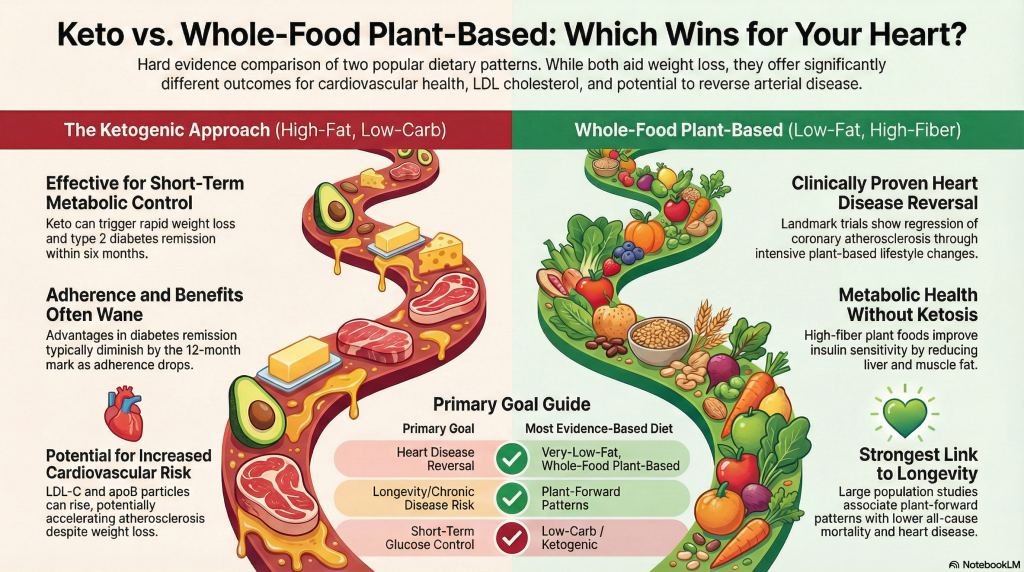
Keto can be a useful therapeutic tool for glycemia and weight in some people, but it is not automatically the best choice for heart disease reversãoO estudo REVERSAL comparou a terapia com estatinas moderada e intensiva, utilizando ultrassom intravascular para medir o que aconteceu com a placa coronariana. or longevity, and lipid responses can be a deal-breaker for some.
What’s the strongest “hard evidence” that a low-fat whole-food plant-based pattern can reverse atherosclerosis?
 There are two landmark clinical lines of evidence often cited because they used objective imagem coronarianaNon-invasive or invasive techniques—such as quantitative coronary angiography or intravascular ultrasound—used to visualise the size and character of plaques inside the coronary arteries; the Ornish and Esselstyn work is notable for using objective coronary imaging rather than relying solely on symptom or event data. and tracked clinical outcomes:
1) Ornish/Lifestyle Heart TrialThe Lifestyle Heart Trial, led by Dean Ornish, was a small randomized study testing an intensive lifestyle intervention — very low-fat plant-based diet, exercise, stress management, and group support — using serial coronary angiography; the intervention group's measured arterial narrowing improved slightly while controls worsened, but technical limitations of angiography, reference-segment narrow… (randomized):
Participants assigned to intensive lifestyle change including a very-low-fat, whole-foods dieta vegetarianaUma dieta vegetariana exclui carne, e uma dieta vegana exclui todos os produtos de origem animal. showed regression of coronary atherosclerosis vs. controls in the first year, and sustained benefits were reported in longer follow-up (9).
Five-year follow-up showed continued regression in the intensive group and more eventos cardíacosClinically significant heart-related occurrences—including myocardial infarction, unstable angina, and cardiac death—used as outcome endpoints in cardiovascular trials. in controls (10).
2) Esselstyn cohort (longitudinal clinical series):
A very-low-fat dieta à base de plantas in patients with established CAD was associated with arrest and, in some cases, reversal of disease over years, with outcomes strongly linked to adherence (11).
Are these perfect studies? No—sample sizes were modest and lifestyle bundles include more than diet. But the direction and plausibility are powerful: when you dramatically reduce atherogenic lipoproteínasUma lipoproteína é um pequeno pacote que transporta gordura e colesterol através da sua corrente sanguínea. Como a gordura não se dissolve em água, ela precisa de um invólucro de proteína para viajar. and emphasize high-fiber, minimally processed plant foods, coronary disease progression can slow, stop, and sometimes regress.
If your goal is reversing atherosclerosis, the most direct clinical evidence base favors very-low-fat, whole-food plant-forward patterns paired with comprehensive risk-factor management (9–11). So clearly plant based diets win clearly in my opinion.
What about insulin sensitivity and weight loss on whole-food plant-based diets—is there evidence beyond “it sounds healthy”?
Yes—there are randomized trials showing meaningful metabolic benefits:
- In overweight adults, a low-fat plant-based intervention improved weight and sensibilidade à insulinaInsulin sensitivity is how well your cells respond to insulin. It is the opposite of insulin resistance. and reduced metabolic risk factors (12).
- In type 2 diabetes, a randomized trial found a low-fat vegan diet improved controle glicêmicoGlycemic control is how steadily your blood sugar is kept in a healthy range over time. and cardiovascular risk factors compared with a conventional diabetes diet (13).
- A 2-year randomized weight-loss trial found a low-fat vegan diet produced sustained weight loss advantages compared with a more moderate low-fat diet in a real-world format (14).
Mechanistically, one consistent theme is that high-fiber, low–energy-density plant foods can promote spontaneous calorie reduction, and lowering intramyocellular/liver fat may improve resistência à insulinaA resistência à insulina é quando as suas células param de responder bem à insulina, fazendo com que o seu pâncreas precise produzir cada vez mais para fazer o mesmo trabalho.—often without needing ketosis.
Conclusions: you don’t need ketosis to improve insulinaInsulin is a hormone made by your pancreas. Its main job is letting sugar move out of your blood and into your cells for fuel. sensitivity; well-designed plant-based diets can do it, and the approach often aligns better with heart-protective lipid targets (12–14).
If keto improves triglycerides and HDL, why isn’t it automatically heart-protective?
Because atherosclerosis risk is driven heavily by partículas contendo apoBLipoproteínas — incluindo LDL, IDL, VLDL e seus remanescentes —, cada uma carregando uma molécula de apolipoproteína B em sua superfície; o número de partículas (em vez da massa de colesterol isolada) é um fator determinante fundamental da aterosclerose, porque cada partícula pode ser retida na parede arterial. (LDL, VLDLVLDL, ou lipoproteína de muito baixa densidade, é a partícula que seu fígado produz para enviar triglicerídeos para o resto do corpo. remnants) and exposição cumulativa over time.
In nutritional ketosis interventions, it’s common to see lower triglycerides and sometimes higher HDLHDL, ou lipoproteína de alta densidade, é a partícula frequentemente chamada de "bom colesterol". Ela coleta o colesterol dos tecidos e o transporta de volta para o fígado., but some studies report higher LDL-C (and variable LDL particle effects) (7,8).
If LDL/apoB rises substantially—especially if the diet is high in saturated fat—this can conflict with the core lipid-lowering strategy used to prevent and treat atherosclerotic disease.
Metabolic “wins” don’t automatically cancel out a large rise in LDL/apoB.
What does the longevity evidence say—do the longest-lived populations look “keto”?
In human population studies, dietary patterns associated with lower mortality and lower doença cardíaca isquêmicaUma condição em que o suprimento sanguíneo reduzido para o músculo cardíaco, geralmente devido à aterosclerose das artérias coronárias, causa sintomas como angina ou infarto do miocárdio. risk generally skew plant-forward rather than very-low-carb/high-fat.
Two large prospective datasets often discussed in this context:
- Estudo de Saúde Adventista-2: vegetarian dietary patterns were associated with lower mortalidade por todas as causasMortalidade por todas as causas significa morte por qualquer causa, não apenas doenças cardíacas — o desfecho mais amplo e difícil de manipular que um estudo pode medir. compared with nonvegetarian patterns (15).
- EPIC-OxfordUma ampla coorte prospectiva baseada no Reino Unido que recrutou uma proporção substancial de vegetarianos e veganos, fazendo parte da investigação europeia mais ampla sobre o cancro e a nutrição (EPIC); relatou um risco total de AVC mais elevado — impulsionado pelo AVC hemorrágico — entre vegetarianos em comparação com comedores de carne. (18+ years): vegetarians had a lower risk of ischemic heart disease than meat eaters (with nuanced findings for acidente vascular cerebralUm AVC ocorre quando o fluxo sanguíneo para uma parte do cérebro é interrompido, seja por um bloqueio ou por sangramento. that highlight the importance of nutrient adequacy—e.g., B12) (16).
These aren’t “whole-food plant-based” trials, and observational data can’t prove causaçãoCausation means one thing actually makes another thing happen. It is different from correlation, which only means two things tend to show up together.. But they’re consistent with a broad scientific pattern: diets centered on minimally processed plant foods are compatible with long-term cardiometabolic health and lower mortality.
The best longevity-linked dietary patterns in large cohorts look much closer to plant-forward than to strict keto.
So what’s the most evidence-based way to frame this for the general public?
If your primary goal is heart disease reversal / atherosclerosis regression:
A very-low-fat, whole-food, plant-based pattern has some of the strongest direct clinical signals (including angiographic evidence) and aligns with LDL/apoB lowering (9–11).
If your primary goal is short-term glucose control or appetite/weight help:
Low-carb/keto can work for some—especially in type 2 diabetes—but the advantage may lessen over time and lipid responses should be monitored closely (6–8).
If your goal is longevity / chronic disease risk reduction at scale:
The strongest population evidence tilts toward plant-forward patterns (with attention to nutrient adequacy like B12) (15,16).
Referências
- Clarke K, Tchabanenko K, Pawlosky R, et al. Kinetics, safety and tolerability of (R)-3-hydroxybutyl (R)-3-hydroxybutyrate in healthy adult subjects. Regul Toxicol Pharmacol. 2012;63(3):401-408. doi:10.1016/j.yrtph.2012.04.008
- Cox PJ, Kirk T, Ashmore T, et al. Nutritional Ketosis Alters Fuel Preference and Thereby Endurance Performance in Athletes. Cell Metab. 2016;24(2):256-268. doi:10.1016/j.cmet.2016.07.010
- Evans M, McClure TS, Koutnik AP, Egan B. Exogenous Ketone Supplements in Athletic Contexts: Past, Present, and Future. Sports Med. 2022;52(Suppl 1):25-67. doi:10.1007/s40279-022-01756-2
- Soto-Mota A, Norwitz NG, Clarke K. Why a d-β-hydroxybutyrate monoester?. Biochem Soc Trans. 2020;48(1):51-59. doi:10.1042/BST20190240
- Stubbs BJ, Cox PJ, Kirk T, Evans RD, Clarke K. Gastrointestinal Effects of Exogenous Ketone Drinks are Infrequent, Mild, and Vary According to Ketone Compound and Dose. Int J Sport Nutr Exerc Metab. 2019;29(6):596-603. doi:10.1123/ijsnem.2019-0014
- Goldenberg JZ, Day A, Brinkworth GD, et al. Efficacy and safety of low and very low carbohydrate diets for type 2 diabetes remission: systematic review and meta-analysis of published and unpublished randomized trial data. BMJ. 2021;372:m4743. Published 2021 Jan 13. doi:10.1136/bmj.m4743
- Athinarayanan SJ, Adams RN, Hallberg SJ, et al. Long-Term Effects of a Novel Continuous Remote Care Intervention Including Nutritional Ketosis for the Management of Type 2 Diabetes: A 2-Year Non-randomized Clinical Trial. Front Endocrinol (Lausanne). 2019;10:348. Published 2019 Jun 5. doi:10.3389/fendo.2019.00348
- Athinarayanan SJ, Hallberg SJ, McKenzie AL, et al. Impact of a 2-year trial of nutritional ketosis on indices of cardiovascular disease risk in patients with type 2 diabetes. Cardiovasc Diabetol. 2020;19(1):208. Published 2020 Dec 8. doi:10.1186/s12933-020-01178-2
- Ornish D, Brown SE, Scherwitz LW, et al. Can lifestyle changes reverse coronary heart disease? The Lifestyle Heart Trial. Lancet. 1990;336(8708):129-133. doi:10.1016/0140-6736(90)91656-u
- Ornish D, Scherwitz LW, Billings JH, et al. Intensive lifestyle changes for reversal of coronary heart disease. JAMA. 1998;280(23):2001-2007. doi:10.1001/jama.280.23.2001
- Esselstyn CB Jr, Ellis SG, Medendorp SV, Crowe TD. A strategy to arrest and reverse coronary artery disease: a 5-year longitudinal study of a single physician’s practice. J Fam Pract. 1995;41(6):560-568.
- Barnard ND, Scialli AR, Turner-McGrievy G, Lanou AJ, Glass J. The effects of a low-fat, plant-based dietary intervention on body weight, metabolism, and insulin sensitivity. Am J Med. 2005;118(9):991-997. doi:10.1016/j.amjmed.2005.03.039
- Barnard ND, Cohen J, Jenkins DJ, et al. A low-fat vegan diet improves glycemic control and cardiovascular risk factors in a randomized clinical trial in individuals with type 2 diabetes. Diabetes Care. 2006;29(8):1777-1783. doi:10.2337/dc06-0606
- Turner-McGrievy GM, Barnard ND, Scialli AR. A two-year randomized weight loss trial comparing a vegan diet to a more moderate low-fat diet. Obesity (Silver Spring). 2007;15(9):2276-2281. doi:10.1038/oby.2007.270
- Orlich MJ, Singh PN, Sabaté J, et al. Vegetarian dietary patterns and mortality in Adventist Health Study 2. JAMA Intern Med. 2013;173(13):1230-1238. doi:10.1001/jamainternmed.2013.6473
- Tong TYN, Appleby PN, Bradbury KE, et al. Risks of ischaemic heart disease and stroke in meat eaters, fish eaters, and vegetarians over 18 years of follow-up: results from the prospective EPIC-Oxford study. BMJ. 2019;366:l4897. Published 2019 Sep 4. doi:10.1136/bmj.l4897