Cosa intendono le persone sui social media con “chetosi” e significa automaticamente “più sani”?
Ketosis simply means your blood ketones (often β-hydroxybutyrate, βHB) are elevated because carboidratoI carboidrati sono gli zuccheri e gli amidi presenti negli alimenti: pane, riso, pasta, frutta, patate, dolci. availability is low (fasting, very-low-carb diets) or because you ingested ketones.
That metabolic state can have specific, real physiologic effects—but “being in ketosis” is not the same thing as “reducing aterosclerosiL'aterosclerosi è la malattia responsabile della maggior parte degli attacchi cardiaci e di molti ictus. Le particelle di colesterolo rimangono intrappolate nella parete di un'arteria, il corpo invia cellule immunitarie per ripulire e, nel corso degli anni, questo accumulo si indurisce trasformandosi in placca. risk,” “reversing heart disease,” or “living longer.” Whether ketosis helps or harms depends heavily on what foods create it and what it does to apoBL'ApoB è una proteina che si trova sulla superficie di ogni particella di colesterolo che può depositarsi nella parete arteriosa e causare la formazione di placca. Ognuna di queste particelle trasporta esattamente una molecola di ApoB./LDLL'LDL, o lipoproteina a bassa densità, è la principale particella che trasporta il colesterolo nel sangue ed è la principale a bloccarsi nelle pareti delle arterie., pressione sanguignaLa pressione sanguigna è la forza del sangue che preme contro le pareti delle arterie. È scritta come due numeri, come 120/80. Il numero superiore è la pressione quando il cuore si contrae, quello inferiore quando si rilassa., infiammazioneL'infiammazione è la risposta del sistema immunitario a una lesione o a qualcosa che esso tratta come un aggressore. Porta gonfiore, calore e cellule di pulizia., body weight, and diet quality.
Do exogenous ketones (ketone drinks/esters) improve athletic performance?
 The evidence is mixed and context-dependent. The best-known ketone ester work shows that exogenous ketosis can change fuel use (more fat oxidation, less glycolysis) and has sometimes been associated with endurance performance effects in controlled settings, but results vary by dose, sport, intensity, co-ingested carbs, and GI tolerance (1–3).
A major scientific point: ketone esters can raise βHB quickly and predictably, which is useful for studying ketosis without changing the whole diet. That’s a research advantage, not a guarantee of performance gains in the real world (4).
Conclusions: some athletes may see benefits in specific endurance contexts, but exogenous ketonesKetone bodies—most commonly β-hydroxybutyrate—consumed directly as drinks or esters rather than produced by the body through carbohydrate restriction; they raise blood ketone levels quickly without requiring dietary change and are used both as research tools and as proposed ergogenic supplements. are not a universally proven ergogenic aidAny nutritional, pharmacological, or physical intervention intended to enhance athletic performance beyond normal capacity; the term is used to evaluate whether a supplement like exogenous ketones provides a proven competitive advantage.; and GI side effects and practical cost/taste issues are real constraints (5).
Isn’t keto “proven” because it improves insulin sensitivity and weight loss quickly?
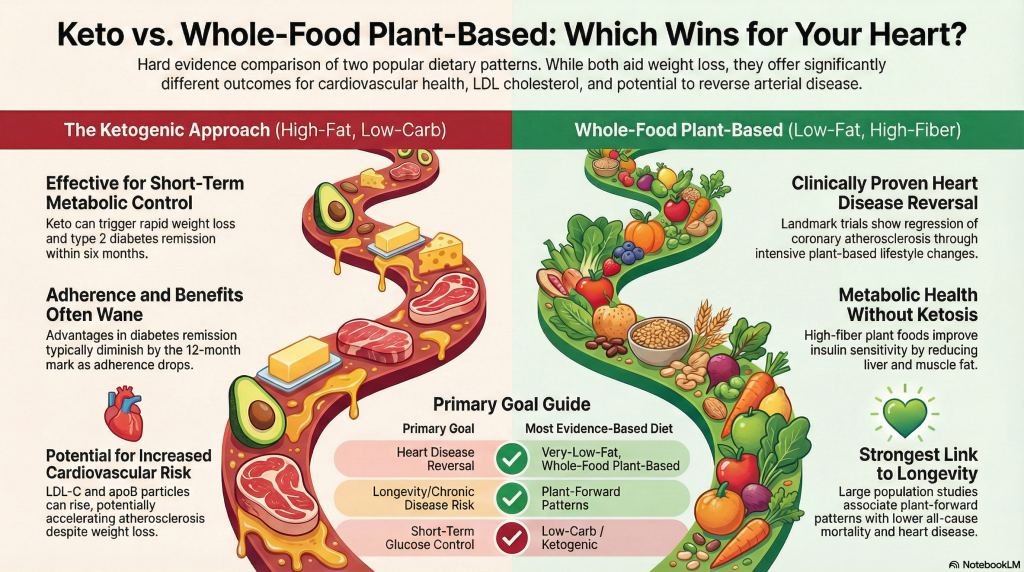
Short-term improvements in glucosioIl glucosio è lo zucchero che il sangue trasporta per nutrire le cellule. control and weight are real for many people, especially in type 2 diabeteIl diabete è una condizione in cui la glicemia rimane troppo alta, o perché il corpo produce troppa poca insulina o perché smette di rispondere all'insulina che produce.—often because carbohydrate restriction reduces glycemic loadA measure that combines both the quality and quantity of carbohydrate in a meal by multiplying the glycemic index of a food by the amount of carbohydrate it contains; carbohydrate restriction lowers glycemic load and can reduce post-meal blood glucose spikes. and can facilitate perdita di pesoLa perdita di peso significa ridurre il grasso corporeo, sia attraverso modifiche alimentari, esercizio fisico, farmaci o chirurgia. and medication reduction (6).
But two key scientific caveats:
- Durability is less impressive than the hype suggests. A major revisione sistematicaUna revisione sistematica cerca ogni studio su un determinato quesito utilizzando un metodo predefinito, per poi valutarli secondo criteri coerenti./meta-analisiUna meta-analisi combina statisticamente i risultati di molti studi separati in una stima complessiva. found low/very-low-carb diets can increase diabetes remission at ~6 months, but the advantage tends to diminish by 12 months as adesioneL'aderenza significa prendere davvero la medicina nel modo in cui è stata prescritta, giorno dopo giorno. drops and differences narrow (6).
- Cardiovascular risk markers can move in different directions. In longer-term “nutritional ketosisA metabolic state deliberately maintained through a very-low-carbohydrate diet, in which blood β-hydroxybutyrate is chronically elevated (typically 0.5–3 mmol/L) and the body preferentially burns fat and ketones for fuel; distinct from the much higher ketone levels seen in diabetic ketoacidosis.” interventions for type 2 diabetes, many fattori di rischioUn fattore di rischio è qualcosa che aumenta la probabilità di sviluppare una malattia: particelle di colesterolo alto, pressione alta, fumo, diabete, storia familiare. improve (weight, trigliceridiI trigliceridi sono la principale forma di grasso nel sangue e nelle riserve dell'organismo., glycemia), but LDL-C can rise in some participants—an issue that matters because atherosclerosis is driven strongly by apoB/LDL carico di particelleIl carico di particelle si riferisce al numero totale di particelle di lipoproteine aterogene circolanti nel plasma, misurato al meglio dall'ApoB; esso si distingue dalla massa di colesterolo perché è il conteggio fisico delle particelle — non la quantità di colesterolo che trasportano — a determinare la frequenza con cui le lipoproteine infiltrano e rimangono intrappolate nella parete arteriosa. (7,8).
Keto can be a useful therapeutic tool for glycemia and weight in some people, but it is not automatically the best choice for heart disease inversioneREVERSAL ha confrontato la terapia con statine moderata e intensiva, utilizzando l'ecografia intravascolare per misurare cosa è accaduto alla placca coronarica. or longevity, and lipid responses can be a deal-breaker for some.
What’s the strongest “hard evidence” that a low-fat whole-food plant-based pattern can reverse atherosclerosis?
 There are two landmark clinical lines of evidence often cited because they used objective imaging coronaricoTecniche non invasive o invasive, come la coronarografia quantitativa o l'ecografia intravascolare, utilizzate per visualizzare le dimensioni e le caratteristiche delle placche all'interno delle arterie coronarie; il lavoro di Ornish ed Esselstyn è degno di nota per aver utilizzato l'imaging coronarico oggettivo anziché affidarsi esclusivamente a dati sui sintomi o sugli eventi. and tracked clinical outcomes:
1) Ornish/Lifestyle Heart TrialThe Lifestyle Heart Trial, led by Dean Ornish, was a small randomized study testing an intensive lifestyle intervention — very low-fat plant-based diet, exercise, stress management, and group support — using serial coronary angiography; the intervention group's measured arterial narrowing improved slightly while controls worsened, but technical limitations of angiography, reference-segment narrow… (randomized):
Participants assigned to intensive lifestyle change including a very-low-fat, whole-foods dieta vegetarianaUna dieta vegetariana esclude la carne, e una dieta vegana esclude tutti i prodotti di origine animale. showed regression of coronary atherosclerosis vs. controls in the first year, and sustained benefits were reported in longer follow-up (9).
Five-year follow-up showed continued regression in the intensive group and more eventi cardiaciEventi cardiaci clinicamente significativi, tra cui infarto miocardico, angina instabile e morte cardiaca, utilizzati come endpoint di esito negli studi cardiovascolari. in controls (10).
2) Esselstyn cohort (longitudinal clinical series):
A very-low-fat dieta a base vegetale in patients with established CAD was associated with arrest and, in some cases, reversal of disease over years, with outcomes strongly linked to adherence (11).
Are these perfect studies? No—sample sizes were modest and lifestyle bundles include more than diet. But the direction and plausibility are powerful: when you dramatically reduce atherogenic lipoproteineUna lipoproteina è una piccola struttura che trasporta grassi e colesterolo attraverso il flusso sanguigno. Poiché i grassi non si dissolvono in acqua, hanno bisogno di un rivestimento proteico per viaggiare. and emphasize high-fiber, minimally processed plant foods, coronary disease progression can slow, stop, and sometimes regress.
If your goal is reversing atherosclerosis, the most direct clinical evidence base favors very-low-fat, whole-food plant-forward patterns paired with comprehensive risk-factor management (9–11). So clearly plant based diets win clearly in my opinion.
What about insulin sensitivity and weight loss on whole-food plant-based diets—is there evidence beyond “it sounds healthy”?
Yes—there are randomized trials showing meaningful metabolic benefits:
- In overweight adults, a low-fat plant-based intervention improved weight and sensibilità all'insulinaLa sensibilità all'insulina è il modo in cui le cellule rispondono all'insulina. È l'opposto dell'insulino-resistenza. and reduced metabolic risk factors (12).
- In type 2 diabetes, a randomized trial found a low-fat vegan diet improved controllo glicemicoGlycemic control is how steadily your blood sugar is kept in a healthy range over time. and cardiovascular risk factors compared with a conventional diabetes diet (13).
- A 2-year randomized weight-loss trial found a low-fat vegan diet produced sustained weight loss advantages compared with a more moderate low-fat diet in a real-world format (14).
Mechanistically, one consistent theme is that high-fiber, low–energy-density plant foods can promote spontaneous calorie reduction, and lowering intramyocellular/liver fat may improve insulino-resistenzaL'insulino-resistenza si verifica quando le cellule smettono di rispondere bene all'insulina, costringendo il pancreas a produrne sempre di più per svolgere la stessa funzione.—often without needing ketosis.
Conclusions: you don’t need ketosis to improve insulinaL'insulina è un ormone prodotto dal pancreas. Il suo compito principale è permettere allo zucchero di passare dal sangue alle cellule per produrre energia. sensitivity; well-designed plant-based diets can do it, and the approach often aligns better with heart-protective lipid targets (12–14).
If keto improves triglycerides and HDL, why isn’t it automatically heart-protective?
Because atherosclerosis risk is driven heavily by particelle contenenti apoBLe lipoproteine, tra cui LDL, IDL, VLDL e i loro residui, che trasportano ciascuna una molecola di apolipoproteina B sulla loro superficie; il numero di particelle (anziché la sola massa di colesterolo) è un fattore chiave dell'aterosclerosi poiché ciascuna particella può essere trattenuta nella parete arteriosa. (LDL, VLDLLe VLDL, o lipoproteine a bassissima densità, sono le particelle prodotte dal fegato per trasportare i trigliceridi nel resto del corpo. remnants) and esposizione cumulativa over time.
In nutritional ketosis interventions, it’s common to see lower triglycerides and sometimes higher HDLLe lipoproteine ad alta densità, o HDL, sono le particelle spesso definite "colesterolo buono". Raccolgono il colesterolo dai tessuti e lo trasportano al fegato., but some studies report higher LDL-C (and variable LDL particle effects) (7,8).
If LDL/apoB rises substantially—especially if the diet is high in saturated fat—this can conflict with the core lipid-lowering strategy used to prevent and treat atherosclerotic disease.
Metabolic “wins” don’t automatically cancel out a large rise in LDL/apoB.
What does the longevity evidence say—do the longest-lived populations look “keto”?
In human population studies, dietary patterns associated with lower mortality and lower cardiopatia ischemicaUna condizione in cui un ridotto afflusso di sangue al muscolo cardiaco, solitamente dovuto all'aterosclerosi delle arterie coronarie, provoca sintomi come l'angina o l'infarto miocardico. risk generally skew plant-forward rather than very-low-carb/high-fat.
Two large prospective datasets often discussed in this context:
- Adventist Health Study-2: vegetarian dietary patterns were associated with lower mortalità per tutte le causeLa mortalità per tutte le cause indica il decesso dovuto a qualsiasi causa, e non solo a malattie cardiache: l'esito più ampio e difficile da manipolare che uno studio possa misurare. compared with nonvegetarian patterns (15).
- EPIC-OxfordUn'ampia coorte prospettica britannica che ha arruolato una percentuale consistente di vegetariani e vegani, facente parte della più ampia European Prospective Investigation into Cancer and Nutrition; ha riportato un rischio totale di ictus più elevato — guidato dall'ictus emorragico — tra i vegetariani rispetto a chi mangia carne. (18+ years): vegetarians had a lower risk of ischemic heart disease than meat eaters (with nuanced findings for ictusUn ictus si verifica quando il flusso sanguigno verso una parte del cervello si interrompe, a causa di un'ostruzione o di un'emorragia. that highlight the importance of nutrient adequacy—e.g., B12) (16).
These aren’t “whole-food plant-based” trials, and observational data can’t prove causalitàCausation means one thing actually makes another thing happen. It is different from correlation, which only means two things tend to show up together.. But they’re consistent with a broad scientific pattern: diets centered on minimally processed plant foods are compatible with long-term cardiometabolic health and lower mortality.
The best longevity-linked dietary patterns in large cohorts look much closer to plant-forward than to strict keto.
So what’s the most evidence-based way to frame this for the general public?
If your primary goal is heart disease reversal / atherosclerosis regression:
A very-low-fat, whole-food, plant-based pattern has some of the strongest direct clinical signals (including angiographic evidence) and aligns with LDL/apoB lowering (9–11).
If your primary goal is short-term glucose control or appetite/weight help:
Low-carb/keto can work for some—especially in type 2 diabetes—but the advantage may lessen over time and lipid responses should be monitored closely (6–8).
If your goal is longevity / chronic disease risk reduction at scale:
The strongest population evidence tilts toward plant-forward patterns (with attention to nutrient adequacy like B12) (15,16).
Riferimenti
- Clarke K, Tchabanenko K, Pawlosky R, et al. Kinetics, safety and tolerability of (R)-3-hydroxybutyl (R)-3-hydroxybutyrate in healthy adult subjects. Regul Toxicol Pharmacol. 2012;63(3):401-408. doi:10.1016/j.yrtph.2012.04.008
- Cox PJ, Kirk T, Ashmore T, et al. Nutritional Ketosis Alters Fuel Preference and Thereby Endurance Performance in Athletes. Cell Metab. 2016;24(2):256-268. doi:10.1016/j.cmet.2016.07.010
- Evans M, McClure TS, Koutnik AP, Egan B. Exogenous Ketone Supplements in Athletic Contexts: Past, Present, and Future. Sports Med. 2022;52(Suppl 1):25-67. doi:10.1007/s40279-022-01756-2
- Soto-Mota A, Norwitz NG, Clarke K. Why a d-β-hydroxybutyrate monoester?. Biochem Soc Trans. 2020;48(1):51-59. doi:10.1042/BST20190240
- Stubbs BJ, Cox PJ, Kirk T, Evans RD, Clarke K. Gastrointestinal Effects of Exogenous Ketone Drinks are Infrequent, Mild, and Vary According to Ketone Compound and Dose. Int J Sport Nutr Exerc Metab. 2019;29(6):596-603. doi:10.1123/ijsnem.2019-0014
- Goldenberg JZ, Day A, Brinkworth GD, et al. Efficacy and safety of low and very low carbohydrate diets for type 2 diabetes remission: systematic review and meta-analysis of published and unpublished randomized trial data. BMJ. 2021;372:m4743. Published 2021 Jan 13. doi:10.1136/bmj.m4743
- Athinarayanan SJ, Adams RN, Hallberg SJ, et al. Long-Term Effects of a Novel Continuous Remote Care Intervention Including Nutritional Ketosis for the Management of Type 2 Diabetes: A 2-Year Non-randomized Clinical Trial. Front Endocrinol (Lausanne). 2019;10:348. Published 2019 Jun 5. doi:10.3389/fendo.2019.00348
- Athinarayanan SJ, Hallberg SJ, McKenzie AL, et al. Impact of a 2-year trial of nutritional ketosis on indices of cardiovascular disease risk in patients with type 2 diabetes. Cardiovasc Diabetol. 2020;19(1):208. Published 2020 Dec 8. doi:10.1186/s12933-020-01178-2
- Ornish D, Brown SE, Scherwitz LW, et al. Can lifestyle changes reverse coronary heart disease? The Lifestyle Heart Trial. Lancet. 1990;336(8708):129-133. doi:10.1016/0140-6736(90)91656-u
- Ornish D, Scherwitz LW, Billings JH, et al. Intensive lifestyle changes for reversal of coronary heart disease. JAMA. 1998;280(23):2001-2007. doi:10.1001/jama.280.23.2001
- Esselstyn CB Jr, Ellis SG, Medendorp SV, Crowe TD. A strategy to arrest and reverse coronary artery disease: a 5-year longitudinal study of a single physician’s practice. J Fam Pract. 1995;41(6):560-568.
- Barnard ND, Scialli AR, Turner-McGrievy G, Lanou AJ, Glass J. The effects of a low-fat, plant-based dietary intervention on body weight, metabolism, and insulin sensitivity. Am J Med. 2005;118(9):991-997. doi:10.1016/j.amjmed.2005.03.039
- Barnard ND, Cohen J, Jenkins DJ, et al. A low-fat vegan diet improves glycemic control and cardiovascular risk factors in a randomized clinical trial in individuals with type 2 diabetes. Diabetes Care. 2006;29(8):1777-1783. doi:10.2337/dc06-0606
- Turner-McGrievy GM, Barnard ND, Scialli AR. A two-year randomized weight loss trial comparing a vegan diet to a more moderate low-fat diet. Obesity (Silver Spring). 2007;15(9):2276-2281. doi:10.1038/oby.2007.270
- Orlich MJ, Singh PN, Sabaté J, et al. Vegetarian dietary patterns and mortality in Adventist Health Study 2. JAMA Intern Med. 2013;173(13):1230-1238. doi:10.1001/jamainternmed.2013.6473
- Tong TYN, Appleby PN, Bradbury KE, et al. Risks of ischaemic heart disease and stroke in meat eaters, fish eaters, and vegetarians over 18 years of follow-up: results from the prospective EPIC-Oxford study. BMJ. 2019;366:l4897. Published 2019 Sep 4. doi:10.1136/bmj.l4897