Neu5Gc, Proteção à Base de Plantas e Doença Cardíaca Aterosclerótica
Q1. O que é Neu5Gc e por que ele está ligado a doenças cardíacas?
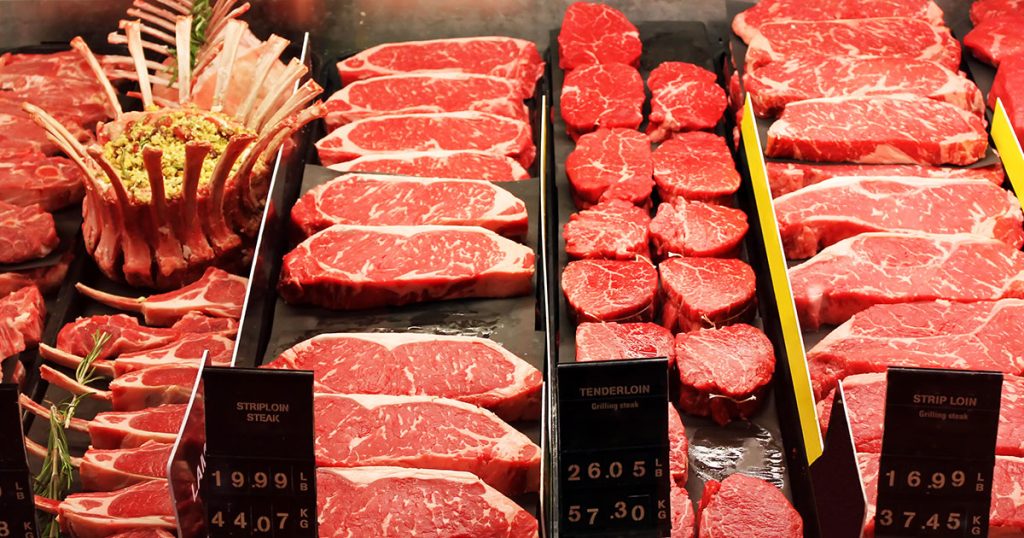
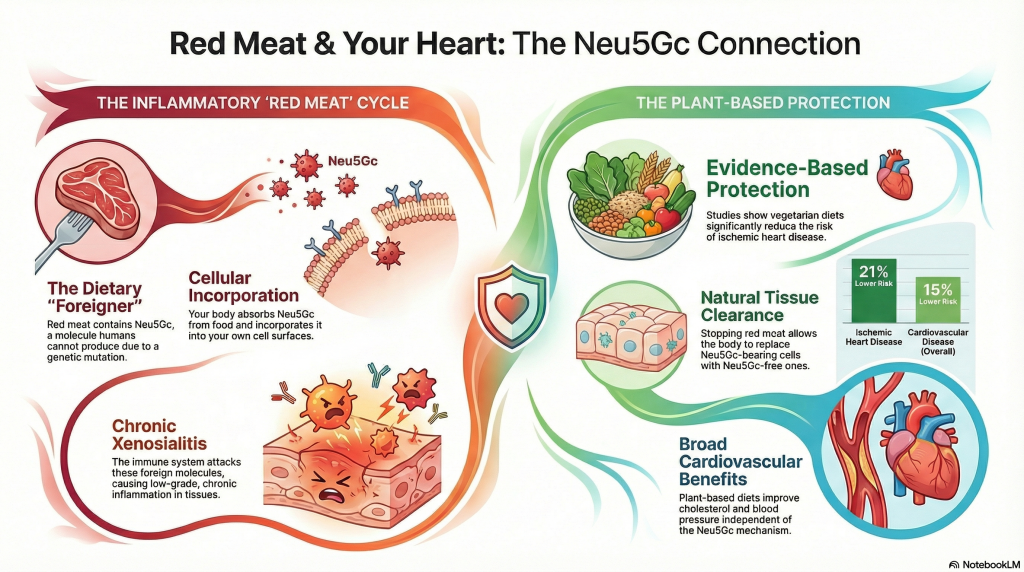
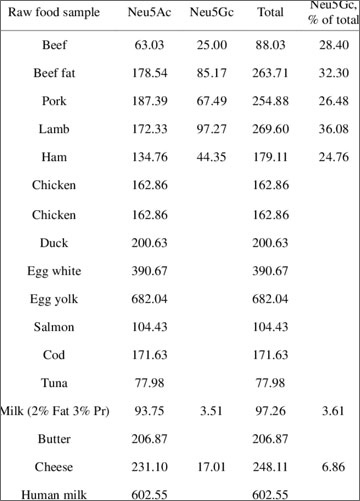 Neu5GcNeu5Gc is a sugar molecule found in red meat. Humans lost the ability to make it millions of years ago, but we still absorb it when we eat beef, pork, or lamb. (N-glycolylneuraminic acid) is a type of sialic acid found on the cells of most mammals—meaning it is present in carne vermelhaRed meat includes beef, pork, and lamb. (beef, pork, lamb). Humans, however, cannot make Neu5Gc because of a mutation in the CMAH gene that occurred after our lineage split from great apes.¹²
Despite this, small amounts of Neu5Gc have been detected in normal human tissues and tumors, which indicates it is absorbed from the diet and incorporated into human cells.¹³
This matters because Neu5Gc is “foreign” to the human immune system. When it appears on human cells after red meat consumption, it can trigger an immune response, setting the stage for chronic inflamaçãoA inflamação é a resposta do seu sistema imunológico a uma lesão ou a algo que ele trata como um invasor. Ela traz inchaço, calor e células de limpeza. that may contribute to atherosclerotic heart diseaseA condition in which plaques composed of lipids, inflammatory cells, and fibrous tissue build up within the walls of the coronary arteries, narrowing them and reducing blood flow to the heart; it is the leading cause of heart attacks worldwide..³
Q2. How does Neu5Gc get into human tissues?
 Several lines of evidence show that Neu5Gc from food can end up in human cells:
- In human tissue samples and cancer cells, Neu5Gc has been found on cell-surface glicanosA carbohydrate chain or sugar molecule attached to proteins or lipids on cell surfaces; Neu5Gc is incorporated into human cell-surface glycans after red meat consumption, where it is recognized by the immune system as foreign. despite humans being unable to synthesize it.¹³
- Laboratory studies show that human cells can take up free Neu5Gc and incorporate it into cell-surface structures via endocytic and lysosomal transport pathwaysCellular mechanisms by which material outside the cell is engulfed in vesicles (endocytosis) and processed through lysosomes; in this context, the route by which dietary Neu5Gc enters human cells and is incorporated into cell-surface structures..²
In other words, when you eat red meat, Neu5Gc doesn’t just pass through your body. It can become part of your tissues.
Q3. What is “xenosialitis,” and why might it matter for atherosclerotic heart disease?
Because Neu5Gc is non-human, the immune system recognizes Neu5Gc-bearing glycans as xeno-antigensA foreign molecular structure recognized by the immune system as non-self; dietary Neu5Gc incorporated into human cell surfaces acts as a xeno-antigen because the human body naturally produces antibodies against it. (foreign structures). Humans naturally produce circulating antibodies against Neu5Gc.³⁶
When these antibodies bind Neu5Gc on human cells, they can drive a chronic, low-grade inflammatory process termed **“xenossialiteXenosialitis is a state of chronic, smoldering vascular inflammation that arises when dietary Neu5Gc from red meat is incorporated into human endothelial tissue and subsequently attacked by the body's own anti-Neu5Gc antibodies, which recognize it as a foreign 'xeno-autoantigen.'.”**³⁶
Key points from experimental work:
- Neu5Gc-deficient mice that mimic humans can incorporate dietary Neu5Gc into tissues.⁴
- When these mice are also given anti-Neu5Gc antibodies, they develop antibody-mediated inflammation and higher rates of certain cancers.⁴
- A detailed review suggests this same antibody–antigen interaction could plausibly contribute to other chronic conditions, including atherosclerosis, though this remains unproven in humans.³
Thus, xenosialitis is a biologically plausible mechanism linking red meat → Neu5Gc → immune reaction → inflammation, which could contribute to atherosclerotic processes.
Q4. Does Neu5Gc drive atherosclerosis directly?
 In humans, we do not yet have direct clinical proof that dietary Neu5Gc causes atherosclerotic heart disease. There are, however, strong mechanistic and animal data:
- In a human-like mouse model (Cmah⁻/⁻ LdlrLDLR é o gene que fabrica o receptor de LDL, a porta de encaixe que seu fígado usa para retirar partículas de colesterol da circulação.⁻/⁻), adding Neu5Gc to a high-fat diet and generating anti-Neu5Gc antibodies accelerated ateroscleroseA aterosclerose é a doença por trás da maioria dos ataques cardíacos e de muitos acidentes vasculares cerebrais. Partículas de colesterol ficam presas na parede de uma artéria, o corpo envia células imunológicas para limpar e, ao longo dos anos, essa bagunça endurece, transformando-se em placa. compared with mice that did not receive Neu5Gc.⁵
- The same model supports the idea that both intrinsic changes (lack of Neu5Gc inside cells) and extrinsic factors (dietary Neu5Gc plus antibodies) can influence placaPlaca é o acúmulo de colesterol, células imunológicas, tecido cicatricial e cálcio dentro da parede de uma artéria. development.⁵
These findings suggest Neu5Gc could be one more factor—among others like LDL cholesterol, hipertensãoHipertenção é o termo médico para pressão arterial alta., tabagismoFumar danifica o revestimento dos vasos sanguíneos, aumenta a pressão arterial, faz o sangue coagular mais facilmente e acelera o crescimento de placas.—that contributes to atherosclerotic plaque formation. But at present, this remains experimental, not clinical, evidence.
Q5. What about Neu5Ac? Can it protect against Neu5Gc?
Neu5Ac (N-acetylneuraminic acid)Neu5Ac is the predominant sialic acid found on human cell surfaces, synthesized de novo in all vertebrates; because humans lack CMAH, Neu5Ac cannot be converted to Neu5Gc, making it the only sialic acid decorating human glycoproteins and glycolipids. is the sialic acid that humans lata synthesize and normally express on their cells. Some intriguing mouse work has looked at whether Neu5Ac can “compete” with Neu5Gc:
- No Cmah⁻/⁻ Ldlr⁻/⁻ mouse modelA genetically engineered mouse that lacks both the CMAH gene (making it unable to produce Neu5Gc, like humans) and the LDL receptor gene (making it prone to high cholesterol and atherosclerosis); used to study how dietary Neu5Gc and anti-Neu5Gc antibodies affect plaque development., switching from a Neu5Gc-rich diet to a Neu5Gc-free diet, or adding a ~5-fold excess of Neu5Ac, reduced atherosclerosis that had been worsened by Neu5Gc.⁵
- Remarkably, feeding a Neu5Ac-enriched diet alone (without Neu5Gc) also showed a protective effect against atherosclerosis in these mice—but only in the human-like Cmah-null background.⁵
However:
- These results are limited to mice.
- There are no human trials showing that Neu5Ac supplementation prevents heart disease or reverses plaque.
- At present, no clinical guidelines recommend Neu5Ac supplements or specific Neu5Ac-rich foods for cardiovascular prevention.
So, Neu5Ac is scientifically interesting, but not yet a human therapy or dietary recommendation.
Q6. How strong is the evidence for red meat and disease risk in humans?
Large human studies and meta-analyses link higher red meat intake to increased risks of:
- Colorectal cancer and some other cancers (potentially via Neu5Gc-related mechanisms, among others).⁴
- Doença cardiovascularDoença cardiovascular é o termo abrangente para problemas no coração e nos vasos sanguíneos, incluindo ataques cardíacos, derrames e artérias das pernas bloqueadas. e total mortalityMortalidade por todas as causas significa morte por qualquer causa, não apenas doenças cardíacas — o desfecho mais amplo e difícil de manipular que um estudo pode medir. through multiple pathways (saturated fat, ferro hemeThe form of iron bound to hemoglobin and myoglobin in animal tissue, absorbed more efficiently than plant-derived non-heme iron; cited as one of the potentially harmful components of red meat contributing to cardiovascular and cancer risk., sodium, overall dietary pattern), with Neu5Gc as a plausible but not proven contributor.³⁴
The Neu5Gc mechanism helps explain por que red meat might have harmful long-term effects, but it is only one piece of a complex picture.
Q7. What is the evidence for plant-based diets and cardiovascular protection?
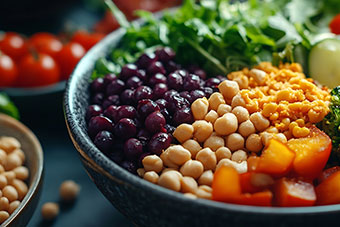 Here, the evidence is much stronger and directly human:
- A revisão sistemáticaA systematic review searches for every study on a question using a pre-declared method, then assesses them by consistent criteria. e metanáliseUma metanálise combina estatisticamente os resultados de vários estudos separados em uma estimativa geral. of 13 coorte prospectivaUm coorte prospectivo recruta pessoas saudáveis, registra suas características e, em seguida, aguarda para ver o que acontece. studies (over 844,000 participants) found that dietas vegetarianasUma dieta vegetariana exclui carne, e uma dieta vegana exclui todos os produtos de origem animal. were associated with a 15% lower risk of cardiovascular disease e um 21% lower risk of doença cardíaca isquêmicaUma condição em que o suprimento sanguíneo reduzido para o músculo cardíaco, geralmente devido à aterosclerose das artérias coronárias, causa sintomas como angina ou infarto do miocárdio., compared with non-vegetarian diets.⁷
- An umbrella reviewA systematic review of multiple existing meta-analyses on a topic, providing a high-level synthesis of evidence across many studies; cited in the article to summarize findings on plant-based diets and cardiovascular outcomes. of meta-analyses concluded that vegetarian and vegan diets are associated with meaningful reductions in cardiovascular disease incidence and mortality, as well as cerebrovascular diseaseDisease affecting the blood vessels supplying the brain, including stroke; cited alongside cardiovascular disease as an outcome reduced by vegetarian and vegan diets in an umbrella review of meta-analyses..⁸
- A meta-analysis of dieta à base de plantas adesãoAdesão significa realmente tomar o seu medicamento da forma como ele foi prescrito, dia após dia. and cardiovascular outcomes showed that more plant-forward patterns are linked to lower cardiovascular disease and mortality risk.⁹
- A meta-analysis in the European Heart Journal found that vegetarian and vegan diets significantly reduce colesterol totalO colesterol total soma o colesterol em todas as suas partículas, tanto as prejudiciais quanto as benéficas. and LDL cholesterol, key fatores de riscoUm fator de risco é algo que aumenta a sua chance de desenvolver uma doença — partículas de colesterol alto, pressão alta, tabagismo, diabetes, histórico familiar. for atherosclerotic heart disease.¹⁰
Importantly, these benefits are documented independent of Neu5Gc. They reflect broad improvements in lipids, pressão arterialA pressão arterial é a força do sangue empurrando as paredes das artérias. Ela é escrita como dois números, como 120/80. O número superior é a pressão quando o coração se contrai, o inferior é quando ele relaxa., inflammation, and body weight.
Q8. Do plant-based diets help “clear out” Neu5Gc?
Plant foods do não contain Neu5Gc, which is a major advantage. While we don’t have precise human data on Neu5Gc clearance rates, the following points are reasonable:
- Stopping red meat intake halts new Neu5Gc incorporation into tissues.¹³⁴
- Cells naturally turn over over time; as this happens, Neu5Gc-bearing cells are gradually replaced with Neu5Gc-free cells.³
- In cell and animal models, removing Neu5Gc from the diet reduces tissue Neu5Gc levels and associated immune reactivity.¹⁴
Thus, a plant-based or strongly plant-forward diet likely allows the body to gradually reduce existing Neu5Gc burden, while simultaneously improving classic cardiovascular risk factors.
Q9. So what is the practical, evidence-based takeaway?
Based on current human and experimental evidence:
- Most solid evidence:
- Reducing or avoiding red meat lowers exposure to Neu5Gc and other harmful components.
- Increasing whole plant foods reduces cardiovascular disease risk through multiple well-documented mechanisms.⁷⁸⁹¹⁰
- Promising but not yet proven in humans:
- Neu5Gc as a direct driver of atherosclerotic heart disease via xenosialitis.³⁵⁶
- Neu5Ac as a “protective” dietary intervention against atherosclerosis.⁵
In practical terms, if your goal is to reduce the risk of atherosclerotic heart disease:
- Emphasize whole plant foods (vegetables, fruits, whole grains, legumes, nuts, seeds).
- Limit or avoid red meat, especially processed red meat.
- View Neu5Gc and Neu5Ac as useful explanatory biology—not yet as clinical targets.
Referências
- Tangvoranuntakul P, Gagneux P, Diaz S, et al. Human uptake and incorporation of an immunogenic nonhuman dietary sialic acid. Proc Natl Acad Sci U S A. 2003;100(21):12045-12050. doi:10.1073/pnas.2131556100
- Bardor M, Nguyen DH, Diaz S, Varki A. Mechanism of uptake and incorporation of the non-human sialic acid N-glycolylneuraminic acid into human cells. J Biol Chem. 2005;280(6):4228-4237. doi:10.1074/jbc.M412040200
- Dhar C, Sasmal A, Varki A. From “Serum Sickness” to “Xenosialitis”: Past, Present, and Future Significance of the Non-human Sialic Acid Neu5Gc. Front Immunol. 2019;10:807. Published 2019 Apr 17. doi:10.3389/fimmu.2019.00807
- Samraj AN, Pearce OM, Läubli H, et al. A red meat-derived glycan promotes inflammation and cancer progression. Proc Natl Acad Sci U S A. 2015;112(2):542-547. doi:10.1073/pnas.1417508112
- Kawanishi K, Coker JK, Grunddal KV, et al. Dietary Neu5Ac Intervention Protects Against Atherosclerosis Associated With Human-Like Neu5Gc Loss-Brief Report. Arterioscler Thromb Vasc Biol. 2021;41(11):2730-2739. doi:10.1161/ATVBAHA.120.315280
- Samraj AN, Bertrand KA, Luben R, et al. Polyclonal human antibodies against glycans bearing red meat-derived non-human sialic acid N-glycolylneuraminic acid are stable, reproducible, complex and vary between individuals: Total antibody levels are associated with colorectal cancer risk. PLoS One. 2018;13(6):e0197464. Published 2018 Jun 18. doi:10.1371/journal.pone.0197464
- Dybvik JS, Svendsen M, Aune D. Vegetarian and vegan diets and the risk of cardiovascular disease, ischemic heart disease and stroke: a systematic review and meta-analysis of prospective cohort studies. Eur J Nutr. 2023;62(1):51-69. doi:10.1007/s00394-022-02942-8
- Ocagli H, Berti G, Rango D, et al. Association of Vegetarian and Vegan Diets with Cardiovascular Health: An Umbrella Review of Meta-Analysis of Observational Studies and Randomized Trials. Nutrients. 2023;15(19):4103. Published 2023 Sep 22. doi:10.3390/nu15194103
- Quek J, Lim G, Lim WH, et al. The Association of Plant-Based Diet With Cardiovascular Disease and Mortality: A Meta-Analysis and Systematic Review of Prospect Cohort Studies. Front Cardiovasc Med. 2021;8:756810. Published 2021 Nov 5. doi:10.3389/fcvm.2021.756810
- Koch CA, Kjeldsen EW, Frikke-Schmidt R. Vegetarian or vegan diets and blood lipids: a meta-analysis of randomized trials. Eur Heart J. 2023;44(28):2609-2622. doi:10.1093/eurheartj/ehad211