种子油健康吗?是非题
一项重要的科学综述 种子油 对决 橄榄油, 饱和脂肪, ,以及全食物脂肪来源
摘要
饮食中脂肪的争论已经从低脂范式演变为脂质特异性范式。历史上,指南建议用多不饱和脂肪酸替代饱和脂肪酸以降低血清 胆固醇 并防止 冠心病. 在过去的十年里,这一指导原则受到了富含欧米茄-6的工业种子油这一假说的挑战 亚油酸 促进系统性 炎症 以及 脂质过氧化, ,同时人们对特级初榨橄榄油和天然全食物脂肪基质的心血管益处日益关注。本综述评估了其生理、机制及 临床试验 证据,治疗 载脂蛋白 B (载脂蛋白B)-含 脂蛋白 作为...的根本动因 动脉粥样硬化. 自始至终,都在机械论和 替代标志物, 例如血流介导的扩张和炎症 生物标志物, ,以及诸如之类的硬临床终点 心肌梗死, 中风, ,以及心血管死亡。定量声明摘自同行评审的原始研究和系统性证据综合;无法与已发表来源进行核实的声明已被删除。.
1. 引言
围绕膳食脂肪的营养学争论已从简单的低脂肪模式转向复杂、针对特定脂类的分析。公众健康指南历史上曾建议用 饱和脂肪酸 (SFAs) 用 多不饱和脂肪酸 减少血清 总胆固醇 (TC)并预防冠心病(CHD)。在过去十年中,这一指导原则受到了以下假说的挑战:富含 omega-6 亚油酸(LA,18:2n-6)的工业种子油会促进慢性全身性炎症和脂质过氧化。与此同时,越来越多的证据表明 特级初榨橄榄油 以及源自全食物的脂质基质。1]
本篇综述对未精炼和精炼种子油进行了平衡评估,并将其与特级初榨橄榄油(EVOO)、精炼橄榄油、饱和脂肪酸(SFA)以及全食物脂肪来源进行了对比。分析的核心是含ApoB的脂蛋白作为动脉粥样硬化致病驱动因素的作用,同时探讨了 餐后 提取脂肪对血管的影响独立于其对循环脂质的影响,从而增加了发病风险。2], [3]
2. 种子油 (Seed Oils) 的危害真的独一无二吗?
含有不同数量亚油酸的种子油(大豆油、玉米油、向日葵油、红花油、菜籽油、棉籽油、葡萄籽油和米糠油)是否具有超出其他精炼脂质的独特不良影响,这一假设仍在积极研究中。菜籽油按惯例在此归为一类,但它主要含单不饱和脂肪酸,并提供α-亚麻酸,因此不应将其视为可与高亚油酸油类互换。这种担忧植根于化学结构:多不饱和脂肪酸包含多个由 双烯丙基亚甲基, ,使其易受夺氢和脂质过氧化的影响。6]
在现代饮食中,这些油主要作为加工和超加工食品基质的成分被消耗,这混淆了观察性研究,因为精炼种子油的影响很难与精炼(食品)的影响区分开来 碳水化合物, ,高钠且低 纤维.
在对照试验中作为孤立的饮食成分进行评估时,种子油并未表现出可归因于其作为一个类别的独特的不良心脏代谢影响。相反,根据其脂肪酸谱,它们显示出可预测的脂质调节作用。与黄油和其他富含饱和脂肪酸(SFA)的脂肪相比,不饱和植物油始终能降低低密度脂蛋白胆固醇(LDL-C);高油酸油替代试验也表明载脂蛋白B(ApoB)有适度降低。4], [5]
2.1 脂肪酸组成与氧化稳定性
表1总结了主要添加油脂的脂肪酸组成和相对抗氧化稳定性。对……的敏感性 自动氧化 随着双键数量的增加,因此饱和与 单不饱和脂肪 比多不饱和种子油具有显著更高的抗氧化稳定性。传统的高亚油酸种子油与其高油酸品种在化学成分上截然不同:高油酸葵花籽油、红花油和大豆油主要由单不饱和的油酸组成,因此比传统的同类高亚油酸油具有更高的稳定性。6]
| 脂肪 / 油 | 主职业 | 主要脂肪酸 | 双键 | 氧化敏感性 |
| 椰子油 | 饱和 | 月桂酸(12:0)、肉豆蔻酸(14:0) | 0 | 极低 |
| 黄油 | 饱和 | 棕榈酸 (16:0),硬脂酸 (18:0) | 0 | 极低 |
| 特级初榨橄榄油 | 单不饱和 | 油酸 (18:1n-9) | 1 | 低(受 多酚) |
| 菜籽油 | 单不饱和脂肪酸 / 多不饱和脂肪酸 | 油酸 (18:1n-9)、亚油酸 (18:2n-6)、α-亚麻酸 (18:3n-3) | 1 到 3 | 适度 |
| 大豆油 | 多不饱和 | 亚油酸 (18:2n-6) | 2 | 高 |
| 玉米油 | 多不饱和 | 亚油酸 (18:2n-6) | 2 | 高 |
| 红花油(高亚油酸) | 多不饱和 | 亚油酸 (18:2n-6) | 2 | 非常高 |
| 红花油(高油酸) | 单不饱和 | 油酸 (18:1n-9) | 1 | 低 |
表 1. 主要添加脂肪的脂肪酸组成和相对抗氧化稳定性。组成数据反映了标准脂质化学参考资料。氧化敏感性分级是定性的和相对的,适用于可比的储存和加热条件;它们不是测得的通用值,实际的抗氧化稳定性随精炼、生育酚和 抗氧化剂 含量、温度、氧气暴露和脂肪酸组成。.
2.2 行业资金与解读
由于行业资助的营养研究普遍存在,对膳食脂肪相关文献的评估变得相当复杂。一项针对饮料研究的方法学分析发现,行业赞助与有利于赞助方的结论之间存在显著关联; 在干预性研究中,将“完全由行业资助”与“无行业资助”进行比较时,得出有利结论与不利结论的比值比为7.61(95%置信区间1.27至45.73),且16项完全由行业资助的干预性研究中,无一报告得出不利结论。 [7]
该分析关注的是饮料而非膳食脂肪,从中无法得出特定于脂肪的比值比。在此引用它只是为了说明赞助偏向的一般方向。秉持一致性原则,必须承认这种审视在脂肪争论中是对称适用的:商品和生产商赞助在双方都存在,在种子油研究和橄榄油研究中皆是如此。商业赞助本身并不能使一项研究无效,但它凸显了由独立、无商业赞助的研究对辩论各个方面进行重复验证的价值。7]
3. 主要问题是添加油而不是种子油吗?
另一种假设认为,餐后血管功能障碍的主要决定因素是摄入任何类型的提取、纯化油(包括橄榄油),而不是种子油特定的脂肪酸谱。根据这一模型,机械或化学提取剥夺了脂质的保护性细胞结构、纤维和微量营养素基质,将其转化为高度生物利用、高热量的液体。3]
提取的油脂在上消化道中比完整的食物基质具有更快的生物可及性,从而导致餐后循环中的 乳糜微粒 和富含甘油三酯的脂蛋白。这可能会引发短暂的 氧化应激 以及 内皮功能障碍. 摄入完整全食物基质中的脂肪会产生更缓慢、更受控的吸收曲线,因为膳食纤维和完整的植物细胞壁充当了物理屏障,减缓了脂肪酶的接触。这已经在杏仁中得到了直接证明:一项针对20名男性的随机交叉试验比较了脂肪含量均为54克的餐食,结果发现,与杏仁油加脱脂杏仁粉相比,完整杏仁颗粒引发的餐后甘油三酯反应要小得多。与第2.2节的对称性原则一致,该试验得到了加州杏仁委员会(Almond Board of California)的资助,更广泛的杏仁食物基质文献也得到了杏仁行业的支持。目前尚未对橄榄、大豆或牛油果进行类似的对照比较,因此将其推广到坚果之外仍属于推论。25], [26]
3.1 添加的脂质对血管生理学的机制影响
已经提出了几种相互关联的途径,通过这些途径,提取的油可能会影响血管健康。这些是得到餐后生理学支持的机制性假设,而不是硬终点试验的支持,并以此形式提出。3]
- 一氧化氮 以及 内皮功能: 据认为,餐后血脂的大幅飙升会增加超氧化物的生成并减少 一氧化氮生物利用度, ,从而导致一过性血管收缩功能障碍。在一项人体对照研究中,抗氧化维生素C和E减轻了71%引起的餐后功能障碍,这表明氧化应激与该反应有关。[8]
- 脂蛋白的进入与滞留: 餐后内皮功能紊乱被假设能促进含ApoB的脂蛋白进入内皮下基质,这是什么的起始步骤 动脉粥样硬化发生, ,尽管餐后相关文献本身并未证明其能穿透动脉壁。2], [3]
现有机制证据表明,提取油无论其脂肪酸组成如何,都可能导致短暂的餐后内皮功能障碍。反复发生的餐后内皮功能障碍代表了一种生物学上合理的机制,值得进一步研究。尽管在生物学上是合理的,但尚无任何人体试验表明反复出现的短暂FMD受损会独立加速 斑块 调整载脂蛋白B(ApoB)暴露量后的进展,且尚无试验直接证明该途径在人体中会进展为斑块。3]
4. 流量介导的扩张与内皮功能
流介导的血管扩张反应 臂的 动脉 是一个成熟的非侵入性一氧化氮依赖性内皮功能测量方法,且与心血管事件前瞻性相关。在 元分析 在包含 5,547 名参与者的 14 项观察性研究中,受损的肱动脉 FMD 与未来的心血管事件显著相关,合并的 相对危险度 FMD绝对每增加百分之一,即为0.87 [27] 这是一种预后关联,而不是对 FMD 作为 替代终点 用于治疗效果。必须明确指出,FMD是一个替代指标,而不是临床终点:它测量的是血管的生理特性,FMD的变化本身并不构成 心脏病发作, ,可以预防中风或死亡。其价值在于机制上的理解,而不在于量化临床获益。27]
4.1 脂质餐后内皮反应
A 系统评价 一项关于单餐饮食对内皮功能急性影响的Meta分析(包含131项研究,其中90项纳入定量综合分析)发现,餐后内皮功能出现了具有统计学意义的下降,降幅为 肱动脉血流介导的血管舒张功能. [3]
- 2小时后:FMD下降了1.02个百分点(95%置信区间为-1.34至-0.70;P < 0.01)。[3]
- 3小时时:FMD下降了1.04个百分点(95%两侧置信区间为-1.48至-0.59;P < 0.001)。[3]
- 4小时后:FMD下降了1.19个百分点(95%两端置信区间为-1.53至-0.84;P < 0.01)。[3]
脂肪供能比与3小时内FMD的变化呈负相关(P < 0.01),这与剂量相关的餐后效应一致;富含甘油三酯的脂血症和氧化应激是候选机制,而非已证实的机制。3](图 1)
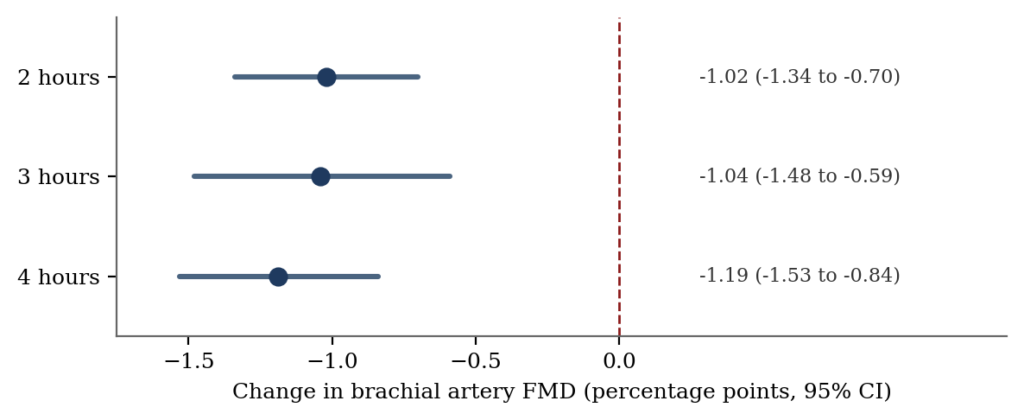
图1. 单次高脂餐后肱动脉血流介导的舒张反应的变化,汇总自各项试验。数值为百分比点的均值差,95%置信区间为[X,Y]。 置信区间. 。FMD是内皮功能的替代指标,而非临床终点。来自参考文献[3].
4.2 橄榄油地中海饮食悖论
血管生物学中的一个关键观察是Vogel及其同事描述的橄榄油FMD悖论。十名健康、血脂正常的受试者食用了含有来自不同来源的50克脂肪、热量为900大卡的餐食。[8]
橄榄油餐使餐后FMD降低了31%,从14.3%降至9.9%(P = 0.008),而菜籽油餐和鲑鱼餐则未产生显著下降。 观察到餐后血清 甘油三酯 以及FMD的变化(r = -0.47;P < 0.05)。 当橄榄油餐搭配富含抗氧化剂的食物或维生素C和E时,这种下降得以显著抑制(分别由65%和71%实现)。该实验表明,在这些条件下,高特级初榨橄榄油餐并不能预防餐后FMD功能受损。 这是一项针对10人的急性高脂负荷试验:实验餐中含有约50克脂肪,远高于许多人的典型单餐脂肪摄入量,因此无论是反应的幅度还是各类食用油的排名,均不应直接推断至日常饮食情况。[8]
特级初榨橄榄油对内皮功能的保护作用通常归因于其亲水性环烯醚萜酚类物质,包括羟基酪醇、橄榄苦苷、, 橄榄油刺激醛, ,以及齐墩果素,它们在体外充当自由基清除剂。这一归因应当谨慎对待,本综述并未将其视为既定事实。该文献中的资助情况较为混杂,必须逐个案例进行描述,而不能统而言之。一项阳性的餐后试验,即一项针对 20 名有 2 型糖尿病风险的成人的随机对照交叉研究 糖尿病, ,报道称单次服用50毫升的高多酚特级初榨橄榄油相对精炼橄榄油改善了内皮功能;该试验由一家橄榄油生产商资助,该生产商还提供了研究用油,并得到了美国疾病控制与预防中心的额外支持。28] 最大规模的多酚临床试验 EUROLIVE 得到了欧洲委员会(资助编号 QLK1-CT-2001-00287)的支持,其作者声明不存在任何财务利益冲突。 [17一项在46名健康志愿者中进行的为期三周的交叉试验,比较了富含酚类与酚类贫乏的初榨橄榄油,结果发现对……的抵抗力没有影响 低密度脂蛋白 或 高密度脂蛋白 抗氧化;该试验得到了国际橄榄油理事会和营养与健康研究基金会的支持,其中一位作者隶属于联合利华健康研究所。[29] 准确的总结是,这份文献包含了由生产商资助的阳性试验、一项独立资助的阳性试验以及一项由橄榄产业资助的无显著性试验,其结果方向不一,且这些研究中的每一项都测量了一个替代指标。因此,赞助情况并未与研究结果完全吻合,根据现有的证据,关于橄榄油多酚能独立改善人类内皮功能的说法尚未得到证实。.
| 脂肪 / 油 | 脂肪酸骨架 | 辅助组件 | 餐后FMD效应 |
| 黄油 | 饱和脂肪酸 (16:0, 18:0) | 富含饱和脂肪酸的乳基质;含有胆固醇 | 急性高脂餐通常会降低 FMD;参考文献 [ 未能确定黄油的特异性推论3] |
| 精炼植物油 | 多不饱和脂肪酸 (18:2n-6) | 生育酚(可变) | 可变且取决于背景;急性高脂饮食通常会降低FMD |
| 精炼橄榄油 | 单不饱和脂肪酸 (18:1n-9) | 多酚含量极低 | 在一些急性对照中报告了减少;具体情况而定 |
| 特级初榨橄榄油 | 单不饱和脂肪酸 (18:1n-9) | 环烯醚萜多酚 | 混合;视语境而定 |
| 菜籽油 | 单不饱和脂肪酸 (18:1n-9) | 植物甾醇, ,ALA (18:3n-3) | 引用的单次急性实验中未见显著降低;普遍适用性不确定 |
表 2. 主要脂肪来源对餐后血流介导的扩张效应的影响。方向性效应反映了引用的对照研究结果;其幅度因餐食成分而异。FMD 是一种替代标志物。.
5. Omega-6 脂肪酸生物学与代谢
为了评估种子油会促进全身性炎症这一假说,必须检查亚油酸(18:2n-6)的代谢去向。LA通过一组共享的去饱和酶和延长酶级联反应进行酶促转化,最终产生 花生四烯酸 (花生四烯酸,20:4n-6),它是通过环氧合酶、脂氧合酶和细胞色素P450途径合成类花生酸的底物。9]
ω-6假说认为,膳食中亚油酸(LA)含量过高会导致细胞膜中花生四烯酸(AA)含量增加,从而过量产生促炎介质。 针对人类的稳定同位素示踪研究表明,在通常的西方饮食摄入量下,该模型并不成立。膳食LA转化为AA的转化率估计仅为0.3%至0.6%,这反映出成人人体组织中限速酶——δ-6去饱和酶的活性较低。[9], [10]
一项针对人类干预措施的系统性综述发现,将膳食亚油酸(LA)摄入量减少多达90%,与血浆或血清磷脂中的亚油酸(AA)含量之间并无显著相关性(P = 0.39);同样,将膳食亚油酸摄入量增加数倍,与亚油酸含量之间也无相关性(P = 0.72)。 过量的膳食亚油酸主要通过β-氧化产生能量,或储存在脂肪组织中,而非转化为亚麻酸。[9]
花生四烯酸代谢本质上也处于平衡状态。既往的花生四烯酸生物化学研究表明,花生四烯酸不仅是促炎介质的前体,也是前列环素(一种血管舒张剂和血小板活化的抑制剂)以及脂氧素(一种主动下调炎症的特化促消退介质)的前体。因此,那种认为摄入更多膳食亚油酸就会产生更多炎症的简单模型与潜在的生物化学机制是不符的。31]
6. 欧米茄-6会增加慢性炎症吗?
系统评价 随机对照试验 对健康非婴儿人群中膳食亚油酸(LA)与慢性炎症的研究发现没有危害证据。在各项试验中,增加膳食LA对循环系统无显著影响 C反应蛋白 (C反应蛋白)、纤维蛋白原、, 纤溶酶原 纤溶酶原激活物抑制剂-1, 白细胞介素-6(IL-6), ,肿瘤坏死因子-α (TNF-α) 或可溶性粘附分子。11]
因此,临床证据不支持高饮食摄入 omega-6 会促进人类全身性炎症的假说。这一结论基于以客观生物标志物为终点的对照人体试验,而不是基于对类花生酸途径的机械外推。11]
为了保持透明度,且符合第 2 节中的资金资助考量,亚油酸炎症综述得到了某行业技术委员会无限制资助的赞助,而下文讨论的高油酸油综述则由某商品委员会资助。进行这些披露是为了透明起见;它们既不会否定研究结果,也不会被关于脂质和临床结果的无关证据所抵消,这些无关证据与亚油酸是否会升高炎症生物标志物无关。11]
7. 种子油与饱和脂肪
7.1 代谢与脂质影响
用多不饱和种子油替代饱和脂肪可显著降低致动脉粥样硬化性脂质水平。一项针对54项随机试验的网络荟萃分析,根据各类油脂和固体脂肪对血脂的影响对其进行了排名。 红花油降低低密度脂蛋白胆固醇(LDL-C)(SUCRA 82%)和总胆固醇(SUCRA 90%)的概率最高,其次是菜籽油(SUCRA 76%,针对LDL-C, 总胆固醇为85%)。与黄油相比,不饱和油脂可使LDL-C降低约0.23至0.42 mmol/L。[4] 通常用于解释这种效应的机制是肝脏的基因上调 低密度脂蛋白受体, ,这增加了循环中药物的清除率 含载脂蛋白B的颗粒; ;该机制在脂蛋白文献中已有定论,而非由网络荟萃分析本身所证实。21]
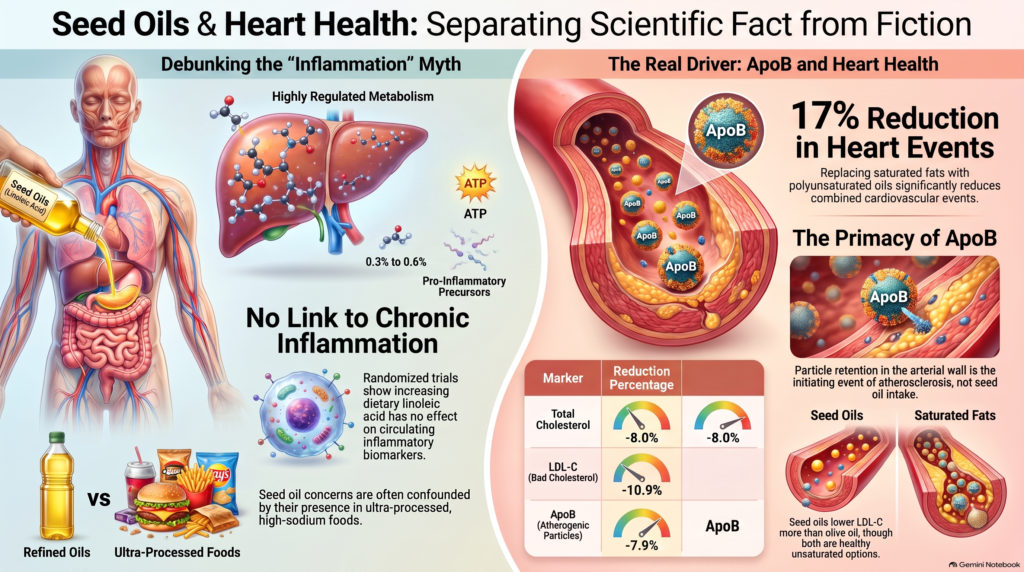
一项关于高油酸植物油替代品的系统评价直接量化了ApoB效应:用其替代饱和脂肪 高油酸油 总胆固醇降低了8.0%,低密度脂蛋白胆固醇(LDL-C)降低了10.9%,载脂蛋白B(ApoB)降低了7.9%(均P < 0.05)。相关的干预措施是替代而非无限制地增加:现有证据支持采用替代法 不饱和脂肪 对于约占总能量摄入 5% 到 10% 的饱和脂肪,而不是在现有饮食基础之上无限制地添加油脂。[5](图2)
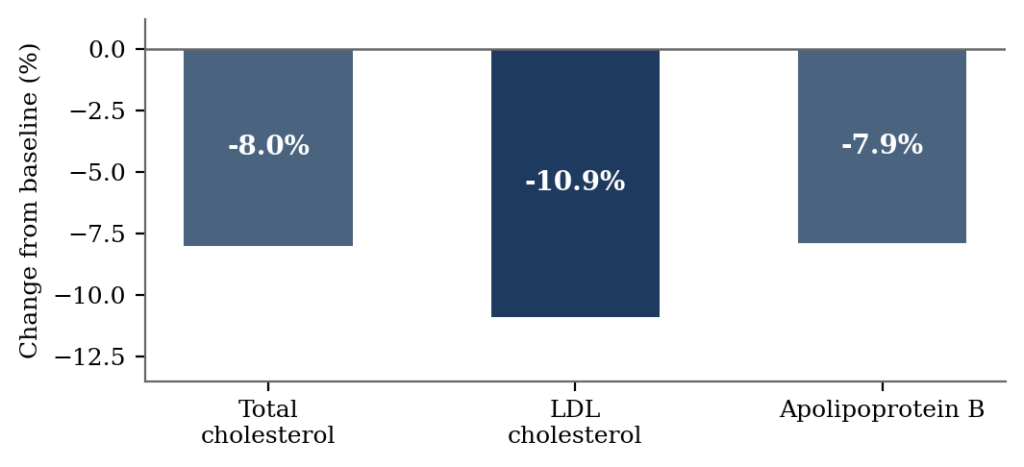
图2. 用高油酸植物油替代饱和脂肪时致动脉粥样硬化脂质指标的变化。所有变化均P < 0.05。相关干预为等热量替代,而非在现有饮食中添加油。数据来自参考文献[5].
7.2 临床心血管结局
一项关于减少饱和脂肪摄入的最新Cochrane系统综述汇总了15项随机对照试验,涉及56,675名参与者,这些参与者至少持续减少了两年饱和脂肪的摄入。 减少饱和脂肪摄入可使合并心血管事件发生率显著降低17%(风险比0.83;95%置信区间0.70至0.98;I²为67%)。[18]
亚组分析和元回归表明,这一益处是由用...替代饱和脂肪驱动的 多不饱和脂肪 或优质碳水化合物,胆固醇降幅越大,预示着保护作用越强。 需治数 当时是56英寸 一级预防 和 53 英寸 二级预防. [18]
尽管减少了联合事件,但减少饱和脂肪对……几乎没有影响或没有影响 全因死亡率 (55,858名参与者,11项试验)或心血管死亡率(53,421名参与者,10项试验),两者的证据质量均为中等。事件减少与死亡率之间的这种分离本身就很重要,并将在第12节中进一步讨论。18]
7.3 历史争议的批判性重新评估
饮食-心脏假说的批评者经常引用Ramsden及其同事重新分析的两项历史试验的恢复数据。.
- 明尼苏达冠状动脉实验: 一项针对9,423名机构收容参与者的双盲随机试验,比较了将饱和脂肪替换为玉米油的饮食与饱和脂肪对照组的效果。 玉米油干预组血清胆固醇降低了13.8%,而对照组仅降低了1.0%(P < 0.001),但并未带来生存获益。 在协变量调整模型中,血清胆固醇每降低30 mg/dL,死亡风险就会增加22%(风险比 1.22;95% CI 1.14 至 1.32;P < 0.001)。[13]
- 悉尼心脏饮食研究: 一项针对458名近期发生过冠状动脉事件的男性进行的随机试验发现,用红花油替代饱和脂肪会增加全因死亡率(17.6% 对比 11.8%;风险比 1.62; 95% 置信区间 1.00 至 2.64),心血管死亡率(危险比 1.70;95% 置信区间 1.03 至 2.80)以及冠心病死亡率(危险比 1.74; 95%置信区间 1.04 至 2.92)。[14]
这两项试验都有重要的局限性,限制了它们与现代建议的相关性。这些干预措施选择性地增加了亚油酸的摄入量,而没有增加 n-3 多不饱和脂肪酸的摄入量,并且在悉尼试验中, 反式脂肪 研究中人造黄油的具体成分未被记录,导致在当时普通人造黄油和起酥油本身就含有反式脂肪酸的背景下,同时代反式脂肪酸的暴露情况并不明确。这些历史试验在控制饮食暴露的持续时间、随访以及参与者保留率方面也存在重要局限性。13], [14]
8. 种子油与橄榄油
8..1 直接调节血脂作用
由于多不饱和脂肪酸含量较高,富含亚油酸的种子油在降低总胆固醇和低密度脂蛋白胆固醇(LDL-C)方面,比富含单不饱和脂肪酸的橄榄油效果略好。 一项针对27项随机安慰剂对照试验(1,089名参与者)的荟萃分析发现,橄榄油降低低密度脂蛋白胆固醇(LDL-C)的效果弱于其他植物油,加权均值差为4.2 mg/dL(95%置信区间[CI] 1.4至7.01; P = 0.003),且降低总胆固醇的效果也较其他植物油低6.27 mg/dL(95%置信区间为2.8至10.6)。 尽管这一差异在统计学上显著,但就橄榄油而言,低密度脂蛋白胆固醇(LDL-C)差异的幅度较为温和,读者不应将其解读为两者之间存在显著的临床差异。[15]
相反,与其他植物油相比,橄榄油对高密度脂蛋白胆固醇(HDL-C)的提升作用更为显著,在所有27项试验中,加权平均差值为1.37 mg/dL(95%置信区间为0.40至2.36)。 该效应较小,且其临床意义尚不明确。[15]
8.2 橄榄油等级
橄榄油这个术语包含几个读者经常混淆的不同产品。初榨橄榄油是通过机械方式生产的,未经化学处理;特级初榨橄榄油是最高品质的 年级, ,符合更严格的感官和游离酸度标准,并保留了显著更多的天然酚类化合物。精炼橄榄油是通过化学或物理精炼去除缺陷的初榨橄榄油,这一过程去除了绝大多数多酚,同时保持油酸骨架完好。果渣油是用溶剂从残留的橄榄泥中提取然后精炼而成的。一些替代效应与酚类含量而非油酸含量相关,因此这些等级不应被视为可互换的,并且不能假定使用高多酚特级初榨橄榄油得出的证据适用于精炼油或果渣油等级。17]
8.3 血管、内皮和炎症特征
Olive oil is sometimes said to outperform refined seed oils on vascular inflammation and endothelial function, but that claim rests on surrogate endpoints and is not relied upon here for clinical conclusions. A meta-analysis of 30 randomized controlled trials in 3,106 participants reported that olive oil consumption was associated with lower 白介素-6 (mean difference -0.29 pg/mL; 95% CI -0.57 to -0.02), lower soluble E-selectin (mean difference -3.16; 95% CI -4.07 to -2.25), and higher FMD (mean difference 0.76%; 95% CI 0.27 to 1.24). These are surrogate markers, not clinical events. The meta-analysis pools trials of heterogeneous design, duration, and sponsorship, and does not itself report a funding analysis, so no conclusion about the sponsorship profile of the underlying literature can be drawn from it. Because the results are surrogate improvements of uncertain clinical meaning, they should not be extrapolated to event reduction, and no conclusion of endothelial superiority for olive oil over other unsaturated oils can be drawn from them. [16]
8.4 Isolating the Contribution of Polyphenols
To determine whether the benefits of EVOO derive from its oleic acid backbone or its minor bioactive compounds, the EUROLIVE study fed 200 healthy men 25 mL/day of olive oils with low (2.7 mg/kg), medium (164 mg/kg), or high (366 mg/kg) polyphenol content in a randomized crossover design. HDL-C rose linearly with polyphenol content (change of +0.045 mmol/L at the highest dose; 95% CI 0.02 to 0.06), and 氧化低密度脂蛋白 fell linearly (change of -3.21 U/L at the highest dose; 95% CI -5.1 to -0.8), while the low-polyphenol oil increased oxidized LDL. [17]
These dose-dependent findings underpin the European Union authorized health claim for olive oil polyphenols, which may be applied only to oils containing at least 5 mg of hydroxytyrosol and its derivatives per 20 g of oil. [30] EUROLIVE was funded by the European Commission under grant QLK1-CT-2001-00287 and its authors declared no financial conflicts of interest, so it is properly read as an independently funded trial. [17] Its principal limitation is not sponsorship but endpoint. HDL-C and oxidized LDL are surrogate markers, and no trial has shown that raising olive oil polyphenol intake reduces myocardial infarction, stroke, or cardiovascular death. A three-week crossover trial in 46 healthy volunteers found that phenol-rich oil did not increase the resistance of LDL or HDL to oxidation relative to a phenol-poor control; that trial was supported by the International Olive Oil Council and also included a commercial food-industry affiliation, so it is not an independent test either. [29] The polyphenol mechanism is therefore supported by surrogate-endpoint evidence of mixed direction and mixed sponsorship, and it does not by itself justify recommending olive oil over other unsaturated fats for cardiovascular outcomes. A further caution applies to generalization: EUROLIVE compared olive oils that differed in phenolic concentration but were otherwise similar, so its low-phenolic comparator should not be treated as equivalent to every commercially refined olive oil.
| 记号笔 | Extra Virgin Olive Oil | Refined Olive Oil | Refined Seed Oils |
| LDL-C lowering | 适度 | 适度 | Variable; generally greater with PUFA-rich oils |
| HDL-C effect | Small increase reported for olive oil overall | Not established separately by grade | 变量 |
| 氧化低密度脂蛋白 | Decrease reported with high-polyphenol olive oil | Increase reported with low-polyphenol olive oil in EUROLIVE | Variable / not consistently improved |
| Systemic inflammation (IL-6) | Some trials and meta-analyses report modest improvement | Insufficient grade-specific evidence | Generally no increase in chronic inflammatory biomarkers |
| Postprandial FMD | 混合;视语境而定 | Context-dependent transient reduction | Context-dependent transient reduction |
| Oxidative stability | 相对较高 | Moderate to relatively high | Variable: higher for high-oleic formulations, lower for PUFA-rich formulations |
Table 3. Comparative lipid, oxidative, and vascular profiles of extra virgin olive oil, refined olive oil, and refined seed oils, based on the cited trials.
9. Whole Foods Versus Extracted Oils
Comparing extracted oils with their whole-food counterparts reveals differences in bioavailability, postprandial kinetics, and 饱腹感. Extraction removes cellular structure and dietary fiber. In almonds, where this has been measured directly, intact cell walls limit lipid bioaccessibility so that a portion of fat passes unabsorbed into the lower gastrointestinal tract, and measured metabolizable energy falls below Atwater prediction. Equivalent controlled measurements are not available for olives, avocados, and most seeds, so the extension of this mechanism to whole-food fats generally remains an inference from a nut-specific literature. [25], [26]
The whole-food form also carries measurable lipid benefit. A systematic review, meta-analysis, and 剂量-反应 of 61 controlled trials (2,582 participants) found that tree nut consumption lowered total cholesterol and LDL-C in a nonlinear fashion, with stronger effects above roughly 60 g/day, and lowered ApoB and triglycerides in a linear dose-response. This is consistent with the ApoB-centered framework of this review, since whole nuts reduce the 致动脉粥样硬化颗粒 burden directly. [24]
Extracted oils are among the most calorie-dense foods in the diet, providing approximately 9 kcal/g, or roughly 120 kcal per tablespoon, with negligible fiber or 蛋白质. Energy density of this magnitude can promote positive energy balance, which matters because excess adiposity is itself a cardiovascular 风险因素. Olive oil, seed oil, and butter are all energy-dense, so any of them, consumed in excess, can contribute to weight gain independent of fatty acid quality.
Controlled human data support a functional difference between whole foods and their oils: walnuts preserved postprandial endothelial function relative to olive oil in patients with 高胆固醇血症, an effect attributed to their combined fatty acid, antioxidant, and L-arginine content. [22]
Tree nuts lower circulating ApoB directly in randomized trials, and the almond food-matrix studies demonstrate reduced lipid bioaccessibility and a smaller postprandial triglyceride response relative to extracted oil. Evidence that all whole-food fat sources improve satiety per calorie, postprandial metabolism, or ApoB relative to isolated oils has not been established, and should not be asserted. Randomized trials have likewise not established that whole-food fat sources produce superior cardiovascular event reduction compared with high-quality dietary patterns containing unsaturated oils, because few long-term trials directly compare oil-free whole-food diets with oil-containing diets. The case for whole foods therefore rests on convergent intermediate evidence and biological plausibility, not on proven event reduction, and this distinction should be kept in view when translating mechanism into recommendation. [24], [25], [26]
10. Lipid Oxidation during Processing, Storage, and Cooking
The rate of lipid autoxidation is proportional to the number of double bonds in the fatty acid chain, so PUFAs are highly susceptible to free radical attack. When refined high-PUFA seed oils are heated for prolonged periods, especially under repeated commercial frying conditions, they undergo thermal oxidation, hydrolysis, and polymerization. Oxidation is also accelerated by repeated fryer reuse, air and light exposure, and prolonged storage, and is retarded by dark glass, cool storage, and inert-gas flushing. [6], [12]
This degradation generates primary lipid hydroperoxides that decompose into reactive secondary products, including aldehydes such as malondialdehyde and 4-hydroxynonenal, and oxidized linoleic acid metabolites such as 9-HODE and 13-HODE. In humans, lowering dietary linoleic acid measurably reduces circulating bioactive oxidized linoleic acid metabolites, confirming a diet-responsive pathway. An interpretive caution applies throughout this literature: circulating oxidized-LDL and oxidized-metabolite measurements correlate with, but do not directly demonstrate, oxidation occurring within the 动脉斑块 itself, and the two should not be equated. [6], [23]
By contrast, monounsaturated and saturated fats have far fewer double bonds and lack vulnerable bis-allylic carbons, making them more resistant to thermal breakdown. These oxidation-product mechanisms are biologically plausible contributors to endothelial and mitochondrial stress, but the magnitude of their clinical contribution relative to circulating ApoB remains a proposed rather than an established pathway. A crucial distinction, frequently conflated in popular discussion, is that these concerns apply to repeatedly heated and thermally degraded oils, not to fresh, unheated seed oils; the oxidation products of abused frying oil are not a property of the fresh oil itself. [6], [12]
11. Endothelial Injury, Atherosclerosis, and the Primacy of ApoB
The vascular failure hypothesis proposes that repeated postprandial endothelial stress from extracted oils contributes over decades to increased endothelial permeability, lipoprotein entry, and vascular inflammation. Repeated transient endothelial dysfunction represents a biologically plausible mechanism that could contribute to long-term vascular injury, although direct clinical evidence demonstrating this pathway in humans remains limited. It is best regarded as a contributory hypothesis, not an established initiating cause. [3]
Vascular biology establishes that atherosclerotic plaque formation requires the entry and retention of ApoB-containing lipoproteins in the arterial wall. The European Atherosclerosis Society consensus concludes that the retention and accumulation of cholesterol-rich ApoB-containing lipoproteins within the arterial 内膜 is the initiating event of atherogenesis, with risk accruing in a dose-dependent manner. ApoB is generally a more direct measure of circulating 致动脉粥样硬化性颗粒数 than 低密度脂蛋白胆固醇, because each atherogenic particle carries a single ApoB molecule. Any dietary change that lowers circulating ApoB reduces the 颗粒物负荷 available to penetrate and be retained in the arterial wall. This framework is consistent with the long-term clinical benefit observed when saturated fat is replaced by unsaturated fat, despite the transient postprandial FMD findings described above; no trial has directly tested that comparison. 孟德尔随机化 studies reinforce the framework, showing that genetically lower LDL and ApoB reduce cardiovascular risk irrespective of the mechanism by which they are lowered. [2], [21]
12. Clinical Outcomes and Population Subgroups
Long-term randomized evidence indicates that reducing saturated fat lowers combined cardiovascular events, with benefit appearing greater when saturated fat is replaced by polyunsaturated fat, and with the magnitude of cholesterol lowering correlating with the magnitude of protection. This supports reduction of circulating ApoB as the principal mechanism. The effect on stroke and on total mortality is less pronounced in pooled randomized data. [18], [21]
12.1 Olive Oil and the Mediterranean Pattern
For established coronary disease, the CORDIOPREV 试验 randomized 1,002 patients to a 地中海饮食 rich in EVOO or a low-fat diet over seven years. The primary 复合端点 occurred at 28.1 versus 37.7 events per 1,000 person-years, and multivariable-adjusted hazard ratios across models ranged from 0.719 (95% CI 0.541 to 0.957) to 0.753 (95% CI 0.568 to 0.998) in favor of the Mediterranean diet. Two interpretive points apply: the low-fat comparator reduced total fat only to roughly 32 percent of calories, short of a strict low-fat target, and the trial carried mixed funding, including Spanish governmental and European Union sources alongside olive-oil organizations. The achieved comparator diet and the mixed funding should both be considered when interpreting generalizability. [20]
The landmark primary-prevention trial is PREDIMED, which randomized 7,447 high-risk participants to a Mediterranean diet supplemented with extra virgin olive oil, the same diet supplemented with nuts, or a reduced-fat control. In the republished intention-to-treat analysis, the adjusted hazard ratio for major cardiovascular events was 0.69 (95% CI 0.53 to 0.91) for the olive oil arm and 0.72 (95% CI 0.54 to 0.95) for the nut arm, roughly a 30% relative reduction. Three caveats are essential. First, the original 2013 report was retracted and republished in 2018 after a baseline-data audit found that 随机化 had been compromised for approximately 1,588 of the 7,447 participants (about 21 percent), including household members assigned en masse and a clinic randomized as a unit; it is best described as a randomized trial with important protocol deviations in assignment procedures, addressed in the 2018 reanalysis, which reported that results remained similar after excluding the affected assignments. Second, the intervention was an entire Mediterranean dietary pattern, not olive oil in isolation, so the benefit cannot be attributed to olive oil alone. Third, on funding, the intervention foods were donated by olive-oil and nut producers and commodity organizations, whereas the trial itself received extensive public research funding, and the investigators reported that the sponsors had no role in study design, analysis, or reporting. [19]
12.2 Absolute Risk Reduction and the Limits of Surrogate Markers
A recurring gap in discussions of dietary fat is the leap from surrogate markers to implied clinical benefit. Improvements in LDL-C, HDL-C, oxidized LDL, FMD, and IL-6 are meaningful mechanistically, but readers are ultimately concerned with heart attacks and deaths prevented, and the two do not always move in proportion. The clearest absolute figures come from the Cochrane saturated fat review, where the number needed to treat to prevent one cardiovascular event over the trial durations was 56 in primary prevention and 53 in secondary prevention, while all-cause and cardiovascular mortality were not significantly reduced. [18] The overall certainty of the edible-oil literature is also lower than its volume suggests. An 伞形评价 of 48 systematic reviews containing 206 meta-analyses graded 67.5 percent of the associations as very low certainty, 21.8 percent as low and 9.7 percent as moderate, with only 1 percent rated high; on the AMSTAR-2 instrument, a single one of the 48 reviews reached high confidence and 14.6 percent moderate, while 62.5 percent were low and 20.8 percent critically low. [32] (Figure 3)

Figure 3. Certainty and methodological confidence of the edible-oil evidence base. Left: GRADE certainty across 206 meta-analyses. Right: AMSTAR-2 confidence across the 48 systematic reviews containing them. Percentages may not sum to 100 because of rounding. Data from reference [32].
For olive oil specifically, no randomized trial has tested olive oil alone against a control for hard cardiovascular endpoints. The event-reduction evidence attributed to olive oil derives from whole-pattern Mediterranean diet trials such as PREDIMED and 冠心病预防, in which olive oil was one component among many. Consequently, the precise 绝对风险 reduction attributable to olive oil as an isolated intervention is not known. Accordingly, estimates that olive oil alone reduces myocardial infarction by a specific percentage cannot presently be supported by randomized evidence. Where olive oil has been pooled against comparators for hard endpoints, the summary estimates are null: no significant effect on cardiovascular events (RR 0.97; 95% CI 0.67 to 1.39), cardiovascular deaths (RR 1.07; 95% CI 0.77 to 1.48), or all-cause deaths (RR 0.99; 95% CI 0.85 to 1.15). [32] This is an honest limitation rather than a weakness of the underlying dietary advice. [19], [20] (Figure 4)
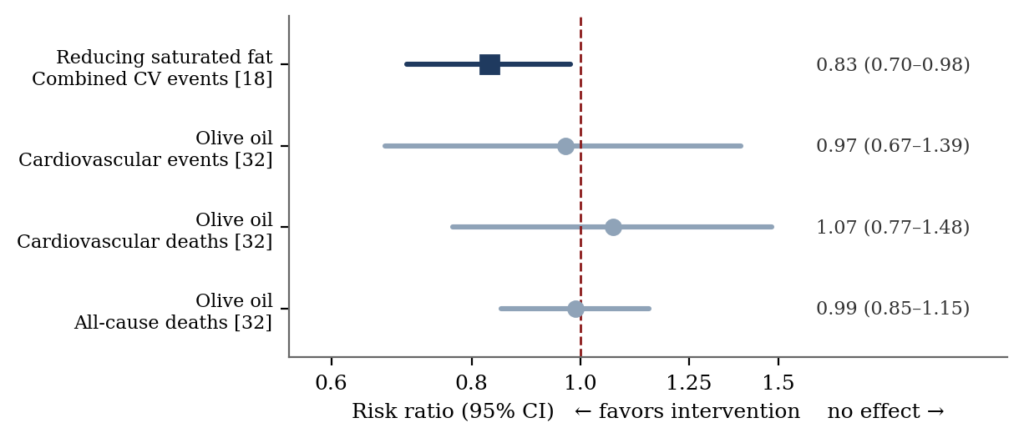
Figure 4. Randomized and pooled evidence for hard clinical endpoints. Reducing saturated fat lowers combined cardiovascular events; pooled estimates for olive oil against comparators are null for events and for mortality. Square denotes a statistically significant estimate. Note that the two rows are not a head-to-head comparison: the interventions, comparators, and trial populations differ. Data from references [18] 和 [32].
12.3 Population Subgroups
For patients with 家族性高胆固醇血症, who have genetically reduced LDL receptor function and high lifetime ApoB exposure, dietary saturated-fat restriction with substitution of unsaturated plant oils can complement pharmacotherapy, although pharmacologic LDL lowering remains central to management. Across subgroups, the unifying principle remains reduction of lifetime ApoB exposure. [2], [21]
13. Synthesis and Answers to Core Questions
- Are seed oils uniquely harmful compared with other added oils?
No. There is no convincing human evidence that commonly consumed seed oils have a unique cardiometabolic toxicity when substituted isocalorically for other dietary fats. Controlled human evidence does not show increased chronic inflammatory biomarkers, and lipid effects are generally favorable when they replace saturated fat. Their frequent occurrence in 超加工食品 is an important observational 混杂因素. [4], [11]
- Do omega-6 fatty acids increase chronic inflammation in humans?
No. Randomized controlled trials show that dietary linoleic acid does not increase circulating inflammatory biomarkers. Conversion of linoleic acid to arachidonic acid is only 0.3% to 0.6% and tightly regulated, and arachidonic acid gives rise to both pro-inflammatory and pro-resolving mediators. [9], [11]
- Do seed oils impair endothelial function differently from olive oil?
No dependable difference has been established. Postprandial FMD changes are influenced by meal size and composition, and are associated in some studies with the magnitude of the postprandial triglyceride response; in the acute experiment cited here a canola oil meal produced no significant fall while an extra virgin olive oil meal did. [8] The trials comparing high-polyphenol with refined olive oil report mixed results under mixed sponsorship: a positive postprandial trial funded by a producer that supplied the study oil [28], a three-week crossover trial funded by the International Olive Oil Council that found no effect of phenol content on LDL oxidation resistance [29], and EUROLIVE, funded by the European Commission with no declared conflicts, which reported dose-dependent changes in HDL-C and oxidized LDL [17]. A predominantly oleic-acid fatty-acid profile alone has not been shown to prevent postprandial FMD impairment, and FMD is in any case only a surrogate marker.
- Is the primary concern extracted oils regardless of fatty acid composition?
Direct whole-food-versus-oil evidence, strongest for almonds, demonstrates substantially greater lipid bioaccessibility and 餐后高脂血症 from extracted oil than from the intact seed; generalization to all food matrices remains plausible but incompletely tested. Extracted oils are also calorie-dense. Whether either property translates into long-term risk independent of ApoB lowering remains uncertain. High-polyphenol EVOO is sometimes proposed as a partial exception on the grounds that its antioxidant fraction counteracts lipid-induced endothelial stress, but the trials supporting that proposition are few, mixed in result, and measure only surrogate endpoints. [3], [8], [25], [28], [29]
- Does replacing saturated fat with seed oils improve outcomes primarily through LDL-C and ApoB?
Yes. The benefit is likely mediated substantially by reductions in LDL and ApoB-containing lipoprotein exposure. Saturated fats down-regulate hepatic LDL receptors, and replacing them with unsaturated oils up-regulates receptor activity and sustainably lowers circulating ApoB for as long as the dietary change is maintained. [5], [21]
- Do whole-food fat sources provide superior cardiovascular outcomes?
Tree nuts lower ApoB directly in randomized trials, and almond food-matrix studies show reduced lipid bioaccessibility relative to extracted oil. Whether that advantage generalizes to all whole-food fat sources has not been established. For hard clinical endpoints the evidence is limited, because few long-term randomized trials compare oil-free with oil-containing diets. [24], [25], [26]
- What role does acute postprandial FMD impairment play in long-term atherosclerosis?
It is a reproducible marker of transient vascular stress but remains secondary to ApoB retention. Atherosclerotic plaque formation requires the entry and retention of ApoB-containing lipoproteins in the arterial wall. Long-term outcome evidence currently favors the clinical importance of sustained ApoB lowering over concern about transient FMD changes, though the two have never been compared directly in a trial. [2], [21]
13.1 Evidence-Based Recommendations
The totality of evidence supports a dietary pattern that prioritizes replacing saturated fat with plant-derived unsaturated fats, particularly for those with elevated ApoB, familial hypercholesterolemia, or established coronary disease; treats olive oil and other unsaturated plant oils as reasonable substitutes for animal fat on the basis of their LDL and ApoB effects rather than any demonstrated endothelial or polyphenol advantage, since the polyphenol evidence rests entirely on surrogate endpoints and has never been tested against clinical events; favors minimally processed whole-food fat sources such as nuts, seeds, avocados, and olives, among which tree nuts carry the strongest randomized evidence for modest reductions in LDL-C and ApoB, while noting that comparable ApoB evidence does not exist for every food in that list; and minimizes thermally degraded, repeatedly heated, or deep-fried oils. Where surrogate markers improve, the honest framing is that these are mechanistically favorable changes whose translation into event reduction is best evidenced for whole dietary patterns rather than for any single oil in isolation. [18], [24], [25], [26], [6]
参考文献
- Sacks FM, Lichtenstein AH, Wu JHY, et al. Dietary Fats and Cardiovascular Disease: A Presidential Advisory From the American Heart Association. Circulation. 2017;136(3):e1-e23. doi:10.1161/CIR.0000000000000510
- Ference BA, Ginsberg HN, Graham I, et al. Low-density lipoproteins cause atherosclerotic cardiovascular disease. 1. Evidence from genetic, epidemiologic, and clinical studies. A consensus statement from the European Atherosclerosis Society Consensus Panel. Eur Heart J. 2017;38(32):2459-2472. doi:10.1093/eurheartj/ehx144
- Fewkes JJ, Kellow NJ, Cowan SF, Williamson G, Dordevic AL. A single, high-fat meal adversely affects postprandial endothelial function: a systematic review and meta-analysis. Am J Clin Nutr. 2022;116(3):699-729. doi:10.1093/ajcn/nqac153
- Schwingshackl L, Bogensberger B, Benčič A, Knüppel S, Boeing H, Hoffmann G. Effects of oils and solid fats on blood lipids: a systematic review and network meta-analysis. J Lipid Res. 2018;59(9):1771-1782. doi:10.1194/jlr.P085522
- Huth PJ, Fulgoni VL 3rd, Larson BT. A systematic review of high-oleic vegetable oil substitutions for other fats and oils on cardiovascular disease risk factors: implications for novel high-oleic soybean oils. Adv Nutr. 2015;6(6):674-693. Published 2015 Nov 13. doi:10.3945/an.115.008979
- Grootveld M. Evidence-Based Challenges to the Continued Recommendation and Use of Peroxidatively-Susceptible Polyunsaturated Fatty Acid-Rich Culinary Oils for High-Temperature Frying Practises: Experimental Revelations Focused on Toxic Aldehydic Lipid Oxidation Products. Front Nutr. 2022;8:711640. Published 2022 Jan 5. doi:10.3389/fnut.2021.711640
- Lesser LI, Ebbeling CB, Goozner M, Wypij D, Ludwig DS. Relationship between funding source and conclusion among nutrition-related scientific articles. PLoS Med. 2007;4(1):e5. doi:10.1371/journal.pmed.0040005
- Vogel RA, Corretti MC, Plotnick GD. The postprandial effect of components of the Mediterranean diet on endothelial function. J Am Coll Cardiol. 2000;36(5):1455-1460. doi:10.1016/s0735-1097(00)00896-2
- Rett BS, Whelan J. Increasing dietary linoleic acid does not increase tissue arachidonic acid content in adults consuming Western-type diets: a systematic review. Nutr Metab (Lond). 2011;8:36. Published 2011 Jun 10. doi:10.1186/1743-7075-8-36
- Demmelmair H, Iser B, Rauh-Pfeiffer A, Koletzko B. Comparison of bolus versus fractionated oral applications of [13C]-linoleic acid in humans. Eur J Clin Invest. 1999;29(7):603-609. doi:10.1046/j.1365-2362.1999.00477.x
- Johnson GH, Fritsche K. Effect of dietary linoleic acid on markers of inflammation in healthy persons: a systematic review of randomized controlled trials. J Acad Nutr Diet. 2012;112(7):1029-1041.e10415. doi:10.1016/j.jand.2012.03.029
- Bazina N, Ahmed T, Almdaaf M, Abu Hallalah HMO, Jibia S. Chemical Changes in Deep-Fat Frying: Reaction Mechanisms, Oil Degradation, and Health Implications. Food Sci Nutr. 2025;13(10):e70969. Published 2025 Oct 13. doi:10.1002/fsn3.70969
- Ramsden CE, Zamora D, Majchrzak-Hong S, et al. Re-evaluation of the traditional diet-heart hypothesis: analysis of recovered data from Minnesota Coronary Experiment (1968-73). BMJ. 2016;353:i1246. Published 2016 Apr 12. doi:10.1136/bmj.i1246
- Ramsden CE, Zamora D, Leelarthaepin B, et al. Use of dietary linoleic acid for secondary prevention of coronary heart disease and death: evaluation of recovered data from the Sydney Diet Heart Study and updated meta-analysis. BMJ. 2013;346:e8707. Published 2013 Feb 4. doi:10.1136/bmj.e8707
- Ghobadi S, Hassanzadeh-Rostami Z, Mohammadian F, et al. Comparison of blood lipid-lowering effects of olive oil and other plant oils: A systematic review and meta-analysis of 27 randomized placebo-controlled clinical trials. Crit Rev Food Sci Nutr. 2019;59(13):2110-2124. doi:10.1080/10408398.2018.1438349
- Schwingshackl L, Christoph M, Hoffmann G. Effects of Olive Oil on Markers of Inflammation and Endothelial Function-A Systematic Review and Meta-Analysis. Nutrients. 2015;7(9):7651-7675. Published 2015 Sep 11. doi:10.3390/nu7095356
- Covas MI, Nyyssönen K, Poulsen HE, et al. The effect of polyphenols in olive oil on heart disease risk factors: a randomized trial. Ann Intern Med. 2006;145(5):333-341. doi:10.7326/0003-4819-145-5-200609050-00006
- Hooper L, Martin N, Jimoh OF, Kirk C, Foster E, Abdelhamid AS. Reduction in saturated fat intake for cardiovascular disease. Cochrane Database Syst Rev. 2020;8(8):CD011737. Published 2020 Aug 21. doi:10.1002/14651858.CD011737.pub3
- Estruch R, Ros E, Salas-Salvadó J, et al. Primary Prevention of Cardiovascular Disease with a Mediterranean Diet Supplemented with Extra-Virgin Olive Oil or Nuts. N Engl J Med. 2018;378(25):e34. doi:10.1056/NEJMoa1800389
- Delgado-Lista J, Alcala-Diaz JF, Torres-Peña JD, et al. Long-term secondary prevention of cardiovascular disease with a Mediterranean diet and a low-fat diet (CORDIOPREV): a randomised controlled trial. Lancet. 2022;399(10338):1876-1885. doi:10.1016/S0140-6736(22)00122-2
- Borén J, Chapman MJ, Krauss RM, et al. Low-density lipoproteins cause atherosclerotic cardiovascular disease: pathophysiological, genetic, and therapeutic insights: a consensus statement from the European Atherosclerosis Society Consensus Panel. Eur Heart J. 2020;41(24):2313-2330. doi:10.1093/eurheartj/ehz962
- Cortés B, Núñez I, Cofán M, et al. Acute effects of high-fat meals enriched with walnuts or olive oil on postprandial endothelial function. J Am Coll Cardiol. 2006;48(8):1666-1671. doi:10.1016/j.jacc.2006.06.057
- Ramsden CE, Ringel A, Feldstein AE, et al. Lowering dietary linoleic acid reduces bioactive oxidized linoleic acid metabolites in humans. Prostaglandins Leukot Essent Fatty Acids. 2012;87(4-5):135-141. doi:10.1016/j.plefa.2012.08.004
- Del Gobbo LC, Falk MC, Feldman R, Lewis K, Mozaffarian D. Effects of tree nuts on blood lipids, apolipoproteins, and blood pressure: systematic review, meta-analysis, and dose-response of 61 controlled intervention trials. Am J Clin Nutr. 2015;102(6):1347-1356. doi:10.3945/ajcn.115.110965
- Berry SE, Tydeman EA, Lewis HB, et al. Manipulation of lipid bioaccessibility of almond seeds influences postprandial lipemia in healthy human subjects. Am J Clin Nutr. 2008;88(4):922-929. doi:10.1093/ajcn/88.4.922
- Novotny JA, Gebauer SK, Baer DJ. Discrepancy between the Atwater factor predicted and empirically measured energy values of almonds in human diets. Am J Clin Nutr. 2012;96(2):296-301. doi:10.3945/ajcn.112.035782
- Inaba Y, Chen JA, Bergmann SR. Prediction of future cardiovascular outcomes by flow-mediated vasodilatation of brachial artery: a meta-analysis. Int J Cardiovasc Imaging. 2010;26(6):631-640. doi:10.1007/s10554-010-9616-1
- Njike VY, Ayettey R, Treu JA, Doughty KN, Katz DL. Post-prandial effects of high-polyphenolic extra virgin olive oil on endothelial function in adults at risk for type 2 diabetes: a randomized controlled crossover trial. Int J Cardiol. 2021;330:171-176. doi:10.1016/j.ijcard.2021.01.062
- Vissers MN, Zock PL, Wiseman SA, Meyboom S, Katan MB. Effect of phenol-rich extra virgin olive oil on markers of oxidation in healthy volunteers. Eur J Clin Nutr. 2001;55(5):334-341. doi:10.1038/sj.ejcn.1601161
- EFSA Panel on Dietetic Products, Nutrition and Allergies (NDA). Scientific opinion on the substantiation of health claims related to polyphenols in olive and protection of LDL particles from oxidative damage, pursuant to Article 13(1) of Regulation (EC) No 1924/2006. EFSA Journal. 2011;9(4):2033. doi:10.2903/j.efsa.2011.2033. Authorized wording established by Commission Regulation (EU) No 432/2012 of 16 May 2012.
- Serhan CN. Pro-resolving lipid mediators are leads for resolution physiology. Nature. 2014;510(7503):92-101. doi:10.1038/nature13479
- Voon PT, Ng CM, Ng YT, et al. Health effects of various edible vegetable oil: an umbrella review. Adv Nutr. 2024;15(9):100276. doi:10.1016/j.advnut.2024.100276. Several authors are affiliated with the Malaysian Palm Oil Board; the authors declared no conflicts of interest and no funding.