एक ऐसी दुनिया में “बायोहैकिंग”और तीव्र वजन-घटाने के रुझानों में, दो आहार प्रतिमान अक्सर टकराते हैं: कम-वसा वाले पूरे खाद्य पौधा-आधारित (WFPB) आहार और उच्च-प्रोटीन/उच्च-वसा वाला पैलियो/केटोजेनिक आहार. जबकि दोनों स्वास्थ्य में सुधार का दावा करते हैं, वैज्ञानिक साहित्य—विशेष रूप से दीर्घकालिक नैदानिक परीक्षण और शतायु अध्ययन—लघु-कालिक चयापचय परिवर्तनों और दीर्घकालिक रोग के बीच एक स्पष्ट अंतर प्रकट करते हैं। उलटफेर.
यह सारांश कठोर साक्ष्यों और सहकर्मी-समीक्षित उद्धरणों का उपयोग करते हुए महत्वपूर्ण प्रश्नों का उत्तर देता है।.
क्या कम वसा वाला संपूर्ण खाद्य वनस्पति-आधारित (WFPB) आहार वास्तव में हृदय रोग को उलट सकता है?
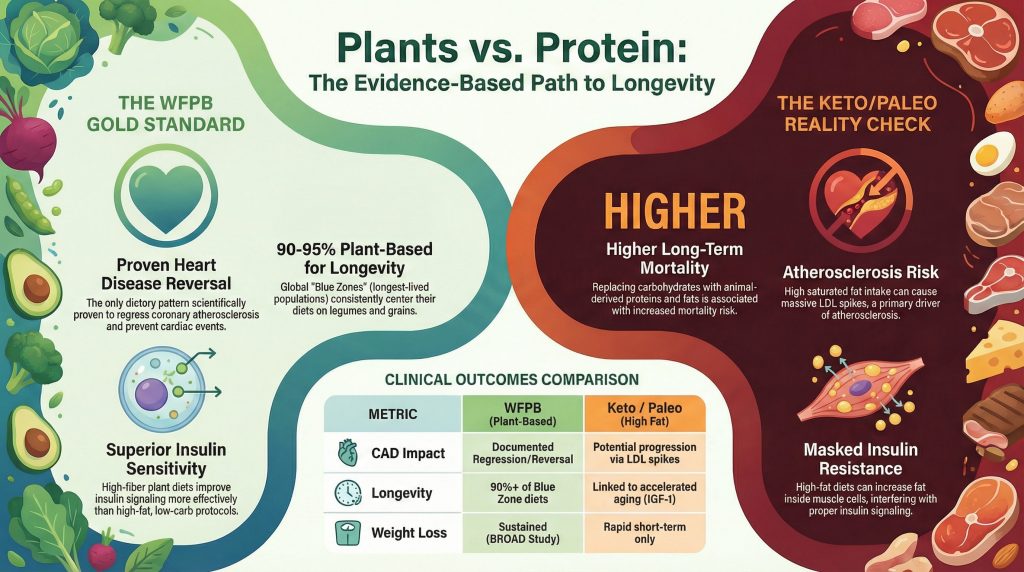
हाँ। WFPB आहार एकमात्र ऐसा आहार पैटर्न है जिसे वैज्ञानिक रूप से सिद्ध किया गया है कि यह न केवल रोकता है, बल्कि वास्तव में उलट भी देता है। कोरोनरी धमनी रोग (सीएडी).
- साक्ष्य: डॉ. डीन ऑर्निश ने में प्रदर्शित किया लाइफ़स्टाइल हार्ट ट्रायल कि कम-वसा (10% वसा) आहार का पालन करने वाले रोगी शाकाहारी आहार, जीवनशैली में बदलावों के साथ, एक वर्ष बाद कोरोनरी एथेरोस्क्लेरोसिस में प्रतिगमन देखा गया, और पाँच वर्षों बाद और सुधार हुआ। इसके विपरीत, “मध्यम” आहार परिवर्तन अपनाने वाले नियंत्रण समूह में उनकी बीमारी आगे बढ़ी (Ornish et al., 1998)।.
- कार्यप्रणाली: एक WFPB आहार एंडोथीलियल कार्य—रक्त वाहिकाओं के फैलने की क्षमता—को बेहतर बनाता है और कम करता है एलडीएल कोलेस्ट्रॉल “हार्ट-अटैक प्रूफ” स्तरों (आमतौर पर <70 mg/dL) तक। डॉ. कॉल्डवेल एस्सेलस्टीन के 12-वर्षीय अध्ययन ने दिखाया कि WFPB आहार का पालन करने वाले 99.4% रोगियों ने आगे के बड़े हृदय संबंधी घटनाओं से बचाव किया। हृदय संबंधी घटनाएं (एसेलस्टीन एट अल., 2014).
कीटो/पालियो की “त्वरित वजन कमी” की तुलना WFPB की दीर्घकालिक इंसुलिन संवेदनशीलता से कैसे की जाती है?
जबकि कीटोजेनिक और पेलियो आहार तेज़ी के लिए प्रशंसित वजन घटाना और रक्त में तत्काल गिरावट ग्लूकोज, ये अक्सर “अल्पकालिक प्रभाव” होते हैं जो अंतर्निहित समस्याओं को छिपा सकते हैं।.
- इंसुलिन संवेदनशीलता: उच्च वसा युक्त आहार वास्तव में बढ़ाना अंतरकोशिकीय लिपिड्स (मांसपेशियों की कोशिकाओं के अंदर वसा), जो में हस्तक्षेप करता है इंसुलिन संकेत दे रहा है। जबकि ब्लड शुगर कम बना रह सकता है क्योंकि मरीज बच रहा है कार्बोहाइड्रेट, अंतर्निहित इंसुलिन प्रतिरोधकता अक्सर बना रहता है या बिगड़ जाता है।.
- WFPB का लाभ: अनुसंधान से पता चलता है कि उच्च-कार्बोहाइड्रेट, उच्च-फाइबर WFPB आहार समय के साथ इंसुलिन संवेदनशीलता को अधिक प्रभावी ढंग से सुधारता है। एडवेंटिस्ट हेल्थ स्टडीज़ पता चला कि वीगन लोगों में टाइप 2 विकसित होने का जोखिम 62% कम था। मधुमेह मांसभक्षियों की तुलना में, शरीर के वजन के समायोजन के बाद भी (टोनस्टाड एट अल., 2009)।.
- वजन कम करना: में ब्रॉड अध्ययन, एक 6-महीने यादृच्छिक नियंत्रित परीक्षण, WFPB समूह ने छह और बारह महीनों में नियमित व्यायाम या कैलोरी प्रतिबंध को अनिवार्य नहीं करने वाले किसी भी अन्य परीक्षण की तुलना में अधिक वजन कम किया (Wright et al., 2017)।.
दुनिया की सबसे लंबी आयु वाली आबादी (ब्लू ज़ोन्स) हमें क्या बताती है?
यदि दीर्घायु लक्ष्य है, तो हमें “ को देखना चाहिए।“ब्लू जोन्स”—वे क्षेत्र जहाँ लोग वैश्विक औसत से काफी अधिक समय तक जीवित रहते हैं (ओकिनावा, सार्डिनिया, लोमा लिंडा, निकोया, और इकरिया)।.
- साझा सूत्र: सबसे लंबी आयु वाली किसी भी आबादी का कीटोजेनिक या उच्च-प्रोटीन पेलियो आहार नहीं है। उनका आहार लगातार 90–95% तक पौध-आधारित होता है, जो दालें (बीन्स, मटर, मसूर), साबुत अनाज और कंद पर केंद्रित है।.
- ओकिनावा: ऐतिहासिक रूप से, ओकिनावा आहार 69% शकरकंद थे और पशु उत्पादों में बहुत कम थे (Willcox et al., 2007)।.
- पशु प्रोटीन और वृद्धावस्था: उच्च पशु प्रोटीन का सेवन बढ़े हुए स्तरों से जुड़ा हुआ है आईजीएफ-1 (इंसुलिन-सदृश वृद्धि कारक 1), एक हार्मोन जो कोशिका वृद्धि को बढ़ावा देता है लेकिन त्वरित उम्र बढ़ने और कैंसर से जुड़ा हुआ है (Levine et al., 2014).
क्या दीर्घकालिक कीटो/पालेओ आहारों से दीर्घायु के संबंध में कोई जोखिम हैं?
हालांकि कीटो/पालियो आहार कुछ लोगों में अल्पकालिक इंसुलिन नियंत्रण के लिए प्रभावी हो सकते हैं, दीर्घकालिक महामारी विज्ञान संबंधी आंकड़े जोखिमों का संकेत देते हैं।.
- मृत्यु जोखिम: एक बड़े पैमाने पर मेटा-विश्लेषण प्रकाशित द लैंसेट पब्लिक हेल्थ पाया गया कि कम कार्बोहाइड्रेट आहार (70% ऊर्जा) दोनों ही बढ़ी हुई मृत्यु दर से जुड़े थे। हालांकि, जोखिम तब सबसे अधिक था जब कार्बोहाइड्रेट को पशुजन्य प्रोटीन और वसा से प्रतिस्थापित किया गया, जबकि मृत्यु दर घटा हुआ जब कार्बोहाइड्रेट को पौधों पर आधारित प्रोटीन और वसा से प्रतिस्थापित किया गया (Seidelmann et al., 2018)।.
- एथेरोस्क्लेरोसिस जोखिम: कई कीटो/पालेओ आहारों में आम उच्च संतृप्त वसा का सेवन, महत्वपूर्ण रूप से बढ़ाता है एलडीएल कोलेस्ट्रॉल. कुछ कीटो अनुयायियों में देखा जाने वाला “लीन मास हाइपर-रिस्पॉन्डर” फेनोटाइप एलडीएल (LDL) में भारी उछाल से जुड़ा होता है, जो एथेरोस्क्लेरोसिस का एक प्रमुख चालक है (Nylander et al., 2023)।.
निष्कर्ष: साक्ष्य-आधारित विकल्प
यदि उद्देश्य एथेरोस्क्लेरोसिस को उलटना और जीवनकाल को अधिकतम करना है, तो सबूत भारी तौर पर कम-वसा वाले आहार के पक्ष में हैं, पूर्ण खाद्य पौधों पर आधारित आहार. जबकि पैलिओ और कीटो वजन घटाने और कार्बोहाइड्रेट प्रतिबंध के माध्यम से अस्थायी चयापचय सुधार प्रदान कर सकते हैं, वे हमारे #1 किलर—हृदय रोग—को उलटने का प्रमाणित रिकॉर्ड नहीं रखते और पृथ्वी पर हर दीर्घायु वाली आबादी में पाए जाने वाले आहार पैटर्न के विपरीत हैं।.
संदर्भ
- Esselstyn CB Jr, Gendy G, Doyle J, Golubic M, Roizen MF. A way to reverse CAD?. J Fam Pract. 2014;63(7):356-364b.
- Levine ME, Suarez JA, Brandhorst S, et al. Low protein intake is associated with a major reduction in IGF-1, cancer, and overall mortality in the 65 and younger but not older population. Cell Metab. 2014;19(3):407-417. doi:10.1016/j.cmet.2014.02.006
- Ornish D, Scherwitz LW, Billings JH, et al. Intensive lifestyle changes for reversal of coronary heart disease. JAMA. 1998;280(23):2001-2007. doi:10.1001/jama.280.23.2001
- Seidelmann SB, Claggett B, Cheng S, et al. Dietary carbohydrate intake and mortality: a prospective cohort study and meta-analysis. Lancet Public Health. 2018;3(9):e419-e428. doi:10.1016/S2468-2667(18)30135-X
- Tonstad S, Butler T, Yan R, Fraser GE. Type of vegetarian diet, body weight, and prevalence of type 2 diabetes. Diabetes Care. 2009;32(5):791-796. doi:10.2337/dc08-1886
- Willcox DC, Willcox BJ, Todoriki H, Suzuki M. The Okinawan diet: health implications of a low-calorie, nutrient-dense, antioxidant-rich dietary pattern low in glycemic load. J Am Coll Nutr. 2009;28 Suppl:500S-516S. doi:10.1080/07315724.2009.10718117
- Wright N, Wilson L, Smith M, Duncan B, McHugh P. The BROAD study: A randomised controlled trial using a whole food plant-based diet in the community for obesity, ischaemic heart disease or diabetes. Nutr Diabetes. 2017;7(3):e256. Published 2017 Mar 20. doi:10.1038/nutd.2017.3