
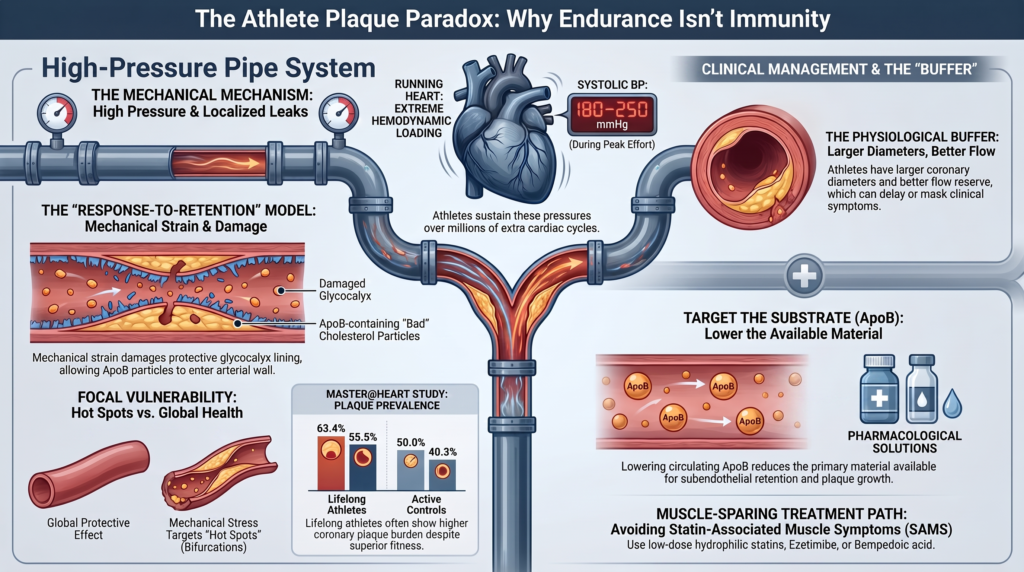
生涯にわたる累積アポリポ蛋白Bの曝露と持続的な持久系アスリートにおける冠状動脈アテローム性動脈硬化症
機構論的仮説と批判的 narrative review の日本語訳: ナラティブレビューA narrative review is a type of scientific article that synthesizes existing research on a topic through expert selection and interpretation rather than through a pre-registered, exhaustive search with formal bias scoring; unlike a systematic review or meta-analysis, its conclusions can reflect the authors' editorial judgment in choosing which studies to emphasize.
抄録
背景. 持久力トレーニングは、好ましい心血管代謝プロファイルおよび全体的な死亡率の低下と関連しているが、いくつかの 冠動脈画像診断冠動脈内のプラークの大きや性質を可視化するために用いられる、定量冠動脈造影や血管内超音波法などの非侵襲的または侵襲的な手法。オーニッシュやエッセルスティンの研究は、症状やイベントのデータのみに頼るのではなく、客観的な冠動脈イメージングを用いている点で特筆すべきである。. 研究により、無症候性の冠動脈疾患の負担が逆説的に高いことが報告されている 石灰化石灰化とは、カルシウムがプラークに沈着し、その一部が硬く骨状になることです。. そして 歯垢プラークとは、動脈の壁の内側にコレステロール、免疫細胞、瘢痕組織、カルシウムが蓄積したものです。. 生涯にわたるマスターズ持久系アスリートにおいて、運動習慣のない対照群と比較して、.
目的. 数十年に及ぶ高負荷な持久系運動が、冠動脈の微小環境を変化させ、内皮下へのプラークの侵入と蓄積を促進する可能性があるという仮説を批判的に評価するために、 アポリポ蛋白アポリポ蛋白とは、血液中の脂肪を運ぶ粒子に結合しているタンパク質です。脂肪と水は混ざらないため、これらのタンパク質は脂肪が血流の中を安全に移動できるようにする包みのような役割を果たします。. Bアポリポ蛋白BアポBは、動脈の壁に詰まってプラークを引き起こす可能性のあるコレステロール粒子のすべての外側に存在するタンパク質です。それらの粒子はそれぞれ、正確に1個のアポBを運んでいます。.)-を含む リポタンパク質リポタンパク質とは、脂肪とコレステロールを血流に乗せて運ぶ小さなカプセルのことです。脂肪は水に溶けないため、移動するにはタンパク質の包みが必要です。., それにより、蓄積されたApoB曝露の動脈硬化形成における意義が潜在的に増幅される可能性がある。.
エビデンス・アプローチ. 本稿は、その疑問に関するメカニズム、画像診断、疫学、および治療に関する文献のナラティブレビューおよび批判的評価である。再現可能な検索戦略、定まったスクリーニングプロセス、および事前定義されたプロトコルが適用されていないため、PRISMA準拠のものとして解釈されるべきではない。 システマティックレビューシステマティックレビューは、事前に宣言された方法を用いてある問いに関するすべての研究を検索し、一貫した基準によってそれらを評価する。. 現在の形で.
結果. レビューされた文献はいくつかの確立された原則を支持している:アポB含有リポタンパク質は以下の原因となる: アテローム発生アテローム性動脈硬化形成は、プラークが形成される段階的なプロセスです。.; 動脈壁内へのリポタンパク質の保持はプラーク形成の初期段階において中心的な役割を果たし、また、持久力アスリートは冠動脈の有病率が高く見られることがある 動脈動脈は、心臓から全身へ血液を送り出す血管です。. 伝統的なリスク因子のプロファイルから予測されるよりも多くのカルシウムとプラークが。妥当ではあるが、まだ直接的には証明されていないメカノバイオロジカルなモデルは、高強度の運動への繰り返しの曝露が 血圧血圧とは、血液が動脈の壁を押す力ののことです。120/80のように2つの数字で表されます。上の数字は心臓が収縮するときの圧力で、下の数字は弛緩するときの圧力です。., 、周期的な血管壁のストレイン、および局所的に乱れた冠血流は、解剖学的に感受性の高い部位において、内皮バリア機能、リポ蛋白輸送、またはApoB粒子の内膜基質保持を変化させる可能性がある。アスリートは、潜在性疾患の一定の負荷においても、高値を示すことにより、臨床的リスクが低く抑えられる可能性がある。 心肺持久力Cardiorespiratory fitness is how well your heart, lungs, and muscles work together to use oxygen during hard exercise. It is often measured as VO2 max., 、好ましい全身性の 危険因子危険因子とは、高コレステロール粒子、高血圧、喫煙、糖尿病、家族歴など、病気にかかる可能性を高めるものです。., 、そして血管の適応;より太い冠動脈口径、プラークの構成、あるいは側副血行路の機能がこの関連を実際に仲介しているのかどうかは、依然として不確実である。.
結論. 総合すると、このエビデンスは、血中ApoB値の低下が、特定の持久系アスリート(特にプラークが認められる者、冠動脈石灰化が亢進している者、あるいは遺伝性脂質リスクを持つ者)において合理的な追加的予防戦略となり得るという、仮説生成モデルを支持するものである。しかしながら、アスリートを対象としたランダム化アウトカム試験は不足しており、推奨事項は、アウトカムで実証された基準というよりも、個別化されたリスク管理の考察として位置づけられるべきである。.
キーワード アポリポタンパクB;持久力アスリート;冠動脈カルシウム;; 冠動脈CTアンギオグラフィー冠動脈CTアンギオグラフィー(CCTA)は、静脈に造影剤を入れて行うCT検査であり、心臓の動脈の詳細な画像を作成します。.; 動脈硬化動脈硬化は、ほとんど的心筋梗塞と多くの脳卒中の背景にある病気です。コレステロールの粒子が動脈の壁に入り込み、体がそれを掃除するために免疫細胞を送り込み、何年もかけてその堆積物が硬化してプラークになります。.; 脂質管理;運動生理学
略語: ALK1、アクチビン受容体様キナーゼ1;ApoB、アポリポ蛋白B;ARR、, 絶対リスク絶対リスクとは、何かが自分に起こる実際の確率であり、パーセンテージで表されます。今後10年間の心臓発作の絶対リスクが12パーセントである場合、それはあなたと似た人100人のうち約12人が発作を起こすことを意味します。. 低減;ASCVD、アテローム性動脈硬化性 心血管疾患心血管疾患とは、心臓発作、脳卒中、下肢の動脈閉塞など、心臓や血管に関する問題の総称です。.; ;CAC、冠動脈カルシウム;CCTA、冠動脈CT血管造影;CTT、, コレステロールコレステロールは、体が必要とするロウ状の物質です。細胞壁、ホルモン、ビタミンD、そして食べ物を消化する胆汁の材料となります。コレステロールがなければ私たちは生きていけません。. Treatment Trialists’ Collaboration; eGC、, 内皮グリコカリックスThe endothelial glycocalyx is a thin, gel-like layer of glycoproteins and proteoglycans lining the inner surface of blood vessels; it acts as a selective barrier that limits direct contact between circulating lipoproteins and the arterial wall, and is vulnerable to disruption by disturbed or high-velocity blood flow.; FAK、接着斑キナーゼ; GAG、, グリコサミノグリカンGlycosaminoglycans are long, negatively charged sugar chains that are major components of the arterial extracellular matrix and plaque connective tissue; in cynomolgus macaque plaques they are prominent structural constituents that persist after regression of the lipid-rich components.; 人事、, ハザード比ハザード比は、2つのグループでイベントが起こる速さを比較するものです。比率が0.75の場合、治療群でのイベント発生率が4分の一減少し、対照群の4分の3であったことを意味します。.; IDLIDL(中等密度リポ蛋白)は、トリセリドを多く運ぶ大型の粒子が収縮してLDL粒子へと変化する過程の中間で形成される粒子です。., 、中間密度リポタンパク質;LDL-C、低密度リポタンパク質コレステロール;Lp(a)、, リポ蛋白(a)リポタンパク(a)(Lp(a)と表記され、「L-P-リトル-a」と発音される)は、余分な粘着性のあるタンパク質が付着したLDL様粒子です。.; メイス、, 主要心血管イベント主要心血管イベント、またはMACEとは、心血管死、心筋梗塞、脳卒中など、研究においてまとめて集計される有害な転帰のグループのことである。.; NNT、, 治療必要数NNT(治療必要数)とは、1人が治療から利益を得るために何人がその治療を受けなければならないかを示す数です。.; いいえ、, 一酸化窒素一酸化窒素は、血管の内壁が血管に弛緩して広がるよう伝えるために産生するガスです。.; OR、オッズ比; RRR、, 相対リスク相対リスクは2つのグループを比較するもので、このグループの心臓発作の発生率は、あのグループよりも30パーセント低かった。. 減弱;SAMS、スタチン関連筋肉症状;; SR-B1SR-B1 is the receptor on liver cells that takes cholesterol from HDL particles and releases it for disposal in bile., 、スカベンジャー受容体クラスBタイプ1;TGF-β、トランスフォーミング増殖因子ベータ;; VLDLVLDL(超低密度リポ蛋白)は、肝臓が中性脂肪を体内の他の部位へと送り出すために作り出す粒子です。., 、超低密度リポタンパク質;VSMC、血管 平滑筋細胞平滑筋細胞は動脈の中膜を構成しており、血管の収縮や弛緩の程度を調節しています。..
エグゼクティブ・サマリー
従来の心血管予防のパラダイムは、定期的な有酸素運動が改善するという前提に固定されている 脂質プロファイル総コレステロール、LDLコレステロール、HDLコレステロール、中性脂肪を測定する血液検査のパネルで、心血管リスクの評価や食事療法・薬物治療の効果のモニタリングに使用される。., 血圧を下げ、2型を予防する 糖尿病糖尿病は、体が十分なインスリンを作らないか、あるいは作られたインスリンに反応しなくなることで、血糖値が常に高すぎる状態になる疾患です。., 、システム的なリスクを軽減する 炎症炎症は、怪我や侵入物とみなしたものに対する免疫システムの反応です。これにより腫れや熱、そして浄化細胞がもたらされます。., 、そして平均寿命を延ばす。しかし、現代の冠動脈画像研究により、パラドックス(逆説的)な現象が明らかになっている。マラソンランナー、競技サイクリスト、トライアスリート、クロスカントリースキーヤー、ボート選手といった生涯にわたる高強度の持久系アスリートは、より高い有病率と、より多くの量の無症候性の 冠動脈石灰化(CAC)冠動脈カルシウムは、冠動脈壁における石灰化プラークの沈着の測定値であり、CTスキャンで定量化されアガトストン・スコアとして表されます。スコアが高いほど、累積プラーク負荷が大きいことを示し、将来の心血管イベントを予測します。. 同等の低い心血管リスクプロファイルを持つ運動をしていない対照群と比較して、動脈硬化性プラークが多い.
このナラティブレビューおよび批判的評価は、何十年もの高強度持久運動によって生み出す独自の血行動態的および力学的微小環境が、 内皮下貯留Subendothelial retention is the process by which ApoB-containing lipoprotein particles that have crossed the endothelial barrier become electrostatically bound to proteoglycans in the arterial intima and are unable to diffuse back into the bloodstream; it is considered the non-redundant first step in atherosclerosis under the response-to-retention framework. アポB含有リポ蛋白の。もしこの物理的負荷がアテローム性動脈硬化の形成を実際に加速するのであれば、生涯にわたる持久系アスリートにおいては、一般集団に対して現在推奨されている値よりも低いアポB濃度を維持することの臨床的根拠が存在する可能性がある。.
血管生体力学の統合により、 応答保持モデルThe response-to-retention model holds that atherogenesis begins when ApoB-containing lipoproteins cross the endothelial barrier and become trapped by proteoglycans in the arterial intima, triggering oxidative modification, immune cell recruitment, foam-cell formation, and eventual plaque development. アテローム性動脈硬化形成の, 臨床試験臨床試験とは、研究者が一方のグループに治療法を施し、もう一方のグループにはプラセボ(偽薬)または標準治療を施して、その結果を比較する研究のことです。., 、および疫学的転帰データに基づき、本総説では、長期間の身体トレーニングが心外膜冠動脈壁に生物学的変化をもたらし、局所的な生体力学的条件を作り出す可能性があり、それが理論的に特定部位でのApoBの停留を促進すると主張している。運動誘発性の反復的曝露は 収縮期血圧Systolic blood pressure is the top number — the pressure in your arteries while your heart is squeezing. およそ180〜220 mmHg(最大労力時には約250 mmHgに達する)の血圧、数十年にわたる数千万から数億回の追加の心拍周期(例外的に高頻度な毎日のトレーニング量では理論上さらに多くの合計が可能であるが、累積拍動数は独立した動脈硬化の曝露としては検証されていない)、および周期的動脈壁変形は、保護的な内皮の局所的なリモデリングや剥離の一因となる可能性がある。 グリコカリックスThe glycocalyx is a delicate sugar-rich coating on the inner surface of blood vessels, a kind of gel layer between the blood and the cells. 解剖学的に好発する動脈の部位において.
実験的研究によれば、周期的機械的伸展は、荷電性の高い内膜プロテオグリカン、特に ビグリカンBiglycan is a small leucine-rich proteoglycan present in the arterial subendothelial matrix that, along with versican and decorin, binds apoB-containing lipoprotein particles through ionic interactions, contributing to their retention in the intima as an initiating step in atherosclerosis., これらはApoBの保持における構造的アンカーとして機能するが、これがアスリートの冠動脈で生じるかどうかは不明である。いずれにせよ、持久系アスリートは、高い心肺フィットネスや良好な適応といった生理学的適応により、臨床的な冠動脈イベントから大幅に保護されている。 血管内皮機能血管の内側を覆う内膜が血管の緊張、炎症、血液凝固を調節する能力。健康な内視細胞は一酸化窒素を放出し、動脈をリラックスさせ、プラーク形成に対する抵抗力を保ちます。., そして心筋予備能も――たとえそこに無症候性のプラークが存在する場合であっても 冠動脈近位部The proximal coronary segment refers to the portion of a coronary artery closest to its origin from the aorta; plaques in these segments are considered highest risk because blockages there can cut off blood supply to the largest area of heart muscle..
その結果、循環血液中の絶対濃度を低下させることにより、 アポB含有リポ蛋白リポタンパク質(LDL、IDL、VLDLおよびそれらの残渣を含む)は、それぞれ表面に1分子のアポリポタンパク質Bを結合している。各粒子が動脈壁に捕捉される可能性があるため、コレステロールの質量そのものではなく、粒子数がアテローム性動脈硬化症の主要な要因となっている。. 生体力学的に増大した内皮下停滞のリスクを軽減するための生物学的に妥当な戦略である。この結論が仮説生成型であることを最初にはっきりさせておくことが重要である。すなわち、無症状のアスリートを対象により低いApoB目標値を検証したランダム化アウトカム試験は存在せず、そのような目標値が現行のガイドラインに基づく治療法に上乗せしてベネフィットをもたらすかどうかは不明である。 脂質低下脂質低下とは、食事、薬、あるいはその両方によって、血中のアポBを運ぶ有害な粒子を減らすことを意味します。. 未知のままであり、ランダム化臨床試験で評価されるべきである。このアイデアは、結果が実証された標準というよりも、メカニズムおよび遺伝学的証拠に基づく合理的な拡張として捉えられるべきである。.
序論:アスリートの動脈硬化仮説と累積脂質曝露
アテローム性動脈硬化性心血管疾患(ASCVD)の生物学的基盤は、 累積暴露Cumulative exposure is the total amount of harmful cholesterol particles your arteries have been soaked in across your entire life — how high, multiplied by how long. 動脈壁へのアポリポタンパク質B(ApoB)含有リポ蛋白の時間の経過に伴う蓄積であり、これは「“アポB年ApoB-years(アポB年)は、時間経過に伴うアポBの累積曝露量を表す提案中の研究用指標であり、mg/dL・年単位のアポB対年齢曲線の下面積として表されます。これは、単一の測定値よりも直接的に統合された動脈硬化惹起性粒子の負荷をとらえることを目的としていますが、臨床ツールや治療閾値としてはまだ検証されていません。.”または“コレステロール年数Cholesterol-years is a cumulative-exposure metric that multiplies a person's average LDL-C level (in mg/dL) by the number of years they have carried that level, analogous to pack-years for tobacco. The concept holds that it is the total lifetime burden of apoB-containing lipoproteins, not any single reading, that determines when and how severely atherosclerosis develops.”負担。「ApoB年」は、時間とともに蓄積される曝露の概念的説明としてここで使用されている。 動脈硬化惹起性粒子動脈硬化惹起性粒子とは、LDL、IDL、VLDL、リポ蛋白(a)といったアポB含有リポ蛋白のことであり、動脈壁に侵入・停滞してプラークの成長を開始・持続させます。本論文では、プラークの退縮を達成するために大幅かつ持続的に低下させなければならない対象を指す言葉としてこの用語を使用しています。., 、現在標準化されている臨床指標としても、将来的に妥当性が検証される臨床指標としてもではない。循環血中のApoB含有粒子(低密度リポ蛋白(LDLLDL(低密度リポ蛋白)は、コレステロールを血液中に運ぶ主要な粒子であり、動脈壁に詰まる主原因となるものです。.)、超低密度リポ蛋白(VLDL)残余、中密度リポ蛋白(IDL)、およびリポ蛋白(a)[Lp(a)]は、脂質を豊富に含む動脈硬化性プラークの形成における原因であり、一般に不可欠な関与因子である。累積アポB曝露量が excepcinally(非常に)低い場合、 高血圧Hypertension is the medical term for high blood pressure., 喫煙喫煙は血管の内壁を傷つけ、血圧を上げ、血液を凝固しやすくし、プラークの成長を早めます。., 、糖尿病、およびその他のリスク因子による従来の脂質豊富なアテローム性動脈硬化の形成は著しく減弱する。しかし、これらの因子は、内皮透過性、リポ蛋白の保持と修飾、および炎症に影響を与えるため、生物学的に依然として重要である。, 血栓症血栓症とは、血管内で血液が固まって血栓ができることです。., そして既存のプラークの臨床的結果.[1,2]
メンデルランダム化Mendelian randomization is a clever research method that uses the genes people were born with as a natural experiment. 研究はこの関係性に対する強力な証拠を提供しており、生涯にわたる、遺伝的に予測されたApoB含有リポ蛋白の低濃度が、以下における大幅な減少につながることを実証している 冠動脈疾患冠状動脈疾患は、アスケロスクレロティック・プラーク(動脈硬化性プラーク)の蓄積によって心筋に血液を供給する動脈が狭窄または閉塞する疾患であり、世界中で心筋梗塞および心臓死の主要な原因となっています。. 人生の後半に開始された短期的な薬物療法試験によって達成された削減よりも大きなリスク.[1,23]
「運動性アテローム硬化仮説」は、長年にわたる生涯の持久力トレーニングが、従来のリスクと曝露の関係を変化させることを提唱している。多量の運動を何十年にもわたって積み重ねる個人は、 有酸素運動有酸素運動は、早歩き、サイクリング、水泳、ジョギングのように、しばらくの間呼吸が激しくなるような持続的な運動のことです。. subject their 冠動脈冠動脈とは、心臓の外側を囲むように走っている細い血管で、心筋そのものに血液を供給するものです。. to unusual mechanical conditions. During exercise, 心拍数心拍数とは、心臓が1分間に鼓動する回数のことです。. can remain above 150 to 180 beats per minute for hours, generating thousands of additional cardiac cycles per day, while cardiac output rises five- to six-fold. This high-flow, high-pressure state produces sustained elevations in epicardial blood-flow velocity and circumferential arterial wall deformation.
The primary question evaluated in this review is whether these mechanical forces accelerate the rate of transendothelial lipid infiltration and subendothelial retention, effectively lowering the threshold of cumulative ApoB exposure required to initiate and progress coronary plaque. If correct, maintaining lower circulating ApoB concentrations could provide an additive clinical benefit in protecting these highly fit individuals from subclinical vascular progression.
Scope and Approach
This manuscript is intentionally framed as a narrative review and critical appraisal rather than a systematic review: it does not document a reproducible search workflow (named databases, search strings, prespecified eligibility criteria, formal screening, or a PRISMA flow diagram) and should not be read as PRISMA-compliant. Where the argument moves from established biology to extrapolation, that transition is made explicit.
Three questions organize the appraisal. First, is there a biologically plausible pathway by which chronic endurance loading could facilitate ApoB entry or retention in the coronary wall? Second, do imaging data support a reproducible, athlete-specific phenotype of increased subclinical plaque or calcification? Third, if both propositions are at least partly true, what are the implications for lipid management in athletes whose baseline event risk may remain low despite detectable subclinical disease? Throughout, direct human coronary evidence is distinguished from cell-culture work, animal models, computational modeling, and inference.
Mechanical and Biomechanical Forces During Extreme Aerobic Training
The coronary vascular tree is continuously exposed to three-dimensional mechanical forces: blood-pressure-induced normal force (circumferential wall stressCircumferential wall stress is the tensile force acting around the circumference of an artery due to internal blood pressure; it rises with higher pressure and greater arterial diameter, and repeated extreme elevations during intense exercise may contribute to structural changes in the arterial wall.), blood-flow-induced tangential force (endothelial 壁面せん断応力Wall shear stress is the frictional force exerted by flowing blood on the inner surface of an artery; low, oscillatory, or multidirectional shear stress at arterial bends and bifurcations promotes endothelial dysfunction and plaque initiation, whereas high, uniform shear stress in straight segments is generally protective.), and myocardial-contraction-induced cyclic deformation. During chronic endurance training these forces are amplified and sustained, generating a physical microenvironment distinct from that of sedentary individuals.
| ESTABLISHED DURING EXERCISE
Elevated coronary flow, heart rate, pulsatile pressure, and cyclic deformation ↓ ANATOMICALLY LOCALIZED POSSIBILITY Altered low / oscillatory / multidirectional shear or wall strain at geometrically susceptible bends and bifurcations ↓ (hypothesized; not demonstrated in athlete coronary arteries) HYPOTHESIZED ATHLETE-SPECIFIC RESPONSES Focal glycocalyx remodeling · altered endothelial transport · altered intimal 細胞外マトリックスThe extracellular matrix is the scaffolding of collagen and other fibers that holds tissue together and gives an artery wall its strength. ↓ (hypothesized; not demonstrated in athlete coronary arteries) UNPROVEN CONSEQUENCE Greater entry or retention of ApoB-containing particles ↓ (hypothesized; not demonstrated in athlete coronary arteries) CLINICAL HYPOTHESIS Increased focal plaque initiation or progression in susceptible athletes |
At rest, normal flow patterns generate a physiological level of laminar shear stress that maintains endothelial health by stimulating nitric oxide (NO) production and downregulating adhesion molecules.[44] During extreme exertion, the epicardial arteries must accommodate high-flow, high-velocity perfusion. Computational fluid dynamics (CFD) modeling indicates that while time-averaged wall shear stress (TAWSS) remains elevated and globally protective across most of the coronary tree during high-output exercise, localized regions experience altered fluid dynamics.
Coronary bifurcations and curved segments exhibit spatially heterogeneous shear patterns because of their geometry. During exercise, increased flow raises wall shear stress over much of the coronary tree, which is generally considered atheroprotective. Whether exercise worsens low, oscillatory, or multidirectional shear at individual susceptible sites, improves it, or produces mixed effects depends on local anatomy, vessel motion, cardiac phase, and flow conditions, and has not been established longitudinally in endurance athletes. Where disturbed local hemodynamics do persist, they may impair endothelial homeostasis at the same focal “hot spots” that harbor plaque preferentially in the general population.[43]
Exercise-induced hypertension is a common but under-recognized phenomenon in masters and elite athletes. During maximal dynamic endurance exertion, systolic blood pressure can rise to roughly 200–220 mmHg in trained men and women, with values approaching 250 mmHg in selected highly trained athletes at the extreme upper end of effort (the upper extreme of reported observations rather than a typical response); heavy resistance exercise can transiently produce even higher pressures through a different, Valsalva-associated mechanism. These loads markedly increase transmural pressure and circumferential wall tension in epicardial vessels.[13] This high pulsatile pressure is a major determinant of vessel stretch and may contribute to repetitive deformation of 内皮細胞すべての血管の内面を覆う薄い細胞層であり、血管緊張の調節、血液凝固の防止、および動脈壁への物質の通過の制御を行います。また、その機能障害はアテローム性動脈硬化における初期の極めて重要な段階です。. and underlying vascular smooth muscle cells. Crucially, transient exercise hypertension is not equivalent to sustained chronic hypertension: the two differ fundamentally in duration (minutes to hours versus around the clock), pressure waveform, and the endothelial adaptations that accompany training. A peak of 200 mmHg during effort therefore carries very different biological implications than a resting pressure of 200 mmHg, and the hypothesis here concerns cumulative, intermittent loading rather than a chronic pressure overload.
Circumferential stretch triggers intracellular signaling pathways, activating mitogen-activated タンパク質タンパク質は、体内の筋肉や組織の構築と修復に使用される栄養素です。. kinases (MAPK) and upregulating inflammatory mediators such as tumor necrosis factor-alpha (TNF-α). Repetitive, high-frequency physical stretch over decades of training imposes cumulative mechanical loading on the arterial wall, potentially altering compliance and predisposing the vessel to microvascular distortion, endothelial activation, and localized lipid accumulation.
At the molecular level, endothelial cells convert these mechanical inputs into biochemical signals through a defined 機械受容シグナル伝達メカノトランスダクション(機械的刺激受容伝達)は、細胞が伸展、圧力、ずり応力などの機械的刺激を、細胞の挙動や遺伝子発現を変化させる生化学的シグナルへと変換する生物学的プロセスです。. apparatus. The mechanosensitive cation channel ピエゾ1Piezo1 is a mechanosensitive ion channel protein found in arterial endothelial and smooth muscle cells that converts physical forces such as pressure and wall stretch into intracellular chemical signals, a process called mechanotransduction. is the best-characterized endothelial shear sensor, gating calcium influx in response to frictional force[40], while integrin–YAP/TAZ signaling translates flow direction into transcriptional programs. Importantly, unidirectional (laminar) shear engages an integrin–YAP/TAZ–JNK cascade that is atheroprotective, whereas disturbed, oscillatory flow shifts the same machinery—Piezo1, integrins, and YAP/TAZ—toward pro-inflammatory, atheroprone signaling[41]. This flow-pattern dependence reinforces the central point that the relevant risk is focal and disturbed-flow-specific rather than a global consequence of high flow. As with the other mechanistic pathways discussed here, these mechanotransduction cascades have not been directly demonstrated in the coronary arteries of healthy human endurance athletes and are invoked by analogy from vascular-biology models.
Mechanistic Review of the Response-to-Retention Model in Athletes
その リテンション応答仮説The response-to-retention hypothesis is the leading mechanistic account of early atherosclerosis, holding that the initiating event is the binding and trapping of apoB-containing lipoprotein particles to proteoglycans in the arterial intima, before inflammation or foam cell formation occurs. holds that the rate-limiting step in atherogenesis is the physical entrapment and retention of ApoB-containing lipoproteins within the subendothelial intimal space.[3,4,37] For a circulating lipoprotein to participate in plaque formation, it must traverse the vascular 内皮内皮は、すべての血管の内側にある極めて薄く滑らかな裏地であり、厚さはわずか1細胞分です。. and interact with the extracellular matrix. This transendothelial passage and subsequent retention are highly regulated and are directly influenced by the mechanical stresses of chronic exercise.
Endothelial Glycocalyx Degradation (Shedding)
The first structural barrier to lipoprotein infiltration is the endothelial glycocalyx (eGC), a negatively charged, carbohydrate-rich, gel-like layer lining the luminal surface of endothelial cells.[5,39] Composed of proteoglycans (primarily syndecans and glypicans) linked to negatively charged glycosaminoglycan (GAG) chains (ヘパラン硫酸Heparan sulfate is a negatively charged glycosaminoglycan, similar to chondroitin sulfate, found on proteoglycans in the arterial extracellular matrix; alongside chondroitin sulfate, it participates in the electrostatic binding of ApoB-100–containing lipoproteins that initiates plaque formation. そして コンドロイチン硫酸Chondroitin sulfate is a negatively charged glycosaminoglycan chain attached to arterial proteoglycans such as biglycan and versican; it binds ionically to the positively charged ApoB-100 protein on LDL particles, anchoring them in the subendothelial space and initiating the atherosclerotic process.), the eGC contributes to size-, charge-, and flow-dependent regulation of macromolecular access to the endothelial surface. Experimental and modeling studies suggest that an intact eGC can reduce LDL concentration and transport near the plasma membrane; it should not, however, be described as completely excluding LDL or preventing receptor-mediated interactions, since basal lipoprotein–endothelial interaction and transport occur in intact vessels.
A key mechanistic nuance must be stated precisely. Habitual exercise, taken as a whole, improves systemic endothelial function, raises 一酸化窒素の生体利用能内皮が、血管を拡張させ、血小板の凝集を抑制し、炎症細胞が動脈壁に付着するのを防ぐシグナル伝達分子である一酸化窒素を、どの程度産生し、適切なレベルに維持できるかという度合い。., and is broadly vasculoprotective; the hypothesis advanced here is emphatically not that endurance training harms the endothelium globally. Uniform, high laminar shear stress is itself generally glycocalyx-protective and stimulates its biosynthesis. Rather, it is the low, oscillatory, and disturbed shear found at bifurcations, arterial bends, and branch points—together with 酸化ストレス酸化ストレスとは、有害な活性分子と、それらを中和する身体の能力との間の不均衡です。. and elevated transmural pressure—that promotes eGC “shedding,” the enzymatic cleavage and release of syndecan-1, heparan sulfate, and hyaluronic acid into the circulation. The athletic hypothesis is therefore narrow and focal: not that high flow uniformly strips the glycocalyx, but that decades of repeated exposure to a limited number of disturbed-flow hot spots, superimposed on transient oxidative and pressure loads, could theoretically promote localized glycocalyx remodeling at the very segments already predisposed to plaque, while the remainder of the arterial tree benefits from exercise. It should be emphasized that the evidence for glycocalyx shedding is strongest for disturbed flow, oxidative injury, diabetes, hypertension, and inflammation, and that this focal remodeling has not been demonstrated in the coronary arteries of healthy human athletes.
If localized glycocalyx remodeling or thinning occurs at these sites, the transvascular permeability of the wall would be altered, allowing circulating ApoB-containing lipoproteins more direct access to the underlying endothelial cell membrane.
Transcellular Vesicular Transport (Transcytosis)
Because intact LDL particles are larger than conventional interendothelial junctional gaps (typically < 6 nm)—LDL particles are approximately 20–25 nm in diameter, with larger VLDL remnants extending up to ~80 nm—transcellular transport appears to be an important route across relatively intact arterial endothelium. This process, termed トランスサイトーシストランスサイトーシスとは、細胞が片側で物質を取り込み、反対側へと運び、そして反対側で放出しするプロセスのことである。., is mediated by caveolae (cholesterol-rich, flask-shaped plasma-membrane invaginations) and specific cargo receptors, with strong experimental support for caveolin-associated pathways involving scavenger receptor class B type 1 (SR-B1) and activin receptor-like kinase 1 (ALK1). Paracellular transport through transiently widened or leaky junctions can also contribute, particularly during endothelial turnover, inflammation, or injury, and the relative quantitative contributions of these pathways in human coronary arteries remain incompletely defined.[6,7,8]
In the cerebral vasculature, transcytosis is also mediated by the classical LDL受容体LDL受容体は、肝細胞の表面にあるドッキングポートであり、血液中からLDL粒子を捕捉して取り込み、分解する。. (LDL受容体LDLR is the gene that builds the LDL receptor, the docking port your liver uses to pull cholesterol particles out of circulation.). Basal transcytotic flux across systemic arterial endothelium occurs largely through LDLR-independent, caveolin-1–dependent pathways, although LDLR-dependent and inflammation-induced routes can contribute under specific conditions. The centrality of the caveolar route is underscored by genetic evidence: caveolin-1 knockout mice show markedly reduced LDL transport across the endothelium and are relatively protected from 病変循環器学において、病変とは冠動脈を狭窄させるアテローム性動脈硬化プラークの不連続な領域を指し、通常はそれが引き起こす内腔閉塞のパーセンテージによって記述される。この記事では、最も重要な病変が治療された後、血管径が小さすぎてステントを受け入れることができない4つの遺残病変について述べている。. formation despite hyperlipidemia. A paracellular route can also open transiently at sites of endothelial cell turnover, apoptosis, or mitosis (so-called leaky junctions), contributing to LDL entry alongside transcytosis.[9]
Mechanical strain and hydrostatic pressure can alter caveolar abundance, trafficking, and endothelial permeability in experimental systems. Caveolae participate in signaling, membrane buffering, and endocytosis, so a greater number of caveolae does not by itself establish greater vectorial transport of LDL; whether exercise-relevant coronary strain increases net luminal-to-intimal transport of ApoB-containing particles through SR-B1–, ALK1–, or caveolin-dependent pathways in vivo has not been established.
Extracellular Matrix Proteoglycan Synthesis and Affinity Modifications
Once a lipoprotein crosses the endothelial monolayer, its retention within the 内膜内膜は動脈壁の一番内側の層であり、平滑な内壁のすぐ下に位置しています。. is determined by ionic binding to extracellular matrix proteoglycans synthesized by vascular smooth muscle cells (VSMCs). The small leucine-rich proteoglycan biglycan (BGN) is a predominant structural mediator of this retention, acting alongside other intimal proteoglycans such as バーシカンVersican is a large sulfated proteoglycan found in the arterial intima whose negatively charged glycosaminoglycan chains bind ionically to apoB-100 on lipoprotein particles, contributing to their retention in the artery wall as an early step in atherosclerosis., perlecan, and decorin. Biglycan carries negatively charged chondroitin sulfate and dermatan sulfate GAG chains that bind positively charged basic amino-acid residues on the surface of アポB-100ApoB-100 is the full-length form of apolipoprotein B found on LDL, VLDL, IDL, and remnant lipoproteins; its positively charged amino-acid domains bind ionically to negatively charged proteoglycan side chains in the arterial wall, physically trapping the particle in the intima and initiating plaque formation..[10]
Experimental mechanical strain can alter VSMC proteoglycan synthesis and GAG structure. In such models, sustained loading increases vascular smooth muscle cell (VSMC) synthesis and secretion of biglycan and decorin, driven principally by transforming growth factor-beta (TGF-β)/Smad mechanotransduction, with focal adhesion kinase (FAK)–associated signaling proposed as a contributing but less firmly established pathway. Whether the intermittent strain pattern of endurance exercise produces similar chronic changes in healthy human coronary intima is unknown.[11,12]
Mechanical strain can also modify GAG side-chain length, charge density, and sulfation in experimental systems, alterations that in vitro enhance the binding affinity of the extracellular matrix for ApoB-containing lipoproteins. The extent to which such changes occur in the coronary intima of healthy athletes, and their net effect on lipoprotein retention in vivo, remains undefined.
Established vs. Speculative Mechanobiological Pathways
In evaluating these adaptations, it is essential to separate established physiological observations from pathways that remain speculative in the specific context of the healthy human athlete.
| Established Vascular Mechanisms | Speculative Athletic Hypotheses |
| • The general response-to-retention pathway of atherogenesis.
• Glycocalyx shedding in response to oxidative/inflammatory stress and disturbed shear. • Caveolae-mediated active transcellular transport of LDL (SR-B1, ALK1). • In vitro / animal upregulation of biglycan under mechanical strain (TGF-β). |
• Direct in vivo documentation of exercise-induced local glycocalyx shedding in human coronary arteries.
• Exercise-specific proteoglycan GAG affinity modifications in healthy, elite human athletes. • Demonstration that mechanically driven retention outpaces metabolic clearance in non-atherosclerotic walls. |
Established mechanisms. The general response-to-retention model is widely accepted as the primary initiating event of ASCVD. The role of the glycocalyx as a selective permeability barrier, and its degradation under oxidative, inflammatory, and disturbed-flow conditions, is well documented, as is active transcellular LDL transport via caveolae and its dependence on SR-B1 and ALK1. Mechanical stimulation of VSMCs increasing proteoglycan synthesis and altering GAG sulfation has been robustly demonstrated in cell culture and animal stretch models.
Speculative hypotheses. Direct extrapolation of these cellular mechanisms to the coronary arteries of healthy, elite human endurance athletes remains speculative: in vivo visualization of coronary glycocalyx shedding and quantitative measurement of biglycan–ApoB binding affinity in healthy, active human athletes have not been performed, and whether these retention pathways would overcome the protective adaptations of exercise (detailed below) is unknown.
Competing Protective Mechanisms: Why Exercise May Also Reduce ApoB Entry
The retention-centered hypothesis must be weighed against the powerful, well-established vascular benefits of exercise, several of which act directly against lipoprotein entry and retention. Habitual endurance training raises endothelial nitric oxide bioavailability, improves flow-mediated dilation, and shifts endothelial gene expression toward an anti-inflammatory, anti-adhesive, atheroprotective phenotype.[45] Sustained high laminar shear stress—the dominant flow pattern across most of the coronary tree during exercise—stimulates glycocalyx biosynthesis rather than degradation, potentially reinforcing the very barrier whose focal loss the hypothesis invokes.
Beyond the endothelium, training lowers systemic and vascular inflammation (reduced hsCRP and pro-inflammatory cytokines), enhances 抗酸化物質抗酸化物質とは、体内にある有害な分子を取り除く物質です。ビタミンEやベータカロテンはその例です。. defenses and mitochondrial efficiency (limiting the oxidative stress that drives LDL modification and glycocalyx shedding, and lowering circulating 酸化LDL酸化LDLは、動脈壁に付着した後に化学的損傷を受けたLDL粒子です。.), and upregulates オートファジーAutophagy is a cellular housekeeping process by which cells break down and recycle damaged proteins and organelles; in arterial macrophages, it helps clear lipid debris and prevents the accumulation of plaque. The article's 2024 Nature Metabolism finding suggests that high single-meal protein doses may suppress autophagy in these immune cells, potentially worsening atherosclerosis in animal model… and endothelial repair programs that maintain barrier integrity. Exercise also improves HDLHDL、すなわち高密度リポタンパク質は、しばしば「善玉コレステロール」と呼ばれる粒子です。組織からコレステロールを回収し、肝臓へ運び戻します。. function and reverse コレステロール引き抜き能Cholesterol efflux capacity is a laboratory test of how well someone's HDL actually pulls cholesterol out of cells — a measure of function rather than quantity. and lowers triglyceride-rich remnant lipoproteins—each reducing the pool and residence time of atherogenic particles available for subendothelial retention. Any one of these adaptations could, in principle, outweigh the proposed mechanical effect entirely.
These protective mechanisms are a principal reason endurance athletes enjoy markedly lower cardiovascular and 全因死亡率全死因死亡とは、心疾患に限らず、あらゆる原因による死亡を意味し、研究が測定できる最も広範で、ごまかしが最も効かない結果です。., and they plausibly offset much of any biomechanically driven increase in ApoB entry. The pertinent question is therefore not whether exercise protects the vasculature—it clearly does—but whether, at the extreme upper end of lifelong training volume, focal mechanical stresses at a limited number of disturbed-flow sites can locally outpace these globally protective adaptations.
Two observations suggest the balance is not always fully protective at the highest exposures. First, several—but not all—observational imaging studies of predominantly middle-aged and older male endurance athletes have reported higher coronary calcium or plaque prevalence than in carefully selected active controls, with heterogeneous findings regarding plaque composition and the relative roles of exercise volume and intensity; this suggests that the protective mechanisms, however potent, may not fully neutralize the plaque signal in such cohorts. Second, the protective effects are largely systemic and global, whereas the proposed retention risk is focal and anatomically concentrated at atheroprone segments; a globally healthier endothelium does not guarantee protection at every bifurcation and bend. This asymmetry between global protection and focal vulnerability is the crux of the hypothesis and the reason the two effects need not cancel. It nonetheless remains entirely possible that the protective mechanisms fully offset the mechanical risk, and that the observed plaque reflects the competing explanations discussed later rather than net harm; distinguishing these possibilities will require prospective mechanistic and outcome data. Stated plainly: despite these powerful protective mechanisms, observational imaging studies continue to demonstrate greater プラーク負荷プラーク負荷とは、単に最も状態の悪い一箇所だけでなく、動脈全体に存在するプラークの総量のことです。. in selected lifelong athletes, suggesting either incomplete compensation or an alternative explanation that remains unidentified.
Coronary Arterial Remodeling: Physiological Buffer vs. Subclinical Progression
Clinical evaluation of coronary disease in endurance athletes must account for the structural and functional adaptations of the athletic heart, commonly termed “exercise-induced coronary remodeling.” Epicardial arteries are dynamic structures that adapt to repetitive hemodynamic loads by altering caliber, wall thickness, and vasomotor responsiveness.
During training, sustained increases in coronary blood flow and laminar shear stress enhance endothelial-derived NO bioavailability, improving vasodilation and lowering resting vascular resistance. Over months to years this functional adaptation is supplemented by structural outward (positive) remodeling: 冠動脈定量解析法冠動脈形態定量解析は、血管造影画像の狭窄を、目視ではなく正確に測定する方法です。., echocardiography, and 心臓MRICardiac MRI uses magnetic fields rather than X-rays to image the heart in fine detail, with no radiation. show that competitive endurance athletes possess significantly larger proximal coronary ルーメン内腔とは、血液が実際に流れる血管の内側の開いた通路のことです。. diameters and cross-sectional areas than sedentary controls, proportional to the degree of eccentric 左室肥大Pathological thickening of the muscular wall of the left ventricle, most commonly caused by sustained high blood pressure forcing the heart to work harder; even after blood pressure is normalized, some degree of structural hypertrophy may persist..
| The Protective Buffer | The Clinical Delay |
| • Sustained 心筋血流心筋灌流とは、心筋自体への酸素化血液の送達を指し、PETイメージングによって測定することで、食事療法や薬物療法が、以前に血流が不足していた心筋組織への血流量を改善させたかどうかを評価することができます。..
• Preserved 冠血流予備能Coronary flow reserve compares blood flow through the heart's arteries at rest with flow when the heart is working hard.. • High ischemic-symptom threshold. |
• Absence of classic stable 狭心症狭心症は、心筋に十分な酸素が供給されていないときに起こる胸の不快感です。圧迫感、締めつけ感、絞られるような感じ、または灼熱感と表現され、腕、首、または顎に広がることがあります。..
• Subclinical plaque progresses unseen. • Possible sudden presentation of acute events. |
Endurance training improves coronary vasodilator capacity and myocardial perfusion efficiency and increases microvascular density. In individuals with established coronary disease, repeated ischemic stimuli and exercise training may enhance collateral function, but robust protective collateral networks capable of compensating for severe epicardial obstruction should not be presumed in otherwise healthy athletes. A larger resting lumen and improved vasodilator capacity nonetheless provide a physiological buffer that helps preserve coronary flow reserve, allowing athletes to perform at high workloads despite a meaningful burden of subclinical plaque.
This compensatory remodeling is, however, a double-edged sword. グラゴフGLAGOV added a PCSK9 inhibitor to statin therapy and measured coronary plaque with intravascular ultrasound before and after. and colleagues showed that coronary segments enlarge to accommodate plaque until roughly 40% of the internal elastic lamina area is occupied before the lumen begins to narrow[42]. This compensation can preserve lumen dimensions during early plaque growth, allowing substantial disease to remain angiographically silent, so that the first clinical manifestation may be an abrupt acute event during extreme exertion. Two distinct processes should not be conflated: Glagov-type ポジティブリモデリングAn outward expansion of the arterial wall that accommodates growing atherosclerotic plaque while preserving the inner lumen diameter; the artery appears unobstructed on tests that only assess lumen narrowing, masking a structurally vulnerable plaque. is a local response to plaque growth (and is itself a recognized feature of some high-risk plaques), whereas the generalized physiological enlargement of coronary arteries reported in trained athletes is an adaptation to chronic high flow. Positive remodeling is therefore not uniquely a protective athletic adaptation; what may distinguish the endurance athlete is the combination of expanded coronary caliber and a high ischemic threshold, which together can delay clinical recognition.
Review of Coronary Imaging Studies in Endurance Athletes
Modern sports cardiology relies on multi-modality coronary imaging—CAC scoring, coronary CT angiography (CCTA), 血管内超音波検査血管内超音波(IVUS)は、冠動脈の内部に通した極小の超音波プローブを使用し、内側から血管壁を撮影する検査です。. (IVUS), and 光干渉断層計Optical coherence tomography, or OCT, threads a light-based probe into a coronary artery. It sees roughly ten times finer detail than ultrasound. (OCT)—to characterize coronary disease in highly trained individuals.
Coronary Artery Calcium (CAC) Scoring and Plaque Distribution
Early evaluations used non-contrast CT to quantify CAC with the Agatston method. Several observational studies have reported higher CAC among highly active individuals and masters athletesCompetitive or highly trained endurance athletes typically defined as individuals over the age of 35 who have engaged in years of high-intensity or high-volume training; they are the primary population studied in the athlete paradox research because their long exercise histories can paradoxically be associated with elevated coronary calcium scores. relative to age-matched controls. In a 25-year follow-up of 3,175 CARDIACARDIA has followed young adults from their twenties into later life, tracking fitness, cholesterol, blood pressure, and what eventually happened to them. participants, individuals exceeding physical activity guidelines had a higher likelihood of a CAC score above zero (adjusted OR 1.86, 95% CI 1.16–2.98), an association most pronounced among white male participants.[18]
Similarly, Sung and colleagues studied 25,485 healthy, asymptomatic adults and found that those classified as “health-enhancing physically active” (HEPA) exhibited higher baseline CAC and more rapid progression of calcification over follow-up than inactive individuals.[19]
Among dedicated athletic cohorts, the Marathon Study (Möhlenkamp et al.) evaluated 108 male marathon runners (aged ≥ 50 years, ≥ 5 marathons in the prior 3 years) against 864 controls drawn from the Heinz Nixdorf Recall population cohort, matched 8:1 by age and 2:1 by Framingham risk. Detectable CAC was present in 71% of runners, and 36% had a CAC score > 100—significantly higher than in risk-matched controls.[17]
In a UK cohort of 152 masters athletesA masters athlete is a competitor over about 35 who trains and races seriously, often for decades. (77% runners, 23% cyclists) versus 92 controls (mean age 54 years), Merghani and colleagues found severe coronary disease (CAC ≥ 300) in 11.3% of male athletes versus none of the risk-matched controls (P = 0.009); male athletes exhibited predominantly 石灰化プラークCalcified plaque is the hardened, calcium-filled part of a plaque. It shows up brightly on a CT scan, which is what a calcium scan measures., whereas sedentary controls showed predominantly mixed plaques.[16]
High-Resolution Plaque Tissue Characterization (CCTA, IVUS, OCT)
Advanced CCTA and intravascular imaging permit high-resolution characterization of non-calcified, mixed, and high-risk plaque, revealing that the coronary plaque profile of athletes is heterogeneous.
| Densely Calcified Plaques | Vulnerable Soft PlaquesNon-calcified, lipid-rich atherosclerotic plaque that does not appear bright on a standard calcium score scan but is detectable by CT angiography; it is considered higher risk for rupture than fully calcified plaque. |
| • High attenuation (> 130 HU).
• Compositionally stable, thick 線維性被膜The fibrous cap is the tough layer of tissue covering a plaque, separating its greasy core from the bloodstream.. • Low risk of mechanical rupture. • Relatively promoted by very-vigorous training. |
• Low attenuation (< 30 HU), large 壊死核壊死性コアは、捕捉されたコレステロールを食べてその場で死亡した免疫細胞から形成された、進行したプラークの死滅したドロドロとした中心部である。..
• Non-calcified proximal lesions; ナプキンリング徴候The napkin-ring sign is a distinctive pattern on a CT scan: a dark, fatty plaque core surrounded by a bright rim, so the cross-section resembles a ring.; TCFA. • Higher absolute burden in lifelong athletes than in active controls. • Progress silently under positive remodeling. |
Calcified plaques. Calcified plaque is conventionally identified above approximately 130 HU on non-contrast CAC imaging, but 130 HU is the minimum threshold used to detect calcium and should not be equated with densely calcified plaque; higher calcium density may reflect more mature or healed plaque, although its prognostic meaning depends on total calcium volume, plaque burden, and clinical context. Greater 巨大石灰化Large, macroscopic deposits of calcium within atherosclerotic plaque that are visible on standard non-contrast CT imaging; macrocalcification generally reflects plaque stabilization and healing rather than active instability. is often interpreted as a marker of more mature or healed disease, but CAC alone does not establish fibrous-cap thickness, exclude coexisting non-calcified components, or render a lesion clinically benign.
Mixed and 非石灰化プラーク石灰化していないプラークとは、カルシウムによって硬化していない、柔らかく脂肪性のプラークの部分です。CTスキャンでは黒く写ります。.. The assumption that athletes develop only “safe,” heavily calcified plaques is incorrect. Using high-resolution CCTA, the Master@Heart研究The Master@Heart study is a controlled study of lifelong male endurance athletes that found they carried more total coronary plaque than healthy, active non-athletes—including more calcified and non-calcified plaque in proximal artery segments—raising questions about whether extreme lifelong endurance training promotes atherosclerosis even in the absence of traditional risk factors. showed that lifelong masters endurance athletes harbor a significantly higher absolute burden of mixed and non-calcified plaque than active, non-athletic controls—any coronary plaque was present in 63.4% of lifelong athletes versus 50.0% of controls, and any proximal plaque in 55.5% versus 40.3%. Lifelong athletes had higher odds of at least one non-calcified plaque (23.6% vs. 15.3% of controls; OR 1.95, 95% CI 1.12–3.40) and at least one non-calcified proximal plaque (16.8% vs. 7.4%; OR 2.80, 95% CI 1.39–5.65).[14]
Fibrous plaques. Between the densely calcified and lipid-rich non-calcified extremes lies the fibrous plaque—a lesion rich in smooth muscle cells and collagen-dense extracellular matrix, with intermediate CT attenuation and comparatively little lipid or calcium. Fibrous and fibrocalcific lesions are generally regarded as biologically quiescent and mechanically stable, and they may represent a healed or stabilizing phenotype.[38] Their prominence in some athletic cohorts is consistent with the interpretation that much of the athlete plaque burden reflects a shift toward more stable morphologies over time, even as the absolute lesion count rises.
Vulnerable-plaque features. Vulnerable plaques破裂するリスクが高いプラークが脆弱性プラークであり、その特徴は、薄い線維性皮膜、大きな脂質コア、活発な炎症、そしてしばしば動脈の外側への突出です。. are marked by 低吸収プラーク低減衰プラークは、CTスキャンで最も黒く、脂肪分の多いプラークであり、X線が容易に透過するほど柔らかいものです。. (< 30 HU), positive remodeling, 微小石灰化Microscopic calcium deposits within atherosclerotic plaque that fall below the resolution threshold of conventional CT; unlike dense macrocalcification, microcalcifications can generate mechanical stress within the fibrous cap and increase plaque rupture susceptibility., and the napkin-ring sign. Because the major athlete-imaging studies used CAC scoring and CCTA rather than routine intracoronary NIRS or OCT, direct comparisons of 薄い線維性被膜を伴う粥腫A thin-cap fibroatheroma is an advanced atherosclerotic lesion in which inflammatory proteolysis has reduced the fibrous cap thickness to below 65 micrometers over a necrotic core, making it the plaque phenotype most associated with rupture and acute coronary thrombosis. prevalence in healthy endurance athletes are limited. What can be said is that the elevated burden of non-calcified and mixed proximal lesions reported in some athletic cohorts indicates that athletic status does not confer absolute protection against potentially 不安定なプラークAn unstable plaque is an atherosclerotic lesion with a thin fibrous cap, a large lipid-rich necrotic core, and active inflammation, making it prone to rupture even when it is not large enough to meaningfully restrict blood flow or cause symptoms..
Clinical Outcome Studies, Longevity, and Cardioprotective Redundancies
To reconcile an increased subclinical plaque burden with superior fitness, long-term outcome registries are informative. Highly active individuals, masters athletes, and elite competitors consistently show reductions in both cardiovascular and all-cause mortality relative to the general population. In a cohort of more than 21,000 men stratified by physical activity and CAC, the most active individuals had lower all-cause and cardiovascular mortality across all CAC categories; highly active men with CAC ≥ 100 had a mortality hazard at or below that of inactive men with a CAC score of zero—an observation suggesting that high fitness may attenuate the prognostic weight of calcification, but which should not be read to mean that calcified plaque is benign.[20] This survival advantage is especially pronounced in elite cohorts: French Tour de France participants have shown roughly 41% lower all-cause and 33% lower cardiovascular mortality than the general male population, with correspondingly greater average longevity.[21,22]
The cardioprotection of endurance athletes reflects several integrated, redundant adaptations:
- Autonomic regulation. Training-related autonomic adaptation lowers resting heart rate and improves heart-rate recovery, both generally associated with favorable prognosis. Its effect on arrhythmic risk is not uniformly protective, however: lifelong endurance training may also increase susceptibility to atrial arrhythmias (notably 心房細動Atrial fibrillation, often shortened to AFib, is a fast and irregular heartbeat that starts in the upper chambers of the heart.) and, in selected individuals, to clinically important brady- or ventricular arrhythmias.
- Myocardial efficiency and compliance. Physiological eccentric left ventricular hypertrophy increases end-diastolic volume and 一回拍出量一回拍出量は、心臓が1回の人拍動で送り出す血液の量です。マスターズアスリートの場合、長年のトレーニングによって心室がより大きくしなやかになり、高い一回拍出量が維持されるため、年齢とともに避けられない最大心拍数の低下が部分的に相殺されます。. and permits a lower heart rate at a given submaximal external workload, improving whole-body exercise efficiency. This should not be interpreted as reducing myocardial oxygen demand during maximal exertion, when demand is very high.
- Metabolic and anti-inflammatory homeostasis. 高 インスリン感受性インスリン感受性とは、細胞がインスリンに対してどれだけよく反応するかということです。それはインスリン抵抗性の反対です。., efficient mitochondrial substrate oxidation, favorable blood pressure, and low circulating hsCRP and pro-inflammatory cytokines minimize the probability of plaque activation and destabilization.
- Vascular compliance and perfusion redundancy. High NO bioavailability, anti-atherogenic gene expression, and preserved arterial compliance support myocardial perfusion; in selected individuals with coronary disease, exercise training may also improve collateral function, though robust collateral networks should not be presumed in otherwise healthy athletes.
These redundancies substantially reduce the clinical consequences of subclinical plaque, but the safety margin is finite. In susceptible individuals with underlying coronary disease, vigorous exertion can transiently increase the risk of an acute event through rises in myocardial demand, catecholamines, blood pressure, and platelet activity, and possibly plaque-related mechanisms; the absolute risk remains low in regularly trained individuals, and direct mechanical プラーク破綻The cracking, rupturing, or surface erosion of an atheromatous plaque that triggers local thrombus formation; in MINOCA, the plaque may be too small to cause ≥50% stenosis, and the resulting clot can dissolve or embolize before angiography, leaving an apparently open vessel. by exercise should not be presumed.
Genetic Architecture of ApoB and Cumulative Lifetime Particle Exposure
Modern lipid management increasingly focuses on the absolute particle concentration of ApoB-containing lipoproteins rather than cholesterol cargo such as LDL-C. Each hepatically derived atherogenic particle—VLDL, IDL, LDL, and Lp(a)—contains one ApoB-100 molecule, whereas intestinal カイロミクロンカイロミクロンは、食事由来の脂肪を小腸から血流へと運ぶ非常に大きな粒子です。. and remnant particles contain one アポB-48ApoB-48 is a truncated isoform of apolipoprotein B produced in the intestine and found exclusively on chylomicrons and their remnants; unlike ApoB-100, it is not measured by standard clinical ApoB assays in the fasting state, meaning routine ApoB tests reflect atherogenic particle burden from liver-derived lipoproteins rather than dietary fat absorption. molecule; clinical ApoB assays capture both forms, although fasting ApoB is dominated by ApoB-100-containing particles. Measuring ApoB therefore approximates the total number of atherogenic particles capable of crossing the endothelium and initiating atherogenesis.[2]
When LDL-C and ApoB are discordant—as in インスリン抵抗性インスリン抵抗性とは、細胞がインスリンに対して十分に応答しなくなる状態のことであり、そのため膵臓は同じ働きをするためにますます多くのインスリンを分泌し続けなければならなくなります。., 肥満肥満とは、健康に影響を及ぼすほど過剰な体脂肪を蓄えている状態を意味します。., or elevated 中性脂肪トリグリセリド(中性脂肪)は、血液中および体内の蓄積脂肪の主要な形態です。., where small, dense LDL particles predominate—risk often tracks more closely with ApoB (or non-HDL-C) than with LDL-C, so ApoB can provide important incremental information, particularly in hypertriglyceridemia, diabetes, obesity, and メタボリックシンドロームMetabolic syndrome is a cluster of five problems that tend to travel together: a large waist, high triglycerides, low HDL, high blood pressure, and high blood sugar. Having three or more counts..
| The causal mechanism of atherogenesis
↓ Total particle number (ApoB) > cholesterol-mass cargo (LDL-C) ↓ Strong causal evidence (MR) | Cumulative-exposure model genetically lower ApoB → lifelong, risk ≈ magnitude × duration; unbiased protection (LDLR, PCSK9PCSK9 is a protein made by your liver that destroys the docking ports your liver uses to pull cholesterol out of your blood., early control prevents APOC3APOC3 is the gene for a protein that blocks the clearance of triglyceride-rich particles from your blood.) subendothelial retention |
Mendelian-randomization analyses provide strong causal evidence for this particle-centric model by using inherited genetic variants as instruments for lifelong differences in lipoprotein exposure. These analyses remain dependent on instrument validity and assumptions regarding pleiotropy and population structure, and so should not be described as literal proof or as completely unbiased experiments. Genetic scores mimicking HMG-CoA還元酵素HMG-CoA reductase is the rate-limiting enzyme in the liver's cholesterol biosynthetic (mevalonate) pathway; statins work by competitively blocking it, reducing the liver's own cholesterol production and prompting it to pull more LDL out of the bloodstream., 、PCSK9、, NPC1L1NPC1L1 is the transporter in your intestine that absorbs cholesterol from food and bile. Ezetimibe blocks it., and APOC3 inhibition show a consistent, 対数線形関係A log-linear relationship between LDL-C and cardiovascular risk means that each successive equal reduction in LDL-C produces a proportionally consistent percentage reduction in heart events, with no threshold below which further lowering stops being beneficial—supporting the 'lower is better' principle. between cumulative ApoB exposure and coronary heart disease risk. Variant analyses of triglyceride-lowering (APOC3/LPL) and LDL-lowering (LDLR/PCSK9) pathways indicate that, once scaled to the same ApoB reduction, each confers a comparable magnitude of coronary risk reduction, and that combined exposure is additive.[23] Randomized-trial evidence is concordant: the Cholesterol Treatment Trialists’ Collaboration meta-analyses show an approximately 20–25% proportional reduction in major vascular events per 1 mmol/L (≈38.6 mg/dL) reduction in LDL-C over typical follow-up; the corresponding ApoB change varies by baseline phenotype and treatment and is not represented by a fixed conversion.[24]
For the athletic population, this genetic architecture carries a clear implication: athletes possess exceptional fitness and 代謝の健康Metabolic health describes how well your body handles blood sugar, blood pressure, fats, and body fat storage. but do not inherit immunity to lipid abnormalities. 脂質異常症Dyslipidemia is the medical word for an unhealthy pattern of fats in the blood. It can mean high LDL, high triglycerides, low HDL, or some combination. is common and frequently under-recognized in competitive athletes, with screening of Olympic and Paralympic competitors identifying elevated LDL-C or other lipid abnormalities (depending on the threshold used) in roughly 32% to 36%.
Because mutations reducing LDL-receptor function or increasing ApoB production generate a high 粒子負荷粒子負荷とは、血漿中を循環する動脈硬化性リポ蛋白粒子の総数のことであり、ApoBによって最もよく測定されます。これはコレステロール量とは区別されます。なぜなら、リポ蛋白が動脈壁に浸潤して捕捉される頻度を決定するのは、コレステロールの量ではなく、粒子の物理的な数だからです。. from birth, cumulative lifetime exposure in these athletes is substantially elevated independent of training volume.[32,33] In the absence of pharmacological intervention, a genetically high particle count—combined with any mechanically enhanced transcytosis and intimal retention during extreme exercise—can accelerate subclinical plaque progression and, in principle, erode the exercise-induced safety buffer.
Pharmacological Interventions and Therapeutic Management in Athletes
When an endurance athlete presents with established coronary disease, elevated CAC, or high ApoB that cannot be managed by lifestyle alone, pharmacological therapy should be considered within current guideline recommendations. Managing lipids in competitive and masters athletes requires careful attention to drug side effects, training adaptations, and exercise tolerance.
Statins and Statin-Associated Muscle Symptoms (SAMS)
スタチンスタチンは、肝臓がコレステロールを作るのに使う酵素の働きを遅らせます。肝臓は血液中からより多くのコレステロールを取り除くことでこれに反応し、そこに真の利益があります。. are the primary agents for lowering ApoB and reducing cardiovascular events. By competitively inhibiting hepatic HMG-CoA reductase, they upregulate cell-surface LDL receptors and enhance clearance of ApoB-containing particles.
Their utility in athletes is frequently challenged by スタチン関連筋症状(SAMS)Statin-associated muscle symptoms is the clinical umbrella term for the spectrum of muscle-related complaints — pain, weakness, cramps, and fatigue — reported by patients taking statins, ranging from mild discomfort driven largely by the nocebo effect to rare serious myopathy.. It is important to distinguish objectively defined statin myopathy—marked creatine kinase elevation (> 10× the upper limit of normal), and, more rarely still, rhabdomyolysisRhabdomyolysis is the rapid breakdown of skeletal muscle tissue that releases cellular contents — including myoglobin — into the bloodstream; a key warning sign is dark tea- or cola-colored urine, and if untreated it can cause acute kidney failure.—which is genuinely uncommon, affecting well under 0.1% of users, from the far more prevalent syndrome of subjective muscle aches, weakness, and cramps without major CK elevation. Blinded randomized evidence finds only a small excess of predominantly mild symptoms attributable to statins, concentrated early after initiation, whereas unblinded observational studies and registries report much higher symptom frequencies, sometimes approaching 10%–30%—estimates strongly affected by definitions, selection, and expectation (nocebo) effects. Whether competitive athletes have a substantially higher pharmacologically caused SAMS rate remains uncertain, though they may report symptoms more often given high training loads, muscle microtrauma, and heightened somatic awareness.
Proposed mechanisms include altered mitochondrial energetics and reduced isoprenoid (including coenzyme Q10) synthesis, oxidative stress, and disturbed intracellular calcium handling; their relative importance in typical statin-associated symptoms remains uncertain, and CoQ10 depletion has not been shown to establish that supplementation prevents symptoms. Under the repetitive eccentric loads of endurance exercise, such factors could in principle exacerbate soreness or prolong recovery in susceptible individuals, but this is not established.
High-dose lipophilic statin therapy (for example, アトルバスタチンAtorvastatin, sold as Lipitor, is one of the two strongest statins and among the most prescribed medicines in the world. 40–80 mg or simvastatin 40 mg) may blunt ミトコンドリア新生ミトコンドリアバイオジェネシス(ミトコンドリア生合成)は、エネルギーを産生する細胞小器官であるミトコンドリアが筋細胞や心筋細胞内で新しく作られる細胞プロセスであり、主に有酸素運動によって刺激されますが、現在利用可能などの薬剤でも再現することはできません。. and diminish expected gains in VO₂peak and muscle citrate-synthase activity during aerobic training. In the STOMP試験A randomized, placebo-controlled trial that tested high-dose atorvastatin in healthy, physically active participants; it found increased muscle symptoms and creatine kinase levels but no significant reduction in muscle strength or exercise performance over six months., atorvastatin 80 mg/day for 6 months in healthy, statin-naive subjects produced a modest mean creatine kinase increase (+20.8 U/L; P < 0.0001) and slightly more myalgia than プラセボプラセボとは、本物の薬が実際にどのような効果をもたらすかを研究者が知るために投与される、偽の治療法(砂糖の錠剤や生理食塩水の注射など)である。., without objectively impairing muscle strength or 運動耐容能Exercise capacity is a quantitative measure of the maximum physical work a person can perform, typically assessed during a graded stress test as peak workload in watts, peak oxygen consumption (VO2 max), or metabolic equivalents (METs). In the article, a decline in exercise capacity four months after stenting indicated that the procedure alone had not resolved the underlying disease..[31] To minimize SAMS while achieving lipid goals, a structured, stepwise strategy is advised.
| Masters athlete with indication for ApoB lowering
↓ Step 1: low-dose hydrophilic statin + エゼチミブEzetimibe is a pill that blocks your intestines from absorbing cholesterol. ロスバスタチンRosuvastatin, sold as Crestor, is the most potent statin available and stays largely in the liver rather than spreading through the body. 5–10 mg or プラバスタチンA moderate-intensity statin that lowers LDL-C roughly 22–32% across common licensed doses; because it is not metabolized through the CYP3A4 pathway and is hydrophilic, it is often preferred when muscle tolerability is a concern.; add ezetimibe 10 mg ↓ Well tolerated → achieve target | SAMS → assess timing/causes, CK if indicated, brief interruption then rechallenge ↓ Step 2: non-statin phase ベムペド酸Bempedoic acid is a cholesterol-lowering pill that works in the liver, at a point just before where statins act. 180 mg · add/escalate to PCSK9阻害薬A PCSK9 inhibitor is a medicine that blocks that cholesterol-destroying protein, leaving more docking ports available to clear particles from the blood. (mAb or インクリシランInclisiran is a cholesterol-lowering injection given just twice a year after the first two doses.) |
Statin selection and dosing. For an athlete experiencing muscle symptoms, reasonable options include a lower dose, alternate-day administration, or a different statin. Hydrophilic agents such as pravastatin or rosuvastatin are sometimes selected empirically because of lower passive skeletal-muscle penetration, but a clinically meaningful muscle-sparing advantage over lipophilic statins at equivalent lipid-lowering potency has not been conclusively demonstrated.
Combination therapy with ezetimibe. To avoid high-dose statin monotherapy, early combination with low-dose ezetimibe (10 mg)—which blocks the NPC1L1 transporter in the small intestine—adds an incremental LDL-C reduction of roughly 23% to 24% when combined with a statin (with a somewhat smaller reduction in ApoB on a percentage basis). A low-dose statin plus ezetimibe can produce substantial additional LDL-C and ApoB lowering while avoiding escalation to the highest statin doses; the magnitude varies by regimen and baseline phenotype, and preservation of athletic performance has not been established in dedicated trials.[27]
Oral and Injectable Non-Statin Alternatives
For athletes with documented statin intolerance, or who fail to reach ApoB targets on maximally tolerated therapy, several effective non-statin options exist.
Bempedoic acid. Bempedoic acid is a first-in-class oral プロドラッグA prodrug is a pharmacologically inactive compound that is converted into its active form by metabolic processes after administration; bempedoic acid is a prodrug activated specifically in the liver, which is why it avoids causing muscle side effects seen with statins. inhibiting adenosine triphosphate–citrate lyase (ACLY), upstream of HMG-CoA reductase. It requires enzymatic activation by very-long-chain acyl-CoA synthetase-1 (ACSVL1), which is highly expressed in liver but essentially absent in skeletal muscle; consequently it cannot be activated within myofibers. It provides robust lipid lowering (LDL-C ~21% and ApoB ~15% as monotherapy) and anti-inflammatory effects (hsCRP reduced by 22.2%) with a rate of myalgia statistically indistinguishable from placebo. It can, however, raise uric acid and the risk of gout and has been associated with small increases in cholelithiasis and tendon-related adverse events; tendon symptoms are particularly relevant when counseling competitive athletes, even though the absolute risk is low. Its outcome benefit was demonstrated in statin-intolerant high-risk patients (CLEAR OutcomesCLEAR Outcomes was a large trial that tested bempedoic acid in people who couldn't tolerate statins, to see whether it lowered heart attack and stroke risk the way statins do.), not specifically in healthy endurance athletes.[25,26]
In the CLEAR Outcomes trial (13,970 statin-intolerant patients), bempedoic acid significantly reduced the primary 4-component MACE endpoint (HR 0.87, 95% CI 0.79–0.96; P = 0.004) and coronary 血行再建術血行再建術とは、閉塞または狭窄した冠動脈の血流を回復させるために行われる医療または外科的処置(冠動脈バイパス術や経皮的冠動脈インターベンションなど)であり、根底にあるアテローム性動脈硬化のプロセスではなく、物理的な閉塞に対処するものである。. (by 19%), confirming its therapeutic efficacy.[25]
PCSK9-directed therapies. アリロクマブプラルエントとして販売されているアリロクマブは、PCSK9を阻害する注射用抗体であり、2〜4週間ごとに投与される。. そして エボロクマブEvolocumab is an injectable cholesterol medicine in the PCSK9 inhibitor family, usually given every two to four weeks. are monoclonal antibodies that prevent lysosomal degradation of hepatic LDL receptors, commonly reducing LDL-C by ~50–60% or more, with somewhat smaller ApoB reductions, and have demonstrated cardiovascular outcome reductions in secondary-prevention trials, with muscle-related side effects at very low rates.[28,29] Inclisiran, a small interfering RNA that inhibits hepatic PCSK9 synthesis, is dosed on day 1, day 90, and every 6 months thereafter, producing sustained LDL-C and ApoB lowering with twice-yearly maintenance dosing; its definitive cardiovascular outcome evidence should be distinguished from the completed outcomes evidence for the PCSK9 monoclonal antibodies.[30]
Clinical Guidelines and Consensus Statements
Despite the expanding literature on subclinical plaque and accelerated calcification in endurance athletes, current major guidelines from the American Heart Association (AHA), American College of Cardiology (ACC), European Society of Cardiology (ESC), and European Atherosclerosis Society (EAS) do not define athlete-specific lipid or ApoB targets. Both athletes and sedentary individuals are stratified into risk categories using standardized equations such as the PREVENT-ASCVD equations or SCORE2.[34,36]
Guideline frameworks differ by jurisdiction. European (ESC/EAS) guidelines use explicit LDL-C and ApoB goals by risk category, including an LDL-C goal below 55 mg/dL for many very-high-risk patients; U.S. guidelines have historically used treatment thresholds and percentage lowering and, in the 2026 framework, restored treatment goals in specified categories. Importantly, the classification of asymptomatic CCTA plaque depends on plaque burden, 狭窄狭窄とは閉塞のことであり、通常は70%の閉塞といったようにパーセンテージで表されます。., and clinical context, and non-obstructive plaque冠動脈内腔の50%未満を占めるアテローム性プラークで、血液は正常に流れ、通常の負荷試験では通常、症状が現れない。しかし、これが破裂すると、心筋梗塞の大部分の原因となる。. should not automatically be labeled equivalent to established clinical ASCVD. Across frameworks, ApoB is used as an adjunct to guide intensification once LDL-C and non-HDL-C goals are met, and a high CAC score (Agatston > 100 or > 75th percentile for age and sex) can prompt or intensify preventive therapy.[34]
Sports-cardiology groups have begun to address the physiology of lifelong runners and cyclists. A 2026 Swiss Olympic/Swiss Society of Sports Medicine (SEMS) practical framework—not a multinational, evidence-graded guideline—proposes an athlete-focused approach to lipid screening and treatment tolerance, highlighting several considerations:
- Pragmatic 一次予防一次予防とは、これまでに心臓発作や脳卒中を起こしたことのない人に対して治療を行い、最初の発作を防ぐことです。.. Athletes with clear, guideline-based indications for lipid lowering should not be denied evidence-based therapy purely because of theoretical concerns about performance or muscle soreness.
- Stepwise SAMS avoidance. To preserve training quality, prioritize low-dose hydrophilic statins (rosuvastatin), early ezetimibe combination, or muscle-sparing alternatives (bempedoic acid, PCSK9 inhibitors) in symptomatic individuals.
- Routine lipoprotein(a) screening. Consistent with the 2026 ACC/AHA multisociety dyslipidemia guideline, a one-time measurement of Lp(a) is recommended in all competitive and masters athletes. Because elevated Lp(a) (> 50 mg/dL or > 125 nmol/L) is an independent, genetically determined risk factor unaffected by exercise, its identification is crucial to personalize risk estimation.[34,35]
Methodological Appraisal of Major Observational Imaging Studies
To gauge the strength of the evidence bearing on the athletic-atherosclerosis hypothesis, the most influential imaging studies in this field—all observational rather than randomized—are appraised below using a structured narrative certainty assessment. Study design and population characteristics are summarized in Table 1; principal findings, methodological limitations, and certainty ratings appear in Table 2. (The landscape tables follow on the next pages.)
Table 1. Design and population characteristics of major coronary-imaging studies in endurance athletes
| Study / Trial | Design, population & N | Training & exercise metrics | Adjustments & statistical model |
| MARC-2 (2023) [15] | • Prospective cohort前向きコホート研究は、健康な人々を登録し、その特徴を記録し、その後何が起こるかを待って観察する。.
• 289 male amateur athletes (median age 54; IQR 50–60) • Follow-up 6.3 ± 0.5 y |
• Median 41 MET-h/wk
• Moderate 0%; vigorous 44%; very vigorous 34% |
• Linear / logistic regression
• Adjusted: age, SBP, DBP, BMI, lipids, HbA1c, 家族の歴史Family history means whether your close relatives developed heart disease, and how young they were when it happened., baseline CAC |
| Master@Heart (2023) [14] | • Prospectively recruited, cross-sectional CCTA comparison
• 191 lifelong + 191 late-onset masters athletes; 176 active controls • All male, median age 55 |
• Lifelong 11 h/wk; late-onset 10 h/wk; controls 1 h/wk
• Fitness quantified via VO₂peak |
• Adjusted: age, BMI, blood pressure, lipids, smoking, family history, cardiorespiratory fitness |
| Merghani et al. (2017) [16]
(UK Masters cohort) |
• Cross-sectional comparative
• 152 masters athletes (77% runners, 23% cyclists) vs 92 controls • Mean age 54; low baseline risk |
• High-intensity training over decades
• Risk-factor-matched controls |
• Adjusted for baseline Framingham risk scoreフラミンガム・リスク・スコアは、フラミンガム心臓研究の数十年にわたるデータをもとに作成された、10年以内の心臓発作リスクを算出する特定の計算ツールであり、「リスク要因」を数値化することに成功した最初のツールである。. |
| Marathon Study / Möhlenkamp et al. (2008) [17] | • Observational cohort
• 108 male marathon runners (≥ 50 y) vs 864 Heinz Nixdorf Recall controls |
• ≥ 5 marathons in prior 3 y
• Decades of recreational training |
• Matched 8:1 by age, 2:1 by Framingham risk
• Adjusted for individual risk factors |
Table 2. Principal findings, methodological limitations, and narrative certainty
| 勉強 | Primary findings (HR / OR) | Limitations & bias risk | Funding / COI & narrative certainty |
| MARC-2 (2023) | • Total exercise volume not associated with plaque progression
• Vigorous: β = −0.05 per 10% increase (P = 0.02) • Very vigorous: β = +0.05 per 10% increase (P = 0.01) • Calcified plaque aOR 2.09 (P ≈ 0.03), highest vs lowest tertile |
• Exclusively male and White
• Self-reported exercise questionnaire • No clinical hard endpoints |
Academic / institutional grants; no commercial COI.
Certainty: low-to-moderate for association with plaque progression; no evidence on causality or athlete event risk. |
| Master@Heart (2023) | Lifelong athletes vs controls:
• ≥ 1 plaque OR 1.86 (1.17–2.94) • ≥ 1 proximal plaque OR 1.96 (1.24–3.11) • ≥ 1 non-calcified plaque OR 1.95 (1.12–3.40) • ≥ 1 non-calcified proximal plaque OR 2.80 (1.39–5.65) |
• Cyclist-dominant (77% cyclists)
• White males only • No longitudinal event tracking |
Public research grants (KU Leuven); no COI.
Certainty: low-to-moderate for the association with greater plaque prevalence in this selected population; no evidence on clinical outcomes or causality. |
| Merghani et al. (2017) | • Higher CAC in athletes
• CAC ≥ 300 in 11.3% of male athletes vs 0% of controls (P = 0.009) • Athletes predominantly calcified plaque; controls predominantly mixed |
• Small sample size
• Selection bias (recruited from athletic clubs) • No clinical outcomes |
British Heart Foundation; no industry COI.
Certainty: low for association (small, selected sample); no outcome data. |
| Marathon Study / Möhlenkamp (2008) | • Detectable CAC 71% (runners) vs lower in controls
• CAC > 100 in 36% of runners • CAC graded risk of all-cause mortality across categories |
• Self-selected athletic cohort
• Historical (2008) imaging technology • Male-only; no plaque-tissue characterization |
Public and foundation funding; no commercial COI.
Certainty: low-to-moderate for association (older imaging, male-only); limited outcome linkage. |
Note: The previously separate “UK Masters Study (2017)” and “Merghani et al. (2017)” entries describe the same cohort (152 athletes; 77% runners, 23% cyclists; vs 92 controls) and have been consolidated into a single reference [16]. The 108 marathon runners are attributed to the Marathon Study (Möhlenkamp et al., 2008 [17]); the Heinz Nixdorf Recall studyThe Heinz Nixdorf Recall Study is a German population-based cohort study; a sub-analysis of 108 male marathon runners aged 50 and older found they had coronary artery calcium scores higher than risk-factor-matched controls despite lower Framingham Risk Scores, and that all coronary events during follow-up occurred exclusively in runners with CAC scores of 100 or above. supplied the matched control population.
Narrative Synthesis of Study Quality and Bias
A critical review of the major imaging studies reveals several recurring limitations:
- Selection and 生存者バイアスSurvivor bias in the elderly paradox refers to the statistical artifact whereby people who reach old age with high LDL may represent a genetically hardy subset who were never vulnerable to LDL-driven atherosclerosis, making high LDL appear safe in that age group when the susceptible individuals already died younger.. All major athletic imaging studies are susceptible to healthy-user selection bias: those who undertake extreme endurance exercise are inherently healthier, with lower rates of metabolic syndrome and superior fitness. Because these studies enroll older masters athletes (typically ≥ 50–55 years), they are also subject to survivor bias—athletes prone to early unstable-plaque rupture or malignant arrhythmia would already have been removed from the cohort, leaving survivors with predominantly stable, calcified coronary trees.
- Homogeneity of study populations. The cohorts are exceptionally homogeneous. In both MARC-2 and Master@Heart, participants were exclusively White males, limiting generalizability. Female athletes show different plaque characteristics—lower calcification, lower total プラーク体積プラーク体積とは、動脈の一区間におけるプラークの総物理量であり、立方ミリメートル単位で測定されます。., and lower baseline risk. The cyclist-dominant Master@Heart cohort (77% cyclists) may also experience different mechanical coronary stresses than running-dominant cohorts.
- Lack of longitudinal outcome data. MARC-2 and Master@Heart provide high-resolution cross-sectional imaging but no longitudinal hard-outcome data. It remains a critical gap to determine whether the non-calcified and mixed proximal plaques seen in lifelong athletes carry the same hazard for 心筋梗塞詳しい項目については心臓発作をご覧ください。. and sudden death as in sedentary, risk-matched cohorts.
Competing Explanations for the Athlete Plaque Paradox
Before attributing the athlete plaque signal to any specific mechanobiological pathway, it is essential to weigh alternative interpretations, several of which could partly or wholly account for the observed associations:
- Detection and surveillance bias. Health-conscious athletes undergo cardiac imaging more often than the general population, so a higher measured plaque prevalence may partly reflect ascertainment rather than a true excess.
- Calcification as stabilization. A higher calcified-plaque burden may represent healed, stabilized lesions—an endpoint of plaque repair—rather than more active or dangerous disease; CAC then marks past healing, not accelerated atherogenesis.
- Detectability (measurement hypothesis, unvalidated). It has been proposed that 外向きの再構築Outward remodeling (also called compensatory or positive remodeling) is the process by which an artery expands its outer diameter to accommodate growing plaque, preserving the inner lumen even as the artery wall becomes more diseased; because of this, standard tests that measure only the lumen opening can miss substantial atherosclerosis. and the larger caliber of athletic arteries could affect plaque conspicuity on CCTA; larger vessels may reduce partial-volume effects and improve image quality, but the claim that they systematically inflate apparent plaque burden is not established and should be regarded as a measurement hypothesis requiring validation.
- Genetic predisposition. Endurance sport self-selects individuals with particular physiologies; unmeasured genetic factors (including Lp(a) and familial lipid traits) could confound the exercise–plaque association.
- Dietary and behavioral factors. High-volume training is often accompanied by very high caloric intake and specific dietary patterns whose long-term vascular effects are not captured by standard risk factors.
- Historical risk-factor exposure. In older masters cohorts, prior smoking and earlier-life risk-factor exposure predating athletic careers may contribute to present-day plaque independent of training.
- Selection and survivor bias. As discussed above, healthy-user selection and the survivorship of older athletes both shape these cross-sectional cohorts.
None of these alternatives is mutually exclusive with the mechanobiological hypothesis, and the truth likely involves several acting together. Acknowledging them explicitly is essential to avoid over-attributing the signal to a single, unproven pathway.
Limitations
Three limitations define the proper status of this review. First, direct mechanistic confirmation in living human athlete coronary arteries is lacking: the hypothesized roles of glycocalyx disruption, upregulated transcytosis, and proteoglycan remodeling in endurance athletes remain plausible extrapolations from cell, animal, and modeling work rather than demonstrated coronary findings in vivo. Second, the athlete-imaging literature is constrained by selection bias, survivor bias, modest sample sizes in several cohorts, and population homogeneity—much of it drawn from older White male masters athletes—so the proposed phenotype should not be generalized to women, younger athletes, or more diverse groups without caution. Third, athlete-specific outcome trials are absent: there is at present no randomized evidence that a lower ApoB threshold improves hard clinical outcomes specifically in asymptomatic endurance athletes with subclinical plaque. These limitations do not negate the thesis; they fix its status as hypothesis-generating and clinically pragmatic rather than prescriptive.
結論
The current literature supports a plausible, hypothesis-generating, non-binary model: decades of high-volume aerobic exercise do not confer complete immunity from coronary disease, and the distinctive hemodynamic forces of extreme training may, at anatomically susceptible sites, contribute to localized changes in the vascular wall.
This microenvironment could plausibly increase the probability that circulating ApoB-containing lipoproteins traverse the endothelium and are retained within the epicardial wall, potentially facilitating subclinical plaque initiation and progression. Athletes are nonetheless substantially protected from clinical events by high cardiorespiratory fitness, favorable systemic risk factors, improved endothelial function, and myocardial reserve—adaptations that can act as a buffer, delaying symptoms even where subclinical plaque is present.
On mechanistic and genetic grounds, lowering circulating ApoB reduces the primary substrate for subendothelial retention. Whether lower ApoB targets provide incremental benefit beyond current guideline-directed lipid lowering in endurance athletes nonetheless remains unknown and should be evaluated in randomized clinical trials; because long-term outcome trials in asymptomatic athletes are lacking, any athlete-specific target remains hypothesis-generating. Athletes with documented plaque, elevated CAC, 家族性高コレステロール血症家族性高コレステロール血症(FH)は、肝臓が血液中からコレステロールを適切に除去できない遺伝性疾患です。出生時からコレステロール値が非常に高くなります。., elevated Lp(a), diabetes, or other established risk enhancers should receive guideline-based risk assessment and lipid management according to the same principles applied to non-athletes, rather than reassurance based solely on high fitness. Treatment should follow contemporary prevention guidelines and 意思決定の共有Shared decision-making is a clinical approach in which the physician and patient together weigh the available evidence — including imaging results, risk factors, and personal goals — to reach a management plan that reflects both medical best practice and the individual's values; the 2025 AHA/ACC guidelines specifically invoke it for athletes found to have elevated coronary calcium scores.; in athletes with muscle symptoms or performance concerns, reasonable individualized options include dose adjustment, a different statin, combination therapy with ezetimibe, or evidence-based non-statin therapy chosen according to baseline risk, plaque burden, expected absolute benefit, adverse-effect profile, access, and patient preference. It must be stated plainly that no current ACC, AHA, ESC, or EAS guidance endorses athlete-specific ApoB or LDL-C targets, and whether athletic exposure itself justifies lower targets at an otherwise identical level of plaque and clinical risk is unknown.
Diagnostic and Prevention Gaps, Unanswered Questions, and Future Directions
- Determining the true event rate of subclinical proximal plaque in masters athletes. Large, multicenter, prospective longitudinal registries are needed to track myocardial infarction, 急性冠症候群急性冠症候群(ACS)は、プラークの突然の破綻やびらんによって引き起こされる、不安定狭心症から完全な心筋梗塞に至るまで、心臓への血流が急激に低下する状態全般を指す包括的な用語です。., and sudden death in asymptomatic athletes with documented proximal plaque, and to determine whether high fitness and anti-inflammatory preconditioning stabilize these lesions over time.
- Establishing non-invasive バイオマーカーバイオマーカーとは、健康や病気の状態について教えてくれる、体内で測定可能なもののことであり、例えば、検査値、スキャン画像の結果、血圧の数値などが挙げられます。. of coronary glycocalyx integrity. Validation of circulating biomarkers (syndecan-1, heparan sulfate, hyaluronic acid) or advanced microvascular imaging (e.g., sublingual dark-field microscopy) would allow tracking of glycocalyx degradation and recovery across exercise intensities and training volumes.
- Conducting dedicated randomized trials of muscle-sparing pharmacotherapy. Trials designed specifically for competitive and masters athletes should compare the efficacy, safety, and training impact of non-statin regimens (bempedoic acid, PCSK9 monoclonal antibodies, inclisiran) against standard high-dose statin monotherapy, with VO₂peak and recovery kinetics as endpoints.
- Testing athlete-specific ApoB targets in randomized trials. Randomized trials comparing ApoB or LDL-C targets (for example, LDL-C < 50 vs. < 70 mg/dL) in endurance athletes with documented coronary plaque are needed to determine whether more intensive lowering improves outcomes without compromising training tolerance—the central clinical question raised by this review.
- Characterizing subclinical CAD in diverse and female athletic cohorts. Prospective CCTA and intravascular-imaging studies in large female and ethnically diverse cohorts are needed to map vascular remodeling, plaque morphology, and event rates, enabling athlete-specific risk models (such as a proposed “Lipid Athlete Score”) that replace the generalizations of standard primary-prevention calculators.
Disclosures
著者貢献度. P.M. is the sole author and is responsible for the conception, literature appraisal, drafting, and final approval of the manuscript, and accepts full responsibility for its content.
資金調達. This work received no specific grant from any public, commercial, or not-for-profit funding agency.
利害の対立. The author is the founder and operator of Curing Heart Disease, LLC, a cardiovascular-health education platform (curingheartdisease.com) that publishes content on the topics discussed in this review. The author has no other financial or non-financial competing interests to declare.
データの可用性. No new data were generated or analyzed in this narrative review; all data discussed derive from the cited published sources.
Ethics. This article is a review of previously published literature and did not involve new studies of human or animal subjects; institutional review board approval was therefore not required.
Use of AI. AI-assisted tools were used for language editing, organization, and source verification. All substantive claims, citations, interpretations, and final wording were reviewed and approved by the author, who accepts full responsibility for the manuscript. No AI tool is listed as an author. This disclosure is provided in accordance with current ICMJE recommendations; the author should adapt it to the target journal’s specific policy.
参考文献
- Ference BA, Ginsberg HN, Graham I, et al. Low-density lipoproteins cause atherosclerotic cardiovascular disease. 1. Evidence from genetic, epidemiologic, and clinical studies. A consensus statement from the European Atherosclerosis Society Consensus Panel. Eur Heart J. 2017;38(32):2459-2472. doi:10.1093/eurheartj/ehx144
- Sniderman AD, Thanassoulis G, Glavinovic T, et al. Apolipoprotein B Particles and Cardiovascular Disease: A Narrative Review. JAMA Cardiol. 2019;4(12):1287-1295. doi:10.1001/jamacardio.2019.3780
- Williams KJ, Tabas I. The response-to-retention hypothesis of early atherogenesis. Arterioscler Thromb Vasc Biol. 1995;15(5):551-561. doi:10.1161/01.atv.15.5.551
- Tabas I, Williams KJ, Borén J. Subendothelial lipoprotein retention as the initiating process in atherosclerosis: update and therapeutic implications. Circulation. 2007;116(16):1832-1844. doi:10.1161/CIRCULATIONAHA.106.676890
- Reitsma S, Slaaf DW, Vink H, van Zandvoort MA, oude Egbrink MG. The endothelial glycocalyx: composition, functions, and visualization. Pflugers Arch. 2007;454(3):345-359. doi:10.1007/s00424-007-0212-8
- Huang L, Chambliss KL, Gao X, et al. SR-B1 drives endothelial cell LDL transcytosis via DOCK4 to promote atherosclerosis. Nature. 2019;569(7757):565-569. doi:10.1038/s41586-019-1140-4
- Kraehling JR, Chidlow JH, Rajagopal C, et al. Genome-wide RNAi screen reveals ALK1 mediates LDL uptake and transcytosis in endothelial cells. Nat Commun. 2016;7:13516. Published 2016 Nov 21. doi:10.1038/ncomms13516
- Zhang X, Sessa WC, Fernández-Hernando C. Endothelial Transcytosis of Lipoproteins in Atherosclerosis. Front Cardiovasc Med. 2018;5:130. Published 2018 Sep 25. doi:10.3389/fcvm.2018.00130
- Cancel LM, Tarbell JM. The role of apoptosis in LDL transport through cultured endothelial cell monolayers. Atherosclerosis. 2010;208(2):335-341. doi:10.1016/j.atherosclerosis.2009.07.051
- O’Brien KD, Olin KL, Alpers CE, et al. Comparison of apolipoprotein and proteoglycan deposits in human coronary atherosclerotic plaques: colocalization of biglycan with apolipoproteins. Circulation. 1998;98(6):519-527. doi:10.1161/01.cir.98.6.519
- Lee RT, Yamamoto C, Feng Y, et al. Mechanical strain induces specific changes in the synthesis and organization of proteoglycans by vascular smooth muscle cells. J Biol Chem. 2001;276(17):13847-13851. doi:10.1074/jbc.M010556200
- O’Callaghan CJ, Williams B. Mechanical strain-induced extracellular matrix production by human vascular smooth muscle cells: role of TGF-beta(1). Hypertension. 2000;36(3):319-324. doi:10.1161/01.hyp.36.3.319
- Caselli S, Vaquer Segui A, Quattrini F, et al. Upper normal values of blood pressure response to exercise in Olympic athletes. Am Heart J. 2016;177:120-128. doi:10.1016/j.ahj.2016.04.020
- De Bosscher R, Dausin C, Claus P, et al. Lifelong endurance exercise and its relation with coronary atherosclerosis. Eur Heart J. 2023;44(26):2388-2399. doi:10.1093/eurheartj/ehad152
- Aengevaeren VL, Mosterd A, Bakker EA, et al. Exercise Volume Versus Intensity and the Progression of Coronary Atherosclerosis in Middle-Aged and Older Athletes: Findings From the MARC-2 Study. Circulation. 2023;147(13):993-1003. doi:10.1161/CIRCULATIONAHA.122.061173
- Merghani A, Maestrini V, Rosmini S, et al. Prevalence of Subclinical Coronary Artery Disease in Masters Endurance Athletes With a Low Atherosclerotic Risk Profile. Circulation. 2017;136(2):126-137. doi:10.1161/CIRCULATIONAHA.116.026964
- Möhlenkamp S, Lehmann N, Breuckmann F, et al. Running: the risk of coronary events : Prevalence and prognostic relevance of coronary atherosclerosis in marathon runners. Eur Heart J. 2008;29(15):1903-1910. doi:10.1093/eurheartj/ehn163
- Laddu DR, Rana JS, Murillo R, et al. 25-Year Physical Activity Trajectories and Development of Subclinical Coronary Artery Disease as Measured by Coronary Artery Calcium: The Coronary Artery Risk Development in Young Adults (CARDIA) Study. Mayo Clin Proc. 2017;92(11):1660-1670. doi:10.1016/j.mayocp.2017.07.016
- Sung KC, Hong YS, Lee JY, et al. Physical activity and the progression of coronary artery calcification. Heart. 2021;107(21):1710-1716. doi:10.1136/heartjnl-2021-319346
- DeFina LF, Radford NB, Barlow CE, et al. Association of All-Cause and Cardiovascular Mortality With High Levels of Physical Activity and Concurrent Coronary Artery Calcification. JAMA Cardiol. 2019;4(2):174-181. doi:10.1001/jamacardio.2018.4628
- Marijon E, Tafflet M, Antero-Jacquemin J, et al. Mortality of French participants in the Tour de France (1947-2012). Eur Heart J. 2013;34(40):3145-3150. doi:10.1093/eurheartj/eht347
- Sanchis-Gomar F, Olaso-Gonzalez G, Corella D, Gomez-Cabrera MC, Vina J. Increased average longevity among the “Tour de France” cyclists. Int J Sports Med. 2011;32(8):644-647. doi:10.1055/s-0031-1271711
- Ference BA, Kastelein JJP, Ray KK, et al. Association of Triglyceride-Lowering LPL Variants and LDL-C-Lowering LDLR Variants With Risk of Coronary Heart Disease. JAMA. 2019;321(4):364-373. doi:10.1001/jama.2018.20045
- Cholesterol Treatment Trialists’ (CTT) Collaboration, Baigent C, Blackwell L, et al. Efficacy and safety of more intensive lowering of LDL cholesterol: a meta-analysis of data from 170,000 participants in 26 randomised trials. Lancet. 2010;376(9753):1670-1681. doi:10.1016/S0140-6736(10)61350-5
- Nissen SE, Lincoff AM, Brennan D, et al. Bempedoic Acid and Cardiovascular Outcomes in Statin-Intolerant Patients. N Engl J Med. 2023;388(15):1353-1364. doi:10.1056/NEJMoa2215024
- Pinkosky SL, Newton RS, Day EA, et al. Liver-specific ATP-citrate lyase inhibition by bempedoic acid decreases LDL-C and attenuates atherosclerosis. Nat Commun. 2016;7:13457. Published 2016 Nov 28. doi:10.1038/ncomms13457
- Cannon CP, Blazing MA, Giugliano RP, et al. Ezetimibe Added to Statin Therapy after Acute Coronary Syndromes. N Engl J Med. 2015;372(25):2387-2397. doi:10.1056/NEJMoa1410489
- Sabatine MS, Giugliano RP, Keech AC, et al. Evolocumab and Clinical Outcomes in Patients with Cardiovascular Disease. N Engl J Med. 2017;376(18):1713-1722. doi:10.1056/NEJMoa1615664
- Schwartz GG, Steg PG, Szarek M, et al. Alirocumab and Cardiovascular Outcomes after Acute Coronary Syndrome. N Engl J Med. 2018;379(22):2097-2107. doi:10.1056/NEJMoa1801174
- Ray KK, Wright RS, Kallend D, et al. Two Phase 3 Trials of Inclisiran in Patients with Elevated LDL Cholesterol. N Engl J Med. 2020;382(16):1507-1519. doi:10.1056/NEJMoa1912387
- Parker BA, Capizzi JA, Grimaldi AS, et al. Effect of statins on skeletal muscle function. Circulation. 2013;127(1):96-103. doi:10.1161/CIRCULATIONAHA.112.136101
- Di Gioia G, Buzzelli L, Maestrini V, et al. Lipid Profile in Olympic Athletes: Proposal for a “Lipid Athlete Score” as a Clinical Tool to Identify High-Risk Athletes. J Clin Med. 2023;12(23):7449. Published 2023 Nov 30. doi:10.3390/jcm12237449
- D’Ascenzi F, Caselli S, Alvino F, et al. Cardiovascular risk profile in Olympic athletes: an unexpected and underestimated risk scenario. Br J Sports Med. 2019;53(1):37-42. doi:10.1136/bjsports-2018-099530
- Blumenthal RS, Morris PB, Gaudino M, et al. 2026 ACC/AHA/AACVPR/ABC/ACPM/ADA/AGS/APhA/ASPC/NLA/PCNA Guideline on the Management of Dyslipidemia: A Report of the American College of Cardiology/American Heart Association Joint Committee on Clinical Practice Guidelines. J Am Coll Cardiol. 2026;87(19):2624-2757. doi:10.1016/j.jacc.2025.11.016
- Niederseer D, Betschart H, Gähwiler R. Lipid management in athletes – the Swiss approach. SEMS-journal (Sports & Exercise Medicine Switzerland). Published online June 26, 2026. doi:10.34045/SEMS/2026/13.
- Grundy SM, Stone NJ, Bailey AL, et al. 2018 AHA/ACC/AACVPR/AAPA/ABC/ACPM/ADA/AGS/APhA/ASPC/NLA/PCNA Guideline on the Management of Blood Cholesterol: A Report of the American College of Cardiology/American Heart Association Task Force on Clinical Practice Guidelines. Circulation. 2019;139(25):e1082-e1143. doi:10.1161/CIR.0000000000000625
- Borén J, Chapman MJ, Krauss RM, et al. Low-density lipoproteins cause atherosclerotic cardiovascular disease: pathophysiological, genetic, and therapeutic insights: a consensus statement from the European Atherosclerosis Society Consensus Panel. Eur Heart J. 2020;41(24):2313-2330. doi:10.1093/eurheartj/ehz962
- Libby P. The changing landscape of atherosclerosis. Nature. 2021;592(7855):524-533. doi:10.1038/s41586-021-03392-8
- Foote CA, Soares RN, Ramirez-Perez FI, et al. Endothelial Glycocalyx. Compr Physiol. 2022;12(4):3781-3811. Published 2022 Aug 23. doi:10.1002/cphy.c210029
- Li J, Hou B, Tumova S, et al. Piezo1 integration of vascular architecture with physiological force. Nature. 2014;515(7526):279-282. doi:10.1038/nature13701
- Wang L, Luo JY, Li B, et al. Integrin-YAP/TAZ-JNK cascade mediates atheroprotective effect of unidirectional shear flow. Nature. 2016;540(7634):579-582. doi:10.1038/nature20602
- Glagov S, Weisenberg E, Zarins CK, Stankunavicius R, Kolettis GJ. Compensatory enlargement of human atherosclerotic coronary arteries. N Engl J Med. 1987;316(22):1371-1375. doi:10.1056/NEJM198705283162204
- Malek AM, Alper SL, Izumo S. Hemodynamic shear stress and its role in atherosclerosis. JAMA. 1999;282(21):2035-2042. doi:10.1001/jama.282.21.2035
- Davies PF. Flow-mediated endothelial mechanotransduction. Physiol Rev. 1995;75(3):519-560. doi:10.1152/physrev.1995.75.3.519
- Green DJ, Hopman MT, Padilla J, Laughlin MH, Thijssen DH. Vascular Adaptation to Exercise in Humans: Role of Hemodynamic Stimuli. Physiol Rev. 2017;97(2):495-528. doi:10.1152/physrev.00014.2016