Incretin-Based Metabolic Therapies in Cardiovascular Medicine
A Comprehensive Review of Clinical Outcomes, Pathophysiological Mechanisms, and Future Frontiers
Index Terms — atherosclerosis, cardiometabolic medicine, cardiorenal protection, cardiovascular outcomes trials, dipeptidyl peptidase-4 inhibitors, dual GIP/GLP-1 receptor agonist, glucagon-like peptide-1 receptor agonist, heart failure with preserved ejection fraction, plaque stabilization, semaglutide, tirzepatide, type 2 diabetes.
Abbreviations
| ApoB apolipoprotein B
ARR absolute risk reduction ASCVD atherosclerotic cardiovascular disease BMI body-mass index CCTA coronary computed tomography angiography CI confidence interval CKD chronic kidney disease CV cardiovascular CVD cardiovascular disease CVOT cardiovascular outcomes trial DPP-4 dipeptidyl peptidase-4 eGFR estimated glomerular filtration rate eNOS endothelial nitric oxide synthase GIP glucose-dependent insulinotropic polypeptide GIP/GLP-1RA dual GIP/GLP-1 receptor agonist (e.g., tirzepatide) GLP-1 glucagon-like peptide-1 GLP-1RA GLP-1 receptor agonist HbA1c glycated hemoglobin HDL-C high-density lipoprotein cholesterol HF heart failure HFpEF heart failure with preserved ejection fraction HR hazard ratio hs-CRP high-sensitivity C-reactive protein |
ICAM-1 intercellular adhesion molecule 1
IL-6 interleukin-6 IVUS intravascular ultrasound KCCQ-CSS Kansas City Cardiomyopathy Questionnaire Clinical Summary Score LDL-C low-density lipoprotein cholesterol LVEF left ventricular ejection fraction MACE major adverse cardiovascular events MI myocardial infarction NF-κB nuclear factor kappa-B NYHA New York Heart Association PAD peripheral artery disease PCSK9 proprotein convertase subtilisin/kexin type 9 PKA protein kinase A RRR relative risk reduction SBP systolic blood pressure SC subcutaneous SGLT2i sodium-glucose cotransporter-2 inhibitor T2D type 2 diabetes TNF-α tumor necrosis factor alpha UACR urine albumin-to-creatinine ratio VCAM-1 vascular cell adhesion molecule 1 VSMC vascular smooth muscle cell 6MWD 6-minute walk distance |
Abstract
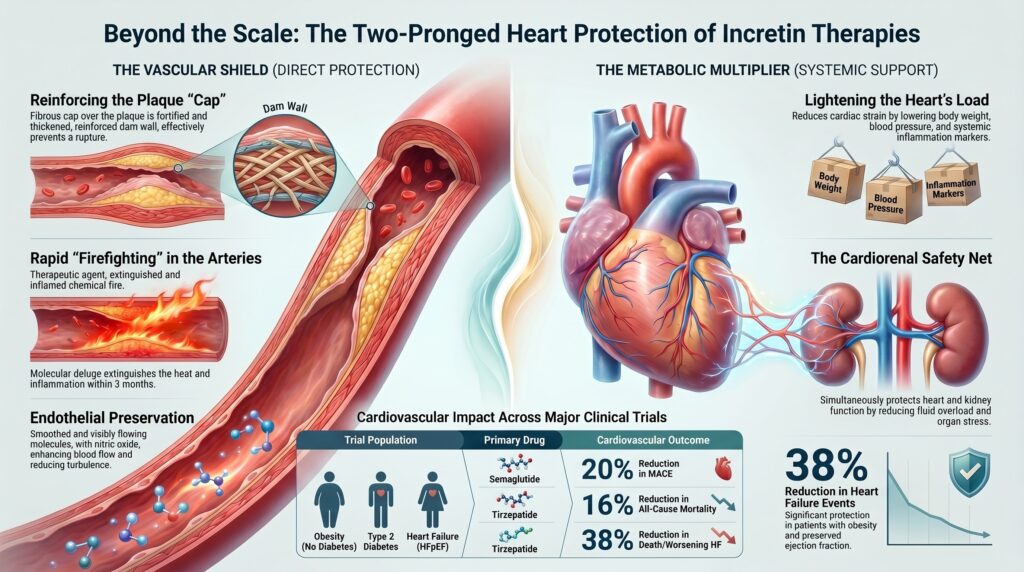
Glucagon-like peptide-1 receptor agonists (GLP-1RAs) and dual GIP/GLP-1 receptor agonists (GIP/GLP-1RAs) have undergone evaluation across an extensive cardiovascular outcomes trial (CVOT) program. Placebo-controlled superiority trials in type 2 diabetes (T2D) — LEADER, SUSTAIN-6, REWIND, and SOUL — and in obesity without diabetes (SELECT) demonstrated statistically significant reductions in major adverse cardiovascular events (MACE) of approximately 12%–26% [3], [4], [10]–[12]. PIONEER 6 established cardiovascular safety with a favorable nonsignificant point estimate [13]. In an active-comparator setting, tirzepatide was noninferior to dulaglutide for 3-point MACE in SURPASS-CVOT (HR 0.92; P = 0.09 for superiority) and reduced all-cause mortality by 16% [6]. In heart failure with preserved ejection fraction (HFpEF) with obesity, SUMMIT demonstrated a 38% reduction in the composite of cardiovascular death and worsening heart failure, complementing the STEP-HFpEF program [5], [20], [21]. The FLOW trial demonstrated cardiorenal benefit in chronic kidney disease (CKD) with T2D [22].
The dominant clinical question is whether these benefits are downstream consequences of weight loss, glycemic improvement, and blood-pressure reduction, or whether they reflect direct pleiotropic actions on the vascular wall and myocardium. The accumulated data support a multifactorial explanation: cardiometabolic burden is reduced, while the rapid separation of MACE event curves in placebo-controlled trials — within months and before substantial weight loss — together with imaging evidence for plaque stabilization and reduced coronary inflammation, plausibly support a contribution from direct vascular anti-inflammatory and endothelial mechanisms [9], [24], [25]. This review synthesizes the cellular and physiological mechanisms, contrasts incretin-based therapies with lipid-lowering pharmacotherapy, summarizes the principal randomized trials, evaluates the distinction between plaque regression and plaque stabilization, and outlines unresolved questions and clinical-implementation considerations.
1. Cellular and Physiological Mechanisms
GLP-1 receptors are expressed in pancreatic β-cells, central-nervous-system appetite centers, and — at substantially lower density — in cardiac atria, vascular endothelium, smooth muscle, immune cells, and the renal nephron [13], [14]. Direct receptor expression in human coronary endothelial and smooth-muscle cells has been difficult to confirm using validated antibodies, raising the possibility that some “vascular” effects are mediated indirectly through circulating immune cells, hepatic signaling, or central-nervous-system pathways [14]. Dual GIP/GLP-1 receptor agonism leverages complementary metabolic actions: glucose-dependent insulinotropic polypeptide (GIP) signaling enhances lipid handling and insulin sensitivity in adipose tissue, while GLP-1 signaling drives satiety, glucose-dependent insulin secretion, and the bulk of incretin-mediated cardiovascular effects [2], [6]. Table I maps target tissues to molecular cascades, clinical biomarkers, and the corresponding cardiovascular outcomes that emerge in clinical studies.
Table I. Cellular and physiological mechanisms of incretin-mediated cardioprotection.
| Target tissue / system | Receptor | Molecular cascade | Biomarker / surrogate | Cardiovascular outcome |
| Vascular endothelium | GLP-1R | Restoration of eNOS coupling; reduced superoxide generation; increased nitric-oxide bioavailability. | Improved flow-mediated dilation; reduced soluble ICAM-1 and VCAM-1. | Coronary microvascular vasodilation; preserved endothelial function; reduced monocyte adhesion. |
| Vascular and circulating immune cells | GLP-1R | cAMP / PKA activation; suppressed NF-κB translocation; reduced macrophage activation. | Lower high-sensitivity CRP, IL-6, and TNF-α. | Suppressed monocyte recruitment to vessel wall; reduced foam-cell formation and plaque inflammation. |
| Arterial smooth muscle and plaque matrix | GLP-1R | Reduced VSMC proliferation; modulation of matrix metalloproteinase expression; increased collagen deposition. | Increased fibrous-plaque volume on coronary CT angiography; thicker fibrous cap on intravascular imaging. | Stabilization of vulnerable plaque architecture; reduced rupture and erosion. |
| Myocardium and coronary microcirculation | GLP-1R | Increased myocardial glucose uptake under stress; reduced cardiomyocyte apoptosis via caspase-3 pathway inhibition. | Reduced NT-proBNP and troponin; preserved LVEF in selected populations. | Mitigation of ischemia-reperfusion injury; improved diastolic function; reduced HF progression. |
| Adipose tissue and liver | GLP-1R and GIPR | Central appetite suppression; reduced hepatic lipogenesis and ectopic fat deposition; improved insulin sensitivity. | 5%–15% body-weight reduction; lower waist circumference; improved HOMA-IR. | Reduced cardiac preload/afterload; reversal of obesity-related systemic inflammation. |
| Renal nephron and hemodynamics | GLP-1R and GIPR | Proximal-tubule sodium-hydrogen exchanger (NHE3) inhibition; natriuresis; reduced glomerular hyperfiltration. | 2–5 mmHg reduction in systolic blood pressure; preserved eGFR slope. | Reduced myocardial wall stress; mitigation of cardiorenal syndrome. |
2. Drug-Class Comparison: Incretin-Based vs. Lipid-Lowering Therapies
Traditional lipid-lowering therapies — statins, ezetimibe, proprotein convertase subtilisin/kexin type 9 (PCSK9) inhibitors, inclisiran, and bempedoic acid — primarily reduce circulating apolipoprotein B (ApoB)–containing lipoproteins, which both retards new atherogenesis and, at sufficient magnitude, drives angiographic plaque regression [15]–[17]. Incretin-based therapies operate on a different axis: they exert modest effects on the lipid panel but substantial effects on systemic inflammation, vascular biology, body composition, blood pressure, and renal hemodynamics [2], [18]. Table II summarizes the comparative profile in terms of low-density lipoprotein cholesterol (LDL-C), high-density lipoprotein cholesterol (HDL-C), and MACE outcomes. The clinical implication is not substitution but combination: aggressive ApoB lowering to address the lipid driver of atherogenesis, paired with incretin therapy to address residual cardiometabolic and inflammatory risk.
Table II. Pharmacological and clinical profiles: incretin-based vs. lipid-lowering therapies.
| Drug class (example) | Primary molecular target | Lipid effects (typical) | Impact on MACE and HF | Secondary metabolic benefits |
| GLP-1 receptor agonists (semaglutide, liraglutide, dulaglutide) | GLP-1 receptor | LDL-C ↓ ~2%–5%; triglycerides ↓ ~12%–18%; HDL-C ↑ ~3%–5%; modest ApoB reduction. | MACE relative risk reduction approximately 12%–26% across positive placebo-controlled CVOTs (LEADER 13%, REWIND 12%, SOUL 14%, SELECT 20%, SUSTAIN-6 26%). PIONEER 6 was a noninferiority safety trial with a nonsignificant favorable point estimate. Favorable HF symptom and functional outcomes in HFpEF. | Weight loss 6%–15%; SBP ↓ 2–5 mmHg; significant hs-CRP reduction; eGFR preservation. |
| GIP/GLP-1 receptor agonist (tirzepatide) | GIP and GLP-1 receptors | LDL-C ↓ ~5%–8%; triglycerides ↓ ~20%–25%; HDL-C ↑ ~5%–8%; greater ApoB reduction than GLP-1RA monotherapy. | Noninferior to dulaglutide for 3-point MACE (HR 0.92, 95.3% CI 0.83–1.01; P = 0.09 for superiority) in SURPASS-CVOT, with 16% reduction in all-cause mortality. 38% reduction in HF-event composite and 46% reduction in worsening HF events in SUMMIT (HFpEF + obesity). | Weight loss 11%–22%; HbA1c reduction 1.5%–2.0%; SBP ↓ 3–5 mmHg; favorable eGFR slope. |
| Statins (HMG-CoA reductase inhibitors) | Hepatic HMG-CoA reductase | LDL-C ↓ 30%–55%; triglycerides ↓ 10%–25%; HDL-C ↑ 5%–10%; ApoB ↓ 30%–50%. | Approximately 22% MACE relative risk reduction per 1.0 mmol/L (38.7 mg/dL) LDL-C reduction (CTT meta-analysis); neutral on HF. | Direct plaque stabilization; modest hs-CRP reduction; pleiotropic endothelial effects. |
| Ezetimibe | NPC1L1 cholesterol transporter | LDL-C ↓ 15%–22%; triglycerides ↓ ~5%; HDL-C ↑ ~1%–3%; ApoB ↓ ~10%–15%. | ~6% MACE relative risk reduction added to statin therapy (IMPROVE-IT); neutral on HF. | Localized intestinal effects; favorable safety profile. |
| PCSK9 inhibitors (alirocumab, evolocumab) and inclisiran | Circulating PCSK9 (mAb) or hepatic PCSK9 mRNA (siRNA) | LDL-C ↓ 50%–60%; ApoB ↓ 40%–50%; Lp(a) ↓ 20%–30%; modest triglyceride reduction. | ~15% MACE relative risk reduction added to statin therapy (FOURIER, ODYSSEY OUTCOMES); neutral on HF. | Drives coronary plaque regression on serial IVUS (GLAGOV); rare adverse events. |
| Bempedoic acid | Hepatic ATP-citrate lyase | LDL-C ↓ 17%–28%; minor effect on triglycerides and HDL-C; ApoB ↓ ~15%. | 13% MACE relative risk reduction in statin-intolerant patients (CLEAR Outcomes); neutral on HF. | ~20% hs-CRP reduction; neutral on glycemia. |
3. Evidence From Major Randomized Trials
The cardiovascular efficacy of incretin-based therapies has been established across a sequence of large prospective CVOTs. The trial program has evolved from glycemic-safety and outcomes studies in T2D (the LEADER, SUSTAIN-6, REWIND, EXSCEL, and PIONEER 6 era [10]–[13], [19]), to outcomes trials in expanded populations including obesity without diabetes (SELECT [3]), HFpEF with obesity (SUMMIT [5], with a companion semaglutide program in STEP-HFpEF [20], [21]), CKD (FLOW [22]), and an active-comparator setting (SURPASS-CVOT [6]). For navigability, the trials are summarized in two tables grouped by enrollment population: Table III covers T2D CVOTs; Table IV covers trials in obesity, HFpEF, and CKD. The next sections discuss what these trials reveal about mechanism: the time course of benefit, the imaging signature of plaque stabilization, and the limits of inference from each trial design.
Table III. Cardiovascular outcomes trials in type 2 diabetes.
Abbreviations used in this table: ASCVD = atherosclerotic cardiovascular disease; CV = cardiovascular; CVD = cardiovascular disease; HR = hazard ratio; SC = subcutaneous; SGLT2i = sodium-glucose cotransporter-2 inhibitor.
| Trial (publication) | Intervention vs. comparator | Population and N | Follow-up | Primary cardiovascular outcome (HR, 95% CI) | Key secondary effects and notable limitations |
| LEADER (Marso et al., NEJM 2016) [10] | Liraglutide 1.8 mg SC daily vs. placebo, on standard care. | T2D with high CV risk (≥80% with established CVD). N = 9,340. | Median 3.8 years. | 3-point MACE: HR 0.87 (0.78–0.97), P = 0.01 for superiority. CV death: HR 0.78 (0.66–0.93). | All-cause mortality HR 0.85; nonfatal MI and stroke numerically lower (not individually significant). GI adverse events most common discontinuation reason. |
| SUSTAIN-6 (Marso et al., NEJM 2016) [11] | Semaglutide 0.5 mg or 1.0 mg SC weekly vs. placebo. | T2D with high CV risk. N = 3,297. | 104 weeks. | 3-point MACE: HR 0.74 (0.58–0.95), P < 0.001 for noninferiority, P = 0.02 for superiority. Nonfatal stroke: HR 0.61 (0.38–0.99). | Statistically significant increase in retinopathy complications (HR 1.76, 1.11–2.78); small sample size limits stroke-subtype precision. |
| REWIND (Gerstein et al., Lancet 2019) [12] | Dulaglutide 1.5 mg SC weekly vs. placebo. | T2D, ~68% without established CVD (broad primary-prevention cohort). N = 9,901. | Median 5.4 years. | 3-point MACE: HR 0.88 (0.79–0.99), P = 0.026 for superiority. | Benefit consistent in primary- and secondary-prevention subgroups; first GLP-1RA CVOT to show benefit in a predominantly primary-prevention population. |
| PIONEER 6 (Husain et al., NEJM 2019) [13] | Oral semaglutide 14 mg daily vs. placebo. | T2D ≥50 years with established CVD or CKD. N = 3,183. | Median 15.9 months. | 3-point MACE: HR 0.79 (0.57–1.11); P < 0.001 for noninferiority (not powered for superiority). | CV safety trial; favorable but nonsignificant point estimate. Cardiovascular and all-cause mortality numerically lower. |
| SOUL (McGuire et al., NEJM 2025) [4] | Oral semaglutide titrated to 14 mg daily vs. placebo, on standard care (~27% on baseline SGLT2i). | T2D ≥50 years with established ASCVD, CKD, or both. N = 9,650. | Median 49.5 months. | 3-point MACE: HR 0.86 (0.77–0.96), P = 0.006 for superiority. | Driven primarily by 26% reduction in nonfatal MI; benefit preserved regardless of baseline or in-trial SGLT2i use. GI events most common adverse-event class. |
| SURPASS-CVOT (Nicholls et al., NEJM 2025) [6] | Tirzepatide (max tolerated up to 15 mg) SC weekly vs. dulaglutide 1.5 mg SC weekly (active comparator). | T2D with established ASCVD. N = 13,165 (6,586 vs. 6,579). | Median 4.0 years. | 3-point MACE: HR 0.92 (95.3% CI 0.83–1.01); P = 0.003 for noninferiority, P = 0.09 for superiority. Expanded 4-point MACE: HR 0.88 (0.80–0.96). All-cause mortality HR 0.84 (0.75–0.94). | Active-comparator design narrows margin for showing superiority. Tirzepatide produced ~7%–8% greater weight loss and ~0.8% greater HbA1c reduction; favorable eGFR-slope trend. |
Table IV. Trials in obesity, heart failure with preserved ejection fraction, and chronic kidney disease.
Abbreviations used in this table: ARR = absolute risk reduction; BMI = body-mass index; CV = cardiovascular; HR = hazard ratio; KCCQ-CSS = Kansas City Cardiomyopathy Questionnaire Clinical Summary Score; LVEF = left ventricular ejection fraction; NYHA = New York Heart Association functional class; PAD = peripheral artery disease; SC = subcutaneous; UACR = urine albumin-to-creatinine ratio.
| Trial (publication) | Intervention vs. comparator | Population and N | Follow-up | Primary outcome (HR or treatment difference) | Key secondary effects and notable limitations |
| SELECT (Lincoff et al., NEJM 2023) [3] | Semaglutide 2.4 mg SC weekly vs. placebo, all on standard CV care. | BMI ≥27 kg/m², established CVD (prior MI, stroke, or symptomatic PAD), no diabetes. N = 17,604. | Mean 39.8 months. | 3-point MACE: HR 0.80 (0.72–0.90), P < 0.001 for superiority. ARR 1.5%. | Prespecified time-to-benefit analysis: nominally significant MACE reduction at 3 months (HR 0.63, 95% CI 0.41–0.95) and 6 months (HR 0.60), before substantial weight loss [25]. Cardioprotection consistent across baseline HbA1c, weight, and waist-circumference categories. GI events drove ~17% discontinuation. |
| SUMMIT (Packer et al., NEJM 2025) [5] | Tirzepatide titrated to maximum tolerated dose (5, 10, or 15 mg) SC weekly vs. placebo. | HFpEF (LVEF ≥50%), NYHA II–IV, BMI ≥30 kg/m², with or without diabetes. N = 731. | Median 104 weeks. | CV death or worsening HF (composite): HR 0.62 (0.41–0.95), P = 0.026. Worsening HF events: HR 0.54 (0.34–0.85). | KCCQ-CSS between-group difference +6.9 (3.3–10.6); 6-minute walk distance +18 m; weight loss treatment difference −11.6%; hs-CRP −34.9%. Modest sample size; CV death events too few to interpret individually. |
| STEP-HFpEF (Kosiborod et al., NEJM 2023) [20] | Semaglutide 2.4 mg SC weekly vs. placebo. | HFpEF (LVEF ≥45%), BMI ≥30 kg/m², no diabetes. N = 529. | 52 weeks. | Dual primary endpoints: KCCQ-CSS change +16.6 vs. +8.7 (between-group +7.8, 95% CI 4.8–10.9, P < 0.001); body weight −13.3% vs. −2.6% (between-group −10.7%, P < 0.001). | Six-minute walk distance and CRP also improved with semaglutide. Symptom and exercise-capacity trial; not powered for hard CV endpoints. |
| STEP-HFpEF DM (Kosiborod et al., Lancet 2024) [21] | Semaglutide 2.4 mg SC weekly vs. placebo. | HFpEF (LVEF ≥45%), BMI ≥30 kg/m², with T2D. N = 616. | 52 weeks. | Dual primary endpoints: KCCQ-CSS change +13.7 vs. +6.4 (between-group +7.3, P < 0.001); body weight −9.8% vs. −3.4% (between-group −6.4%, P < 0.001). | Six-minute walk distance and CRP improved with semaglutide; absolute weight loss smaller than non-diabetic STEP-HFpEF. Not powered for hard CV endpoints. |
| FLOW (Perkovic et al., NEJM 2024) [22] | Semaglutide 1.0 mg SC weekly vs. placebo (trial terminated early for efficacy). | T2D with CKD (eGFR 50–75 with elevated UACR, or eGFR 25–50). N = 3,533. | Median 3.4 years. | Composite major kidney disease events (kidney failure, sustained ≥50% eGFR reduction, kidney or CV death): HR 0.76 (0.66–0.88), P = 0.0003. | MACE: HR 0.82 (0.68–0.98). CV death: HR 0.71 (0.56–0.89). Demonstrated cardiorenal benefit in CKD with T2D. |
4. Plaque Stabilization vs. Atherosclerotic Regression
A central mechanistic question is whether the MACE reduction observed with GLP-1RA therapy is mediated by physical regression of total atheroma volume or by qualitative remodeling that stabilizes the existing plaque burden. Intensive lipid-lowering with high-intensity statins and PCSK9 inhibitors has been shown on serial intravascular ultrasound (IVUS) and coronary computed tomography angiography (CCTA) to reduce both total atheroma volume and lipid-rich plaque components [15], [17], [23]. The imaging signature of incretin therapy is different.
In the observational, prospective CCTA study of Hjuler Boesgaard and colleagues, 204 asymptomatic patients with T2D (55 receiving liraglutide as part of clinical care, 149 not) underwent baseline and 1-year CCTA [9]. The change in total atheroma volume did not differ between groups (38 ± 180 mm³ in the liraglutide group vs. −1 ± 160 mm³ in the comparator group, P = 0.13). However, the liraglutide group showed a significantly greater increase in fibrous-plaque volume. In the context of plaque biology, fibrous-plaque expansion is a favorable structural change: dense, collagen-rich fibrous tissue forms a thicker cap that insulates the thrombogenic lipid core from circulating coagulation factors. The shift toward fibrous composition resembles the qualitative plaque change observed with statin therapy and is the structural substrate of plaque stabilization [9], [15]. The observational design of this study limits causal inference; a randomized CCTA trial addressing this question remains an evidence gap.
Complementary in-vivo evidence for a direct anti-inflammatory vascular action comes from the LIRAFLAME positron emission tomography / computed tomography (PET/CT) substudy [24]. Thirty randomly selected participants from the parent LIRAFLAME trial underwent paired [⁶⁴Cu]Cu-DOTATATE PET/CT imaging of the coronary arteries at baseline and after 26 weeks. The tracer binds somatostatin receptor 2, which is highly expressed on activated macrophages. Coronary tracer uptake decreased significantly in the liraglutide arm (assessed as both maximum and mean-of-maximum standardized uptake values) at the participant level and the individual coronary-segment level; no such reduction was seen with placebo. The change in coronary tracer uptake correlated with the change in systemic high-sensitivity C-reactive protein (hs-CRP), linking a systemic anti-inflammatory effect to a regional reduction in macrophage activity within the coronary vessel wall [24]. Preclinical work in apolipoprotein-E–deficient and LDL-receptor–deficient mouse models, and in Watanabe heritable hyperlipidemic rabbits, has shown analogous effects: reduced macrophage accumulation, inhibited foam-cell formation, and thicker fibrous caps [14], [18]. Taken together, the human imaging and animal data are most consistent with plaque stabilization rather than gross atheroma regression, though the causal mechanism remains an inference rather than a directly proven pathway.
5. Mechanistic Basis for the Rapid Onset of Cardioprotective Benefit
The MACE event curves in SELECT diverged early. The trial’s primary result was a 20% reduction in 3-point MACE over a mean follow-up of 39.8 months (HR 0.80, 95% CI 0.72–0.90) [3]. In a prespecified time-to-benefit secondary analysis presented at the European Congress on Obesity in 2025 and subsequently published, semaglutide produced a nominally significant reduction in MACE within the first 3 months (HR 0.63, 95% CI 0.41–0.95) and the first 6 months (HR 0.60, 95% CI 0.44–0.81), with curve separation visible within approximately 3 weeks of randomization [25], [26]. At 3 months, the mean placebo-adjusted body-weight difference was only approximately 3.6%, and patients were still in the protocol dose-escalation phase. The onset of clinical benefit in this secondary analysis therefore precedes substantial weight loss and predates the achievement of target maintenance dosing, although the time-to-benefit estimates carry wider confidence intervals than the primary endpoint.
Several non-weight-dependent mechanisms could plausibly explain this early cardioprotection:
Endothelial preservation. GLP-1RAs reduce reactive-oxygen-species generation and prevent endothelial nitric oxide synthase (eNOS) uncoupling, increasing local nitric-oxide bioavailability. The net effect is improved coronary microvascular vasodilation and local antithrombotic / antiplatelet tone.
Rapid suppression of plaque-local inflammation. Macrophages in vulnerable plaques produce inflammatory cytokines (tumor necrosis factor alpha [TNF-α], interleukin-6 [IL-6]) and matrix metalloproteinases that degrade the fibrous cap. GLP-1R activation downregulates the nuclear factor kappa-B (NF-κB) cascade within days to weeks, preserving cap integrity and reducing the substrate for erosion and rupture.
Myocardial substrate optimization. Under ischemic and high-stress conditions, GLP-1R activation increases myocardial glucose uptake and glycolytic flux while inhibiting caspase-3–mediated cardiomyocyte apoptosis. This improves the oxygen-efficiency of energy production and reduces infarct expansion and arrhythmic substrate.
These pathways are consistent with the observation that the early MACE reduction in SELECT was driven principally by reductions in nonfatal myocardial infarction (MI) and heart-failure–related events rather than by changes that require months of weight loss to materialize [25], [27]. Direct causal demonstration in human coronary tissue remains an evidence gap.
6. The DPP-4 Inhibitor Discrepancy
A clarifying contrast comes from dipeptidyl peptidase-4 (DPP-4) inhibitors, which act by preventing degradation of endogenous active GLP-1. These agents produce modest improvements in glycated hemoglobin (HbA1c) of approximately 0.5%–0.8% and a neutral profile on weight and blood pressure [28]. Across the major CVOTs — SAVOR-TIMI 53 (saxagliptin), EXAMINE (alogliptin), TECOS (sitagliptin), CARMELINA (linagliptin), and CAROLINA (linagliptin vs. glimepiride) — DPP-4 inhibitors have demonstrated cardiovascular safety but no MACE reduction; SAVOR-TIMI 53 additionally showed an increase in heart-failure hospitalization with saxagliptin [28]–[31].
This therapeutic divergence is reconciled by drug-exposure pharmacology. Endogenous GLP-1 is secreted in small amounts from intestinal L-cells in response to nutrient stimuli and has a circulating half-life of less than two minutes due to rapid DPP-4–mediated degradation. DPP-4 inhibition extends this half-life and increases circulating active GLP-1 by approximately 2- to 3-fold, which is sufficient to engage high-density pancreatic islet receptors and produce glucose-dependent insulin secretion and glucagon suppression. Receptor density in cardiovascular and immune tissues is, however, markedly lower than in the pancreas, and the modest physiological increment in GLP-1 produced by DPP-4 inhibition does not appear sufficient to drive the downstream signaling needed for anti-inflammatory, endothelial, or plaque-modifying effects [13], [14], [28].
Engineered GLP-1RAs achieve supra-physiological active-drug exposure for extended periods. Semaglutide has a plasma half-life of approximately 155–184 hours (≈ one week), driven by albumin binding via a C18 fatty-diacid side chain [32]. Once-weekly dosing therefore produces sustained drug concentrations that are an order of magnitude or more above physiologic baseline. The implication is mechanistically important: cardiovascular benefit appears to require pharmacological-level direct receptor activation, not merely augmentation of physiologic incretin signaling.
7. Practical Clinical Implications
7.1 Population-Specific Cardiorenal Efficacy
Type 2 diabetes with established ASCVD or CKD. GLP-1RAs (subcutaneous semaglutide, liraglutide, dulaglutide) and the GIP/GLP-1RA tirzepatide are evidence-based additions to lipid-lowering and antiplatelet therapy. Oral semaglutide titrated to 14 mg daily reduced 3-point MACE by 14% in SOUL (HR 0.86, 95% CI 0.77–0.96), with the principal driver a 26% reduction in nonfatal MI; benefit was preserved in the prespecified subgroup receiving sodium-glucose cotransporter-2 inhibitors (SGLT2i) at baseline, which supports combined GLP-1RA + SGLT2i use as a supported option pursuing complementary pathways [4], [33].
Overweight or obesity without diabetes, with established CVD. In SELECT, semaglutide 2.4 mg subcutaneously weekly reduced MACE by 20% (HR 0.80, 95% CI 0.72–0.90) with a 1.5% absolute risk reduction over a mean follow-up of 39.8 months [3]. The cardioprotective effect was consistent across baseline HbA1c (normoglycemic and prediabetic strata) and across baseline weight and waist categories; a mediation analysis estimated that only approximately one third of the MACE benefit was attributable to waist-circumference reduction, indicating substantial weight-independent benefit [34], [35]. Therapy should therefore not be discontinued in patients with established CVD who do not achieve the weight-loss targets observed in clinical trials.
HFpEF with obesity. In SUMMIT, tirzepatide reduced the composite of cardiovascular death or worsening heart-failure events by 38% (HR 0.62, 95% CI 0.41–0.95) and worsening HF events alone by 46% (HR 0.54, 95% CI 0.34–0.85), with a +6.9-point between-group improvement in the Kansas City Cardiomyopathy Questionnaire Clinical Summary Score (KCCQ-CSS), an 18-meter improvement in 6-minute walk distance (6MWD), and a placebo-adjusted weight loss of −11.6% [5]. The companion STEP-HFpEF and STEP-HFpEF DM programs demonstrated semaglutide-mediated improvements in KCCQ-CSS, body weight, and 6MWD in similar populations with and without diabetes [20], [21]. Incretin therapy is a supported, evidence-based option in obese HFpEF.
Chronic kidney disease. In SOUL, oral semaglutide reduced MACE in CKD subgroups consistent with the overall trial; in SURPASS-CVOT, tirzepatide slowed estimated glomerular filtration rate (eGFR) decline relative to dulaglutide [4], [6]. The dedicated FLOW trial of subcutaneous semaglutide in T2D-related CKD showed a 24% reduction in the composite of major kidney disease events (HR 0.76, 95% CI 0.66–0.88) and significant reductions in cardiovascular outcomes [22], supporting GLP-1RA therapy as an evidence-based addition for cardiorenal protection in this population.
7.2 Integration With Lipid Management
Statins, ezetimibe, PCSK9 inhibitors, inclisiran, and bempedoic acid remain foundational therapy for atherogenic-lipoprotein reduction. The lipid-modifying effects of GLP-1RAs are modest in comparison: the SELECT lipid analysis reported net placebo-adjusted reductions of approximately 2% in LDL-C and 15% in triglycerides [34]. The implication for practice is that incretin therapy is not a substitute for ApoB-lowering therapy in established ASCVD but is complementary: aggressive ApoB lowering addresses the lipid driver of atherogenesis, while incretin therapy addresses residual inflammatory, vascular, and metabolic risk. The combination is a supported, evidence-based approach for secondary prevention in cardiometabolically high-risk patients.
8. Open Research Questions
8.1 Direct Vascular Receptor Signaling vs. Indirect Systemic Effects
Whether the cardiovascular benefits of GLP-1RAs depend on direct receptor activation in vascular and myocardial tissue — or are mediated by indirect systemic effects on adipose-tissue inflammation, hepatic lipid handling, neurohumoral tone, and intestinal signaling — remains incompletely resolved. Validated immunohistochemistry has had difficulty confirming high-density GLP-1R expression in human coronary endothelium and smooth muscle, raising the possibility that the “vascular” effects are substantially indirect [14]. Resolving this question is more than academic: it determines whether the next generation of incretin-based molecules should be designed for receptor-selective vascular targeting or for refined systemic-metabolic activity.
8.2 The “Saturation” Hypothesis From SURPASS-CVOT
SURPASS-CVOT compared tirzepatide directly with dulaglutide and met its prespecified noninferiority margin but not formal superiority (HR 0.92, 95.3% CI 0.83–1.01; P = 0.09) [6]. Tirzepatide produced substantially greater weight loss (~7–8% additional) and superior glycemic control (~0.8% additional HbA1c reduction), yet the additional cardiovascular benefit over an already-active comparator was modest. One interpretation is a “saturation effect”: once the GLP-1 axis is fully engaged, additional metabolic improvement and GIP receptor activation may yield diminishing returns on hard macrovascular endpoints. Alternative interpretations include (a) trial design (active comparator narrows the margin to detect superiority) and (b) underlying biology that limits incremental benefit on plaque stabilization beyond a threshold. The companion finding of a significant 16% all-cause mortality reduction with tirzepatide and benefit on the expanded 4-point MACE endpoint suggests that additional risk reduction may exist but is more diffusely distributed than the 3-point MACE composite captures [6]. Adequately powered placebo-controlled trials of next-generation triple-incretin agonists will be needed to resolve this question.
8.3 Long-Term Efficacy and Combination Regimens
Prospective randomized data on multi-pathway combination regimens — GLP-1RA + SGLT2i, GLP-1RA + finerenone, GLP-1RA + intensive ApoB-lowering — remain limited. Although the SOUL prespecified analysis showed preserved MACE benefit in the SGLT2i-treated subgroup, that analysis was non-randomized for the SGLT2i exposure [33]. Dedicated factorial trials would clarify whether these complementary pathways produce additive, supra-additive, or attenuated effects on hard outcomes.
8.4 Tolerability and Real-World Adherence
Gastrointestinal adverse events drive treatment discontinuation in clinical trials. In SUMMIT, diarrhea (18.4% vs. 6.3%), nausea (17.0% vs. 6.5%), and adverse events leading to discontinuation (6.3% vs. 1.4%) were more frequent with tirzepatide than with placebo [5]. SOUL reported overall serious adverse events in 47.9% of the oral-semaglutide arm vs. 50.3% in placebo, with GI events the most common [4]. Real-world discontinuation rates are typically higher than clinical-trial rates. Long-term cardiovascular benefit depends on sustained therapy; improving titration protocols and identifying patient-level predictors of intolerance are practical research priorities.
Disclosures
The LEADER, SUSTAIN-6, REWIND, PIONEER 6, SELECT, SOUL, STEP-HFpEF (with and without diabetes), and FLOW trials were sponsored by Novo Nordisk. The SUMMIT and SURPASS-CVOT trials were sponsored by Eli Lilly. These industry sponsorships are routine for cardiovascular outcomes trials in the incretin therapeutic area; results have been published in peer-reviewed journals with adjudicated endpoints. The author declares no financial conflicts related to the manufacturers cited.
References
- Luconi M, Cantini G, Ceriello A, Mannucci E. Perspectives on cardiovascular effects of incretin-based drugs: From bedside to bench, return trip. Int J Cardiol. 2017;241:302-310. doi:10.1016/j.ijcard.2017.02.126
- Ibe T, Borlaug BA. Glucagon-Like Peptide 1 Receptor Agonists and Cardiovascular Disease. Annu Rev Med. 2026;77(1):1-15. doi:10.1146/annurev-med-043024-011141
- Lincoff AM, Brown-Frandsen K, Colhoun HM, et al. Semaglutide and Cardiovascular Outcomes in Obesity without Diabetes. N Engl J Med. 2023;389(24):2221-2232. doi:10.1056/NEJMoa2307563
- McGuire DK, Marx N, Mulvagh SL, et al. Oral Semaglutide and Cardiovascular Outcomes in High-Risk Type 2 Diabetes. N Engl J Med. 2025;392(20):2001-2012. doi:10.1056/NEJMoa2501006
- Packer M, Zile MR, Kramer CM, et al. Tirzepatide for Heart Failure with Preserved Ejection Fraction and Obesity. N Engl J Med. 2025;392(5):427-437. doi:10.1056/NEJMoa2410027
- Nicholls SJ, Pavo I, Bhatt DL, et al. Cardiovascular Outcomes with Tirzepatide versus Dulaglutide in Type 2 Diabetes. N Engl J Med. 2025;393(24):2409-2420. doi:10.1056/NEJMoa2505928
- Borlaug BA, Zile MR, Kramer CM, et al. Effects of tirzepatide on circulatory overload and end-organ damage in heart failure with preserved ejection fraction and obesity: a secondary analysis of the SUMMIT trial. Nat Med. 2025;31(2):544-551. doi:10.1038/s41591-024-03374-z
- Borlaug BA, Zile MR, Kramer CM, et al. Impact of Body Mass Index, Central Adiposity, and Weight Loss on the Benefits of Tirzepatide in HFpEF: The SUMMIT Trial. J Am Coll Cardiol. 2025;86(4):242-255. doi:10.1016/j.jacc.2025.04.059
- Heinsen LJ, Pararajasingam G, Andersen TR, et al. Liraglutide treatment is associated with progression of coronary artery fibrous plaque: a prospective 1-year follow-up study in asymptomatic patients with type 2 diabetes. BMC Cardiovasc Disord. 2023;23(1):214. Published 2023 Apr 28. doi:10.1186/s12872-023-03228-5
- Marso SP, Daniels GH, Brown-Frandsen K, et al. Liraglutide and Cardiovascular Outcomes in Type 2 Diabetes. N Engl J Med. 2016;375(4):311-322. doi:10.1056/NEJMoa1603827
- Marso SP, Bain SC, Consoli A, et al. Semaglutide and Cardiovascular Outcomes in Patients with Type 2 Diabetes. N Engl J Med. 2016;375(19):1834-1844. doi:10.1056/NEJMoa1607141
- Gerstein HC, Colhoun HM, Dagenais GR, et al. Dulaglutide and cardiovascular outcomes in type 2 diabetes (REWIND): a double-blind, randomised placebo-controlled trial. Lancet. 2019;394(10193):121-130. doi:10.1016/S0140-6736(19)31149-3
- Husain M, Birkenfeld AL, Donsmark M, et al. Oral Semaglutide and Cardiovascular Outcomes in Patients with Type 2 Diabetes. N Engl J Med. 2019;381(9):841-851. doi:10.1056/NEJMoa1901118
- Pyke C, Heller RS, Kirk RK, et al. GLP-1 receptor localization in monkey and human tissue: novel distribution revealed with extensively validated monoclonal antibody. Endocrinology. 2014;155(4):1280-1290. doi:10.1210/en.2013-1934
- Cholesterol Treatment Trialists’ (CTT) Collaboration, Baigent C, Blackwell L, et al. Efficacy and safety of more intensive lowering of LDL cholesterol: a meta-analysis of data from 170,000 participants in 26 randomised trials. Lancet. 2010;376(9753):1670-1681. doi:10.1016/S0140-6736(10)61350-5
- Cannon CP, Blazing MA, Giugliano RP, et al. Ezetimibe Added to Statin Therapy after Acute Coronary Syndromes. N Engl J Med. 2015;372(25):2387-2397. doi:10.1056/NEJMoa1410489
- Nicholls SJ, Puri R, Anderson T, et al. Effect of Evolocumab on Progression of Coronary Disease in Statin-Treated Patients: The GLAGOV Randomized Clinical Trial. JAMA. 2016;316(22):2373-2384. doi:10.1001/jama.2016.16951
- Park B, Bakbak E, Teoh H, et al. GLP-1 receptor agonists and atherosclerosis protection: the vascular endothelium takes center stage. Am J Physiol Heart Circ Physiol. 2024;326(5):H1159-H1176. doi:10.1152/ajpheart.00574.2023
- Holman RR, Bethel MA, Mentz RJ, et al. Effects of Once-Weekly Exenatide on Cardiovascular Outcomes in Type 2 Diabetes. N Engl J Med. 2017;377(13):1228-1239. doi:10.1056/NEJMoa1612917
- Kosiborod MN, Abildstrøm SZ, Borlaug BA, et al. Semaglutide in Patients with Heart Failure with Preserved Ejection Fraction and Obesity. N Engl J Med. 2023;389(12):1069-1084. doi:10.1056/NEJMoa2306963
- Kosiborod MN, Deanfield J, Pratley R, et al. Semaglutide versus placebo in patients with heart failure and mildly reduced or preserved ejection fraction: a pooled analysis of the SELECT, FLOW, STEP-HFpEF, and STEP-HFpEF DM randomised trials. Lancet. 2024;404(10456):949-961. doi:10.1016/S0140-6736(24)01643-X
- Perkovic V, Tuttle KR, Rossing P, et al. Effects of Semaglutide on Chronic Kidney Disease in Patients with Type 2 Diabetes. N Engl J Med. 2024;391(2):109-121. doi:10.1056/NEJMoa2403347
- Nissen SE, Nicholls SJ, Sipahi I, et al. Effect of very high-intensity statin therapy on regression of coronary atherosclerosis: the ASTEROID trial. JAMA. 2006;295(13):1556-1565. doi:10.1001/jama.295.13.jpc60002
- Jensen JK, Zobel EH, von Scholten BJ, et al. Effect of 26 Weeks of Liraglutide Treatment on Coronary Artery Inflammation in Type 2 Diabetes Quantified by [64Cu]Cu-DOTATATE PET/CT: Results from the LIRAFLAME Trial. Front Endocrinol (Lausanne). 2021;12:790405. Published 2021 Nov 30. doi:10.3389/fendo.2021.790405
- Garvey WT, Blüher M, Osorto Contreras CK, et al. Coadministered Cagrilintide and Semaglutide in Adults with Overweight or Obesity. N Engl J Med. 2025;393(7):635-647. doi:10.1056/NEJMoa2502081
- Hussain M, Miras AD. Peptidhormonanaloga basierte medikamentöse Adipositastherapie ist effektiv : Was ist die Evidenz zu harten Endpunkten und zum Langzeitverlauf? [Peptide hormone analogue-based pharmacotherapy for obesity is effective : What is the evidence on hard end points and the long-term course?]. Chirurgie (Heidelb). 2026;97(1):11-20. doi:10.1007/s00104-025-02402-z
- Deanfield J, Verma S, Scirica BM, et al. Semaglutide and cardiovascular outcomes in patients with obesity and prevalent heart failure: a prespecified analysis of the SELECT trial. Lancet. 2024;404(10454):773-786. doi:10.1016/S0140-6736(24)01498-3
- Scirica BM, Bhatt DL, Braunwald E, et al. Saxagliptin and cardiovascular outcomes in patients with type 2 diabetes mellitus. N Engl J Med. 2013;369(14):1317-1326. doi:10.1056/NEJMoa1307684
- Green JB, Bethel MA, Armstrong PW, et al. Effect of Sitagliptin on Cardiovascular Outcomes in Type 2 Diabetes. N Engl J Med. 2015;373(3):232-242. doi:10.1056/NEJMoa1501352
- Rosenstock J, Perkovic V, Johansen OE, et al. Effect of Linagliptin vs Placebo on Major Cardiovascular Events in Adults With Type 2 Diabetes and High Cardiovascular and Renal Risk: The CARMELINA Randomized Clinical Trial. JAMA. 2019;321(1):69-79. doi:10.1001/jama.2018.18269
- Rosenstock J, Kahn SE, Johansen OE, et al. Effect of Linagliptin vs Glimepiride on Major Adverse Cardiovascular Outcomes in Patients With Type 2 Diabetes: The CAROLINA Randomized Clinical Trial. JAMA. 2019;322(12):1155-1166. doi:10.1001/jama.2019.13772
- Lau J, Bloch P, Schäffer L, et al. Discovery of the Once-Weekly Glucagon-Like Peptide-1 (GLP-1) Analogue Semaglutide. J Med Chem. 2015;58(18):7370-7380. doi:10.1021/acs.jmedchem.5b00726
- Marx N, Deanfield JE, Mann JFE, et al. Oral Semaglutide and Cardiovascular Outcomes in People With Type 2 Diabetes, According to SGLT2i Use: Prespecified Analyses of the SOUL Randomized Trial. Circulation. 2025;151(23):1639-1650. doi:10.1161/CIRCULATIONAHA.125.074545
- Lingvay I, Deanfield J, Kahn SE, et al. Semaglutide and Cardiovascular Outcomes by Baseline HbA1c and Change in HbA1c in People With Overweight or Obesity but Without Diabetes in SELECT. Diabetes Care. 2024;47(8):1360-1369. doi:10.2337/dc24-0764
- Deanfield J, Lincoff AM, Kahn SE, et al. Semaglutide and cardiovascular outcomes by baseline and changes in adiposity measurements: a prespecified analysis of the SELECT trial. Lancet. 2025;406(10516):2257-2268. doi:10.1016/S0140-6736(25)01375-3