تقييم شامل للعلامات الحيوية في تصنيف مخاطر أمراض القلب والأوعية الدموية
أولاً: مقدمة: التحول في النموذج الفكري
على مدى عقود، استند طب القلب الوقائي إلى مفهوم واحد قوي، ألا وهو “فرضية الدهون”. وكنا نعمل انطلاقًا من افتراض أن كوليسترول كان تراكم الكوليسترول — وبالتحديد الكوليسترول الضار (LDL-C) — العامل الرئيسي المسبب لتصلب الشرايين أمراض القلب والأوعية الدموية. كانت التوجيهات السريرية واضحة ومباشرة: خفض مستوى الكوليسترول الضار (LDL-C)، و نوبة قلبية وستترتب على ذلك مخاطر. ورغم أن هذا النهج، الذي يحركه إلى حد كبير ستاتين لا شك في أن العلاج قد أنقذ ملايين الأرواح، لكننا نعلم الآن أنه استراتيجية غير مكتملة.
حتى عندما ينجح المرضى في اتباع نهج علاجي مكثف أهداف الكوليسترول الضار, ، وهو أمر مهم “المخاطر المتبقية”لا يزال قائماً. ونشهد ذلك سريرياً كل يوم: مرضى يتمتعون بمستويات “مثالية” من الكوليسترول، ومع ذلك يعانون من نوبات قلبية. وقد أدى استمرار هذا الخطر إلى إعادة تقييم نموذج المرض. ونحن نبتعد عن النظر إلى تصلب الشرايين من مشكلة “سباكة” سلبية — انسداد الأنابيب بسبب الشحوم — إلى فهمها على أنها مناعة الدهون واللصق. ومن هذا المنظور،, لوحة ليس مجرد حطام؛ بل هو استجابة التهابية مزمنة وغير تكيفية تجاه بروتين دهني الاحتفاظ.
تطوران رئيسيان — المتابعة التي استمرت 30 عامًا لدراسة صحة المرأة (التي نُشرت في مجلة نيوانغلند الطبية في أواخر عام 2024) [1] والبيان العلمي لعام 2025 الصادر عن الكلية الأمريكية لأمراض القلب [2]—أدت إلى إعادة ترتيب جذرية في تسلسل أولويات المخاطر لدينا. وتشير هذه التقارير إلى أن بروتين سي التفاعلي عالي الحساسية (hs-CRP), ، وهو مؤشر على وجود حالة جهازية التهاب, ، قد يتفوق في الواقع على الكوليسترول الضار (LDL-C) في التنبؤ بالنتائج طويلة المدى لدى العديد من المرضى. وفي الوقت نفسه، فإن الاعتماد على الكوليسترول الضار (LDL-C) كمقياس لـ عبء الجسيمات ويتم الطعن فيه بحق من قبل أبروليبوبروتين بأبوبروتين ب).
يحلل هذا التقرير هذا التحول، متجاوزًا العناوين الرئيسية ليتعمق في الجوانب الفيزيولوجية المرضية، ويقدم خارطة طريق قائمة على الأدلة لإدارة هذه “التهديدات الثلاثية” المتمثلة في: عدد الجسيمات، والقابلية الوراثية، والالتهاب.
ثانياً: الآلية: لماذا يُعد الالتهاب أمراً مهماً
لفهم سبب إصابة الكبد بروتين (CRP) قد يكون مؤشراً أفضل على الإصابة بنوبة قلبية مقارنة بالكوليسترول، علينا أن ننظر إلى جدار الأوعية الدموية. إن بطانة الأوعية الدموية فهي ليست بطانة سلبية؛ بل هي نشطة بيولوجيًا.
2.1 الاحتفاظ والأكسدة
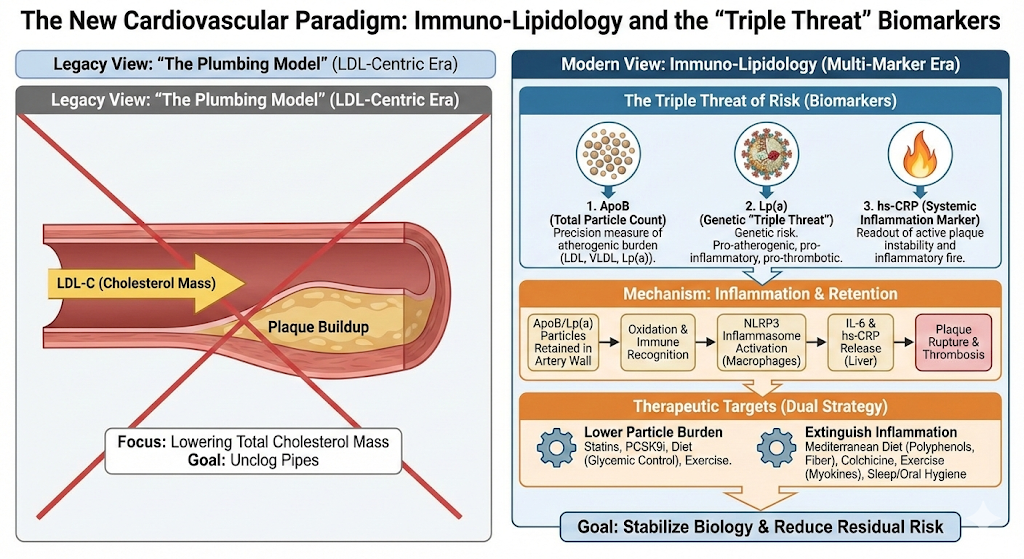
تبدأ العملية بالاحتفاظ. الجسيمات التي تحتوي على البروتين الدهني ب (البروتين الدهني منخفض الكثافة, بروتين دهني منخفض الكثافة جداً, ، Lp(a)) تنتقل إلى الفراغ تحت البطانة. والأمر الحاسم هو أنها تعلق هناك. وبمجرد أن تعلق، تتأكسد هذه الجسيمات. ولا يتعرف الجهاز المناعي على الكوليسترول الضار المؤكسد (LDL) (OxLDL) على أنه “جسم غريب”؛ فهي تعتبره مسببًا للأمراض، على غرار البكتيريا.
2.2 الـ الجهاز الالتهابي NLRP3
وهذا يؤدي إلى تحفيز الاستجابة المناعية الفطرية. البالعات الكبيرة تندفع لتلتهم الدهون المؤكسدة، فتصبح “خلايا رغوية.” ويؤدي هذا الابتلاع إلى تنشيط NLRP3 الإنفلاماسوم، وهو مركب جزيئي يعمل بمثابة جهاز إنذار. فهو يفرز بكميات كبيرة الإنترلوكين-1β (IL-1β), ، مما يؤدي بدوره إلى تحفيز إنترلوكين-6 (IL-6). عندما إنترلوكين-6 عندما يصل إلى الكبد، فإنه يحفز إنتاج البروتين التفاعلي C (CRP).
وبالتالي، فإن ارتفاع مستوى بروتين CRP عالي الحساسية (hs-CRP) ليس مجرد علامة غامضة على “التورم”. بل هو مؤشر ناتج عن عدم استقرار اللويحة النشطة. فالكوليسترول هو الذي يشكل اللويحة، لكن الالتهاب هو الذي يضعف الغطاء الخارجي لها، مما يؤدي إلى تمزقها و خُثْرَة. وهذا ما يفسر البيانات [3]: قد يكون لديك لويحة كبيرة ومستقرة (مستوى مرتفع من الكوليسترول، والتهاب منخفض) تظل بدون أعراض، أو لويحة أصغر حجمًا ومُلتهبة تتعرض للتمزق وتؤدي إلى الوفاة.
ثالثًا: المؤشرات الحيوية: تسلسل هرمي حديث
علينا تقييم العوامل الثلاثة الرئيسية في هذا السياق: hs-CRP، وApoB، و بروتين دهني (أ).
3.1 البروتين المتفاعل C عالي الحساسية (hs-CRP)
تكشف اختبارات CRP القياسية عن حالات العدوى الحادة. أما فيما يتعلق بمخاطر أمراض القلب والأوعية الدموية، فنحتاج إلى فحوصات عالية الحساسية تكشف عن الالتهابات الخفيفة (التي تتراوح عادةً بين 0.5 و10 ملغ/لتر).
- مخاطر منخفضة: < 1.0 ملغ/لتر
- مخاطر عالية: > 3.0 ملغ/لتر
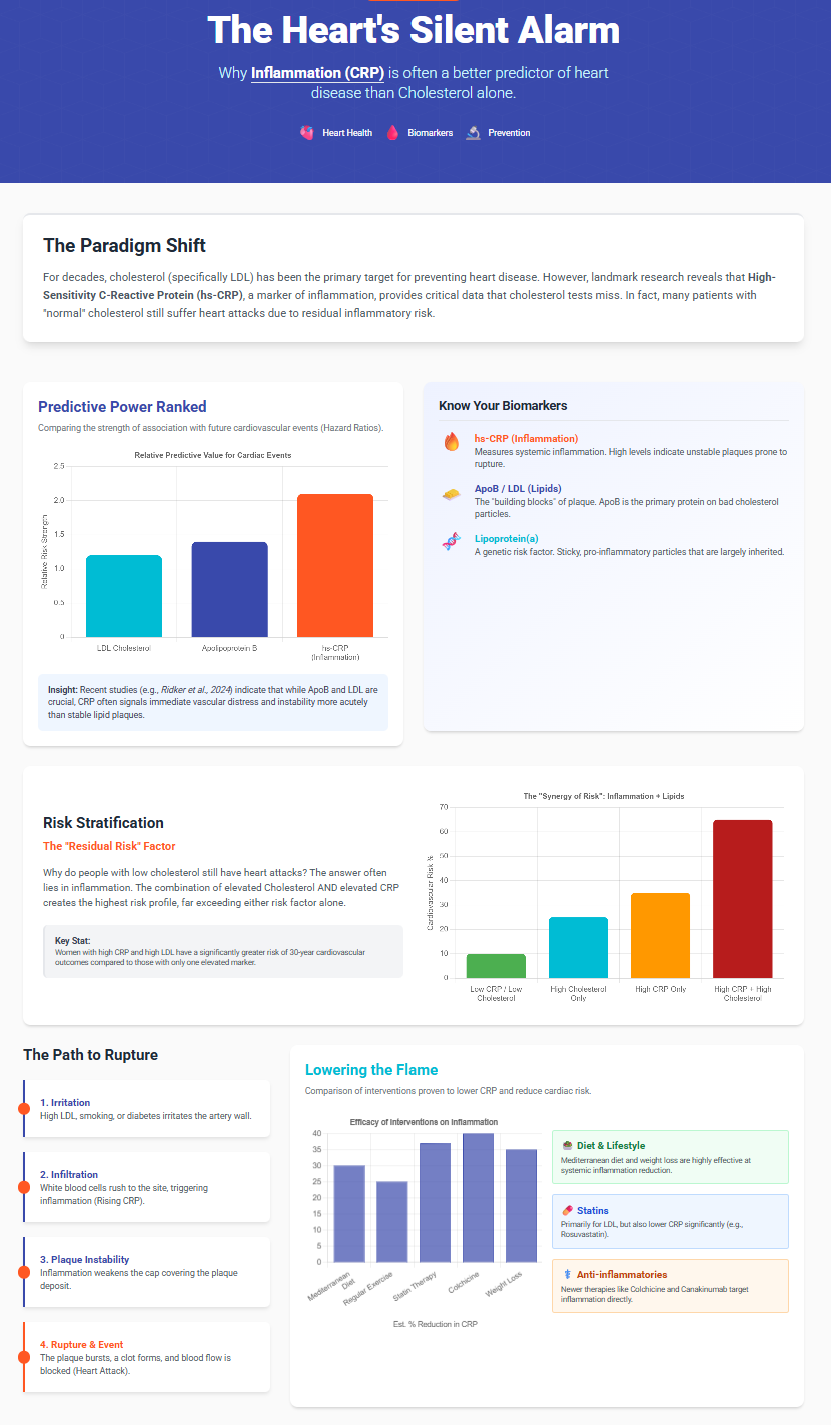
قدمت دراسة ريدكر لعام 2024 نظرة واقعية على المخاطر طويلة الأمد. ففي دراسة شملت ما يقرب من 28,000 امرأة تمت متابعتهن لمدة 30 عامًا، كان مؤشر hs-CRP مؤشرًا تنبؤيًا أقوى للأحداث المستقبلية مقارنةً بمستوى الكوليسترول الضار (LDL-C) [1]. ال نسبة الخطر أما بالنسبة للخُمس الأعلى من مستويات hs-CRP فقد كان 1.70, ، مقارنةً بـ 1.36 بالنسبة للكوليسترول الضار (LDL-C). وهذا يشير إلى أن معرفة الحالة الالتهابية للمريض أمر لا غنى عنه للتنبؤ بالتشخيص على المدى الطويل.
ويتوافق هذا مع البيانات السابقة الصادرة عن تجربة «جوبيتر» [5]، والتي أظهرت أن روزوفراتاستين أدى ذلك إلى انخفاض ملحوظ في معدل حدوث الأحداث لدى الأشخاص الذين يتمتعون بمستويات طبيعية من الكوليسترول الضار (LDL) ولكن لديهم مستويات مرتفعة من بروتين التفاعل التهابي عالي الحساسية (hs-CRP). والجدير بالذكر أن الفائدة الأكبر لوحظت لدى أولئك الذين حققوا مستويات أقل من بروتين التفاعل التهابي عالي الحساسية (hs-CRP)، مما يشير إلى وجود ارتباط قوي بين الحد من الالتهاب ومعدل البقاء على قيد الحياة.
3.2 البروتين الدهني ب (ApoB)
يقيس LDL-C كتلة الكوليسترول، لكن جدار الشريان يهتم بعدد الجسيمات. ويوفر بروتين ApoB عدًّا بنسبة 1:1 لكل جزيء مُتصلِّب الشرايين المتداولة.
في المرضى الذين يعانون من متلازمة الأيض, السمنة, أو مقاومة الإنسولين, ، غالبًا ما نرى عدم توافق: مستوى الكوليسترول LDL-C طبيعي، لكن مستوى البروتين الدهني ApoB مرتفع للغاية لأن الكوليسترول يُنقل في شكل العديد من الجسيمات الصغيرة الكثيفة. وهذه الجسيمات الصغيرة تتراكم بسهولة أكبر في جدار الشريان. ولهذا السبب يُعدُّ البروتين الدهني ApoB مقياسًا أفضل لتقدير الحمل الحقيقي للبروتينات الدهنية [6, 7].
3.3 البروتين الدهني (أ) [Lp(a)]
غالبًا ما يُطلق على Lp(a) اسم “التهديد الثلاثي الجيني”. وهو جسيم LDL مرتبط بـ ذيل apo(a). وهو يساهم في الإصابة بتصلب الشرايين (عن طريق الكوليسترول)، والالتهاب (حيث يحمل الفوسفوليبيدات المؤكسدة) [8]، والتخثر (حيث إنه يشبه بلازمينوجين, ، مما يمنع تفتت الجلطة).
على عكس المؤشرات الأخرى، فإن Lp(a) هو عامل وراثي بنسبة 80-90%، ولا يتأثر تقريبًا بالنظام الغذائي أو ممارسة الرياضة. وهو يمثل خطورة أساسية ثابتة. وتوصي الإرشادات الجديدة بإجراء هذا الفحص مرة واحدة لكل شخص بالغ لتحديد المخاطر “الخفية” التي لا تكتشفها الفحوصات القياسية [2].
رابعاً: تصنيف “التهديد الثلاثي”
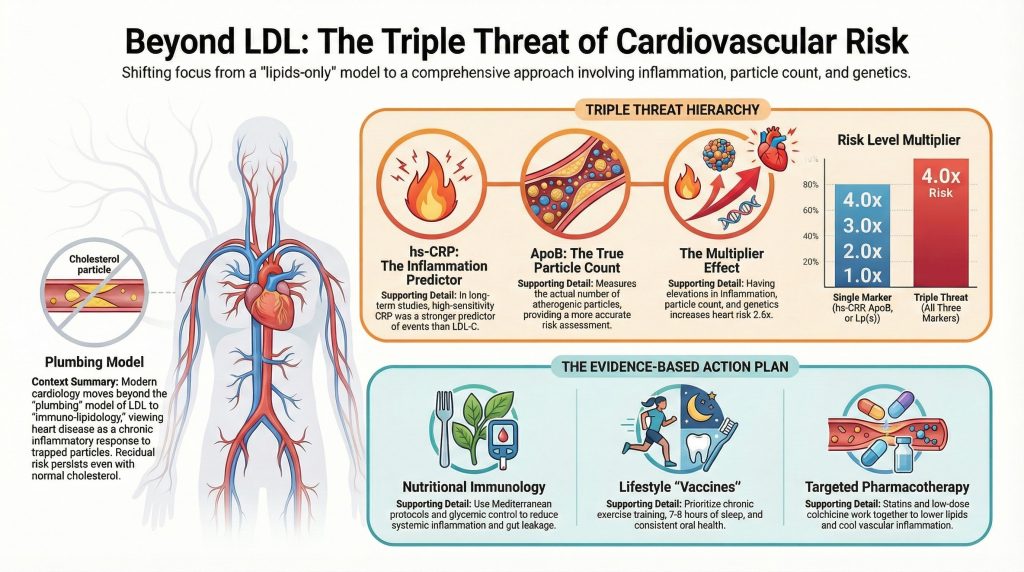
أهم استنتاج يمكن استخلاصه من بيانات 2024/2025 ليس أنه ينبغي علينا استبدال مؤشر LDL بمؤشر CRP، بل أن المخاطر تتراكم.
أظهرت بيانات ريدكر أنه في حين أن الارتفاعات الفردية تعتبر سيئة، فإن تراكمها يؤدي إلى تأثير أسي [1].
- ارتفاع علامة واحدة: ~1.2 ضعف المخاطر
- الثلاثة جميعًا في الأعلى: ~2.6 ضعف المخاطر
أخطر المريض هو الذي يعاني من ارتفاع في عدد الجسيمات (ApoB)، وارتفاع في القابلية الوراثية للإصابة (Lp(a))، والتهاب نشط (hs-CRP).
خامساً: من النظرية إلى العلاج: الحد من مخاطر الالتهاب
إذا كان مستوى hs-CRP مرتفعًا (>2.0 مجم/لتر)، فإن نهج “المراقبة والانتظار” لم يعد مناسبًا. نحن بحاجة إلى نهج متعدد الأساليب لتهدئة الجهاز.
5.1 علم المناعة التغذوي
النظام الغذائي هو أداة التأثير الرئيسية لدينا. إن حمية البحر الأبيض المتوسط لا يزال المعيار الذهبي، ليس فقط بالنسبة للدهون، بل أيضًا بالنسبة للالتهاب [9].
- الآلية: الأمر لا يقتصر على “الدهون الصحية” فحسب. زيت الزيتون البكر الممتاز زيت زيتون يحتوي أوليوكانثال, ، وهو مضاد طبيعي للالتهابات. مرتفع أليفاف تغذي المواد المتناولة البكتيريا المعوية التي تنتج زبدات, ، مما يقوي حاجز الأمعاء ويمنع تسرب السموم البكتيرية (LPS) إلى مجرى الدم — وهو أحد الأسباب الرئيسية للالتهاب الجهازي.
- التحكم في مستوى السكر في الدم: أنسولين تعد المقاومة حالة تسبب الالتهاب. التقليل إلى أدنى حد جلوكوز النتوءات وإزالتها الأطعمة فائقة المعالجة (التي غالبًا ما تحتوي على مواد مستحلبات تسبب اضطرابات في الجهاز الهضمي) أمر بالغ الأهمية [10].
5.2 التمرين “اللقاح”
ينطوي التمرين على مفارقة: فالجهد الشديد والمكثف قد يؤدي إلى ارتفاع مؤقت في مؤشرات الالتهاب، لكن التدريب المستمر يؤدي إلى انخفاضها [11]. تعمل العضلات الهيكلية كعضو غدد صماء. وعندما تنقبض العضلات، فإنها تفرز المياوكينز (الإنترفيرون-6 المشتق من العضلات) الذي يعمل، على نحو متناقض، كإشارات مضادة للالتهاب، حيث يعيق المسارات التي تؤدي إلى الالتهاب المزمن.
5.3 النظافة في نمط الحياة
- صحة الفم: التهاب اللثة وهو يشكل خطرًا على الأوعية الدموية. فهو يؤدي إلى تراكم بكتيري مزمن ينتقل إلى مجرى الدم. وقد ثبت أن علاج أمراض اللثة يؤدي إلى خفض مستوى بروتين CRP في الجسم [12].
- النوم: كل من الحرمان من النوم و انقطاع النظن أثناء النوم تؤدي إلى حدوث الالتهاب عن طريق الإجهاد التأكسدي. يُعد علاج انقطاع التنفس أثناء النوم (CPAP) وضمان الحصول على 7-8 ساعات من النوم من التدخلات الأساسية المضادة للالتهابات [13, 14].
5.4 العلاج الدوائي
وعندما لا يكفي أسلوب الحياة، فإن لدينا أدوات:
- الستاتينات: إنها مثبطات مزدوجة. فهي تخفض الكوليسترول، ولكنها تقلل أيضًا من الاستجابة الالتهابية في جدار الأوعية الدموية [4].
- کولشیسين: هذا هو العامل الذي سيغير قواعد اللعبة بالنسبة لـ الخطر الالتهابي المتبقي. لجنة COLCOT [15] و LoDoCo2 [16] أظهرت التجارب أن الكولشيسين بجرعات منخفضة (0.5 مجم) يقلل بشكل ملحوظ من الأحداث القلبية الوعائية. ويعمل هذا الدواء عن طريق منع تكوين إنفلاماسوم NLRP3، مما يوقف الالتهاب من مصدره.
- المستقبل: أدوية مثل زيلتيفكيماب (مثبط لـ IL-6) يخضع حالياً لتجارب سريرية على المرضى الذين يعانون من مرض الكلى المزمن ورفع مستوى بروتين CRP، مما يبعث الأمل في الحصول على علاج أكثر استهدافًا.
سادساً: الخاتمة
لقد حُسم الجدل: فالالتهاب آلية مسببة للمرض، وليس مجرد عامل ثانوي. وتُظهر البيانات بوضوح أن بروتين CRP عالي الحساسية (hs-CRP) يجب أن يُدرج جنبًا إلى جنب مع البروتين الدهني ApoB والبروتين الدهني Lp(a) في أي تقييم حديث لمخاطر الإصابة بالأمراض.
يجب أن نتجاوز نموذج “السباكة”. لم يعد الهدف من العلاج يقتصر على خفض رقم ما في فحص الدهون في الدم فحسب؛ بل أصبح الهدف هو تحقيق الاستقرار في الحالة البيولوجية لـ شريان. وهذا يتطلب استراتيجية شاملة تعمل على خفض حمل الجسيمات إلى مستويات فسيولوجية مع إخماد «نار» الالتهاب في الوقت نفسه.
 المراجع
- Ridker PM, Moorthy MV, Cook NR, Rifai N, Lee IM, Buring JE. Inflammation, Cholesterol, Lipoprotein(a), and 30-Year Cardiovascular Outcomes in Women. N Engl J Med. 2024;391(22):2087-2097. doi:10.1056/NEJMoa2405182
- Mensah GA, Arnold N, Prabhu SD, Ridker PM, Welty FK. Inflammation and Cardiovascular Disease: 2025 ACC Scientific Statement: A Report of the American College of Cardiology. J Am Coll Cardiol. Published online September 29, 2025. doi:10.1016/j.jacc.2025.08.047
- Libby P. The changing landscape of atherosclerosis. Nature. 2021;592(7855):524-533. doi:10.1038/s41586-021-03392-8
- Ridker PM, Cannon CP, Morrow D, et al. C-reactive protein levels and outcomes after statin therapy. N Engl J Med. 2005;352(1):20-28. doi:10.1056/NEJMoa042378
- Ridker PM, Danielson E, Fonseca FA, et al. Rosuvastatin to prevent vascular events in men and women with elevated C-reactive protein. N Engl J Med. 2008;359(21):2195-2207. doi:10.1056/NEJMoa0807646
- Sniderman AD, Williams K, Contois JH, et al. A meta-analysis of low-density lipoprotein cholesterol, non-high-density lipoprotein cholesterol, and apolipoprotein B as markers of cardiovascular risk. Circ Cardiovasc Qual Outcomes. 2011;4(3):337-345. doi:10.1161/CIRCOUTCOMES.110.959247
- McQueen MJ, Hawken S, Wang X, et al. Lipids, lipoproteins, and apolipoproteins as risk markers of myocardial infarction in 52 countries (the INTERHEART study): a case-control study. Lancet. 2008;372(9634):224-233. doi:10.1016/S0140-6736(08)61076-4
- Tsimikas S. A Test in Context: Lipoprotein(a): Diagnosis, Prognosis, Controversies, and Emerging Therapies. J Am Coll Cardiol. 2017;69(6):692-711. doi:10.1016/j.jacc.2016.11.042
- Estruch R, Ros E, Salas-Salvadó J, et al. Primary Prevention of Cardiovascular Disease with a Mediterranean Diet Supplemented with Extra-Virgin Olive Oil or Nuts. N Engl J Med. 2018;378(25):e34. doi:10.1056/NEJMoa1800389
- Sacks FM, Bray GA, Carey VJ, et al. Comparison of weight-loss diets with different compositions of fat, protein, and carbohydrates. N Engl J Med. 2009;360(9):859-873. doi:10.1056/NEJMoa0804748
- Fedewa MV, Hathaway ED, Ward-Ritacco CL. Effect of exercise training on C reactive protein: a systematic review and meta-analysis of randomised and non-randomised controlled trials. Br J Sports Med. 2017;51(8):670-676. doi:10.1136/bjsports-2016-095999
- Demmer RT, Trinquart L, Zuk A, et al. The influence of anti-infective periodontal treatment on C-reactive protein: a systematic review and meta-analysis of randomized controlled trials. PLoS One. 2013;8(10):e77441. Published 2013 Oct 14. doi:10.1371/journal.pone.0077441
- Meier-Ewert HK, Ridker PM, Rifai N, et al. Effect of sleep loss on C-reactive protein, an inflammatory marker of cardiovascular risk. J Am Coll Cardiol. 2004;43(4):678-683. doi:10.1016/j.jacc.2003.07.050
- Guo Y, Pan L, Ren D, Xie X. Impact of continuous positive airway pressure on C-reactive protein in patients with obstructive sleep apnea: a meta-analysis. Sleep Breath. 2013;17(2):495-503. doi:10.1007/s11325-012-0722-2
- Tardif JC, Kouz S, Waters DD, et al. Efficacy and Safety of Low-Dose Colchicine after Myocardial Infarction. N Engl J Med. 2019;381(26):2497-2505. doi:10.1056/NEJMoa1912388
- Nidorf SM, Fiolet ATL, Mosterd A, et al. Colchicine in Patients with Chronic Coronary Disease. N Engl J Med. 2020;383(19):1838-1847. doi:10.1056/NEJMoa2021372