
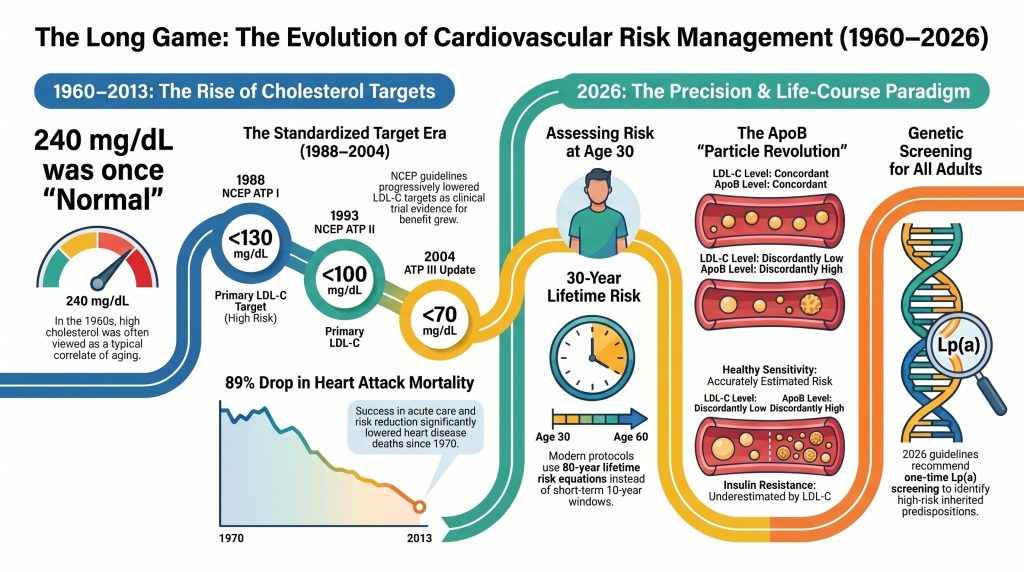
تطور تقييم مخاطر أمراض القلب والأوعية الدموية وإدارة الدهون:
تحليل مسار الحياة من عام 1960 إلى عام 2026
مقدمة
يمثل المسار التاريخي لطب القلب والأوعية الدموية تحولًا جذريًّا من الإدارة التفاعلية للأحداث السريرية في المراحل النهائية إلى نموذج استباقي يمتد على مدار الحياة ويركز على العوامل الفسيولوجية المسببة لـ تصلب الشرايين. منذ منتصف القرن العشرين، تطور فهم الأوساط الطبية لعملية التمثيل الغذائي للدهون من التركيز على الشكل الخام الكوليسترول الكلي القياسات إلى تقدير دقيق لـ بروتين دهني تركيز الجسيمات، والاستعداد الوراثي، والعبء التراكمي للتعرض للعوامل المسببة لتصلب الشرايين. واعتبارًا من عام 2026، تحول التركيز السريري نحو تحديد المخاطر قبل عقود من ظهور أعراض المرض، وذلك باستخدام تقنيات متطورة المؤشرات الحيوية مثل أبروليبوبروتين بأبوبروتين ب) و بروتين دهني (أ) [Lp(a)]، مع تضمين درجات المخاطر الجينية متعددة الجينات إلى أدوات تقييم موحدة.1
التغيرات التاريخية في إرشادات الكوليسترول والأهداف السريرية
تصور مفهوم كوليسترول لم يكن الاعتراف بدوره كعامل رئيسي في أمراض الأوعية الدموية أمراً حظي بالإجماع على الفور، بل كان تطوراً تم التوصل إليه بصعوبة عبر عقود من المراقبة الوبائية و تجربة سريرية الأدلة. في ستينيات القرن العشرين، بلغت ‘الجدل حول الكوليسترول’ ذروته، حيث كان الباحثون يتجادلون حول ما إذا كانت الدهون في الدم مجرد عوامل مرتبطة بالتقدم في العمر أم عوامل مسببة لأمراض القلب.2
حقبة ما قبل NCEP وصعود «فرضية الدهون»
قبل إصدار المبادئ التوجيهية الوطنية رسميًا، كانت مستويات الكوليسترول الكلي ‘المقبولة’ مرتفعة بشكل ملحوظ وفقًا للمعايير الحديثة. ففي ستينيات القرن العشرين وأوائل السبعينيات، كان الأطباء السريريون يعتبرون عمومًا أن مستويات الكوليسترول الكلي التي تبلغ 240 مجم/ديسيلتر أو أعلى تُعد طبيعية بالنسبة للبالغين المتقدمين في السن. كان هذا التصور متجذرًا في المستويات المتوسطة للسكان في ذلك الوقت، حيث بلغ متوسط الكوليسترول الكلي للبالغين في الولايات المتحدة الذين تتراوح أعمارهم بين 20 و74 عامًا حوالي 222 ملغ/ديسيلتر بين عامي 1959 و1962.3 كانت التدخلات المبكرة تتمحور بشكل أساسي حول النظام الغذائي. فقد أصدرت جمعية القلب الأمريكية أول توصياتها الغذائية الرسمية في عام 1961، وقامت بتحديثها في عام 1968، داعيةً إلى الحد من دهون مشبعة و الكوليسترول الغذائي. وقد عكست هذه الأهداف المبكرة فهمًا ناشئًا بأن الدهون المشبعة في النظام الغذائي تؤثر على مستويات الكوليسترول في مصل الدم، على الرغم من أن حجم هذا التأثير غالبًا ما كان يُبالغ في تقديره بمعزل عن السياق الغذائي الأوسع.4
البرنامج الوطني للتوعية بالكوليسترول ولجان علاج البالغين
شهدت الثمانينيات مرحلة انتقالية حاسمة مع إنشاء البرنامج الوطني للتوعية بالكوليسترول (NCEP). وقد وفّر إصدار التقرير الأول للجنة علاج البالغين (ATP I) في عام 1988 أول إطار عمل موحد لتشخيص وعلاج ارتفاع نسبة الكوليسترول في الدم.5
الجدول 1. تطور المبادئ التوجيهية الأمريكية بشأن الكوليسترول، 1988–2026
| تقرير المبادئ التوجيهية | السنة | التركيز الأساسي | الأهداف المحددة لمستوى الكوليسترول الضار (LDL-C) / التغييرات الرئيسية |
| NCEP ATP I | 1988 | الوقاية الأولية; ؛ فحص الكوليسترول الكلي والكوليسترول الضار (LDL-C). | LDL-C <160 مجم/ديسيلتر (مخاطر منخفضة)؛ <130 مجم/ديسيلتر (مخاطر عالية). |
| NCEP ATP II | 1993 | الوقاية الثانوية في حالات أمراض القلب التاجية المؤكدة؛ مع التركيز على الكوليسترول الحميد عالي الكثافة (HDL-C). | LDL-C <100 مجم/ديسيلتر للوقاية الثانوية. |
| NCEP ATP III | 2001 | تقييم المخاطر على مدى 10 سنوات (فرامينغهام)؛ ‘مكافئات مخاطر’ الإصابة بأمراض القلب التاجية، بما في ذلك مرض السكري. | يُعتبر مستوى الكوليسترول الضار (LDL-C) الأمثل أقل من 100 ملغ/ديسيلتر؛ ويُعرَّف مستوى الكوليسترول النافع (HDL-C) المنخفض بأنه أقل من 40 ملغ/ديسيلتر. |
| تحديث بشأن ATP III | 2004 | علاج مكثف للأفراد ‘ذوي المخاطر العالية جدًّا’. | قيمة LDL-C الاختيارية <70 ملغ/ديسيلتر للحالات ذات المخاطر العالية جدًّا. |
| 2013 ACC/AHA | 2013 | تم التخلي عن نهج «العلاج وفق الهدف»؛ وتم تحديد أربعة ستاتين مجموعات المستفيدين. | العلاج بالستاتينات عالي الكثافة مقابل العلاج بالستاتينات متوسط الكثافة؛ دون تحديد هدف محدد لمستوى الكوليسترول الضار (LDL-C). |
| اجتماع الجمعيات المتعددة لـ AHA/ACC لعام 2018 | 2018 | العودة إلى القيم الحدية؛ التصعيد القائم على المخاطر باستخدام عوامل غير من فئة الستاتين. | LDL-C <70 ملغ/ديسيلتر (مخاطر عالية)؛ <55 ملغ/ديسيلتر (مخاطر عالية جدًا). |
| 2026 ACC/AHA اضطراب شحوم الدم المبدأ التوجيهي | 2026 | الوقاية على مدار الحياة؛; منع المعادلات لتقييم المخاطر على مدى 10 و30 عامًا؛ فحص مستويات البروتين الدهني B (ApoB) والبروتين الدهني (Lp(a)). | LDL-C <55 مجم/ديسيلتر (مخاطر عالية جدًّا)؛ إجراء فحص شامل لمستوى Lp(a) لمرة واحدة. |
NCEP = البرنامج الوطني للتوعية بالكوليسترول؛ ATP = لجنة علاج البالغين؛ ACC = الكلية الأمريكية لأمراض القلب؛ AHA = جمعية القلب الأمريكية.
كان السبب وراء تحديد أهداف أقل تدريجيًا هو تراكم أدلة قوية من تجارب معشاة ذات شواهد. أظهرت تجربة «عيادات أبحاث الدهون للوقاية الأولية من أمراض الشريان التاجي» (LRC-CPPT) التي أُجريت عام 1984 أن خطر الإصابة بأمراض القلب التاجية ينخفض بنحو 2% مقابل كل انخفاض بمقدار 1% في مستوى الكوليسترول الكلي، مما وفر أساسًا إحصائيًّا مبكرًا لاتباع نهج صارم في خفض مستويات الدهون.6 المحاكمات اللاحقة التي جرت في التسعينيات وأوائل العقد الأول من القرن الحادي والعشرين — الدراسة الاسكندنافية للبقاء على قيد الحياة باستخدام سيمفاستاتين (4S), ، ودراسة «الكوليسترول والأحداث المتكررة» (CARE)، و«التدخل طويل الأمد مع» برافاستاتين في دراسة «الأمراض الإقفارية (LIPID)» — أظهرت بشكل متسق أن خفض مستوى الكوليسترول الضار (LDL-C) أدى إلى انخفاض الأحداث القلبية الوعائية السلبية الكبرى (MACE)، مما أدى إلى انتشار واسع لفلسفة ‘كلما انخفضت القيم، كان ذلك أفضل’.7
التحول النوعي الذي حدث في عام 2013 والتوجه نحو العلاج المكثف بالستاتينات
حدثت نقلة نوعية مهمة في عام 2013 مع صدور إرشادات ACC/AHA بشأن الكوليسترول. فقد ابتعد هذا التقرير عن تحديد أهداف رقمية محددة لمستوى الكوليسترول الضار (LDL-C)، وبدلاً من ذلك حدد أربع ‘مجموعات مستفيدة من الستاتينات’ حيث كانت الأدلة على خفض المخاطر أكثر إقناعاً: (1) الأفراد الذين يعانون من تصلب الشرايين السريري أمراض القلب والأوعية الدموية (ASCVD)؛ (2) الأفراد الذين يعانون من ارتفاع أولي في مستوى الكوليسترول الضار (LDL-C) يبلغ ≥190 مجم/ديسيلتر؛ (3) الأفراد الذين تتراوح أعمارهم بين 40 و75 عامًا المصابون بداء السكري ومستوى الكوليسترول الضار (LDL-C) لديهم يتراوح بين 70 و189 مجم/ديسيلتر؛ و (4) الأفراد الذين تتراوح أعمارهم بين 40 و75 عامًا ولا يعانون من مرض ASCVD السريري أو داء السكري، ويبلغ مستوى الكوليسترول الضار (LDL-C) لديهم 70–189 ملغ/ديسيلتر، ويُقدَّر خطر إصابتهم بمرض ASCVD خلال 10 سنوات بـ ≥7.5%.8 وقد أعطى هذا النهج الأولوية لشدة العلاج بالستاتينات على حساب الوصول إلى مستوى محدد من الكوليسترول الضار (LDL-C). غير أن هذا التحول أثار جدلاً، حيث رأى العديد من الأطباء أنه يقلل من دافع المرضى التزام كما أنه أغفل التباين الفردي في الاستجابة للعقار.9
العودة إلى الأهداف ونموذج مسار الحياة لعام 2026
المبادئ التوجيهية المشتركة بين الجمعيات الصادرة عن ACC/AHA لعام 2018، والمبادئ التوجيهية الصادرة عن ACC/AHA/AACVPR/ABC/ACPM/ADA/AGS/APhA/ASPC/NLA/PCNA لعام 2026 بشأن إدارة اضطرابات شحوم الدم أعادت تحديد أهداف علاجية صريحة لـ LDL-C مع توسيع نطاقها بشكل ملحوظ. نُشرت في مجلة الكلية الأمريكية لأمراض القلب وتم نشرها بالاشتراك في التداول, ، تشدد المبادئ التوجيهية لعام 2026 على ضرورة إجراء تقييم مبكر للمخاطر بدءًا من سن 30 عامًا، وتفرض استخدام معادلات PREVENT (توقع مخاطر الإصابة بأمراض القلب والأوعية الدموية) لتقدير مخاطر الإصابة على مدى 10 سنوات و30 سنة على التوالي.1 بالنسبة للبالغين الذين تتراوح أعمارهم بين 30 و79 عامًا والذين لا يعانون من أمراض القلب والأوعية الدموية الشريانية (ASCVD) معروفة، ومستوى الكوليسترول الضار (LDL-C) لديهم يتراوح بين 70 و189 ملغ/ديسيلتر، تصنف معادلات PREVENT-ASCVD مخاطر الإصابة خلال 10 سنوات على أنها منخفضة (<3%)، أو حدودي (3% إلى <5%)، أو متوسط (5% إلى <10%)، أو مرتفع (≥10%). بالنسبة للأفراد المعرضين لخطر شديد جدًّا (المعرَّفين بأنهم أولئك الذين تعرضوا لعدة أحداث رئيسية من أمراض القلب والأوعية الدموية التجرِّمية أو حدث رئيسي واحد بالإضافة إلى عدة حالات عالية الخطورة)، توصي المبادئ التوجيهية بهدف LDL-C أقل من 55 مجم/ديسيلتر.1 ويعكس هذا الفهم الحديث الذي يرى أن تصلب الشرايين هو عملية تراكمية تستمر مدى الحياة، حيث تحدد ‘المساحة تحت المنحنى’ للتعرض للبروتينات الدهنية المسببة لتصلب الشرايين مخاطر حدوث الاضطرابات النهائية.10
المتوسطات السكانية مقابل الصحة البيولوجية المثلى
يتمثل أحد الموضوعات الرئيسية في علم الدهون المعاصر في الإدراك بأن مستويات الكوليسترول ‘المتوسطة’ أو ‘الطبيعية’ لدى سكان الدول الصناعية لا تمثل حالة صحية جيدة، بل تمثل خط أساس عالي الخطورة يتشكل بفعل النظام الغذائي وقلة النشاط البدني والأمراض الأيضية.11
اتجاهات متوسط مستويات الكوليسترول وفقًا لمسح NHANES: من عام 1960 حتى الوقت الحاضر
تشير البيانات المستمدة من «المسح الوطني للفحص الصحي والتغذوي» (NHANES) إلى انخفاض مطرد في متوسط مستوى الكوليسترول الكلي لدى البالغين في الولايات المتحدة الذين تتراوح أعمارهم بين 20 و74 عامًا، من حوالي 222 ملغ/ديسيلتر في الفترة 1959–1962 إلى 197 ملغ/ديسيلتر بحلول عام 2007–2008.3 على الرغم من هذا الاتجاه المشجع، لا يزال متوسط مستويات الكوليسترول لدى البالغين في الولايات المتحدة يسهم في الإصابة بتصلب الشرايين لوحة التطور. انخفض معدل انتشار ارتفاع الكوليسترول الكلي (≥240 مجم/ديسيلتر) من حوالي 20% في الفترة 1988–1994 إلى 11.3% في الفترة 2021–2023، على الرغم من أن هذا المستوى الثابت استمر منذ حوالي 2013–2014.12
الجدول 2. اتجاهات مسح الصحة والتغذية الوطني (NHANES) في مستويات الكوليسترول الكلي وكوليسترول البروتين الدهني منخفض الكثافة (LDL-C) لدى البالغين في الولايات المتحدة الذين تتراوح أعمارهم بين 20 و74 عامًا
| فترة الدراسة NHANES | متوسط مستوى الكوليسترول الكلي (ملغم/ديسيلتر) | المتوسط الحسابي لـ LDL-C (ملغم/ديسيلتر) | معدل انتشار ارتفاع الكوليسترول الكلي (≥240 ملغ/ديسيلتر) |
| 1959–1962 | ~222 | غير متوفر | مرتفع (تقديري) |
| 1971–1975 | ~216 | غير متوفر | غير متوفر |
| 1976–1980 | ~213 | ~137 | غير متوفر |
| 1988–1994 | ~206 | ~129 | ~20% |
| 2007–2008 | ~197 | ~116 | ~17% |
| 2021–2023 | غير متوفر | غير متوفر | ~11.3% |
المصادر: كارول وآخرون (2012)؛ كيرتين وآخرون (2024). غير متوفر = البيانات غير متوفرة في الاستطلاعات المذكورة.
انتشار الاضطرابات الأيضية — التي تتميز بـ السمنة, ، وفرط الأنسولين في الدم، و مقاومة الإنسولين—أدى إلى تحول التوزيع ‘الطبيعي’ نحو القيم الأعلى الدهون الثلاثية وانخفاض مستوى الكوليسترول الحميد (HDL-C)، مما يؤدي إلى ظهور فئة سكانية يصاب فيها الفرد العادي بشكل فعلي بأمراض الأوعية الدموية آفات.13 وفي تناقض صارخ مع ذلك، عادةً ما تتراوح مستويات الكوليسترول في الدم من نوع LDL لدى المواليد الجدد بين 30 و70 ملغ/ديسيلتر، وهو ما يتوافق مع المستويات الملاحظة في الرئيسيات من النوع البري والثدييات الأخرى التي لا تصاب تلقائيًّا بتصلب الشرايين.14
دروس مستفادة من قبيلة «تسيمان» في منطقة الأمازون البوليفية
الـ تسيماني تشكل مجموعات سكان الأمازون البوليفي معيارًا بيولوجيًا فريدًا. وقد أُجريت دراسة استقصائية مقطعية رائدة في عام 2017 دراسة أترابية نُشِرَ في لانسيت وقد توصلت الدراسة إلى أن قبيلة «تسيمان» تسجل أدنى معدل انتشار مسجل لتصلب الشرايين التاجية مقارنة بأي مجموعة سكانية تمت دراستها حتى الآن — وهو معدل أقل بخمس مرات من المعدل المسجل لدى المجموعات السكانية المماثلة في الولايات المتحدة.15 في عينة ضمت 705 بالغين تتراوح أعمارهم بين 40 و94 عامًا، كان لدى 85% كالسيوم الشريان التاجي نتيجة صفر، وبين الأشخاص الذين تزيد أعمارهم عن 75 عامًا، ظل 65% يعاني من عدم وجود مرض تاجي قابل للقياس تکلس—معدل انتشار أقل بخمس مرات مقارنة بالأمريكيين من نفس الفئة العمرية في دراسة التعددية العرقية لتصلب الشرايين.15
بلغ متوسط مستوى الكوليسترول الضار (LDL-C) لدى المشاركين من قبيلة تسيمان 91 ملغ/ديسيلتر، بينما بلغ متوسط مستوى الكوليسترول النافع (HDL-C) 39.5 ملغ/ديسيلتر.15 والجدير بالذكر أن هذا المعدل المنخفض للإصابة بتصلب الشرايين استمر على الرغم من ارتفاع مستوى... التهاب: عالية الحساسية البروتين التفاعلي C تجاوزت القيمة الحدية السريرية البالغة 3.0 مجم/ديسيلتر لدى 51% من المشاركين من قبيلة تسيمان، ويعزى ذلك إلى ارتفاع عبء العدوى والطفيليات بدلاً من الالتهاب الوعائي.15 تشير هذه النتائج إلى أن تصلب الشرايين ليس نتيجة حتمية للشيخوخة أو الالتهاب وحدهما، بل يتطلب تجاوز عتبة حرجة من التعرض للبروتينات الدهنية المسببة لتصلب الشرايين في الدورة الدموية — وهي عتبة تم تجاوزها في جميع المجتمعات الغربية المعاصرة تقريبًا.15
البروتين الدهني ب كمقياس أفضل لمخاطر تصلب الشرايين
في حين أن LDL-C يقيس الكتلة الإجمالية للكوليسترول داخل البروتين الدهني منخفض الكثافة الجسيمات، إلا أنه لا يأخذ في الحسبان العدد الإجمالي لجسيمات البروتينات الدهنية المسببة لتصلب الشرايين ولا التباين في تكوينها. ويُعد البروتين الدهني B (ApoB) هو المكون الهيكلي بروتين موجود بنسبة 1:1 في كل حالة محتملة جزيء مُتصلِّب الشرايين, بما في ذلك بروتين دهني منخفض الكثافة جداً, لغة IDL, ، وLDL، وLp(a).16
الحجة الآلية لتفوق البروتين ApoB
يشير الإجماع الناشئ في علم الدهون إلى أن العدد الإجمالي للجسيمات المسببة لتصلب الشرايين هو العامل الرئيسي وراء آلية ‘الاستجابة للاحتباس’ التي تؤدي إلى بدء تصلب الشرايين. يبدأ تصلب الشرايين عندما الجسيمات المحتوية على أبوليبوبروتين ب تخترق الحاجز البطاني وتُحتجز داخل مصفوفة البروتيوغليكان تحت البطانة.17 ونظرًا لأن كل جسيم من هذا النوع يحمل جزيءًا واحدًا من ApoB، فإن قياس ApoB يحدد بشكل مباشر الكمية الإجمالية للمواد المسببة لتصلب الشرايين عبء الجسيمات التي يتم توصيلها إلى جدار الشريان — وهو مقياس أكثر دقة من الناحية الفسيولوجية مقارنة بمحتوى الكوليسترول في جزيئات LDL وحدها.16
التباين بين مستويات بروتين ApoB وكوليسترول LDL في الأمراض الأيضية
تتجلى أوجه القصور في استخدام مؤشر LDL-C بشكل أوضح لدى الأفراد الذين يعانون من الأنسولين المقاومة للأنسولين، أو داء السكري من النوع الثاني، أو فرط ثلاثي غليسريدات الدم. ويؤدي الخلل الأيضي إلى فرط إنتاج الكبد لجزيئات VLDL الكبيرة الغنية بثلاثي غليسريدات. وفي الدورة الدموية،, إستر الكوليسترول بروتين النقل (CETP) يستبدل الدهون الثلاثية الموجودة في جزيئات VLDL باسترات الكوليسترول في جزيئات LDL، ثم تخضع جزيئات LDL الناتجة والمُثريّة بالدهون الثلاثية لعملية تحلل مائي بواسطة الليباز الكبدي لإنتاج جزيئات LDL صغيرة وكثيفة (sdLDL).18 تفتقر كل جسيمات sdLDL هذه إلى الكوليسترول، مما يؤدي، بشكل متناقض، إلى انخفاض قيم الكوليسترول في الدم من نوع LDL (LDL-C) على الرغم من ارتفاع مستوى البروتين ApoB الكلي (وعدد الجسيمات). أ مراجعة منهجية و تحليل تلوي أثبت أن هذا النوع من ApoB/LDL-C عدم توافق وهو شائع في الأمراض الأيضية ويرتبط بتقدير أقل بكثير من اللازم لمخاطر الإصابة بأمراض القلب والأوعية الدموية.13
الجدول 3. أنماط عدم التوافق بين ApoB وLDL-C حسب الحالة الأيضية
| الحالة الأيضية | مستوى الكوليسترول الضار (LDL-C) | مستوى البروتين ApoB | دلالة سريرية |
| صحي حساسية الأنسولين | متوافق (على سبيل المثال، 100 مجم/ديسيلتر) | متوافق (على سبيل المثال، 80 مجم/ديسيلتر) | يتم تقدير المخاطر بدقة باستخدام أي من المقياسين. |
| مقاومة الأنسولين / داء السكري من النوع الثاني | منخفض بشكل غير متوقع (على سبيل المثال، 90 ملغ/ديسيلتر) | مستويات مرتفعة بشكل غير طبيعي (على سبيل المثال، 110 ملغ/ديسيلتر) | يؤدي الاعتماد على الكوليسترول الضار (LDL-C) وحده إلى التقليل من تقدير المخاطر. |
| ارتفاع كمية الدهون المشبعة المتناولة (النمط الظاهري لـ LDL الكبير) | مستويات مرتفعة بشكل غير طبيعي (على سبيل المثال، 160 مجم/ديسيلتر) | أقل نسبيًا (على سبيل المثال، 100 ملغ/ديسيلتر) | قد يؤدي الكوليسترول الضار (LDL-C) إلى المبالغة في تقدير المخاطر. |
مقتبس من: Tsoupras وآخرون (2024)؛ Fahed وآخرون (2022).
أظهرت تحليلات بيانات مسح NHANES أن ما يقارب 20% من إجمالي السكان في الولايات المتحدة يُظهر تباينًا ذا أهمية سريرية بين مستويات البروتين ApoB والكوليسترول LDL، مع ارتفاع هذه النسبة بشكل ملحوظ بين أولئك الذين يعانون من متلازمة الأيض.19 يُلاحظ لدى الأفراد الذين يعانون من ارتفاع مستويات البروتين ApoB مع انخفاض متزامن في مستويات الكوليسترول الضار (LDL-C) معدلات أعلى بشكل ملحوظ للإصابة بأمراض الشريان التاجي شريان التكلس و مرض الكلى المزمن مقارنةً بتلك التي تتبع النمط المعاكس، مما يؤكد أن عدد الجسيمات هو العامل المؤثر من الناحية الميكانيكية في تكون العصيد الشرياني.20
جزيئات LDL الصغيرة عالية الكثافة: الصلة الآلية
تُعد جسيمات LDL الصغيرة والكثيفة خطيرة بشكل فريد لثلاثة أسباب رئيسية. أولاً، يُسهّل صغر حجمها اختراق الشرايين بطانة. ثانياً، تُظهر هذه الجزيئات ارتباطاً معززاً بالبروتيوغليكانات الموجودة تحت البطانة، مما يؤدي إلى بقائها لفترة أطول في موقع تكوّن اللويحات. ثالثاً، فهي أكثر عرضة للتعديل التأكسدي — وهو الخطوة الأساسية لـ بالعمى الامتصاص و خلية رغوية التكوين.21 من الناحية السريرية، المريض الذي يكون مستوى الكوليسترول في الدم من النوع LDL-C ‘طبيعيًا’ لديه مستوى مرتفع من بروتين ApoB أو عدد جزيئات البروتينات الدهنية منخفضة الكثافة ينطوي على مخاطر صحية يتم إخفاؤها بشكل منهجي من خلال الفحوصات الروتينية للدهون في الدم.13
البروتين الدهني (أ): العامل الوراثي الرائد في مخاطر الإصابة بأمراض القلب والأوعية الدموية المرتبطة بالشحوم (ASCVD)
لم يحظَ البروتين الدهني (أ) [Lp(a)] بالاعتراف السريري الواسع النطاق إلا مؤخرًا، على الرغم من اكتشافه في ستينيات القرن الماضي. وتتراوح مستويات Lp(a) بين 70 و90% تقريبًا، وهي مستويات محددة وراثيًا من خلال التباين في LPA موقع الجين، ولا تتأثر بشكل ملحوظ بتعديل نمط الحياة أو العلاج التقليدي بالستاتينات.22
دورها في تكوين اللويحات، والتخثر، وأمراض الصمامات
يتكون Lp(a) من بروتين دهني شبيه بـ LDL مع بروتين سكري إضافي، وهو الأبوليبوبروتين (أ) [apo(a)]، المرتبط تساهميًا بـ أبو بروتين-100 جزيء عبر رابطة ثاني كبريتيد.22 يمنح هذا التكوين الهيكلي قدرة مزدوجة على إحداث المرض: فـ Lp(a) مادة شديدة التسبب في تصلب الشرايين من خلال احتجازها في الحيز تحت البطانة وقد يكون له تأثير مسبب للتخثر من خلال التشابه الهيكلي بين الأبو(أ) و بلازمينوجين, ، مما قد يتعارض مع تحلل الفيبرين.23 كما يُعد ارتفاع مستوى Lp(a) عاملاً مستقلاً رئيسياً عامل خطر بالنسبة للتكلس الصمام الأورتي تضيق; ؛ ويواجه الأشخاص الذين لديهم أعلى مستويات من Lp(a) خطرًا أعلى بكثير من الخضوع لعملية استبدال الصمام الأبهري أو الوفاة المرتبطة بالصمام الأبهري.24
توصيات الفحص والعلاجات الحديثة
توصي إرشادات ACC/AHA لعام 2026 بشأن اضطرابات شحوم الدم بإجراء قياس واحد على الأقل لمستوى Lp(a) مرة واحدة على الأقل في العمر لجميع البالغين، وذلك لتحديد الأفراد المعرضين لخطر وراثي مرتفع للإصابة بأمراض القلب والأوعية الدموية.1 يُقدَّر أن ارتفاع مستوى Lp(a) — الذي يُعرَّف عمومًا بأنه ≥50 مجم/ديسيلتر (أو ≥125 نانومول/لتر) — يؤثر على ما بين 20 و25% من سكان العالم، وهو ما يمثل أكثر من 1.5 مليار شخص، ويسهم بشكل كبير في المخاطر القلبية الوعائية المتبقية وهو ما لا يعالجه العلاج بالستاتين.23
الجدول 4. العلاجات الناشئة القائمة على الحمض النووي الريبي (RNA) التي تستهدف Lp(a) حتى عام 2026
| فئة العلاج | آلية العمل | خفض مستوى Lp(a) | حالة التطوير (2026) |
| الأوليجونوكليوتيدات المضادة (ASO) | يرتبط بـ mRNA لـ LPA لتعزيز تحلله بواسطة إنزيم RNase H. | ~70–80% | بيلاكارسين: اكتملت تجربة المرحلة الثالثة الخاصة بنتائج أمراض القلب والأوعية الدموية (HORIZON)؛ وينتظر صدور النتائج. |
| العلاجات باستخدام الحمض النووي الريبي الصغير المانع للترجمة (siRNA) | يقوم بتقطيع الحمض النووي الريبي المرسال (mRNA) الخاص ببروتين LPA عبر مركب RISC. | ~80–95% | أولباسيران (تجربة OCEAN[a]-OUTCOMES جارية)؛ ليبوديسييران (المرحلة الثالثة). |
| مثبطات الجزيئات الصغيرة التي تُتناول عن طريق الفم | يعطل عملية التجميع الكبدي لبروتينات «أبو (أ)» و«أبو ب». | انخفاض كبير | موفالابلين: اكتملت المرحلة الثانية؛ ومن المقرر إجراء المرحلة الثالثة. |
المصادر: تسيميكاس (2022)؛ كروننبرغ ومورا (2025). RISC = مركب الكتم المستحث بالحمض النووي الريبي (RNA)؛ mRNA = الحمض النووي الريبي الرسول.
ورغم أن هذه العلاجات لا تزال في انتظار النتائج النهائية لتجارب النتائج القلبية الوعائية، فإنها تمثل تحولاً جذرياً في قدرتنا على معالجة عامل خطر وراثي كان ‘بعيد المنال’ في السابق، وذلك من الناحية الدوائية.25
اتجاهات الوفيات الناجمة عن أمراض القلب والأوعية الدموية: من عام 1970 إلى عام 2022
يُعد انخفاض معدل الوفيات الناجمة عن أمراض القلب والأوعية الدموية منذ عام 1970 أحد أبرز إنجازات الصحة العامة في العصر الحديث. وقد نُشر تحليل شامل لبيانات «النظام الوطني للإحصاءات الحيوية» في الولايات المتحدة، والذي شمل البالغين الذين تبلغ أعمارهم 25 عامًا فأكثر، في مجلة جمعية القلب الأمريكية في عام 2025، توصلت الدراسة إلى أن أمراض القلب كانت مسؤولة في عام 1970 عن 41% من إجمالي الوفيات؛ وبحلول عام 2022، انخفض هذا الرقم إلى 24% — وهو ما يمثل انخفاضًا إجماليًّا في معدل الوفيات الناجمة عن أمراض القلب، بعد تعديله حسب العمر، بمقدار 66%.26
تحليل أسباب التراجع
معدل الوفيات المعدل حسب العمر من الحالة الحادة احشاء عضلة القلب (AMI) انخفض بمقدار 89% من عام 1970 إلى عام 2022، في حين أن إجمالي مرض القلب الإشكيمي وانخفض معدل الوفيات بمقدار 81% خلال الفترة نفسها.26 قام تحليل بارز أجراه فورد وآخرون (2007) بتحليل أسباب الانخفاض في الولايات المتحدة. مرض الشريان التاجي حالات الوفاة بين عامي 1980 و2000، حيث عُزيت حوالي 44% إلى انخفاض عوامل الخطر (بشكل أساسي تدخين التوقف، متوسط أقل ضغط الدم, ، وانخفاض متوسط مستوى الكوليسترول الكلي) وحوالي 47% إلى تحسن العلاجات الطبية والجراحية (بما في ذلك الوقاية الثانوية بعد الإصابة بنوبة قلبية، وعلاجات النوبة القلبية الحادة، و فشل القلب (الإدارة).27
الجدول 5. العوامل المُقدَّرة التي ساهمت في انخفاض معدل الوفيات الناجمة عن أمراض القلب التاجية في الولايات المتحدة، 1980–2000
| عامل | المساهمة التقديرية | الآليات الأساسية |
| الحد من عوامل الخطر | ~44% | انخفاض معدل انتشار التدخين (من حوالي 42% في عام 1965 إلى حوالي 25% في عام 1995)؛ انخفاض المتوسط ضغط الدم الانقباضي; ؛ انخفاض متوسط مستوى الكوليسترول الكلي. |
| العلاجات الطبية والجراحية | ~47% | الوقاية الثانوية بعد الإصابة بنوبة قلبية (MI) (~11%)؛ علاجات النوبة القلبية الحادة (AMI) (مضادات التخثر، التدخل التاجي عبر القسطرة (PCI)) (~10%)؛ إدارة حالات قصور القلب (~9%)؛ الشريان التاجي إعادة التروية (~5%). |
| أخرى / غير موضحة | ~9% | بما في ذلك التغيرات في النشاط البدني والنظام الغذائي والعوامل غير المقاسة متغيرات مربكة. |
مقتبس من: Ford et al. N Engl J Med. 2007;356:2388–2398. MI = احتشاء عضلة القلب؛ PCI = التدخل التاجي عن طريق الجلد.
ومع ذلك، كشفت إحدى النتائج المهمة المستخلصة من تحليل مجلة «JAHA» لعام 2025 عن تحول مقلق في التركيبة: ففي حين انخفضت الوفيات الناجمة عن احتشاء عضلة القلب الحاد بمقدار 89%، ارتفعت معدلات الوفيات الناجمة عن أمراض القلب غير الإقفارية بشكل كبير. فقد ارتفعت الوفيات الناجمة عن قصور القلب بمقدار 146%، والوفيات الناجمة عن أمراض القلب الناتجة عن ارتفاع ضغط الدم بمقدار 106%، والوفيات الناجمة عن اضطرابات نظم القلب بمقدار 450% خلال فترة الدراسة.26 يشير هذا النمط إلى أن الطب الحديث قد نجح في الوقاية من الوفاة الناجمة عن الأحداث الإقفارية الحادة — وذلك إلى حد كبير من خلال تحويلها إلى حالات يمكن النجاة منها — لكن عملية مرض تصلب الشرايين الكامنة وراءها، والضرر المزمن الذي يلحق بالأعضاء ويتراكم على مدى عقود، لا تزال مستمرة دون تباطؤ يذكر.26
فعالية عقاقير الستاتينات: خفض المخاطر النسبي مقابل خفض المخاطر المطلق
غالبًا ما يُعبَّر عن نجاح عقاقير الستاتينات من حيث الخطر النسبي التخفيض (RRR). أظهر التحليل التلوي التعاوني الذي أجراه ’مجموعة الباحثين في تجارب علاج الكوليسترول» (CTT) لبيانات 170,000 مشارك في 26 تجربة عشوائية أظهر انخفاضاً نسبياً ثابتاً يبلغ ~21% في الأحداث الوعائية الكبرى لكل انخفاض قدره 1.0 مليمول/لتر (38.7 ملغ/ديسيلتر) في مستوى الكوليسترول الضار (LDL-C).28
انخفاض المخاطر المطلقة والنقاش حول عدد المرضى الذين يجب معالجتهم (NNT)
على الرغم من الفوائد النسبية المستمرة، أظهرت مراجعة منهجية وتحليل تلوي أجريا عام 2022 وشملتا 21 تجربة عشوائية مؤهلة نُشرت في جاما لأمراض الباطنة أثبتت الدراسة التي أجراها بايرن وآخرون أن الخطر المطلق أما معدلات الانخفاض السنوية (ARRs) فهي أقل بكثير، لا سيما في سياقات الوقاية الأولية.29
الجدول 6. انخفاض المخاطر النسبي، وانخفاض المخاطر المطلق، وعدد المرضى المطلوب علاجهم (NNT) للعلاج بالستاتينات (تجارب مجمعة للوقاية الأولية والثانوية؛ متوسط مدة المتابعة 4.4 سنوات)
| نتيجة | انخفاض المخاطر النسبي (نطاق الثقة 95%) | تخفيض المخاطر المطلق (نطاق الثقة 95%) | العدد المطلوب معالجته |
| معدل الوفيات من جميع الأسباب | 9% (5–14%) | 0.8% (0.4–1.2%) | ~125 |
| احشاء عضلة القلب | 29% (22–34%) | 1.3% (0.9–1.7%) | ~77 |
| سكتة دماغية | 14% (5–22%) | 0.4% (0.2–0.6%) | ~250 |
المصدر: Byrne P، وآخرون. مجلة الطب الباطني التابعة لجمعية الأطباء الأمريكية (JAMA Intern Med). 2022؛ 182:474–481. CI = فترة الثقة; ؛ NNT = العدد المطلوب معالجته (يُحسب بناءً على ARR).
وقد أدى هذا التباين بين معدل المخاطر المطلق (RRR) ومعدل المخاطر النسبي (ARR) إلى إثارة الجدل حول مدى كفاية الاستراتيجيات الحالية لخفض مستويات الدهون في الدم، لا سيما في المجموعات السكانية الخاضعة للوقاية الأولية ذات المخاطر المنخفضة، حيث تكون معدلات الأحداث الأساسية منخفضة. ومع ذلك، يدعو إطار المبادئ التوجيهية لعام 2026 إلى اتباع منظور ‘مسار الحياة’: ففي حين أن معدل المخاطر المطلق (ARR) على مدى 5 سنوات بالنسبة لشخص منخفض المخاطر يبدأ العلاج بالستاتين في منتصف العمر قد يكون متواضعًا، فإن الوقاية التراكمية من تصلب الشرايين عبء اللويحات قد يؤدي ذلك، على مدى 30 إلى 40 عامًا، إلى تحقيق فوائد أكبر بكثير على مدى العمر.1 الـ التعاون مع CTT وقد عززت هذه الدراسة هذه النقطة، حيث أظهرت أن الانخفاض النسبي في المخاطر متسق عبر جميع مستويات المخاطر الأساسية، مما يعني أن الأفراد الذين يبدؤون العلاج في وقت مبكر — عندما يكون الخطر المطلق أقل — قد يحققون أكبر فائدة على مدى حياتهم.28
التوليف النقدي: نحو نموذج للوقاية الدقيقة
حققت الاستراتيجيات الحالية التي تركز على الكوليسترول انخفاضات لم يسبق لها مثيل في تاريخ الوفيات الناجمة عن الأمراض القلبية الوعائية الحادة، ومع ذلك لا تزال هناك ثغرات كبيرة. وغالبًا ما يؤدي التركيز المستمر على تقدير مخاطر الإصابة على مدى 10 سنوات لدى الأفراد في منتصف العمر إلى الخطأ في تحديد الأشخاص المعرضين لمخاطر عالية على مدى حياتهم والذين يمكن أن يستفيدوا من التدخل المبكر.1
ثغرات مستمرة في النماذج الحالية
لا تزال الثغرات في مراقبة التمثيل الغذائي تشكل نقطة ضعف حرجة: فالمقاييس التقليدية لمستوى الكوليسترول في الدم من النوع LDL (LDL-C) تقلل بشكل منهجي من تقدير مخاطر الإصابة بأمراض القلب والأوعية الدموية لدى الأفراد الذين يعانون من مقاومة الأنسولين أو داء السكري من النوع 2، والذين قد يعانون من ارتفاع في حمل الجسيمات المسببة لتصلب الشرايين (كما يتضح من مستويات بروتين ApoB) على الرغم من أن مستويات LDL-C تبدو ‘طبيعية’ ظاهريًّا.13 لا تزال هناك ثغرات في مجال علم الوراثة، حيث إن فحوصات الدهون القياسية لم تكن قادرة تاريخياً على الكشف عن ارتفاع مستويات Lp(a) أو الاستعدادات الجينية المتعددة لارتفاع مستويات الكوليسترول الضار (LDL-C).22 علاوة على ذلك، فإن التحول من الوفيات الناجمة عن مرض الشريان التاجي الحاد (AMI) نحو حالات قصور القلب، وأمراض القلب الناتجة عن ارتفاع ضغط الدم، واضطرابات النظم القلبي — وهو ما وثّقه تحليل مجلة «JAHA» لعام 2025 — يشير إلى أن الطب المعاصر يركز على معالجة المضاعفات الناجمة عن تصلب الشرايين بدلاً من القضاء على مسار المرض في مرحلة مبكرة بما يكفي من مسار الحياة.26
إطار عمل عام 2026: الدقة، وتحسين المؤشرات الحيوية، والتكامل الجينومي
تمثل إرشادات ACC/AHA لعام 2026 بشأن اضطرابات شحوم الدم خطوة نحو ‘الوقاية الدقيقة’. وتشمل التطورات الرئيسية تقييم المخاطر في مرحلة مبكرة (ابتداءً من سن 30 عامًا)، واستخدام معادلات PREVENT لتقدير المخاطر على مدى 10 و30 عامًا، والدمج الانتقائي لبروتين ApoB لحل التباين بين مستويات الكوليسترول LDL-C والجسيمات، وإجراء اختبار Lp(a) شامل لمرة واحدة.1 كما تؤيد المبادئ التوجيهية الاستخدام الانتقائي لـ تسجيل كالسيوم الشريان التاجي للمخاطر إعادة تصنيف في الأفراد الذين يواجهون خطرًا حدوديًّا أو متوسطًا على مدى 10 سنوات.1
الجدول 7. أهم التطورات في إطار العمل الخاص بالوقاية الدقيقة لعام 2026
| التقدم | وصف | التأثير على تقييم المخاطر |
| معادلات برنامج PREVENT | أدوات تقييم المخاطر على مدى 10 و30 عامًا، والتي تأخذ في الاعتبار وظيفة الكلى (eGFR) و الصحة الأيضية; ؛ يحل محل معادلات الأتراب المجمعة, ، والتي بالغت في تقدير المخاطر على مدى 10 سنوات بنسبة تتراوح بين 40 و50%. | يتيح تقييم المخاطر على مدى العمر لدى البالغين الأصغر سنًّا (الذين تتراوح أعمارهم بين 30 و79 عامًا)، مما يسهل التدخل المبكر على صعيد نمط الحياة والعلاج الدوائي. |
| القياس الانتقائي لبروتين ApoB | يقيس الحجم الإجمالي للجسيمات المسببة لتصلب الشرايين؛ ويحدد تباين مستويات الكوليسترول الضار (LDL-C) وبروتين ApoB. | يحدد الأفراد الذين يعانون من اضطرابات التمثيل الغذائي والذين يتم التقليل من مخاطرهم بشكل منهجي عند قياس الكوليسترول الضار (LDL-C). |
| الفحص الشامل لمستوى Lp(a) | يُنصح بإجراء قياس لمرة واحدة لجميع البالغين للكشف عن ارتفاع مستوى Lp(a) الوراثي. | يحدد ما يقارب 20–25% من السكان الذين يعانون من ارتفاع جيني في مستوى Lp(a) والذين يحملون المخاطر المتبقية التي لا تعالجها الطرق العلاجية التقليدية. |
| حساب نقاط الكالسيوم التاجي | الاستخدام الانتقائي لإعادة تصنيف المخاطر لدى الأفراد ذوي المخاطر الحدية والمتوسطة. | يقدم دليلاً تشريحياً مباشراً على تصلب الشرايين تحت السريري لتوجيه قرارات بدء العلاج بالستاتينات أو تخفيف جرعاتها. |
| درجات المخاطر متعددة الجينات (PRS) | يجمع بين آلاف المتغيرات الجينية الشائعة لتشكيل مؤشر مركب لمخاطر الإصابة بأمراض القلب والأوعية الدموية. | يعيد تصنيف الأفراد الذين ينتمون إلى فئة المخاطر السريرية ‘الحدية’ إلى فئة المخاطر العالية بناءً على القابلية الوراثية؛ وقد أُدرج ذلك في النص التوضيحي لإرشادات عام 2026. |
المصادر: بلومنتال وآخرون (2026)؛ خان وآخرون (2024)؛ خيرا وآخرون (2018).
في الختام، كان تطور الرعاية القلبية الوعائية منذ ستينيات القرن العشرين رحلة انتقلت من معالجة الأزمات إلى تعديل العمليات البيولوجية. وفي حين أن السكان الغربيين ‘العاديين’ لا يزالون عند مستوى أساسي مرتفع بشكل مرضي، فإن الأدوات المتاحة في عام 2026 تتيح مستوى من الوقاية المخصصة على مدار الحياة التي يمكنها نظريًا أن تجعل الأحداث التصلبية نادرة بشكل متزايد بدلاً من أن تكون السبب الرئيسي للوفاة. يجب أن تعطي الأبحاث المستقبلية الأولوية للفعالية من حيث التكلفة وقابلية التوسع العادلة لاختبارات المؤشرات الحيوية المتقدمة، فضلاً عن التأثير طويل المدى لاستراتيجيات الوقاية ‘الأولية’ التي تهدف إلى الحفاظ على مستويات الكوليسترول الضار (LDL-C) وبروتين أبا (ApoB) عند مستويات قريبة من المستويات الفسيولوجية طوال حياة البالغين.11014
المراجع
- Writing Committee Members, Blumenthal RS, Morris PB, et al. 2026 ACC/AHA/AACVPR/ABC/ACPM/ADA/AGS/APhA/ASPC/NLA/PCNA Guideline on the Management of Dyslipidemia: A Report of the American College of Cardiology/American Heart Association Joint Committee on Clinical Practice Guidelines. Circulation. Published online March 13, 2026. doi:10.1161/CIR.0000000000001423
- Steinberg D. Thematic review series: the pathogenesis of atherosclerosis. An interpretive history of the cholesterol controversy: part I. J Lipid Res. 2004;45(9):1583-1593. doi:10.1194/jlr.R400003-JLR200
- Carroll MD, Lacher DA, Sorlie PD, et al. Trends in serum lipids and lipoproteins of adults, 1960-2002. JAMA. 2005;294(14):1773-1781. doi:10.1001/jama.294.14.1773
- Hooper L, Martin N, Jimoh OF, Kirk C, Foster E, Abdelhamid AS. Reduction in saturated fat intake for cardiovascular disease. Cochrane Database Syst Rev. 2020;5(5):CD011737. Published 2020 May 19. doi:10.1002/14651858.CD011737.pub2
- Report of the National Cholesterol Education Program Expert Panel on Detection, Evaluation, and Treatment of High Blood Cholesterol in Adults. The Expert Panel. Arch Intern Med. 1988;148(1):36-69.
- The Lipid Research Clinics Coronary Primary Prevention Trial results. I. Reduction in incidence of coronary heart disease. JAMA. 1984;251(3):351-364. doi:10.1001/jama.1984.03340270029025
- Baigent C, Keech A, Kearney PM, et al. Efficacy and safety of cholesterol-lowering treatment: prospective meta-analysis of data from 90,056 participants in 14 randomised trials of statins. Lancet. 2005;366(9493):1267-1278. doi:10.1016/S0140-6736(05)67394-1
- Stone NJ, Robinson JG, Lichtenstein AH, et al. 2013 ACC/AHA guideline on the treatment of blood cholesterol to reduce atherosclerotic cardiovascular risk in adults: a report of the American College of Cardiology/American Heart Association Task Force on Practice Guidelines. J Am Coll Cardiol. 2014;63(25 Pt B):2889-2934. doi:10.1016/j.jacc.2013.11.002
- Grundy SM, Stone NJ, Bailey AL, et al. 2018 AHA/ACC/AACVPR/AAPA/ABC/ACPM/ADA/AGS/APhA/ASPC/NLA/PCNA Guideline on the Management of Blood Cholesterol: A Report of the American College of Cardiology/American Heart Association Task Force on Clinical Practice Guidelines. Circulation. 2019;139(25):e1082-e1143. doi:10.1161/CIR.0000000000000625
- Ference BA, Ginsberg HN, Graham I, et al. Low-density lipoproteins cause atherosclerotic cardiovascular disease. 1. Evidence from genetic, epidemiologic, and clinical studies. A consensus statement from the European Atherosclerosis Society Consensus Panel. Eur Heart J. 2017;38(32):2459-2472. doi:10.1093/eurheartj/ehx144
- Reiner Ž. Hypertriglyceridaemia and risk of coronary artery disease. Nat Rev Cardiol. 2017;14(7):401-411. doi:10.1038/nrcardio.2017.31
- Carroll MD, Fryar CD, Gwira JA, Iniguez M. Total and High-density Lipoprotein Cholesterol in Adults: United States, August 2021-August 2023. NCHS Data Brief. 2024;(515):CS354900. doi:10.15620/cdc/165796
- Tsoupras A, Lordan R, Zabetakis I. Inflammation, not Cholesterol, Is a Cause of Chronic Disease. Nutrients. 2018;10(5):604. Published 2018 May 12. doi:10.3390/nu10050604
- Napoli C, Glass CK, Witztum JL, Deutsch R, D’Armiento FP, Palinski W. Influence of maternal hypercholesterolaemia during pregnancy on progression of early atherosclerotic lesions in childhood: Fate of Early Lesions in Children (FELIC) study. Lancet. 1999;354(9186):1234-1241. doi:10.1016/S0140-6736(99)02131-5
- Kaplan H, Thompson RC, Trumble BC, et al. Coronary atherosclerosis in indigenous South American Tsimane: a cross-sectional cohort study. Lancet. 2017;389(10080):1730-1739. doi:10.1016/S0140-6736(17)30752-3
- Ference BA, Graham I, Tokgozoglu L, Catapano AL. Impact of Lipids on Cardiovascular Health: JACC Health Promotion Series. J Am Coll Cardiol. 2018;72(10):1141-1156. doi:10.1016/j.jacc.2018.06.046
- Williams KJ, Tabas I. The response-to-retention hypothesis of early atherogenesis. Arterioscler Thromb Vasc Biol. 1995;15(5):551-561. doi:10.1161/01.atv.15.5.551
- Ivanova EA, Myasoedova VA, Melnichenko AA, Grechko AV, Orekhov AN. Small Dense Low-Density Lipoprotein as Biomarker for Atherosclerotic Diseases. Oxid Med Cell Longev. 2017;2017:1273042. doi:10.1155/2017/1273042
- Witt C, Renfroe LG, Lyons TS. Discordance between serum cholesterol concentration and atherogenic lipoprotein particle number in people with metabolic disease: A systematic review. Diabetes Obes Metab. 2025;27(6):2940-2954. doi:10.1111/dom.16335
- Pischon T, Girman CJ, Sacks FM, Rifai N, Stampfer MJ, Rimm EB. Non-high-density lipoprotein cholesterol and apolipoprotein B in the prediction of coronary heart disease in men. Circulation. 2005;112(22):3375-3383. doi:10.1161/CIRCULATIONAHA.104.532499
- Ivanova EA, Myasoedova VA, Melnichenko AA, Grechko AV, Orekhov AN. Small Dense Low-Density Lipoprotein as Biomarker for Atherosclerotic Diseases. Oxid Med Cell Longev. 2017;2017:1273042. doi:10.1155/2017/1273042
- Tsimikas S. A Test in Context: Lipoprotein(a): Diagnosis, Prognosis, Controversies, and Emerging Therapies. J Am Coll Cardiol. 2017;69(6):692-711. doi:10.1016/j.jacc.2016.11.042
- Kronenberg F, Mora S, Stroes ESG, et al. Lipoprotein(a) in atherosclerotic cardiovascular disease and aortic stenosis: a European Atherosclerosis Society consensus statement. Eur Heart J. 2022;43(39):3925-3946. doi:10.1093/eurheartj/ehac361
- Coassin S, Kronenberg F. Lipoprotein(a) beyond the kringle IV repeat polymorphism: The complexity of genetic variation in the LPA gene. Atherosclerosis. 2022;349:17-35. doi:10.1016/j.atherosclerosis.2022.04.003
- Perez AD, Simpson RJ Jr, Komé AM, Lopez ST. Emerging therapies targeting lipoprotein(a): Pharmacologic advances and future directions. J Pharmacol Exp Ther. 2025;392(12):103695. doi:10.1016/j.jpet.2025.103695
- King SJ, Wangdak Yuthok TY, Bacong AM, et al. Heart Disease Mortality in the United States, 1970 to 2022. J Am Heart Assoc. 2025;14(13):e038644. doi:10.1161/JAHA.124.038644
- Ford ES, Ajani UA, Croft JB, et al. Explaining the decrease in U.S. deaths from coronary disease, 1980-2000. N Engl J Med. 2007;356(23):2388-2398. doi:10.1056/NEJMsa053935
- Cholesterol Treatment Trialists’ (CTT) Collaboration, Baigent C, Blackwell L, et al. Efficacy and safety of more intensive lowering of LDL cholesterol: a meta-analysis of data from 170,000 participants in 26 randomised trials. Lancet. 2010;376(9753):1670-1681. doi:10.1016/S0140-6736(10)61350-5
- Byrne P, Demasi M, Jones M, Smith SM, O’Brien KK, DuBroff R. Evaluating the Association Between Low-Density Lipoprotein Cholesterol Reduction and Relative and Absolute Effects of Statin Treatment: A Systematic Review and Meta-analysis. JAMA Intern Med. 2022;182(5):474-481. doi:10.1001/jamainternmed.2022.0134

