¿Es el aceite de oliva cardioprotector de forma independiente?
Una evaluación crítica de la epidemiología, Posprandial, y Evidencia Clínica
Una revisión basada en la evidencia con una evaluación explícita de la independencia de financiamiento
Resumen
Antecedentes. Virgen extra aceite de oliva (AOVE) se promueve ampliamente como un alimento con propiedades cardioprotectoras independientes. Esta revisión evalúa si el aceite de oliva aislado posee propiedades cardioprotectoras intrínsecas, independientes de los patrones dietéticos en los que se consume y de la financiamiento de la industria que domina su base probatoria.
Métodos y alcance. Fuentes primarias revisadas por pares (cohortes prospectivas, ensayos controlados aleatorizados [ECA], Aleatorización mendeliana [RM], y estudios posprandiales controlados) se evaluaron por sus estimaciones de efectos informadas, evidencia calificación, y financiamiento independiente. Debido a que el comercio de aceite de oliva patrocina gran parte de la literatura sobre la eficacia del AOVE, cada estudio sobre aceite de oliva se clasifica explícitamente como independiente o influenciado por la industria, y la incertidumbre residual se indica en el texto en lugar de pasarla por alto.
Hallazgos. Las asociaciones epidemiológicas entre el aceite de oliva y una menor mortalidad cardiovascular son reales, pero se reproducen por completo con otros aceites vegetales y desaparecen cuando el aceite de oliva se compara con otros aceites vegetales en lugar de con grasas animales. La RM no encuentra ningún beneficio cardiovascular causal de la circulación ácidos grasos monoinsaturados (AGMI), el principal lípido del aceite de oliva; las pistas de señales causales apolipoproteína B (ApoB) número de partículas en su lugar. El AOVÉ aislado deteriora agudamente función endotelial posprandialmente, un efecto que no se observa cuando la grasa se consume dentro de una matriz de alimentos integrales. Solo se ha demostrado que los patrones estrictos, bajos en grasa y basados en alimentos integrales de origen vegetal (WFPB, por sus siglas en inglés) que excluyen todos los aceites añadidos detienen y revierten parcialmente la enfermedad coronaria angiográfica. Los dos principales ECA sobre AOVE (PREDIMED, CORDIOPREV) son financiados por el organismo comercial del aceite de oliva Patrimonio Comunal Olivarero, y PREDIMED fue retractado y republicado después de su aleatorización se encontró que estaba comprometido.
Conclusión. La evidencia independiente actual no demuestra un efecto cardioprotector clínicamente significativo del aceite de oliva más allá del reemplazo de las grasas saturadas y grasas trans; se entiende mejor como un sustituto comparativamente benigno de la grasa animal en lugar de un alimento con actividad intrínseca única demostrada. Esta es una afirmación sobre la ausencia de evidencia convincente, no una prueba de que no haya efecto. No existe ningún ensayo clínico aleatorizado (RCT) grande y totalmente independiente de desenlaces duros sobre el AOVE aislado; esta brecha probatoria es en sí misma un hallazgo central.
Una nota sobre la base de evidencia y su financiamiento
Una dificultad recurrente en este campo es que casi todos los ensayos clínicos aleatorizados que pretenden demostrar la eficacia del AOVE en las variables principales de valoración cardiovascular fueron financiados, en efectivo o en especie, por el sector del aceite de oliva. PREDIMED y CORDIOPREV recibieron su aceite de intervención de Patrimonio Comunal Olivarero, una organización cuyo propósito explícito es promover las exportaciones de aceite de oliva español.73,76] El financiamiento de la industria no invalida por sí solo un resultado, pero el sistemático el enredo de toda la literatura de ECA sobre la eficacia del AOVE con una sola parte interesada es una base legítima para la cautela.67,69Donde existe una fuente independiente que respalde el mismo punto, se prefiere citarla. Cuando no existe ninguna —como suele ocurrir en el caso del AOVE—, se conserva el estudio financiado por la industria pero se señala en el lugar, y la incertidumbre resultante se traslada a la interpretación. El lector debe considerar cada estimación de eficacia del AOVE que se presenta a continuación como provisional en esa medida.
1. Cuantificación epidemiológica de la eficacia cardioprotectora independiente del aceite de oliva
Para evaluar si el aceite de oliva aislado posee propiedades cardioprotectoras independientes, epidemiología nutricional debe analizarse desde la perspectiva de dinámica de reemplazo y contexto dietético. Los datos prospectivos más completos en cohortes no mediterráneas provienen del Nurses’ Health Study (NHS) y del Health Professionals Follow-Up Study (HPFS), que en conjunto hicieron un seguimiento a 92,383 hombres y mujeres estadounidenses libres de enfermedad cardiovascular y cáncer al inicio del estudio durante un máximo de 28 años. [1]
Los análisis ajustados por múltiples variables muestran que las personas que se encuentran en la categoría más alta de consumo de aceite de oliva, definida como más de media cucharada al día (>7 g/día), presentaron una reducción de 19% en la mortalidad cardiovascular (cociente de riesgos instantáneos [HR] 0,81; 95% intervalo de confianza [CI] 0,75–0,87) y una reducción de 19% en mortalidad por todas las causas (HR 0,81; IC 95 % 0,78–0,84) en comparación con los que no consumen. [1] Una mayor ingesta también se asoció con un riesgo 18% menor de enfermedad coronaria (HR 0,82; IC 95 % 0,73–0,91), sin que se observara una asociación significativa para derrame cerebral. [2]
Los datos también mostraron un riesgo 17% menor de mortalidad por cáncer (HR 0,83; IC 95% 0,78–0,89), un riesgo 29% menor de mortalidad por enfermedades neurodegenerativas (HR 0,71; IC 95%: 0,64–0,78) y un riesgo 18% menor de mortalidad por enfermedades respiratorias (HR 0,82; IC 95%: 0,72–0,93). [1] Un borrador anterior enumeraba el IC neurodegenerativo como 0.78–0.89, lo cual es imposible para una estimación puntual de 0.71 y de hecho pertenece a la estimación del cáncer; el intervalo corregido es 0.64–0.78.
Por separado dosis-respuesta metaanálisis De 13 cohortes prospectivas, se observó que cada 5 g/día adicionales de aceite de oliva se asociaban con un riesgo ligeramente menor, aunque significativo, de enfermedad cardiovascular (ECV) (RR 0,96; IC 95 % 0,93–0,99) y de mortalidad por todas las causas (RR 0,96; IC 95 %: 0,95–0,96). [3Esta cifra por incremento proviene de Xia et al., y no de las cohortes de Harvard, y se atribuye en consecuencia.
La prueba epidemiológica decisiva es la comparación directa con otros aceites vegetales. Dentro de las mismas cohortes, sustituir 10 g/día de lípidos animales con alto contenido de grasas saturadas (margarina, mantequilla, mayonesa, grasa láctea) por aceite de oliva se asoció con un riesgo menor de mortalidad total y por causas específicas, de 8% a 34%. [1] Pero comparado directamente con otros aceites vegetales combinados, el aceite de oliva mostró ninguna diferencia estadísticamente significativa para el total de enfermedad cardiovascular (ECV), enfermedad coronaria (EC) o accidente cerebrovascular. [1,2] En estos datos, el beneficio aparente sigue el desplazamiento de la grasa animal aterogénica en lugar de cualquier propiedad intrínseca de la estructura lipídica del aceite de oliva.
Residual confusor esto se complica. Aquellos con la mayor ingesta de aceite de oliva tenían estilos de vida más saludables en general (más actividad física, menos fumar, más frutas y verduras), y los autores reconocieron que un consumo elevado de aceite de oliva puede ser simplemente un indicador de un nivel socioeconómico más alto y de una mejor calidad general de la dieta. [1]
1.1 El marco de prevención primaria PREDIMED
PREDIMED asignó al azar a 7447 adultos españoles de alto riesgo a un Dieta mediterránea más aceite de oliva virgen extra gratis, una dieta mediterránea más frutos secos, o una dieta de control (consejo bajo en grasa), con una mediana de seguimiento de 4,8 años. El grupo de aceite de oliva virgen extra mostró una tasa compuesta más baja de infarto de miocardio, accidente cerebrovascular y muerte cardiovascular (HR 0,69; IC 95 %: 0,53–0,91) en comparación con el grupo de control, lo que representa una reducción relativa de aproximadamente 30%. [4]
Dos salvedades debilitan esto. Primero, en los análisis secundarios, la asociación inversa entre la ingesta inicial de AOVE y los eventos mayores se mantuvo únicamente dentro de los grupos aleatorizados a la dieta mediterránea y desapareció en el grupo de control bajo en grasa, por lo que el valor del aceite de oliva parece depender del patrón circundante en lugar de ser intrínseco.4]
En segundo lugar, y de manera más grave, PREDIMED fue retractado. Un reanálisis de 2017 realizado por Carlisle encontró distribuciones basales estadísticamente incompatibles con la asignación aleatoria.6] La auditoría reveló que la aleatorización había fallado en aproximadamente 1 588 de los 7 447 participantes (aprox. 21%): en un centro, los miembros de un mismo hogar fueron asignados en bloque; en otro, no se utilizó correctamente la tabla de aleatorización; y en un tercero, una clínica fue aleatorizada como una unidad. El NEJM retiró el artículo de 2013 en junio de 2018 y volvió a publicar un reanálisis ajustado por agrupamiento. [4,5Dado que ya no está estrictamente aleatorizado de forma individual, el PREDIMED se interpreta mejor como una intervención cuasialeatorizada; el NICE ya lo había considerado con un riesgo grave de sesgo para los resultados cardiovasculares individuales.71]
1.2 Prevención secundaria: CORDIOPREV
El estudio CORDIOPREV asignó al azar a 1.002 pacientes españoles con enfermedad coronaria a una dieta mediterránea rica en aceite de oliva virgen extra (~35% de grasa, ~22% de ácidos grasos monoinsaturados) frente a una dieta baja en grasas durante 7 años. La incidencia de eventos cardiovasculares mayores (MACE) recurrentes fue de 28,1 por cada 1 000 años-persona (grupo mediterráneo) frente a 37,7 por cada 1 000 años-persona (grupo bajo en grasas); las razones de riesgo ajustadas multivariables en los distintos modelos oscilaron entre 0,719 (IC 95%: 0,541–0,957) hasta 0,753 (IC 95 %: 0,568–0,998) a favor de la dieta mediterránea, lo que representa una reducción relativa de aproximadamente 25–28 (p del log-rank = 0,039). [8] 28.1 es la tasa de incidencia del brazo mediterráneo por cada 1000 años-persona, no el porcentaje de reducción del riesgo; el IC de 0.62 a 0.89 en un borrador anterior no aparece en la fuente y ha sido reemplazado por el rango del modelo informado.
El comparador no era una dieta genuinamente baja en grasas. El grupo de control redujo la grasa total solo a ~32% de calorías, por debajo del umbral clínico de <30% y muy lejos del <10–15% de los programas de Ornish y Esselstyn reversión Pruebas. Grasa saturada fue prácticamente idéntico entre los grupos (~7,91 TP9T frente a ~7,11 TP9T), y el grupo de control consumió ~101 TP9T más proteína, principalmente de origen animal, con menos legumbres, verduras y frutas. El beneficio puede reflejar el comparador deficiente en lugar de cualquier acción única del AOVe.8]
Un subanálisis genético refuerza esto: los portadores del alelo de riesgo ZPR1 rs964184 con la dieta mediterránea mantuvieron niveles elevados en ayunas y posprandiales triglicéridos, mientras que los que siguieron la dieta baja en grasa los normalizaron; por lo tanto, para ciertos genotipos, el patrón rico en AOV_E fue inferior para la depuración de triglicéridos. [9]
1.3 Aleatorización mendeliana: sin señal causal para los AGMI
Si el ácido oleico, el AGMI dominante en el aceite de oliva, fuera directamente cardioprotector, los niveles circulantes de AGMI genéticamente más altos deberían reducir el riesgo. Los análisis de variables instrumentales no encuentran evidencia convincente de un efecto protector causal de los AGMI circulantes sobre la cardiopatía coronaria, el infarto de miocardio o infarto isquémico. [10] Esto es un fracaso para detectar un efecto más que una prueba positiva de su ausencia, pero elimina un pilar clave de la afirmación de beneficio intrínseco. La RM multivariable prioriza consistentemente la ApoB y número de partículas de LDL como los factores lipídicos causales, sin señal de AGMI independiente.11,12Estos datos genéticamente anclados e independientes de la industria se cuentan entre las pruebas más sólidas de que las asociaciones de cohortes atribuidas al aceite de oliva están sustancialmente confundiéndolas el estilo de vida y la dieta de los consumidores.
Tabla 1. Estudios clave sobre el aceite de oliva y los resultados cardiovasculares
| Estudio / Cohorte | Población y diseño | Exposición / Intervención | Estimación del efecto (IC 95%) | Advertencias clave |
| Mortalidad del NHS y del HPFS1] | 92,383 adultos estadounidenses; cohorte prospectiva de 28 años | Mayor ingesta (>7 g/día) frente a no consumidores | Por todas las causas: HR 0.81 (0.78–0.84) Enfermedad cardiovascular: HR 0.81 (0.75–0.87) |
Beneficio totalmente reproducido por otros aceites vegetales; impulsado por el reemplazo de la grasa animal |
| Incidente de ECV en NHS y HPFS2] | 92,978 adultos estadounidenses; cohorte prospectiva de 24 años | Mayor consumo frente a no consumidores | ECV total: HR 0.86 (0.79–0.94) Enfermedad coronaria: HR 0.82 (0.73–0.91) |
Sin asociación con accidentes cerebrovasculares; sin diferencia frente a otros aceites vegetales |
| PREDIMED prevención primaria [4] | 7,447 adultos españoles de alto riesgo; cuasi-aleatorizado a 4.8 años | Dieta mediterránea + AOVE frente a consejo bajo en grasas | MACE compuesto: HR 0.69 (0.53–0.91) | RETIRADO / republicado; ~21%: aleatorización incorrecta; AOVE procedente de la asociación del sector del aceite de oliva |
| CORDIOPREV prevención secundaria [8] | 1,002 pacientes coronarios españoles; ensayo controlado aleatorizado de 7 años | Dieta Mediterránea + AOVE vs. dieta baja en grasas | MACE recurrentes: HR 0.719–0.753 (p. ej., 0.541–0.957) | “El control ”bajo en grasa» contiene solo ~32% de grasa; financiado por una asociación del sector del aceite de oliva |
| Aleatorización mendeliana10–12] | UK Biobank y metaanálisis de GWAS | MUFA (ácido oleico) circulante determinado genéticamente | Enfermedad coronaria (CHD) / IAM (MI) / accidente cerebrovascular (stroke): sin asociación causal | MUFA no es causalmente protector; ApoB es el rasgo causal |
Sombreado verde = evidencia independiente que respalda la tesis escéptica. Sombreado rojo = ensayos controlados aleatorizados (ECA) sobre la eficacia del AOVE financiados por la industria (retenidos con salvedad; ver texto).
1.4 El argumento más sólido a favor del aceite de oliva
La honestidad intelectual requiere exponer el argumento a favor en su punto más fuerte antes de explicar por qué no es suficiente para establecer una eficacia independiente. Varios hallazgos genuinos y reproducibles respaldan el aceite de oliva como un componente de un patrón saludable para el corazón.
Reemplazo de grasas saturadas y LDL. Sustituir el aceite de mantequilla, manteca de cerdo u otras grasas saturadas reduce colesterol LDL y los análisis de sustitución de NHS/HPFS muestran una mortalidad significativamente menor cuando el aceite de oliva reemplaza a las grasas animales.1,65] Debido a que las LDL/ApoB son el motor causal de ateroesclerosis, este efecto de reemplazo es real y clínicamente útil.
Presión arterial y marcadores endoteliales. Los aceites de oliva con mayor contenido fenólico se han asociado con reducciones moderadas en la presión arterial y mejoras en algunos marcadores endoteliales e inflamatorios, y los datos combinados de aceite fenólico más vino tinto muestran que el contexto puede incluso producir una mejora aguda de la FMD.16,65La declaración de propiedades saludables sobre los compuestos fenólicos reconocida por la EFSA, independientemente de su costo calórico práctico, se basa en una auténtica in vitro y ex vivo antioxidante señal.22]
La señal de patrón mediterráneo. Dentro de un patrón mediterráneo general, las dietas suplementadas con AOVE redujeron los eventos mayores tanto en PREDIMED como en CORDIOPREV, y redujeron la carótida placa progresión en CORDIOPREV.4,8] Estos son resultados de nivel de ECA, no meramente observacionales, y no deben descartarse.
Por qué esto no establece eficacia independiente. Cada uno de estos beneficios es explicable sin invocar una propiedad única del lípido del aceite de oliva. Los efectos sobre el LDL y la mortalidad son efectos de sustitución reproducidos por otros aceites vegetales; los efectos sobre la presión arterial y los marcadores son compartidos por muchos alimentos integrales ricos en polifenoles aportados a un costo calórico mucho menor; la señal antioxidante fenólica no se ha traducido en un efecto específico de los fenoles in vivo beneficio en la prueba controlada más limpia24]; y los beneficios de los ECA se midieron frente a comparadores débiles o ricos en proteínas animales, dentro de patrones multicomponente y en ensayos financiados por el sector comercial del aceite de oliva. El argumento afirmativo establece que el aceite de oliva es un buen sustituto de la grasa animal y una parte razonable de una dieta rica en vegetales. No establece que el aceite de oliva, de forma aislada, sea independiente y cardioprotector, que es la afirmación específica que examina esta revisión.
2. Dinámica vascular posprandial: aceites aislados frente a grasas de alimentos integrales
El impacto vascular agudo de la ingestión de grasas se observa en el estado posprandial: transitorio disfunción endotelial, estrés oxidativo, y la señalización inflamatoria. El índice estándar es dilatación mediada por flujo (DMF) del braquial arteria, una respuesta dependiente del óxido nítrico. El consumo de aceites dietéticos aislados, incluido el AOVE, produce sistemáticamente una reducción aguda y significativa de la FMD.13]
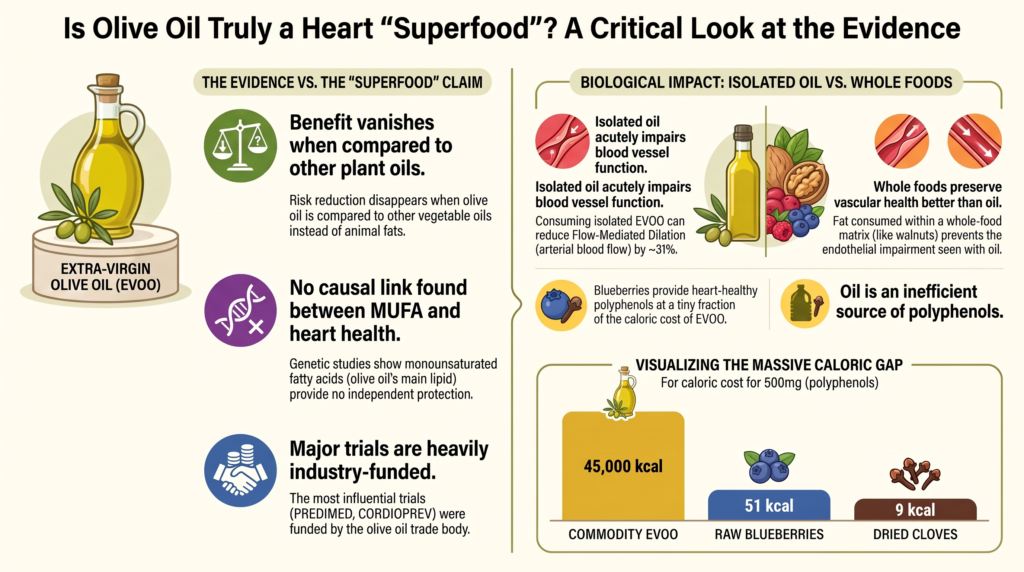
En un estudio cruzado de referencia, una sola comida de 900 kcal que contenía 50 g de grasa procedente de aceite de oliva aislado redujo la FMD en ~31% a las 3 horas, pasando de un valor inicial de 14,3 ± 4,2% a 9,9 ± 4,5% (p = 0,008); esta disminución se correlacionó inversamente con el aumento posprandial de los triglicéridos (r = −0,47, p < 0,05). [13] En un borrador anterior se indicaba que la FMD descendía “a ~4.5%”; 4.5% es la desviación estándar, no la media. El valor posprandial correcto es 9.9%, y el estudio es el de Vogel et al., 2000.
Estudios comparativos muestran divergencia por matriz alimentaria: una comida a base de nueces preserva o mejora la FMD, mientras que una comida con aceite de oliva con contenido de grasa equivalente la empeora.14] Advertencia: la comparación del aceite de nuez14] fue financiado por la California Walnut Commission y uno de los autores formó parte de su Consejo Asesor Científico. No se identificó ningún ensayo postprandial directo entre nueces y aceite que fuera totalmente independiente, por lo que este resultado debe interpretarse como un apoyo direccional pero influenciado por la industria.
Una salvedad esencial se aplica a toda esta sección. Solo se ha demostrado directamente el primer paso de la cadena postulada: que el aceite aislado reduce agudamente la DFD. No se ha demostrado si estos deterioros endoteliales posprandiales transitorios se traducen en aterosclerosis acelerada y, en última instancia, en eventos cardiovasculares clínicos. Dicha progresión es biológicamente plausible y coherente con el marco de respuesta a la retención, pero sigue siendo una inferencia más que una secuencia causal demostrada en humanos. Por lo tanto, los datos posprandiales deben interpretarse como una señal mecanicista, no como una prueba de daño a largo plazo por parte del aceite de oliva.
2.1 Mecanismo: Remanentes de quilomicrones y el modelo de respuesta a la retención
The acute impairment is linked to lipemia posprandial y el modelo de respuesta a la retención de aterogénesis. [29,33] Rapid absorption of emulsified triacylglycerols from isolated oil produces a surge of quilomicrones; lipoprotein-lipase hydrolysis then yields smaller, atherogenic remnants (<70 nm) that traverse the arterial endotelio via active transcitosis mediated by scavenger receptor class B type 1 (SR-BI) and activin receptor-like kinase 1 (ALK1). [30] Mechanistic (cell/animal and human-biomarker data), not RCT-grade.
In capillaries, this hydrolysis is stabilized by GPIHBP1, which anchors LPL to the luminal surface; larger arteries lack GPIHBP1, so intact remnants interact directly with the arterial wall. [31,32] Retained ApoB-containing remnants bind subendothelial proteoglycans, are oxidized to reactive aldehydes such as 4-hydroxynonenal (4-HNE), and activate NF-κB in endothelium and macrófagos, inducing VCAM-1, ICAM-1, and E-selectin; monocytes then adhere, transmigrate, and become células espumosas. [33,37,39] Each individual step in this sequence is experimentally supported, but the complete progression from a dietary oil bolus through remnant formation, transcytosis, foam-cell generation, and plaque is inferred by assembling those steps. This integrated pathway remains mechanistic rather than experimentally demonstrated as a continuous sequence in humans.
2.2 Nitric Oxide, ADMA, and eNOS Uncoupling
Postprandial impairment is largely mediated by reduced nitric-oxide bioavailability. Endothelial NO synthase (eNOS) makes NO from L-arginine; asymmetric dimethylarginine (ADMA) competitively inhibits eNOS and is normally cleared by dimethylarginine dimethylaminohydrolase (DDAH). [40,43] During lipemia, ROS and the lipid aldehyde 4-HNE inhibit DDAH, ADMA accumulates, and eNOS uncouples toward superoxide and peroxinitrito, causing acute endothelial dysfunction. [40,41] This is a mechanistically supported model; the dietary-causal specifics are not established by RCT.
2.3 The Whole-Food Matrix Prevents Postprandial Decline
In several controlled studies, whole-food fat sources (fresh avocado, raw walnuts) appear to attenuate or prevent the endothelial impairment seen after isolated oils, rather than reliably eliminating it. [14,15] In a randomized crossover study, substituting fresh Hass avocado for refined carbohidrato improved postprandial FMD and lowered triglyceride-rich lipoproteínas versus a fat-matched control. [15] Caveat: avocado postprandial research is frequently funded by the Hass Avocado Board; the specific funding statement should be verified and the result read as industry-adjacent. The intact fibra and cell matrix slow gastric emptying and lipase access, smoothing the triglyceride curve, while co-absorbed antioxidants neutralize ROS, preserve DDAH, and maintain eNOS coupling. [44,47]
The adverse postprandial signature is also modifiable by co-ingested antioxidants. In the Vogel trial, adding vitamins C and E, or a salad with balsamic vinegar, to the olive-oil meal fully prevented the FMD reduction. [13] A separate crossover study reported that combining 50 g of high-phenolic green olive oil with 250 mL of red wine produced a synergistic postprandial FMD improvement sustained for up to two hours (p = 0.002). [16] Funding statement for [16] not retrievable; treat as unverified for independence. Note this result cuts toward “phenolic and whole-food context matters,” not toward isolated-oil benefit. The takeaway is that the endothelial injury of isolated oil is context-dependent, not fixed—but the cleanest way to avoid it is to eat fats in whole-food form.
Table 2. Postprandial Atherogenic Cascade After Isolated-Oil Ingestion (Mechanistic Model)
| Stage | Key Mediators | Mecanismo | Effect on eNOS / Permeability |
| 1. Lipemia & remnant generation | Triacylglycerols, chylomicrons, LPL | Rapid absorption of isolated lipid → chylomicron surge; LPL hydrolysis → small dense remnants (<70 nm) | High triglycerides impair systemic vascular reactivity |
| 2. Transcytosis & retention | Remnants, SR-BI, ALK1, proteoglycans | Remnants cross the endothelium via SR-BI/ALK1 and accumulate in the íntima | Increased permeability; ApoB particles bind proteoglycans |
| 3. Oxidative modification | ROS, 4-HNE, oxidized remnants | Retained particles are oxidized to cytotoxic aldehydes | 4-HNE inhibits DDAH; eNOS uncouples toward superoxide |
| 4. Endothelial activation | NF-κB, VCAM-1, ICAM-1, E-selectin | Oxidized lipids activate NF-κB → adhesion-molecule expression | Vascular lining becomes adhesive to leukocytes |
| 5. Monocyte recruitment & foam cells | Monocytes, macrophages, scavenger receptors, IL-6, TNF-α | Adhered monocytes transmigrate, differentiate, and form foam cells | Sustained inflamación; loss of vasodilator tone |
This cascade is a mechanistic synthesis of cell, animal, and human-biomarker studies [29–43]; it is not established as an RCT-grade causal chain in humans.
3. Reversal Mechanisms of Whole-Food Plant-Based Diets
Where standard low-fat and Mediterranean patterns generally slow progression, strict low-fat WFPB interventions are the only dietary programs that have demonstrated regresión angiográfica of coronary disease in published intervention studies. That evidence base is small, highly selected, involves several simultaneous lifestyle changes, and has not been independently replicated at the same scale, and it is described here with those limitations explicit rather than as settled superiority. [54]
Ornish’s Ensayo sobre el estilo de vida y el corazón (a small RCT, n = 48) combined a ~10%-fat dieta vegetariana with no added oils, exercise, stress management, and group support. Quantitative coronary angiography showed regression of average percent-diameter estenosis (40.0% → 37.8% in the intervention group versus progression 42.7% → 46.1% in controls) at 1 year, with further divergence at 5 years. [17,18] LDL colesterol fell ~37% without lipid-lowering drugs, angina frequency fell markedly, and control patients had roughly twice as many eventos cardíacos by year 5. [18] RCT-grade but small, and the intervention is multi-component, so diet cannot be isolated.
Esselstyn’s case series followed 198 patients with established CVD counseled to a strict WFPB diet excluding all added oils; 177/198 (89%) were adherent. Among adherent patients, one recurrent event occurred (0.6%), versus 13/21 (62%) among the non-adherent, over a mean 3.7 years. [19] Independent (author-declared no conflicts) but uncontrolled, self-selected, and observational—not RCT-grade. The “reversal” claim rests on a small RCT [17,18] plus this uncontrolled cohort; readers should weight it accordingly.
3.1 Direct Clearance of Circulating ApoB
A strict WFPB diet nearly eliminates colesterol dietético and saturated/trans fat while supplying soluble fiber and fitoesteroles, depleting hepatic cholesterol pools, activating esterol regulatory element-binding proteins, and upregulating receptores de LDL. [48] Circulating ApoB and LDL-C fall, often below 70 mg/dL, reducing the gradient that drives lipoprotein entry into the intima and blunting the initiating step of the response-to-retention cascade. [33,35,36] That ApoB is the causal driver is well established from genetic and clinical data. [35,36]
3.2 Restoration of eNOS Activity and NO Bioavailability
Eliminating added oils and processed fats lowers triglycerides and prevents ADMA-mediated eNOS uncoupling; leafy greens supply inorganic nitrate reduced to nitrite and then bioactive NO; and abundant polifenoles protect tetrahydrobiopterin (BH4), keeping eNOS coupled. [43,50] These are mechanistically supported pathways rather than hard clinical endpoints.
3.3 The TMAO Pathway
Trimethylamine-N-oxide (TMAO), a gut-microbiota-dependent metabolite of dietary carnitina y colina, is associated with accelerated atherosclerosis via effects on macrophage scavenger receptors and transporte inverso de colesterol. [52,53] A WFPB shift enriches fiber-fermenting taxa and depletes TMA-producing species, markedly reducing TMAO production. [53] An earlier draft said WFPB “entirely abolishes” TMAO; this overreaches. Vegans produce far less TMAO after a carnitine challenge, but endogenous choline metabolism and residual microbial activity mean TMAO is reduced, not eliminated. The claim is corrected to “markedly reduces.”
3.4 Attenuation of Systemic Inflammation
Fiber fermentation yields short-chain fatty acids that lower systemic inflammation; WFPB patterns reduce high-sensitivity Proteína C reactiva and downregulate NF-κB-driven adhesion-molecule expression, shifting the arterial wall from active recruitment toward resolution. [54,62] Effect sizes vary across small trials and should not be over-stated.
Table 3. Comparative Effects of Three Dietary Patterns
| Parámetro | Low-Fat Control (30–35% fat) | Mediterranean + EVOO | Strict No-Added-Oil WFPB |
| LDL-C / ApoB | Minimal-to-modest reductions; often fails to lower ApoB to physiological range | Modest reductions; LDL-C typically remains 80–100 mg/dL, leaving residual particle risk | Profound reductions; frequently LDL-C <70 mg/dL, minimizing intimal entry |
| Postprandial FMD / NO | Transient impairment from refined carbohydrate or saturated fat | Acute FMD reduction (~31% in [13]) unless paired with antioxidants | Postprandial FMD preserved; no added oil, high NO bioavailability |
| Systemic inflammation (hs-CRP) | Minimal reduction | Significant reduction reported (industry-linked trials; caveat applies) | Substantial reduction; NF-κB downregulated |
| Plaque progression | Continued progression even with estatinas | Delayed progression; slight IMT regression; recurrent events persist | Documented angiographic arrest and partial regression (small studies) |
| Microbial TMAO | High; ongoing conversion of carnitine/choline | Variable; persists with fish, poultry, dairy | Markedly reduced (not fully abolished) |
Estimates for the Mediterranean and WFPB columns derive from trials of differing size and funding independence; see text and Section 4 for caveats.
4. Deconstruction of Industry Sponsorship and Nutritional Claims
4.1 The PREDIMED Retraction and Randomization Failures
PREDIMED, published in NEJM in 2013, was the most influential trial supporting the Mediterranean diet and EVOO. [68] Carlisle’s 2017 reanalysis found baseline distributions incompatible with randomization (p < 0.0001). [6] The internal audit found systemic departures from randomization affecting ~1,588 participants (~21% of the cohort): en-masse household assignment at one site, improper use of the randomization table at another, and clinic-level (rather than individual) assignment at a third. [4,5] NEJM retracted the 2013 paper in June 2018 and republished a reanalysis; because it was no longer strictly randomized, its evidence grade fell to that of a quasi-randomized cohort-style intervention. NICE had assessed it at serious risk of bias with low-to-very-low-quality data for individual outcomes. [71]
4.2 CORDIOPREV: A Weak Comparator
CORDIOPREV is cited as the premier secondary-prevention trial favoring a Mediterranean over a low-fat diet, but its control arm did not reach a genuine low-fat target (~32% of calories from fat, versus the <30% clinical definition and the <10–15% of Ornish and Esselstyn). [8] Saturated fat was near-identical between arms, and the control consumed ~10% more protein—mostly animal-source—while eating fewer whole plant foods. The ~26% MACE reduction may reflect the poor control diet rather than any unique EVOO mechanism. [8]
4.3 Funding Sources and Conflicts of Interest
The two major hard-outcome EVOO RCTs discussed here are PREDIMED and CORDIOPREV; numerous smaller RCTs of olive oil on marcadores sustitutos also exist, but none tests hard cardiovascular endpoints independently of the olive-oil trade. PREDIMED, though primarily government-funded, received donated EVOO from Hojiblanca and Patrimonio Comunal Olivarero, and donated nuts from the California Walnut Commission and others. [73] Disclosed steering-committee conflicts include Emilio Ros (research grants from and Scientific Advisory Committee membership of the California Walnut Commission) and Jordi Salas-Salvadó (grants from and unpaid advisory membership of the International Nut and Dried Fruit Council). [74] An earlier draft attributed International Nut Council funding to M. Á. Martínez-González; that attribution is not supported by the disclosures and has been removed. The verified nut-industry tie belongs to Salas-Salvadó.
CORDIOPREV was supported by the Fundación Patrimonio Comunal Olivarero, an organization dedicated to promoting Spanish olive-oil exports; its very acronym encodes the sponsor’s interest. [76] These systematic ties between a single trade interest and the entire EVOO-efficacy RCT literature justify treating “olive oil as superfood” framing with caution. [67,69]
4.4 The Lyon Diet Heart Study: Canola, Not Olive Oil
El Estudio de Lyon sobre la Dieta Cardioprotectora is often invoked for Mediterranean secondary prevention, reporting roughly a 70% lower all-cause mortality (adjusted risk ratio 0.30; 95% CI 0.11–0.82). [27,28] But its supplemental fat was not olive oil: the experimental group received a custom canola-oil-based margarine designed to mimic a Cretan profile, high in alpha-linolenic acid (ALA), with a low omega-6:omega-3 ratio (~2.8). [27,79] Reviewers attributed the mortality benefit substantially to ALA’s anti-arrhythmic and anti-thrombotic effects rather than to olive oil. [78] The choice of canola reflected, in part, Spain’s Toxic Oil Syndrome history, which had made rapeseed-oil trials socially fraught there; this is historical context, not a cardioprotection claim.
4.5 The Polyphenol “Health Halo” and the Caloric-Efficiency Gap
A central marketing claim is EVOO’s biophenol content (hydroxytyrosol, oleuropein, oleocantal, oleacein). In 2011 the European Food Safety Authority approved a claim that olive-oil polyphenols protect blood lipids from oxidative stress, conditional on ≥5 mg of hydroxytyrosol and its derivatives per 20 g of oil, at 20 g/day. [22,23]
But olive oil is a calorically expensive polyphenol vehicle. It is ~100% lipid (~900 kcal/100 g, ~120 kcal per tablespoon) with negligible fiber, protein, or water-soluble micronutrients. [47] Commodity EVOO often falls below the EFSA threshold, and even premium high-phenolic oils require large lipid loads to deliver a meaningful polyphenol dose, whereas whole plant foods deliver far more polyphenol per calorie. [21,85] The per-food polyphenol values below trace to the Phenol-Explorer database and vary with assay and extraction; the derived gram/calorie figures are illustrative arithmetic, not measured trial outcomes.
Table 4. Caloric Cost of Obtaining 500 mg of Polyphenols by Food Source
| Fuente de alimentación | Polyphenols (mg/100 g) | Energy (kcal/100 g) | Mass for 500 mg (g) | Caloric cost (kcal) |
| Commodity EVOO | ~10 | 900 | 5,000 | 45,000 |
| Premium high-phenolic EVOO | ~50 | 900 | 1,000 | 9,000 |
| Raw blueberries | 560 | 57 | 89 | 51 |
| Black chokeberries | 1,022 | 47 | 49 | 23 |
| Dark chocolate (≥70%) | 1,664 | 598 | 30 | 180 |
| Dried cloves | 15,188 | 274 | 3.3 | 9 |
Polyphenol concentrations from Phenol-Explorer [21,85]; energy values from USDA. Red = calorically expensive polyphenol vehicles; green = efficient whole-food sources. Values should be verified per cell before publication, as Folin assay results vary by method.
4.6 Do the Phenolics Deliver In Vivo?
A controlled crossover trial found that olive oil fortified with polar or non-polar phenolics increased LDL-oxidation lag time by ~8 minutes—but the same increase occurred with the polyphenol-free placebo oil, suggesting a non-specific meal or time effect rather than a unique phenolic benefit. [24] A single trial cannot overturn a field, and other work reports phenol-specific effects; but this relatively independent (Wageningen-led) study raises important questions about the magnitude of the proposed antioxidant mechanism and cautions against treating it as established. [24] Related LDL-oxidation analyses by the same group had Unilever affiliation or International Olive Oil Council funding [89]; the specifically cited 2001 Free Radical Research paper [24] is the cleaner source and is used here.
Some industry-linked trials (e.g., EUROLIVE and HDL-function studies) do report phenolic benefits. [49,86] These are cited for completeness but carry funding caveats and should not be read as independent confirmation. [61,63]
The pharmacology of oleocanthal is real but distinct from clinical cardioprotection: it inhibits COX-1 and COX-2 dose-dependently, like ibuprofen, [25] while the peppery throat sting of high-phenolic oil is mediated by TRPA1 channels restricted to the posterior oropharynx—a sensory phenomenon with no established bearing on cardiovascular outcomes. [26]
5. Conclusions
A critical synthesis indicates that current independent evidence does not demonstrate a clinically meaningful cardioprotective effect of isolated olive oil beyond the replacement of saturated and trans fats. This is a conclusion about the absence of convincing evidence for unique benefit, not positive proof that no such benefit exists. Epidemiological associations are real but are reproduced by other plant oils and are consistent with the displacement of animal fat; MR finds no convincing evidence of a causal MUFA effect and points instead to ApoB. [1,2,10,11]
Physiologically, isolated EVOO acutely impairs postprandial endothelial function by accelerating chylomicron-remnant generation and retention—an effect that whole-food fat sources appear to attenuate. Whether this transient postprandial impairment translates into long-term atherosclerosis and clinical events has not been demonstrated; it is a plausible mechanistic link, not an established one, and should be presented as such. [13,14,15]
While EVOO-supplemented diets can slow progression relative to weak comparators, only strict low-fat WFPB patterns excluding added oils have been shown to arrest and partially reverse angiographic coronary disease—though that evidence rests on one small RCT and an uncontrolled cohort and should be described with appropriate humility. [17,18,19]
Finally, the EVOO efficacy literature is systematically entangled with the olive-oil trade, and its most influential trial was retracted for randomization failure. The strongest evidence in this review—the null comparison against other plant oils, the null MUFA MR, and the null phenolic LDL-oxidation trial—comes from independent or government-funded work. [1,10,24]
The central evidentiary gap: no large, fully independent RCT of isolated EVOO on hard cardiovascular endpoints exists. Until one does, claims of unique olive-oil cardioprotection should be regarded as unproven, and the reader is entitled to the residual doubt that this review has tried to make explicit throughout.
Referencias
Citations follow IEEE style and are numbered in order of first appearance. Primary peer-reviewed sources (PubMed/PMC) are used throughout; entries marked “mechanistic” denote preclinical or biomarker-level evidence rather than RCT-grade clinical outcomes. Funding caveats for industry-linked olive-oil sources are noted in the text.
-
- Guasch-Ferré M, Li Y, Willett WC, et al. Consumption of Olive Oil and Risk of Total and Cause-Specific Mortality Among U.S. Adults. J Am Coll Cardiol. 2022;79(2):101-112. doi:10.1016/j.jacc.2021.10.041
- Guasch-Ferré M, Liu G, Li Y, et al. Olive Oil Consumption and Cardiovascular Risk in U.S. Adults. J Am Coll Cardiol. 2020;75(15):1729-1739. doi:10.1016/j.jacc.2020.02.036
- Xia M, Zhong Y, Peng Y, Qian C. Olive oil consumption and risk of cardiovascular disease and all-cause mortality: A meta-analysis of prospective cohort studies. Front Nutr. 2022;9:1041203. Published 2022 Oct 18. doi:10.3389/fnut.2022.1041203
- Estruch R, Ros E, Salas-Salvadó J, et al. Primary Prevention of Cardiovascular Disease with a Mediterranean Diet Supplemented with Extra-Virgin Olive Oil or Nuts. N Engl J Med. 2018;378(25):e34. doi:10.1056/NEJMoa1800389
- Estruch R, Ros E, Salas-Salvadó J, et al. Retraction and Republication: Primary Prevention of Cardiovascular Disease with a Mediterranean Diet. N Engl J Med 2013;368:1279-90 [retraction of: N Engl J Med. 2013 Apr 4;368(14):1279-90. doi: 10.1056/NEJMoa1200303.]. N Engl J Med. 2018;378(25):2441-2442. doi:10.1056/NEJMc1806491
- Carlisle JB. Data fabrication and other reasons for non-random sampling in 5087 randomised, controlled trials in anaesthetic and general medical journals. Anaesthesia. 2017;72(8):944-952. doi:10.1111/anae.13938
- Martínez-González MÁ, Toledo E, Arós F, et al. Extravirgin olive oil consumption reduces risk of atrial fibrillation: the PREDIMED (Prevención con Dieta Mediterránea) trial. Circulation. 2014;130(1):18-26. doi:10.1161/CIRCULATIONAHA.113.006921
- Delgado-Lista J, Alcala-Diaz JF, Torres-Peña JD, et al. Long-term secondary prevention of cardiovascular disease with a Mediterranean diet and a low-fat diet (CORDIOPREV): a randomised controlled trial. Lancet. 2022;399(10338):1876-1885. doi:10.1016/S0140-6736(22)00122-2
- Alcala-Diaz JF, Arenas-de Larriva AP, Torres-Peña JD, et al. A Gene Variation at the ZPR1 Locus (rs964184) Interacts With the Type of Diet to Modulate Postprandial Triglycerides in Patients With Coronary Artery Disease: From the Coronary Diet Intervention With Olive Oil and Cardiovascular Prevention Study. Front Nutr. 2022;9:885256. Published 2022 Jun 17. doi:10.3389/fnut.2022.885256
- Mazidi M, Katsiki N, Shekoohi N, Banach M. Monounsaturated Fatty Acid Levels May Not Affect Cardiovascular Events: Results From a Mendelian Randomization Analysis. Front Nutr. 2020;7:123. Published 2020 Sep 2. doi:10.3389/fnut.2020.00123
- Zagkos L, Dib MJ, Pinto R, et al. Associations of genetically predicted fatty acid levels across the phenome: A mendelian randomisation study. PLoS Med. 2022;19(12):e1004141. Published 2022 Dec 29. doi:10.1371/journal.pmed.1004141
- Richardson TG, Sanderson E, Palmer TM, et al. Evaluating the relationship between circulating lipoprotein lipids and apolipoproteins with risk of coronary heart disease: A multivariable Mendelian randomisation analysis. PLoS Med. 2020;17(3):e1003062. Published 2020 Mar 23. doi:10.1371/journal.pmed.1003062
- Vogel RA, Corretti MC, Plotnick GD. The postprandial effect of components of the Mediterranean diet on endothelial function. J Am Coll Cardiol. 2000;36(5):1455-1460. doi:10.1016/s0735-1097(00)00896-2
- Cortés B, Núñez I, Cofán M, et al. Acute effects of high-fat meals enriched with walnuts or olive oil on postprandial endothelial function. J Am Coll Cardiol. 2006;48(8):1666-1671. doi:10.1016/j.jacc.2006.06.057
- Wang L, Bordi PL, Fleming JA, Hill AM, Kris-Etherton PM. Effect of a moderate fat diet with and without avocados on lipoprotein particle number, size and subclasses in overweight and obese adults: a randomized, controlled trial. J Am Heart Assoc. 2015;4(1):e001355. Published 2015 Jan 7. doi:10.1161/JAHA.114.001355
- Karatzi K, Papamichael C, Karatzis E, et al. Postprandial improvement of endothelial function by red wine and olive oil antioxidants: a synergistic effect of components of the Mediterranean diet. J Am Coll Nutr. 2008;27(4):448-453. doi:10.1080/07315724.2008.10719724
- Ornish D, Brown SE, Scherwitz LW, et al. Can lifestyle changes reverse coronary heart disease? The Lifestyle Heart Trial. Lancet. 1990;336(8708):129-133. doi:10.1016/0140-6736(90)91656-u
- Ornish D, Scherwitz LW, Billings JH, et al. Intensive lifestyle changes for reversal of coronary heart disease. JAMA. 1998;280(23):2001-2007. doi:10.1001/jama.280.23.2001
- Esselstyn CB Jr, Gendy G, Doyle J, Golubic M, Roizen MF. A way to reverse CAD?. J Fam Pract. 2014;63(7):356-364b.
- Esselstyn CB Jr. Updating a 12-year experience with arrest and reversal therapy for coronary heart disease (an overdue requiem for palliative cardiology). Am J Cardiol. 1999;84(3):339-A8. doi:10.1016/s0002-9149(99)00290-8
- Pérez-Jiménez J, Neveu V, Vos F, Scalbert A. Identification of the 100 richest dietary sources of polyphenols: an application of the Phenol-Explorer database. Eur J Clin Nutr. 2010;64 Suppl 3:S112-S120. doi:10.1038/ejcn.2010.221
- EFSA Panel on Dietetic Products, Nutrition and Allergies (NDA). Scientific Opinion on the substantiation of health claims related to polyphenols in olive and protection of LDL particles from oxidative damage (ID 1333, 1638, 1639, 1696, 2865), maintenance of normal blood HDL cholesterol concentrations (ID 1639), maintenance of normal blood pressure (ID 3781), “anti-inflammatory properties” (ID 1882), “contributes to the upper respiratory tract health” (ID 3468), “can help to maintain a normal function of gastrointestinal tract” (3779), and “contributes to body defences against external agents” (ID 3467) pursuant to Article 13(1) of Regulation (EC) No 1924/2006. EFSA J. 2011;9(4):2033. Published 2011 Apr 8. doi:10.2903/j.efsa.2011.2033
- Commission Regulation (EU) No 432/2012 of 16 May 2012 establishing a list of permitted health claims made on foods, Off. J. Eur. Union, L 136, pp. 1–40, May 2012.
- Vissers MN, Zock PL, Leenen R, Roodenburg AJ, van Putte KP, Katan MB. Effect of consumption of phenols from olives and extra virgin olive oil on LDL oxidizability in healthy humans. Free Radic Res. 2001;35(5):619-629. doi:10.1080/10715760100301621
- Beauchamp GK, Keast RS, Morel D, et al. Phytochemistry: ibuprofen-like activity in extra-virgin olive oil. Nature. 2005;437(7055):45-46. doi:10.1038/437045a
- Peyrot des Gachons C, Uchida K, Bryant B, et al. Unusual pungency from extra-virgin olive oil is attributable to restricted spatial expression of the receptor of oleocanthal. J Neurosci. 2011;31(3):999-1009. doi:10.1523/JNEUROSCI.1374-10.2011
- de Lorgeril M, Renaud S, Mamelle N, et al. Mediterranean alpha-linolenic acid-rich diet in secondary prevention of coronary heart disease. Lancet. 1994;343(8911):1454-1459. doi:10.1016/s0140-6736(94)92580-1
- de Lorgeril M, Salen P, Martin JL, Monjaud I, Delaye J, Mamelle N. Mediterranean diet, traditional risk factors, and the rate of cardiovascular complications after myocardial infarction: final report of the Lyon Diet Heart Study. Circulation. 1999;99(6):779-785. doi:10.1161/01.cir.99.6.779
- Williams KJ, Tabas I. The response-to-retention hypothesis of early atherogenesis. Arterioscler Thromb Vasc Biol. 1995;15(5):551-561. doi:10.1161/01.atv.15.5.551
- Bolanle IO, de Liedekerke Beaufort GC, Weinberg PD. Transcytosis of LDL Across Arterial Endothelium: Mechanisms and Therapeutic Targets. Arterioscler Thromb Vasc Biol. 2025;45(4):468-480. doi:10.1161/ATVBAHA.124.321549
- Beigneux AP. GPIHBP1 and the processing of triglyceride-rich lipoproteins. Clin Lipidol. 2010;5(4):575-582. doi:10.2217/clp.10.43
- Goldberg IJ, Bornfeldt KE. Lipids and the endothelium: bidirectional interactions. Curr Atheroscler Rep. 2013;15(11):365. doi:10.1007/s11883-013-0365-1
- Tabas I, Williams KJ, Borén J. Subendothelial lipoprotein retention as the initiating process in atherosclerosis: update and therapeutic implications. Circulation. 2007;116(16):1832-1844. doi:10.1161/CIRCULATIONAHA.106.676890
- Badimon L, Vilahur G. LDL-cholesterol versus HDL-cholesterol in the atherosclerotic plaque: inflammatory resolution versus thrombotic chaos. Ann N Y Acad Sci. 2012;1254:18-32. doi:10.1111/j.1749-6632.2012.06480.x
- Borén J, Chapman MJ, Krauss RM, et al. Low-density lipoproteins cause atherosclerotic cardiovascular disease: pathophysiological, genetic, and therapeutic insights: a consensus statement from the European Atherosclerosis Society Consensus Panel. Eur Heart J. 2020;41(24):2313-2330. doi:10.1093/eurheartj/ehz962
- Ference BA, Ginsberg HN, Graham I, et al. Low-density lipoproteins cause atherosclerotic cardiovascular disease. 1. Evidence from genetic, epidemiologic, and clinical studies. A consensus statement from the European Atherosclerosis Society Consensus Panel. Eur Heart J. 2017;38(32):2459-2472. doi:10.1093/eurheartj/ehx144
- Libby P. The changing landscape of atherosclerosis. Nature. 2021;592(7855):524-533. doi:10.1038/s41586-021-03392-8
- van Oostrom AJ, Rabelink TJ, Verseyden C, et al. Activation of leukocytes by postprandial lipemia in healthy volunteers. Atherosclerosis. 2004;177(1):175-182. doi:10.1016/j.atherosclerosis.2004.07.004
- Tsimikas S, Witztum JL. Oxidized phospholipids in cardiovascular disease. Nat Rev Cardiol. 2024;21(3):170-191. doi:10.1038/s41569-023-00937-4
- Böger RH. The emerging role of asymmetric dimethylarginine as a novel cardiovascular risk factor. Cardiovasc Res. 2003;59(4):824-833. doi:10.1016/s0008-6363(03)00500-5
- Böger RH. Asymmetric dimethylarginine (ADMA): a novel risk marker in cardiovascular medicine and beyond. Ann Med. 2006;38(2):126-136. doi:10.1080/07853890500472151
- Zhao G, Etherton TD, Martin KR, Gillies PJ, West SG, Kris-Etherton PM. Dietary alpha-linolenic acid inhibits proinflammatory cytokine production by peripheral blood mononuclear cells in hypercholesterolemic subjects. Am J Clin Nutr. 2007;85(2):385-391. doi:10.1093/ajcn/85.2.385
- Förstermann U, Sessa WC. Nitric oxide synthases: regulation and function. Eur Heart J. 2012;33(7):829-837d. doi:10.1093/eurheartj/ehr304
- Kris-Etherton PM, Hecker KD, Bonanome A, et al. Bioactive compounds in foods: their role in the prevention of cardiovascular disease and cancer. Am J Med. 2002;113 Suppl 9B:71S-88S. doi:10.1016/s0002-9343(01)00995-0
- Ornish D. Avoiding revascularization with lifestyle changes: The Multicenter Lifestyle Demonstration Project. Am J Cardiol. 1998;82(10B):72T-76T. doi:10.1016/s0002-9149(98)00744-9
- Dreher ML, Davenport AJ. Hass avocado composition and potential health effects. Crit Rev Food Sci Nutr. 2013;53(7):738-750. doi:10.1080/10408398.2011.556759
- Rajaram S. The effect of vegetarian diet, plant foods, and phytochemicals on hemostasis and thrombosis. Am J Clin Nutr. 2003;78(3 Suppl):552S-558S. doi:10.1093/ajcn/78.3.552S
- Jenkins DJ, Kendall CW, Marchie A, et al. Effects of a dietary portfolio of cholesterol-lowering foods vs lovastatin on serum lipids and C-reactive protein. JAMA. 2003;290(4):502-510. doi:10.1001/jama.290.4.502
- Covas MI, Nyyssönen K, Poulsen HE, et al. The effect of polyphenols in olive oil on heart disease risk factors: a randomized trial. Ann Intern Med. 2006;145(5):333-341. doi:10.7326/0003-4819-145-5-200609050-00006
- Kapil V, Khambata RS, Robertson A, Caulfield MJ, Ahluwalia A. Dietary nitrate provides sustained blood pressure lowering in hypertensive patients: a randomized, phase 2, double-blind, placebo-controlled study. Hypertension. 2015;65(2):320-327. doi:10.1161/HYPERTENSIONAHA.114.04675
- Karatzi K, Papamichael C, Karatzis E, et al. Postprandial improvement of endothelial function by red wine and olive oil antioxidants: a synergistic effect of components of the Mediterranean diet. J Am Coll Nutr. 2008;27(4):448-453. doi:10.1080/07315724.2008.10719724
- Tang WH, Wang Z, Levison BS, et al. Intestinal microbial metabolism of phosphatidylcholine and cardiovascular risk. N Engl J Med. 2013;368(17):1575-1584. doi:10.1056/NEJMoa1109400
- Koeth RA, Wang Z, Levison BS, et al. Intestinal microbiota metabolism of L-carnitine, a nutrient in red meat, promotes atherosclerosis. Nat Med. 2013;19(5):576-585. doi:10.1038/nm.3145
- Tuso P, Stoll SR, Li WW. A plant-based diet, atherogenesis, and coronary artery disease prevention. Perm J. 2015;19(1):62-67. doi:10.7812/TPP/14-036
- Esselstyn CB. A plant-based diet and coronary artery disease: a mandate for effective therapy. J Geriatr Cardiol. 2017;14(5):317-320. doi:10.11909/j.issn.1671-5411.2017.05.004
- Esselstyn CB Jr, Ellis SG, Medendorp SV, Crowe TD. A strategy to arrest and reverse coronary artery disease: a 5-year longitudinal study of a single physician’s practice. J Fam Pract. 1995;41(6):560-568.
- Fernández-Rodríguez R, Bizzozero-Peroni B, Díaz-Goñi V, et al. Plant-based meat alternatives and cardiometabolic health: a systematic review and meta-analysis. Am J Clin Nutr. 2025;121(2):274-283. doi:10.1016/j.ajcnut.2024.12.002
- Campbell TC. A plant-based diet and animal protein: questioning dietary fat and considering animal protein as the main cause of heart disease. J Geriatr Cardiol. 2017;14(5):331-337. doi:10.11909/j.issn.1671-5411.2017.05.011
- Dinu M, Abbate R, Gensini GF, Casini A, Sofi F. Vegetarian, vegan diets and multiple health outcomes: A systematic review with meta-analysis of observational studies. Crit Rev Food Sci Nutr. 2017;57(17):3640-3649. doi:10.1080/10408398.2016.1138447
- Weech M, Altowaijri H, Mayneris-Perxachs J, et al. Replacement of dietary saturated fat with unsaturated fats increases numbers of circulating endothelial progenitor cells and decreases numbers of microparticles: findings from the randomized, controlled Dietary Intervention and VAScular function (DIVAS) study. Am J Clin Nutr. 2018;107(6):876-882. doi:10.1093/ajcn/nqy018
- M.-I. Covas et al., “Minor components of olive oil: Evidence to date of health benefits in humans,” Nutr. Rev., vol. 64, no. 10 pt 2, pp. S20–S30, 2006 (industry-linked review; funding caveat in text).
- Kahleova H, Levin S, Barnard N. Cardio-Metabolic Benefits of Plant-Based Diets. Nutrients. 2017;9(8):848. Published 2017 Aug 9. doi:10.3390/nu9080848
- Estruch R. Anti-inflammatory effects of the Mediterranean diet: the experience of the PREDIMED study. Proc Nutr Soc. 2010;69(3):333-340. doi:10.1017/S0029665110001539
- Nishi SK, Paz-Graniel I, Ni J, et al. Effect of nut consumption on blood lipids: An updated systematic review and meta-analysis of randomized controlled trials. Nutr Metab Cardiovasc Dis. 2025;35(5):103771. doi:10.1016/j.numecd.2024.10.009
- Schwingshackl L, Hoffmann G. Monounsaturated fatty acids, olive oil and health status: a systematic review and meta-analysis of cohort studies. Lipids Health Dis. 2014;13:154. Published 2014 Oct 1. doi:10.1186/1476-511X-13-154
- Ros E, Martínez-González MA, Estruch R, et al. Mediterranean diet and cardiovascular health: Teachings of the PREDIMED study. Adv Nutr. 2014;5(3):330S-6S. Published 2014 May 14. doi:10.3945/an.113.005389
- Nestle M. Food Industry Funding of Nutrition Research: The Relevance of History for Current Debates. JAMA Intern Med. 2016;176(11):1685-1686. doi:10.1001/jamainternmed.2016.5400
- Estruch R, Ros E, Salas-Salvadó J, et al. Retraction and Republication: Primary Prevention of Cardiovascular Disease with a Mediterranean Diet. N Engl J Med 2013;368:1279-90 [retraction of: N Engl J Med. 2013 Apr 4;368(14):1279-90. doi: 10.1056/NEJMoa1200303.]. N Engl J Med. 2018;378(25):2441-2442. doi:10.1056/NEJMc1806491
- Bero L. Industry sponsorship and research outcome: a Cochrane review. JAMA Intern Med. 2013;173(7):580-581. doi:10.1001/jamainternmed.2013.4190
- A.-M. Chang et al., commentary on PREDIMED randomization irregularities, republished analysis context, N. Engl. J. Med., 2018 (see [4], [5]).
- Evidence review for dietary cholesterol strategies: Cardiovascular disease: risk assessment and reduction, including lipid modification. London: National Institute for Health and Care Excellence (NICE); May 2023.
- Alcala-Diaz JF, Arenas-de Larriva AP, Torres-Peña JD, et al. A Gene Variation at the ZPR1 Locus (rs964184) Interacts With the Type of Diet to Modulate Postprandial Triglycerides in Patients With Coronary Artery Disease: From the Coronary Diet Intervention With Olive Oil and Cardiovascular Prevention Study. Front Nutr. 2022;9:885256. Published 2022 Jun 17. doi:10.3389/fnut.2022.885256
- PREDIMED Study Investigators, “Funding and food-industry donations disclosure,” in [4] supplementary appendix, N. Engl. J. Med., 2018.
- Conflict-of-interest disclosures, PREDIMED steering committee, in [4] supplementary appendix (E. Ros: California Walnut Commission; J. Salas-Salvadó: International Nut and Dried Fruit Council), N. Engl. J. Med., 2018.
- Estruch R, Ros E, Salas-Salvadó J, et al. Primary Prevention of Cardiovascular Disease with a Mediterranean Diet Supplemented with Extra-Virgin Olive Oil or Nuts. N Engl J Med. 2018;378(25):e34. doi:10.1056/NEJMoa1800389
- Fundación Patrimonio Comunal Olivarero, funding acknowledgment, in CORDIOPREV [8], Lancet, 2022.
- de Lorgeril M, Salen P. The Mediterranean diet in secondary prevention of coronary heart disease. Clin Invest Med. 2006;29(3):154-158.
- Visioli F, Galli C. Alpha-linolenic acid and cardiovascular disease. Am J Clin Nutr. 2002;75(6):1121-1122. doi:10.1093/ajcn/75.6.1121
- de Lorgeril M, Salen P. Modified Cretan Mediterranean diet in the prevention of coronary heart disease and cancer. World Rev Nutr Diet. 2000;87:1-23.
- Hu FB. The Mediterranean diet and mortality–olive oil and beyond. N Engl J Med. 2003;348(26):2595-2596. doi:10.1056/NEJMp030069
- EFSA Panel on Nutrition, Novel Foods and Food allergens (NDA), Turck D, Bohn T, et al. Olive oil polyphenols and the maintenance of normal HDL-cholesterol concentrations: Evaluation of a health claim pursuant to Article 13(5) of Regulation (EC) No 1924/2006. EFSA J. 2025;23(5):e9372. Published 2025 May 2. doi:10.2903/j.efsa.2025.9372
- Fabiani R. Anti-cancer properties of olive oil secoiridoid phenols: a systematic review of in vivo studies. Food Funct. 2016;7(10):4145-4159. doi:10.1039/c6fo00958a
- Owen RW, Giacosa A, Hull WE, et al. Olive-oil consumption and health: the possible role of antioxidants. Lancet Oncol. 2000;1:107-112. doi:10.1016/s1470-2045(00)00015-2
- Crespo MC, Tomé-Carneiro J, Dávalos A, Visioli F. Pharma-Nutritional Properties of Olive Oil Phenols. Transfer of New Findings to Human Nutrition. Foods. 2018;7(6):90. Published 2018 Jun 11. doi:10.3390/foods7060090
- Neveu V, Perez-Jiménez J, Vos F, et al. Phenol-Explorer: an online comprehensive database on polyphenol contents in foods. Database (Oxford). 2010;2010:bap024. doi:10.1093/database/bap024
- Hernáez Á, Fernández-Castillejo S, Farràs M, et al. Olive oil polyphenols enhance high-density lipoprotein function in humans: a randomized controlled trial. Arterioscler Thromb Vasc Biol. 2014;34(9):2115-2119. doi:10.1161/ATVBAHA.114.303374
- Key TJ, Fraser GE, Thorogood M, et al. Mortality in vegetarians and nonvegetarians: detailed findings from a collaborative analysis of 5 prospective studies. Am J Clin Nutr. 1999;70(3 Suppl):516S-524S. doi:10.1093/ajcn/70.3.516s
- Yeung AWK. Food Composition Databases (FCDBs): A Bibliometric Analysis. Nutrients. 2023;15(16):3548. Published 2023 Aug 11. doi:10.3390/nu15163548
- Castañer O, Covas MI, Khymenets O, et al. Protection of LDL from oxidation by olive oil polyphenols is associated with a downregulation of CD40-ligand expression and its downstream products in vivo in humans. Am J Clin Nutr. 2012;95(5):1238-1244. doi:10.3945/ajcn.111.029207