Is olijfolie op zichzelf hartbeschermend?
Een kritische evaluatie van epidemiologische, postprandiaalPostprandial means 'after a meal'; postprandial studies measure how the body—including blood vessels, lipid levels, and inflammatory markers—responds in the hours immediately following food consumption, rather than at a fasting baseline., en klinisch bewijs
Een op bewijs beoordeeld overzicht met een expliciete beoordeling van de financieringsonafhankelijkheid
Abstract
Achtergrond. Extra vierge olijfolieOlive oil is the main fat of the Mediterranean diet, rich in monounsaturated fat and, in the extra virgin form, in plant compounds called polyphenols. (EVOO) wordt alom gepromoot als een onafhankelijk hartbeschermend voedingsmiddel. Deze overzichtsartikelen evalueert of geïsoleerde olijfolie intrinsieke hartbeschermende eigenschappen heeft, los van de voedingspatronen waarin het wordt geconsumeerd en van de industriefinancieringFinancial sponsorship of scientific research by commercial entities with a stake in the outcome; studies funded by industry have been shown to be more likely to report results favorable to the sponsor's product, introducing systematic bias into health evidence. dat het bewijsmateriaal overheerst.
Methoden en reikwijdte. Primaire door vakgenoten getoetste bronnen (prospectieve cohortenEen prospectief cohortonderzoek includeert gezonde mensen, registreert hun kenmerken en wacht vervolgens af wat er gebeurt., gerandomiseerde gecontroleerde onderzoekenEen gerandomiseerd gecontroleerd onderzoek wijst mensen puur op basis van toeval toe aan een behandel- of een vergelijkingsgroep en volgt vervolgens beide groepen. [RCT's], Mendeliana randomisatieMendel-randomisering is een slimme onderzoeksmethode waarbij de genen waarmee mensen zijn geboren, worden gebruikt als een natuurlijk experiment. [MR], en gecontroleerde postprandiale studies) werden beoordeeld op hun gerapporteerde effectschattingen, bewijs cijferGRADE (Grading of Recommendations, Assessment, Development and Evaluations) is a widely used framework for rating the certainty of evidence behind a clinical finding, classifying it as high, moderate, low, or very low based on factors such as study design, risk of bias, consistency, directness, and precision of results., en financieringsonafhankelijkheid. Omdat de olijfoliehandel een groot deel van de literatuur over de werkzaamheid van EVOO sponsort, wordt elke olijfoliestudie expliciet geclassificeerd als onafhankelijk of door de industrie beïnvloed, en wordt de resterende onzekerheid in de tekst vermeld in plaats van weggewerkt.
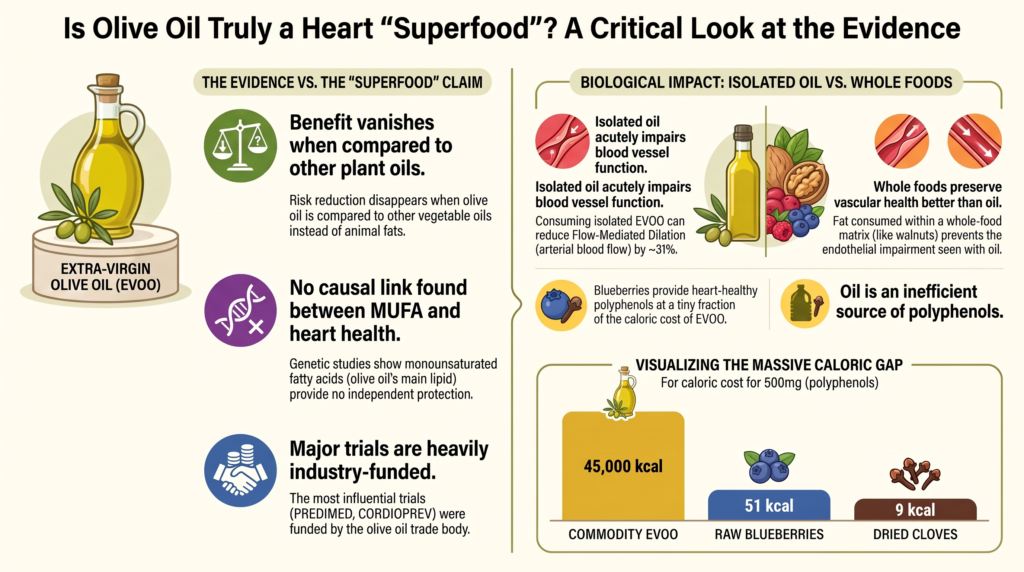
Bevindingen. Epidemiologische associaties tussen olijfolie en een lagere cardiovasculaire mortaliteit zijn reëel, maar worden volledig gereproduceerd door andere plantaardige oliën en verdwijnen wanneer olijfolie wordt vergeleken met andere plantaardige oliën in plaats van met dierlijke vetten. MR vindt geen causaal cardiovasculair voordeel van circulerende enkelvoudig onverzadigde vetzurenMonounsaturated fatty acids are fats with a single carbon-carbon double bond; oleic acid, the principal fat in olive oil, is the most common dietary MUFA, and it is often cited as the reason olive oil is considered heart-healthy., het belangrijkste olijfolielipide; de causale signaalbanen apolipoproteïneEen apolipoproteïne is een eiwit dat is gehecht aan een vettransporterend deeltje in je bloed. Vet en water mengen niet, dus deze eiwitten fungeren als een verpakking waardoor vet veilig door de bloedbaan kan reizen. B (ApoBApoB is een eiwit dat zich aan de buitenkant bevindt van elk cholesteroldeeltje dat vast kan komen te zitten in je slagaderwand en plaque kan veroorzaken. Elk van die deeltjes draagt precies één ApoB.) in plaats daarvan het deeltjesaantal. Geïsoleerde EVOO tast acuut de endotheelfunctieHet vermogen van de binnenwand van bloedvaten om de vaattonus, ontsteking en stolling te reguleren; gezonde endotheelcellen geven stikmonoxide af om slagaders ontspannen en weerstand tegen plaquevorming te houden. postprandiaal, een effect dat niet wordt waargenomen wanneer vet wordt geconsumeerd binnen een volwaardige voedselmatrix. Alleen strikte, vetarme, plantaardige voedingspatronen op basis van onbewerkte voedingsmiddelen (WFPB) waarbij alle toegevoegde oliën worden uitgesloten, hebben aangetoond dat ze angiografische coronaire hartziekte kunnen stoppen en gedeeltelijk omkeren. De twee belangrijkste EVOO RCT's (PREDIMEDPREDIMED randomly assigned thousands of high-risk Spanish adults to a Mediterranean diet with extra olive oil, the same diet with extra nuts, or a low-fat control diet., CORDIOPREVCORDIOPREV compared a Mediterranean diet against a low-fat diet in people who already had coronary disease, following them for seven years.worden beide gefinancierd door de olijfoliebranche Patrimonio Comunal OlivareroPatrimonio Comunal Olivarero is a Spanish olive-oil trade organization whose stated purpose is to promote Spanish olive-oil exports; it supplied the intervention oil and co-funded both PREDIMED and CORDIOPREV, making it the single industry sponsor entangled with virtually the entire randomized-trial evidence base for olive oil's cardiovascular efficacy., en PREDIMED werd ingetrokken en opnieuw gepubliceerd na zijn randomisatieRandomization is the process of assigning trial participants to treatment or control groups by chance, ensuring that known and unknown confounding factors are evenly distributed; when randomization fails—as auditors found occurred in PREDIMED—the groups may differ in ways that distort the apparent treatment effect. bleek te zijn gecompromitteerd.
Conclusie. Huidig onafhankelijk bewijs toont geen klinisch zinvol cardioprotectief effect aan van olijfolie dat verder gaat dan de vervanging van verzadigd en transvettenTrans fat is an artificially altered fat once used to make processed foods last longer on the shelf.; het kan het best worden begrepen als een verhoudingsgewijs goedaardige vervanging voor dierlijk vet in plaats van als een voedingsmiddel met aangetoonde unieke intrinsieke activiteit. Dit is een bewering over de afwezigheid van overtuigend bewijs, geen bewijs van geen effect. Er bestaat geen groot, volledig onafhankelijk gerandomiseerd gecontroleerd onderzoek met harde eindpunten naar geïsoleerde extra vergine olijfolie; deze bewijslacune is op zich al een centrale bevinding.
Een opmerking over het bewijsmateriaal en de financiering ervan
Een terugkerende moeilijkheid op dit gebied is dat bijna elke RCT die de werkzaamheid van olijfolie van de eerste persing (EVOO) op cardiovasculaire eindpunten pretendeert aan te tonen, in geld of in natura werd gefinancierd door de olijfoliehandel. Zowel PREDIMED als CORDIOPREV ontvingen hun interventie-olie van Patrimonio Comunal Olivarero, een organisatie met als uitdrukkelijk doel het bevorderen van de export van Spaanse olijfolie.73,76Industriefinanciering maakt een resultaat op zich niet ongeldig, maar het systematisch verstrengeling van de hele RCT-literatuur over de werkzaamheid van EVOO met één belanghebbende partij is een legitieme reden tot voorzichtigheid.67,69Waar een onafhankelijke bron die hetzelfde punt ondersteunt bestaat, heeft deze de voorkeur bij citatie. Waar geen dergelijke bron bestaat — zoals vaak het geval is bij extra olijfolie van de eerste persing (EVOO) — wordt de door de industrie gefinancierde studie behouden maar ter plekke van een kanttekening voorzien, en wordt de daaruit voortvloeiende onzekerheid meegenomen in de interpretatie. De lezer dient elke onderstaande schatting van de werkzaamheid van EVOO in die mate als voorlopig te beschouwen.
1. Epidemiologische kwantificering van de onafhankelijke cardioprotectieve werkzaamheid van olijfolie
Om te beoordelen of olijfolie op zichzelf over onafhankelijke cardioprotectieve eigenschappen beschikt, voedingsepidemiologieThe branch of epidemiology that studies relationships between dietary patterns and disease outcomes in populations, relying primarily on observational data such as food-frequency questionnaires and disease registries. moet worden bekeken door de lens van vervangingsdynamiekReplacement dynamics refers to the statistical principle that a food's apparent health benefit may reflect what it displaces in the diet rather than any intrinsic property; in olive oil research, much of the observed cardiovascular benefit disappears when olive oil is compared against other plant oils rather than against butter or animal fats. en de dieetcontext. De meest uitgebreide prospectieve gegevens in niet-mediterrane cohorten zijn afkomstig van de Nurses’ Health Study (NHS) en de Health Professionals Follow-Up Study (HPFS), die samen 92.383 Amerikaanse mannen en vrouwen volgenden die vrij waren van hart- en vaatziektenCardiovasculaire aandoeningen is de verzamelnaam voor problemen met het hart en de bloedvaten, waaronder hartinfarcten, beroertes en verstopte beenslagaders. en kanker bij aanvang gedurende maximaal 28 jaar. [1]
Uit analyses waarbij voor meerdere variabelen is gecorrigeerd, blijkt dat personen in de hoogste categorie van olijfolieconsumptie, gedefinieerd als meer dan een halve eetlepel per dag (>7 g/dag), een afname van 19% in de cardiovasculaire mortaliteit vertoonden (hazardratioEen hazardratio vergelijkt hoe snel gebeurtenissen plaatsvinden in twee groepen. Een ratio van 0,75 betekent dat gebeurtenissen zich in de behandelde groep voordeden aan driekwart van de snelheid. [HR] 0,81; 95% betrouwbaarheidsintervalEen betrouwbaarheidsinterval is het bereik van waarden dat statistisch compatibel is met wat een studie heeft gevonden. [CI] 0,75–0,87) en een afname van 19% in sterfte door alle oorzakenSterfte door alle oorzaken betekent overlijden door welke oorzaak dan ook, en niet alleen door hartaandoeningen — de meest omvattende en minst te manipuleren uitkomst die een studie kan meten. (HR 0,81; 95%-betrouwbaarheidsinterval 0,78–0,84) ten opzichte van niet-gebruikers. [1] Een hogere inname ging ook gepaard met een 18% lager risico op kransslagaderziekteCoronary heart disease is the narrowing or blockage of the arteries that supply blood to the heart muscle, caused by the buildup of atherosclerotic plaque; it is the leading cause of heart attack and cardiac death worldwide. (HR 0,82; 95%-betrouwbaarheidsinterval 0,73–0,91), zonder significant verband voor beroerteEen beroerte ontstaat wanneer de bloedtoevoer naar een deel van de hersenen stopt, hetzij door een blokkade of door een bloeding.. [2]
Uit de gegevens bleek verder een 17% lager risico op sterfte door kanker (HR 0,83; 95% BI 0,78–0,89), een 29% lager risico op sterfte door neurodegeneratieve aandoeningen (HR 0,71; 95% CI 0,64–0,78) en een 18% lager risico op sterfte door aandoeningen van de luchtwegen (HR 0,82; 95% CI 0,72–0,93). [1] Een eerdere versie vermeldde het betrouwbaarheidsinterval voor neurodegeneratieve aandoeningen als 0,78–0,89, wat onmogelijk is voor een punt schatting van 0,71 en in feite bij de kankerschatting hoort; het gecorrigeerde interval is 0,64–0,78.
Een afzonderlijke dosis-effectrelatieEen dosis-responarelatie betekent dat een grotere hoeveelheid van iets een groter effect oplevert, in een consistent verloop. meta-analyseEen meta-analyse combineert de resultaten van vele afzonderlijke onderzoeken statistisch tot één algemene schatting. Uit 13 prospectieve cohortstudies bleek dat elke extra 5 g olijfolie per dag gepaard ging met een klein maar significant lager risico op hart- en vaatziekten (RR 0,96; 95% BI 0,93–0,99) en sterfte door alle oorzaken (RR 0,96; 95% BI 0,95–0,96). [3] Dit cijfer per toename is afkomstig van Xia et al., en niet van de Harvard-cohorten, en wordt dienovereenkomstig toegeschreven.
De beslissende epidemiologische test is de directe vergelijking met andere plantaardige oliën. Binnen dezelfde cohorten ging het vervangen van 10 g/dag aan dierlijke vetten met een hoog gehalte aan verzadigde vetten (margarine, boter, mayonaise, zuivelvet) door olijfolie gepaard met een lager risico op totale en oorzaakspecifieke sterfte, variërend van 8% tot 34%. [1Maar vergeleken met andere plantaardige oliën samen, liet olijfolie zien geen statistisch significant verschil voor totale hart- en vaatziekten, coronaire hartziekten of een beroerte.1,2Op basis van deze gegevens volgt het schijnbare voordeel de verdringing van atherogene dierlijke vetten in plaats van enige intrinsieke eigenschap van de olijfolielipideruggengraat.
Residu verwarrendVerstorende vertekening treedt op wanneer een verborgen derde factor twee ongerelateerde dingen met elkaar verbonden doet lijken. dat verergert dit. Degenen met de hoogste inname van olijfolie hadden over het algemeen een gezondere levensstijl (meer lichaamsbeweging, minder rokenRoken beschadigt de wand van je bloedvaten, verhoogt de bloeddruk, zorgt ervoor dat het bloed sneller stolt en versneld de groei van plak., meer fruit en groenten), en de auteurs erkenden dat een hoge inname van olijfolie eenvoudigweg een hoger sociaaleconomisch status en een algehele dieetkwaliteit kan aangeven.1]
1.1 Het PREDIMED-primaire-preventiekader
PREDIMED wees willekeurig 7.447 Spaanse volwassenen met een hoog risico toe aan een mediterraan dieetThe Mediterranean diet emphasizes vegetables, fruit, beans, whole grains, nuts, and olive oil, with fish and little red meat. plus gratis olijfolie van eerste persing, een Mediterraan dieet plus noten, of een controledieet (advies voor een vetarm dieet), met een mediane follow-up van 4,8 jaar. De groep met olijfolie van eerste persing liet een lager samengesteld aantal zien van myocardinfarctZie Hartinfarct voor de volledige vermelding., beroerte en cardiovasculaire sterfte (HR 0,69; 95% BI 0,53–0,91) ten opzichte van de controlegroep, wat neerkomt op een relatieve afname van ongeveer 30%. [4]
Twee kanttekeningen verzwakken dit. Ten eerste hield in secundaire analyses het omgekeerde verband tussen de aanzet tot de inname van olijfolie van eerste persing en ernstige voorvallen alleen stand binnen de met de mediterrane dieet gerandomiseerde groepen en was dit verdwenen in de vetarme controlegroep — dus de waarde van olijfolie lijkt eerder afhankelijk van het onderliggende patroon dan intrinsiek. [4]
Ten tweede, en ernstiger, werd PREDIMED ingetrokken. Een heranalyse uit 2017 door Carlisle wees uit dat de uitgangsverdelingen statistisch onverenigbaar waren met willekeurige toewijzing. [6] Uit de controle bleek dat de randomisatie bij ongeveer 1.588 van de 7.447 deelnemers (~21%) niet correct was verlopen: op de ene locatie werden gezinsleden en bloc toegewezen; op een tweede locatie werd de randomisatietabel niet correct gebruikt; en op een derde locatie werd een kliniek als geheel gerandomiseerd. NEJM trok het artikel uit 2013 in juni 2018 in en publiceerde een voor clustering gecorrigeerde heranalyse. [4,5Aangezien het niet langer strikt individueel gerandomiseerd is, kan PREDIMED het best worden gelezen als een quasi-gerandomiseerde interventie; NICE had het al beoordeeld als een ernstig risico op vertekening voor individuele hart- en vaatziekte-uitkomsten.71]
1.2 Secundaire Preventie: CORDIOPREV
In het CORDIOPREV-onderzoek werden 1.002 Spaanse patiënten met coronaire hartziekte gedurende 7 jaar willekeurig ingedeeld in een groep met een mediterraan dieet rijk aan extra vierge olijfolie (~35% vet, ~22% MUFA) of een vetarm dieet. Recidiverende MACE trad op bij 28,1 per 1.000 persoonsjaren (mediterraan) versus 37,7 per 1.000 persoonsjaren (vetarm); de voor meerdere variabelen gecorrigeerde hazard ratio’s varieerden in de verschillende modellen van 0,719 (95% BI 0,541–0,957) tot 0,753 (95% BI 0,568–0,998) in het voordeel van het mediterrane dieet, wat neerkomt op een relatieve afname van ongeveer 25–28% (log-rank p = 0,039). [8] 28.1 is het incidentiecijfer van de Middellandse Zee-arm per 1.000 persoonsjaren, en niet de procentuele risicoreductie; het betrouwbaarheidsinterval van 0,62–0,89 in een eerdere versie komt niet voor in de bron en is vervangen door het gerapporteerde modelbereik.
De comparator was geen echt vetarm dieet. De controlegroep bracht het totale vetgehalte terug tot slechts ~32% calorieën — wat onder de klinische drempel van <30% ligt en ver verwijderd is van de <10–15% van Ornish en Esselstyn omkeringREVERSAL vergeleek matige en intensieve statinetherapie en gebruikte intravasculaire echografie om te meten wat er met de kransslagaderplaque gebeurde. proeven. Verzadigd vetVerzadigd vet is het soort vet dat bij kamertemperatuur vaste vorm behoudt — boter, het vet in rood vlees, kokosolie en palmolie. was vrijwel identiek tussen de groepen (~7,91 TP9T versus ~7,11 TP9T), en de controlegroep at ~101 TP9T meer eiwitEiwit is de voedingsstof die je lichaam gebruikt om spieren en weefsel op te bouwen en te herstellen., voornamelijk van dierlijke oorsprong, met minder peulvruchten, groenten en fruit. Het voordeel weerspiegelt mogelijk de slechte vergelijkingsgroep in plaats van een unieke werking van EVOO.8]
Een genetische subanalyse versterkt dit: dragers van het ZPR1 rs964184-risico-allel op het mediterrane dieet behielden een verhoogd nuchter en postprandiaal triglyceridenTriglyceriden zijn de belangrijkste vorm van vet in uw bloed en in de opslag van uw lichaam., terwijl degenen op het vetarme dieet deze normaliseerden—dus voor bepaalde genotypen was het EVOO-rijke patroon minder goed voor de triglyceridenklaring.9]
1.3 Mendeliaanse randomisatie: geen causaal signaal voor MUFA
Als oliezuur, het dominante enkelvoudig onverzadigde vetzuur in olijfolie, direct hartbeschermend zou zijn, zou een genetisch hoger circulerend enkelvoudig onverzadigd vetzuur het risico moeten verlagen. Instrumentele-variabele-analyses vinden geen overtuigend bewijs van een causaal beschermend effect van circulerend enkelvoudig onverzadigd vetzuur op coronaire hartziekte, myocardinfarct of ischemisch cerebrovasculair accidentAn ischemic stroke happens when blood flow to part of the brain is blocked and brain tissue starts to die.. [10Dit is eerder het niet kunnen aantonen van een effect dan het bewijs van de afwezigheid ervan, maar het ontneemt een belangrijk argument aan de claim van intrinsiek voordeel. Multivariabele MR prioriteert consistent ApoB en LDL-deeltjesaantalLDL particle number counts how many LDL particles are circulating, rather than how much cholesterol they contain. als de causale lipidenfactoren, zonder onafhankelijk MUFA-signaal.11,12Deze genetisch verankerde, onafhankelijke gegevens behoren tot het sterkste bewijs dat de cohortassociaties die aan olijfolie worden toegeschreven, in aanzienlijke mate worden verstoord door de levensstijl en het dieet van de consument.
Tabel 1. Belangrijke onderzoeken naar olijfolie en cardiovasculaire uitkomsten
| Studie / Cohort | Bevolking & Ontwerp | Blootstelling / Interventie | Effectschatting (95%-betrouwbaarheidsinterval) | Belangrijke kanttekeningen |
| NHS & HPFS mortaliteit1] | 92.383 Amerikaanse volwassenen; prospectieve cohortstudie van 28 jaar | Hoogste inname (>7 g/dag) versus niet-gebruikers | Alle oorzaken: HR 0,81 (0,78–0,84) CVZ: HR 0,81 (0,75–0,87) |
Voordeel volledig overgenomen door andere plantenoliën; gedreven door het vervangen van dierlijk vet |
| NHS & HPFS incident CVD2] | 92.978 Amerikaanse volwassenen; prospectieve cohortstudie van 24 jaar | Hoogste inname versus niet-gebruikers | Totale hart- en vaatziekten: HR 0,86 (0,79–0,94) HVZ: HR 0,82 (0,73–0,91) |
Geen beroertevereniging; geen verschil ten opzichte van andere plantaardige oliën |
| PREDIMED primaire preventiePrimaire preventie is het behandelen van iemand die nooit een hartinfarct of beroerte heeft gehad, om te voorkomen dat de eerste zich voordoet. [4] | 7.447 Spaanse volwassenen met een hoog risico; quasi-gerandomiseerd gecontroleerd onderzoek van 4,8 jaar | Mediterraans dieet + extra vierge olijfolie vs advies voor vetarm dieet | Samengestelde MACE: HR 0,69 (0,53–0,91) | INGETROKKEN / opnieuw gepubliceerd; ~21% verkeerd gerandomiseerd; EVOO afkomstig van brancheorganisatie voor olijfolie |
| CORDIOPREV secundaire preventieSecundaire preventie is het behandelen van iemand die al een hartinfarct, beroerte of stent heeft gehad, om de volgende te voorkomen. [8] | 1.002 Spaanse coronapatiënten; 7-jarig gerandomiseerd gecontroleerd onderzoek | MedDiet + EVOO vs vetarm dieet | Terugkerende MACE: HR 0,719–0,753 (bijv. 0,541–0,957) | “Vetarm” bevat slechts ~32% vet; gefinancierd door de brancheorganisatie voor olijfolie |
| Mendeliaanse randomisatie10–12] | UK BiobankUK Biobank holds detailed genetic, lifestyle, and health data on half a million British volunteers, linked to their medical records. & GWAS-meta-analyses | Genetically bepaald circulerend MUFA (oliezuur) | CHD / MI / beroerte: geen causaal verband | MUFA is niet causaal beschermend; ApoB is de causale eigenschap |
Groene markering = onafhankelijk bewijs dat de sceptische these ondersteunt. Rode markering = door de industrie gefinancierde RCT's naar de werkzaamheid van extra vierge olijfolie (behouden met voorbehoud; zie tekst).
1.4 Het Sterkste Argument voor Olijfolie
Intellectuele eerlijkheid vereist dat het bevestigende argument op zijn sterkst wordt gepresenteerd voordat wordt uitgelegd waarom het tekortschiet in het aantonen van een onafhankelijke werkzaamheid. Verschillende echte, reproduceerbare bevindingen ondersteunen olijfolie als onderdeel van een hartgezond patroon.
Vervanging van verzadigd vet en LDLLDL, of lage-dichtheid-lipoproteïne, is het belangrijkste deeltje dat cholesterol door uw bloed vervoert — en het belangrijkste dat vast komt te zitten in de wanden van slagaders.. Het vervangen van boter, reuzel of andere verzadigde vetten door olijfolie verlaagt LDL-cholesterolLDL-cholesterol, of LDL-C, is de hoeveelheid cholesterol in je LDL-deeltjes. Het is het getal op bijna elk standaard laboratoriumrapport. en ApoB, en de NHS/HPFS-substitutieanalyses tonen een betekenisvolle lagere mortaliteit wanneer olijfolie dierlijke vetten vervangt.1,65Omdat LDL/ApoB de veroorzakende factor is van aderverkalkingAtherosclerose is de ziekte achter de meeste hartaanvallen en vele beroertes. Cholesteroldeeltjes raken vast in de vaatwand van een slagader, het lichaam stuurt immuuncellen om op te ruimen, en in de loop van jaren verhardt die bende tot plaque., dit vervangingseffect is reëel en klinisch nuttig.
BloeddrukBloeddruk is de kracht van het bloed dat tegen de wanden van je slagaders duwt. Het wordt genoteerd als twee getallen, zoals 120/80. Het bovenste getal is de druk wanneer je hart samensmelt, het onderste wanneer het ontspant. en endotheliale markers. Olijfolie met een hoog gehalte aan fenolen wordt in verband gebracht met een bescheiden daling van de bloeddruk en verbeteringen in sommige endotheliale en inflammatoire markers, en de gecombineerde gegevens over fenolhoudende olie en rode wijn tonen aan dat de context zelfs een acute verbetering van de FMD kan opleveren.16,65De door de EFSA erkende fenolische claim, wat de praktische calorische kosten ook zijn, berust op een oprechte in vitro en ex vivo antioxidantEen antioxidant is een stof die schadelijke moleculen in het lichaam opruimt. Vitamine E en bètacaroteen zijn hiervan voorbeelden. signaal.22]
Het signaal met het Mediterrane patroon. Binnen een algeheel Mediterraan patroon verminderden diëten aangevuld met extra olijfolie van de eerste persing harde gebeurtenissen in zowel PREDIMED als CORDIOPREV, en verminderden ze de halsslagader tandplakPlaque is de opbouw van cholesterol, immuuncellen, littekenweefsel en calcium in een slagaderwand. progressie in CORDIOPREV.4,8Dit zijn uitkomsten van het niveau van een gerandomiseerd gecontroleerd onderzoek (RCT), niet louter observationeel, en ze mogen niet zomaar terzijde worden geschoven.
Waarom dit geen onafhankelijke werkzaamheid aantoont. Elk van deze voordelen is te verklaren zonder een beroep te doen op een unieke eigenschap van de olijfolielipide. De LDL- en mortaliteitseffecten zijn vervangingseffecten die worden gereproduceerd door andere plantenoliën; de bloeddruk- en markereffecten worden gedeeld door veel polyfenolrijke volwaardige voedingsmiddelen die worden geleverd tegen een veel lagere calorische kosten; het fenolische antioxiderende signaal heeft zich niet vertaald in een fenolspecifiek in vivo voordeel in de schoonste gecontroleerde test24]; en de RCT-voordelen werden afgewogen tegen zwakke of dierlijk-eiwitrijke vergelijkers, binnen samengestelde patronen, en in studies die werden gefinancierd door de olijfoliehandel. Het bevestigende standpunt toont aan dat olijfolie een goed alternatief is voor dierlijk vet en een redelijk onderdeel vormt van een plantrijk dieet. Het toont niet aan dat olijfolie, op zichzelf staand, onafhankelijk cardioprotectief is – wat de specifieke bewering is die in dit overzicht wordt onderzocht.
2. Postprandiale vasculaire dynamiek: geïsoleerde oliën versus volwaardige voedingsvetten
De acute vasculaire impact van vetinname is zichtbaar in de postprandiale toestand—transiënt endotheeldisfunctieEndotheeldisfunctie is wanneer die dunne bekleding zijn werk niet meer goed doet. Bloedvatten verwijden zich niet goed en de barrière wordt lekkerder., oxidatieve stressOxidative stress is an imbalance between damaging reactive molecules and the body's ability to neutralize them., en inflammatoire signalering. De standaard index is flow-mediated dilatatie (FMD)Flow-mediated dilation is a non-invasive ultrasound measurement of how much a conduit artery — typically the brachial artery — widens in response to increased blood flow, serving as a marker of endothelial nitric oxide signaling and endothelial function. van de armslagader slagaderEen slagader is een bloedvat dat bloed van het hart wegvoert naar de rest van het lichaam., een stikstofmonoxide-afhankelijke respons. Het consumeren van geïsoleerde dieetoliën, waaronder EVOO, leidt consequent tot een acute, significante afname van FMD.13]
In een baanbrekend crossover-onderzoek zorgde één maaltijd van 900 kcal, die 50 g vet uit geïsoleerde olijfolie bevatte, ervoor dat de FMD na 3 uur met ~31% daalde, van een uitgangswaarde van 14,3 ± 4,2% naar 9,9 ± 4,5% (p = 0,008); de daling correleerde omgekeerd evenredig met de stijging van de triglyceriden na de maaltijd (r = −0,47, p < 0,05). [13] In een eerdere versie stond dat de FMD daalde “tot ~4,5%”; 4,5% is de standaardafwijking, niet het gemiddelde. De juiste postprandiale waarde is 9,9%, en het onderzoek is dat van Vogel et al. 2000.
Vergelijkende studies tonen divergentie door voedselmatrixThe food matrix refers to the physical and chemical structure of a whole food—cell walls, fiber, protein networks—that surrounds and interacts with its nutrients; fats consumed within an intact food matrix, such as whole almonds versus almond oil, are absorbed more slowly and less completely than the same fats in extracted, purified form.: een maaltijd met walnoten behoudt of verbetert de FMD, terwijl een vet-gematchte olijfoliemaaltijd deze verslechtert. [14] Voorbehoud: de walnoot-olie vergelijking [14] werd gefinancierd door de California Walnut Commission en één auteur had zitting in de wetenschappelijke adviesraad. Er werd geen volledig onafhankelijke postprandiale direct-vergelijkende studie tussen walnoten en olie gevonden, dus dit resultaat moet worden gelezen als richtinggevend ondersteunend maar door de industrie beïnvloed.
Een essentiële kanttekening is van toepassing op deze hele sectie. Alleen de eerste stap van de gepostuleerde keten – dat geïsoleerde olie de FMD acuut vermindert – is direct aangetoond. Of deze voorbijgaande postprandiale endotheliale stoornissen zich vertalen in versnelde atherosclerose en uiteindelijk in klinische cardiovasculaire events, is niet aangetoond. Die progressie is biologisch plausibel en consistent met het 'response-to-retention'-raamwerk, maar het blijft een gevolgtrekking in plaats van een aangetoonde causale sequens bij de mens. De postprandiale data moeten daarom worden gelezen als een mechanistisch signaal, en niet als bewijs van langetermijnschade door olijfolie.
2.1 Mechanisme: Chylomicronremnants en het 'Response-to-Retention'-model
The acute impairment is linked to postprandiale lipemiePostprandial lipemia is the surge of fat particles in your blood in the hours after eating a meal containing fat. en de respons-retentiemodelThe response-to-retention model holds that atherogenesis begins when ApoB-containing lipoproteins cross the endothelial barrier and become trapped by proteoglycans in the arterial intima, triggering oxidative modification, immune cell recruitment, foam-cell formation, and eventual plaque development. of atherogeneseAtherogenese is het stapsgewijze proces van de vorming van een plaque.. [29,33] Rapid absorption of emulsified triacylglycerols from isolated oil produces a surge of chylomicronenA chylomicron is a very large particle that carries fat from a meal out of your intestines and into your bloodstream.; lipoprotein-lipase hydrolysis then yields smaller, atherogenic remnants (<70 nm) that traverse the arterial endotheelHet endotheel is de ultradunne, gladde bekleding aan de binnenzijde van elk bloedvat. Het is slechts één cel dik. via active transcytoseTranscytosis is the process by which a cell picks something up on one side, carries it across, and releases it on the other. mediated by scavenger receptor class B type 1 (SR-BI) and activin receptor-like kinase 1 (ALK1). [30] Mechanistic (cell/animal and human-biomarker data), not RCT-grade.
In capillaries, this hydrolysis is stabilized by GPIHBP1, which anchors LPL to the luminal surface; larger arteries lack GPIHBP1, so intact remnants interact directly with the arterial wall. [31,32] Retained ApoB-containing remnants bind subendothelial proteoglycans, are oxidized to reactive aldehydes such as 4-hydroxynonenal (4-HNE), and activate NF-κB in endothelium and macrofagenEen macrofaag is een grote immuuncel die vuur en indringers opslokt. De naam betekent letterlijk "grote eter".", inducing VCAM-1VCAM-1 is een kleverig molecuul dat verschijnt op een ontstoken vaatwand en voorbijkomende witte bloedcellen grijpt zodat ze in de wand kunnen binnendringen., ICAM-1ICAM-1 is een molecuul dat verschijnt op het oppervlak van de bekleding van de bloedvaten en werkt als klittenband, dat passerende immuunellen vangt., and E-selectin; monocytes then adhere, transmigrate, and become schuimcellenEen schuimcel is een immuuncel die zoveel ingesloten cholesterol heeft opgenomen dat deze opzwelt en er onder een microscoop schuimig uitziet.. [33,37,39] Each individual step in this sequence is experimentally supported, but the complete progression from a dietary oil bolus through remnant formation, transcytosis, foam-cell generation, and plaque is inferred by assembling those steps. This integrated pathway remains mechanistic rather than experimentally demonstrated as a continuous sequence in humans.
2.2 Nitric Oxide, ADMA, and eNOS Uncoupling
Postprandial impairment is largely mediated by reduced nitric-oxide bioavailability. Endothelial NO synthase (eNOS) makes NO from L-arginine; asymmetric dimethylarginine (ADMA) competitively inhibits eNOS and is normally cleared by dimethylarginine dimethylaminohydrolase (DDAH). [40,43] During lipemia, ROS and the lipid aldehyde 4-HNE inhibit DDAH, ADMA accumulates, and eNOS uncouples toward superoxide and peroxinitrietA reactive nitrogen species formed when nitric oxide is neutralized by superoxide radicals; its production during postprandial oxidative stress sharply reduces the bioavailable nitric oxide needed for arterial dilation and anti-atherogenic vascular function., causing acute endothelial dysfunction. [40,41] This is a mechanistically supported model; the dietary-causal specifics are not established by RCT.
2.3 The Whole-Food Matrix Prevents Postprandial Decline
In several controlled studies, whole-food fat sources (fresh avocado, raw walnuts) appear to attenuate or prevent the endothelial impairment seen after isolated oils, rather than reliably eliminating it. [14,15] In a randomized crossover study, substituting fresh Hass avocado for refined koolhydraatKoolhydraten zijn de suikers en zetmelen in voeding — brood, rijst, pasta, fruit, aardappelen, snoep. improved postprandial FMD and lowered triglyceride-rich lipoproteïnenEen lipoproteïne is een klein pakketje dat vet en cholesterol door je bloedbaan vervoert. Omdat vet niet oplost in water, heeft het een eiwitomhulling nodig om te kunnen reizen. versus a fat-matched control. [15] Caveat: avocado postprandial research is frequently funded by the Hass Avocado Board; the specific funding statement should be verified and the result read as industry-adjacent. The intact vezelVezels zijn het deel van plantenvoeding dat je lichaam niet kan vertegenwoordigd. Ze komen voor in bonen, haver, groenten, fruit en volkorenproducten. and cell matrix slow gastric emptying and lipase access, smoothing the triglyceride curve, while co-absorbed antioxidants neutralize ROS, preserve DDAH, and maintain eNOS coupling. [44,47]
The adverse postprandial signature is also modifiable by co-ingested antioxidants. In the Vogel trial, adding vitamins C and E, or a salad with balsamic vinegar, to the olive-oil meal fully prevented the FMD reduction. [13] A separate crossover study reported that combining 50 g of high-phenolic green olive oil with 250 mL of red wine produced a synergistic postprandial FMD improvement sustained for up to two hours (p = 0.002). [16] Funding statement for [16] not retrievable; treat as unverified for independence. Note this result cuts toward “phenolic and whole-food context matters,” not toward isolated-oil benefit. The takeaway is that the endothelial injury of isolated oil is context-dependent, not fixed—but the cleanest way to avoid it is to eat fats in whole-food form.
Table 2. Postprandial Atherogenic Cascade After Isolated-Oil Ingestion (Mechanistic Model)
| Stage | Key Mediators | Mechanisme | Effect on eNOS / Permeability |
| 1. Lipemia & remnant generation | Triacylglycerols, chylomicrons, LPL | Rapid absorption of isolated lipid → chylomicron surge; LPL hydrolysis → small dense remnants (<70 nm) | High triglycerides impair systemic vascular reactivity |
| 2. Transcytosis & retention | Remnants, SR-BI, ALK1, proteoglycans | Remnants cross the endothelium via SR-BI/ALK1 and accumulate in the intimaDe intima is de binnenste laag van een slagaderwand, net onder de gladde bekleding. | Increased permeability; ApoB particles bind proteoglycans |
| 3. Oxidative modification | ROS, 4-HNE, oxidized remnants | Retained particles are oxidized to cytotoxic aldehydes | 4-HNE inhibits DDAH; eNOS uncouples toward superoxide |
| 4. Endothelial activation | NF-κB, VCAM-1, ICAM-1, E-selectin | Oxidized lipids activate NF-κB → adhesion-molecule expression | Vascular lining becomes adhesive to leukocytes |
| 5. Monocyte recruitment & foam cells | Monocytes, macrophages, scavenger receptors, IL-6Interleukine-6, of IL-6, is een signaalmolecuul dat het immuunsysteem gebruikt om een ontstekingsboodschap door het lichaam te verspreiden., TNF-α | Adhered monocytes transmigrate, differentiate, and form foam cells | Sustained ontstekingOntsteking is de reactie van je immuunsysteem op letsel of iets dat het als een indringer beschouwt. Het brengt zwelling, warmte en opruimingscellen teweeg.; loss of vasodilator tone |
This cascade is a mechanistic synthesis of cell, animal, and human-biomarker studies [29–43]; it is not established as an RCT-grade causal chain in humans.
3. Reversal Mechanisms of Whole-Food Plant-Based Diets
Where standard low-fat and Mediterranean patterns generally slow progression, strict low-fat WFPB interventions are the only dietary programs that have demonstrated angiografische regressieAngiografische regressie verwijst naar een meetbare afname in de grootte van een verstopping in een kransslagader, zoals te zien is op röntgenopnamen van de kransslagaders; het artikel haalt de Lifestyle Heart Trial aan als bewijs dat een intensief op planten gebaseerd dieet en leefstijlveranderingen dit effect kunnen teweegbrengen. of coronary disease in published intervention studies. That evidence base is small, highly selected, involves several simultaneous lifestyle changes, and has not been independently replicated at the same scale, and it is described here with those limitations explicit rather than as settled superiority. [54]
Ornish’s Lifestyle Heart TrialThe Lifestyle Heart Trial, led by Dean Ornish, was a small randomized study testing an intensive lifestyle intervention — very low-fat plant-based diet, exercise, stress management, and group support — using serial coronary angiography; the intervention group's measured arterial narrowing improved slightly while controls worsened, but technical limitations of angiography, reference-segment narrow… (a small RCT, n = 48) combined a ~10%-fat vegetarisch dieetA vegetarian diet excludes meat, and a vegan diet excludes all animal products. with no added oils, exercise, stress management, and group support. Kwantitatieve coronairangiografieQuantitative coronary angiography is a way of measuring artery narrowing precisely from angiogram images, rather than eyeballing it. showed regression of average percent-diameter stenoseStenose is vernauwing — meestal beschreven als een percentage, zoals een blokkade van 70 procent. (40.0% → 37.8% in the intervention group versus progression 42.7% → 46.1% in controls) at 1 year, with further divergence at 5 years. [17,18] LDL cholesterolCholesterol is een wasachtige stof die je lichaam nodig heeft. Het zit in celwanden, hormonen, vitamine D en de gal die je voedsel verteert. Je zou zonder sterven. fell ~37% without lipid-lowering drugs, anginaAngina is chest discomfort that happens when the heart muscle isn't getting enough oxygen. People describe it as pressure, tightness, squeezing, or burning, and it can spread to the arm, neck, or jaw. frequency fell markedly, and control patients had roughly twice as many cardiaque voorvallenClinically significant heart-related occurrences—including myocardial infarction, unstable angina, and cardiac death—used as outcome endpoints in cardiovascular trials. by year 5. [18] RCT-grade but small, and the intervention is multi-component, so diet cannot be isolated.
Esselstyn’s case series followed 198 patients with established CVD counseled to a strict WFPB diet excluding all added oils; 177/198 (89%) were adherent. Among adherent patients, one recurrent event occurred (0.6%), versus 13/21 (62%) among the non-adherent, over a mean 3.7 years. [19] Independent (author-declared no conflicts) but uncontrolled, self-selected, and observational—not RCT-grade. The “reversal” claim rests on a small RCT [17,18] plus this uncontrolled cohort; readers should weight it accordingly.
3.1 Direct Clearance of Circulating ApoB
A strict WFPB diet nearly eliminates voedingscholesterolDieet-cholesterol is het cholesterol in voedsel — eieren, garnalen, lever en andere dierlijke producten. and saturated/trans fat while supplying soluble fiber and fytosterolenPhytosterols are the plant equivalents of cholesterol, found in nuts, seeds, and vegetable oils, and added to some margarines., depleting hepatic cholesterol pools, activating sterolEen sterol is een familie van wasachtige moleculen die zijn opgebouwd uit dezelfde vierringstructuur. Cholesterol is degene die dieren aanmaken; planten maken hun eigen versies. regulatory element-binding proteins, and upregulating LDL-receptorenDe LDL-receptor is een koppelingsstation op levercellen dat LDL-deeltjes uit het bloed grijpt en naar binnen trekt om afgebroken te worden.. [48] Circulating ApoB and LDL-C fall, often below 70 mg/dL, reducing the gradient that drives lipoprotein entry into the intima and blunting the initiating step of the response-to-retention cascade. [33,35,36] That ApoB is the causal driver is well established from genetic and clinical data. [35,36]
3.2 Restoration of eNOS Activity and NO Bioavailability
Eliminating added oils and processed fats lowers triglycerides and prevents ADMA-mediated eNOS uncouplingA dysfunctional state of endothelial nitric oxide synthase in which the enzyme produces superoxide rather than nitric oxide, amplifying oxidative stress and reducing vasodilatory capacity; it is reversed as tetrahydrobiopterin availability is restored during plaque regression.; leafy greens supply inorganic nitrate reduced to nitrite and then bioactive NO; and abundant polyfenolenPolyphenols are a broad class of plant-derived compounds with antioxidant properties; extra virgin olive oil is particularly rich in them, and they are often cited as the reason EVOO may be more protective than refined olive oil, though trials measuring hard cardiovascular endpoints have not confirmed a meaningful clinical benefit. protect tetrahydrobiopterin (BH4), keeping eNOS coupled. [43,50] These are mechanistically supported pathways rather than hard clinical endpoints.
3.3 The TMAO Pathway
Trimethylamine-N-oxide (TMAOTMAO is a compound your gut bacteria produce from nutrients found in red meat, eggs, and some fish. Higher blood levels have been linked to heart disease.), a gut-microbiota-dependent metabolite of dietary carnitineCarnitine is a nutrient found mostly in red meat. Your body also makes some on its own. en cholineCholine is a nutrient found in eggs, red meat, and liver. Your body genuinely needs it, especially for the brain., is associated with accelerated atherosclerosis via effects on macrophage scavenger receptors and omgekeerd cholesteroltransportReverse cholesterol transport is the process of moving cholesterol out of tissues, including artery walls, and back to the liver for disposal. HDL particles do the hauling.. [52,53] A WFPB shift enriches fiber-fermenting taxa and depletes TMA-producing species, markedly reducing TMAO production. [53] An earlier draft said WFPB “entirely abolishes” TMAO; this overreaches. Vegans produce far less TMAO after a carnitine challenge, but endogenous choline metabolism and residual microbial activity mean TMAO is reduced, not eliminated. The claim is corrected to “markedly reduces.”
3.4 Attenuation of Systemic Inflammation
Fiber fermentation yields short-chain fatty acids that lower systemic inflammation; WFPB patterns reduce high-sensitivity C-reactieve proteïneC-reactief proteïne, of CRP, is een stof die je lever aanmaakt wanneer er ergens in je lichaam ontstekingen zijn. Een gevoelige versie van de test, hs-CRP, wordt gebruikt om het risico op hart- en vaatziekten te schatten. and downregulate NF-κB-driven adhesion-molecule expression, shifting the arterial wall from active recruitment toward resolution. [54,62] Effect sizes vary across small trials and should not be over-stated.
Table 3. Comparative Effects of Three Dietary Patterns
| Parameter | Low-Fat Control (30–35% fat) | Mediterranean + EVOO | Strict No-Added-Oil WFPB |
| LDL-C / ApoB | Minimal-to-modest reductions; often fails to lower ApoB to physiological range | Modest reductions; LDL-C typically remains 80–100 mg/dL, leaving residual particle risk | Profound reductions; frequently LDL-C <70 mg/dL, minimizing intimal entry |
| Postprandial FMD / NO | Transient impairment from refined carbohydrate or saturated fat | Acute FMD reduction (~31% in [13]) unless paired with antioxidants | Postprandial FMD preserved; no added oil, high NO bioavailability |
| Systemic inflammation (hs-CRP) | Minimal reduction | Significant reduction reported (industry-linked trials; caveat applies) | Substantial reduction; NF-κB downregulated |
| Plaque progression | Continued progression even with statinesEen statine remt het enzym dat uw lever gebruikt om cholesterol aan te maken. Uw lever reageert hierop door meer cholesterol uit uw bloed te halen, en dat is precies waar het echte voordeel vandaan komt. | Delayed progression; slight IMT regression; recurrent events persist | Documented angiographic arrest and partial regression (small studies) |
| Microbial TMAO | High; ongoing conversion of carnitine/choline | Variable; persists with fish, poultry, dairy | Markedly reduced (not fully abolished) |
Estimates for the Mediterranean and WFPB columns derive from trials of differing size and funding independence; see text and Section 4 for caveats.
4. Deconstruction of Industry Sponsorship and Nutritional Claims
4.1 The PREDIMED Retraction and Randomization Failures
PREDIMED, published in NEJM in 2013, was the most influential trial supporting the Mediterranean diet and EVOO. [68] Carlisle’s 2017 reanalysis found baseline distributions incompatible with randomization (p < 0.0001). [6] The internal audit found systemic departures from randomization affecting ~1,588 participants (~21% of the cohort): en-masse household assignment at one site, improper use of the randomization table at another, and clinic-level (rather than individual) assignment at a third. [4,5] NEJM retracted the 2013 paper in June 2018 and republished a reanalysis; because it was no longer strictly randomized, its evidence grade fell to that of a quasi-randomized cohort-style intervention. NICE had assessed it at serious risk of bias with low-to-very-low-quality data for individual outcomes. [71]
4.2 CORDIOPREV: A Weak Comparator
CORDIOPREV is cited as the premier secondary-prevention trial favoring a Mediterranean over a low-fat diet, but its control arm did not reach a genuine low-fat target (~32% of calories from fat, versus the <30% clinical definition and the <10–15% of Ornish and Esselstyn). [8] Saturated fat was near-identical between arms, and the control consumed ~10% more protein—mostly animal-source—while eating fewer whole plant foods. The ~26% MACE reduction may reflect the poor control diet rather than any unique EVOO mechanism. [8]
4.3 Funding Sources and Conflicts of Interest
The two major hard-outcome EVOO RCTs discussed here are PREDIMED and CORDIOPREV; numerous smaller RCTs of olive oil on surrogaatmerkersA surrogate marker is a stand-in measurement used because the thing you really care about takes too long to observe. also exist, but none tests hard cardiovascular endpoints independently of the olive-oil trade. PREDIMED, though primarily government-funded, received donated EVOO from Hojiblanca and Patrimonio Comunal Olivarero, and donated nuts from the California Walnut Commission and others. [73] Disclosed steering-committee conflicts include Emilio Ros (research grants from and Scientific Advisory Committee membership of the California Walnut Commission) and Jordi Salas-Salvadó (grants from and unpaid advisory membership of the International Nut and Dried Fruit Council). [74] An earlier draft attributed International Nut Council funding to M. Á. Martínez-González; that attribution is not supported by the disclosures and has been removed. The verified nut-industry tie belongs to Salas-Salvadó.
CORDIOPREV was supported by the Fundación Patrimonio Comunal Olivarero, an organization dedicated to promoting Spanish olive-oil exports; its very acronym encodes the sponsor’s interest. [76] These systematic ties between a single trade interest and the entire EVOO-efficacy RCT literature justify treating “olive oil as superfood” framing with caution. [67,69]
4.4 The Lyon Diet Heart Study: Canola, Not Olive Oil
De Lyon Diet Heart-studieThe Lyon Diet Heart Study was a randomized trial that tested a Mediterranean-style diet against a prudent Western diet in patients who had already had a heart attack; it reported a large reduction in recurrent cardiac events despite essentially no difference in blood cholesterol between the two groups, making it a key reference for the idea that dietary benefit is not fully explained by lipid cha… is often invoked for Mediterranean secondary prevention, reporting roughly a 70% lower all-cause mortality (adjusted risk ratio 0.30; 95% CI 0.11–0.82). [27,28] But its supplemental fat was not olive oil: the experimental group received a custom canola-oil-based margarine designed to mimic a Cretan profile, high in alpha-linolenic acid (ALA)Alfaliponzuur of alfa-linoleenzuur (ALA, 18:3n-3) is een uit planten verkregen omega-3-meervoudig onverzadigd vetzuur dat met name voorkomt in canola-olie (raapzaadolie) en lijnzaad; het is chemisch onderscheiden van het omega-6-linolzuur dat de meeste andere zaadoliën domineert, wat de reden is dat canola-olie niet als uitwisselbaar wordt beschouwd met oliën met een hoog linolzuurgehalte., with a low omega-6:omega-3 ratio (~2.8). [27,79] Reviewers attributed the mortality benefit substantially to ALA’s anti-arrhythmic and anti-thrombotic effects rather than to olive oil. [78] The choice of canola reflected, in part, Spain’s Toxic Oil Syndrome history, which had made rapeseed-oil trials socially fraught there; this is historical context, not a cardioprotection claim.
4.5 The Polyphenol “Health Halo” and the Caloric-Efficiency Gap
A central marketing claim is EVOO’s biophenol content (hydroxytyrosol, oleuropein, oleocanthalA naturally occurring phenolic compound in extra-virgin olive oil that inhibits inflammatory enzymes in a manner similar to ibuprofen; it is proposed as one mechanism by which the Mediterranean diet reduces vascular inflammation., oleacein). In 2011 the European Food Safety Authority approved a claim that olive-oil polyphenols protect blood lipids from oxidative stress, conditional on ≥5 mg of hydroxytyrosol and its derivatives per 20 g of oil, at 20 g/day. [22,23]
But olive oil is a calorically expensive polyphenol vehicle. It is ~100% lipid (~900 kcal/100 g, ~120 kcal per tablespoon) with negligible fiber, protein, or water-soluble micronutrients. [47] Commodity EVOO often falls below the EFSA threshold, and even premium high-phenolic oils require large lipid loads to deliver a meaningful polyphenol dose, whereas whole plant foods deliver far more polyphenol per calorie. [21,85] The per-food polyphenol values below trace to the Phenol-Explorer database and vary with assay and extraction; the derived gram/calorie figures are illustrative arithmetic, not measured trial outcomes.
Table 4. Caloric Cost of Obtaining 500 mg of Polyphenols by Food Source
| Voedselbron | Polyphenols (mg/100 g) | Energy (kcal/100 g) | Mass for 500 mg (g) | Caloric cost (kcal) |
| Commodity EVOO | ~10 | 900 | 5,000 | 45,000 |
| Premium high-phenolic EVOO | ~50 | 900 | 1,000 | 9,000 |
| Raw blueberries | 560 | 57 | 89 | 51 |
| Black chokeberries | 1,022 | 47 | 49 | 23 |
| Dark chocolate (≥70%) | 1,664 | 598 | 30 | 180 |
| Dried cloves | 15,188 | 274 | 3.3 | 9 |
Polyphenol concentrations from Phenol-Explorer [21,85]; energy values from USDA. Red = calorically expensive polyphenol vehicles; green = efficient whole-food sources. Values should be verified per cell before publication, as Folin assay results vary by method.
4.6 Do the Phenolics Deliver In Vivo?
A controlled crossover trial found that olive oil fortified with polar or non-polar phenolics increased LDL-oxidation lag time by ~8 minutes—but the same increase occurred with the polyphenol-free placeboEen placebo is een neppe behandeling – een suikerpil of een zoutwaterinjectie – die wordt gegeven zodat onderzoekers kunnen zien wat een echt medicijn daadwerkelijk doet. oil, suggesting a non-specific meal or time effect rather than a unique phenolic benefit. [24] A single trial cannot overturn a field, and other work reports phenol-specific effects; but this relatively independent (Wageningen-led) study raises important questions about the magnitude of the proposed antioxidant mechanism and cautions against treating it as established. [24] Related LDL-oxidation analyses by the same group had Unilever affiliation or International Olive Oil Council funding [89]; the specifically cited 2001 Free Radical Research paper [24] is the cleaner source and is used here.
Some industry-linked trials (e.g., EUROLIVE and HDL-function studies) do report phenolic benefits. [49,86] These are cited for completeness but carry funding caveats and should not be read as independent confirmation. [61,63]
The pharmacology of oleocanthal is real but distinct from clinical cardioprotection: it inhibits COX-1 and COX-2 dose-dependently, like ibuprofen, [25] while the peppery throat sting of high-phenolic oil is mediated by TRPA1 channels restricted to the posterior oropharynx—a sensory phenomenon with no established bearing on cardiovascular outcomes. [26]
5. Conclusions
A critical synthesis indicates that current independent evidence does not demonstrate a clinically meaningful cardioprotective effect of isolated olive oil beyond the replacement of saturated and trans fats. This is a conclusion about the absence of convincing evidence for unique benefit, not positive proof that no such benefit exists. Epidemiological associations are real but are reproduced by other plant oils and are consistent with the displacement of animal fat; MR finds no convincing evidence of a causal MUFA effect and points instead to ApoB. [1,2,10,11]
Physiologically, isolated EVOO acutely impairs postprandial endothelial function by accelerating chylomicron-remnant generation and retention—an effect that whole-food fat sources appear to attenuate. Whether this transient postprandial impairment translates into long-term atherosclerosis and clinical events has not been demonstrated; it is a plausible mechanistic link, not an established one, and should be presented as such. [13,14,15]
While EVOO-supplemented diets can slow progression relative to weak comparators, only strict low-fat WFPB patterns excluding added oils have been shown to arrest and partially reverse angiographic coronary disease—though that evidence rests on one small RCT and an uncontrolled cohort and should be described with appropriate humility. [17,18,19]
Finally, the EVOO efficacy literature is systematically entangled with the olive-oil trade, and its most influential trial was retracted for randomization failure. The strongest evidence in this review—the null comparison against other plant oils, the null MUFA MR, and the null phenolic LDL-oxidation trial—comes from independent or government-funded work. [1,10,24]
The central evidentiary gap: no large, fully independent RCT of isolated EVOO on hard cardiovascular endpoints exists. Until one does, claims of unique olive-oil cardioprotection should be regarded as unproven, and the reader is entitled to the residual doubt that this review has tried to make explicit throughout.
Referenties
Citations follow IEEE style and are numbered in order of first appearance. Primary peer-reviewed sources (PubMed/PMC) are used throughout; entries marked “mechanistic” denote preclinical or biomarker-level evidence rather than RCT-grade clinical outcomes. Funding caveats for industry-linked olive-oil sources are noted in the text.
-
- Guasch-Ferré M, Li Y, Willett WC, et al. Consumption of Olive Oil and Risk of Total and Cause-Specific Mortality Among U.S. Adults. J Am Coll Cardiol. 2022;79(2):101-112. doi:10.1016/j.jacc.2021.10.041
- Guasch-Ferré M, Liu G, Li Y, et al. Olive Oil Consumption and Cardiovascular Risk in U.S. Adults. J Am Coll Cardiol. 2020;75(15):1729-1739. doi:10.1016/j.jacc.2020.02.036
- Xia M, Zhong Y, Peng Y, Qian C. Olive oil consumption and risk of cardiovascular disease and all-cause mortality: A meta-analysis of prospective cohort studies. Front Nutr. 2022;9:1041203. Published 2022 Oct 18. doi:10.3389/fnut.2022.1041203
- Estruch R, Ros E, Salas-Salvadó J, et al. Primary Prevention of Cardiovascular Disease with a Mediterranean Diet Supplemented with Extra-Virgin Olive Oil or Nuts. N Engl J Med. 2018;378(25):e34. doi:10.1056/NEJMoa1800389
- Estruch R, Ros E, Salas-Salvadó J, et al. Retraction and Republication: Primary Prevention of Cardiovascular Disease with a Mediterranean Diet. N Engl J Med 2013;368:1279-90 [retraction of: N Engl J Med. 2013 Apr 4;368(14):1279-90. doi: 10.1056/NEJMoa1200303.]. N Engl J Med. 2018;378(25):2441-2442. doi:10.1056/NEJMc1806491
- Carlisle JB. Data fabrication and other reasons for non-random sampling in 5087 randomised, controlled trials in anaesthetic and general medical journals. Anaesthesia. 2017;72(8):944-952. doi:10.1111/anae.13938
- Martínez-González MÁ, Toledo E, Arós F, et al. Extravirgin olive oil consumption reduces risk of atrial fibrillation: the PREDIMED (Prevención con Dieta Mediterránea) trial. Circulation. 2014;130(1):18-26. doi:10.1161/CIRCULATIONAHA.113.006921
- Delgado-Lista J, Alcala-Diaz JF, Torres-Peña JD, et al. Long-term secondary prevention of cardiovascular disease with a Mediterranean diet and a low-fat diet (CORDIOPREV): a randomised controlled trial. Lancet. 2022;399(10338):1876-1885. doi:10.1016/S0140-6736(22)00122-2
- Alcala-Diaz JF, Arenas-de Larriva AP, Torres-Peña JD, et al. A Gene Variation at the ZPR1 Locus (rs964184) Interacts With the Type of Diet to Modulate Postprandial Triglycerides in Patients With Coronary Artery Disease: From the Coronary Diet Intervention With Olive Oil and Cardiovascular Prevention Study. Front Nutr. 2022;9:885256. Published 2022 Jun 17. doi:10.3389/fnut.2022.885256
- Mazidi M, Katsiki N, Shekoohi N, Banach M. Monounsaturated Fatty Acid Levels May Not Affect Cardiovascular Events: Results From a Mendelian Randomization Analysis. Front Nutr. 2020;7:123. Published 2020 Sep 2. doi:10.3389/fnut.2020.00123
- Zagkos L, Dib MJ, Pinto R, et al. Associations of genetically predicted fatty acid levels across the phenome: A mendelian randomisation study. PLoS Med. 2022;19(12):e1004141. Published 2022 Dec 29. doi:10.1371/journal.pmed.1004141
- Richardson TG, Sanderson E, Palmer TM, et al. Evaluating the relationship between circulating lipoprotein lipids and apolipoproteins with risk of coronary heart disease: A multivariable Mendelian randomisation analysis. PLoS Med. 2020;17(3):e1003062. Published 2020 Mar 23. doi:10.1371/journal.pmed.1003062
- Vogel RA, Corretti MC, Plotnick GD. The postprandial effect of components of the Mediterranean diet on endothelial function. J Am Coll Cardiol. 2000;36(5):1455-1460. doi:10.1016/s0735-1097(00)00896-2
- Cortés B, Núñez I, Cofán M, et al. Acute effects of high-fat meals enriched with walnuts or olive oil on postprandial endothelial function. J Am Coll Cardiol. 2006;48(8):1666-1671. doi:10.1016/j.jacc.2006.06.057
- Wang L, Bordi PL, Fleming JA, Hill AM, Kris-Etherton PM. Effect of a moderate fat diet with and without avocados on lipoprotein particle number, size and subclasses in overweight and obese adults: a randomized, controlled trial. J Am Heart Assoc. 2015;4(1):e001355. Published 2015 Jan 7. doi:10.1161/JAHA.114.001355
- Karatzi K, Papamichael C, Karatzis E, et al. Postprandial improvement of endothelial function by red wine and olive oil antioxidants: a synergistic effect of components of the Mediterranean diet. J Am Coll Nutr. 2008;27(4):448-453. doi:10.1080/07315724.2008.10719724
- Ornish D, Brown SE, Scherwitz LW, et al. Can lifestyle changes reverse coronary heart disease? The Lifestyle Heart Trial. Lancet. 1990;336(8708):129-133. doi:10.1016/0140-6736(90)91656-u
- Ornish D, Scherwitz LW, Billings JH, et al. Intensive lifestyle changes for reversal of coronary heart disease. JAMA. 1998;280(23):2001-2007. doi:10.1001/jama.280.23.2001
- Esselstyn CB Jr, Gendy G, Doyle J, Golubic M, Roizen MF. A way to reverse CAD?. J Fam Pract. 2014;63(7):356-364b.
- Esselstyn CB Jr. Updating a 12-year experience with arrest and reversal therapy for coronary heart disease (an overdue requiem for palliative cardiology). Am J Cardiol. 1999;84(3):339-A8. doi:10.1016/s0002-9149(99)00290-8
- Pérez-Jiménez J, Neveu V, Vos F, Scalbert A. Identification of the 100 richest dietary sources of polyphenols: an application of the Phenol-Explorer database. Eur J Clin Nutr. 2010;64 Suppl 3:S112-S120. doi:10.1038/ejcn.2010.221
- EFSA Panel on Dietetic Products, Nutrition and Allergies (NDA). Scientific Opinion on the substantiation of health claims related to polyphenols in olive and protection of LDL particles from oxidative damage (ID 1333, 1638, 1639, 1696, 2865), maintenance of normal blood HDL cholesterol concentrations (ID 1639), maintenance of normal blood pressure (ID 3781), “anti-inflammatory properties” (ID 1882), “contributes to the upper respiratory tract health” (ID 3468), “can help to maintain a normal function of gastrointestinal tract” (3779), and “contributes to body defences against external agents” (ID 3467) pursuant to Article 13(1) of Regulation (EC) No 1924/2006. EFSA J. 2011;9(4):2033. Published 2011 Apr 8. doi:10.2903/j.efsa.2011.2033
- Commission Regulation (EU) No 432/2012 of 16 May 2012 establishing a list of permitted health claims made on foods, Off. J. Eur. Union, L 136, pp. 1–40, May 2012.
- Vissers MN, Zock PL, Leenen R, Roodenburg AJ, van Putte KP, Katan MB. Effect of consumption of phenols from olives and extra virgin olive oil on LDL oxidizability in healthy humans. Free Radic Res. 2001;35(5):619-629. doi:10.1080/10715760100301621
- Beauchamp GK, Keast RS, Morel D, et al. Phytochemistry: ibuprofen-like activity in extra-virgin olive oil. Nature. 2005;437(7055):45-46. doi:10.1038/437045a
- Peyrot des Gachons C, Uchida K, Bryant B, et al. Unusual pungency from extra-virgin olive oil is attributable to restricted spatial expression of the receptor of oleocanthal. J Neurosci. 2011;31(3):999-1009. doi:10.1523/JNEUROSCI.1374-10.2011
- de Lorgeril M, Renaud S, Mamelle N, et al. Mediterranean alpha-linolenic acid-rich diet in secondary prevention of coronary heart disease. Lancet. 1994;343(8911):1454-1459. doi:10.1016/s0140-6736(94)92580-1
- de Lorgeril M, Salen P, Martin JL, Monjaud I, Delaye J, Mamelle N. Mediterranean diet, traditional risk factors, and the rate of cardiovascular complications after myocardial infarction: final report of the Lyon Diet Heart Study. Circulation. 1999;99(6):779-785. doi:10.1161/01.cir.99.6.779
- Williams KJ, Tabas I. The response-to-retention hypothesis of early atherogenesis. Arterioscler Thromb Vasc Biol. 1995;15(5):551-561. doi:10.1161/01.atv.15.5.551
- Bolanle IO, de Liedekerke Beaufort GC, Weinberg PD. Transcytosis of LDL Across Arterial Endothelium: Mechanisms and Therapeutic Targets. Arterioscler Thromb Vasc Biol. 2025;45(4):468-480. doi:10.1161/ATVBAHA.124.321549
- Beigneux AP. GPIHBP1 and the processing of triglyceride-rich lipoproteins. Clin Lipidol. 2010;5(4):575-582. doi:10.2217/clp.10.43
- Goldberg IJ, Bornfeldt KE. Lipids and the endothelium: bidirectional interactions. Curr Atheroscler Rep. 2013;15(11):365. doi:10.1007/s11883-013-0365-1
- Tabas I, Williams KJ, Borén J. Subendothelial lipoprotein retention as the initiating process in atherosclerosis: update and therapeutic implications. Circulation. 2007;116(16):1832-1844. doi:10.1161/CIRCULATIONAHA.106.676890
- Badimon L, Vilahur G. LDL-cholesterol versus HDL-cholesterol in the atherosclerotic plaque: inflammatory resolution versus thrombotic chaos. Ann N Y Acad Sci. 2012;1254:18-32. doi:10.1111/j.1749-6632.2012.06480.x
- Borén J, Chapman MJ, Krauss RM, et al. Low-density lipoproteins cause atherosclerotic cardiovascular disease: pathophysiological, genetic, and therapeutic insights: a consensus statement from the European Atherosclerosis Society Consensus Panel. Eur Heart J. 2020;41(24):2313-2330. doi:10.1093/eurheartj/ehz962
- Ference BA, Ginsberg HN, Graham I, et al. Low-density lipoproteins cause atherosclerotic cardiovascular disease. 1. Evidence from genetic, epidemiologic, and clinical studies. A consensus statement from the European Atherosclerosis Society Consensus Panel. Eur Heart J. 2017;38(32):2459-2472. doi:10.1093/eurheartj/ehx144
- Libby P. The changing landscape of atherosclerosis. Nature. 2021;592(7855):524-533. doi:10.1038/s41586-021-03392-8
- van Oostrom AJ, Rabelink TJ, Verseyden C, et al. Activation of leukocytes by postprandial lipemia in healthy volunteers. Atherosclerosis. 2004;177(1):175-182. doi:10.1016/j.atherosclerosis.2004.07.004
- Tsimikas S, Witztum JL. Oxidized phospholipids in cardiovascular disease. Nat Rev Cardiol. 2024;21(3):170-191. doi:10.1038/s41569-023-00937-4
- Böger RH. The emerging role of asymmetric dimethylarginine as a novel cardiovascular risk factor. Cardiovasc Res. 2003;59(4):824-833. doi:10.1016/s0008-6363(03)00500-5
- Böger RH. Asymmetric dimethylarginine (ADMA): a novel risk marker in cardiovascular medicine and beyond. Ann Med. 2006;38(2):126-136. doi:10.1080/07853890500472151
- Zhao G, Etherton TD, Martin KR, Gillies PJ, West SG, Kris-Etherton PM. Dietary alpha-linolenic acid inhibits proinflammatory cytokine production by peripheral blood mononuclear cells in hypercholesterolemic subjects. Am J Clin Nutr. 2007;85(2):385-391. doi:10.1093/ajcn/85.2.385
- Förstermann U, Sessa WC. Nitric oxide synthases: regulation and function. Eur Heart J. 2012;33(7):829-837d. doi:10.1093/eurheartj/ehr304
- Kris-Etherton PM, Hecker KD, Bonanome A, et al. Bioactive compounds in foods: their role in the prevention of cardiovascular disease and cancer. Am J Med. 2002;113 Suppl 9B:71S-88S. doi:10.1016/s0002-9343(01)00995-0
- Ornish D. Avoiding revascularization with lifestyle changes: The Multicenter Lifestyle Demonstration Project. Am J Cardiol. 1998;82(10B):72T-76T. doi:10.1016/s0002-9149(98)00744-9
- Dreher ML, Davenport AJ. Hass avocado composition and potential health effects. Crit Rev Food Sci Nutr. 2013;53(7):738-750. doi:10.1080/10408398.2011.556759
- Rajaram S. The effect of vegetarian diet, plant foods, and phytochemicals on hemostasis and thrombosis. Am J Clin Nutr. 2003;78(3 Suppl):552S-558S. doi:10.1093/ajcn/78.3.552S
- Jenkins DJ, Kendall CW, Marchie A, et al. Effects of a dietary portfolio of cholesterol-lowering foods vs lovastatin on serum lipids and C-reactive protein. JAMA. 2003;290(4):502-510. doi:10.1001/jama.290.4.502
- Covas MI, Nyyssönen K, Poulsen HE, et al. The effect of polyphenols in olive oil on heart disease risk factors: a randomized trial. Ann Intern Med. 2006;145(5):333-341. doi:10.7326/0003-4819-145-5-200609050-00006
- Kapil V, Khambata RS, Robertson A, Caulfield MJ, Ahluwalia A. Dietary nitrate provides sustained blood pressure lowering in hypertensive patients: a randomized, phase 2, double-blind, placebo-controlled study. Hypertension. 2015;65(2):320-327. doi:10.1161/HYPERTENSIONAHA.114.04675
- Karatzi K, Papamichael C, Karatzis E, et al. Postprandial improvement of endothelial function by red wine and olive oil antioxidants: a synergistic effect of components of the Mediterranean diet. J Am Coll Nutr. 2008;27(4):448-453. doi:10.1080/07315724.2008.10719724
- Tang WH, Wang Z, Levison BS, et al. Intestinal microbial metabolism of phosphatidylcholine and cardiovascular risk. N Engl J Med. 2013;368(17):1575-1584. doi:10.1056/NEJMoa1109400
- Koeth RA, Wang Z, Levison BS, et al. Intestinal microbiota metabolism of L-carnitine, a nutrient in red meat, promotes atherosclerosis. Nat Med. 2013;19(5):576-585. doi:10.1038/nm.3145
- Tuso P, Stoll SR, Li WW. A plant-based diet, atherogenesis, and coronary artery disease prevention. Perm J. 2015;19(1):62-67. doi:10.7812/TPP/14-036
- Esselstyn CB. A plant-based diet and coronary artery disease: a mandate for effective therapy. J Geriatr Cardiol. 2017;14(5):317-320. doi:10.11909/j.issn.1671-5411.2017.05.004
- Esselstyn CB Jr, Ellis SG, Medendorp SV, Crowe TD. A strategy to arrest and reverse coronary artery disease: a 5-year longitudinal study of a single physician’s practice. J Fam Pract. 1995;41(6):560-568.
- Fernández-Rodríguez R, Bizzozero-Peroni B, Díaz-Goñi V, et al. Plant-based meat alternatives and cardiometabolic health: a systematic review and meta-analysis. Am J Clin Nutr. 2025;121(2):274-283. doi:10.1016/j.ajcnut.2024.12.002
- Campbell TC. A plant-based diet and animal protein: questioning dietary fat and considering animal protein as the main cause of heart disease. J Geriatr Cardiol. 2017;14(5):331-337. doi:10.11909/j.issn.1671-5411.2017.05.011
- Dinu M, Abbate R, Gensini GF, Casini A, Sofi F. Vegetarian, vegan diets and multiple health outcomes: A systematic review with meta-analysis of observational studies. Crit Rev Food Sci Nutr. 2017;57(17):3640-3649. doi:10.1080/10408398.2016.1138447
- Weech M, Altowaijri H, Mayneris-Perxachs J, et al. Replacement of dietary saturated fat with unsaturated fats increases numbers of circulating endothelial progenitor cells and decreases numbers of microparticles: findings from the randomized, controlled Dietary Intervention and VAScular function (DIVAS) study. Am J Clin Nutr. 2018;107(6):876-882. doi:10.1093/ajcn/nqy018
- M.-I. Covas et al., “Minor components of olive oil: Evidence to date of health benefits in humans,” Nutr. Rev., vol. 64, no. 10 pt 2, pp. S20–S30, 2006 (industry-linked review; funding caveat in text).
- Kahleova H, Levin S, Barnard N. Cardio-Metabolic Benefits of Plant-Based Diets. Nutrients. 2017;9(8):848. Published 2017 Aug 9. doi:10.3390/nu9080848
- Estruch R. Anti-inflammatory effects of the Mediterranean diet: the experience of the PREDIMED study. Proc Nutr Soc. 2010;69(3):333-340. doi:10.1017/S0029665110001539
- Nishi SK, Paz-Graniel I, Ni J, et al. Effect of nut consumption on blood lipids: An updated systematic review and meta-analysis of randomized controlled trials. Nutr Metab Cardiovasc Dis. 2025;35(5):103771. doi:10.1016/j.numecd.2024.10.009
- Schwingshackl L, Hoffmann G. Monounsaturated fatty acids, olive oil and health status: a systematic review and meta-analysis of cohort studies. Lipids Health Dis. 2014;13:154. Published 2014 Oct 1. doi:10.1186/1476-511X-13-154
- Ros E, Martínez-González MA, Estruch R, et al. Mediterranean diet and cardiovascular health: Teachings of the PREDIMED study. Adv Nutr. 2014;5(3):330S-6S. Published 2014 May 14. doi:10.3945/an.113.005389
- Nestle M. Food Industry Funding of Nutrition Research: The Relevance of History for Current Debates. JAMA Intern Med. 2016;176(11):1685-1686. doi:10.1001/jamainternmed.2016.5400
- Estruch R, Ros E, Salas-Salvadó J, et al. Retraction and Republication: Primary Prevention of Cardiovascular Disease with a Mediterranean Diet. N Engl J Med 2013;368:1279-90 [retraction of: N Engl J Med. 2013 Apr 4;368(14):1279-90. doi: 10.1056/NEJMoa1200303.]. N Engl J Med. 2018;378(25):2441-2442. doi:10.1056/NEJMc1806491
- Bero L. Industry sponsorship and research outcome: a Cochrane review. JAMA Intern Med. 2013;173(7):580-581. doi:10.1001/jamainternmed.2013.4190
- A.-M. Chang et al., commentary on PREDIMED randomization irregularities, republished analysis context, N. Engl. J. Med., 2018 (see [4], [5]).
- Evidence review for dietary cholesterol strategies: Cardiovascular disease: risk assessment and reduction, including lipid modification. London: National Institute for Health and Care Excellence (NICE); May 2023.
- Alcala-Diaz JF, Arenas-de Larriva AP, Torres-Peña JD, et al. A Gene Variation at the ZPR1 Locus (rs964184) Interacts With the Type of Diet to Modulate Postprandial Triglycerides in Patients With Coronary Artery Disease: From the Coronary Diet Intervention With Olive Oil and Cardiovascular Prevention Study. Front Nutr. 2022;9:885256. Published 2022 Jun 17. doi:10.3389/fnut.2022.885256
- PREDIMED Study Investigators, “Funding and food-industry donations disclosure,” in [4] supplementary appendix, N. Engl. J. Med., 2018.
- Conflict-of-interest disclosures, PREDIMED steering committee, in [4] supplementary appendix (E. Ros: California Walnut Commission; J. Salas-Salvadó: International Nut and Dried Fruit Council), N. Engl. J. Med., 2018.
- Estruch R, Ros E, Salas-Salvadó J, et al. Primary Prevention of Cardiovascular Disease with a Mediterranean Diet Supplemented with Extra-Virgin Olive Oil or Nuts. N Engl J Med. 2018;378(25):e34. doi:10.1056/NEJMoa1800389
- Fundación Patrimonio Comunal Olivarero, funding acknowledgment, in CORDIOPREV [8], Lancet, 2022.
- de Lorgeril M, Salen P. The Mediterranean diet in secondary prevention of coronary heart disease. Clin Invest Med. 2006;29(3):154-158.
- Visioli F, Galli C. Alpha-linolenic acid and cardiovascular disease. Am J Clin Nutr. 2002;75(6):1121-1122. doi:10.1093/ajcn/75.6.1121
- de Lorgeril M, Salen P. Modified Cretan Mediterranean diet in the prevention of coronary heart disease and cancer. World Rev Nutr Diet. 2000;87:1-23.
- Hu FB. The Mediterranean diet and mortality–olive oil and beyond. N Engl J Med. 2003;348(26):2595-2596. doi:10.1056/NEJMp030069
- EFSA Panel on Nutrition, Novel Foods and Food allergens (NDA), Turck D, Bohn T, et al. Olive oil polyphenols and the maintenance of normal HDL-cholesterol concentrations: Evaluation of a health claim pursuant to Article 13(5) of Regulation (EC) No 1924/2006. EFSA J. 2025;23(5):e9372. Published 2025 May 2. doi:10.2903/j.efsa.2025.9372
- Fabiani R. Anti-cancer properties of olive oil secoiridoid phenols: a systematic review of in vivo studies. Food Funct. 2016;7(10):4145-4159. doi:10.1039/c6fo00958a
- Owen RW, Giacosa A, Hull WE, et al. Olive-oil consumption and health: the possible role of antioxidants. Lancet Oncol. 2000;1:107-112. doi:10.1016/s1470-2045(00)00015-2
- Crespo MC, Tomé-Carneiro J, Dávalos A, Visioli F. Pharma-Nutritional Properties of Olive Oil Phenols. Transfer of New Findings to Human Nutrition. Foods. 2018;7(6):90. Published 2018 Jun 11. doi:10.3390/foods7060090
- Neveu V, Perez-Jiménez J, Vos F, et al. Phenol-Explorer: an online comprehensive database on polyphenol contents in foods. Database (Oxford). 2010;2010:bap024. doi:10.1093/database/bap024
- Hernáez Á, Fernández-Castillejo S, Farràs M, et al. Olive oil polyphenols enhance high-density lipoprotein function in humans: a randomized controlled trial. Arterioscler Thromb Vasc Biol. 2014;34(9):2115-2119. doi:10.1161/ATVBAHA.114.303374
- Key TJ, Fraser GE, Thorogood M, et al. Mortality in vegetarians and nonvegetarians: detailed findings from a collaborative analysis of 5 prospective studies. Am J Clin Nutr. 1999;70(3 Suppl):516S-524S. doi:10.1093/ajcn/70.3.516s
- Yeung AWK. Food Composition Databases (FCDBs): A Bibliometric Analysis. Nutrients. 2023;15(16):3548. Published 2023 Aug 11. doi:10.3390/nu15163548
- Castañer O, Covas MI, Khymenets O, et al. Protection of LDL from oxidation by olive oil polyphenols is associated with a downregulation of CD40-ligand expression and its downstream products in vivo in humans. Am J Clin Nutr. 2012;95(5):1238-1244. doi:10.3945/ajcn.111.029207