This page has been automatically translated. If there is any discrepancy, the English version is authoritative.

Revised: July 16, 2026

Pathophysiological Determinants of Atherosclerotic Regression: The Criticality of Ultra-Low-Fat Whole-Food Plant-Based Nutritional Protocols

By: Peter Megdal PhD

How to Use This Article

Medical disclaimer: This article is for education only and is not medical advice. Always consult your clinician for personal guidance.

Easy Read

1. Introduction: The Heart Disease Myth

Many people live with a quiet fear. They believe that as they get older, their heart will naturally get weaker. They think that clogged arteries are a “one-way street.” Most people imagine heart disease like a car rolling down a steep hill. They think the best they can do is press the brakes to slow the car down before it crashes. They hope that by being “mostly healthy,” they can delay the worst from happening.

But what if you didn’t just slow the car down? What if you could actually put that car in reverse?

Science shows us that we can reverse the damage already done to our hearts. Doctors call this “regression.” It means your body is actually fixing itself and clearing out the “junk” in your pipes. However, there is a big secret to making this happen. Standard “healthy” diets are like lightly pressing the brakes. They might slow the damage, but they don’t fix the problem. To truly unclog your arteries, you need a very specific “Ultra-Low-Fat” way of eating. It is the difference between surviving a disease and actually leaving it behind.

2. Why “Moderate” Changes Often Fail

Most people think that if they just cut back on fried chicken or use “healthy” oils, their heart will get better. Unfortunately, the science shows us that “moderate” changes are usually not enough. If you want to fix a broken heart, “cutting back” doesn’t stop the clock.

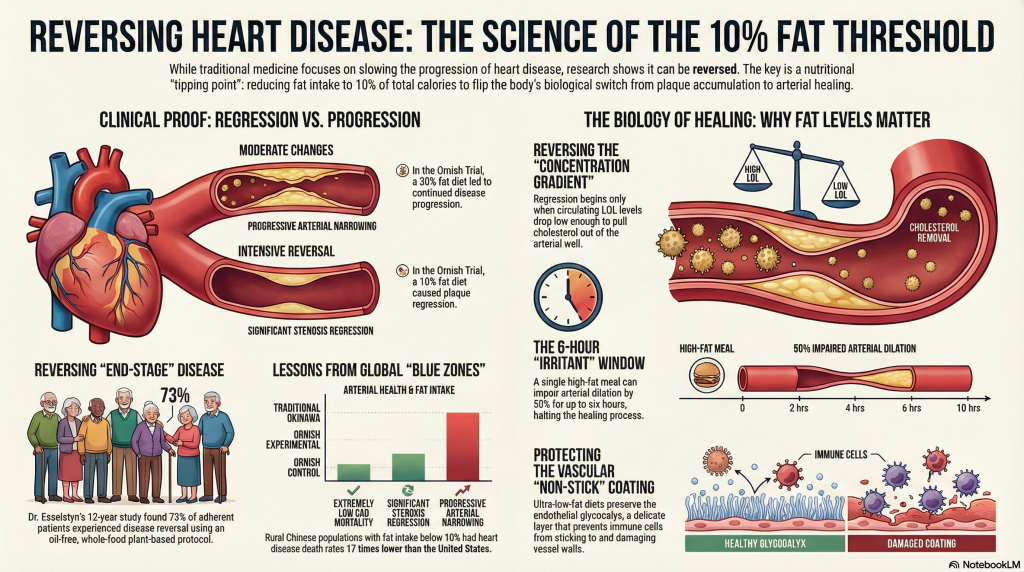
A famous study called the Ornish Lifestyle Heart TrialA randomized controlled trial led by Dean Ornish that tested whether a comprehensive lifestyle program—including a very low-fat, whole-food, plant-based diet, moderate exercise, stress management, and social support—could halt or reverse coronary atherosclerosis without lipid-lowering drugs; 82% of intervention participants showed measurable plaque regression at one year. proved this. Researchers looked at two groups of people. One group made moderate changes. The other group went “all in” with a diet where only 10% of their calories came from fat.

The results after one year and five years were clear:

Time Frame Experimental Group (10% Fat) Control Group (30% Fat Diet)
After 1 Year Arteries began to open (Healing) Arteries became more clogged
After 5 Years Healing continued and stayed open Clogging got much worse

Think of your arteries like the kitchen pipes in your home. If you pour grease down the drain every day, the pipes clog. If you decide to pour “less” grease, the pipes still get clogged—it just takes a little longer. To actually clear the pipes, you have to stop the grease entirely.

Standard health advice often suggests a diet with 30% fat. But in this study, the 30% group actually got sicker. Their arteries continued to narrow. This shows that your body needs a very clean environment to start the healing process. “Moderate” changes just don’t provide the “why” your body needs to start fixing the damage.

3. The Great Escape: Reversing the Cholesterol Flow

To reverse heart diseasePlaque regression means existing plaque actually gets smaller, rather than just growing more slowly., we have to understand how cholesterolCholesterol is a waxy substance your body needs. It goes into cell walls, hormones, vitamin D, and the bile that digests your food. You would die without it. moves. Imagine a very crowded room. If the hallway outside the room is empty, people will naturally walk out of the room to find more space. But if the hallway is also packed with people, everyone stays stuck where they are.

Your arteries work the same way. When you have too much “bad” cholesterol (LDLLDL, or low-density lipoprotein, is the main particle that carries cholesterol through your blood — and the main one that gets stuck in artery walls.) in your blood (the hallway), it pushes its way into your arteryAn artery is a blood vessel that carries blood away from the heart to the rest of the body. walls (the room). Once it gets inside the wall, it gets stuck. This is how a clog starts.

But if you can get the cholesterol in your blood very low—specifically below 70 mg/dL—the pressure changes. Suddenly, the “hallway” is empty. The cholesterol trapped in your artery walls finally has room to move out and back into the blood to be cleared away. This is the “holy grail” of heart health.

The Broken Vacuum Cleaner When cholesterol gets stuck in the wall, it doesn’t just sit there. It “spoils” like old milk. Your body sends in a cleanup crew called macrophagesA macrophage is a large immune cell that swallows debris and invaders. The name literally means "big eater.". Think of these like little vacuum cleaners. They try to suck up the spoiled cholesterol, but they eat so much of it that they “break” and die. These broken vacuum cleaners are called foam cellsThe necrotic core is the dead, mushy center of an advanced plaque, built from immune cells that ate trapped cholesterol and then died in place.. They stay stuck in the wall and make the clog even bigger and more dangerous.

Dr. Caldwell Esselstyn showed that we can stop this process. He worked with patients who were told they were “end-stage” and had no hope. By using an oil-free, plant-based diet, he saw incredible results.

“By maintaining total serum cholesterol below 150 mg/dL and LDL cholesterol below 80 mg/dL through nutrition alone, 73% of adherent patients experienced disease reversal.”

4. The 6-Hour “Glitch”: Why There Are No “Cheat Meals”

Many people ask, “Can’t I just have one burger on the weekend?” To your heart, a high-fat meal is like a “reset button” that stops the healing process in its tracks.

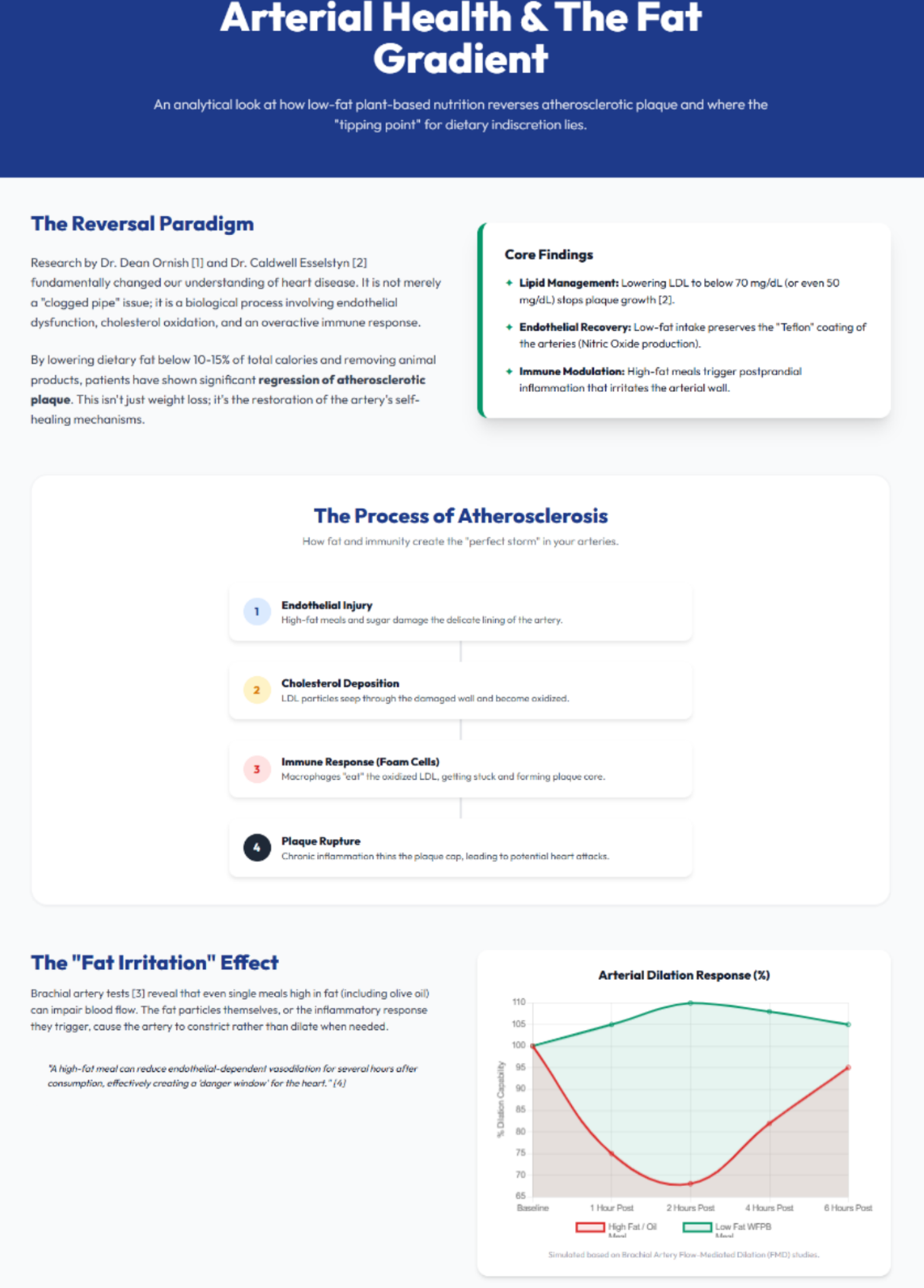
When you eat a meal high in fat—even “healthy” oils—your blood vessels go through a “6-hour glitch.” For six hours after that meal, your arteries become stiff and sluggish.

Nitric OxideNitric oxide is a gas your blood vessel lining makes to tell the vessel to relax and widen.: Your Heart’s Gas Pedal Your arteries produce a miracle molecule called Nitric Oxide. Think of Nitric Oxide as the “gas pedal” that tells your arteries to open wide and let blood flow. It also acts like a “non-stick” spray that keeps your blood moving smoothly. When you eat fat, it acts like a “brake” on that gas pedal. It stops the Nitric Oxide from working. For six hours, your arteries can’t open up properly.

The Wet Cement Analogy Imagine a construction crew trying to fix a giant hole in a road. They pour the wet cement and start to smooth it out. But then, a big truck drives right over the wet cement. The crew has to stop, wait for the truck to pass, and start all over again.

Because most people eat three or four times a day, their arteries are never out of this “glitch” state. If you eat a fatty breakfast, lunch, and dinner, your “construction crew” never gets to finish the job. Your arteries stay irritated and inflamed all day and all night. One single “cheat meal” can ruin a whole day of healing.

5. Your Arteries’ Secret “Non-Stick” Coating

Your arteries are supposed to be slippery. On the inside of your blood vessels, there is a very thin, gel-like layer called the glycocalyxThe endothelial glycocalyx is a thin, gel-like layer of glycoproteins and proteoglycans lining the inner surface of blood vessels; it acts as a selective barrier that limits direct contact between circulating lipoproteins and the arterial wall, and is vulnerable to disruption by disturbed or high-velocity blood flow.. Think of this like the non-stick coating on a brand-new frying pan. When this coating is healthy, cholesterol and “foam cellsA foam cell is an immune cell that has eaten so much trapped cholesterol that it swells up and looks foamy under a microscope.” just slide right past the artery wall without sticking.

But high-fat meals act like a metal scrubber on that pan. They “shed” or “melt” this protective layer away. Once the non-stick coating is gone, your arteries become “sticky.” Now, the bad cholesterol can easily grab onto the wall and start building a clog.

The “Germ Mistake” (MetaflammationA chronic, low-grade inflammatory state driven by excess nutrients—particularly saturated fat—that activates innate immune receptors such as TLR4, producing sustained cytokine signaling in the absence of infection; distinct from classical acute inflammation.) When you eat a lot of fat, your body makes a big mistake. It sees the fat as a dangerous threat, like a germ or a virus. This sets off an “intruder alarm” in your body called TLR4.

This alarm causes “metaflammation.” It’s like your body is calling the fire department because you burned a piece of toast. It creates a huge, inflammatory mess for no reason. This inflammationInflammation is your immune system's response to injury or something it treats as an invader. It brings swelling, heat, and cleanup cells. makes the clogs in your heart “angry” and unstable. It makes them much more likely to pop or cause a heart attackA heart attack happens when blood flow to part of the heart muscle is cut off and that muscle starts to die.. Keeping that “non-stick” coating healthy is the best way to keep your heart safe.

6. Lessons from the “Blue Zones”: Purple Potatoes and Rural Fields

We don’t have to guess if this works. We can look at people around the world who live their whole lives without heart disease. In places like traditional Okinawa and rural China, heart disease was almost never seen.

These people didn’t have special medicine. They just didn’t “irritate” their arteries three times a day.

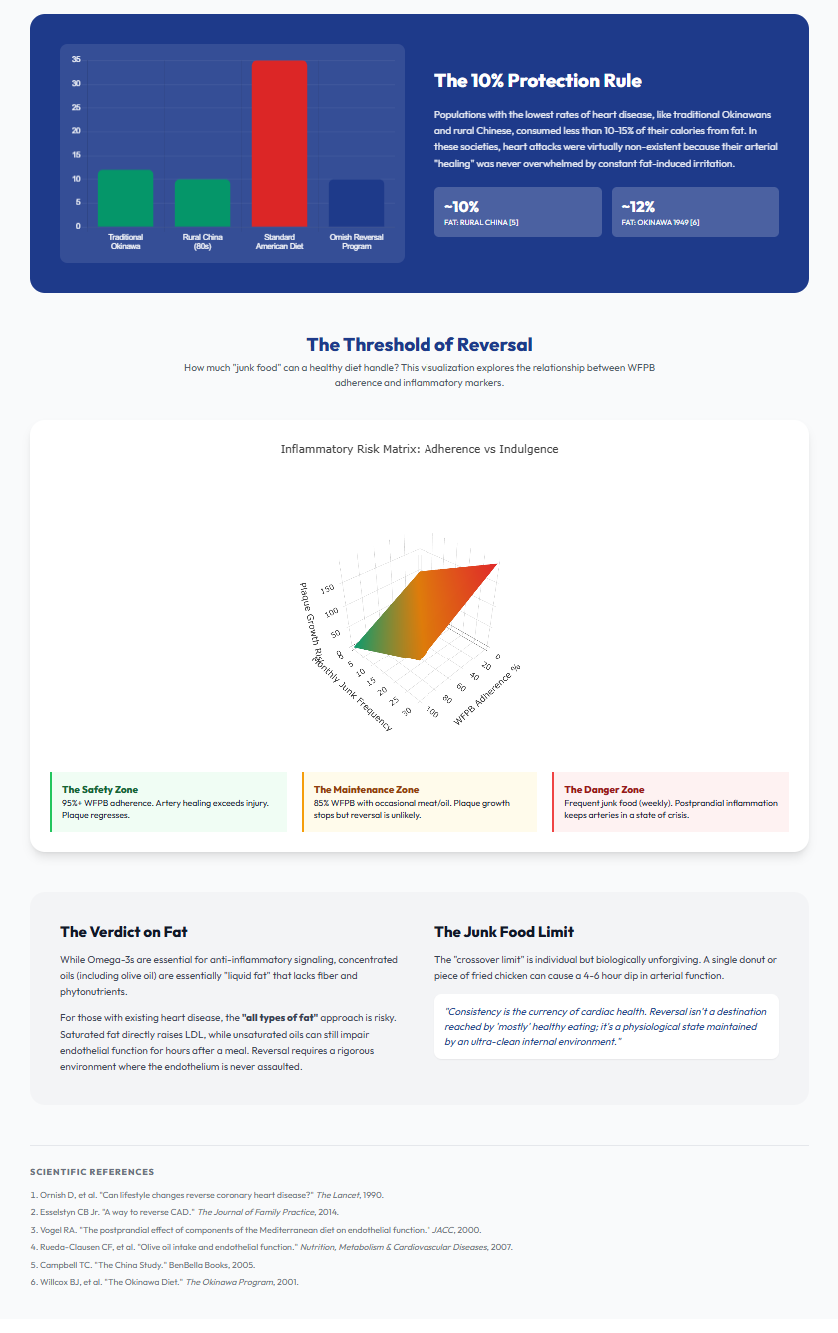
Population Fat Intake Main Food Source Heart Disease Death Rate
Rural China Less than 10% Grains and Beans 17 times lower than the USA
Traditional Okinawa 6% Purple Sweet Potatoes Extremely Low
Modern USA 35% or more Refined Sugars and Fats High

In rural China, the death rate from heart disease was 17 times lower than in the United States. That is a massive difference! In Okinawa, people lived on purple sweet potatoes. Their diet was very high in healthy carbs but very, very low in fat. Because they stayed under that 10% fat limit, their “non-stick” coating stayed perfect, and their “gas pedal” (Nitric Oxide) was always working.

7. The 10% Threshold: The Line Between Fixing and Managing

There is a big difference between “managing” a disease and “fixing” it. This is what modern medicine often gets wrong. As noted in the research:

“The management of coronary artery disease (CAD) has traditionally been viewed through the lens of ‘risk management’… this approach primarily addresses late-stage manifestations—the ‘downstream’ consequences—rather than the ‘upstream’ cellular and molecular drivers.”

If you want to just slow down the damage, a “mostly plant-based” diet might help. But if you want to reverse the damage, you have to cross a line. That line is 10% fat.

When you keep your total fat at or below 10%, and you cut out all added oils, you create a “safe zone.” In this zone, your LDL drops low enough to pull junk out of your walls. Your non-stick coating can regrow. Your “construction crew” can finally finish fixing the road.

This might sound hard, but it’s actually a series of small, simple swaps. Instead of cooking with oil, you use vegetable broth or water. Instead of creamy, fatty dressings, you use balsamic vinegar or lemon. These small wins add up to a big victory for your heart. When you weigh the “sacrifice” of oil against the reward of a healthy, open heart, the choice becomes easy.

8. Conclusion: A New Blueprint for Your Heart

The most important thing to remember is that your body is not your enemy. Your body actually wants to heal. If you scrape your knee, it heals. If you break a bone, it mends. Your arteries want to do the exact same thing. The only reason they don’t is that we usually “irritate” them faster than they can repair themselves.

By following the 10% rule, you are giving your heart the blueprint it needs to rebuild. You are moving from a state of “constant damage” to a state of “true health.” You are no longer just pressing the brakes; you are putting your life in reverse and moving away from danger.

You now have a powerful choice to make. Do you want to spend the rest of your life “managing” a disease that is slowly getting worse? Or do you want to start the journey toward unclogging your future? Your heart is waiting for your answer.

Deep Dive

1. Introduction: Challenging the Paradigm of Permanent Progression

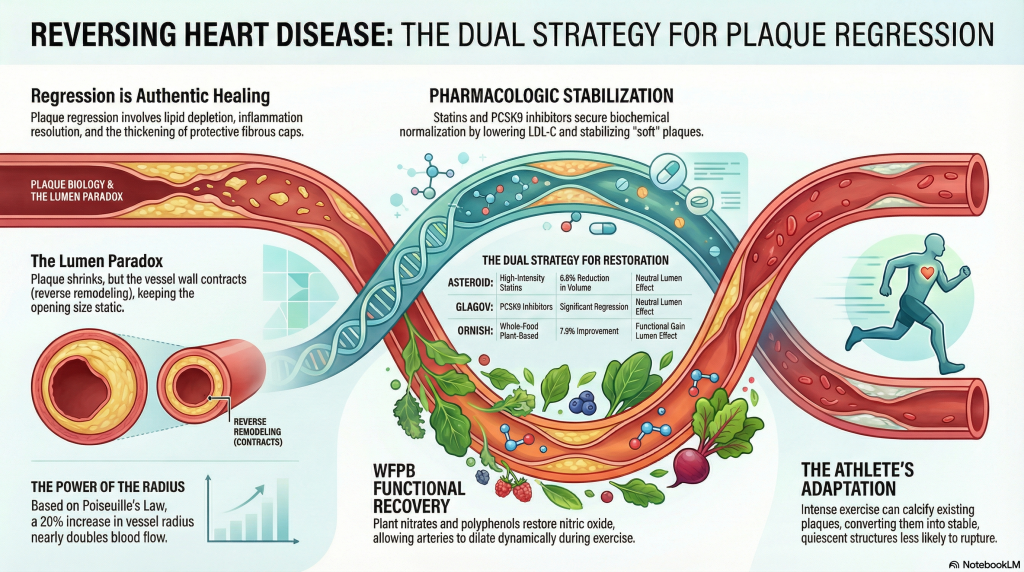
The management of coronary artery diseaseCoronary artery disease is plaque buildup in the arteries feeding the heart muscle. (CAD) has traditionally been viewed through the lens of “risk management.” In this paradigm, pharmacological interventions such as statinsA statin slows the enzyme your liver uses to make cholesterol. Your liver responds by pulling more cholesterol out of your blood, which is where the real benefit comes from. and procedural approaches such as Percutaneous Coronary Intervention (PCI)Percutaneous coronary intervention is a minimally invasive procedure, commonly known as angioplasty with or without stenting, in which a catheter is used to open a blocked coronary artery; it is included in the article as one of the four components of the composite major CVD endpoint tracked in the Nurses' Health Study analysis. or Coronary Artery Bypass Grafting (CABG)CABG is an open-heart surgical procedure in which a surgeon uses a blood vessel harvested from elsewhere in the body—typically a leg vein or chest-wall artery—to create a new route for blood flow around a blocked coronary artery. are deployed to slow the expected progression of disease. However, these approaches primarily address late-stage manifestations—the “downstream” consequences—rather than the “upstream” cellular and molecular drivers of plaquePlaque is the buildup of cholesterol, immune cells, scar tissue, and calcium inside an artery wall. formation and instability [1], [9].

The emerging clinical consensus among lifestyle medicineLifestyle medicine uses everyday behavior — food, movement, sleep, stress, not smoking — to prevent and treat disease. researchers is that CAD is not an inevitable consequence of aging, but a reversible condition strongly modulated by nutritional choices. Central to this reversalREVERSAL compared moderate and intensive statin therapy, using intravascular ultrasound to measure what happened to coronary plaque. is the implementation of an ultra-low-fat (approximately 10% of total calories), oil-free, whole-food plant-based (WFPB) diet [3], [7]. This report examines why the 10% threshold is biologically meaningful and how modern dietary “indiscretions” can halt—or reverse—the healing trajectory of the arterial wall.

2. The Quantitative Foundations of Coronary Reversal

The clinical validation of atherosclerotic regressionThe measurable reduction in the size or lipid content of coronary artery plaques, documented by angiography or imaging; it requires a sustained biochemical environment of low circulating LDL and low inflammatory signaling so that cholesterol efflux from the arterial wall exceeds influx. was established most rigorously by the Lifestyle Heart TrialThe Lifestyle Heart Trial, led by Dean Ornish, was a small randomized study testing an intensive lifestyle intervention — very low-fat plant-based diet, exercise, stress management, and group support — using serial coronary angiography; the intervention group's measured arterial narrowing improved slightly while controls worsened, but technical limitations of angiography, reference-segment narrow…, a landmark prospective, randomized controlled study designed to test whether intensive lifestyle modification could affect the progression of coronary lesionsIn cardiology, a lesion refers to a discrete area of atherosclerotic plaque narrowing a coronary artery, typically described by the percentage of luminal obstruction it causes. The article describes four residual lesions too small in vessel diameter to accept a stent after the most critical one was treated. without lipid-lowering medications [1].

2.1 The Ornish Lifestyle Heart TrialA randomized controlled trial led by Dean Ornish that tested whether a comprehensive lifestyle program—including a very low-fat, whole-food, plant-based diet, moderate exercise, stress management, and social support—could halt or reverse coronary atherosclerosis without lipid-lowering drugs; 82% of intervention participants showed measurable plaque regression at one year.

The experimental group in this trial adhered to a nutritional protocol consisting of a 10% fat whole-foods vegetarian dietA vegetarian diet excludes meat, and a vegan diet excludes all animal products., supplemented by aerobic exerciseAerobic exercise is steady activity that gets you breathing harder for a while, like walking fast, cycling, swimming, or jogging., stress management training, and smokingSmoking damages the lining of your blood vessels, raises blood pressure, makes blood clot more easily, and speeds up plaque growth. cessation [1], [3]. Using quantitative coronary angiographyQuantitative coronary angiography is a way of measuring artery narrowing precisely from angiogram images, rather than eyeballing it. (QCA), investigators demonstrated a clear divergence between the experimental and control groups.
In the first year, the experimental group showed an average diameter stenosisDiameter stenosis is an angiographic measure of how much a coronary artery's lumen has been narrowed by plaque, expressed as a percentage of the vessel's original diameter; it is used in clinical trials as an objective marker of plaque progression or regression. regression from 40.0% to 37.8%. In contrast, the control group—following a “moderate” 30% fat diet consistent with standard recommendations at the time—showed progression from 42.7% to 46.1% [1]. When extended to five years, the experimental group sustained regression to 37.3%, while the control group worsened to 51.9% [5]. This finding underscores that “moderate” changes do not yield moderate regression; in advanced disease, they often yield no regression at all [6].

2.2 The Esselstyn Longitudinal StudyA research design that follows the same individuals over an extended period to observe how exposures or traits at one time point relate to outcomes—such as mortality—years or decades later.

Dr. Caldwell Esselstyn’s work at the Cleveland Clinic further refined the WFPB protocol by removing all oils and animal products entirely. His 12-year longitudinal study followed patients with advanced CAD who had been told they were “end-stage.” By maintaining total serum cholesterolCholesterol is a waxy substance your body needs. It goes into cell walls, hormones, vitamin D, and the bile that digests your food. You would die without it. below 150 mg/dL and LDL cholesterolLDL cholesterol, or LDL-C, is the amount of cholesterol sitting inside your LDL particles. It is the number on almost every standard lab report. below 80 mg/dL through nutrition alone, 73% of adherent patients experienced disease reversal as assessed by angiography and clinical outcomes [2].

Study Cohort Intervention Type Baseline StenosisStenosis is narrowing — usually described as a percentage, like a 70 percent blockage. (%) Outcome
Ornish Experimental 10% Fat WFPB + Lifestyle 40.0 Significant Regression [1]
Ornish Control Standard Care (~30% Fat) 42.7 Progressive Stenosis [1]
Esselstyn Cohort Oil-Free WFPB Diet Severe Cessation of AnginaAngina is chest discomfort that happens when the heart muscle isn't getting enough oxygen. People describe it as pressure, tightness, squeezing, or burning, and it can spread to the arm, neck, or jaw. / Regression [2]
CORDIOPREVCORDIOPREV compared a Mediterranean diet against a low-fat diet in people who already had coronary disease, following them for seven years. Mediterranean vs Low-Fat (Secondary PreventionSecondary prevention is treating someone who has already had a heart attack, stroke, or stent, to stop the next one.) CHD baseline Reduced events vs comparator diet [8]

3. The Lipid–Immune Interface: Mechanisms of Plaque Stability

To understand why fat must be restricted so severely for regression, one must appreciate the “concentration gradient” across the arterial wall. Atherosclerotic plaque is initiated by the retention, accumulation, and modification of low-density lipoproteinA lipoprotein is a tiny package that carries fat and cholesterol through your bloodstream. Since fat won't dissolve in water, it needs a protein wrapper to travel. (LDLLDL, or low-density lipoprotein, is the main particle that carries cholesterol through your blood — and the main one that gets stuck in artery walls.) particles within the sub-endothelial space [9], [10].

3.1 The Concentration Gradient and Efflux

When circulating LDL levels are high, the gradient favors movement of LDL into the arterial wall. Once retained, LDL becomes modified through oxidation and related biochemical processes [9]. Modified LDL is recognized by the innate immune system as a danger signal. Monocytes are recruited and differentiate into macrophagesA macrophage is a large immune cell that swallows debris and invaders. The name literally means "big eater.", which ingest modified LDL and become lipid-laden “foam cellsA foam cell is an immune cell that has eaten so much trapped cholesterol that it swells up and looks foamy under a microscope.,” a hallmark of plaque development [10].
Regression becomes possible when circulating LDL falls low enough (often below ~70 mg/dL) that the gradient reverses, enabling net efflux of cholesterol out of the arterial wall through Reverse Cholesterol TransportReverse cholesterol transport is the process of moving cholesterol out of tissues, including artery walls, and back to the liver for disposal. HDL particles do the hauling. [4]. In clinical practice, an ultra-low-fat dietary pattern is often necessary to achieve these LDL levels without high-dose statin dependence [2].

3.2 MetaflammationA chronic, low-grade inflammatory state driven by excess nutrients—particularly saturated fat—that activates innate immune receptors such as TLR4, producing sustained cytokine signaling in the absence of infection; distinct from classical acute inflammation. and TLR4

High-fat meals do more than elevate LDL; they can initiate “metaflammation.” Saturated fatty acids (SFAs)Saturated fatty acids are fat molecules with no carbon-carbon double bonds, found abundantly in butter, coconut oil, and fatty meat; they raise LDL cholesterol and ApoB-containing lipoprotein levels more than unsaturated plant oils, which is why replacing them with unsaturated fats is a central public-health recommendation. can activate Toll-like receptor 4 (TLR4), a pattern-recognition receptor best known for detecting microbial toxins [11]. TLR4 activation promotes NF-κB signaling and increases cytokine production such as IL-6Interleukin-6, or IL-6, is a signaling molecule the immune system uses to spread an inflammatory message through the body. and TNF-α [11]. These inflammatory mediators can destabilize plaque by weakening the fibrous capThe fibrous cap is the tough layer of tissue covering a plaque, separating its greasy core from the bloodstream., increasing vulnerability to rupture and thrombosisThrombosis is a blood clot forming inside a blood vessel. [9].

4. The “Irritant” Effect: Endothelial Dysfunction

Patients commonly describe a feeling of “irritation” or “sluggishness” after high-fat meals. This is not merely subjective; it reflects acute endothelial dysfunctionEndothelial dysfunction is when that thin lining stops doing its job well. Vessels don't widen properly, and the barrier gets leakier..

4.1 Nitric Oxide BioavailabilityThe degree to which the endothelium can produce and maintain adequate levels of nitric oxide, a signaling molecule that keeps blood vessels dilated, inhibits platelet clumping, and prevents inflammatory cells from adhering to the arterial wall.

The endotheliumThe endothelium is the ultra-thin, slippery lining on the inside of every blood vessel. It is only one cell thick.—the single-cell layer lining blood vessels—produces Nitric OxideNitric oxide is a gas your blood vessel lining makes to tell the vessel to relax and widen. (NO), a key mediator of vasodilation and vascular “non-stick” signaling. NO reduces leukocyte adhesionThe process by which white blood cells attach to the endothelial surface of blood vessels, a key early step in atherogenesis; nitric oxide and an intact glycocalyx normally suppress this adhesion. and platelet activation, helping maintain an anti-atherogenic surface [13].
After a high-fat meal (including meals high in animal fat or refined plant oils), triglyceride-rich lipoproteins rise in circulation, producing postprandial lipemiaPostprandial lipemia is the surge of fat particles in your blood in the hours after eating a meal containing fat. and increased oxidative stressOxidative stress is an imbalance between damaging reactive molecules and the body's ability to neutralize them. [14]. Reactive oxygen speciesReactive oxygen species are unstable oxygen-containing molecules produced as a by-product of normal metabolism. neutralize NO, converting it into peroxynitriteA reactive nitrogen species formed when nitric oxide is neutralized by superoxide radicals; its production during postprandial oxidative stress sharply reduces the bioavailable nitric oxide needed for arterial dilation and anti-atherogenic vascular function. and sharply reducing functional vasodilatory signaling [12], [13].

4.2 Flow-Mediated Dilation (FMD)Flow-mediated dilation is a non-invasive ultrasound measurement of how much a conduit artery — typically the brachial artery — widens in response to increased blood flow, serving as a marker of endothelial nitric oxide signaling and endothelial function.

Flow-Mediated Dilation (FMD) studies show that within approximately 2 to 4 hours of a single high-fat meal, arterial dilation capacity can decline by roughly 50% [13]. This impairment can persist for up to 6 hours. With multiple high-fat meals per day, the vasculature can remain in a near-continuous state of impaired dilation and inflammatory tone [14].

5. The Biological Barrier: The Endothelial Glycocalyx

A critical but often overlooked component of vascular health is the endothelial glycocalyxThe endothelial glycocalyx is a thin, gel-like layer of glycoproteins and proteoglycans lining the inner surface of blood vessels; it acts as a selective barrier that limits direct contact between circulating lipoproteins and the arterial wall, and is vulnerable to disruption by disturbed or high-velocity blood flow.—a delicate, gel-like surface layer that coats the luminal side of blood vessels. It functions as both a mechanotransducer and a physical barrier limiting LDL and immune cell interactions with endothelial membranes [15], [19].
When intact, the glycocalyxThe glycocalyx is a delicate sugar-rich coating on the inner surface of blood vessels, a kind of gel layer between the blood and the cells. reduces leukocyte adhesion and helps prevent LDL infiltration. However, metabolic stressors such as hyperglycemiaAbnormally elevated blood glucose concentration; included as one of the modifiable risk factors in the PDAY scoring system because it accelerates arterial lesion progression in adolescents and young adults. and inflammatory signals can cause the glycocalyx to shed into circulation [17]. Experimental evidence also demonstrates that exposure to oxidized LDLOxidized LDL is an LDL particle that has been chemically damaged after getting stuck in an artery wall. rapidly reduces glycocalyx thickness, leaving the vessel surface more adhesive and vulnerable to injury [16]. Dietary patterns that drive recurrent postprandialPostprandial means 'after a meal'; postprandial studies measure how the body—including blood vessels, lipid levels, and inflammatory markers—responds in the hours immediately following food consumption, rather than at a fasting baseline. lipemia and oxidative stress can therefore contribute to glycocalyx dysfunction and impaired vascular recovery [18]. Restoration of glycocalyx integrity is a plausible mechanistic target of sustained ultra-low-fat, whole-food nutritional protocols [19].

6. Epidemiological Evidence: Lessons from Okinawa and Rural China

The historical diets of Okinawans and rural Chinese provide population-level evidence of the capacity to live with minimal coronary disease.

6.1 The Traditional Okinawan DietThe traditional dietary pattern of Okinawa, Japan—historically comprising approximately 69% sweet potatoes with very low animal product consumption—associated with one of the world's highest concentrations of centenarians.

Before Westernization, Okinawans had among the highest life expectancy and lowest rates of cardiovascular diseaseCardiovascular disease is the umbrella term for problems with the heart and blood vessels, including heart attacks, strokes, and blocked leg arteries. globally [21]. Analyses of their traditional pre-1960 diet indicate macronutrient distribution of approximately 85% carbohydrateCarbohydrates are the sugars and starches in food — bread, rice, pasta, fruit, potatoes, sweets., 9% proteinProtein is the nutrient your body uses to build and repair muscle and tissue., and 6% fat [21]. The primary staple was the purple sweet potato, rich in fiberFiber is the part of plant food your body cannot digest. It is found in beans, oats, vegetables, fruit, and whole grains. and antioxidantAn antioxidant is a substance that mops up damaging molecules in the body. Vitamin E and beta-carotene are examples. phytochemicals [21].

6.2 The China StudyA 2005 book by T. Colin Campbell summarizing decades of epidemiological research, including the China-Cornell-Oxford Project, that links diets high in animal protein and fat to higher rates of chronic disease including cardiovascular disease; it is widely cited in plant-based nutrition literature.

In rural China during the 1970s and 1980s, investigators reported that in some counties the death rate from heart disease was extremely low [20]. Average fat intake was often below 10%, and mean serum cholesterol was approximately 127 mg/dL—levels considered “low” by Western standards, yet associated with markedly reduced rates of Western chronic disease patterns [20].

Population Fat Intake (%) Primary Carb CAD Mortality (vs US)
Rural China <10 Grains/Legumes 1/17th [20]
Traditional Okinawa 6 Sweet Potato Extremely Low [21]
Modern USA 35+ Refined Sugars High [21]

7. The “Crossover Limit”: The Danger of Nutritional Indiscretion

A common question is whether a “cheat meal”—such as fried chicken or a donut—is truly damaging. From the standpoint of regression biology, these indiscretions can temporarily halt arterial healing and reintroduce biochemical conditions that favor dysfunction.

  1. The 6-Hour Window: A single high-fat meal can induce approximately 6 hours of impaired endothelial responsiveness [12], [13].
  2. Glycocalyx Damage: Metabolic stressors—including hyperglycemia and oxidative stress—promote shedding of the protective glycocalyx [17], [18].
  3. Immune Re-Activation: For a patient in a “cooling” phase of plaque stabilizationPlaque stabilization is making an existing plaque less likely to crack open — thickening its cap, shrinking its greasy core, and calming the inflammation inside it., a high-fat meal may re-activate TLR4 signaling and amplify inflammatory cascades that undermine cap stability [11].
    For individuals with severe CAD, the “crossover limit” is low. Regression requires a stable biochemical environment. Frequent dietary “cheats” can prevent sustained low LDL and low inflammatory pressure, limiting the body’s ability to clear lipid burden from lesions and restore endothelial functionThe ability of the inner lining of blood vessels to regulate vascular tone, inflammation, and clotting; healthy endothelial cells release nitric oxide to keep arteries relaxed and resistant to plaque formation. [2], [4].

8. Strategic Conclusions and Clinical Synthesis

The evidence from clinical trialsA clinical trial is a study where researchers give one group a treatment and another group a placebo or standard care, then compare what happens., epidemiological observation, and vascular biology supports the conclusion that the 10% fat threshold can be a critical determinant of atherosclerotic regression. Moderate-fat diets (25–30% fat) may support primary preventionPrimary prevention is treating someone who has never had a heart attack or stroke, to keep the first one from happening. and risk reduction, but often lack the biochemical intensity required for regression in established lesions [7], [8].
The vascular “irritation” described by patients reflects real postprandial physiology: oxidative stress, impaired nitric oxide bioavailability, and endothelial surface layer vulnerability. For the patient seeking regression, the clinical objective is a sustained environment of low LDL, reduced inflammatory signaling, and minimal postprandial lipid burden. This is achieved through a nutritional pattern that is not merely “mostly plants,” but strictly low in total fat and free of refined oils [2], [3]. By addressing root drivers—cholesterol retention and immune activation—rather than managing symptoms alone, an ultra-low-fat WFPB protocol provides a credible, non-surgical pathway toward comprehensive cardiovascular health.

References

  1. Ornish D, Brown SE, Scherwitz LW, et al. Can lifestyle changes reverse coronary heart disease? The Lifestyle Heart Trial. Lancet. 1990;336(8708):129-133. doi:10.1016/0140-6736(90)91656-u
  2. Esselstyn CB Jr, Ellis SG, Medendorp SV, Crowe TD. A strategy to arrest and reverse coronary artery disease: a 5-year longitudinal study of a single physician’s practice. J Fam Pract. 1995;41(6):560-568.
  3. Ornish D, Scherwitz LW, Billings JH, et al. Intensive lifestyle changes for reversal of coronary heart disease. JAMA. 1998;280(23):2001-2007. doi:10.1001/jama.280.23.2001
  4. Roberts WC. It’s the cholesterol, stupid!. Am J Cardiol. 2010;106(9):1364-1366. doi:10.1016/j.amjcard.2010.09.022
  5. Gould KL, Ornish D, Scherwitz L, et al. Changes in myocardial perfusion abnormalities by positron emission tomography after long-term, intense risk factor modification. JAMA. 1995;274(11):894-901. doi:10.1001/jama.1995.03530110056036
  6. Varady KA, Lamarche B, Santosa S, Demonty I, Charest A, Jones PJ. Effect of weight loss resulting from a combined low-fat diet/exercise regimen on low-density lipoprotein particle size and distribution in obese women. Metabolism. 2006;55(10):1302-1307. doi:10.1016/j.metabol.2006.05.014
  7. Choi EY, Allen K, McDonnough M, Massera D, Ostfeld RJ. A plant-based diet and heart failure: case report and literature review. J Geriatr Cardiol. 2017;14(5):375-378. doi:10.11909/j.issn.1671-5411.2017.05.003
  8. Delgado-Lista J, Alcala-Diaz JF, Torres-Peña JD, et al. Long-term secondary prevention of cardiovascular disease with a Mediterranean diet and a low-fat diet (CORDIOPREV): a randomised controlled trial. Lancet. 2022;399(10338):1876-1885. doi:10.1016/S0140-6736(22)00122-2
  9. Libby P. The changing landscape of atherosclerosis. Nature. 2021;592(7855):524-533. doi:10.1038/s41586-021-03392-8
  10. Glass CK, Witztum JL. Atherosclerosis. the road ahead. Cell. 2001;104(4):503-516. doi:10.1016/s0092-8674(01)00238-0
  11. Rocha VZ, Libby P. Obesity, inflammation, and atherosclerosis. Nat Rev Cardiol. 2009;6(6):399-409. doi:10.1038/nrcardio.2009.55
  12. Rouyer O, Auger C, Charles AL, et al. Effects of a High Fat Meal Associated with Water, Juice, or Champagne Consumption on Endothelial Function and Markers of Oxidative Stress and Inflammation in Young, Healthy Subjects. J Clin Med. 2019;8(6):859. Published 2019 Jun 15. doi:10.3390/jcm8060859
  13. Lefèbvre PJ, Scheen AJ. The postprandial state and risk of cardiovascular disease. Diabet Med. 1998;15 Suppl 4:S63-S68. doi:10.1002/(sici)1096-9136(1998120)15:4+3.3.co;2-z
  14. Plotnick GD, Corretti MC, Vogel RA. Effect of antioxidant vitamins on the transient impairment of endothelium-dependent brachial artery vasoactivity following a single high-fat meal. JAMA. 1997;278(20):1682-1686.
  15. Milusev A, Rieben R, Sorvillo N. The Endothelial Glycocalyx: A Possible Therapeutic Target in Cardiovascular Disorders. Front Cardiovasc Med. 2022;9:897087. Published 2022 May 13. doi:10.3389/fcvm.2022.897087
  16. Vink H, Constantinescu AA, Spaan JA. Oxidized lipoproteins degrade the endothelial surface layer : implications for platelet-endothelial cell adhesion. Circulation. 2000;101(13):1500-1502. doi:10.1161/01.cir.101.13.1500
  17. Nieuwdorp M, van Haeften TW, Gouverneur MC, et al. Loss of endothelial glycocalyx during acute hyperglycemia coincides with endothelial dysfunction and coagulation activation in vivo. Diabetes. 2006;55(2):480-486. doi:10.2337/diabetes.55.02.06.db05-1103
  18. Calles-Escandon J, Cipolla M. Diabetes and endothelial dysfunction: a clinical perspective. Endocr Rev. 2001;22(1):36-52. doi:10.1210/edrv.22.1.0417
  19. Broekhuizen LN, Lemkes BA, Mooij HL, et al. Effect of sulodexide on endothelial glycocalyx and vascular permeability in patients with type 2 diabetes mellitus. Diabetologia. 2010;53(12):2646-2655. doi:10.1007/s00125-010-1910-x
  20. Gates JR, Parpia B, Campbell TC, Junshi C. Association of dietary factors and selected plasma variables with sex hormone-binding globulin in rural Chinese women. Am J Clin Nutr. 1996;63(1):22-31. doi:10.1093/ajcn/63.1.22
  21. Willcox BJ, Willcox DC, Todoriki H, et al. Caloric restriction, the traditional Okinawan diet, and healthy aging: the diet of the world’s longest-lived people and its potential impact on morbidity and life span. Ann N Y Acad Sci. 2007;1114:434-455. doi:10.1196/annals.1396.037

Transparency Note: This blog post was created with assistance from AI tools. The final content has been carefully reviewed and edited by the author, who is responsible for its accuracy. The information provided is for educational purposes only and does not constitute medical advice.

AI App

Heart Risk Calulator

Educational family-history heart risk calculator with H-score insights, visual family tree input and shareable PDF reports.

Read why this app is so important here.