علم الأمراض المقارن لتصلب الشرايين لدى الرئيسيات غير البشرية
استعراض نقدي تاريخي لتطور الحالة، والاستقرار، والتراجع، وديناميكيات اللويحات الدهنية (1950–1995)
Executive Summary
نموذج تصلب الشرايين في منتصف القرن العشرين، انتقلت النظرة إلى هذه الحالة من اعتبارها نتيجة حتمية وتدريجية للشيخوخة إلى فهمها على أنها مرض التهابي ديناميكي مدفوع بالدهون، يمكن بيولوجيًا تحقيق تراجع كبير في أعراضه واستقرار حالته في ظل بعض الظروف التجريبية. وقد تم إثبات معظم الأدلة الأساسية لهذا التحول من خلال نماذج من الرئيسيات غير البشرية التي تم تطويرها بين عام 1950 وأواخر الثمانينيات. وبالمقارنة مع العديد من نماذج القوارض والأرانب الشائعة الاستخدام، تتمتع بعض الرئيسيات غير البشرية المختارة بـ بروتين دهني الأيض،, أبروليپوبروتين بأبوبروتين ب) وعلم الأحياء، وتشريح الشرايين التاجية، والتي تقترب بشكل أكبر من السمات المهمة لتصلب الشرايين لدى البشر. تستعرض هذه الدراسة العلمية المستندة إلى الأسس التاريخية تطور وتثبيت وتراجع تصلب الشرايين الناجم عن النظام الغذائي لدى عدة أنواع من الرئيسيات، بما في ذلك قرود المكاك الريسوس, cynomolgus macaques, ، والقرود الخضراء الأفريقية، والبابون، وقرود السناجب.
تُظهر هذه الدراسات التاريخية أن بعض أنواع الرئيسيات غير البشرية تُصاب بأمراض شريانية تاجية معقدة تشبه تلك التي تصيب البشر لوحات يضم أغطية ليفية, الأنوية النخرية الغنية بالدهون, ، وإعادة تشكيل المصفوفة خارج الخلية، و تکلس. عفوي احشاء عضلة القلب كما تم الإبلاغ عن ذلك، وإن كان ذلك أقل شيوعًا بكثير. علاوة على ذلك، توفر التحليلات المتسلسلة والتحليلات التي تُجرى بعد الوفاة أدلة تجريبية على أن ذلك كان ملحوظًا ومستمرًا عكس من فرط كوليстеロール الدم, ، وهو ما يتحقق من خلال إجراء تعديلات كبيرة في النظام الغذائي، وفي بعض التجارب، من خلال تدخلات إضافية لخفض مستويات الدهون، يمكن أن يؤدي إلى تراجع اللويحة. وفي جميع هذه الدراسات، اتسمت مراحل الانحسار والاستقرار بنضوب مخزونات إستر الكوليسترول في اللويحات داخل الخلايا وخارجها، وبانخفاض المكونات الخلوية والنخرية الغنية بالدهون؛ كما أظهرت الدراسات التي قيمت وظيفة الأوعية الدموية بشكل مباشر تعافي الاستجابات الوعائية الحركية للبطانة. Densely fibrotic and macrocalcific matrix components nevertheless frequently persist, limiting complete anatomical normalization. By evaluating the dietary, kinetic, and methodological parameters of these historical studies, this report provides a translational bridge to modern human studies, outlining both the translational relevance and the biological limits of plaque-regression therapy.
Historical Evolution and Timeline
The systematic study of nonhuman primate atherosclerosis evolved through distinct experimental phases, tracking advancements in analytical biochemistry, histopathology, and imaging technologies. The table below outlines the milestones of this research, detailing how investigators advanced from early observation of vascular lipid deposits to functional, high-resolution evaluations of plaque biology.
| Period | Experimental Focus & Methodological Advancements | Key Pioneering Research Centers | Landmark Scientific Contributions |
| 1950s | Induction of hypercholesterolemia and vascular lipid staining in New World primates; exploration of nutritional deficiencies. | Harvard School of Public Health; Bowman Gray School of Medicine. | Among the early experimental inductions of hypercholesterolemia in New World monkeys; characterization of Cebus and rhesus vascular susceptibility. |
| 1960s | Focus on coronary شريان pathology and natural history; early reports of spontaneous myocardial infarction in hyperlipidemic monkeys. | Northwestern University; Oregon Regional Primate Research Center. | Taylor et al. document fatal diet-induced myocardial infarction in a rhesus macaque [1]. Maruffo & Portman study early coronary changes in squirrel monkeys [2]. |
| 1970s | Morphometric evidence of advanced coronary regression; detailed mapping of plaque lipid phases and matrix changes. | University of Iowa; University of Chicago; LSU Medical Center. | Armstrong et al. provide early morphometric evidence of advanced coronary عصيدي regression in rhesus macaques [3]. Vesselinovitch & Wissler evaluate low-fat diets combined with a pharmacologic lipid-lowering agent (W-1372) [4]. |
| 1980s | Long-term, multi-year kinetic studies of regression; physical-chemical analyses of lipid phase transitions; epidemiological modeling of HDL. | Bowman Gray School of Medicine; Boston University; Southwest Foundation for Biomedical Research. | Clarkson et al. compare long-term regression at plasma total-cholesterol levels near 200 versus 300 mg/dl [5]. Small et al. characterize transient plaque crystallization at 6 months of regression [6]. |
| 1990s | Integration of histomorphometry with quantitative angiography, endothelial reactivity, and compensatory vascular remodeling. | Bowman Gray School of Medicine; LSU Medical Center. | Williams et al. report approximately doubled coronary artery and لومن cross-sectional areas, consistent with favorable عادة إعادة تشكيل خارجية, together with improved وظيفة حركية وعائية [7]. LSU team completes a multi-year study on rhesus plaques [8]. |
Primate Models: Species-Specific Pathobiology and Metabolic Profiles
The selection of a nonhuman primate species in atherosclerosis research is guided by genetic, metabolic, and anatomical considerations. Choosing the correct model is critical, as species differences in lipoprotein transport and arterial susceptibility directly affect the translation of experimental results to human clinical practice.
Rhesus Macaques (Macaca mulatta)
Rhesus macaques are historically the most widely utilized primate model for atherosclerosis research. Under atherogenic dietary challenge, susceptible rhesus macaques can shift from relatively HDL-dominant baseline lipoprotein profiles toward marked enrichment of ApoB-containing lipoproteins, producing a plasma profile that resembles important features of human hyperlipoproteinemia. Rhesus macaques are highly responsive to dietary cholesterol و دهون مشبعة. They reliably develop advanced, concentric, and eccentric coronary plaques that progress to اللب النخري formation, cellular decay, intraplaque hemorrhage, ، والتكلس. وقد تم توثيق حالات احتشاء عضلة القلب التلقائي، على الرغم من أنها ظلت نادرة، في الدراسات طويلة الأمد التي أجريت على قرود الريسوس، مما يجعل هذا النوع نموذجًا رائدًا في مجال الأبحاث السريرية مرض الشريان التاجي.
قرود المكاك السينومولجوس (Macaca fascicularis)
تتميز قرود المكاك السينومولجوس بحساسية شديدة تجاه النظام الغذائي كوليسترول, ، مما يجعلها نموذجًا ممتازًا للتطبيق السريع إصابة التحريض. فهم معرضون للإصابة بآفات متقدمة في الشرايين التاجية تحتوي على نسبة عالية من النسيج الضام، بما في ذلك الكولاجين،, إلاستين, ، و الجليكوسامينوجليكانات, ، بالإضافة إلى تكلس كثيف. كما تُظهر قرود السينومولغوس درجة عالية من الاستجابة للضغوط النفسية والاجتماعية. وقد تم ربط الضغوط النفسية والاجتماعية والمكانة الاجتماعية، من خلال التجارب، بالاختلافات في الشرايين التاجية تكون العصيد الشرياني في هذا النوع، لوحظت هذه الظاهرة بشكل خاص لدى الذكور المهيمنين والإناث الأقل مكانةً اجتماعيًّا، حيث يُقترح أن تنشيط الجهاز العصبي الودي وارتفاع مستوى الكورتيزول في الدم يمثلان آليات عصبية-هرمونية تسهم في هذه الظاهرة بشكل يتجاوز تأثير تركيزات الدهون في الدم. وهذا يجعلها نموذجًا قيّمًا لدراسة العلاقة بين الإجهاد النفسي والاجتماعي وأمراض الأوعية الدموية.
القرود الخضراء الأفريقية (Chlorocebus aethiops)
تتميز القرود الخضراء الأفريقية (القرود الفيرفيت) بعملية استقلاب للبروتينات الدهنية تتسم بحساسية شديدة تجاه التركيب المحدد للأحماض الدهنية في النظام الغذائي. وعندما تُغذى هذه القرود بأطعمة تحتوي على أحماض دهنية أحادية غير مشبعة مقارنةً بالأطعمة التي تحتوي على أحماض دهنية مشبعة أو دهون متعددة غير مشبعة, ، وتظهر تباينات واضحة في البروتين الدهني منخفض الكثافة الحجم والكثافة ذات الصلة باستجابات الدهون الغذائية لدى البشر. وتتطور آفات الشريان التاجي لديهم بوتيرة أبطأ مقارنةً بآفات قرود المكاك، لكنها تشترك في سمات مورفولوجية مهمة مع اللويحات الدهنية البشرية، بما في ذلك توزيع الآفات ووجود كليهما خلايا العضلات الملساء و بالعمى خلايا رغوية, ، على الرغم من استمرار وجود اختلافات خاصة بكل نوع في التركيب الخلوي واستقلاب الدهون.
البابون (Papio hamadryas/sp.)
البابون هي رئيسيات كبيرة الحجم ومتنوعة وراثياً تنتمي إلى العالم القديم، وتُستخدم على نطاق واسع لدراسة العوامل الوراثية والبيئية المحددة لمخاطر الإصابة بأمراض القلب والأوعية الدموية. وهي تصاب بشكل طبيعي بمرحلة مبكرة من خطوط دهنية ولويحات ليفية في الفروع الشريانية التي يمكن التنبؤ بها، بما في ذلك التفرع الحرقفي والشريان البطني الوريد الأبهر. ويتبع نموها وتطورها وتقدمها في العمر النمط العام للرئيسيات في العالم القديم، كما أنها تُظهر تباينات شبيهة بتلك الموجودة لدى البشر في استجابات البروتينات الدهنية،, ضغط الدم, ، ومرونة الأوعية الدموية تحت تأثير التحدي الغذائي. ومع ذلك، فهي مقاومة نسبيًّا للإصابة بحالات انسداد حادة، تضيق الشريان التاجي أو حدوث حالات نقص التروية النهائية ضمن الأطر الزمنية التجريبية القياسية، مما يحد من فائدتها في تجارب الانحدار المتقدمة.
قرود السناجب (Saimiri sciureus)
باعتبارها من الرئيسيات الصغيرة في «العالم الجديد»، تُعدّ قرود السناجب نموذجًا موجزًا لأبحاث تصلب الشرايين. فهي تُصاب بشكل طبيعي بآفات في الشريان الأورطي والشرايين التاجية، وتستجيب استجابةً عاليةً للتغييرات الغذائية قصيرة المدى المتعلقة بالدهون. يمكن أن تؤدي العودة إلى الأنظمة الغذائية منخفضة الكوليسترول لدى قرود السناجب إلى تقليل عبء الدهون والخلايا الرغوية في الآفات ووقف تطور الآفات المبكرة؛ إلا أن مدى التراجع التشريحي المثبت كمياً في الأدبيات المبكرة المتعلقة بقرود السناجب أقل تأكيداً. ومع ذلك، فإن صغر قطر الأوعية الدموية لديهم والقيود المفروضة على أبعادها الجسدية الإجمالية تعقّد إجراء التصوير الوعائي المتسلسل، والتصوير داخل الأوعية الدموية، وقياسات تدفق الدورة الدموية في مناطق محددة.
المزايا النسبية لنماذج الرئيسيات مقارنةً بالنماذج غير الرئيسية
تتمتع الرئيسيات غير البشرية بعدة مزايا فسيولوجية وهيكلية مقارنة بنماذج الثدييات الأدنى في دراسة أمراض الشريان التاجي لدى البشر، على الرغم من عدم وجود نوع واحد مثالي لجميع الأغراض، وقد تكون النماذج الأخرى (الأرانب، والخنازير، والفئران المعدلة وراثيًا) هي الخيار الأفضل في بعض الحالات المتعلقة بالآليات الفسيولوجية أو التدخلات الطبية أو التصوير الطبي:
- توزيع البروتينات الدهنية و CETP النشاط: تحمل الفئران والجرذان المختبرية العادية جزءًا كبيرًا من الكوليسترول المتداول في الدم في جزيئات الكوليسترول الحميد (HDL)، وتفتقر إلى مستويات ملحوظة في البلازما إستر الكوليسترول transfer بروتين نشاط (CETP). هذه الخصائص تجعل فرط شحميات الدم التلقائي الشبيه بالبشر، والذي يغلب عليه بروتين ApoB، نادرًا في هذه الأنواع، وغالبًا ما تتطلب تدخلات جينية أو غذائية لتمثيل تصلب الشرايين البشري. تمتلك العديد من أنواع الرئيسيات غير البشرية نشاط CETP، وعندما تتعرض للكوليسترول الغذائي والدهون المشبعة، تحدث لديها زيادات ملحوظة في البروتينات الدهنية المحتوية على ApoB وتوزيع للبروتينات الدهنية يشبه فرط كوليسترول الدم البشري. ومع ذلك، فإن توزيعات البروتينات الدهنية الأساسية تختلف اختلافًا جوهريًّا حسب النوع والمستعمرة والنظام الغذائي والجنس واستجابة الفرد، وتكون البروتينات الدهنية عالية الكثافة (HDL) هي السائدة نسبيًّا لدى العديد من الرئيسيات قبل إطعامها الكوليسترول.
- تشريح الشرايين وديناميكا الدم: تمتلك الرئيسيات غير البشرية شريانًا تاجيًّا سميكًا متعدد الطبقات بطانة مع طبقة مرنة داخلية محددة بوضوح وطبقة خارجية الأوعية الغاذية, ، حيث تشترك في العديد من السمات المهمة التي تتميز بها بنية الأوعية التاجية البشرية. وعلى النقيض من ذلك، فإن الأرانب تستجيب بشكل كبير للكوليسترول الغذائي وتتراكم لديها بسهولة خلايا رغوية من البلاعم المليئة بالدهون (استجابة “خلايا أنيتشكوف”); كما يمكن أن تصاب، في ظل بروتوكولات علاجية مطولة أو معدلة، بآفات ليفية ونخرية وتكلسية أكثر تقدماً. ومع ذلك، فإن حساسيتها الشديدة للكوليسترول الغذائي، واستقلاب البروتينات الدهنية المميز لديها، وتركّز المرض بشكل متكرر في الشريان الأورطي بدلاً من الأحداث التاجية العفوية الشبيهة بالبشر، كل ذلك يحد من إمكانية التطبيق المباشر مقارنةً بنماذج مختارة من الرئيسيات.
- التسلسلات الالتهابية والتخثرية: تُظهر الرئيسيات سلسلة تفاعلات التهابية شديدة الحفظ، حيث تستخدم جزيئات التصاق خلوي متجانسة بشكل وثيق (جزيء التصاق الخلايا الوعائية-1, الكاكام-1)، ومُستقطبات الخلايا الأحادية (MCP-1)، ومستقبلات الزبالة (CD36، SR-A1) لتحفيز تجنيد الخلايا البلعمية وتنشيطها داخل اللويحة. علاوة على ذلك، فإن أنظمة التخثر لدى الرئيسيات، وتفاعل الصفائح الدموية، والتسلسلات الفيبرينوليتية تتوافق بشكل أوثق مع بيولوجيا الإنسان مقارنةً بالعديد من نماذج القوارض أو الطيور، على الرغم من أن التجلط التلقائي الشبيه بالإنسان تمزق اللويحة, ، ونزيف داخل اللويحة، وداخل التجويف خُثْرَة لا تزال هذه النتائج التجريبية غير شائعة حتى في الرئيسيات.
تصنيف الأهمية لبرامج البحث الرئيسية
يعرض الجدول أدناه ترتيبًا للأهمية وضعه المؤلف (وليس نتيجة لـ مراجعة منهجية) لعشرة برامج بحثية مفيدة على الرئيسيات غير البشرية، استنادًا إلى صلتها بتصلب الشرايين التاجية لدى البشر. وتشمل هذه المجموعة كلاً من دراسات التراجع ودراسات التقدم المقارنة (لا سيما برنامجي رودل وماكجيل)، والتي تم تصنيفها وفقًا لذلك. يتم تصنيف البرامج وفقًا لمدى ملاءمة الأنواع، وتعقيد وموقع الآفات المستحثة (التاجية مقابل الأبهرية)، ومدة فترات التغذية التجريبية، ووجود مرحلة انحسار خاضعة للرقابة، وقياس الفصائل الفرعية للبروتينات الدهنية في البلازما، وتفاصيل التشريح المرضي للتاجيات بعد الوفاة.
| Rank | برنامج الأبحاث والباحثون الرئيسيون | الأنواع الرئيسية | تعقيد الآفات التاجية | تصميم الدراسة ومدة الحركية | الأساس العلمي لترتيب المراكز |
| 1 | برنامج آيوا لتقليص الشرايين التاجية (أرمسترونغ، وارنر، وكونور) | مكاك ريزوس | مرتفع؛ مرض شرياني تاجي منتشر حاد تضيق, ، النخر، اللويحات المليئة بالدهون. | 17 شهرًا من المرحلة التمهيدية؛ 40 شهرًا من المرحلة التراجعية. | دراسة أساسية: من بين أقدم البراهين المورفومترية الدقيقة التي أثبتت حدوث تراجع تشريحي كبير ونضوب في الدهون في الشرايين التاجية في نموذج من الرئيسيات، حيث أظهرت انخفاضًا ملحوظًا في تصلب الشرايين التاجية الناجم عن النظام الغذائي وتحسنًا في أبعاد التجويف. |
| 2 | برنامج الانحدار طويل الأمد بجامعة لويزيانا الحكومية (LSU) (سترونغ، باتاشاريا، إيغن، نيومان، وآخرون) | مكاك ريزوس | عالية؛ لويحات تاجية ليفية عضلية منظمة وناضجة مع lipid cores. | 5.4 سنوات في مرحلة التمهيد؛ 1.9 أو 3.7 سنوات في مرحلة التراجع. | الدقة الزمنية: تُعد هذه الدراسة من بين أطول الدراسات التي أجريت على الرئيسيات في مجال التحفيز، حيث أنتجت لويحات ناضجة نسبيًّا ومعقدة هيكليًّا، والتي تعكس بشكل أفضل الآفات المزمنة لدى البشر مقارنةً بنماذج التحفيز الأقصر مدةً؛ وأظهرت أن تراجع الآفات المتقدمة لا يصبح ملحوظًا إلا بعد سنوات من الاستمرار في خافض للدهون. |
| 3 | سلسلة «مركز بومان غراي للرئيسيات»، المجلد الخامس (كلاركسون، بوند، بولوك، ماكلوغلين، سوير) | مكاك ريزوس | High; concentric and eccentric coronary lesions with necrosis and calcification. | 38 months induction; 24 or 48 months regression. | Target Calibration: Compared regression at two prespecified plasma-cholesterol levels; in this rhesus model, sustained plasma الكوليسترول الكلي near 200 mg/dl was associated with more consistent coronary regression than levels near 300 mg/dl. |
| 4 | Bowman Gray Female Regression Program (Williams, Anthony, Honoré, Register, Clarkson, et al.) | Macaca fascicularis | High; complex لويحات متكلسة, loss of endothelium-dependent vasomotor reactivity. | 24 months induction; 30 months regression. | Functional Integration: Showed that lipid lowering can approximately double the coronary lumen area—consistent with favorable outward remodeling—and improve vasomotor function even when plaque size does not shrink. |
| 5 | Boston / Bowman Gray Lipid Phase Program (Small, Bond, Waugh, Prack, Sawyer) | Macaca fascicularis | Moderate-High; epicardial coronary plaques, prominent cellular necrosis. | 18–30 months induction; 6 or 12 months regression. | Biophysical Insight: Characterized the physical chemistry of lipids in the plaque; described a transient crystalline free-cholesterol phase during early rapid lipid mobilization. |
| 6 | Chicago Reversal Program (Vesselinovitch, Wissler, Hughes, Borensztajn) | مكاك ريزوس | Moderate-High; severe aortic and proximal coronary plaque. | 18 months induction; 18 months regression. | Combined Intervention: Adding the pharmacologic lipid-lowering agent W-1372 to a low-fat regression diet was associated with greater lipid lowering and greater lesion improvement than diet alone, with foam cell clearance and reported endothelial-surface improvement. |
| 7 | Oregon Alfalfa Saponin Program (Malinow, McLaughlin, Naito, McNulty, et al.) | Macaca fascicularis | Moderate; widespread coronary foam cell infiltration and early plaques. | 6 months induction; 18 months regression. | Mechanistic Diversification: Alfalfa-containing diets were associated with reduced plasma cholesterol and reduced lesion burden during continued cholesterol feeding; reduced intestinal ستيرول absorption mediated by saponins was proposed as one mechanism. |
| 8 | Wake Forest / Bowman Gray Fatty Acid Program (Rudel, Parks, Sawyer) | Chlorocebus aethiops | Moderate-High; proximal coronary plaques rich in cholesteryl esters. | 5 years continuous induction (comparative fat study). | Lipoprotein Biology: Challenged the assumption that dietary fats are equivalent; in this cholesterol-containing experimental model, the monounsaturated-fat diet was associated with larger, cholesteryl-oleate-enriched LDL particles and did not reduce coronary atherosclerosis to the extent seen with the polyunsaturated-fat diet. |
| 9 | Southwest Foundation Baboon Program (McGill, McMahan, Kruski, Mott) | Papio sp. | Low-Moderate; aortic and iliac bifurcational fatty streaks and early plaques. | 26 months continuous atherogenic induction. | Controlled Lipoprotein Association: Showed a positive association of LDL and a negative association of HDL with plaque coverage under controlled conditions, providing controlled experimental support for associations also observed in humans. |
| 10 | Oregon New World Program (Maruffo & Portman) | Saimiri sciureus | Low-Moderate; early proximal coronary foam cell lesions. | 3–12 months induction; 3–12 months control-diet follow-up. | Early Validation: One of the first programs to examine the fate of early coronary foam-cell lesions in a New World primate after dietary lipid normalization. |
Individual Structured Evidence Profiles
The following structured profiles present the scientific data and pathological findings for each of the ranked research programs. Bibliographic details have been verified against the primary literature; quantitative values drawn from the original reports are presented as published.
Rank 1: Iowa Coronary Regression Program (Armstrong, Warner, & Connor, 1970)
| Full citation | [3] Armstrong M. L., Warner E. D., Connor W. E. Regression of coronary atheromatosis in rhesus monkeys. Circ Res. 1970 Jul;27(1):59–67. |
| Year | 1970 |
| Primate species | Macaca mulatta (Rhesus macaque) |
| Number of animals | 40 |
| Sex and approximate age | Adult males, age unknown (wild-caught) |
| Duration of atherogenic feeding | 17 months |
| Duration of regression phase | 40 months |
| Experimental diet composition | Semipurified diet containing 41% of total calories from fat, 19% from protein, and 40% from كربوهيدرات. |
| Control / regression diet | Low-fat diet (4% calories as fat) OR corn-oil diet (40% calories as corn oil). Both were cholesterol-free. |
| Dietary cholesterol content | 1.2% by weight during induction; 0% (cholesterol-free) during regression. |
| Total-fat percentage | 41% (induction), 40% (corn-oil regression), 4% (low-fat regression). |
| Saturated-fat percentage | High saturated fat during induction (egg-yolk fat); low saturated fat during corn-oil regression. |
| Achieved lipids & lipoproteins | Induction: 711 ± 31 mg/dl (TC). Low-fat regression: 141 ± 7 mg/dl. Corn-oil regression: 140 ± 8 mg/dl. Historical electrophoretic analysis showed reversal of the beta-lipoprotein-dominant pattern. |
| Arterial territories examined | Extramural coronary arteries (LAD, LCx, RCA), aorta, and peripheral arteries. |
| Plaque-assessment method | Histomorphometry of microscope-projected sections traced on paper, cut, and weighed. |
| Evidence of coronary disease | Severe, diffuse coronary atheromatosis with marked luminal narrowing across five evaluation sites. |
| Evidence of plaque progression | High-fat, high-cholesterol feeding caused extensive progression of lesions in 17 months. |
| Evidence of true regression | Regression animals had an average coronary lumen cross-sectional area more than 80% greater than that of animals with baseline atherosclerosis, with no significant difference between the low-fat and corn-oil regression diets. This is a measurement of lumen dimensions rather than a direct measurement of حجم اللويحة. |
| Evidence of استقرار اللويحة | Remaining lesions were flatter and lipid-depleted, with proportionally greater dense fibrous tissue. |
| Calcification / thrombosis / death | No fatal infarctions reported in this specific cohort; minimal baseline calcification observed. |
| الاستنتاجات الرئيسية | In this rhesus model, uncomplicated coronary atheromas regressed substantially when plasma lipids were normalized by either low-fat or corn-oil regression diets. |
| Major limitations | Small sample sizes, lack of baseline coronary biopsies in surviving animals, and lack of modern lipoprotein assays. |
| Relevance to human disease | Very High; demonstrated the biological feasibility of substantial improvement in coronary arterial geometry following diet-induced normalization of plasma lipids in a primate model. |
Rank 2: LSU Long-Term Regression Program (Strong, Bhattacharyya, Eggen, Newman, et al., 1994)
| Full citation | [8] Strong J. P., Bhattacharyya A. K., Eggen D. A., et al. Long-term induction and regression of diet-induced atherosclerotic lesions in rhesus monkeys. Two separately published companion papers, both listed under reference [8]: Part I, Arterioscler Thromb. 1994;14(6):958–965; Part II, Arterioscler Thromb. 1994;14(12):2007–2016. |
| Year | 1994 |
| Primate species | Macaca mulatta (Rhesus macaque) |
| Number of animals | 45 |
| Sex and approximate age | Young adult males, 3–6 years of age at baseline |
| Duration of atherogenic feeding | 5.4 years |
| Duration of regression phase | 1.9 years (Group R4) or 3.7 years (Group R5) |
| Experimental diet composition | High-saturated-fat, high-cholesterol diet: 38% of calories from fat, 15% from protein, and 47% from carbohydrate. |
| Control / regression diet | Saturated-fat diet without cholesterol (38% fat, 15% protein, 47% carbohydrate; cholesterol deleted). |
| Dietary cholesterol content | 0.35 mg/kcal during induction; 0.02 mg/kcal during regression. |
| Total-fat percentage | 38.0% of total calories |
| Saturated-fat percentage | 26.2% of total calories (polyunsaturated/saturated ratio of 0.35). |
| Achieved lipids & lipoproteins | Serum cholesterol rose from a pre-induction mean near 150 mg/dl to a mean of about 430 mg/dl during induction, and returned toward baseline (approximately 150 mg/dl) during regression. |
| Arterial territories examined | Aorta, coronary arteries (LAD, LCx, RCA), common carotid, external carotid, and peripheral arteries. |
| Plaque-assessment method | Visual estimation of aortic surface lesion area, chemical lipid extraction, and histomorphometry of perfusion-fixed sections. |
| Evidence of coronary disease | Concentric and eccentric plaques with measurable coronary luminal reduction at baseline. |
| Evidence of plaque progression | 5.4 years of induction produced extensive progression of raised lesions and elevated plaque cholesteryl esters. |
| Evidence of true regression | Statistically demonstrable decrease in intimal thickness and plaque area became apparent after approximately 3.7 years of regression (Group R5), but not at 1.9 years. |
| Evidence of plaque stabilization | Substantial reduction in plaque esterified cholesterol, with remaining lesions composed of dense collagenous scars. |
| Calcification / thrombosis / death | Advanced calcification in the abdominal aorta and proximal coronaries, which remained largely unchanged during regression. |
| الاستنتاجات الرئيسية | In this model, advanced diet-induced coronary lesions showed morphometrically demonstrable regression only after prolonged lipid lowering, with clearer regression at 3.7 years than at 1.9 years. |
| Major limitations | Prolonged study length resulted in animal attrition; small sample size in late regression cohorts. |
| Relevance to human disease | Extremely High; its unusually long induction and regression periods produced comparatively mature lesions, making it particularly informative for considering the slower regression kinetics of chronic human disease. |
Rank 3: Bowman Gray Primate Center Series V (Clarkson, Bond, Bullock, McLaughlin, Sawyer, 1984)
| Full citation | [5] Clarkson T. B., Bond M. G., Bullock B. C., McLaughlin K. J., Sawyer J. K. A study of atherosclerosis regression in Macaca mulatta. V. Changes in abdominal aorta, carotid, and coronary arteries. Exp Mol Pathol. 1984 Aug;41(1):96–118. |
| Year | 1984 |
| Primate species | Macaca mulatta (Rhesus macaque) |
| Number of animals | 48 |
| Sex and approximate age | Young adult males, age approximately 4–5 years at baseline |
| Duration of atherogenic feeding | 38 months |
| Duration of regression phase | 24 or 48 months |
| Experimental diet composition | Semipurified atherogenic diet (approximately 40–44% of calories from fat, primarily lard). |
| Control / regression diet | Titrated semipurified diets where cholesterol content was adjusted individually to maintain specific plasma total-cholesterol ceilings. |
| Dietary cholesterol content | Approximately 0.35–1.0 mg/Cal during induction; dynamically titrated during regression. |
| Total-fat percentage | Approximately 40–44% (induction); lower fat during regression titrations. |
| Saturated-fat percentage | High saturated fat during induction (lard/beef tallow/butter). |
| Achieved lipids & lipoproteins | Induction: 450 ± 25 mg/dl (TC). Regression Group 1: 316 ± 10 mg/dl. Regression Group 2: 204 ± 4 mg/dl. |
| Arterial territories examined | Abdominal aorta, thoracic aorta, coronary arteries (LAD, LCx, RCA), and common carotid bifurcations. |
| Plaque-assessment method | Perfusion-fixed morphometry, detailed histological grading, and biochemical analysis of tissue cholesteryl esters. |
| Evidence of coronary disease | Concentric fibro-lipid coronary plaques with prominent necrotic cores and medial thinning. |
| Evidence of plaque progression | 38 months of induction produced severe coronary plaques. Progression continued in a substantial fraction of the 300 mg/dl cohort. |
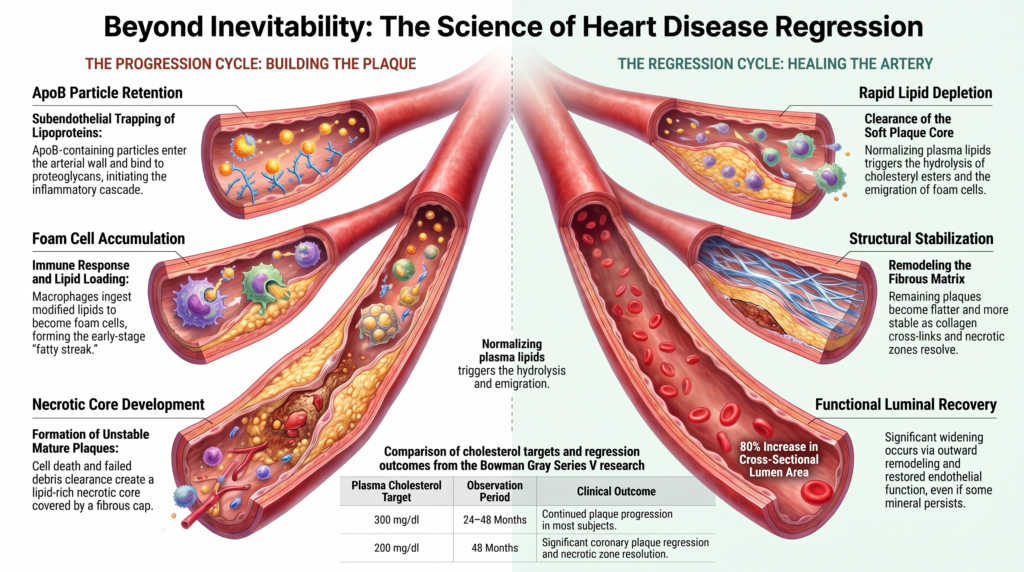
| Evidence of true regression | Coronary plaque regressed significantly after 48 months at 200 mg/dl, but not after 24 months, showing time-dependence. |
| Evidence of plaque stabilization | Monkeys at 200 mg/dl showed near-complete resolution of necrotic zones and a relative increase in dense collagen matrix. |
| Calcification / thrombosis / death | High baseline calcification. Calcification frequency was substantially lower in the 200 mg/dl group than in the 300 mg/dl group. |
| الاستنتاجات الرئيسية | In this model, regression of advanced coronary plaques was observed when plasma total cholesterol was held near 200 mg/dl for several years, but not at levels near 300 mg/dl. |
| Major limitations | High individual genetic variability (hyper- vs. hypo-responders) confounded findings in the 300 mg/dl regression cohort. |
| Relevance to human disease | High; indicates that the achieved lipid level and the duration of exposure are both important determinants of regression. |
Rank 4: Bowman Gray Female Regression Program (Williams, Anthony, Honoré, Register, Clarkson, et al., 1995)
| Full citation | [7] Williams J. K., Anthony M. S., Honoré E. K., Herrington D. M., Morgan T. M., Register T. C., Clarkson T. B. Regression of atherosclerosis in female monkeys. Arterioscler Thromb Vasc Biol. 1995 Jul;15(7):827–836. |
| Year | 1995 |
| Primate species | Macaca fascicularis (Cynomolgus macaque) |
| Number of animals | 88 (baseline necropsy n=20; diet-only n=25; +conjugated equine الإستروجينات n=22; +estrogens/medroxyprogesterone n=21) |
| Sex and approximate age | Surgically postmenopausal (bilaterally ovariectomized) adult females |
| Duration of atherogenic feeding | 24 months |
| Duration of regression / treatment phase | 30 months |
| Experimental diet composition | Semipurified atherogenic diet (approximately 44% of calories from fat, 16% protein, 40% carbohydrate). |
| Control / regression diet | Low-fat, low-cholesterol diet enriched with safflower oil. |
| Dietary cholesterol content | High during induction; markedly reduced during the regression/treatment phase. |
| Achieved lipids & lipoproteins | Induction: approximately 470 mg/dl (TC). Regression: decreased to a mean near 140 mg/dl in the diet-only and hormone-added groups. |
| Arterial territories examined | Extramural coronary arteries (LAD, LCx, RCA) and abdominal aorta. |
| Plaque-assessment method | Perfusion-fixed coronary morphometry and vascular-ring vasomotor reactivity. |
| Evidence of coronary disease | Advanced, calcified epicardial coronary plaques causing baseline luminal narrowing. |
| Evidence of plaque progression | 24 months of induction produced severe concentric and eccentric coronary lesions. |
| Evidence of true regression | Cross-sectional plaque size did not change significantly compared with the baseline necropsy cohort. |
| Evidence of plaque stabilization | Coronary artery and lumen cross-sectional area approximately doubled compared with the baseline group, consistent with favorable (outward) remodeling; endothelium-dependent vasomotor dilation to acetylcholine was improved. |
| Calcification / thrombosis / death | Advanced calcification remained largely unchanged; its persistence limits anatomical normalization and does not by itself indicate healing. |
| الاستنتاجات الرئيسية | Clinically relevant benefit is not restricted to plaque shrinkage; lipid lowering was associated with enlargement of coronary artery and lumen cross-sectional area and improved endothelial reactivity, consistent with favorable remodeling. |
| Major limitations | Emphasis on postmenopausal hormone interactions; the advanced lesions did not show direct volumetric shrinkage. |
| Relevance to human disease | Extremely High; provides a mechanistically relevant example of how lipid lowering can improve arterial geometry and الوظيفة البطانية despite little change in plaque cross-sectional area, a pattern relevant to human clinical observations. |
Rank 5: Boston / Bowman Gray Lipid Phase Program (Small, Bond, Waugh, Prack, Sawyer, 1984)
| Full citation | [6] Small D. M., Bond M. G., Waugh D., Prack M., Sawyer J. K. Physicochemical and histological changes in the arterial wall of nonhuman primates during progression and regression of atherosclerosis. J Clin Invest. 1984 Jun;73(6):1590–1605. |
| Year | 1984 |
| Primate species | Macaca fascicularis (Cynomolgus macaque) |
| Number of animals | 54 |
| Sex and approximate age | Adult males, age approximately 5–6 years at baseline |
| Duration of atherogenic feeding | Up to 30 months (progression animals evaluated at 6, 12, 18, 24, and 30 months) |
| Duration of regression phase | 6 or 12 months (after 18 months of induction) |
| Experimental diet composition | Semipurified diet containing dextrin, salts, vitamin mixture, and butterfat/lard. |
| Control / regression diet | Standard commercial non-cholesterol-containing monkey chow. |
| Dietary cholesterol content | 0.36 mg/Cal during induction; cholesterol-free during regression. |
| Total-fat percentage | Approximately 40% of calories as fat during induction; low fat during chow regression. |
| Saturated-fat percentage | High (butterfat and lard) during induction. |
| Achieved lipids & lipoproteins | Induction: 520 ± 30 mg/dl (TC). 6-month regression: 148 ± 12 mg/dl. 12-month regression: 140 ± 10 mg/dl. |
| Arterial territories examined | Thoracic aorta, abdominal aorta, common carotid, and coronary arteries. |
| Plaque-assessment method | Perfusion histomorphometry, hot-stage polarizing microscopy, and chemical lipid extraction. |
| Evidence of coronary disease | Advanced, occlusive fibro-lipid epicardial coronary plaques with large necrotic cores. |
| Evidence of plaque progression | Plaque cholesteryl esters increased, forming foam-cell-rich lesions with high-melting-point intracellular lipid droplets. |
| Evidence of true regression | Return to chow shifted plaque lipid composition toward normal; by 12 months, arterial cholesterol, بلورات الكوليسترول, and necrosis had decreased and the intima appeared improved but scarred. |
| Evidence of plaque stabilization | After 12 months of regression, cell debris and necrotic core size were significantly reduced, and collagen content increased. |
| Calcification / thrombosis / death | During early regression, a transient increase in free cholesterol monohydrate crystals was observed, interpreted as cholesteryl-ester hydrolysis temporarily exceeding cholesterol efflux. |
| الاستنتاجات الرئيسية | Plaque regression involves complex, time-dependent chemical changes; rapid lipid lowering can induce a transient crystalline phase during lipid mobilization. |
| Major limitations | Confined to a single species with rapid lipid-loading responses. |
| Relevance to human disease | High; elucidated the physical chemistry of plaque lipid mobilization, providing a physicochemical explanation for why structural improvement may lag behind biochemical lipid depletion. |
Rank 6: Chicago Reversal Program (Vesselinovitch, Wissler, Hughes, Borensztajn, 1976)
| Full citation | [4] Vesselinovitch D., Wissler R. W., Hughes R., Borensztajn J. Reversal of advanced atherosclerosis in Rhesus monkeys. Part 1. Light-microscopic studies. Atherosclerosis. 1976;23(2):155–176. Cited jointly as [4] with the companion ultrastructural report: Weber G., Fabbrini P., Resi L., Jones R., Vesselinovitch D., Wissler R. W. Atherosclerosis. 1977;26(4):535–547. |
| Year | 1976 |
| Primate species | Macaca mulatta (Rhesus macaque) |
| Number of animals | 54 |
| Sex and approximate age | Young adult males, 3–4 years of age at baseline |
| Duration of atherogenic feeding | 18 months |
| Duration of regression phase | 18 months |
| Experimental diet composition | Semipurified diet with 25% by weight of a 1:1 coconut-oil / butterfat mixture, plus casein and cornstarch. |
| Control / regression diet | Low-fat, low-cholesterol diet with or without the investigational lipid-lowering compound W-1372 (an experimental agent, not a clinically approved drug). |
| Dietary cholesterol content | 2.0% by weight during induction; cholesterol-free during regression. |
| Total-fat percentage | High saturated fat during induction; less than 5% during regression. |
| Saturated-fat percentage | High saturated fat during induction (زيت جوز الهند and butterfat). |
| Achieved lipids & lipoproteins | Serum cholesterol increased roughly five-fold during induction (approximately 830 ± 45 mg/dl). Regression (diet only): 210 ± 15 mg/dl. Diet + W-1372: 145 ± 10 mg/dl. |
| Arterial territories examined | Aorta, carotid bifurcations, femoral arteries, and main coronary branches. |
| Plaque-assessment method | Gross visual staining of the aortic surface, light microscopy, histomorphometry, and scanning electron microscopy. |
| Evidence of coronary disease | Advanced, occlusive fibro-lipid coronary plaques with prominent necrotic cores. |
| Evidence of plaque progression | Severe progressive plaques developed at 18 months, causing significant stenosis and media destruction. |
| Evidence of true regression | Marked reduction in gross aortic intimal lesion burden in the diet-only group, with further reduction when W-1372 was added. This is an aortic gross-surface endpoint rather than a direct morphometric measure of coronary plaque regression. |
| Evidence of plaque stabilization | Near-complete clearance of intracellular foam cells and a reduction in necrotic debris; endothelial-surface improvements were reported, in part in companion ultrastructural studies. |
| Calcification / thrombosis / death | Intraplaque hemorrhage and focal necrosis were present at baseline and were less evident in regression animals (inferred from cross-sectional necropsy comparisons). |
| الاستنتاجات الرئيسية | Advanced atherosclerotic plaques can regress; lowering plasma cholesterol toward baseline was associated with lesion regression and matrix stabilization, and the added pharmacologic agent was associated with greater lipid lowering and greater lesion improvement than diet alone. |
| Major limitations | Quantified primarily via visual surface-area projection and light microscopy. |
| Relevance to human disease | High; supported the concept that adding a pharmacologic agent to a lipid-lowering diet is associated with greater plaque improvement and endothelial repair than diet alone. |
Rank 7: Oregon Alfalfa Saponin Program (Malinow, McLaughlin, Naito, McNulty, et al., 1978)
| Full citation | [9] Malinow M. R., McLaughlin P., Naito H. K., Lewis L. A., McNulty W. P. Effect of alfalfa meal on shrinkage (regression) of atherosclerotic plaques during cholesterol feeding in monkeys. Atherosclerosis. 1978 May;30(1):27–43. |
| Year | 1978 |
| Primate species | Macaca fascicularis (Cynomolgus macaque) |
| Number of animals | 72 (a baseline-necropsy group plus three groups of ~18 during the regression phase) |
| Sex and approximate age | Adult males, age approximately 5–6 years |
| Duration of atherogenic feeding | 6 months |
| Duration of regression phase | 18 months |
| Experimental diet composition | Semipurified diet rich in saturated fat, containing sucrose, dextrin, casein, and mineral mixtures. |
| Control / regression diet | Semipurified diet with or without alfalfa meal, or a diet consisting entirely of monkey chow. |
| Dietary cholesterol content | 1.2 mg/Cal during induction; 0.34 mg/Cal in the subsequent semipurified diets, with or without alfalfa meal; the Monkey Chow comparison diet was nearly cholesterol-free. |
| Total-fat percentage | High fat (approximately 40% of calories) during induction; low fat during chow regression. |
| Saturated-fat percentage | High saturated fat during induction. |
| Achieved lipids & lipoproteins | Induction: 734 ± 41 mg/dl (TC). Alfalfa group: 341 ± 22 mg/dl. Chow group: 146 ± 11 mg/dl. |
| Arterial territories examined | Thoracic aorta, abdominal aorta, and main coronary arteries. |
| Plaque-assessment method | Visual surface staining of the aorta and histomorphometry of cross-sectioned coronary arteries. |
| Evidence of coronary disease | Extensive proximal coronary plaques with prominent lipid-laden foam cells. |
| Evidence of plaque progression | Monkeys on the control saturated-fat diet showed progressive, severe coronary plaques over the 18-month intervention period. |
| Evidence of true regression | Alfalfa-fed monkeys showed significant reduction in aortic and coronary plaque area, approaching the chow-fed group. |
| Evidence of plaque stabilization | Plaque shrinkage was accompanied by a marked decrease in foam cell infiltration and normalization of circulating lipoproteins. |
| Calcification / thrombosis / death | No prominent treatment toxicity was reported in the publication. |
| الاستنتاجات الرئيسية | Addition of alfalfa meal was associated with lower plasma cholesterol and reduced lesion burden during continued cholesterol feeding; saponin-mediated interference with intestinal sterol absorption was proposed as a mechanism, but the intervention was a complex plant preparation rather than a purified saponin. |
| Major limitations | The active component was not isolated; a whole plant preparation was used, and the coronary change was not necessarily quantified to the same standard as the aortic change. |
| Relevance to human disease | High; showed that an alfalfa-containing diet was associated with lower plasma cholesterol and reduced lesion burden during continued cholesterol feeding, while intestinal sterol-binding by saponins remained a proposed rather than an isolated mechanism. |
Rank 8: Wake Forest / Bowman Gray Fatty Acid Program (Rudel, Parks, Sawyer, 1995)
| Full citation | [10] Rudel L. L., Parks J. S., Sawyer J. K. Compared with dietary monounsaturated and saturated fat, polyunsaturated fat protects African green monkeys from coronary artery atherosclerosis. Arterioscler Thromb Vasc Biol. 1995 Dec;15(12):2101–2110. |
| Year | 1995 |
| Primate species | Chlorocebus aethiops (African green monkey; formerly Cercopithecus aethiops) |
| Number of animals | 36 |
| Sex and approximate age | Adult males, age approximately 5–7 years |
| Duration of atherogenic feeding | 5 years continuous feeding |
| Duration of regression phase | Comparative progression model (no dedicated regression phase in this cohort). |
| Experimental diet composition | Liquid-formula diet providing 35% of total kilocalories as fat, 21% from protein, and 44% from carbohydrate. |
| Control / comparison diets | Saturated fat (palm oil) vs. دهون أحادية غير مشبعة (oleic-enriched safflower) vs. polyunsaturated fat (standard safflower). |
| Dietary cholesterol content | 0.80 mg/kcal in all experimental formulations. |
| Total-fat percentage | 35.0% of total calories. |
| Saturated-fat percentage | Saturated group: 19.5%. Monounsaturated: 4.5%. Polyunsaturated: 5.1%. |
| Achieved lipids & lipoproteins | Saturated: 380 ± 25 (TC); Monounsaturated: 290 ± 18; Polyunsaturated: 280 ± 15 mg/dl. The monounsaturated group had the lowest LDL/HDL ratio yet did not show reduced atherosclerosis. |
| Arterial territories examined | Aorta, coronary arteries (LAD, LCx, RCA), and hepatic tissue. |
| Plaque-assessment method | Perfusion-fixed morphometry, chemical lipid-class separation, and hepatic ACAT activity assay. |
| Evidence of coronary disease | Advanced coronary atherosclerosis with prominent intimal plaque area in the saturated and monounsaturated groups. |
| Evidence of plaque progression | 5 years of palm oil or oleic acid feeding drove progressive coronary plaque development. |
| Evidence of true regression | Comparative progression study; no regression phase. Polyunsaturated fat was associated with substantially less coronary plaque than monounsaturated or saturated fat. |
| Evidence of plaque stabilization | Polyunsaturated fat minimized cholesteryl ester and cholesteryl oleate accumulation in the coronary arteries. |
| Calcification / thrombosis / death | تکلس اللويحات was observed in the saturated and monounsaturated groups. No acute thrombotic events were documented. |
| الاستنتاجات الرئيسية | Under this cholesterol-containing experimental diet, monounsaturated fat did not reduce coronary plaque to the degree observed with polyunsaturated fat, despite apparently favorable plasma-lipoprotein measures; polyunsaturated fat minimized cholesteryl oleate accumulation. Findings cannot be extrapolated directly to whole-food human dietary patterns. |
| Major limitations | Absence of a dedicated regression or dietary crossover phase in this cohort. |
| Relevance to human disease | Very High; challenged the assumption that monounsaturated and polyunsaturated fats have equivalent cardiovascular effects. |
Rank 9: Southwest Foundation Baboon Program (McGill, McMahan, Kruski, Mott, 1981)
| Full citation | [11] McGill H. C. Jr., McMahan C. A., Kruski A. W., Mott G. E. Relationship of lipoprotein cholesterol concentrations to experimental atherosclerosis in baboons. Arteriosclerosis. 1981 Jan–Feb;1(1):3–12. |
| Year | 1981 |
| Primate species | Papio sp. (Baboon) |
| Number of animals | 60 |
| Sex and approximate age | Young adult males and females, age approximately 4–6 years |
| Duration of atherogenic feeding | 26 months continuous feeding |
| Duration of regression phase | Baseline comparison design (diet-induced progression focus). |
| Experimental diet composition | نظام غذائي مخصص: 21% من السعرات الحرارية من البروتين، و41% من الدهون، و38% من الكربوهيدرات. |
| النظام الغذائي الضابط | طعام البابون القياسي قليل الدهون (حوالي 5.8% سعرة حرارية من الدهون). |
| Dietary cholesterol content | 1.7 ملغ/كيلو كالوري خلال فترة التجربة التي استمرت 26 شهراً. |
| Total-fat percentage | 41.0% من إجمالي السعرات الحرارية. |
| Saturated-fat percentage | 17.21 TP9T من إجمالي السعرات الحرارية (شحم الخنزير وصفار البيض المجفف). |
| Achieved lipids & lipoproteins | تشاو: 112 ± 8 مجم/ديسيلتر (الكوليسترول الكلي). مسبب للتصلب الشرياني: 298 ± 15 مجم/ديسيلتر (الكوليسترول الكلي). |
| Arterial territories examined | الشريان الأورطي الصدري، والشريان الأورطي البطني، والشريان الحرقفي المشترك، والشرايين التاجية خارج الجدار. |
| Plaque-assessment method | تقدير السطح البصري المثبت بالتروية، والتصنيف المرضي-البيولوجي المستقل، واستخلاص الدهون كيميائيًا. |
| Evidence of coronary disease | خطوط دهنية تاجية في مرحلة مبكرة تتراوح شدتها بين خفيفة إلى معتدلة، ولويحات ليفية صغيرة. |
| Evidence of plaque progression | أدى اتباع نظام غذائي غني بالدهون المشبعة والكوليسترول لمدة 26 شهراً إلى تفاقم ظهور الخطوط الدهنية في الشريان الأورطي والشرايين التاجية. |
| Evidence of true regression | لم يتم تقييم ذلك بشكل مباشر في هذه الدراسة. |
| Evidence of plaque stabilization | لم يتم اختبار أي مرحلة تدخل أو تراجع؛ فقد كانت هذه دراسة ارتباطية. وكان هناك ارتباط عكسي بين تغطية اللويحات وكوليسترول البروتين الدهني عالي الكثافة (HDL)، وارتباط إيجابي بينها وبين كوليسترول البروتين الدهني منخفض الكثافة (LDL) والبروتين الدهني منخفض جدًا الكثافة (VLDL). |
| Calcification / thrombosis / death | لم يتم الإبلاغ عن أي حالات تجلط دموي عفوي أو احتشاءات عضلة القلب؛ ولوحظت درجة ضئيلة من التكلس في الحالة الأساسية. |
| الاستنتاجات الرئيسية | هناك ارتباط إيجابي بين الكوليسترول من نوع LDL وVLDL، وارتباط سلبي بين الكوليسترول من نوع HDL، وبين مدى انتشار اللويحات الناتجة عن النظام الغذائي لدى البابون. |
| Major limitations | حدوث حالات قليلة جدًّا من مرض الشريان التاجي المتقدم المصحوب بتضيق خلال فترة سنتين. |
| Relevance to human disease | مرتفعة؛ حيث تم إثبات وجود علاقات بين فصائل الكوليسترول في البروتينات الدهنية وحجم الآفات في ظل ظروف خاضعة للرقابة. ولا تُثبت هذه العلاقات القائمة على الملاحظة أن كوليسترول البروتين الدهني عالي الكثافة (HDL) يُعد هدفًا علاجيًّا سببيًّا وقابلًا للتعديل. |
المرتبة 10: برنامج «العالم الجديد» في ولاية أوريغون (ماروفو وبورتمان، 1968)
| Full citation | [2] ماروفو سي. أ.، بورتمان أو. و. «التحكم الغذائي في تصلب الشرايين التاجية لدى قرد السناجب». مجلة أبحاث تصلب الشرايين. مارس–أبريل 1968؛ 8(2):237–247. |
| Year | 1968 |
| Primate species | Saimiri sciureus (قرد السنجاب) |
| Number of animals | 24 |
| Sex and approximate age | ذكور وإناث بالغة، تم صيدها من البرية (العمر غير معروف) |
| Duration of atherogenic feeding | 3–12 شهراً |
| مدة المتابعة الخاصة بالنظام الغذائي المرجعي | 3–12 شهراً |
| Experimental diet composition | نظام غذائي شبه مُنقي غني بالدهون المشبعة، يحتوي على شحم الخنزير والزبدة. |
| النظام الغذائي الضابط | نظام غذائي تجاري قياسي قائم على الحبوب، قليل الدهون وخالٍ من الكوليسترول. |
| Dietary cholesterol content | من 0.5% إلى 1.0% بالوزن خلال مرحلة التحضير؛ خالية من الكوليسترول خلال فترة النظام الغذائي المرجعي. |
| Total-fat percentage | نظام غذائي عالي الدهون (حوالي 35% من السعرات الحرارية) خلال مرحلة التحضير؛ ونظام غذائي منخفض الدهون خلال فترة المراقبة. |
| Saturated-fat percentage | ارتفاع نسبة الدهون المشبعة خلال مرحلة التحضير (الشحم والزبدة). |
| Achieved lipids & lipoproteins | المرحلة التمهيدية: أكثر من 400 مجم/ديسيلتر (الكوليسترول الكلي)؛ وانخفض مستوى الكوليسترول في البلازما بسرعة إلى المستوى الأساسي بعد العودة إلى النظام الغذائي المرجعي. |
| Arterial territories examined | الشريان الأورطي الصدري، والشريان الأورطي البطني، والشرايين التاجية خارج الجدار. |
| Plaque-assessment method | علم التشريح المرضي، والمجهر الإلكتروني، وفصل فئات الدهون في الأنسجة. |
| Evidence of coronary disease | تراكمات تصلبية مبكرة في الشرايين التاجية غنية بالدهون، مصحوبة بتراكمات بارزة لخلايا الرغوة في البطانة. |
| Evidence of plaque progression | تسببت الحمية الغنية بالكوليسترول في التقدم السريع لظهور الخطوط الدهنية في الشريان الأورطي والشرايين التاجية. |
| Evidence of true regression | أدى العودة إلى نظام غذائي قليل الدهون وخالٍ من الكوليسترول إلى وقف تقدم المرض؛ ويتم تحديد مدى التراجع التشريحي الفعلي للآفات المبكرة بحذر (انظر الملاحظة الواردة في «النقد المنهجي»). |
| Evidence of plaque stabilization | انخفاض محتوى الدهون في اللويحات، مع وجود طبقات رقيقة ومرنة ليفية تثخنات البطانة مستمرة. |
| Calcification / thrombosis / death | لم يتم تسجيل أي حالات تجلط شرياني تاجي حاد أو احتشاءات عضلة القلب خلال الدراسة. |
| الاستنتاجات الرئيسية | تدعم الدراسة وقف تطور الآفات وانخفاض محتواها من الدهون بعد عودة النظام الغذائي إلى طبيعته بشكل أوضح مما تدعم التراجع التشريحي المثبت كمياً للآفات المبكرة. |
| Major limitations | أدى صغر قطر الأوعية الدموية والقيود المتعلقة بأبعادها المادية إلى تقييد إجراء تقييم وظيفي مفصل للأوعية الدموية. |
| Relevance to human disease | متوسط إلى مرتفع؛ يدعم الفكرة القائلة بأن الآفات التاجية في مراحلها المبكرة تتمتع بمرونة استقلابية عالية. |
التدخلات الغذائية وتحليل المغذيات الكبيرة
يكشف تحليل التدخلات الغذائية المستخدمة في الدراسات التي أُجريت على الرئيسيات غير البشرية عن العوامل التغذوية المحددة المسؤولة عن تكوّن التصلب الشرياني وتراجعه. فقد قامت التجارب السابقة بتقييم التفاعلات بين الدهون الإجمالية، والدهون المشبعة، والدهون المتعددة غير المشبعة، والكوليسترول بشكل منهجي، مما وفر رؤى تتجاوز التصنيف البسيط بين “نظام غذائي عالي الدهون” و“نظام غذائي منخفض الدهون”.
الأحماض الدهنية المشبعة مقابل الأحماض الدهنية المتعددة غير المشبعة في تطور المرض وتراجعه
كان السؤال الرئيسي في سبعينيات وثمانينيات القرن الماضي هو ما إذا كان عكس مسار تصلب الشرايين يتطلب اتباع نظام غذائي منخفض جدًّا في الدهون، أم أن نظامًا غذائيًّا غنيًّا بالدهون المتعددة غير المشبعة يمكن أن يحقق نتائج مماثلة. في الدراسة الرائدة التي أجراها أرمسترونغ وزملاؤه على قرود المكاك الريسوس، كانت مرحلة تطور المرض مدفوعة بنظام غذائي يحتوي على 41% من إجمالي السعرات الحرارية من الدهون، التي جاءت بشكل أساسي من صفار البيض المجفف، مما أدى إلى تضيق شديد ومنتشر في الشرايين التاجية.
خلال مرحلة التراجع التي استمرت 40 شهراً، قارن الباحثون نظاماً غذائياً منخفض الدهون (4% من إجمالي السعرات الحرارية من الدهون، التي تأتي أساساً من نشا الحبوب) بنظام غذائي غني بالدهون المتعددة غير المشبعة (40% من إجمالي السعرات الحرارية من زيت الذرة، الغني بـ حمض اللينولييك). كان كلا النظامين الغذائيين خاليين تمامًا من الكوليسترول. وكانت نتائج هذه المقارنة المباشرة مذهلة:
- أدى كلا النظامين الغذائيين إلى خفض مستوى الكوليسترول الكلي في البلازما إلى مستويات متطابقة تقريبًا (حوالي 140 ملغ/ديسيلتر).
- أدى كلا النظامين الغذائيين إلى عكس النمط التصلبي الذي يغلب عليه البروتين الدهني بيتا (LDL)، ليصبح النمط الذي يغلب عليه البروتين الدهني ألفا (وهو المقابل الكهربائي التاريخي لجزء البروتين الدهني عالي الكثافة (HDL)، والذي لا يتطابق مع الفئات الفرعية الحالية للبروتين الدهني عالي الكثافة (HDL)).
- كان التراجع التشريحي في الشرايين التاجية متشابهاً بين المجموعتين: فقد كان متوسط مساحة التجويف في المقطع العرضي أكبر بأكثر من 80% في الحيوانات التي شهدت تراجعاً مقارنةً بالحيوانات التي كانت تعاني من المرض في البداية، دون وجود فرق ذي دلالة إحصائية بين النظام الغذائي منخفض الدهون والنظام الغذائي الذي يعتمد على زيت الذرة. ولم تكن السمة المشتركة الحاسمة هي محتوى الدهون الإجمالي، بل حقيقة أن كلا النظامين الغذائيين أعادا مستويات الكوليسترول في الدم، والكوليسترول الضار (LDL)، و(بالاستدلال) حمل جسيمات ApoB إلى مستوياتها الطبيعية؛ وتبع ذلك الانحسار.
في هذا النموذج، لم يكن انخفاض إجمالي الدهون إلى مستويات منخفضة جدًّا ضروريًّا لتحقيق التراجع: فقد أدى اتباع نظام غذائي خالٍ من الكوليسترول وغني بالدهون المتعددة غير المشبعة إلى انخفاض مكافئ ومستمر في البروتينات الدهنية المسببة لتصلب الشرايين في الدم، وإلى تراجع مماثل. وبالتالي، تحدد التجربة استجابة البروتينات الدهنية التي تم تحقيقها — بدلاً من النسبة المئوية لإجمالي الدهون وحدها — باعتبارها العامل الأكثر ارتباطًا بالتراجع. ولا تثبت التجربة أن إجمالي الدهون الغذائية غير ذي صلة بالنسبة للأنواع الأخرى، أو تركيبات الأحماض الدهنية، أو مدخول الطاقة، أو الأنظمة الغذائية البشرية العادية؛ فتأثيرات الدهون المشبعة والكوليسترول الغذائي على البروتين الدهني ApoB المتداول في الدم كبيرة ولكنها ليست حاسمة.
الأدوار المربكة للكازين والسكروز والمدخول من السعرات الحرارية
يتطلب تقييم التجارب التاريخية التي أُجريت على الرئيسيات الفصل بين تأثيرات الدهون والكوليسترول في النظام الغذائي وتأثيرات المكونات الأخرى في الأنظمة الغذائية شبه المنقاة. فقد احتوت العديد من التركيبات المسببة لتصلب الشرايين على الكازين كمصدر وحيد للبروتين، والسكروز كمصدر أساسي للكربوهيدرات، وكلاهما يمكن أن يكون له تأثيرات استقلابية مستقلة.
أفادت التقارير بأن الكازين يرفع مستوى الكوليسترول في البلازما لدى العديد من أنواع الثدييات مقارنةً ببروتينات الصويا أو البروتينات النباتية الأخرى، وهو تأثير يختلف بشكل كبير باختلاف الأنواع، وربما يرتبط بالاختلافات في تركيبة الأحماض الأمينية وفي استقلاب الكوليسترول والأحماض الصفراوية. ولا يتسبب السكروز المكرر بحد ذاته في تكوين لويحات تصلب الشرايين، لكن تناول كميات كبيرة منه يرفع مستوى الكوليسترول الكبدي بروتين دهني منخفض الكثافة جداً التوليف، البلازما الدهون الثلاثية, ، وبقايا البروتينات الدهنية، وقد تؤدي إلى تفاقم ملامح البروتينات الدهنية المسببة لتصلب الشرايين. علاوة على ذلك، سمحت العديد من الدراسات التي أُجريت على الرئيسيات بالتغذية حسب الرغبة، مما أدى إلى توازن طاقي إيجابي وزيادة في الوزن، وهو ما قد يشوش على تقييمات التمثيل الغذائي. وينطبق تحذير ذو صلة على الأنظمة الغذائية الانحلالية الخالية من الكوليسترول المستخدمة في هذه البرامج؛ لأن هذه الأنظمة غالبًا ما تغير مصدر الدهون ونسبتها،, طاقة استيعابية, ، مصدر البروتين،, أليفاف, ، والمركبات النباتية في آن واحد، فلا ينبغي للقراء أن يستنتجوا أن الكوليسترول الغذائي وحده هو المسؤول عن إحداث أي من هذين المرضين أو عن الشفاء منهما.
ومع ذلك، في التجارب التي أخذت هذه المتغيرات في الحسبان — مثل برنامج ريسوس التابع لجامعة لويزيانا الحكومية (LSU)، الذي استخدم مستويات متطابقة من الكازين والسكروز والدهون في كل من الوجبات الغذائية المُسببة للتطور والوجبات المُسببة للتراجع، مع تباين محتوى الكوليسترول فقط — كان استبعاد الكوليسترول مع الحفاظ على مستويات عالية من الدهون المشبعة كافياً لخفض الكوليسترول في البلازما وتحفيز التراجع. ويؤكد هذا الدور المركزي للكوليسترول الغذائي في هذا النموذج، دون استبعاد المساهمات المستقلة للدهون المشبعة التي تم إثباتها في تصميمات تجريبية أخرى.
ديناميات التقدم والتراجع: تراكم اللويحات مقابل الاستقرار
يتبع تصلب الشرايين الناجم عن النظام الغذائي لدى الرئيسيات غير البشرية مسارًا مرضيًا يمكن التنبؤ به، يعكس بشكل وثيق تطور مرض الشريان التاجي لدى البشر.
دخول جزيئات ApoB واستبقاؤها → التكتل والتغيرات الكيميائية الحيوية → تنشيط الخلايا البطانية والجهاز المناعي الفطري → تراكم الدهون في الخلايا الرغوية المشتقة من البلاعم والعضلات الملساء → الدهون خارج الخلية، وإعادة تشكيل المصفوفة، وموت الخلايا، وخلل في الوظائف بلع الخلايا المواتية → الغطاء الليفي / اللب النخري
المراحل المرضية لتطور المرض
- تنشيط الخلايا البطانية والخطوط الدهنية: يتم احتجاز جزيئات البروتين ApoB المتداولة في الدم بكميات مرتفعة في الحيز تحت البطانة, ، حيث تخضع لعمليات التكتل والأكسدة وتغيرات كيميائية حيوية أخرى. ويؤدي ذلك إلى تنشيط جزيئات الالتصاق البطانية واستقطاب الخلايا الأحادية المشتقة من الدم، التي تتمايز لتصبح خلايا بلعمية وتستوعب البروتينات الدهنية المعدلة لتتحول إلى خلايا رغوية، مكونةً بذلك خطوطًا دهنية مبكرة.
- تكوّن اللويحات الليفية: في ظل استمرار ارتفاع الكوليسترول في الدم، تفرز الخلايا الرغوية عوامل نمو (مثل عامل النمو المشتق من الصفائح الدموية) التي تحفز هجرة خلايا العضلات الملساء من الطبقة الوسطى. وتتكاثر هذه الخلايا وتفرز المصفوفة خارج الخلية البروتينات، مما يؤدي إلى تكوين غطاء ليفي فوق النواة الغنية بالدهون؛ ويمكن للخلايا المشتقة من العضلات الملساء أن تمتص الدهون بنفسها وتساهم بشكل كبير في تكوين مجموعة الخلايا الرغوية.
- تكوّن النواة النخرية: مع نضوج اللويحة، تخضع الخلايا الرغوية الموجودة داخل اللب لعملية الموت الخلوي المبرمج (الأبوبتوسيس) والنخر الثانوي. ويؤدي فشل عملية امتصاص الخلايا الميتة إلى تراكم بقايا الخلايا والكوليسترول الحر وتجمعات الدهون، مما يؤدي إلى تكوين لب نخرى شديد عدم الاستقرار.
- التكلس وتغييرات الوسائط: تظهر حبيبات الكالسيوم المجهرية داخل اللب النخري وخلايا العضلات الملساء المتدهورة، وتتجمع لتشكل صفائح معدنية كبيرة وصلبة. وغالبًا ما تظهر الطبقة الوسطى المجاورة تسللًا خلويًّا، وتفتتًا في الصفيحة المرنة، وترققًا موضعيًّا.
استقرار اللويحة مقابل الانكماش التشريحي
- نضوب الخلايا البلعمية وانحسار الالتهاب: يؤدي الانخفاض الملحوظ في مستويات الدهون إلى الحد من استمرار تجنيد الخلايا الأحادية، كما يعزز فقدان الخلايا البلعمية الموجودة في اللويحات وإزالتها وإعادة تشكيلها من الناحية النمطية؛ وتختلف المساهمات النسبية لعمليات الهجرة، والموت الخلوي، والبلعمة الخلوية باختلاف النموذج ومرحلة الآفة. تقوم الخلايا البلعمية بتثبيط الجينات الالتهابية وزيادة تعبير علامات إعادة تشكيل الأنسجة، ويتم إزالة الحطام النخري تدريجيًا مع حدوث التهاب يقرر.
- إعادة تشكيل المصفوفة والربط المتقاطع للألياف: في حين يتم التخلص من المكونات الدهنية والخلوية بسرعة أكبر نسبيًّا، فإن عناصر المصفوفة خارج الخلوية (الكولاجين، والإيلاستين) تتجدد بوتيرة أبطأ. وتقوم خلايا العضلات الملساء بتخليق ألياف كولاجين جديدة تتشابك وتتكثف، مما يحول اللويحة الدهنية اللينة وغير المستقرة إلى آفة ليفية أكثر استواءً واستقرارًا.
- التئام الخلايا البطانية: تستعيد البطانة البطانية التي تغطي اللويحات المتبقية سلامتها الهيكلية، مكونةً وصلات خلوية متصلة ومتماسكة بقوة تقاوم إجهاد القص وتقلل من احتمالية تكوين الجلطات.
تشير هذه التغييرات إلى أن تثبيت اللويحات والشفاء الهيكلي يسبقان الانخفاض الملحوظ في الحجم الإجمالي للويحات، ويمكن أن يحدثا بشكل مستقل عنه.
من الناحية الميكانيكية الحديثة، يُفهم أن إزالة الدهون الموجودة في اللويحات أثناء تراجعها تعتمد بشكل كبير على النقل العكسي للكوليسترول: تدفق الكوليسترول الحر من الخلايا المليئة بالدهون عبر ناقلات النقل ABCA1 and ABCG1 to HDL acceptors, esterification by lecithin–cholesterol acyltransferase (LCAT), and ultimate hepatic clearance. These efflux pathways were not directly measured in the historical primate experiments, but they provide the contemporary biochemical framework for the lipid depletion those studies documented morphologically and chemically.
Macromolecular and Kinetic Mechanisms (ApoB and the Cumulative-Exposure Model)
ApoB-Containing Lipoproteins and Cumulative Arterial Exposure
The entry and subsequent retention of ApoB-containing lipoproteins within the subendothelial space constitute the fundamental initiating lipid event in atherosclerotic plaque formation. LDL, intermediate-density lipoproteins, cholesterol-enriched remnants, and بروتين دهني (أ) can cross the arterial بطانة الأوعية الدموية. Once within the intima, positively charged regions of apolipoprotein B interact with negatively charged glycosaminoglycan chains on arterial-wall proteoglycans (notably biglycan و versican), selectively retaining these particles at lesion-prone sites [12]. Retained particles undergo aggregation, enzymatic modification, oxidation, and other compositional changes that provoke innate and adaptive immune responses, macrophage foam-cell formation, smooth-muscle-cell phenotypic change, extracellular lipid accumulation, and ultimately formation of a fibrous and potentially necrotic plaque. Because each atherogenic LDL, لغة IDL, remnant, or Lp(a) particle carries a single ApoB molecule, it is the number of retained particles—not the cholesterol mass they carry—that is mechanistically trapped in the wall; this is why particle-based (ApoB) measures are conceptually preferable to cholesterol-mass (LDL-C) measures, even though the historical studies could report only the latter.
Hemodynamic forces, endothelial التبرعم الخلوي, arterial proteoglycan composition, inflammation, and genetic susceptibility strongly influence the location and rate of lesion development. These factors do not displace الجسيمات المحتوية على أبوليبوبروتين ب from the causal center of atherogenesis; rather, they regulate the probability that circulating particles will enter, remain within, and injure a particular arterial region. In this framework, ApoB عبء الجسيمات supplies the atherogenic substrate, arterial-wall characteristics govern retention and biological response, and inflammatory and thrombotic pathways determine plaque progression and clinical complication.
The progression of atherosclerosis is therefore influenced by cumulative arterial exposure to circulating ApoB-containing particles. This relationship may be represented conceptually as:
التعرض التراكمي = ∫0t Cأبوبروتين ب(t) dt
where C_ApoB(t) is the circulating concentration of atherogenic ApoB-containing particles over time. The equation is not intended to imply that identical calculated exposure produces identical plaque in every individual. The biological consequences of a given exposure are modified by particle composition, arterial-wall retention affinity, age, blood pressure, تدخين, glycemia, inflammation, hemodynamics, and genetic susceptibility. Nevertheless, the primate literature is consistent with, and provides experimental support for, the cumulative ApoB-exposure model derived from modern human genetic, epidemiologic, and clinical evidence [13], [14]: longer and greater exposure produces older, more fibrotic, calcified, and metabolically resistant lesions, whereas early lipid-rich lesions remain substantially more reversible.
قامت معظم الدراسات التاريخية التي أجريت على الرئيسيات بقياس الكوليسترول الكلي في البلازما، أو كوليسترول البروتين الدهني بيتا، أو كوليسترول LDL و VLDL معًا، بدلاً من قياس البروتين الدهني ApoB مباشرةً. ومع ذلك، يمكن تفسير نتائجها ضمن الإطار الحديث لبروتين ApoB لأن الأنظمة الغذائية المسببة لتصلب الشرايين أدت إلى زيادات ملحوظة في البروتينات الدهنية المحتوية على ApoB المتداولة في الدم، في حين أن أنظمة العلاج الناجحة في عكس هذا الاتجاه أدت إلى انخفاضات كبيرة ومستمرة في تلك الجسيمات. وتوفر العلاقة الوثيقة بين عودة حمل البروتينات الدهنية المسببة لتصلب الشرايين إلى مستوياته الطبيعية، وتوقف تراكم اللويحات، ونضوب الدهون، واستقرار الحالة، والتراجع التشريحي الجزئي، دعماً تجريبياً للأهمية السببية للتعرض التراكمي لبروتين ApoB.
توضح الدراسات طويلة الأمد التي أجرتها جامعة لويزيانا الحكومية (LSU) على قرود الريسوس هذا المبدأ: فقد طورت الحيوانات التي تعرضت لضغط دهني مستمر على مدى 5.4 سنوات لويحات ليفية منظمة شديدة التعقيد، ذات بنية ليفية، وتحتاج إلى فترة أطول بكثير من العلاج الخافض للدهون (حيث يصبح التراجع ملحوظًا بعد حوالي 3.7 سنة) مقارنةً بالآفات المبكرة الغنية بالدهون، مما يشير إلى أن العمر الفعلي للوحة، مقترنًا بتاريخ تعرضها التراكمي، يؤثر على قابلية عكسها الأيضية.
تحليل مقارن مع علم الأمراض البشرية والتجارب السريرية
إن تطبيق النتائج المرضية المستخلصة من التجارب التاريخية على الرئيسيات في الممارسة السريرية البشرية يتطلب تقييمًا دقيقًا للمسارات المشتركة والاختلافات الهيكلية بين هذه النماذج والأمراض البشرية.
أوجه التشابه الهيكلي والآليات المشتركة
تتسم الآليات الخلوية والجزيئية لتكوين اللويحات بتشابه كبير بين البشر والقرود غير البشرية. يبدأ كلا النوعين في تكوين اللويحات من خلال الاحتباس تحت البطانة وأكسدة البروتينات الدهنية المحتوية على ApoB. أما الخطوات اللاحقة — بما في ذلك هجرة الخلايا الأحادية، وتمايزها إلى خلايا بلعمية، وامتصاص الدهون بوساطة مستقبلات الزبالة، وهجرة خلايا العضلات الملساء، وتكوين النواة النخرية — فهي متشابهة إلى حد كبير في كلا النوعين. في ظل تحدي غذائي مطول، يتطور لدى كل من قرود المكاك الريسوس والسينومولجوس لويحات متقدمة تتميز بأغلفة ليفية، ونوى دهنية، وتكلس، وتدهور الطبقة الوسطى، تشبه الآفات التصلبية المتقدمة (المعقدة) لدى البشر. وعلى الرغم من التشابه النسيجي، تظل اللويحات التي تُحدث تجريبياً في القرود عادةً أبسط من اللويحات البشرية التي يعود عمرها إلى عدة عقود والتي تعرضت لعوامل قلبية وعائية متعددة ومتزامنة عوامل الخطر.
الآثار السريرية والباثولوجية المشتركة
- احتشاء عضلة القلب: تم الإبلاغ عن حالات نادرة من احتشاءات عضلة القلب العفوية والمميتة في بعض مستعمرات قرود المكاك التي تعاني من ارتفاع شديد في مستويات الكوليسترول في الدم على المدى الطويل. ومن التقديرات التي يُستشهد بها كثيرًا أن معدل الإصابة يبلغ تقريبًا حالة واحدة لكل 300 قرد معرض للخطر سنويًّا [15], [16]; ويستمد هذا الرقم من تعليق وليس من دراسة أتباعية لحالات الإصابة خضعت للتحليل المباشر، ولا ينبغي تعميمه على جميع الأنواع أو البروتوكولات. وفي الحالات التي وقعت فيها، كانت هذه الاحتقانات مشابهة من الناحية المورفولوجية للاحتقانات البشرية، حيث أظهرت نخرًا عبر الجدار أو تحت البطانية، ونخرًا بشريط انقباضي، وتغيرات مصاحبة في تخطيط القلب الكهربائي.
- تفاعل الأوعية الدموية و Vasomotor Tone: يُظهر كلا النوعين خللاً في البطانة أكسيد النيتريك (عدم) التوافر البيولوجي أثناء تكوّن اللويحات. في حالات ارتفاع الكوليسترول في الدم، تفقد الشرايين التاجية قدرتها على التوسع استجابةً للأسيتيل كولين (بل تظهر بدلاً من ذلك تضيقاً وعائياً متناقضاً)، وهو خلل تبين في الدراسات التي قاست استجابة الأوعية الدموية بشكل مباشر أنه قابل للعلاج من خلال خفض مستمر لمستويات الدهون.
- الأمراض الدماغية الوعائية والأمراض الوعائية الطرفية: تصاب القرود التي تُغذى بنظام غذائي مسبب لتصلب الشرايين بتصلب الشرايين في الشرايين غير التاجية، مثل تفرع الشريان السباتي والشرايين الفخذية، مما يحاكي التوزيع الجهازي لمرض الشرايين لدى البشر.
إعادة تشكيل اللويحات: مقارنة بين نتائج التصوير لدى الرئيسيات والبشر
تقييم الانحدار لدى البشر التجارب السريرية يعتمد على تقنيات التصوير غير الجراحية التي تقيّم جوانب محددة من بيولوجيا اللويحات. وتوفر الدراسات التي أُجريت على الرئيسيات غير البشرية التحقق النسيجي المرضي الذي يشكل الأساس لتفسير هذه النتائج السريرية.
- قطر اللومن (QCA): استُخدمت في التجارب البشرية المبكرة تصوير الأوعية التاجية الكمي لقياس التغير في قطر التجويف، مع تسجيل تحسن طفيف في بعض الأحيان. وتسجل التصوير الوعائي التاجي الكمي أبعاد التجويف، ولا يمكنه بمفرده التمييز بين تقلص اللويحات والتغيرات في إعادة تشكيل الشرايين (التضخم الظاهري الذي يعوض عن تراكم اللويحات، والذي تم وصفه لأول مرة من خلال غلاغوف [17]) أو التوتر الوعائي الحركي؛ وتُظهر الدراسات التي أُجريت على الرئيسيات أن خفض مستويات الدهون يمكن أن يحسّن أبعاد التجويف وتفاعلية الأوعية الدموية دون حدوث انخفاض متناسب في المساحة النسيجية للوحة التصلب الشرياني.
- الحجم الإجمالي لللويحات (IVUS و OCT): تستخدم التجارب الحديثة الموجات فوق الصوتية داخل الأوعية الدموية و التصوير المقطعي للترابط البصري لقياس التغيرات في الحجم الإجمالي للوحة التصلب الشرياني، والتي غالبًا ما تُظهر انخفاضات طفيفة. وتشير الدراسات التي أُجريت على الرئيسيات إلى أن هذه الانخفاضات تمثل عملية إزالة خلوية وكيميائية لمخزونات الدهون والحطام النخرية من قلب اللوحة التصلب الشرياني.
- Noncalcified Plaque التغييرات (CCTA): تصوير الأوعية المقطعي المحوسب للشرايين التاجية يتيح القياس الكمي غير الجراحي لحجم اللويحات اللينة غير المتكلسة. وتشير البيانات المستمدة من الرئيسيات إلى أن هذا التجمع يحتوي على خلايا رغوية شديدة النشاط ومشحونة بالدهون، بالإضافة إلى ترسبات دهنية خارج الخلايا، وهي المكونات التي يتم التخلص منها بأسرع ما يمكن أثناء التراجع. وتماشيًا مع الملاحظات الحديثة المستمدة من التصوير بالموجات فوق الصوتية داخل الأوعية الدموية (IVUS) والتصوير المقطعي المحوسب بالأشعة السينية (CCTA)، يمكن أن تصاحب زيادة كثافة الكالسيوم هذا الفقدان لـ لويحة غنية بالدهون أثناء عملية الشفاء، لذا فإن ارتفاع مستوى الكالسيوم لا يشير بالضرورة إلى تفاقم المرض.
- Vulnerable Plaque الميزات والفوائد العلاجية: يتيح التصوير باستخدام تقنيتي OCT وPET لدى البشر تتبع زيادة سماكة الغطاء الليفي، وانخفاض حجم اللب النخري، واستقرار اللويحات الملتهبة. وتتوافق النتائج النسيجية المرضية لدى الرئيسيات غير البشرية مع هذه النتائج، حيث تُظهر تحسُّنًا في تغطية البطانة، وانخفاضًا في أعداد الخلايا الرغوية، وترسب غطاء كولاجين أكثر كثافة واستقرارًا فوق الحطام النخري المتبقي؛ ولم يتم تحديد ما إذا كان فقدان الخلايا الرغوية يعكس هجرة الخلايا، أو موت الخلايا الموضعي، أو انخفاض تجنيد الخلايا، أو تدفقها، في معظم الدراسات التاريخية.
تندرج النتائج المتعلقة بالرئيسيات ضمن إطار معاصر أوسع نطاقاً. إن فرضية الاستجابة للاحتباس الاحتباس الرسمي لجسيمات ApoB تحت البطانة كخطوة أولية [12]; وقد أثبتت الدراسات المتعلقة بالتوزيع العشوائي المندلي لدى البشر والدراسات الوبائية أن التعرض التراكمي لـ LDL/ApoB يُعد عاملاً محدداً لمخاطر الإصابة على مدى العمر [13], [14]؛ وقد تم تأكيد الدور الالتهابي في هذه الأحداث سريريًّا في CANTOS trial [18]. وفي موازاة ذلك، أُجريت تجارب متسلسلة للتصوير داخل الأوعية الدموية والتصوير المقطعي المحوسب (CT) حول العلاج المكثف لخفض مستويات الدهون — REVERSAL [19], كويكب [20], زحل [21], GLAGOV [22], باكمان-آمي [23], and هويغنس [24]—وقد وثقت هذه الدراسات تراجع اللويحات، واستقرارها، والتغيرات في تكوينها لدى المرضى الأحياء، مما يربط بين الأدلة التاريخية المستمدة من الرئيسيات والبيانات البشرية المعاصرة.
النقد المنهجي والأخلاقي
يتطلب تقييم الأدبيات التاريخية المتعلقة بالرئيسيات إجراء تحليل نقدي لكل من التصاميم التجريبية التي تعود إلى منتصف القرن العشرين وأواخره، وتطور اللوائح المعاصرة المتعلقة برفاهية الحيوانات.
القيود المنهجية والتحيز في التصميم
- مقارنات مقطعية بعد الوفاة: اعتمدت معظم دراسات التراجع التاريخية على تصميم مقطعي، حيث تم تشريح مجموعة فرعية من الحيوانات في نهاية مرحلة التحريض لتحديد “التطور الأساسي”، وتم توزيع الحيوانات المتبقية عشوائياً على مجموعات التراجع وتقييمها بعد عدة سنوات. يفترض هذا التصميم أن المجموعة الأساسية تمثل الحيوانات الناجية في مرحلة التراجع. ونظرًا للتباين الفردي الكبير في الاستجابة الغذائية (ظاهرة “المستجيب المفرط” مقابل “المستجيب الضعيف”) ، فإن ذلك قد يؤدي إلى حدوث تشويش وتحيز إحصائيين كبيرين.
- Survivorship Bias: في الدراسات التي رصدت تطور الحالة على المدى الطويل، كانت الحيوانات التي تعاني من أشد حالات تضيق الشريان التاجي عرضة لخطر كبير للإصابة بـ الموت القلبي المفاجئ قبل مرحلة التراجع الرسمية، مما قد يؤدي إلى تقييم انتقائي للحيوانات الأكثر مقاومة والأقل استجابة في مجموعات التراجع النهائية.
- أحجام العينات الصغيرة: Because of the high cost and complexity of primate husbandry, many cohorts were small (often 6 to 12 per arm), limiting القوة الإحصائية and complicating subgroup analyses.
- Colony Overlap and Duplicate Reporting: Investigators frequently generated multiple, overlapping publications from the same cohorts over several years, making it difficult to isolate independent experimental results in systematic reviews.
- Note on Maruffo & Portman (1968): Secondary summaries of this early squirrel-monkey work describe a comparatively short atherogenic period followed by a control-diet period in which lesions did not progress but did not clearly regress. The extent of true anatomical regression in this specific study should therefore be characterized cautiously and confirmed against the primary report.
Historical Terminology vs. Modern Usage
- “Cholesterol Atherosclerosis” & “Atheromatosis”: Historically used to describe the diffuse lipid-loading and foam cell infiltration driven by extreme dietary cholesterol feeding. Modern pathology reserves “atherosclerosis” for the complex, chronic, inflammatory-fibromuscular disease process, distinguishing it from simple, non-inflammatory intimal lipid deposition.
- “Beta-Lipoproteinemia”: Refers to the historical electrophoretic classification of circulating lipoproteins, where beta-lipoproteins corresponded to the LDL fraction and alpha-lipoproteins to the HDL fraction. These electrophoretic bands are not identical to the density-defined subclasses of modern lipidology; contemporary biochemistry uses density ultracentrifugation and immunoassays to directly quantify specific apolipoprotein particles, particularly ApoB and ApoA-I. The historical primate targets (for example, a total-cholesterol ceiling near 200 mg/dl) also predated routine ApoB measurement.
- “Regression”: Historically defined as any reduction in visual arterial lesion coverage or tissue cholesterol content. Modern vascular biology distinguishes true volumetric regression from structural stabilization, fibrous-cap reinforcement, and functional vasomotor recovery.
Ethical Evolution of Primate Research Regulations
The regulatory landscape governing animal research underwent a profound transformation during this era. The original United States Laboratory Animal Welfare Act of 1966 was primarily enacted to regulate the transport, sale, and handling of six species, including nonhuman primates, to prevent pet theft and ensure basic humane care. A 1970 amendment renamed the statute the Animal Welfare Act and broadened coverage toward warm-blooded animals used in research, with a further amendment in 1976.
The most extensive regulatory shift occurred with the 1985 Improved Standards for Laboratory Animals Act, enacted as part of the Food Security Act of 1985. This amendment introduced requirements that altered the design of primate research:
- Institutional Animal Care & Use Committees (IACUCs): Mandated independent review boards to evaluate and approve experimental protocols involving covered species, ensuring that pain and distress are minimized.
- Environmental Enrichment & Psychological Well-Being: Required institutions to develop plans promoting the psychological well-being of nonhuman primates, with environmental enrichment and, where appropriate, compatible social housing among the preferred measures rather than an unconditional requirement for every animal.
- Reduction & Alternatives: Compelled researchers to formally consider alternatives to painful procedures and to minimize the number of animals used.
Simultaneously, the Health Research Extension Act of 1985 amended the Public Health Service Act and provided the statutory basis for the PHS Policy on Humane Care and Use of Laboratory Animals, enforcing compliance with the Guide for the Care and Use of Laboratory Animals for NIH-funded institutions. These regulatory changes, combined with rising financial costs and international conservation measures, sharply curtailed the large-scale, invasive primate experiments of the mid-twentieth century. Modern research relies heavily on non-invasive imaging and highly refined, ethically approved protocols.
Explicit Investigation of Core Hypotheses and Counter-Evidence
To evaluate the scientific integrity of the primate literature, the core hypotheses of this field are examined below alongside the evidence that supports and challenges each.
Hypothesis 1: Nonhuman primates develop coronary atherosclerosis that is histologically and metabolically closer to human disease than most other laboratory animals.
Support. Rhesus and cynomolgus macaques develop complex epicardial coronary plaques featuring fibrous caps, lipid-rich necrotic cores, calcification, media degradation, and spontaneous myocardial infarctions that closely match human lesions.
Counter-Evidence / Challenges. Certain species, such as baboons and squirrel monkeys, are relatively resistant to severe, occlusive coronary stenosis or advanced plaque rupture within standard timeframes, limiting their utility for modeling late-stage clinical events.
Hypothesis 2: Diet-induced elevations in ApoB-containing lipoproteins are the principal mediator between atherogenic diets and plaque formation.
Support. Plaque progression and regression correlate strongly with circulating VLDL+الكوليسترول الضار, and clearing these ApoB-containing particles is required to arrest and reverse plaque development.
Counter-Evidence / Challenges. Local proteoglycan binding, hemodynamics, and chemical modifications (such as oxidation) are also required to initiate plaque formation. Some animals show significant variation in lesion severity at identical circulating ApoB levels, indicating individual genetic and vascular susceptibility.
Hypothesis 3: Early lipid-rich lesions can regress substantially after major cholesterol reduction.
Support. Early fatty streaks and foam-cell-rich lesions in rhesus and squirrel monkeys undergo rapid and substantial regression within months following a return to low-cholesterol diets.
Counter-Evidence / Challenges. In advanced, highly structured lesions, simple lipid lowering may clear intracellular cholesteryl esters but does not rapidly reduce overall plaque cross-sectional area, as the mature collagenous and calcified matrix remains largely unchanged.
Hypothesis 4: Advanced fibrotic or calcified lesions regress incompletely but may become more stable.
Support. Long-term regression studies show that while advanced, years-old plaques lose inflammatory cell content and soft lipid pools, dense collagenous scars and large calcified plates persist within the arterial wall.
Counter-Evidence / Challenges. Under certain long-term protocols, very slow reductions in plaque calcium and enzymatic degradation of collagen have been reported, indicating that even mature matrix components possess slow, long-term turnover.
Hypothesis 5: The duration and cumulative magnitude of lipoprotein exposure influence whether plaque is reversible.
Support. LSU studies showed that regression of plaques induced over 5.4 years became statistically demonstrable only after an extended regression phase (approximately 3.7 years), in contrast to the more rapid response of early fatty streaks.
Counter-Evidence / Challenges. In some experiments, genetic “hypo-responder” animals showed significant regression under moderate lipid lowering, whereas “hyper-responders” progressed, indicating that individual metabolic susceptibility can override cumulative-exposure targets.
Hypothesis 6: Very-low-fat diets promote regression primarily when they produce large and sustained reductions in atherogenic lipoproteins.
Support. Reversing hypercholesterolemia using ultra-low-fat diets (4% of calories as fat) lowers plasma cholesterol and regresses coronary plaques.
Counter-Evidence / Challenges. Corn-oil-substitution diets (40% of calories as fat) achieve comparable plasma cholesterol lowering and coronary regression when dietary cholesterol is eliminated, indicating that absolute lipid clearance, rather than total dietary fat reduction, is the primary driver.
Hypothesis 7: Human coronary regression is generally smaller and slower than in some monkey studies because human plaques are older, more heterogeneous, and exposed to multiple risk factors.
Support. Human plaques accumulate over decades and are characterized by highly cross-linked, mature collagen and calcification. Diet-induced monkey lesions are typically generated over 1 to 5 years and contain younger, more metabolically active lipids that are more easily cleared.
Counter-Evidence / Challenges. Aggressive modern pharmacological regimens can lower human LDL-cholesterol to very low levels, which has been associated with rapid regression of soft, noncalcified lipid cores, approaching the kinetics seen in some primate studies.
Hypothesis 8: Clinical benefit may result more from plaque stabilization and prevention of new lesions than from complete removal of existing plaque.
Support. Primate lipid-lowering trials demonstrated an approximate doubling of coronary artery and lumen cross-sectional area, consistent with favorable outward remodeling, together with improved endothelium-dependent vasomotor dilation to acetylcholine, despite persistence of the advanced calcified plaque matrix.
Counter-Evidence / Challenges. While stabilization reduces acute ischemic events, more complete anatomical reduction of plaque may still be needed to restore normal mechanical vascular compliance and relieve severe, chronic exertional ذبحة صدرية in highly stenotic vessels.
What These Animal Studies Do Not Prove
To ensure rigorous translation to human clinical practice, the scientific and biological limits of nonhuman primate trials must be clearly defined:
- They do not prove that diet alone can reverse advanced coronary artery disease in all humans. Primate studies used highly controlled, extreme dietary changes (such as shifting from a high-fat, high-cholesterol diet to an entirely cholesterol-free diet) under laboratory conditions that are difficult for human patients to achieve or sustain.
- They do not prove that coronary artery calcium will disappear. Historical pathology demonstrated that while lipid-rich pools and cell debris can be cleared, large, consolidated calcific deposits persist within the vessel wall, undergoing little to no anatomical regression over several years of lipid normalization. Calcification is not a single quantity: frequency, calcified area, التكلس الدقيق, macrocalcified plates, and calcium density can change independently, and in human therapy an increase in calcium density can accompany reduction of lipid-rich plaque and lower event rates, so persistent or increasing calcium does not by itself indicate treatment failure.
- They do not prove that human plaques regress at the same speed as monkey plaques. Nonhuman primates have significantly shorter lifespans and higher metabolic rates. A 3-year regression period in a rhesus monkey represents a substantial fraction of its lifespan, whereas human plaques develop over decades and are exposed to multiple, often unmanaged risk factors.
- They do not prove the human safety or efficacy of high-dose alternative agents. While plant-derived saponins or alfalfa meal induced regression in cynomolgus monkeys by blocking intestinal absorption, such agents can cause systemic toxicities (such as hemolytic effects) in humans if not carefully purified, and they are not approved for clinical use.
Unanswered Questions and Contemporary Experimental Opportunities
Critical Unanswered Questions
- What is the precise phenotypic fate of plaque smooth muscle cells during dietary regression, and do they revert from a synthetic, proliferative state back to a contractile state?
- How does systemic inflammation (measured by high-sensitivity البروتين التفاعلي C or key interleukins) interact with aggressive lipid-lowering diets to determine the speed of primate coronary regression?
- Can advanced coronary اختلال وظيفة الأوعية الدقيقة be fully reversed by intensive dietary modification alone, or does it require concurrent pharmacotherapy?
Contemporary, Highly Ethical Experimental Designs
Studies involving prolonged فرط كوليстеロール الدم الشديد, substantial morbidity, or terminal pathological assessment would now face far more demanding scientific-necessity, harm–benefit, refinement, veterinary-monitoring, and IACUC review; such work is not categorically prohibited, but many historical protocols would be difficult to justify or would require substantial redesign. Within these constraints, highly informative, minimally invasive studies can be conducted in nonhuman primates today:
- Serial, Non-Invasive High-Resolution Imaging: High-resolution MRI, PET/CT, and coronary CT angiography can track progression and regression within the same living animals over time, eliminating the statistical noise of cross-sectional designs and enabling real-time evaluation of plaque volume, lipid content, and calcification.
- Pedigreed, Aged Nonhuman Primate Colonies: Established, naturally occurring hyperlipidemic or aged primate cohorts allow evaluation of gene-diet interactions and the impact of aging on plaque stability without invasive surgery or rapid, unphysiological lipid-loading regimens.
- Peripheral Blood Transcriptomics and المؤشرات الحيوية: Single-cell RNA sequencing of peripheral blood mononuclear cells and circulating inflammatory markers during dietary interventions can map the systemic immune and metabolic pathways that drive vascular healing and reverse cholesterol transport.
Central Synthesis and Answer to the Central Question
Question. To what extent do historical monkey experiments demonstrate that human-like coronary atherosclerosis caused by prolonged exposure to elevated atherogenic lipoproteins can be slowed, stabilized, or partially reversed through major dietary and plasma-lipid reduction, and what aspects of those findings can and cannot reasonably be extrapolated to human coronary artery disease?
Historical nonhuman primate experiments between 1950 and the late 1980s provide histologically verified evidence that human-like coronary atherosclerosis is a dynamic and potentially reversible pathology. These trials demonstrate that when severe hypercholesterolemia is aggressively reversed, the progression of coronary atheromas is arrested and substantial anatomical regression can be achieved. Early, lipid-rich plaques possess high metabolic plasticity, allowing rapid clearance of intracellular foam cells, hydrolysis of cholesteryl esters, and resolution of early-stage stenosis within months.
By contrast, advanced, calcified, and densely fibrotic plaques regress much more slowly and incompletely, leaving a persistent collagenous scar and mineral deposits within the vessel wall. Crucially, these studies show that the clinical benefits of lipid lowering are not restricted to physical plaque shrinkage. Substantial benefit results from plaque stabilization—including lipid depletion, reduced cellularity and inflammation, increased relative collagen content, endothelial healing, and (in modern human imaging studies) fibrous-cap thickening—together with enlargement of coronary artery and lumen cross-sectional area consistent with favorable remodeling and improved endothelium-dependent vasomotor dilation.
Extrapolatable Findings
- The Shared Cellular Mechanics of Reversal: The core pathways of ApoB retention, foam-cell reduction, cholesterol efflux, fibrous-cap reinforcement, and endothelial healing are broadly conserved between primates and humans, supporting the biological plausibility of clinical plaque stabilization.
- The Targets of Volumetric Change: Soft, noncalcified, lipid-rich plaque cores are the most rapidly and completely cleared components during regression, matching human intravascular imaging findings.
- Outward Remodeling & Functional Vasomotor Recovery: The primate finding that lipid lowering can approximately double the coronary artery and lumen cross-sectional area and improve endothelial reactivity helps explain why human cardiovascular event rates decline following lipid-lowering therapy despite minimal overall change in angiographic stenosis.
Non-Extrapolatable Findings
- The Kinetics and Speed of Regression: Human coronary plaques are older, more structurally complex, and characterized by highly cross-linked, mature collagen and calcification. They are less metabolically active and regress much more slowly than the younger, diet-induced lesions of experimental primates.
- The Complexity of Multi-Risk Etiologies: Primate trials examined a single, severe, diet-induced risk factor under uniform conditions. Human coronary artery disease is multifactorial, driven by the interaction of lipid levels with cigarette smoking, ارتفاع ضغط الدم, مرض السكري, and genomic variation.
- The Feasibility of Extreme Dietary Reversals: The extreme dietary changes used to drive regression in primate trials are difficult to achieve or sustain in clinical practice, requiring human therapies to rely on a combination of moderate dietary modification and intensive pharmacological lipid-lowering.
- No Endorsement of a Specific Named Diet: These experiments do not establish that any particular human dietary program—Ornish, Esselstyn, vegan, or Mediterranean—is superior. What they demonstrate is narrower and mechanism-based: aggressive, sustained reduction of atherogenic (ApoB-containing) lipoproteins, by whatever means, can arrest progression and induce regression under controlled conditions.
المراجع
- TAYLOR CB, PATTON DE, COX GE. ATHEROSCLEROSIS IN RHESUS MONKEYS. VI. FATAL MYOCARDIAL INFARCTION IN A MONKEY FED FAT AND CHOLESTEROL. Arch Pathol. 1963;76:404-412.
- Maruffo CA, Portman OW. Nutritional control of coronary artery atherosclerosis in the squirrel monkey. J Atheroscler Res. 1968;8(2):237-247. doi:10.1016/s0368-1319(68)80060-2
- Armstrong ML, Warner ED, Connor WE. Regression of coronary atheromatosis in rhesus monkeys. Circ Res. 1970;27(1):59-67. doi:10.1161/01.res.27.1.59
- Vesselinovitch D, Wissler RW, Hughes R, Borensztajn J. Reversal of advanced atherosclerosis in Rhesus monkeys. Part 1. Light-microscopic studies. Atherosclerosis. 1976;23(2):155-176. doi:10.1016/0021-9150(76)90092-7. Cited jointly as [4] with the companion ultrastructural report: Weber G, Fabbrini P, Resi L, Jones R, Vesselinovitch D, Wissler RW. Regression of arteriosclerotic lesions in rhesus monkey aortas after regression diet. Scanning and transmission electron microscope observations of the endothelium. Atherosclerosis. 1977;26(4):535-547. doi:10.1016/0021-9150(77)90121-6
- Clarkson TB, Bond MG, Bullock BC, McLaughlin KJ, Sawyer JK. A study of atherosclerosis regression in Macaca mulatta. V. Changes in abdominal aorta and carotid and coronary arteries from animals with atherosclerosis induced for 38 months and then regressed for 24 or 48 months at plasma cholesterol concentrations of 300 or 200 mg/dl. Exp Mol Pathol. 1984;41(1):96-118. doi:10.1016/0014-4800(84)90011-x
- Small DM, Bond MG, Waugh D, Prack M, Sawyer JK. Physicochemical and histological changes in the arterial wall of nonhuman primates during progression and regression of atherosclerosis. J Clin Invest. 1984;73(6):1590-1605. doi:10.1172/JCI111366
- Williams JK, Anthony MS, Honoré EK, et al. Regression of atherosclerosis in female monkeys. Arterioscler Thromb Vasc Biol. 1995;15(7):827-836. doi:10.1161/01.atv.15.7.827
- Strong JP, Bhattacharyya AK, Eggen DA, Malcom GT, Newman WP 3rd, Restrepo C. Long-term induction and regression of diet-induced atherosclerotic lesions in rhesus monkeys. I. Morphological and chemical evidence for regression of lesions in the aorta and carotid and peripheral arteries. Arterioscler Thromb. 1994;14(6):958-965. doi:10.1161/01.atv.14.6.958. Companion paper, cited jointly as [8]: Strong JP, Bhattacharyya AK, Eggen DA, Stary HC, Malcom GT, Newman WP 3rd, Restrepo C. Long-term induction and regression of diet-induced atherosclerotic lesions in rhesus monkeys. II. Morphometric evaluation of lesions by light microscopy in coronary and carotid arteries. Arterioscler Thromb. 1994;14(12):2007-2016. doi:10.1161/01.atv.14.12.2007
- Malinow MR, McLaughlin P, Naito HK, Lewis LA, McNulty WP. Effect of alfalfa meal on shrinkage (regression) of atherosclerotic plaques during cholesterol feeding in monkeys. Atherosclerosis. 1978;30(1):27-43. doi:10.1016/0021-9150(78)90150-8
- Rudel LL, Parks JS, Sawyer JK. Compared with dietary monounsaturated and saturated fat, polyunsaturated fat protects African green monkeys from coronary artery atherosclerosis. Arterioscler Thromb Vasc Biol. 1995;15(12):2101-2110. doi:10.1161/01.atv.15.12.2101
- McGill HC Jr, McMahan CA, Kruski AW, Mott GE. Relationship of lipoprotein cholesterol concentrations to experimental atherosclerosis in baboons. Arteriosclerosis. 1981;1(1):3-12. doi:10.1161/01.atv.1.1.3
- Williams KJ, Tabas I. The response-to-retention hypothesis of early atherogenesis. Arterioscler Thromb Vasc Biol. 1995;15(5):551-561. doi:10.1161/01.atv.15.5.551
- Ference BA, Ginsberg HN, Graham I, et al. Low-density lipoproteins cause atherosclerotic cardiovascular disease. 1. Evidence from genetic, epidemiologic, and clinical studies. A consensus statement from the European Atherosclerosis Society Consensus Panel. Eur Heart J. 2017;38(32):2459-2472. doi:10.1093/eurheartj/ehx144
- Borén J, Chapman MJ, Krauss RM, et al. Low-density lipoproteins cause atherosclerotic cardiovascular disease: pathophysiological, genetic, and therapeutic insights: a consensus statement from the European Atherosclerosis Society Consensus Panel. Eur Heart J. 2020;41(24):2313-2330. doi:10.1093/eurheartj/ehz962
- Clarkson TB, Mehaffey MH. Coronary heart disease of females: lessons learned from nonhuman primates. Am J Primatol. 2009;71(9):785-793. doi:10.1002/ajp.20693
- Bond MG, Bullock BC, Bellinger DA, Hamm TE. Myocardial infarction in a large colony of nonhuman primates with coronary artery atherosclerosis. Am J Pathol. 1980;101(3):675-692.
- Glagov S, Weisenberg E, Zarins CK, Stankunavicius R, Kolettis GJ. Compensatory enlargement of human atherosclerotic coronary arteries. N Engl J Med. 1987;316(22):1371-1375. doi:10.1056/NEJM198705283162204
- Ridker PM, Everett BM, Thuren T, et al. Antiinflammatory Therapy with Canakinumab for Atherosclerotic Disease. N Engl J Med. 2017;377(12):1119-1131. doi:10.1056/NEJMoa1707914
- Nissen SE, Tuzcu EM, Schoenhagen P, et al. Effect of intensive compared with moderate lipid-lowering therapy on progression of coronary atherosclerosis: a randomized controlled trial. JAMA. 2004;291(9):1071-1080. doi:10.1001/jama.291.9.1071
- Nissen SE, Nicholls SJ, Sipahi I, et al. Effect of very high-intensity statin therapy on regression of coronary atherosclerosis: the ASTEROID trial. JAMA. 2006;295(13):1556-1565. doi:10.1001/jama.295.13.jpc60002
- Nicholls SJ, Ballantyne CM, Barter PJ, et al. Effect of two intensive statin regimens on progression of coronary disease. N Engl J Med. 2011;365(22):2078-2087. doi:10.1056/NEJMoa1110874
- Nicholls SJ, Puri R, Anderson T, et al. Effect of Evolocumab on Progression of Coronary Disease in Statin-Treated Patients: The GLAGOV Randomized Clinical Trial. JAMA. 2016;316(22):2373-2384. doi:10.1001/jama.2016.16951
- Räber L, Ueki Y, Otsuka T, et al. Effect of Alirocumab Added to High-Intensity Statin Therapy on Coronary Atherosclerosis in Patients With Acute Myocardial Infarction: The PACMAN-AMI Randomized Clinical Trial. JAMA. 2022;327(18):1771-1781. doi:10.1001/jama.2022.5218
- Nicholls SJ, Kataoka Y, Nissen SE, et al. Effect of Evolocumab on Coronary Plaque Phenotype and Burden in Statin-Treated Patients Following Myocardial Infarction. JACC Cardiovasc Imaging. 2022;15(7):1308-1321. doi:10.1016/j.jcmg.2022.03.002