
Jenseits der Herzkranzgefäße
Die klinische Bedeutung von erhöhtem Apolipoprotein B Über das gesamte Spektrum von vaskulären, metabolischen, hepatischen, renalen und neurologischen Erkrankungen
Zusammenfassung
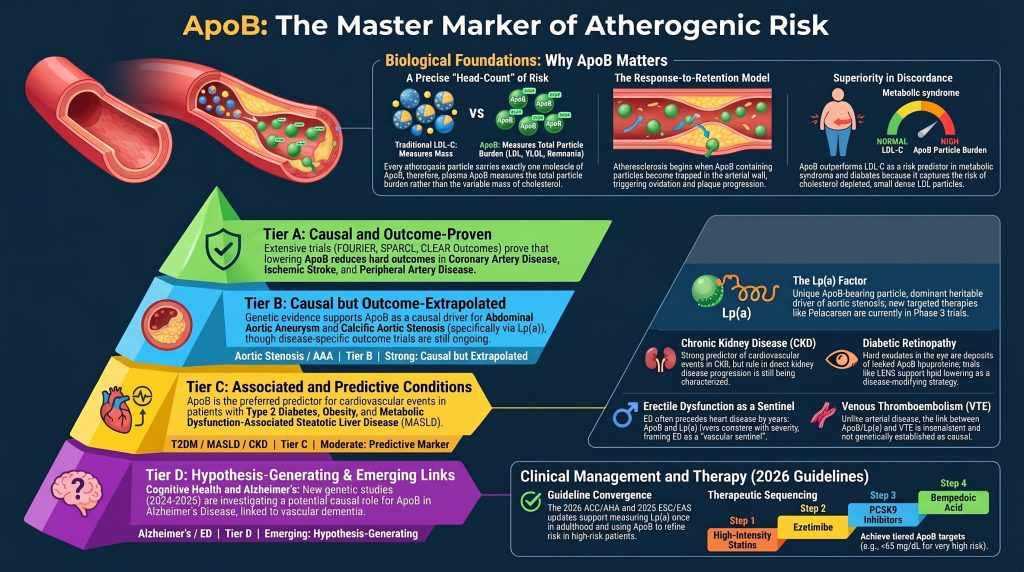
Erhöhte Apolipoprotein-B-Werte (ApoB) ist der informativste einzelne zirkulierende Marker für atherogenes Partikel Belastung ist und der vereinheitlichende kausale Treiber der Atherosklerose ist Herz-Kreislauf-Erkrankung (ASCVD). Sein klinischer Nutzen ist am größten, wo ApoB und Low-Density Lipoprotein Cholesterin (LDL-C) sind diskordant — am häufigsten bei insulinresistenten Phänotypen, die durch cholesterinarme kleines,ndes LDL und Triglycerid-reichen Remnants. Über die klassische ASCVD hinaus reicht die Beziehung zwischen erhöhtem ApoB und einer Erkrankung von kausal-und-als-Ergebnis-bewiesen (ischämischer Schlaganfall, periphere arterielle Verschlusskrankheit), zu kausal-aber-auf-Ergebnis-extrapoliert (abdominal Aortenaneurysma, verkalkt Aortenklappenstenose über Lipoprotein(a)), sowie assoziierter und prädiktiver (metabolische Dysfunktion-assoziierte steatotische Lebererkrankung, chronische Nierenerkrankung, diabetische Retinopathie), zur Hypothesen generierenden Forschung (Alzheimer-Krankheit, erektile Dysfunktion, venöse Thromboembolie, Krebsendpunkte). Diese Übersicht strukturiert die Evidenz in eine transparente Stufenleiter, sodass die Stärke der Inferenz mit der Stärke der zugrundeliegenden Daten übereinstimmt, fasst gegenwärtige und bevorstehende Therapien nach dem Status der Endpunkte zusammen und richtet die Empfehlungen an den ACC/AHA-Leitlinien von 2026 aus Dyslipidämie Leitlinie, das fokussierte Update der ESC/EAS von 2025, die Leitlinie der Canadian Cardiovascular Society von 2021 und der aktuelle Konsens der National Lipid Association.
Eine Evidenzleiter für ApoB und Krankheiten
Um einer Überallgemeinerung vorzubeugen, wird jeder Krankheitszustand in diesem Übersichtsartikel anhand einer vierstufigen Evidenzleiter bewertet. Die Einstufung bestimmt die Stärke der Empfehlung im folgenden Abschnitt.
- Stufe A – Kausal und erwiesen: Mendelsche Randomisierung (MR) unterstützt Kausalität UND randomisierte kontrollierte Studien (RCTs), die senken ApoB-haltige Partikel Reduzierung schwerer klinischer Endpunkte bei dieser Erkrankung durch präzise definierte oder robuste Subgruppenanalysen.
- Stufe B – Kausal, aber mit extrapoliertem Ergebnis: MR- oder starke genetische Evidenz stützt die Kausalität, ABER die Daten zur Reduktion von Endpunkten werden von verwandten ASCVD-Endpunkten extrapoliert und stammen nicht aus krankheitsspezifischen RCTs.
- Stufe C – Assoziativ und prädiktiv: Robuste Beobachtungs- und mechanistische Daten verknüpfen ApoB mit der Erkrankung und ApoB sagt Ereignisse voraus, ABER die Kausalität ist durch Mendelsche Randomisierung nicht bewiesen oder die Evidenz aus Behandlungen ist uneinheitlich.
- Tier D — Hypothesengenerierung: Mechanistische Plausibilität plus begrenzte Beobachtungssignale; keine überzeugenden kausalen oder interventionellen Belege.
Wo für eine Krankheit heterogene Evidenz über Subtypen hinweg vorliegt (z. B. vaskuläre kognitive Beeinträchtigung versus Alzheimer-Krankheit; ischämisch versus. Hämorrhagischer Schlaganfall; CKD-Ereignisse vs. Progression), wird jeder Subtyp separat bewertet, anstatt gemittelt zu werden. Wo eine Erkrankung aufgrund unvollständiger Evidenz zwischen zwei Stufen liegt – zum Beispiel bei hypertensiver vaskulärer Erkrankung (synergistisch mit Atherosklerose aber begrenzte krankheitsspezifische RCT-Daten) – eine doppelte Kennzeichnung wie “B/C” wird verwendet und im jeweiligen Abschnitt erläutert. Die Absicht ist deskriptive Transparenz, keine pseudopräzise Punktevergabe.
Teil I — Biologische Grundlagen
ApoB zählt atherogene Partikel
Jeder LDL, Lipoprotein mittlerer Dichte (IDL), Lipoprotein sehr niedriger Dichte (VLDL), Chylomikron Remnanten- und Lipoprotein(a)-[Lp(a)]-Partikel tragen genau ein Molekül Apolipoprotein B — apoB-100 auf hepatisch sezernierten Partikeln, apoB-48 auf die im Darm sekretierten1, 2Plasma-ApoB ist daher eine Zählung atherogener Partikel, während LDL-C eine Massenmessung ist, die von einer variablen Cholesterin-pro-Partikel-Stöchiometrie abhängt.3, 4Wenn die durchschnittliche Cholesterinladung pro Partikel sinkt — was bei insulinresistenten Zuständen mit cholesterinarmen, kleinen, dichten LDL der Fall ist —, entspricht dieselbe Plasmacholesterinmasse einer größeren Anzahl von Partikeln, und ApoB steigt unverhältnismäßig zum LDL-C an. Dies ist die Ursache für ein klinisch aussagekräftiges ApoB / LDL-C Unstimmigkeit und der Hauptgrund, warum ApoB LDL-C übertrifft bei Metabolisches Syndrom, Typ 2 Diabetes, MASLD und Adipositas [5, 6, 7].
Der Response-to-Retention-Mechanismus in der Arterienwand
Atherosklerose beginnt, wenn ApoB-haltige Partikel das Endothel und im Subendothel eingeschlossen werden extrazelluläre Matrix durch ionische Bindung zwischen positiv geladenen Resten auf ApoB-100 und negativ geladenen Glykosaminoglykane auf Biglykan und Decorin8, 9Retainierte Partikel werden oxidiert, angetrieben Makrophage Schaumzellenbildung, aktivieren das NLRP3-Inflammasom, und verbreiten Plaque Fortschritt10]. Dies Antwort-Retentions-Modell ist eine Eigenschaft der arteriellen Atherosklerose und betrifft Koronar-, Karotis-, zerebrale, periphere, Nieren- und Aortenarterien. Die Ausdehnung desselben Mechanismus auf nicht-arterielle Gefäßbetten – Lebersinusoiden, glomeruläres Mesangium, Netzhautkapillaren, kavernöse Mikrovaskulatur – ist biologisch plausibel, aber empirisch schwächer belegt und wird in den folgenden krankheitsspezifischen Abschnitten auch entsprechend behandelt.
Mendelsche Randomisierung: Von der Assoziation zur Kausalität
Genetisch bedingtes niedrigeres ApoB bietet einen lebenslangen Schutz vor koronare Herzkrankheit und mehrere koronar-externe Endpunkte. Multivariable MR-Analysen von Richardson und Kollegen (PLoS Medicine, 2020) und Marston und Kollegen (JAMA Cardiology, 2022) zeigen, dass bei konstant gehaltenem ApoB die residuellen Assoziationen von LDL-C und Triglyceride mit Myokardinfarkt erheblich abschwächen – was die Interpretation unterstützt, dass ApoB-haltige Feinstaubbelastung ist das dominante kausale Lipidsignal für ASCVD, wobei Cholesterin- und Triglyceridgehalt eher als Fracht denn als unabhängig fungieren Risikofaktoren [11, 12]. ApoB ist notwendig, aber nicht immer hinreichend: Remnant-Cholesterin, Lp(a), oxidierte Phospholipide, Endothelbiologie und systemische Entzündung beitragen Restrisiko über ApoB-Partikelanzahlen hinaus. Unter Berücksichtigung dieser Einschränkungen stellt die Konvergenz von MR, Modellen zur kumulativen Exposition und randomisierten Studien zu mechanistisch unterschiedlichen ApoB-senkenden Medikamenten, die einen ähnlichen Nutzen pro mg/dl erzielen, einen starken – wenn auch nicht absoluten – Kausalitätsnachweis dar, wobei die bekannten MR-Annahmen (Pleiotropie, Kanalisierung, Äquivalenz einer lebenslangen genetischen Exposition zur pharmakologischen Exposition) als Einschränkungen anerkannt werden [13].
Teil II – Stufe A: Kausal und erwiesen ursächlich für die Krankheit
Koronare Herzkrankheit und Myokardinfarkt (der ApoB- vs. LDL-C-Diskriminator)
Hier als Diskriminanzanalyse behandelt, da die Frage lautet, was ApoB über LDL-C und Nicht-HDL-C hinaus beiträgt, und nicht, ob die atherosklerotische KHK durch ApoB angetrieben wird (das ist sie). Der 2011er Sniderman Meta-Analyse (n = 233.455) berichtete standardisiert relative Risiken von 1,43 für ApoB, 1,34 für Non-HDL-C und 1,25 für LDL-C [14]. Die Unterschiede zwischen ApoB und Non-HDL-C sind in konkordanten Populationen klinisch gering, und beide Messwerte bleiben vernünftige Sekundärziele, die von aktuellen Leitlinien unterstützt werden. Die 2022 Marston UK Biobank Die Analyse (n = 389.529) zeigte, dass ApoB das mit LDL-C und Triglyceriden verbundene Risiko erheblich abschwächte; sobald ApoB im Modell enthalten war, trugen LDL-C und Triglyceride kaum noch zusätzliche Informationen bei [12Behbodikhah und Kollegen (2021) sowie Glavinovic und Kollegen (2022) formalisierten ApoB als das dominante – wenn auch nicht ausschließliche – vereinheitlichende kausale Partikel4, 5Wenn ApoB und LDL-C voneinander abweichen, ist die Behandlung nach dem höheren Risikowert der sicherere Weg; wenn sie übereinstimmen, ist jeder der beiden Messwerte klinisch vertretbar.
Ischämischer Schlaganfall (Groß- und Kleingefäßerkrankung)
MR-Studien einschließlich MEGASTROKE (Hindy und Kollegen, 2018) und die breit angelegte MR von Allara und Kollegen (2019) zeigen, dass genetisch erhöhte LDL-C- und ApoB-Werte das Risiko für einen ischämischen Schlagzeil durch Arteriosklerose der großen Arterien kausal erhöhen Schlaganfall und Schlaganfällen kleiner Gefäße; die Auswirkungen auf kardioembolische Schlaganfälle sind null [15, 16]. SPARCL zeigte, dass hochintensive Atorvastatin reduziert rezidivierende Schlaganfälle nach Schlaganfall oder TIA17]. FOURIER (Evolocumab) und ODYSSEY ERGEBNISSE (Alirocumab) senkte den ischämischen Schlaganfall proportional zur ApoB-Senkung, ohne den hämorrhagischen Schlaganfall bei LDL-C-Werten von bis zu <30 mg/dL zu erhöhen [18, 19].
Die Literatur zum hämorrhagischen Schlagzeil ist nuancierter und der optimale untere Schwellenwert für LDL-C und ApoB bleibt umstritten. Sun und Kollegen berichteten über einen moderat positiven Zusammenhang zwischen sehr niedrigem LDL-C und intrazerebralen Blutungen bei chinesischen Erwachsenen [20]. Absolute Ereignisraten bei LDL-C <40 mg/dL sind gering, und FOURIER und ODYSSEY zeigten kein Signal für hämorrhagischen Schlaganfall. Alles in allem sprechen die Studiendaten für einen Netto-zerebrovaskulären Nutzen der Senkung bei Hochrisiko-ASCVD-Populationen, jedoch ist bei schlecht kontrollierter Hypertonie, in einigen ostasiatischen Kohorten und bei sehr niedrig erreichten LDL-C-Werten, bei denen das absolute Nutzen-Schaden-Verhältnis weniger gut charakterisiert ist, weiterhin Vorsicht geboten.
Das Jahr 2025 VESALIUS-CV-Studie erweiterte diese Evidenz durch den Nachweis, dass die Zugabe von Evolocumab zu einer optimierten Lipidtherapie bei Patienten mit hohem kardiovaskulärem Risiko ohne vorangegangenen Myokardinfarkt oder Schlaganfall atherosklerotische Ereignisse reduzierte, was das „Lower-for-longer“-Paradigma in frühere Krankheitsstadien untermauert [21].
Periphere arterielle Verschlusskrankheit
Klarin und Kollegen (Nature Medicine, 2019) nutzten die Million Veteran Program genetische Determinanten der PAVK zu identifizieren und zu replizieren, die sich mit LDL-C-erhöhenden Loci überschneiden, was die Kausalität ApoB-haltiger Partikel unterstützt22]. Die FOURIER-PAD-Untergruppe (Bonaca et al., 2018) zeigte bei dem niedrigsten erreichten LDL-C-Wert eine Verringerung der schwerwiegenden unerwünschten Ereignisse an den Gliedmaßen um 42% [23]. CLEAR Outcomes (Nissen und Kollegen, 2023) zeigten Bempedoinsäure reduziert einen kombinierten kardiovaskulären Endpunkt einschließlich Extremitätenereignissen bei Statin-intoleranten Patienten24ApoB ist LDL-C bei diabetischer PAVK insbesondere aufgrund des Phenotyps der kleinen dichten LDL und Remnants überlegen.6].
Teil III – Stufe B: Kausale, aber hinsichtlich des Ergebnisses extrapolierte Erkrankung
Abdominales Aortenaneurysma
Harrison und Kollegen (JAMA Cardiology, 2018) und Allara und Kollegen (2019) nutzten MR, um zu zeigen, dass LDL-C- und ApoB-erhöhende Varianten das KHK-Risiko kausal erhöhen [16, 25]. Statin Meta-Analysen deuten auf ein verlangtes Aneurysmenwachstum hin, aber krankheitsspezifische randomisierte kontrollierte Studien mit ausreichender statistischer Power für harte Endpunkte sind begrenzt; die Reduktion aortaler Ereignisse in Studien wie FOURIER bestärkt die kausale Richtung18, 25].
Kalkhaltige Aortenklappenstenose (speziell Lp(a))
Aortenklappenverkalkung Stenose ist die Erkrankung am spezifischsten durch Lp(a) angetrieben – ein ApoB-haltiges Partikel. Thanassoulis und Kollegen (NEJM, 2013) nutzten die Mendelsche Randomisierung mit LPA-Varianten (rs10455872), um zu zeigen, dass Lp(a) das CAVS-Risiko unabhängig von LDL-C kausal erhöht26Spätere Arbeiten von Kamstrup, Nordestgaard und Tsimikas bestätigten Lp(a) als einen dominanten vererbbaren Treiber von CAVS, wobei die relevante Pathobiologie oxidierte Phospholipide umfasst, die von Lp(a) getragen werden und eine valvuläre Entzündung einleiten, sowie Verkalkung [27, 28Statine verlangsamen das Voranschreiten der CAVS nicht (ASTRONOMER, SEAS, SALTIRE) — was im Einklang damit steht, dass Lp(a) das primäre Ziel darstellt — und Therapien zur Senkung von Lp(a) befinden sich nun in der fortgeschrittenen Entwicklung.
Lp(a)-gerichtete Therapien — Aktueller Status
Um überzogene Erwartungen zu verhindern, sollte der Entwicklungsstatus jedes Agenten präzise angegeben werden:
- Pelacarsen (TQJ230): Antisense-Oligonukleotid. Die 2020 im NEJM veröffentlichte Studie von Tsimikas und Kollegen war eine Phase-2-Dosisfindungsstudie, die eine Senkung des Lp(a)-Wertes um bis zu 80% nachwies [29]. Die kardiovaskuläre Phase-3-Studie Lp(a)HORIZON läuft derzeit, wobei der Abschluss für 2026–2027 erwartet wird [30].
- Olpasiran: small-interfering RNA. Die NEJM-OCEAN(a)-DOSE-Studie aus dem Jahr 2022 war eine Dosisfindungsstudie der Phase 2; die Phase-3-Ergebnisstudie OCEAN(a)-Outcomes läuft noch [31, 32].
- LepodisiransiRNA in fortgeschrittener Entwicklung; die Phase-3-Ergebnisstudie ACCLAIM-Lp(a) nimmt derzeit Patienten auf33].
- Muvalaplin: First-in-Class oraler niedermolekularer Inhibitor der Lp(a)-Assemblierung mit angekündigter Phase-3-Ergebnisentwicklung [34].
Über den Abschluss von Phase-3-Ergebnisstudien zu Lp(a)-spezifischen Therapien wurde bisher noch nicht berichtet. Aussagen zur Reduktion von Endpunkten werden daher von der Biologie des ApoB pro Partikel, der mendelianischen Randomisierung (MR) und der bekannten vaskulären Toxizität von Lp(a) extrapoliert.
Teil IV – Stufe C: Assoziierte und prädiktive Erkrankungen
Typ-2-Diabetes-Mellitus
ApoB ist bei T2DM konsistent erhöht, und die Diskrepanz zu LDL-C ist ein prägendes Merkmal der diabetischen Dyslipidämie (hohe Triglyceride, niedriges HDL-C, normales bis mäßig erhöhtes LDL-C, erhöhtes Nicht-HDL-C und ApoB) [6, 35ApoB ist LDL-C als Prädiktor für kardiovaskuläre Ereignisse bei T2DM überlegen, und die Leitlinie der Canadian Cardiovascular Society von 2021 empfiehlt bei Diabetes und Hypertriglyceridämie bevorzugt ApoB oder Nicht-HDL-C [36Die ACC/AHA-Leitlinie von 2026 befürwortet die selektive Verwendung von ApoB zur Bestimmung des Residualrisikos bei kardio-metabolisch-renalem Syndrom, Typ-2-Diabetes, Hypertriglyzeridämie und manifester CVD37Ob ApoB selbst kausal für das Auftreten von T2DM ist, bleibt umstritten. Eine multivariable mendelsche Randomisierung eine Analyse von Richardson und Kollegen (Lancet Healthy Longevity, 2021) ergab, dass sich ApoB in univariablen im Vergleich zu multivariablen Modellen unterschiedlich verhielt und dass das multivariable Signal auf ein erhöhtes T2DM-Risiko hindeutet – im Einklang mit der mechanistischen Annahme, dass die Cholesterinexposition der β-Zellen (vermittelt durch ABCA1) beeinträchtigt Insulin Sekretion38, 39] – aber die Gerichtetheit wird durch den wohlbekannten leichten Anstieg der T2DM-Inzidenz unter Statintherapie verkompliziert. Die vorherrschende klinische Botschaft bei T2DM ist daher eher prädiktiv und auf die Behandlung ausgerichtet als inzidenzkausal. CARDS, HPS-DIABETES und die Diabetes-Untergruppe von REDUCE-IT (Icosapent-Ethyl 4 g/Tag bei Statin-behandelten Patienten mit erhöhten Triglyzeriden) zeigen eine sinnvolle Reduktion der Ereignisse [40, 41].
Insulinenresistenz und metabolisches Syndrom
In Insulinresistenz, steigen die hepatische VLDL-Sekretion, verlängert sich die Verweilzeit ApoB-haltiger Partikel im Plasma, und ein CETP-vermittelter Lipidaustausch in Kombination mit einem Abbau durch hepatische Lipase erzeugt kleine, dichte LDL. Das Nettoergebnis ist die kanonische Diskrepanz: mehr Partikel, die jeweils weniger Cholesterin transportieren. Cromwell und Kollegen (Framingham Offspring) sowie Mora (Women’s Health Study) zeigten, dass die LDL-Partikelanzahl in dieser Population besser mit Ereignissen korreliert als das LDL-C [42, 43]. Lebensstilinterventionen, GLP-1-Rezeptor-Agonisten, und SGLT2-Hemmer alle senken ApoB mäßig durch Gewichts-, Triglyzerid- und Remnant-Effekte44].
Metabolisnustyforstungs-assoziierte steatotische Lebererkrankung (MASLD/MASH)
MASLD teilt sich einen vorgeschalteten Treiber mit atherogene Dyslipidämieleber- de-novo-Lipogenese und einer Überproduktion von VLDL. Patienten mit MASLD haben typischerweise erhöhtes ApoB, erhöhtes Remnant-Cholesterin und kleine, dichte LDL – oft bei scheinbar normalem LDL-C [45, 46]. Die kardiovaskulären Implikationen sind klinisch von Bedeutung: Herzkreislauferkrankungen sind die Todesursache Nummer eins bei MASLD, und ApoB ist LDL-C als Risikodiskriminator in dieser Population überlegen [46Statine sind gemäß den Leitlinien von AASLD und EASL bei MASLD/MASH sicher und werden empfohlen47Resmetirom, ein Agonist des Schilddrüsenhormonrezeptors-β, wurde im März 2024 von der FDA für nicht-zirrhotische MASH mit mäßiger bis fortgeschrittener Fibrose auf der Grundlage der MAESTRO-NASH-Studie zugelassen; es senkt ApoB und LDL-C bei gleichzeitiger Verbesserung der Histologie, obwohl Daten zu kardiovaskulären Endpunkten noch nicht vorliegen [48].
Zur Kausalität: Die Varianten PNPLA3 (I148M) und TM6SF2 (E167K) reduzieren die hepatische VLDL-Sekretion und senken ApoB, während sie paradoxerweise die intrahepatische Lipidakkumulation und die MASLD-Progression erhöhen – was verdeutlicht, dass der hepatische ApoB-Export teilweise vor intrahepatischer Lipidbelastung schützt, aber die zirkulierende atherogene Last erhöht49, 50Die Beziehung zwischen ApoB und MASLD lässt sich daher am besten als bidirektional und metabolisch miteinander verknüpft beschreiben, anstatt als eine, bei der ApoB MASLD in demselben Sinne verursacht, wie ApoB Atherosklerose verursacht.
Chronische Nierenerkrankung
CKD verursacht eine urämische Dyslipidämie, die durch erhöhte Triglyceride, reduziertes HDL-C, oft niedrige bis normale LDL-C-Werte sowie erhöhte ApoB- und Lp(a)-Werte aufgrund einer beeinträchtigten Remnant-Clearance und Apo(a)-Akkumulation gekennzeichnet ist51]. SHARP (Simvastatin/Ezetimib bei chronischer Nierenerkrankung (CKD) reduzierte die Zahl schwerwiegender atherosklerotischer Ereignisse um 17%; der Nutzen war bei Dialysepatienten geringer (4D, AURORA ergab keine signifikanten Ergebnisse), was die Verlagerung von atherosklerotischen hin zu nicht-atherosklerotischen kardiovaskulären Todesfällen im Endstadium der Erkrankung widerspiegelt [52, 53]. In Post-hoc-Analysen dieser Studien lässt sich anhand von ApoB das Risiko für kardiovaskuläre Ereignisse bei chronischer Nierenerkrankung (CKD) besser vorhersagen als anhand von LDL-C. Die Studie von Lanktree und Kollegen aus dem Jahr 2018 im „American Journal of“ Nierenerkrankungen Im Rahmen einer MR-Analyse wurde der Zusammenhang zwischen HDL-C, LDL-C, Triglyceriden und dem CKD-Risiko untersucht; dabei zeigten sich gemischte Ergebnisse, was die Annahme stützt, dass die Auswirkungen der Blutfettwerte auf das Fortschreiten der CKD selbst geringer sind als ihre Auswirkungen auf CKD-assoziierte kardiovaskuläre Ereignisse [54]. Die Literatur zu den mechanistischen Zusammenhängen bei glomerulären Mesangialzellen Schaumzelle Die Bildung von Ablagerungen und die Lipid-Nephrotoxizität sind biologisch schlüssig, erreichen jedoch noch nicht die für das Fortschreiten einer chronischen Nierenerkrankung erforderliche kausale Schwelle.
Hypertonische Gefäßerkrankung
ApoB und Bluthochdruck wirken unabhängig voneinander und synergistisch auf die Atherosklerose ein. Bluthochdruck erhöht die Endothelpermeabilität, während ApoB das Substrat für die Ablagerung liefert. Beide tragen zur Arterienverhärtung bei, Linksherzhypertrophie, sowie Schäden an den Zielorganen. SCORE2 und die Pooled Cohort Equations sowohl Blutdruck- als auch Lipidwerte einbeziehen; ob ApoB im SCORE2-Modell über den Nicht-HDL-C-Wert hinaus einen zusätzlichen prognostischen Mehrwert bietet, wurde formal untersucht. Eine Analyse von Wong, Takeuchi, Thao, Nicholls, Chew und Peter aus dem Jahr 2025 im „European Journal of Preventive Cardiology“ ergab, dass die Einbeziehung von ApoB in das SCORE2-Modell die Unterscheidungskraft, Kalibrierung oder Netto- Umklassifizierung, obwohl die ApoB-Grenzwerte in Kombination mit den SCORE2-Schwellenwerten die Klassifizierung in Grenzfällen verfeinerten [55]. Die derzeitigen Erkenntnisse sprechen daher nicht dafür, die Standard-Eingabewerte des SCORE2-Modells durch ApoB zu ersetzen; ApoB eignet sich am besten als ergänzender Indikator für das Restrisiko.
Adipositas und bariatrische/medikamentöse Gewichtsreduktion
Viszerales Fettgewebe führt zu einer übermäßigen Produktion von VLDL in der Leber und erhöht den ApoB-Spiegel. Maßnahmen zur Gewichtsreduktion senken den ApoB-Spiegel: bariatrische Chirurgie in Metaanalysen, GLP-1-Rezeptoragonisten (mit dem SELECT-Versuch die eine Verringerung kardiovaskulärer Ereignisse nachweisen mit Semaglutid bei Adipositas ohne Diabetes (zusammen mit signifikanten Auswirkungen auf ApoB und die Blutfettwerte) sowie in geringerem Maße auch SGLT2-Hemmer senken alle den ApoB-Spiegel parallel zur Verringerung des Körperfettanteils erheblich [56]. Bei adipösen Patienten ist der LDL-C-Wert häufig scheinbar normal, während der ApoB-Wert deutlich erhöht ist; Welsh und Kollegen (Circulation, 2021) zeigten anhand der UK Biobank, dass ApoB als Prädiktor über alle BMI-Stufen hinweg besser abschneidet als LDL-C [57]. Der Phänotyp der „Lean-Mass-Hyper-Responder“ – schlanke, insulinsensitive Personen, die ketogene Diäten bei denen sehr hohe LDL-C- und ApoB-Werte auftreten — hat zu einer Debatte in der Beobachtungsforschung geführt (KETO-CTA), doch die veröffentlichte Kohorte weist durchweg extreme ApoB-Werte auf und es fehlt eine Kontrollgruppe mit niedrigem ApoB-Spiegel, was die Schlussfolgerungen einschränkt. Die überwiegende Mehrheit der MR- und RCT-Ergebnisse zur Kausalität von ApoB wird nicht durch eine einzige Studie widerlegt Beobachtungsstudie im eingeschränkten ApoB-Bereich.
Familiäre Hypercholesterinämie
Heterozygot familiäre Hypercholesterinämie (HeFH; Prävalenz ~1 zu 250) und homozygote FH (HoFH; ~1 zu 300.000) sind monogene Erkrankungen der LDLR, APOB (familiäre ApoB-Defekt) oder PCSK9 Funktionsgewinn – direkte Erhöhung des ApoB-Spiegels. Die lebenslange ApoB-Exposition ist der Mechanismus, der zu vorzeitiger ASCVD führt; bei HoFH-Patienten kann es bereits im ersten oder zweiten Lebensjahrzehnt zu einem Myokardinfarkt kommen. Die Therapie zielt auf ApoB ab: hochdosierte Statine, Ezetimib, monoklonale PCSK9-Antikörper (Alirocumab, Evolocumab) bei HeFH und HoFH (restliche LDLR-Funktion), Evinacumab (ANGPTL3 monoklonal; ELIPSE-HoFH, NEJM 2020), Lomitapid, und LDL-Apherese wo nötig [58, 59]. FH gehört zu den aussagekräftigsten natürlichen Experimenten, die die Kausalität von ApoB belegen.
Hypertriglyceridämie, gemischte Dyslipidämie und Restcholesterin
ApoB erfasst die atherogene Belastung bei Hypertriglyceridämie besser als jeder andere einzelne Test, da es jedes VLDL-, IDL- und Restpartikel zählt. Restcholesterin – ob berechnet oder gemessen – wirkt laut MR-Analysen von Varbo, Nordestgaard und Kollegen ursächlich atherogen [60, 61]. Die REDUCE-IT-Studie zeigte, dass 4 g Icosapentethyl pro Tag die Zahl der Ereignisse bei mit Statinen behandelten Patienten mit Triglyceridwerten von 135–499 mg/dL um 25% senkt [40], obwohl der jüngste Expertenkonsens die Stärke der Empfehlung angesichts ungelöster Fragen zum Vergleichspräparat (Mineralöl) abgeschwächt hat. Die PROMINENT-Studie zeigte, dass Pemafibrat die Triglyceride und das Restcholesterin senkte, ohne ApoB zu senken, und kardiovaskuläre Ereignisse nicht reduzierte – tatsächlich erhöhte es ApoB sogar leicht –, was ein aussagekräftiges natürliches Experiment zur Untermauerung des Prinzips darstellt, dass die Reduktion der ApoB-Partikel und nicht die Senkung der Triglyceride an sich das therapeutische Ziel ist [62]. Die Prüfpräparate Olezarsen und Plozasiran (APOC3-gerichtet) sowie Zodasiran (ANGPTL3-siRNA) senken die Anzahl der ApoB-haltigen Partikel und die Triglyceridwerte; Studien zu kardiovaskulären Endpunkten stehen noch aus. Olezarsen erhielt im Dezember 2024 die FDA-Zulassung für das familiäre Chylomikronämie-Syndrom zur Senkung des Pankreatitis-Risikos – eine seltene phänotyp-spezifische Indikation, die nicht mit der nachgewiesenen Reduktion von ASCVD-Ereignissen verwechselt werden sollte [63, 64]. Die einheitliche Schlussfolgerung: Reststoff-reiche, ApoB-haltige Partikel sind atherogen und stellen ein echtes Ziel für das Restrisiko dar, doch gibt es noch nicht für jeden Phänotyp einer gemischten Dyslipidämie spezielle Studien zur Senkung des ApoB-Spiegels mit Ergebnisauswertung.
Diabetische Retinopathie
Über die Blutzucker- und Blutdruckkontrolle hinaus ist eine Dyslipidämie – und insbesondere ApoB-haltige Restlipoproteine – ein Prädiktor für den Schweregrad der diabetischen Retinopathie, des diabetischen Makulaödems und deren Fortschreiten [65]. Die FIELD-Studie (Fenofibrat, 2007) und die Fenofibrat-plus-Simvastatin-Teilstudie der ACCORD-Eye-Studie zeigten eine Verringerung des Fortschreitens der diabetischen Retinopathie (DR) um etwa 40% – weitgehend unabhängig von der blutzuckersenkenden Wirkung –, die auf die Senkung der Restlipoproteinwerte und direkte entzündungshemmende PPAR-α-Effekte im Netzhautendothel zurückgeführt wurde [66, 67]. Das Jahr 2024 LENS-Studie liefert aktuelle randomisierte Erkenntnisse zur frühen DR und untermauert damit den Einsatz von Fenofibrat als krankheitsmodifizierende Therapie bei dieser mikrovaskulären Komplikation [68]. Harte Exsudate bei der diabetischen Retinopathie sind histologisch gesehen Ablagerungen von ApoB-haltigen Lipoproteinen, die durch eine beschädigte Blut-Netzhaut-Schranke in das Gewebe gelangt sind [69]. Die mechanistischen und klinischen Belege sind überzeugend; ob ApoB selbst ursächlich ist oder lediglich ein Marker für die verbleibende Belastung, ist nach wie vor umstritten, und der Nutzen von Fenofibrat könnte über pleiotrope Signalwege zum Tragen kommen.
Schwangerschaftsbedingte Komplikationen
Die Schwangerschaft ist ein physiologisch bedingter Zustand mit Dyslipidämie. Erhöhte ApoB-Werte vor der Schwangerschaft und in der Frühschwangerschaft stehen im Zusammenhang mit späteren Präeklampsie, Schwangerschaftsdiabetes, sowie Frühgeburten in Kohortenstudien [70]. Zu den mechanistischen Zusammenhängen gehören Endotheliale Dysfunktion (Präeklampsie) und einer bereits bestehenden Insulinresistenz (Schwangerschaftsdiabetes). Die FDA hat im Jahr 2021 die pauschale, strengste Warnung vor der Einnahme von Statinen während der Schwangerschaft aufgehoben, doch handelt es sich hierbei nicht um eine allgemeine Empfehlung; die aktuellen Erkenntnisse zu Pravastatin Die Ergebnisse zur Prävention von Präeklampsie aus Studien wie StAmP und INOVASIA sind uneinheitlich und mit meta-analytischer Unsicherheit behaftet [71, 72]. Statine sollten während der Schwangerschaft nicht routinemäßig verabreicht werden, es sei denn im Rahmen einer klinischen Studie oder nach einer individuellen Beratung durch einen Spezialisten für Mutter-Kind-Medizin.
Vaskuläre kognitive Beeinträchtigung
Die vaskuläre kognitive Beeinträchtigung (VCI) weist dieselbe Pathophysiologie auf wie der Schlaganfall und Kleingefäßerkrankung; Durch ApoB bedingte zerebrale Atherosklerose und Lipohyalinose führen zu einer kumulativen Belastung durch Hyperintensitäten in der weißen Substanz, Lakunen und Mikroblutungen, die sich als vaskulärer kognitiver Rückgang äußern [73, 74]. Die Beweislage für ApoB im Zusammenhang mit vaskulärer Demenz ist entsprechend stichhaltig: Sie stützt sich auf die kausalen Belege aus den Bereichen ischämischer Schlaganfall und Kleingefäßerkrankung.
Alzheimer-Krankheit (im Entstehen begriffen)
Bei der Alzheimer-Krankheit (AD) ist das Bild ungewisser und komplexer. APOE ε4 ist der dominierende genetische Risikofaktor und spielt eine Rolle im Lipoproteinstoffwechsel, unterscheidet sich jedoch von ApoB. Eine multivariable Mendelsche Randomisierungsstudie aus dem Jahr 2026 von Pham, Mulugeta, Lumsden und Hyppönen (GeroScience, April 2026) berichtete, dass ApoB in der multivariablen MR mit einem höheren Risiko für Demenz jeglicher Ursache assoziiert war, obwohl das Signal von der Modellspezifikation abhängig war [75]. Eine 2024 in „Communications Biology“ veröffentlichte Analyse von Adams, Martin und Kollegen stellte einen separaten Zusammenhang zwischen genetisch vorhergesagtem ApoB (jedoch nicht LDL-C) und dem Alzheimer-Risiko her, was die Rolle als Hypothesengenerator der Stufe D untermauert [90]. Iwagami und Kollegen (Lancet Healthy Longevity, 2021) zeigten anhand von 1,8 Millionen Menschen, dass erhöhte Werte im mittleren Lebensalter Gesamtcholesterin steht im Zusammenhang mit Demenz im hohen Alter [76]. Metaanalysen zu Statinen deuten auf eine verringerte Demenzinzidenz bei Einnahme im mittleren Lebensalter hin, doch die Ergebnisse aus klinischen Studien (PROSPER, HPS) sind uneinheitlich und die Aussagekraft der Studien ist unzureichend [77]. Aktuelle Beobachtungsdaten bringen erhöhte Lp(a)-Werte zudem mit Hirninfarkten und Demenz in Verbindung [78]. Die Rolle von ApoB bei Alzheimer ist daher nach wie vor nicht abschließend geklärt – gestützt durch mechanistische Plausibilität und eine kleine, heterogene MR-Grundlage, jedoch nicht mit der gleichen Überzeugungskraft wie das Argument der vaskulären kognitiven Beeinträchtigung.
Teil V – Stufe D: Hypothesen generierende Bedingungen
Erektionsstörungen
Eine erektile Dysfunktion tritt häufig 3–5 Jahre vor einer koronaren Herzkrankheit auf, da die Schwellkörper Arterie ist klein (1–2 mm) und weist früher eine Endotheldysfunktion auf [79]. ApoB und Lp(a) korrelieren in Querschnittsstudien mit dem Schweregrad der erektilen Dysfunktion, und eine Statintherapie verbessert in Metaanalysen die erektile Funktion in bescheidenem Maße, vermutlich durch eine Erholung der Endothelzellen [80]. Die Literatur stützt sich größtenteils auf Beobachtungsstudien; die ED lässt sich am besten als vaskulärer Frühindikator beschreiben und nicht als eigenständige, durch ApoB verursachte Erkrankung.
Netzhautvenenverschluss
Netzhautvene Okklusion wurde in Beobachtungsstudien mit erhöhten ApoB- und Lp(a)-Werten in Verbindung gebracht; mechanistisch gesehen weist es atherothrombotische Merkmale auf, die denen einer arteriellen Gefäßerkrankung ähneln [81]. Ein Kausalzusammenhang ist nicht nachgewiesen.
Venöse Thromboembolie
Wurde in der Vergangenheit als vom atherogenen Risiko getrennt betrachtet. Der Zusammenhang zwischen Lp(a) und VTE ist biologisch plausibel – Lp(a) wirkt antifibrinolytisch (durch die Homologie von Apo(a) mit Plasminogen) und transportiert oxidierte Phospholipide – doch die veröffentlichten Erkenntnisse sind widersprüchlich. Jüngste Analysen im „European Heart Journal“ beschreiben den Zusammenhang zwischen Lp(a) und VTE als genetisch nicht belegt, im Gegensatz zu den starken Hinweisen auf arterielle und klappenbezogene Ursachen; eine MRT-Studie fand keinen statistisch signifikanten kausalen Einfluss von ApoB, LDL-C, HDL-C, Triglyceriden oder ApoA1 auf die TVT [82, 83]. Neuere Forschungsergebnisse deuten zudem eher auf eine geschlechts- und hormonabhängige Heterogenität hin als auf einen verallgemeinerbaren kausalen Effekt. Jupiter Post-hoc-Analysen deuten auf einen moderaten Nutzen hinsichtlich der VTE hin bei Rosuvastatin [84]. Die plausibelste Schlussfolgerung ist, dass der Zusammenhang uneinheitlich ist und das Signal – sofern es tatsächlich vorhanden ist – nur geringfügig ist.
Krebsverläufe
Die Evidenz ist heterogen und größtenteils assoziativ. Einige MR-Studien deuten darauf hin, dass ein niedriger LDL-C/ApoB-Wert mit einem höheren Risiko für bestimmte Krebsarten einhergeht – was höchstwahrscheinlich darauf zurückzuführen ist, dass umgekehrte Kausalität aus präklinischen Studien, wonach eine Senkung des zirkulierenden Cholesterinspiegels das Krebsrisiko senkt – während Daten aus Beobachtungskohortenstudien einen Zusammenhang zwischen erhöhten ApoB-Werten und durch Adipositas bedingten Krebserkrankungen herstellen. Ein Kausalzusammenhang ist nicht erwiesen, und niedrige ApoB-Werte sollten nicht als Strategie zur Krebsprävention angesehen werden [85].
Teil VI – Therapien zur Senkung des ApoB-Spiegels, nach Evidenzgrad
Wenn man alle ApoB-senkenden Wirkstoffe über einen Kamm schert, wird die Gewissheit hinsichtlich des Nutzens neuerer Wirkstoffe überbewertet. Die folgende dreistufige Einteilung spiegelt die für Krankheiten verwendete Evidenzleiter wider.
Nachweislich wirksam bei der Senkung des ASCVD-Risikos
- Statine (Rosuvastatin, Atorvastatin, andere) — umfangreiche Evidenz aus randomisierten kontrollierten Studien (RCT) sowohl im Bereich der Primärprävention als auch Sekundärprävention.
- Ezetimib — IMPROVE-IT hat einen zusätzlichen Nutzen gegenüber der Statintherapie gezeigt.
- Monoklonale PCSK9-Antikörper (Alirocumab, Evolocumab) – FOURIER, ODYSSEY OUTCOMES und die Jahre 2024–2025 VESALIUS-Lebenslauf Studie zur Ausweitung der Behandlung auf Hochrisikopatienten ohne vorangegangenen Herzinfarkt oder Schlaganfall [18, 19, 21].
- Bempedoinsäure — CLEAR-Ergebnisse (2023) bei Patienten mit Statinunverträglichkeit [24].
Nutzen bei bestimmten Phänotypen
- Icosapentethyl — REDUCE-IT (mit Statinen behandelte Patienten mit anhaltender Hypertriglyceridämie, vorrangig im Hinblick auf kardiovaskuläre Ereignisse) [40]. Es ist zu beachten, dass der aktuelle Expertenkonsens die Stärke der Empfehlung in einigen Leitlinien aufgrund ungeklärter Fragen bezüglich der Placebo (Mineralöl).
- Fenofibrat — FIELD, ACCORD-Eye und LENS zur Verlangsamung des Fortschreitens der diabetischen Retinopathie; im Allgemeinen nicht zur Reduzierung von ASCVD-Ereignissen indiziert [66, 67, 68].
Experimentelle oder Nischentherapien
- Inclisiran — auf siRNA basierend PCSK9-Inhibitor; drastische und anhaltende Senkung von LDL-C und ApoB. Die ORION-4-Studie zu kardiovaskulären Endpunkten läuft derzeit noch, und in den ACC/AHA-Leitlinien von 2026 wird darauf hingewiesen, dass die Endpunktdaten noch ausstehen [37, 86]. Dennoch hat die zweimal jährliche Verabreichung Inclisiran eine bedeutende Nischenrolle für Patienten mit Schwierigkeiten bei der Therapietreue verschafft, und das fokussierte Update der ESC/EAS für 2025 gibt je nach Risikokategorie eine stärkere Empfehlung der Klasse I/IIa ab [87].
- Auf Lp(a) ausgerichtete Therapien (Pelacarsen, Olpasiran, Lepodisiran, Muvalaplin) — Die Phase-3-Ergebnisstudien Lp(a)HORIZON, OCEAN(a)-Outcomes und ACCLAIM-Lp(a) laufen derzeit [30, 32, 33].
- APOC3-gerichtete Wirkstoffe (Olezarsen, Plozasiran) — Olezarsen ist von der FDA für das familiäre Chylomikronämie-Syndrom (Prävention von Pankreatitis) zugelassen; die Auswirkungen auf ASCVD sind noch nicht geklärt [63, 64].
- ANGPTL3-gerichtete Wirkstoffe (Evinacumab für HoFH zugelassen; Zodasiran in der Entwicklung) — Die Wirksamkeit bei nicht-FH-bedingter ASCVD ist noch nicht nachgewiesen [58].
Teil VII – Die aktuelle Landschaft der Leitlinien
Seit 2025–2026 haben sich die wichtigsten Leitlinien im Vergleich zu den ACC/AHA-Leitlinie zum Cholesterin aus dem Jahr 2018 Rahmen:
- Die ACC/AHA-Leitlinie zur Dyslipidämie aus dem Jahr 2026 (als Ersatz für die Cholesterin-Leitlinie von 2018) führt die Behandlungsziele für LDL-C und Nicht-HDL-C wieder ein, empfiehlt die Messung von Lp(a) mindestens einmal im Erwachsenenalter und befürwortet selektive ApoB-Tests zur Beurteilung des Restrisikos – insbesondere bei kardiometabolischem Nierensyndrom, T2DM, Hypertriglyceridämie und bei bekannter kardiovaskulärer Erkrankung [37].
- Die auf die ESC/EAS-Leitlinien 2025 ausgerichtete Aktualisierung Die Dyslipidämie-Leitlinie von 2019 berücksichtigt die bis März 2025 veröffentlichten wissenschaftlichen Erkenntnisse und befürwortet weiterhin ApoB-Zielwerte bei Patienten mit hohem und sehr hohem Risiko [87].
- Die Leitlinie der Canadian Cardiovascular Society aus dem Jahr 2021 empfiehlt vorrangig ApoB oder Nicht-HDL-C, insbesondere wenn die Triglyceridwerte 1,5 mmol/L überschreiten oder bei kardiometabolischen Erkrankungen [36].
- Aktuelle Konsensempfehlungen der National Lipid Association die praktische Bedeutung von ApoB-Tests bei der Bewertung des Restrisikos ausweiten [88].
Zusammenfassung: In den verschiedenen Fachgesellschaften herrscht Einigkeit darüber, dass ApoB klinisch von Nutzen ist, insbesondere im Hinblick auf das Restrisiko und bei diskordanten LDL-C/ApoB-Phänotypen; jedoch empfiehlt derzeit keine der großen Fachgesellschaften ApoB als universelles Lipid-Screening der ersten Wahl für alle Erwachsenen.
Teil VIII – Praktische Empfehlungen aus den Leitlinien
Selektive ApoB-Untersuchung
Bei jedem Erwachsenen mit Typ-2-Diabetes, metabolischem Syndrom, MASLD, Adipositas (BMI ≥ 30), chronischer Nierenerkrankung (CKD) im Stadium 3 oder höher, Nüchtern-Triglyceridwerten von ≥ 150 mg/dl sowie bekannter oder vermuteter familiärer Prädisposition sollte mindestens einmal der ApoB-Wert bestimmt werden. Hypercholesterinämie, Familiengeschichte bei vorzeitiger ASCVD oder bei LDL-C-Werten im Bereich von 70–190 mg/dL, bei denen die Intensität der Behandlung ungewiss ist. Dies steht im Einklang mit den Empfehlungen der ESC/EAS, des CCS sowie dem selektiven Einsatz, der von der ACC/AHA für 2026 befürwortet wird. Ein flächendeckendes ApoB-Screening bei allen Erwachsenen wird derzeit in den Leitlinien nicht empfohlen.
Lp(a)-Messung wird zunehmend empfohlen
Der Lp(a)-Wert sollte bei jedem Erwachsenen mindestens einmal gemessen werden, sofern dies im Rahmen einer richtlinienkonformen Praxis möglich ist. Diese Empfehlung wird durch das fokussierte Update der ESC/EAS von 2025, die ACC/AHA-Leitlinie von 2026 sowie die früheren Leitlinien der ESC/EAS von 2019 gestützt und wird zunehmend – wenn auch noch nicht flächendeckend – in den Gesundheitssystemen umgesetzt. Lp(a) ist entscheidend für die Beurteilung einer kalzifizierten Aortenstenose, bei einem vorzeitigen Herzinfarkt sowie bei einer familiären Vorgeschichte von vorzeitiger ASCVD; es hat prognostischen Wert sowohl in der Primär- als auch in der Sekundärprävention.
Behandlungsziele
Verwenden Sie LDL-C als primäres Behandlungsziel gemäß den ACC/AHA-Leitlinien von 2026, wobei ApoB als ergänzende Kennzahl für das Restrisiko dient – insbesondere wenn LDL-C und ApoB nicht übereinstimmen. Bei einer an den ESC/EAS-Leitlinien orientierten Praxis können ApoB-Zielwerte direkt herangezogen werden: sehr hohes Risiko < 65 mg/dl, hohes Risiko < 80 mg/dl, mäßiges Risiko < 100 mg/dl. Wenn die beiden Messgrößen voneinander abweichen, sollte die Therapie auf den Wert mit dem höheren Risiko ausgerichtet werden.
Ablauf der Therapie
- Erstlinientherapie: hochdosiertes Statin (Rosuvastatin 20–40 mg oder Atorvastatin 40–80 mg).
- Fügen Sie 10 mg Ezetimib hinzu, um den ApoB-Spiegel zusätzlich zu senken und den Behandlungserfolg zu verbessern.
- Bei Patienten mit sehr hohem Risiko, die ihr Ziel noch nicht erreicht haben, sollte ein monoklonaler PCSK9-Antikörper (Alirocumab oder Evolocumab) hinzugefügt werden.
- Verwenden Sie Bempedoinsäure bei Patienten mit Statinunverträglichkeit gemäß den CLEAR-Outcomes.
- Icosapentethyl sollte bei mit Statinen behandelten Patienten mit anhaltender Hypertriglyceridämie und ASCVD gemäß der REDUCE-IT-Studie angewendet werden, wobei die jüngsten, auf Leitlinienebene formulierten Vorbehalte zu beachten sind.
- Bei einer durch Lp(a) bedingten Erkrankung sollten Sie eine Teilnahme an den Studien Lp(a)HORIZON, OCEAN(a)-Outcomes, ACCLAIM-Lp(a) oder ähnlichen Programmen in Betracht ziehen.
- Inclisiran ist für ausgewählte Patienten, die für eine Statintherapie in Frage kommen und eine weitere Senkung der LDL-C-/ApoB-Werte benötigen, eine sinnvolle Option; die Ergebnisdaten aus der ORION-4-Studie stehen noch aus.
Verbleibendes Entzündungsrisiko
Bei Patienten in der Sekundärprävention mit niedrigem ApoB-Spiegel (z. B. 2 mg/l und wiederkehrenden Ereignissen sollte Folgendes in Betracht gezogen werden: Colchicin 0,5 mg täglich pro LoDoCo2 (2023 von der FDA zur Senkung des ASCVD-Risikos zugelassen) anstelle einer weiteren Senkung des ApoB-Spiegels [89].
Hinweise und Einschränkungen
Die Mendelsche Randomisierung beruht auf Annahmen – Pleiotropie, Kanalisierung und der Äquivalenz der lebenslangen genetischen Exposition mit der medikamentösen Exposition –, die unvollkommen sind. Die Übereinstimmung der MR mit mehreren RCTs zu verschiedenen Wirkstoffklassen (Statine, Ezetimib, monoklonale PCSK9-Antikörper, Bempedoinsäure), die über unterschiedliche Mechanismen auf ApoB abzielen, ist der stärkste praktisch erreichbare Beweis für Kausalität in erwachsenen Populationen, entspricht jedoch nicht einer lebenslangen randomisierten Studie und sollte nicht als logisch unumstößlich dargestellt werden.
Hämorrhagischer Schlaganfall bei sehr niedrigen LDL-C-/ApoB-Werten: Die Datenlage ist uneinheitlich; absolutes Risiko Bei einem LDL-C-Wert < 40 mg/dl ist das Risiko gering, und der zerebrovaskuläre Nettonutzen in Studien ist weiterhin günstig, doch ist bei schlecht eingestellten Hypertonikern und in einigen ostasiatischen Kohorten weiterhin Vorsicht geboten.
Die Diskussion um „Lean-Mass-Hyper-Responder“ und KETO-CTA basiert auf Beobachtungsdaten und ist durch die Begrenzung des Wertebereichs in einer einheitlich extremen ApoB-Kohorte ohne Kontrollgruppe mit niedrigem ApoB-Spiegel eingeschränkt. Die überwiegende Mehrheit der MR- und RCT-Evidenz zur ApoB-Kausalität wird durch eine Beobachtungsstudie mit 100 Personen im eingeschränkten ApoB-Bereich nicht widerlegt.
Zusammenhänge zwischen Krebs und ApoB spiegeln höchstwahrscheinlich eine umgekehrte Beziehung wider Kausalität und verwirrend.
Die Daten zur Schwangerschaft stammen größtenteils aus Beobachtungsstudien; Statine sollten während der Schwangerschaft nicht routinemäßig verabreicht werden, es sei denn, dies geschieht im Rahmen einer klinischen Studie oder nach Rücksprache mit einem Facharzt.
Standardisierung der Assays: Die ApoB-Bestimmung ist mittlerweile mithilfe immunoturbidimetrischer oder immunonephelometrischer Methoden, die auf den WHO/IFCC-Referenzstandard SP3-07 kalibriert sind, gut standardisiert. Ältere Assays wiesen Unterschiede auf, weshalb historische Vergleiche entsprechend interpretiert werden sollten.
Übersichtstabelle: ApoB in verschiedenen Krankheitsstadien
| Krankheitszustand | Evidenzstufe | Kausal vs. assoziativ | Mechanismus | Senkt eine Verringerung des ApoB-Spiegels das Risiko? |
| CAD / MI (im Vergleich zu LDL-C als Unterscheidungsmerkmal) | A | Kausal | Partikelretention unter der Endothelschicht; Bildung von Schaumzellen | Ja – umfangreiche Erkenntnisse aus randomisierten kontrollierten Studien |
| Ischämischer Schlaganfall (Großarterien, Kleingefäße) | A | Kausal | Atherosklerose der Hirnarterien; entspricht der koronaren Herzkrankheit (KHK) | Ja – SPARCL, FOURIER, ODYSSEY |
| Periphere arterielle Verschlusskrankheit | A | Kausal | Arterielle Atherosklerose der unteren Extremitäten | Ja – FOURIER-Glied-Untergruppe, CLEAR |
| Hämorrhagischer Schlaganfall | C | Mehrdeutig/möglicherweise umgekehrt | Gefäßinstabilität bei sehr niedrigen LDL-C-Werten in bestimmten Bevölkerungsgruppen | Der Netto-Nutzen für die zerebrovaskuläre Gesundheit spricht für eine Senkung |
| Bauchaortenaneurysma | B | Kausal (MR) | Mediale Degeneration mit Atherosklerose | Wahrscheinlich – extrapolierte/eingeschränkte RCT |
| Kalzifizierte Aortenstenose (Lp(a)-bedingt) | B | Kausal (Lp(a)-MR) | Durch Lp(a)/OxPL verursachte Entzündung und Verkalkung der Herzklappen | Derzeit laufende Phase-3-Studien mit Lp(a) als Zielmolekül |
| T2DM (Unterscheidung des kardiovaskulären Risikos) | C | Vorausschauend | Kleine, dichte LDL-Partikel, Anreicherung von Restpartikeln | Ja, bei kardiovaskulären Ereignissen; Statine/PCSK9-Hemmer, REDUCE-IT |
| T2DM (Inzidenz) | C | Möglicherweise mitwirkend | Cholesterinbelastung der β-Zellen (umstritten) | Unklar; nicht die wichtigste klinische Botschaft |
| Insulinresistenz / metabolisches Syndrom | C | Prädiktiv/mitwirkend | VLDL-Überproduktion, Remnants, sdLDL | Ja – Lebensstil, GLP-1, Statine |
| MASLD / MASH | C | Bidirektional/mitwirkend | Überproduktion von VLDL in der Leber; kardiovaskuläre Komorbidität | Indirekt; Statine sind sicher; Resmetirom zugelassen |
| Chronische Nierenerkrankung (kardiovaskuläre Ereignisse) | C | Vorausschauend | Urämische Dyslipidämie; Remnants/Lp(a) | Ja – SHARP bei chronischer Nierenerkrankung ohne Dialyse |
| Chronische Nierenerkrankung (Fortschreiten) | D | Hypothesen generierend | Bildung von Mesangial-Schaumzellen | Gemischtes Bild |
| Hypertonische Gefäßerkrankung | B/C | Synergistischer Mitwirkender | Erhöhte Permeabilität + ApoB-Substrat | Ja – als Zusatzstoff in Versuchen |
| Durch Adipositas bedingte kardiometabolische Erkrankungen | C | Beitragspflichtig | Viszerale Adipositas → ApoB-Ausschüttung durch die Leber | Ja – Adipositaschirurgie, GLP-1 |
| Familiäre Hypercholesterinämie | A | Kausal (monogen) | Lebenslang erhöhte ApoB-Belastung | Ja – Statine, PCSK9-Hemmer, Evinacumab bei HoFH |
| Hypertriglyceridämie / gemischte Dyslipidämie (durch Restpartikel bedingt) | A/B | Kausal (Restpartikel) | Restretention; sdLDL; Die PROMINENT-Studie zeigt, dass eine Senkung der Triglyceride ohne Senkung des ApoB-Spiegels keine Wirkung hat | Ja für die ApoB-senkenden Behandlungsarme (Statine, Ezetimib, PCSK9-Inhibitoren); Icosapentethyl mit Einschränkungen |
| Schwere HTG / familiäre Chylomikronämie | B/C | Mitursächliche (Pankreatitis) | durch Chylomikronen bedingt; ApoB-48-Belastung | Olezarsen von der FDA für FCS zugelassen |
| Diabetische Retinopathie / DME | C | Beitragspflichtig | Ablagerung von hartem Exsudat; Auswirkungen von PPAR-α | Ja – Fenofibrat (FIELD, ACCORD-Eye, LENS) |
| Vaskuläre Demenz / kognitive Beeinträchtigung | B/C | Wahrscheinlich ursächlich (vaskulär) | Zerebrale Atherosklerose; Kleingefäßerkrankung | Wahrscheinlich; Zusammenhänge zwischen Statinen und der Lebensmitte |
| Alzheimer-Krankheit | D | Im Entstehen begriffen | BBB Transzytose; möglicher Zusammenhang mit dem Abbau von Amyloid | Unklar; die Aussagekraft der Studienergebnisse ist unzureichend |
| Erektionsstörungen | D | Prädiktiv (vaskulärer Sentinel) | Endotheliale Dysfunktion der Schwellkörper | Bescheiden – Metaanalysen zu Statinen |
| Netzhautvenenverschluss | D | Zugehörig | Atherothrombotische Mechanismen | Möglicherweise mitwirkend |
| Schwangerschaft (Präeklampsie, Schwangerschaftsdiabetes) | C/D | Prädiktiv/mitwirkend | Endotheliale Dysfunktion; vorbestehende Insulinresistenz | Gemischt (Pravastatin-Studien ergaben keine eindeutigen Ergebnisse) |
| Venöse Thromboembolie | D | Uneinheitlich; genetisch nicht belegt | Antifibrinolyse; oxidierte Phospholipide (Lp(a)) | Bestenfalls bescheiden; gemischte Ergebnisse bei Statin-Metaanalysen |
| Ergebnisse bei Krebserkrankungen | D | Nicht eindeutig | Pleiotrop; mögliche umgekehrte Kausalität | Keine Strategie zur Krebsprävention |
Legende zu den Einstufungen: A – Kausal und ergebnisbestätigt; B – Kausal, aber auf das Ergebnis extrapoliert; C – Assoziativ und prädiktiv; D – Hypothesenbildend.
Referenzen
Die Literaturangaben sind im numerischen IEEE-Stil formatiert. Alle Einträge beziehen sich auf begutachtete Primärliteratur, Richtlinien von Fachgesellschaften oder maßgebliche Konsenserklärungen, die in PubMed/CrossRef nachprüfbar sind.
- Ference BA, Ginsberg HN, Graham I, et al. Low-density lipoproteins cause atherosclerotic cardiovascular disease. 1. Evidence from genetic, epidemiologic, and clinical studies. A consensus statement from the European Atherosclerosis Society Consensus Panel. Eur Heart J. 2017;38(32):2459-2472. doi:10.1093/eurheartj/ehx144
- Borén J, Chapman MJ, Krauss RM, et al. Low-density lipoproteins cause atherosclerotic cardiovascular disease: pathophysiological, genetic, and therapeutic insights: a consensus statement from the European Atherosclerosis Society Consensus Panel. Eur Heart J. 2020;41(24):2313-2330. doi:10.1093/eurheartj/ehz962
- Sniderman AD, Thanassoulis G, Glavinovic T, et al. Apolipoprotein B Particles and Cardiovascular Disease: A Narrative Review. JAMA Cardiol. 2019;4(12):1287-1295. doi:10.1001/jamacardio.2019.3780
- Behbodikhah J, Ahmed S, Elyasi A, et al. Apolipoprotein B and Cardiovascular Disease: Biomarker and Potential Therapeutic Target. Metabolites. 2021;11(10):690. Published 2021 Oct 8. doi:10.3390/metabo11100690
- Glavinovic T, Thanassoulis G, de Graaf J, Couture P, Hegele RA, Sniderman AD. Physiological Bases for the Superiority of Apolipoprotein B Over Low-Density Lipoprotein Cholesterol and Non-High-Density Lipoprotein Cholesterol as a Marker of Cardiovascular Risk. J Am Heart Assoc. 2022;11(20):e025858. doi:10.1161/JAHA.122.025858
- Pearson GJ, Thanassoulis G, Anderson TJ, et al. 2021 Canadian Cardiovascular Society Guidelines for the Management of Dyslipidemia for the Prevention of Cardiovascular Disease in Adults. Can J Cardiol. 2021;37(8):1129-1150. doi:10.1016/j.cjca.2021.03.016
- Mora S, Otvos JD, Rifai N, Rosenson RS, Buring JE, Ridker PM. Lipoprotein particle profiles by nuclear magnetic resonance compared with standard lipids and apolipoproteins in predicting incident cardiovascular disease in women. Circulation. 2009;119(7):931-939. doi:10.1161/CIRCULATIONAHA.108.816181
- Williams KJ, Tabas I. The response-to-retention hypothesis of early atherogenesis. Arterioscler Thromb Vasc Biol. 1995;15(5):551-561. doi:10.1161/01.atv.15.5.551
- Tabas I, Williams KJ, Borén J. Subendothelial lipoprotein retention as the initiating process in atherosclerosis: update and therapeutic implications. Circulation. 2007;116(16):1832-1844. doi:10.1161/CIRCULATIONAHA.106.676890
- Borén J, Williams KJ. The central role of arterial retention of cholesterol-rich apolipoprotein-B-containing lipoproteins in the pathogenesis of atherosclerosis: a triumph of simplicity. Curr Opin Lipidol. 2016;27(5):473-483. doi:10.1097/MOL.0000000000000330
- Richardson TG, Sanderson E, Palmer TM, et al. Evaluating the relationship between circulating lipoprotein lipids and apolipoproteins with risk of coronary heart disease: A multivariable Mendelian randomisation analysis. PLoS Med. 2020;17(3):e1003062. Published 2020 Mar 23. doi:10.1371/journal.pmed.1003062
- Marston NA, Giugliano RP, Melloni GEM, et al. Association of Apolipoprotein B-Containing Lipoproteins and Risk of Myocardial Infarction in Individuals With and Without Atherosclerosis: Distinguishing Between Particle Concentration, Type, and Content. JAMA Cardiol. 2022;7(3):250-256. doi:10.1001/jamacardio.2021.5083
- Ference BA, Holmes MV, Smith GD. Using Mendelian Randomization to Improve the Design of Randomized Trials. Cold Spring Harb Perspect Med. 2021;11(7):a040980. Published 2021 Jul 1. doi:10.1101/cshperspect.a040980
- Sniderman AD, Williams K, Contois JH, et al. A meta-analysis of low-density lipoprotein cholesterol, non-high-density lipoprotein cholesterol, and apolipoprotein B as markers of cardiovascular risk. Circ Cardiovasc Qual Outcomes. 2011;4(3):337-345. doi:10.1161/CIRCOUTCOMES.110.959247
- Hindy G, Engström G, Larsson SC, et al. Role of Blood Lipids in the Development of Ischemic Stroke and its Subtypes: A Mendelian Randomization Study. Stroke. 2018;49(4):820-827. doi:10.1161/STROKEAHA.117.019653
- Allara E, Morani G, Carter P, et al. Genetic Determinants of Lipids and Cardiovascular Disease Outcomes: A Wide-Angled Mendelian Randomization Investigation. Circ Genom Precis Med. 2019;12(12):e002711. doi:10.1161/CIRCGEN.119.002711
- Amarenco P, Bogousslavsky J, Callahan A 3rd, et al. High-dose atorvastatin after stroke or transient ischemic attack. N Engl J Med. 2006;355(6):549-559. doi:10.1056/NEJMoa061894
- Sabatine MS, Giugliano RP, Keech AC, et al. Evolocumab and Clinical Outcomes in Patients with Cardiovascular Disease. N Engl J Med. 2017;376(18):1713-1722. doi:10.1056/NEJMoa1615664
- Schwartz GG, Steg PG, Szarek M, et al. Alirocumab and Cardiovascular Outcomes after Acute Coronary Syndrome. N Engl J Med. 2018;379(22):2097-2107. doi:10.1056/NEJMoa1801174
- Sun L, Clarke R, Bennett D, et al. Causal associations of blood lipids with risk of ischemic stroke and intracerebral hemorrhage in Chinese adults. Nat Med. 2019;25(4):569-574. doi:10.1038/s41591-019-0366-x
- Bohula EA, Marston NA, Ruzza A, et al. Rationale and design of the effect of evolocumab in patients at high cardiovascular risk without prior myocardial infarction or stroke (VESALIUS-CV) trial. Am Heart J. 2024;269:179-190. doi:10.1016/j.ahj.2023.12.004
- Klarin D, Lynch J, Aragam K, et al. Genome-wide association study of peripheral artery disease in the Million Veteran Program. Nat Med. 2019;25(8):1274-1279. doi:10.1038/s41591-019-0492-5
- Bonaca MP, Nault P, Giugliano RP, et al. Low-Density Lipoprotein Cholesterol Lowering With Evolocumab and Outcomes in Patients With Peripheral Artery Disease: Insights From the FOURIER Trial (Further Cardiovascular Outcomes Research With PCSK9 Inhibition in Subjects With Elevated Risk). Circulation. 2018;137(4):338-350. doi:10.1161/CIRCULATIONAHA.117.032235
- Nissen SE, Lincoff AM, Brennan D, et al. Bempedoic Acid and Cardiovascular Outcomes in Statin-Intolerant Patients. N Engl J Med. 2023;388(15):1353-1364. doi:10.1056/NEJMoa2215024
- Harrison SC, Holmes MV, Burgess S, et al. Genetic Association of Lipids and Lipid Drug Targets With Abdominal Aortic Aneurysm: A Meta-analysis. JAMA Cardiol. 2018;3(1):26-33. doi:10.1001/jamacardio.2017.4293
- Thanassoulis G, Campbell CY, Owens DS, et al. Genetic associations with valvular calcification and aortic stenosis. N Engl J Med. 2013;368(6):503-512. doi:10.1056/NEJMoa1109034
- Kamstrup PR, Tybjærg-Hansen A, Nordestgaard BG. Elevated lipoprotein(a) and risk of aortic valve stenosis in the general population. J Am Coll Cardiol. 2014;63(5):470-477. doi:10.1016/j.jacc.2013.09.038
- Tsimikas S. A Test in Context: Lipoprotein(a): Diagnosis, Prognosis, Controversies, and Emerging Therapies. J Am Coll Cardiol. 2017;69(6):692-711. doi:10.1016/j.jacc.2016.11.042
- Tsimikas S, Karwatowska-Prokopczuk E, Gouni-Berthold I, et al. Lipoprotein(a) Reduction in Persons with Cardiovascular Disease. N Engl J Med. 2020;382(3):244-255. doi:10.1056/NEJMoa1905239
- Malick WA, Goonewardena SN, Koenig W, Rosenson RS. Clinical Trial Design for Lipoprotein(a)-Lowering Therapies: JACC Focus Seminar 2/3. J Am Coll Cardiol. 2023;81(16):1633-1645. doi:10.1016/j.jacc.2023.02.033
- O’Donoghue ML, Rosenson RS, Gencer B, et al. Small Interfering RNA to Reduce Lipoprotein(a) in Cardiovascular Disease. N Engl J Med. 2022;387(20):1855-1864. doi:10.1056/NEJMoa2211023
- Passey S, Jha J, Chanda A, Pillai A, Frishman WH, Aronow WS. Advances in RNA-Based Therapies Targeted at Lipoprotein(a): Olpasiran in the Management of Atherosclerotic Cardiovascular Disease. Cardiol Rev. Published online August 7, 2025. doi:10.1097/CRD.0000000000001017
- Doherty S, Hernandez S, Rikhi R, et al. Lipoprotein(a) as a Causal Risk Factor for Cardiovascular Disease. Curr Cardiovasc Risk Rep. 2025;19(1):8. doi:10.1007/s12170-025-00760-1
- Nicholls SJ, Nissen SE, Fleming C, et al. Muvalaplin, an Oral Small Molecule Inhibitor of Lipoprotein(a) Formation: A Randomized Clinical Trial. JAMA. 2023;330(11):1042-1053. doi:10.1001/jama.2023.16503
- Nordestgaard BG. Triglyceride-Rich Lipoproteins and Atherosclerotic Cardiovascular Disease: New Insights From Epidemiology, Genetics, and Biology. Circ Res. 2016;118(4):547-563. doi:10.1161/CIRCRESAHA.115.306249
- Pearson GJ, Thanassoulis G, Anderson TJ, et al. 2021 Canadian Cardiovascular Society Guidelines for the Management of Dyslipidemia for the Prevention of Cardiovascular Disease in Adults. Can J Cardiol. 2021;37(8):1129-1150. doi:10.1016/j.cjca.2021.03.016
- Blumenthal RS, Morris PB, Gaudino M, et al. 2026 ACC/AHA/AACVPR/ABC/ACPM/ADA/AGS/APhA/ASPC/NLA/PCNA Guideline on the Management of Dyslipidemia: A Report of the American College of Cardiology/American Heart Association Joint Committee on Clinical Practice Guidelines. J Am Coll Cardiol. Published online March 13, 2026. doi:10.1016/j.jacc.2025.11.016
- Richardson TG, Wang Q, Sanderson E, et al. Effects of apolipoprotein B on lifespan and risks of major diseases including type 2 diabetes: a mendelian randomisation analysis using outcomes in first-degree relatives. Lancet Healthy Longev. 2021;2(6):e317-e326. doi:10.1016/S2666-7568(21)00086-6
- Brunham LR, Kruit JK, Pape TD, et al. Beta-cell ABCA1 influences insulin secretion, glucose homeostasis and response to thiazolidinedione treatment. Nat Med. 2007;13(3):340-347. doi:10.1038/nm1546
- Bhatt DL, Steg PG, Miller M, et al. Cardiovascular Risk Reduction with Icosapent Ethyl for Hypertriglyceridemia. N Engl J Med. 2019;380(1):11-22. doi:10.1056/NEJMoa1812792
- Colhoun HM, Betteridge DJ, Durrington PN, et al. Primary prevention of cardiovascular disease with atorvastatin in type 2 diabetes in the Collaborative Atorvastatin Diabetes Study (CARDS): multicentre randomised placebo-controlled trial. Lancet. 2004;364(9435):685-696. doi:10.1016/S0140-6736(04)16895-5
- Cromwell WC, Otvos JD, Keyes MJ, et al. LDL Particle Number and Risk of Future Cardiovascular Disease in the Framingham Offspring Study – Implications for LDL Management. J Clin Lipidol. 2007;1(6):583-592. doi:10.1016/j.jacl.2007.10.001
- Harada PHN, Demler OV, Dugani SB, et al. Lipoprotein insulin resistance score and risk of incident diabetes during extended follow-up of 20 years: The Women’s Health Study. J Clin Lipidol. 2017;11(5):1257-1267.e2. doi:10.1016/j.jacl.2017.06.008
- Lincoff AM, Brown-Frandsen K, Colhoun HM, et al. Semaglutide and Cardiovascular Outcomes in Obesity without Diabetes. N Engl J Med. 2023;389(24):2221-2232. doi:10.1056/NEJMoa2307563
- Bril F, Sninsky JJ, Baca AM, et al. Hepatic Steatosis and Insulin Resistance, But Not Steatohepatitis, Promote Atherogenic Dyslipidemia in NAFLD. J Clin Endocrinol Metab. 2016;101(2):644-652. doi:10.1210/jc.2015-3111
- Stefan N, Häring HU, Cusi K. Non-alcoholic fatty liver disease: causes, diagnosis, cardiometabolic consequences, and treatment strategies. Lancet Diabetes Endocrinol. 2019;7(4):313-324. doi:10.1016/S2213-8587(18)30154-2
- European Association for the Study of the Liver (EASL); European Association for the Study of Diabetes (EASD); European Association for the Study of Obesity (EASO). EASL-EASD-EASO Clinical Practice Guidelines for the management of non-alcoholic fatty liver disease. J Hepatol. 2016;64(6):1388-1402. doi:10.1016/j.jhep.2015.11.004
- Harrison SA, Bedossa P, Guy CD, et al. A Phase 3, Randomized, Controlled Trial of Resmetirom in NASH with Liver Fibrosis. N Engl J Med. 2024;390(6):497-509. doi:10.1056/NEJMoa2309000
- Romeo S, Kozlitina J, Xing C, et al. Genetic variation in PNPLA3 confers susceptibility to nonalcoholic fatty liver disease. Nat Genet. 2008;40(12):1461-1465. doi:10.1038/ng.257
- Kozlitina J, Smagris E, Stender S, et al. Exome-wide association study identifies a TM6SF2 variant that confers susceptibility to nonalcoholic fatty liver disease. Nat Genet. 2014;46(4):352-356. doi:10.1038/ng.2901
- Mikolasevic I, Žutelija M, Mavrinac V, Orlic L. Dyslipidemia in patients with chronic kidney disease: etiology and management. Int J Nephrol Renovasc Dis. 2017;10:35-45. Published 2017 Feb 7. doi:10.2147/IJNRD.S101808
- Baigent C, Landray MJ, Reith C, et al. The effects of lowering LDL cholesterol with simvastatin plus ezetimibe in patients with chronic kidney disease (Study of Heart and Renal Protection): a randomised placebo-controlled trial. Lancet. 2011;377(9784):2181-2192. doi:10.1016/S0140-6736(11)60739-3
- Fellström BC, Jardine AG, Schmieder RE, et al. Rosuvastatin and cardiovascular events in patients undergoing hemodialysis. N Engl J Med. 2009;360(14):1395-1407. doi:10.1056/NEJMoa0810177
- Lanktree MB, Thériault S, Walsh M, Paré G. HDL Cholesterol, LDL Cholesterol, and Triglycerides as Risk Factors for CKD: A Mendelian Randomization Study. Am J Kidney Dis. 2018;71(2):166-172. doi:10.1053/j.ajkd.2017.06.011
- Xie R, Sha S, Peng L, Holleczek B, Brenner H, Schöttker B. Metabolomics data improve 10-year cardiovascular risk prediction with the SCORE2 algorithm for the general population without cardiovascular disease or diabetes. Eur J Prev Cardiol. Published online April 24, 2025. doi:10.1093/eurjpc/zwaf254
- Lincoff AM, Brown-Frandsen K, Colhoun HM, et al. Semaglutide and Cardiovascular Outcomes in Obesity without Diabetes. N Engl J Med. 2023;389(24):2221-2232. doi:10.1056/NEJMoa2307563
- Welsh C, Celis-Morales CA, Brown R, et al. Comparison of Conventional Lipoprotein Tests and Apolipoproteins in the Prediction of Cardiovascular Disease. Circulation. 2019;140(7):542-552. doi:10.1161/CIRCULATIONAHA.119.041149
- Raal FJ, Rosenson RS, Reeskamp LF, et al. Evinacumab for Homozygous Familial Hypercholesterolemia. N Engl J Med. 2020;383(8):711-720. doi:10.1056/NEJMoa2004215
- Cuchel M, Raal FJ, Hegele RA, et al. 2023 Update on European Atherosclerosis Society Consensus Statement on Homozygous Familial Hypercholesterolaemia: new treatments and clinical guidance. Eur Heart J. 2023;44(25):2277-2291. doi:10.1093/eurheartj/ehad197
- Varbo A, Benn M, Tybjærg-Hansen A, Jørgensen AB, Frikke-Schmidt R, Nordestgaard BG. Remnant cholesterol as a causal risk factor for ischemic heart disease. J Am Coll Cardiol. 2013;61(4):427-436. doi:10.1016/j.jacc.2012.08.1026
- Ginsberg HN, Packard CJ, Chapman MJ, et al. Triglyceride-rich lipoproteins and their remnants: metabolic insights, role in atherosclerotic cardiovascular disease, and emerging therapeutic strategies-a consensus statement from the European Atherosclerosis Society. Eur Heart J. 2021;42(47):4791-4806. doi:10.1093/eurheartj/ehab551
- Das Pradhan A, Glynn RJ, Fruchart JC, et al. Triglyceride Lowering with Pemafibrate to Reduce Cardiovascular Risk. N Engl J Med. 2022;387(21):1923-1934. doi:10.1056/NEJMoa2210645
- Marston NA, Bergmark BA, Alexander VJ, et al. Olezarsen for Managing Severe Hypertriglyceridemia and Pancreatitis Risk. N Engl J Med. 2026;394(5):429-441. doi:10.1056/NEJMoa2512761
- Syed YY. Olezarsen: First Approval. Drugs. 2025;85(4):571-576. doi:10.1007/s40265-025-02166-0
- Wong TY, Cheung CM, Larsen M, Sharma S, Simó R. Diabetic retinopathy. Nat Rev Dis Primers. 2016;2:16012. Published 2016 Mar 17. doi:10.1038/nrdp.2016.12
- Keech AC, Mitchell P, Summanen PA, et al. Effect of fenofibrate on the need for laser treatment for diabetic retinopathy (FIELD study): a randomised controlled trial. Lancet. 2007;370(9600):1687-1697. doi:10.1016/S0140-6736(07)61607-9
- ACCORD Study Group; ACCORD Eye Study Group, Chew EY, et al. Effects of medical therapies on retinopathy progression in type 2 diabetes. N Engl J Med. 2010;363(3):233-244. doi:10.1056/NEJMoa1001288
- Preiss D, Logue J, Sammons E, et al. Effect of Fenofibrate on Progression of Diabetic Retinopathy. NEJM Evid. 2024;3(8):EVIDoa2400179. doi:10.1056/EVIDoa2400179
- Lim LS, Wong TY. Lipids and diabetic retinopathy. Expert Opin Biol Ther. 2012;12(1):93-105. doi:10.1517/14712598.2012.641531
- Mendola P, Ghassabian A, Mills JL, et al. Retinol-Binding Protein 4 and Lipids Prospectively Measured During Early to Mid-Pregnancy in Relation to Preeclampsia and Preterm Birth Risk. Am J Hypertens. 2017;30(6):569-576. doi:10.1093/ajh/hpx020
- Costantine MM, Cleary K, Hebert MF, et al. Safety and pharmacokinetics of pravastatin used for the prevention of preeclampsia in high-risk pregnant women: a pilot randomized controlled trial. Am J Obstet Gynecol. 2016;214(6):720.e1-720.e17. doi:10.1016/j.ajog.2015.12.038
- Akbar MIA, Azis MA, Riu DS, et al. INOVASIA Study: A Multicenter Randomized Clinical Trial of Pravastatin to Prevent Preeclampsia in High-Risk Patients. Am J Perinatol. 2024;41(9):1203-1211. doi:10.1055/a-1798-1925
- Pantoni L. Cerebral small vessel disease: from pathogenesis and clinical characteristics to therapeutic challenges. Lancet Neurol. 2010;9(7):689-701. doi:10.1016/S1474-4422(10)70104-6
- Dichgans M, Leys D. Vascular Cognitive Impairment. Circ Res. 2017;120(3):573-591. doi:10.1161/CIRCRESAHA.116.308426
- Huang SY, Yang YX, Zhang YR, et al. Investigating Causal Relations Between Circulating Metabolites and Alzheimer’s Disease: A Mendelian Randomization Study. J Alzheimers Dis. 2022;87(1):463-477. doi:10.3233/JAD-220050
- Iwagami M, Qizilbash N, Gregson J, et al. Blood cholesterol and risk of dementia in more than 1·8 million people over two decades: a retrospective cohort study. Lancet Healthy Longev. 2021;2(8):e498-e506. doi:10.1016/S2666-7568(21)00150-1
- Westphal Filho FL, Moss Lopes PR, Menegaz de Almeida A, et al. Statin use and dementia risk: A systematic review and updated meta-analysis. Alzheimers Dement (N Y). 2025;11(1):e70039. Published 2025 Jan 16. doi:10.1002/trc2.70039
- Emanuele E, Peros E, Tomaino C, et al. Relation of apolipoprotein(a) size to alzheimer’s disease and vascular dementia. Dement Geriatr Cogn Disord. 2004;18(2):189-196. doi:10.1159/000079200
- Shamloul R, Ghanem H. Erectile dysfunction. Lancet. 2013;381(9861):153-165. doi:10.1016/S0140-6736(12)60520-0
- Cai X, Tian Y, Wu T, Cao CX, Bu SY, Wang KJ. The role of statins in erectile dysfunction: a systematic review and meta-analysis. Asian J Androl. 2014;16(3):461-466. doi:10.4103/1008-682X.123678
- Sofi F, Marcucci R, Fedi S, et al. High lipoprotein (a) levels are associated with an increased risk of retinal vein occlusion. Atherosclerosis. 2010;210(1):278-281. doi:10.1016/j.atherosclerosis.2009.11.006
- Kamstrup PR, Tybjærg-Hansen A, Nordestgaard BG. Genetic evidence that lipoprotein(a) associates with atherosclerotic stenosis rather than venous thrombosis. Arterioscler Thromb Vasc Biol. 2012;32(7):1732-1741. doi:10.1161/ATVBAHA.112.248765
- Poredoš P, Mukherjee D, Blinc A. Statins and Venous Thromboembolic Disease – Where are we Now?. Curr Vasc Pharmacol. 2024;22(4):297-300. doi:10.2174/0115701611308323240229050237
- Glynn RJ, Danielson E, Fonseca FA, et al. A randomized trial of rosuvastatin in the prevention of venous thromboembolism. N Engl J Med. 2009;360(18):1851-1861. doi:10.1056/NEJMoa0900241
- Yarmolinsky J, Wade KH, Richmond RC, et al. Causal Inference in Cancer Epidemiology: What Is the Role of Mendelian Randomization?. Cancer Epidemiol Biomarkers Prev. 2018;27(9):995-1010. doi:10.1158/1055-9965.EPI-17-1177
- Ray KK, Wright RS, Kallend D, et al. Two Phase 3 Trials of Inclisiran in Patients with Elevated LDL Cholesterol. N Engl J Med. 2020;382(16):1507-1519. doi:10.1056/NEJMoa1912387
- Mach F, Koskinas KC, Roeters van Lennep JE, et al. 2025 Focused Update of the 2019 ESC/EAS Guidelines for the management of dyslipidaemias. Eur Heart J. 2025;46(42):4359-4378. doi:10.1093/eurheartj/ehaf190
- Soffer DE, Marston NA, Maki KC, et al. Role of apolipoprotein B in the clinical management of cardiovascular risk in adults: An Expert Clinical Consensus from the National Lipid Association. J Clin Lipidol. 2024;18(5):e647-e663. doi:10.1016/j.jacl.2024.08.013
- Nidorf SM, Fiolet ATL, Mosterd A, et al. Colchicine in Patients with Chronic Coronary Disease. N Engl J Med. 2020;383(19):1838-1847. doi:10.1056/NEJMoa2021372
- Williams DM, Finan C, Schmidt AF, Burgess S, Hingorani AD. Lipid lowering and Alzheimer disease risk: A mendelian randomization study. Ann Neurol. 2020;87(1):30-39. doi:10.1002/ana.25642
Anmerkung des Autors. Dieses Manuskript ist für Bildungszwecke auf curingheartdisease.com bestimmt und ersetzt keine individuelle klinische Beratung. Der Autor ist Doktorand und kein zugelassener Mediziner. Die Quellenangaben sind im numerischen IEEE-Stil formatiert und sollen in PubMed/CrossRef nachprüfbar sein; den Lesern wird empfohlen, die Primärliteratur direkt zu konsultieren.

