
La hipótesis de las lipoproteínas aterogénicas: una revisión exhaustiva de la evidencia causal, las anomalías poblacionales, la interferencia de la industria y la negación organizada de la ciencia del colesterol
La evolución histórica de lo cardiovascular epidemiologíaLa epidemiología es el estudio de los patrones de salud en grandes grupos de personas: quién se enferma, dónde y qué tenían en común. ha sido definido por la tensión entre los patrones de población observados y los mecanismos fisiológicos subyacentes de la enfermedad. Aterosclerótica enfermedad cardiovascularLa enfermedad cardiovascular es el término general para los problemas del corazón y los vasos sanguíneos, incluidos los ataques cardíacos, los accidentes cerebrovasculares y las arterias de las piernas obstruidas. (ASCVD) sigue siendo la principal causa de mortalidad mundial; sin embargo, la “hipótesis lipídica”, la propuesta de que los niveles circundantes lipoproteínasUna lipoproteína es un pequeño paquete que transporta grasa y colesterol a través del torrente sanguíneo. Dado que la grasa no se disuelve en agua, necesita una cubierta de proteína para viajar. son los principales impulsores causales de esta patología, sigue siendo objeto de un intenso debate heterodoxo. Este informe ofrece un análisis científicamente riguroso de la evidencia que respalda la causalidad de apolipoproteínaUna apolipoproteína es una proteína unida a una partícula transportadora de grasa en la sangre. La grasa y el agua no se mezcan, por lo que estas proteínas actúan como una envoltura que permite que la grasa viaje de manera segura a través del torrente sanguíneo. lipoproteínas que contienen apoB, reconcilia las anomalías poblacionales históricas y modernas dentro del modelo lipídico, evalúa la credibilidad de los esfuerzos financiados por la industria para mantener la incertidumbre científica, examina el ecosistema comercial organizado que se beneficia de colesterolEl colesterol es una sustancia cerosa que tu cuerpo necesita. Forma parte de las paredes celulares, las hormonas, la vitamina D y la bilis que digiere tus alimentos. Morirías sin él. negacionismo, y documenta los errores metodológicos específicos empleados por grupos motivados a refutar la importancia del colesterol en la enfermedad cardiovascular.
Sección 1 — La distinción entre ApoB y LDL-C: de la masa de colesterol a la carga de partículas
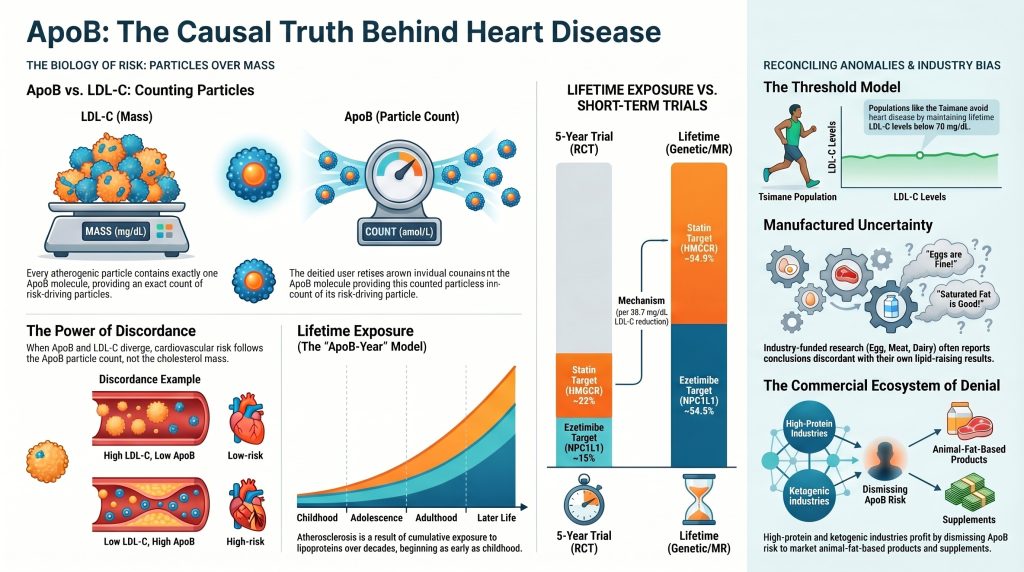
La dependencia clínica tradicional del colesterol de lipoproteínas de baja densidad (C-LDL) como principal biomarcadorUn biomarcador es algo medible en el cuerpo que indica el estado de salud o enfermedad: un valor de laboratorio, el resultado de una exploración o una lectura de la presión arterial. para el riesgo cardiovascular es un legado histórico de finales del siglo XX. El c-LDL mide la masa total de colesterol contenida en la fracción de lipoproteínas de baja densidad, expresada típicamente en miligramos por decilitro (mg/dL) o milimoles por litro (mmol/L). Aunque está altamente correlacionado con el riesgo en la mayoría de las poblaciones, el c-LDL es fundamentalmente un indicador indirecto imperfecto porque no proporciona información directa sobre el número real de partículas circulantes partículas aterogénicasLas partículas aterogénicas son las lipoproteínas que contienen ApoB —incluyendo LDL, IDL, VLDL y la lipoproteína(a)— que pueden ingresar y quedar retenidas en la pared arterial para iniciar y sostener el crecimiento de la placa; el artículo utiliza el término para describir lo que debe reducirse sustancial y sostenidamente para lograr la regresión de la placa.. AteroesclerosisLa aterosclerosis es la enfermedad detrás de la mayoría de los ataques cardíacos y muchos accidentes cerebrovasculares. Las partículas de colesterol se atascan en la pared de una arteria, el cuerpo envía células inmunitarias para limpiar y, a lo largo de los años, ese desorden se endurece hasta convertirse en placa. es una enfermedad de infiltración y atrapamiento de partículas; es el número físico de lipoproteínas que ingresan a la pared arterial, más que la cantidad de carga que transportan, lo que dicta la tasa de placaLa placa es la acumulación de colesterol, células inmunitarias, tejido cicatricial y calcio dentro de la pared de una arteria. progresión.
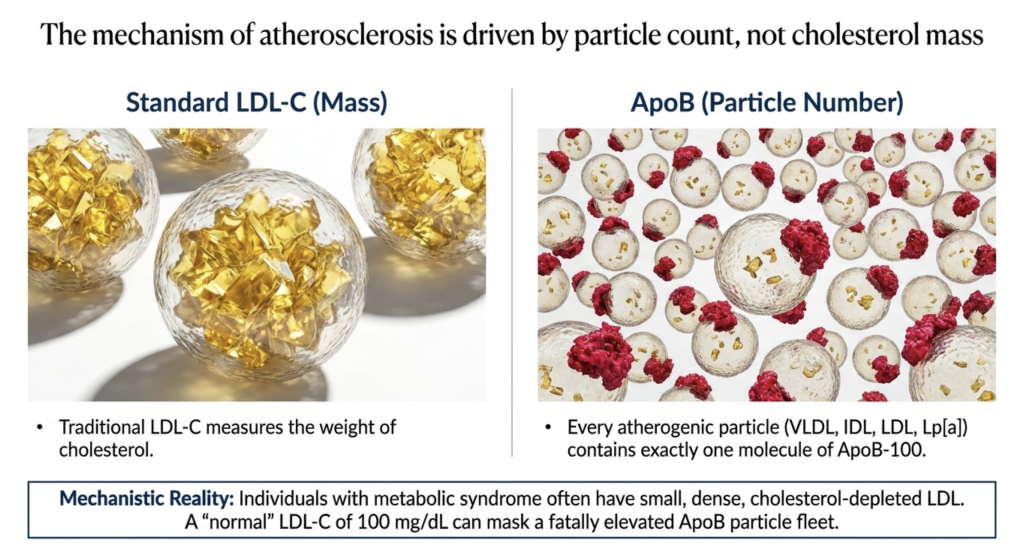
Apolipoproteína B-100 (ApoBLa ApoB es una proteína que se encuentra en la superficie de cada partícula de colesterol que puede atascarse en la pared arterial y causar placa. Cada una de esas partículas transporta exactamente una ApoB.) es el estructural proteínaLa proteína es el nutriente que tu cuerpo utiliza para construir y reparar músculos y tejidos. encontrado en la superficie de cada lipoproteína potencialmente aterogénica. Cada partícula, ya sea una lipoproteína de muy baja densidad (VLDLLas VLDL, o lipoproteínas de muy baja densidad, son las partículas que produce tu hígado para enviar triglicéridos al resto del cuerpo.), lipoproteína de densidad intermedia,IDLLa IDL, o lipoproteína de densidad intermedia, es una partícula que se forma a mitad del proceso en el que una partícula grande transportadora de triglicéridos se reduce para convertirse en una partícula de LDL.), lipoproteína de baja densidad (LDLEl LDL, o lipoproteína de baja densidad, es la principal partícula que transporta colesterol por la sangre y la principal que se atasca en las paredes de las arterias.), o lipoproteína(a)La lipoproteína(a), escrita Lp(a) y pronunciada "L-P-minúscula-a", es una partícula similar al LDL con una proteína adicional pegajosa adherida. [Lp(a)] — contiene exactamente una molécula de ApoB.[1] En consecuencia, medir la ApoB proporciona un recuento exacto del número total de partículas aterogénicas en el plasma. La distinción entre la masa de colesterol (LDL-C) y carga de partículasCarga de partículas se refiere al número total de partículas de lipoproteínas aterogénicas que circulan en el plasma, medido de la mejor manera mediante la ApoB; se distingue de la masa de colesterol porque es el recuento físico de las partículas —no la cantidad de colesterol que transportan— lo que determina con qué frecuencia las lipoproteínas se infiltran y quedan atrapadas en la pared arterial. (ApoB) se vuelve clínicamente crítico en casos de “discordanciaConsulte Discordancia de ApoB para ver la entrada completa.,”, donde estas dos métricas divergen.
El mecanismo de discordancia y la variabilidad de las partículas
La discordancia suele surgir debido a variaciones en el contenido de colesterol de las partículas individuales. En personas con síndrome metabólicoEl síndrome metabólico es un conjunto de cinco problemas que tienden a presentarse juntos: cintura grande, triglicéridos altos, HDL bajo, presión arterial alta y azúcar en sangre alta. Tener tres o más cuenta., resistencia a la insulinaLa resistencia a la insulina ocurre cuando tus células dejan de responder bien a la insulina, por lo que tu páncreas tiene que producir cada vez más para hacer el mismo trabajo., o hipertrigliceridemia, la remodelación intravascular de las lipoproteínas conduce a la formación de partículas de LDL pequeñas y densas que están relativamente desprovistas de colesterol. En estos individuos, un nivel de c-LDL “normal” de 100 mg/dL puede enmascarar un recuento de ApoB significativamente elevado, ya que se requieren más partículas para transportar la misma masa de colesterol. Por el contrario, los individuos con partículas de LDL grandes y ricas en colesterol pueden tener un c-LDL alto pero una ApoB relativamente más baja, lo que representa una carga total de partículas menor.
La espectroscopía de resonancia magnética nuclear (RMN) ha refinado aún más esta comprensión al permitir la medición directa de número de partículas de LDLEl número de partículas de LDL cuenta cuántas partículas de LDL circulan, en lugar de cuánto colesterol contienen. (LDL-P) y tamaño. Datos de grandes cohortes prospectivasUna cohorte prospectiva inscribe a personas sanas, registra sus características y luego espera para ver qué sucede., incluido el Estudio AMORISEl estudio AMORIS (Apolipoprotein MOrtality RISk) fue una gran cohorte prospectiva sueca que midió la ApoB y otras fracciones lipídicas y demostró que la ApoB era un predictor más fuerte de eventos cardiovasculares que el C-LDL, particularmente en casos de discordancia entre ambas medidas., la cohorte EPIC-Norfolk, la UK BiobankUK Biobank holds detailed genetic, lifestyle, and health data on half a million British volunteers, linked to their medical records., y el Estudio de Salud de la Mujer, han demostrado sistemáticamente que cuando la ApoB y el c-LDL son discordantes, el riesgo cardiovascular se alinea con el recuento de ApoB (el número de partículas) en lugar de con la masa de c-LDL.[1] Por ejemplo, las personas en el grupo con ApoB discordantemente alta (LDL-C bajo, ApoB alto) muestran un riesgo significativamente mayor de eventos cardiovasculares adversos mayoresUn evento cardiovascular adverso mayor, o MACE por sus siglas en inglés, es un conjunto de malos resultados que se contabilizan juntos en un estudio, típicamente la muerte cardiovascular, el infarto de miocardio y el accidente cerebrovascular. (MACE) en comparación con aquellos con niveles concordantes.[4]
Tabla 1: Discordancia de LDL-C/ApoBA clinical pattern in which a patient's measured LDL cholesterol mass appears acceptable while the ApoB particle count is elevated, indicating more atherogenic particles than the cholesterol number alone would suggest; common in metabolic syndrome and hypertriglyceridemia. y riesgo de MACE: UK Biobank (n = 375,544)
| Categoría de discordancia | Riesgo de MACE (Cociente de riesgos instantáneosUna razón de riesgo compara qué tan rápido ocurren los eventos en dos grupos. Una razón de 0,75 significa que los eventos ocurrieron a tres cuartas partes de la tasa en el grupo tratado.) | Mediación por VLDLTriglicéridosLos triglicéridos son la principal forma de grasa en la sangre y en el almacenamiento del cuerpo. | Interpretación clínica |
| Concordante (C-LDL y ApoB) | 1.0 (Referente) | N/A | Evaluación de riesgos estándar |
| ApoB discordantemente alto | 1.11 [1.06–1.15] | 25,51 TP9T (VLDL), 26,61 TP9T (TG) | Risk Underestimated by LDL-C |
| Discordantly Low ApoB | 0.87 [0.83–0.93] | N/A | Risk Overestimated by LDL-C |
Source: UK Biobank NMR sub-study.[4]
In the UK Biobank analysis, the increased risk in individuals with discordantly high ApoB was partially mediated by the presence of VLDL particles and elevated triglycerides, which are often overlooked when focusing solely on LDL-C.[4] These findings reinforce the utility of ApoB as a more comprehensive marker of risk, particularly in prevención primariaLa prevención primaria consiste en tratar a alguien que nunca ha tenido un ataque cardíaco o un derrame cerebral, para evitar que ocurra el primero. where traditional lipid panels may fail to identify high-risk individuals with metabolic dysfunction.
Section 2 — Populations Used to Challenge the Lipid Hypothesis: Reconciling Anomalies
Heterodox critiques of the lipid hypothesis often rely on “anomalous” populations that appear to have high fat intake or high cholesterol levels without a corresponding burden of cardiovascular disease. However, a mechanistic review using primary literature and autopsy data demonstrates that these anomalies are either artifacts of poor data quality or, in many cases, provide strong supporting evidence for the lipid hypothesis when evaluated correctly.
1. Inuit and Arctic Populations: The Myth of Immunity
El“Paradoja inuitThe Inuit Paradox was the widely cited but now largely discredited claim that Greenland Inuit populations had exceptionally low rates of ischemic heart disease despite a high-fat diet rich in marine mammals; subsequent analyses showed the low rates were artifacts of mortality misclassification, shorter lifespans, and high infectious disease burden rather than genuine cardiac protection.” was popularized by Bang and Dyerberg, who suggested that Greenland Eskimos had exceptionally low rates of cardiopatía isquémicaUna afección en la cual la reducción del suministro de sangre al músculo cardíaco, generalmente por aterosclerosis de las arterias coronarias, causa síntomas como angina o infarto de miocardio. (IHD) despite a high-fat diet rich in marine mammals.[7] This was attributed to the high intake of omega-3 polyunsaturated fatty acids, which were hypothesized to provide an antithrombotic shield.[9]
However, the scientific evidence for low IHD among the Inuit is remarkably fragile and rests on unreliable mortality statistics. Reassessments of Greenlandic and Alaskan health data have highlighted several critical distortions. First, early mortality records in Greenland suffered from significant misclassification; a high proportion of cardiovascular deaths were attributed to “garbage codes” such as insuficiencia cardíacaLa insuficiencia cardíaca significa que el corazón no puede bombear lo suficientemente bien como para satisfacer las necesidades del cuerpo. El nombre es engañoso: no significa que el corazón se haya detenido. or ill-defined heart disease rather than IHD. When standardized algorithms are applied to these historical data, the difference in IHD mortality between Greenland and Denmark is markedly reduced.
Autopsy data provide the most definitive rebuttal. Studies from the 1960s and 1970s in Alaska and Canada confirmed that atherosclerosis and infarto de miocardioConsulte Ataque cardíaco para ver la entrada completa. were present and not uncommon among the Inuit.[8] Furthermore, modern studies of Alaska Native populations using standardized adjudicationsLa adjudicación es el proceso en el cual un comité independiente revisa cada evento notificado en un ensayo clínico y decide qué sucedió realmente, sin saber qué tratamiento recibió el paciente. show high rates of CHD and derrame cerebralUn derrame cerebral ocurre cuando el flujo sanguíneo a una parte del cerebro se detiene, ya sea por un bloqueo o por una hemorragia., with risk clearly correlated with LDL-C and ApoB.[9] The apparent “low risk” in historical cohorts was also confounded by a shorter average lifespan and a high prevalence of infectious disease and accidental death, which prevented many individuals from surviving long enough to manifest clinical ASCVD.[8]
2. The Tsimane and Hadza: The Threshold Model in Action
El TsimaneThe Tsimane are an indigenous forager-horticulturalist population of the Bolivian Amazon whose traditional lifestyle—characterized by high physical activity and low average LDL cholesterol of around 91 mg/dL—is associated with markedly low rates of coronary calcification, with 85 percent of adults over 40 showing no detectable coronary calcium. forager-horticulturalists of the Bolivian Amazon have been documented as having the lowest prevalence of enfermedad de las arterias coronariasLa enfermedad de las arterias coronarias es la acumulación de placa en las arterias que alimentan el músculo cardíaco. of any population recorded to date.[11] This has been used by some to argue that systemic inflamaciónLa inflamación es la respuesta del sistema inmunitario a una lesión o a algo que considera un intruso. Trae consigo hinchazón, calor y células de limpieza. — which is high in the Tsimane due to chronic parasite burden — is not a primary driver of atherosclerosis.
A mechanistic review reconciles the Tsimane data perfectly with the lipid model. The Tsimane maintain a lifetime mean LDL-C of approximately 70 mg/dL and a mean presión arterialLa presión arterial es la fuerza de la sangre que empuja contra las paredes de las arterias. Se escribe como dos números, como 120/80. El número superior es la presión cuando el corazón se contrae, y el inferior es cuando se relaja. of 104/64 mmHg.[11] In this population, 85% of adults have a calcio en las arterias coronarias (CAC)El calcio en las arterias coronarias es una medida de los depósitos de placa calcificada en las paredes de las arterias coronarias, cuantificada mediante una tomografía computarizada y expresada como una puntuación de Agatston; las puntuaciones más altas indican una mayor carga acumulada de placa y predicen futuros eventos cardiovasculares. score of zero, even into their 70s and 80s.[11] Rather than contradicting the lipid hypothesis, the Tsimane represent the “threshold modelThe threshold model of atherosclerosis proposes that plaque formation requires a sufficient concentration of atherogenic lipoproteins sustained over time; populations such as the Tsimane, who maintain very low lifetime LDL-C levels, demonstrate that even high systemic inflammation does not initiate significant atherosclerosis when the lipoprotein burden stays below this critical threshold.” of disease: atherosclerosis requires the presence of a sufficient concentration of atherogenic lipoproteins over time to initiate and drive plaque formation. Because the Tsimane maintain LDL-C levels well below the critical threshold throughout their entire lives, their arteries remain relatively free of plaque despite high levels of systemic inflammation (hs-CRP above 3.0 mg/L in 51% of the population).[11] This finding constitutes powerful evidence that ApoB-particle burden — not inflammation — is the primary initiator of the atherosclerotic process.
3. Familial Hypercholesterolemia and the “Healthy Survivor” Argument
Heterozygous familial hypercholesterolemia (HeFH)La hipercolesterolemia familiar heterocigótica es la forma hereditaria más común de colesterol LDL gravemente elevado, que afecta aproximadamente a 1 de cada 311 personas, en la que una copia del gen del receptor de LDL es defectuosa; sin tratamiento, conlleva un riesgo aproximadamente 13 veces mayor de padecer enfermedad coronaria y provoca ataques cardíacos en alrededor de 50% de los hombres afectados antes de los 50 años. results in lifelong exposure to extreme LDL-C levels, typically above 190 mg/dL, and carries a 20-fold increased risk of premature CAD if left untreated.[15] Skeptics point to FH heterozygotes who survive into their 80s without medication as evidence that LDL-C is not causal.
The existence of “healthy survivors” in FH is explained by three primary mechanisms:
- Selection Bias: Early clinical cohorts were often identified through their historial familiarLos antecedentes familiares se refieren a si sus familiares cercanos desarrollaron enfermedades cardíacas y qué tan jóvenes eran cuando ocurrió. of premature events, while those without events remained undiagnosed. Systematic screening now shows that the vast majority of untreated FH patients suffer early cardiovascular events.
- Protective Genetic Modifiers: Some FH individuals carry rare loss-of-function variants in the PCSK9PCSK9 es una proteína producida por el hígado que destruye los puertos de acoplamiento que el hígado utiliza para extraer el colesterol de la sangre. gene or other modifiers that significantly lower their ApoB count or improve receptor de LDLEl receptor de LDL es un puerto de acoplamiento en las células hepáticas que atrapa las partículas de LDL de la sangre y las introduce para descomponerlas. recycling, effectively normalizing their risk to that of a non-FH individual.[19]
- Factor de riesgoUn factor de riesgo es algo que aumenta la probabilidad de desarrollar una enfermedad: partículas de colesterol alto, presión arterial alta, tabaquismo, diabetes, antecedentes familiares. Multipliers: Survivors often have an absence of other risk factors, such as fumarFumar daña el revestimiento de los vasos sanguíneos, eleva la presión arterial, hace que la sangre se coagule con más facilidad y acelera el crecimiento de placa. o hipertensiónLa hipertensión es el término médico para la presión arterial alta., which would otherwise accelerate the entrapment of ApoB particles in the arterial wall.
Aleatorización mendelianaLa aleatorización mendeliana es un ingenioso método de investigación que utiliza los genes con los que nació la gente como un experimento natural. studies and the dramatic success of early estatinasUna estatina desacelera la enzima que su hígado utiliza para producir colesterol. Su hígado responde extrayendo más colesterol de su sangre, que es de donde proviene el beneficio real. therapy in FH children further confirm the causality of lipids in this population.[15,17]
4. The French Paradox: A Temporal Illusion
El“Paradoja francesaThe French Paradox is the observation that France had relatively low coronary heart disease mortality in the 1980s and 1990s despite high saturated fat consumption; analyses have attributed this apparent paradox to a time-lag in France's adoption of high-fat diets compared with other Western nations, systematic under-certification of CHD deaths by French physicians, and the cumulative nature of a…” — low CHD rates despite high grasa saturadaLa grasa saturada es el tipo que permanece sólida a temperatura ambiente: la mantequilla, la grasa de la carne roja, el aceite de coco y el aceite de palma. intake — was largely popularized in the 1990s as a rebuttal to the lipid-heart hypothesis.[23] However, detailed analyses by Law and Wald (1999) and others have effectively dismantled the paradox as a combination of under-reporting and a “time-lag” in dietary transition.
Consumption of animal fat and the resulting serum cholesterol elevations in France only reached Western norms in the late 1960s and 1970s, decades later than in Britain or the United States.[25] Because atherosclerosis is a cumulative disease resulting from decades of exposure, French mortality in the 1980s and 1990s reflected the lower lipid levels of the mid-20th century.[25] Additionally, standardized data from the MONICA project revealed that French physicians were historically less likely to certify deaths as CHD, often using codes for other cardiac pathologies. As the French population’s exposure time to high lipids has increased, their CHD mortality has predictably aligned with the lipid model.
5. Lean Mass Hyper-Responders (LMHR): A Developing Challenge
El“Hiperrespondedor de masa magraUn hiperrespondedor de masa magra es una persona delgada y atlética cuyo colesterol LDL aumenta enormemente con una dieta baja en carbohidratos, a veces hasta niveles que normalmente solo se observan en trastornos hereditarios.” (LMHR) phenotype describes lean individuals on dietas cetogénicasA ketogenic diet is very low in carbohydrates and very high in fat, which pushes the body to burn fat and make ketones for fuel. who experience extreme LDL-C spikes — often exceeding 200 mg/dL — while maintaining high HDL-C and low triglycerides.[27] Skeptics argue that these individuals are at low risk because they are metabolically healthy.
El KETO-CTAKETO-CTA es un estudio en el que se utilizó la angiografía coronaria por tomografía computarizada (TC) para evaluar la carga de placa en personas que seguían dietas cetogénicas con niveles marcadamente elevados de colesterol LDL (LDL-C); en él se observó que, a pesar de una alta prevalencia de puntuaciones de CAC (calcificación coronaria) de cero, el volumen de placa no calcificada (blanda) aumentó aproximadamente 42% a lo largo de un año. pilot study followed 100 LMHR individuals for 12 months using high-resolution angiotomografía coronariaLa angiografía por tomografía computarizada coronaria, o CCTA, es una tomografía computarizada realizada con medio de contraste en las venas que produce imágenes detalladas de las arterias del corazón..[27] While the study found that plaque progression was modest over one year and was not predicted by ApoB within that short window, this is consistent with the biology of atherosclerosis, which typically takes decades to manifest as measurable plaque in healthy individuals. Critically, baseline carga de placaLa carga de placa es la cantidad total de placa en sus arterias, en todas partes, no solo en el peor lugar. did predict progression, suggesting that those with existing atherosclerosis remain vulnerable to high lipids regardless of their ketogenic state.[27] Falsification of the lipid hypothesis in this cohort would require a lifetime of exposure to such LDL levels without plaque formation — a condition not yet satisfied by current data.
6. The HDL Paradox and CETP Inhibitor Failures
The failure of multiple trials to reduce cardiovascular risk by raising HDL-C — specifically the CETPCETP es una proteína que intercambia colesterol y triglicéridos entre las HDL y las partículas nocivas de ApoB. inhibitor trials (torcetrapib, dalcetrapib) and niacinaNiacin is vitamin B3, which at very high doses lowers LDL and raises HDL. trials (HPS2-THRIVE, AIM-HIGH) — has been used to argue that the lipid hypothesis is fundamentally flawed.[31,32,33]
In reality, these failures strengthen the ApoB-centered lipid hypothesis. They demonstrate that HDL-C is a “marker” rather than a “maker” of risk — a proxy for low triglyceride levels and favorable salud metabólicaLa salud metabólica describe qué tan bien el cuerpo procesa el azúcar en la sangre, la presión arterial, las grasas y el almacenamiento de grasa corporal. rather than a causal therapeutic target. Conversely, every therapy that successfully lowers partículas que contienen ApoBLas lipoproteínas (incluidas las LDL, IDL, VLDL y sus remanentes) que portan cada una una molécula de apolipoproteína B en su superficie; el número de partículas (más allá de la masa de colesterol por sí sola) es un motor clave de la aterosclerosis debido a que cada partícula puede ser retenida en la pared arterial. — statins, ezetimibaLa ezetimiba es una pastilla que impide que los intestinos absorban el colesterol., inhibidores de la PCSK9Un inhibidor de la PCSK9 es un medicamento que bloquea esa proteína destructora de colesterol, lo que deja más puertos de acoplamiento disponibles para eliminar partículas de la sangre., inclisiránEl inclisirán es una inyección para reducir el colesterol que se administra solo dos veces al año después de las primeras dos dosis., ácido bempedoicoEl ácido bempedoico es una pastilla para reducir el colesterol que actúa en el hígado, en un punto justo antes de donde actúan las estatinas. — results in a proportional reduction in cardiovascular risk, regardless of mechanism of action.[35]
Section 3 — Mendelian Randomization and Causal Inference: The Genetic Proof
mendeliano aleatorizaciónLa aleatorización es el proceso de asignar a los participantes del ensayo a los grupos de tratamiento o de control al azar, lo que garantiza que los factores de confusión conocidos y desconocidos se distribuyan de manera uniforme; cuando la aleatorización falla —como los auditores descubrieron que ocurrió en PREDIMED—, los grupos pueden diferir de maneras que distorsionan el efecto aparente del tratamiento. (MR) serves as a naturalized ensayo controlado aleatorizadoUn ensayo controlado aleatorizado asigna a las personas a un grupo de tratamiento o a un grupo de comparación puramente por azar, y luego hace un seguimiento de ambos grupos., using the random allocation of genetic alleles at conception to study the lifetime effects of an exposure. Because genetic variants are not affected by lifestyle or the presence of disease, MR circumvents the confusorLa confusión ocurre cuando un tercer factor oculto hace que dos cosas no relacionadas parezcan conectadas. y causalidad inversaLa causalidad inversa se da cuando la flecha apunta en sentido contrario: la enfermedad causó la exposición en lugar de que la exposición causara la enfermedad. that limit observational studies.
Establishing Causality Through Genetic Pathways
MR studies have unequivocally established that LDL-C and ApoB are causally related to ASCVD. The most powerful evidence comes from three genetic loci:
- PCSK9 Variants: Individuals with lifelong lower LDL-C due to loss-of-function variants in the PCSK9 gene exhibit an approximately 54% reduction in CHD risk per 38.7 mg/dL of LDL-C reduction — far exceeding the benefit seen in short-term statin trials.[1,2]
- NPC1L1NPC1L1 es el transportador en su intestino que absorbe el colesterol de los alimentos y la bilis. La ezetimiba lo bloquea. Variants: Genetic variants that mimic the action of ezetimibe show a consistent reduction in CHD risk proportional to the degree of LDL-C lowering, providing genetic validation for non-statin lipid-lowering therapies.[41]
- LPA Locus: MR data confirm that genetically elevated Lp(a) is an independent causal risk factor for ASCVD and calcific válvula aórticaLa válvula aórtica es la compuerta unidireccional entre la principal cámara de bombeo del corazón y la aorta. estenosisLa estenosis es un estrechamiento, que por lo general se describe como un porcentaje, como una obstrucción del 70 por ciento., establishing a second ApoB-mediated causal pathway distinct from LDL.[3]
Table 2: Mendelian Randomization vs. Randomized Ensayos clínicosUn ensayo clínico es un estudio en el que los investigadores administran un tratamiento a un grupo y un placebo o atención estándar a otro, y luego comparan lo que sucede. — CHD Risk Reduction per 38.7 mg/dL LDL-C Reduction
| LDL-Lowering Mechanism | MR Estimate (Lifetime) | RCT Estimate (5-Year) | Duration Difference |
| HMGCRHMGCR es el gen de la HMG-CoA reductasa, la enzima que realiza el paso limitante de la velocidad en la producción de colesterol. Es el objetivo exacto de cada estatina. (Statin target) | ~54.5% | ~22% | Lifetime vs. 5 years |
| PCSK9 (EvolocumabEl evolocumab es un medicamento inyectable para el colesterol de la familia de los inhibidores de la PCSK9, que generalmente se administra cada dos a cuatro semanas. target) | ~54.5% | ~15% (2.2-yr follow-up) | Lifetime vs. 2.2 years |
| NPC1L1 (Ezetimibe target) | ~54.5% | ~15% (as add-on) | Lifetime vs. 7 years |
Data synthesized from Ference et al. (2012, 2017) and CTT meta-analyses.[1,2]
The three-fold greater benefit observed in MR studies compared to RCTs underscores the importance of exposición acumulativaLa exposición acumulada es la cantidad total de partículas de colesterol dañino en la que tus arterias se han visto sumergidas a lo largo de toda tu vida: qué tan alto, multiplicado por cuánto tiempo.. Atherosclerosis is a result of “lipoprotein-years” (exposure × time). Lowering lipids early in life prevents the very initiation of the atherosclerotic process, whereas starting therapy in the sixth decade is an exercise in damage control on pre-existing plaque. These MR data represent the strongest possible causal evidence short of a decades-long randomized trial — which is ethically impossible to conduct.
Section 4 — Statin and PCSK9 Inhibitor Trial Evidence: A Critical Synthesis
The randomized controlled trial (RCT) evidence base for lipid-lowering therapy is among the most extensive in medical science. The Cholesterol Treatment Trialists’ (CTT) Collaboration metaanálisisUn metaanálisis combina estadísticamente los resultados de muchos estudios separados en una estimación general. of more than 26 trials involving over 170,000 participants demonstrated a 22% riesgo relativoEl riesgo relativo compara dos grupos: este grupo tuvo un 30 por ciento menos de ataques cardíacos que aquel grupo. reduction in MACE for every 38.7 mg/dL (1 mmol/L) reduction in LDL-C, a result that held across all subgroups including sex, age, baseline LDL-C, and presence or absence of pre-existing cardiovascular disease.[35]
Countering the Pleiotropy Argument
A common heterodox argument suggests that statins reduce cardiovascular events via anti-inflammatory or other “pleiotropic” mechanisms independent of LDL-C lowering — implying that the benefits cannot be attributed to the lipid-lowering itself. This argument is falsified by the concordance of non-statin trials with the CTT regression line:
- IMPROVE-ITIMPROVE-IT añadió ezetimiba a una estatina después de un ataque cardíaco, evaluando si reducir el colesterol LDL mediante un mecanismo no relacionado con estatinas ayudaría.: Adding ezetimibe to simvastatin in 18,144 patients after síndrome coronario agudoEl síndrome coronario agudo (SCA) es el término general para cualquier reducción repentina del flujo sanguíneo al corazón —desde la angina inestable hasta un ataque cardíaco completo— causada por la ruptura o erosión repentina de una placa. produced a further reduction in cardiovascular events that fell exactly on the CTT regression line, despite ezetimibe’s entirely different mechanism of action (intestinal cholesterol absorption inhibition via NPC1L1). Ezetimibe has no meaningful anti-inflammatory activity. Its benefit was purely proportional to the LDL-C reduction achieved.[38]
- FourierFOURIER evaluó evolocumab, un inhibidor de PCSK9, en pacientes que ya padecían enfermedad cardiovascular y tomaban estatinas. y OdiseaODYSSEY OUTCOMES evaluó alirocumab en pacientes que se recuperaban de un infarto de miocardio reciente. OUTCOMES: The PCSK9 inhibitors evolocumab and alirocumabAlirocumab, comercializado como Praluent, es un anticuerpo inyectable que bloquea la PCSK9, administrado cada dos a cuatro semanas. reduced MACE proportionally to the absolute LDL-C reduction achieved, even in patients already on maximally-dosed estatina de alta intensidadUna estatina de alta intensidad es una dosis que se espera reduzca el C-LDL en un 50 por ciento o más; en la práctica, dosis más altas de atorvastatina o rosuvastatina. therapy — patients whose inflammatory markers were already suppressed.[36,37]
- FOURIER-OLEThe open-label extension of the FOURIER trial, which tracked patients treated with evolocumab for seven or more years and found sustained cognitive stability even among those maintaining LDL-C below 20 mg/dL.: Long-term open-label extension data demonstrated continued incremental risk reduction at ultra-low LDL-C levels (below 20 mg/dL), without any increase in adverse safety events, confirming the “lower is better” paradigm and ruling out a therapeutic floor effect or J-curveA J-curve describes a pattern where risk is higher at both very high and very low values of something, with a sweet spot in the middle. Plotted on a graph it looks like the letter J..[47]
Critics argue the benefit is “modest in absolute terms,” typically citing the 2–3 percentage point riesgo absolutoEl riesgo absoluto es la probabilidad real de que algo te suceda, expresada como un porcentaje. Si tu riesgo absoluto de sufrir un ataque cardíaco en los próximos diez años es del 12 por ciento, eso significa que aproximadamente 12 de cada 100 personas como tú lo sufrirían. reductions observed in trials of median 2.2 to 5 years. This critique misunderstands the statistical nature of atherosclerotic disease. When the same per-unit LDL-C reduction is modeled over a lifetime starting at age 40, the absolute benefit is an order of magnitude larger — precisely what the Mendelian randomization data confirm. The modest trial-level absolute risk reductions are a predictable artifact of short follow-up in middle-aged populations that are already decades into the atherosclerotic process.
Section 5 — Industry Interference and Motivated Skepticism: The Historical Record
5.1 The Sugar Research Foundation and Project 226
Historical analysis of internal industry documents has revealed that the Fundación de Investigación del AzúcarThe Sugar Research Foundation was a mid-20th century industry group funded by sugar manufacturers that commissioned and published research — including the 1960s initiative known as Project 226 — specifically designed to shift scientific and public attention away from dietary sugar and toward dietary fat as the primary dietary cause of cardiovascular disease. (SRF) recognized as early as the 1950s that if Americans adopted low-fat diets, sucrose consumption would increase substantially. In 1965, the SRF funded “Project 226” — a literature review written by Harvard nutritionists D. Mark Hegsted and Fredrick Stare — that was intentionally designed to exonerate sucrose as a driver of CHD and focus the blame entirely on dietary fat and cholesterol.[48] The scientists involved received payments equivalent to approximately $50,000 in 2016 dollars and allowed the SRF to review drafts and select the literature to be included.[48] This successfully delayed the scientific consensus on sugar by decades and created a “fat vs. sugar” false dichotomy that heterodox figures continue to exploit today, claiming the lipid hypothesis was “founded on a lie” — a rhetorical misdirection that conflates the dietary fat debate with the entirely separate question of lipoprotein causality in ASCVD.
5.2 Egg, Dairy, and Meat Industry Funding Patterns
The pattern of financiamiento de la industriaFinancial sponsorship of scientific research by commercial entities with a stake in the outcome; studies funded by industry have been shown to be more likely to report results favorable to the sponsor's product, introducing systematic bias into health evidence. influencing nutrition science continues in the present day. Between 2010 and 2019, 60% of research on eggs and blood cholesterol was sponsored by the egg industry.[54] While 86% of these studies actually found that eggs do raise LDL-C, half of them reported conclusions that were discordant with their own results — for example, claiming that the LDL-C increases were “not clinically significant” or were offset by changes in HDL-C.[54]
The dairy and meat industries have funded revisiones sistemáticasUna revisión sistemática busca todos los estudios sobre una pregunta utilizando un método predeclarado y luego los evalúa mediante criterios coherentes. — notably the NutriRECS series published in Annals of Internal Medicine — that utilize CalificaciónGRADE (Grading of Recommendations, Assessment, Development and Evaluations) is a widely used framework for rating the certainty of evidence behind a clinical finding, classifying it as high, moderate, low, or very low based on factors such as study design, risk of bias, consistency, directness, and precision of results. methodology to classify all cohort-based nutritional evidence as “low certainty.”[57] While technically defensible on methodological grounds (long-term dietary RCTs are rarely feasible), this approach is operationally deployed to dismiss consistent, replicated risk signals and manufacture sufficient uncertainty to justify maintaining current high-meat dietary patterns. A systematic review examining the association of dairy industry funding with cardiovascular research findings found that industry-funded studies were significantly more likely to report neutral or favorable results for dairy products.[60]
Section 6 — The Commercial Ecosystem of Cholesterol Denial: High-Protein, Ketogenic, and Paleolithic Diet Industries
Beyond the food commodity industries described above, a distinct and highly organized commercial ecosystem has emerged that derives direct financial benefit from denying the atherogenic significance of LDL-C and ApoB. This ecosystem spans bestselling popular books, direct-to-consumer meat and supplement companies, paid influencer programs, podcast empires, and a small number of clinicians-turned-entrepreneurs who use the architecture of scientific discourse while systematically violating its methodological requirements. Understanding the financial structure of this ecosystem is essential to evaluating the credibility of its scientific claims.
6.1 The Core Commercial Logic
The central economic reality is straightforward: dietary guidelines limiting saturated fat and cholesterol directly restrict the market for carne rojaLa carne roja incluye la carne de res, de cerdo y de cordero., processed meat, full-fat dairy products, and the high-protein supplement industry. By promoting a narrative that (a) saturated fat and colesterol dietéticoEl colesterol dietético es el colesterol presente en los alimentos: huevos, camarones, hígado y otros productos animales. are harmless or beneficial, (b) LDL-C is not a meaningful causal risk factor for ASCVD, and (c) high-protein, animal-fat-based diets are evolutionarily optimal, these commercial interests simultaneously expand sales and cultivate an ideologically committed consumer community that interprets scientific opposition as institutional corruption. The result is a self-reinforcing commercial-ideological machine that is extraordinarily resistant to empirical refutation.
6.2 The Ketogenic and Carnivore Diet Industry
The ketogenic and carnivore diet movement has produced a multi-hundred-million-dollar commercial ecosystem. Leading figures in this space — including Dave Feldman (creator of the LMHR concept), Paul Saladino (“CarnivoreMD”), Shawn Baker, Georgia Ede, and Ken Berry — simultaneously conduct or cite clinical research questioning LDL-C’s importance and operate businesses selling direct-to-consumer beef products, animal organ supplements, electrolyte formulas, online coaching subscriptions, and book publishing rights. Feldman’s “Citizen Science Foundation” and associated KETO-CTA study[27] have received significant attention for their one-year coronary CT data on masa magraLa proporción de peso corporal atribuible al músculo, los huesos y los órganos en lugar de a la grasa; una mayor masa magra se asocia con una mejor salud metabólica y se identifica en el artículo como un impulsor genético ascendente tanto del VO₂ máximo como de la longevidad. hyper-responders. As discussed in Section 2.5, these data are preliminary, and their interpretation as exculpatory for high LDL-C is scientifically unjustified at this stage. The undisclosed financial relationships between the researchers and the ketogenic commercial ecosystem represent conflicts of interest that have not received adequate scrutiny in popular discourse.
The ketogenic diet industry’s anti-LDL argument rests on three claims, each of which fails under scrutiny:
- “Metabolic health negates LDL risk”: There is no randomized trial or Mendelian randomization study demonstrating that the presence of low triglycerides or high HDLLas HDL, o lipoproteínas de alta densidad, son la partícula que a menudo se denomina "colesterol bueno". Recogen el colesterol de los tejidos y lo devuelven al hígado. neutralizes the atherogenic effect of elevated ApoB-particle number. The biological mechanism of subendothelial particle retention does not require metabolic dysfunction — it requires only a sufficient ApoB concentration gradient across the endothelial barrier.
- “The KETO-CTA showed LDL doesn’t predict plaque”: The study found that within-group variation in ApoB did not predict one-year plaque change in a 100-person cohort. This is far weaker than the claim made in popular reporting. The study’s own data showed that baseline plaque burden predicted progression — precisely consistent with the lipid model.
- “Ancestral humans ate high-fat diets without heart disease”: Autopsy data from mummified remains of ancient Egyptians, Peruvians, Puebloans, and Unangan individuals have documented atherosclerosis across multiple hunter-gatherer and agricultural populations — directly contradicting the “ancestral immunity” narrative promoted by Paleo and carnivore advocates.
6.3 The Paleolithic Diet Industry
The Paleo movement — commercialized through the work of Loren Cordain (whose books and related brand generate millions annually), Robb Wolf (Paleo Solution, NovOS supplement company), Mark Sisson (Primal Blueprint, Primal Kitchen brand acquired by Kraft Heinz), and Chris Kresser (Kresser Institute functional medicine training program) — has built substantial revenue streams through cookbooks, certification programs, supplement sales, and online subscription services. While the Paleo framework has contributed useful public health messaging around ultra-processed food avoidance, the industry has concurrently promoted a secondary narrative that is scientifically unfounded: that ancestral humans had uniformly low ASCVD burden and that high red meat and saturated fat consumption is therefore cardiovascular-neutral.
This narrative is contradicted by several lines of evidence. Hladik et al. and Thompson et al., examining CT imaging of mummified remains from four geographically and dietarily diverse ancient populations, documented probable or definite atherosclerosis in 47 of 137 mummies (34%), including in hunter-gatherer populations with no access to modern processed foods. The Paleo industry’s selective presentation of ancestral cardiovascular data to support high red-meat consumption constitutes motivated reasoning directly analogous to the food industry funding practices documented in Section 5.
6.4 The High-Protein Supplement Industry
The animal-derived protein supplement industry — encompassing whey protein, caseínaLa proteína dominante en la leche de vaca, que representa aproximadamente el 80% de su contenido total de proteínas; estudios en roedores han demostrado que la caseína puede promover el crecimiento tumoral cuando se consume en grandes cantidades y inhibirlo cuando se consume en cantidades menores, hallazgos que han sido influyentes, pero también cuestionados al extrapolarlos a otras proteínas animales., collagen, beef protein isolate, and related products — has financial incentives to promote protein-centric dietary frameworks that emphasize high animal protein consumption and minimize concern about accompanying saturated fat and dietary cholesterol intake. Industry-funded research in this area has been used to advocate protein intakes well above established guidelines (often 1.6–2.4 g/kg/day or higher) while arguing that the associated increases in saturated fat intake are either metabolically irrelevant or actively beneficial due to effects on LDL particle size.
The LDL particle size argument — that large, “fluffy” LDL particles are benign even when elevated — has been formally examined and rejected in the scientific literature. Mendelian randomization studies using genetic instruments that specifically alter LDL particle size without changing LDL-C demonstrate that it is LDL particle number (i.e., ApoB) rather than size that mediates atherogenic risk. Large LDL particles are atherogenic at elevated concentrations; their larger size does not prevent retención subendotelialLa retención subendotelial es el proceso por el cual las partículas de lipoproteínas que contienen ApoB que han cruzado la barrera endotelial se unen electrostáticamente a los proteoglicanos en la íntima arterial y no pueden difundir de regreso al torrente sanguíneo; se considera el primer paso no redundante en la aterosclerosis bajo el marco de respuesta a la retención..
6.5 Gary Taubes and the Nutrition Science Initiative (NuSI)
Gary Taubes’ books Good Calories, Bad Calories (2007) and The Case Against Sugar (2016) have been enormously influential in establishing the popular narrative that the lipid hypothesis was fraudulently established by institutional suppression of the carbohydrate-insulin model of obesidadLa obesidad significa tener suficiente exceso de grasa corporal como para afectar la salud.. Taubes co-founded the Nutrition Science Initiative (NuSI) with Peter Attia in 2012, raising approximately $40 million from philanthropic donors to fund studies challenging the diet-heart hypothesis. The NuSI-funded studies generally failed to overturn the energy balance model of obesity, and the organization was effectively wound down by 2021. Nevertheless, Taubes’ argument — that Ancel Keys’ Seven Countries Study was cherry-picked and that the entire lipid hypothesis rests on a corrupt foundation — continues to circulate widely in the low-carbohydrate community.
The scientific problem with this framing is that it is entirely backward-looking. Even if one accepts every criticism of Keys’ original epidemiological work, the subsequent 50 years of Mendelian randomization, statin trials, PCSK9 inhibitor trials, and ezetimibe trials represent an entirely independent evidentiary base that did not exist when Keys was working and that conclusively establishes ApoB-particle causality through mechanisms that are immune to the confounding Taubes invokes against observational epidemiology.
6.6 Nina Teicholz and “The Big Fat Surprise”
Nina Teicholz’s 2014 book The Big Fat Surprise and her ongoing advocacy through The Nutrition Coalition constitute the most organized popular challenge to dietary fat guidance in the United States. A detailed fact-checking analysis by the BMJ found that Teicholz’s characterizations of the scientific literature contained multiple inaccuracies in the treatment of the evidence. Her work has been cited extensively by the meat and dairy industries and has been used to lobby for modifications to U.S. Dietary Guidelines. Teicholz’s central methodological error is identical to that of Taubes: she treats the historical epidemiological debate around dietary fat as dispositive for the question of lipoprotein causality in ASCVD, while refusing to engage with Mendelian randomization evidence — which is the most causally rigorous evidence type available — on the grounds that genetic studies are “not the same” as dietary intervention studies. This argument, while technically containing a kernel of truth (genetic LDL lowering and dietary LDL lowering may differ in magnitude), does not address the core point: both operate through the identical biological mechanism of reducing ApoB-particle infiltration of the arterial wall.
Section 7 — Organized Cholesterol Denialism: THINCS, Academic Contrarians, and Supplement Markets
Beyond commercially motivated skepticism, a distinct intellectual tradition of organized cholesterol denialism has emerged, characterized by coordinated advocacy for the position that LDL-C and ApoB have no causal role in ASCVD and, in extreme formulations, that elevated cholesterol may be protective. This movement is frequently cited in popular discourse as representing a legitimate scientific minority view, and it warrants systematic rebuttal.
7.1 The International Network of Cholesterol Skeptics (THINCS)
The International Network of Cholesterol Skeptics (THINCS) was founded by Danish physician Uffe Ravnskov, author of The Cholesterol Myths (2000) and Fat and Cholesterol Are Good for You (2009). THINCS maintains a manifesto — signed by approximately 100 physicians and researchers — asserting that the cholesterol hypothesis is unsupported by evidence, that cholesterol-lowering drugs provide no net benefit, and that high serum cholesterol is neutral or protective, particularly in elderly populations. The THINCS network publishes selectively in lower-tier journals, issues press releases to popular media, and maintains an active web presence that generates significant lay readership.
The principal scientific claims of THINCS fail under rigorous analysis on multiple grounds:
The “J-curve” in elderly populations: Ravnskov, David Diamond, and Malcolm Kendrick cite observational studies showing inverse or U-shaped associations between LDL-C and mortalidad por todas las causasLa mortalidad por todas las causas significa la muerte por cualquier causa y no solo por enfermedad cardíaca; el resultado más amplio y difícil de manipular que un estudio puede medir. in elderly populations as evidence that lower cholesterol is harmful. This argument commits two fundamental errors. First, it relies on reverse causalidadLa causalidad significa que una cosa realmente hace que otra suceda. Es diferente a la correlación, que solo significa que dos cosas tienden a presentarse juntas.: in elderly or chronically ill individuals, low LDL-C is frequently a consequence of liver dysfunction, malignancy, cardiac cachexia, or chronic inflammation — not a cause of mortality. When this confounding is controlled by excluding early deaths (“leave-one-out” analyses) or by using Mendelian randomization, the apparently protective association disappears entirely. Second, all-cause mortality and ASCVD-specific mortality are different endpoints; even if LDL-C were inversely associated with all-cause mortality in frail elderly individuals (which is entirely explicable by reverse causation), this would not bear on the causal relationship between ApoB and ASCVD that operates across a decades-long biological timescale.
“Statins are harmful and their benefits are exaggerated”: Ravnskov, John Abramson, and Kendrick have argued in peer-reviewed publications and popular books that statin benefits are overstated through relative rather than absolute risk framing, and that statins cause widespread muscle damage, cognitive impairment, and metabolic harm. The absolute-versus-relative risk framing argument is a general concern in medical communication and does not address the underlying biology. The cognitive impairment claim was amplified following an FDA label update in 2012 but has not been confirmed in any prospective, blinded, randomized trial. The largest meta-analyses of statin safety data — encompassing hundreds of thousands of patient-years of follow-up — confirm that serious adverse events are uncommon and that statin therapy is well-tolerated in the vast majority of patients.
“The lipid hypothesis was not proven in women”: Some THINCS-affiliated arguments claim that hipolipemianteLa reducción de lípidos significa disminuir las partículas dañinas que transportan ApoB en la sangre, ya sea mediante la alimentación, medicamentos o ambos. has not been shown to reduce cardiovascular events in women. This is directly contradicted by CTT collaborationThe Cholesterol Treatment Trialists' Collaboration pools the raw data from every major statin trial rather than just comparing published summaries. subgroup analyses, the Ensayo JUPITERThe JUPITER (Justification for the Use of Statins in Prevention: an Intervention Trial Evaluating Rosuvastatin) trial enrolled individuals with 'normal' LDL-C but elevated hs-CRP and showed that rosuvastatin significantly reduced cardiovascular events in this population, demonstrating that inflammatory risk exists and is clinically significant even when conventional cholesterol metrics appear acc… (rosuvastatinaLa rosuvastatina, comercializada como Crestor, es la estatina más potente disponible y permanece principalmente en el hígado en lugar de propagarse por el cuerpo. in primary prevention, demonstrating consistent benefit in women), and Mendelian randomization data that show proportional ASCVD risk reduction in females across all genetic LDL-lowering instruments.
7.2 The “Cholesterol Is Vital” Non-Sequitur
A rhetorical device common to both THINCS and the high-protein diet community is the invocation of cholesterol’s essential biological functions — steroid hormone synthesis, cell membrane integrity, ácido biliarLos ácidos biliares son producidos por el hígado a partir del colesterol y se liberan en el intestino para ayudar a digerir las grasas. production, neuronal function, vitamin D synthesis — to imply that elevated circulating levels of cholesterol-carrying lipoproteins are therefore beneficial or benign. This represents a categorical logical error that Zoë Harcombe deploys with particular frequency on her website and in peer-reviewed correspondence.[67]
Cholesterol is essential at the cellular level, and intracellular cholesterol biosynthesis is exquisitely regulated by the ruta del mevalonatoLa vía del mevalonato es la ruta bioquímica de múltiples pasos mediante la cual las células, principalmente en el hígado, sintetizan colesterol y moléculas relacionadas; las estatinas y el ácido bempedoico actúan en dos puntos distintos de esta vía para reducir la producción de colesterol.. The pathological entity in ASCVD is not cholesterol per se but ApoB-containing lipoproteins — macromolecular particles capable of crossing the endothelial barrier and being retained within the espacio subendotelialEl espacio subendotelial es el estrecho intersticio ubicado justo debajo del revestimiento interno de la arteria, entre esa sola capa de células y el músculo subyacente. through interaction with proteoglycans. Neonates and other primates maintain plasma LDL-C in the range of 40–70 mg/dL with entirely normal steroid hormone levels, cell membrane composition, and neurological function, demonstrating that cholesterol’s essential biological functions are fully served at concentrations far below those associated with ASCVD risk in Western populations. The argument that “cholesterol is vital” is thus a biological truism that has no bearing on the pathological effects of elevated plasma ApoB-particle burden.
7.3 The Alternative Medicine and Supplement Industry Interface
The cholesterol denialism ecosystem intersects substantially with the functional medicine and alternative health supplement industries. By characterizing statins as toxic agents whose benefits are systematically overstated by pharmaceutical company-funded research, this ecosystem creates demand for proprietary “natural” alternatives: red yeast riceA dietary supplement made from rice fermented with Monascus purpureus that naturally contains monacolin K, a compound chemically identical to the prescription statin lovastatin; it lowers LDL cholesterol through the same HMG-CoA reductase pathway as pharmaceutical statins., berberine, omega-3 concentrates, CoQ10 products (marketed to address the widely promoted but poorly substantiated claim that statins deplete CoQ10 and cause fatigue), polyphenol extracts, plant esterolUn esterol es una familia de moléculas cerosas construidas sobre la misma estructura de cuatro anillos. El colesterol es el que producen los animales; las plantas producen sus propias versiones. supplements, and various combination products sold by functional medicine practitioners and direct-to-consumer online pharmacies.
The commercial irony of this position is pointed: red yeast rice contains monacolina KThe active cholesterol-lowering compound in red yeast rice; it is chemically identical to lovastatin and inhibits HMG-CoA reductase, the same enzyme targeted by prescription statin drugs. — the chemically identical molecule to lovastatin — at pharmacologically active concentrations. The anti-statin argument is therefore not fundamentally about mechanism but about directing revenue from generic pharmaceutical products toward higher-margin proprietary supplements sold outside the regulatory framework that governs prescription drugs. Practitioners promoting this substitution do their patients a disservice on two levels: they deny them a therapy with an extensive, validated safety and efficacy record, and they replace it with a preparation whose monacolin K content varies up to 100-fold between brands and is not subject to pharmacovigilance.
7.4 The “Research Corruption” Meta-Argument and Its Limits
Perhaps the most rhetorically powerful tool in the cholesterol denial ecosystem is the “research corruption” meta-argument: the claim that the entire evidence base for lipid-lowering is compromised by pharmaceutical industry funding of statin trials, regulatory capture of guideline-writing bodies, and financial relationships between academic lipidologists and PCSK9 inhibitor manufacturers. This argument is not entirely without foundation — conflicts of interest in cardiovascular medicine are real and warrant ongoing scrutiny. However, as deployed in the denialist literature, it is used to dismiss entire categories of evidence rather than to improve its quality.
The fundamental problem with the research corruption argument is that it cannot account for the Mendelian randomization evidence, which is entirely independent of pharmaceutical funding, is generated from national biobanks and population registries using publicly available genetic data, and produces results in complete concordance with the trial evidence. The individuals with loss-of-function PCSK9 variants who have 54% lower lifetime CHD risk were not enrolled in a pharmaceutical trial and received no intervention — their protection derives from a genetic variant that was present at conception, before any pharmaceutical company existed to fund research about it. Dismissing this evidence requires a conspiratorial framework that has no foundation in the scientific record.
Section 8 — The Threshold Model and Evolutionary Context
A synthesis of the Tsimane, Hadza, and pre-industrial data into a coherent model suggests that atherosclerosis is not an inevitable consequence of aging but a condition of high-lipoprotein exposure sustained over time.
The Genetic Normative Environment
For most of human evolutionary history, LDL-C levels were likely in the range of 40 to 70 mg/dL — similar to those seen in modern non-human primates and human neonates.[11] In this range, ApoB particles are present at such a low concentration that their rate of infiltration and subendothelial entrapment is negligible. Subclinical atherosclerosisLa ateroesclerosis subclínica significa que hay placa presente pero aún no ha causado ningún síntoma o evento., however, begins early in high-lipoprotein environments. Autopsy data from the Estudio del corazón de BogalusaThe Bogalusa Heart Study examined the arteries of children and young adults who died in accidents in a Louisiana town. y CARDIACARDIA ha dado seguimiento a adultos jóvenes desde sus veintitantos años hasta etapas posteriores de su vida, registrando su condición física, colesterol, presión arterial y lo que eventualmente les sucedió. show that aortic estrías grasasUna estría grasa es la etapa visible más temprana de la ateroesclerosis: una mancha amarilla plana de células inmunitarias llenas de colesterol justo debajo del revestimiento de la arteria. and fibrous plaques begin forming in the second decade of life and are strongly correlated with LDL-C and VLDL levels measured in childhood.[69,70] This finding has profound implications: the atherosclerotic clock begins before adulthood, and the cumulative exposure integral — ApoB concentration × time, or “Años-ApoBLos años-ApoB son una métrica de investigación propuesta que representa la exposición acumulativa a la apolipoproteína B a lo largo del tiempo, expresada como el área bajo la curva de ApoB en función de la edad en mg/dL·años; está diseñada para capturar la carga integrada de partículas aterogénicas de manera más directa que cualquier medición única, pero aún no ha sido validada como una herramienta clínica o un umbral de tratamiento.” — is the primary determinant of eventual clinical risk.
Table 3: Cumulative ApoB Exposure and Plaque Development — The ApoB-Year Model
| Population / Context | Lifetime ApoB Target (approx.) | Onset of Raised Fibrous Plaque | Clinical Event Risk |
| Pre-Industrial (Tsimane) | ~50 mg/dL | Rare/absent | Near-zero |
| Modern Western Average | ~90–110 mg/dL | 2nd–3rd Decade | High (Age 50+) |
| Heterozygous FH (untreated) | >150 mg/dL | Childhood | Extreme (Age 30+) |
Synthesized from Bogalusa Heart Study, Tsimane cohort data, and FH registry data.[11,15,69,70]
This threshold model predicts that to avoid meaningful atherosclerosis, the lifetime average ApoB should be maintained below approximately 50–60 mg/dL. Once the cumulative ApoB-year exposure exceeds a critical threshold, the burden of subendothelial plaque reaches the point at which placa vulnerableUna placa vulnerable es aquella con un alto riesgo de romperse: una capa fina, un gran núcleo graso, inflamación activa y, a menudo, abombamiento hacia afuera de la arteria. rupture, trombosisLa trombosis es un coágulo de sangre que se forma dentro de un vaso sanguíneo., and acute coronary events become increasingly probable. The therapeutic implication is that earlier treatment initiation produces disproportionately greater lifetime benefit — consistent with every line of evidence from MR, RCTs, and population data.
Conclusion: The Preponderance of Evidence and Falsification Criteria
The totality of evidence from biochemistry, large prospective cohorts, Mendelian randomization, and randomized controlled trials unequivocally establishes that ApoB-containing lipoproteins are the causal agents of ASCVD.[1,2] The scientific consensus is not genuinely “uncertain”; rather, uncertainty has been systematically manufactured by a coalition of interests: (1) the sugar and refined carbohidratoLos carbohidratos son los azúcares y almidones presentes en los alimentos: pan, arroz, pasta, fruta, papas, dulces. industries, which redirected scientific attention away from sucrose in the 1960s[48]; (2) the egg, dairy, and meat commodity industries, which continue to fund research designed to minimize the perceived significance of dietary lipid-raising[54,57,60]; (3) the high-protein, ketogenic, carnivore, and Paleolithic diet commercial ecosystem, which has direct revenue interest in denying the atherogenic role of saturated fat and red meat consumption[27]; (4) the organized THINCS cholesterol denial network and its associated alternative medicine markets; and (5) a small group of academic contrarians whose arguments consistently avoid engagement with Mendelian randomization evidence — the most causally rigorous data type available.
Falsification Criteria
To scientifically falsify the atherogenic lipoprotein hypothesisLa hipótesis de las lipoproteínas aterogénicas es la proposición científica de que las lipoproteínas que contienen apolipoproteína B son los principales impulsores causales de la enfermedad cardiovascular aterosclerótica, lo que significa que el número de estas partículas que circulan en la sangre determina directamente la velocidad de formación de placa en las paredes arteriales., a researcher would need to demonstrate at least one of the following:
- Identify a population with high lifetime ApoB levels (above 100 mg/dL sustained) that does not develop coronary arteriaUna arteria es un vaso sanguíneo que transporta sangre desde el corazón hacia el resto del cuerpo. calcium or atherosclerosis even in the eighth or ninth decade of life. The LMHR cohort is the only current candidate, but current data span only 12 months in 100 individuals — wholly insufficient to falsify a hypothesis about decades-long biological accumulation.
- Conduct a randomized trial in which a substantial, isolated reduction in ApoB-containing particles fails to produce a proportional reduction in cardiovascular events over a minimum of five years. No such trial has been conducted, and such a trial would face serious ethical barriers given the existing evidence.
To date, every study conducted has further confirmed the model. The preponderance of evidence supports a “lower is better, and lower for longer is best” paradigm, with ApoB serving as the most accurate quantitative metric for the atherogenic particle burden driving disease. The argument that high LDL-C or ApoB is irrelevant to ASCVD is not a scientific minority view competing on equal epistemic footing with the consensus — it is a commercially motivated claim that has failed every rigorous empirical test to which it has been subjected.
Referencias
All references are peer-reviewed journal publications.
- Ference BA, Ginsberg HN, Graham I, et al. Low-density lipoproteins cause atherosclerotic cardiovascular disease. 1. Evidence from genetic, epidemiologic, and clinical studies. A consensus statement from the European Atherosclerosis Society Consensus Panel. Eur Heart J. 2017;38(32):2459-2472. doi:10.1093/eurheartj/ehx144
- Ference BA, Yoo W, Alesh I, et al. Effect of long-term exposure to lower low-density lipoprotein cholesterol beginning early in life on the risk of coronary heart disease: a Mendelian randomization analysis. J Am Coll Cardiol. 2012;60(25):2631-2639. doi:10.1016/j.jacc.2012.09.017
- Doherty S, Hernandez S, Rikhi R, et al. Lipoprotein(a) as a Causal Risk Factor for Cardiovascular Disease. Curr Cardiovasc Risk Rep. 2025;19(1):8. doi:10.1007/s12170-025-00760-1
- Du Y, Ding W, Ye Z, et al. Impact of LDL-C and Apolipoprotein B Level Discordance and associated Lipoprotein Particle Alterations on Cardiovascular Outcomes in a large primary prevention population. Eur J Prev Cardiol. Published online November 24, 2025. doi:10.1093/eurjpc/zwaf750
- Borén J, Williams KJ. The central role of arterial retention of cholesterol-rich apolipoprotein-B-containing lipoproteins in the pathogenesis of atherosclerosis: a triumph of simplicity. Curr Opin Lipidol. 2016;27(5):473-483. doi:10.1097/MOL.0000000000000330
- Sniderman AD, Thanassoulis G, Glavinovic T, et al. Apolipoprotein B Particles and Cardiovascular Disease: A Narrative Review. JAMA Cardiol. 2019;4(12):1287-1295. doi:10.1001/jamacardio.2019.3780
- Bang HO, Dyerberg J, Hjøorne N. The composition of food consumed by Greenland Eskimos. Acta Med Scand. 1976;200(1-2):69-73. doi:10.1111/j.0954-6820.1976.tb08198.x
- Fodor JG, Helis E, Yazdekhasti N, Vohnout B. “Fishing” for the origins of the “Eskimos and heart disease” story: facts or wishful thinking?. Can J Cardiol. 2014;30(8):864-868. doi:10.1016/j.cjca.2014.04.007
- Howard BV, Devereux RB, Cole SA, et al. A genetic and epidemiologic study of cardiovascular disease in Alaska natives (GOCADAN): design and methods. Int J Circumpolar Health. 2005;64(3):206-221. doi:10.3402/ijch.v64i3.17985
- Howard BV, Robbins DC, Sievers ML, et al. LDL cholesterol as a strong predictor of coronary heart disease in diabetic individuals with insulin resistance and low LDL: The Strong Heart Study. Arterioscler Thromb Vasc Biol. 2000;20(3):830-835. doi:10.1161/01.atv.20.3.830
- Kaplan H, Thompson RC, Trumble BC, et al. Coronary atherosclerosis in indigenous South American Tsimane: a cross-sectional cohort study. Lancet. 2017;389(10080):1730-1739. doi:10.1016/S0140-6736(17)30752-3
- Gurven M, Kaplan H, Winking J, Finch C, Crimmins EM. Aging and inflammation in two epidemiological worlds. J Gerontol A Biol Sci Med Sci. 2008;63(2):196-199. doi:10.1093/gerona/63.2.196
- Thompson RC, Allam AH, Lombardi GP, et al. Atherosclerosis across 4000 years of human history: the Horus study of four ancient populations.
- Trumble BC, Stieglitz J, Blackwell AD, et al. Apolipoprotein E4 is associated with improved cognitive function in Amazonian forager-horticulturalists with a high parasite burden. FASEB J. 2017;31(4):1508-1515. doi:10.1096/fj.201601084R
- Nordestgaard BG, Chapman MJ, Humphries SE, et al. Familial hypercholesterolaemia is underdiagnosed and undertreated in the general population: guidance for clinicians to prevent coronary heart disease: consensus statement of the European Atherosclerosis Society. Eur Heart J. 2013;34(45):3478-90a. doi:10.1093/eurheartj/eht273
- Defesche JC, Gidding SS, Harada-Shiba M, Hegele RA, Santos RD, Wierzbicki AS. Familial hypercholesterolaemia. Nat Rev Dis Primers. 2017;3:17093. Published 2017 Dec 7. doi:10.1038/nrdp.2017.93
- Wiegman A, Gidding SS, Watts GF, et al. Familial hypercholesterolaemia in children and adolescents: gaining decades of life by optimizing detection and treatment. Eur Heart J. 2015;36(36):2425-2437. doi:10.1093/eurheartj/ehv157
- Besseling J, Hovingh GK, Huijgen R, Kastelein JJP, Hutten BA. Statins in Familial Hypercholesterolemia: Consequences for Coronary Artery Disease and All-Cause Mortality. J Am Coll Cardiol. 2016;68(3):252-260. doi:10.1016/j.jacc.2016.04.054
- Abifadel M, Varret M, Rabès JP, et al. Mutations in PCSK9 cause autosomal dominant hypercholesterolemia.
- Hovingh GK, Davidson MH, Kastelein JJ, O’Connor AM. Diagnosis and treatment of familial hypercholesterolaemia. Eur Heart J. 2013;34(13):962-971. doi:10.1093/eurheartj/eht015
- Raal FJ, Honarpour N, Blom DJ, et al. Inhibition of PCSK9 with evolocumab in homozygous familial hypercholesterolaemia (TESLA Part B): a randomised, double-blind, placebo-controlled trial. Lancet. 2015;385(9965):341-350. doi:10.1016/S0140-6736(14)61374-X
- Ibrahim S, Reeskamp LF, de Goeij JN, et al. Beyond early LDL cholesterol lowering to prevent coronary atherosclerosis in familial hypercholesterolaemia. Eur J Prev Cardiol. 2024;31(7):892-900. doi:10.1093/eurjpc/zwae028
- Law M, Wald N. Why heart disease mortality is low in France: the time lag explanation. BMJ. 1999;318(7196):1471-1476. doi:10.1136/bmj.318.7196.1471
- Simini B. Serge Renaud: from French paradox to Cretan miracle. Lancet. 2000;355(9197):48. doi:10.1016/S0140-6736(05)71990-5
- Ferrières J. The French paradox: lessons for other countries. Heart. 2004;90(1):107-111. doi:10.1136/heart.90.1.107
- GBD 2023 Disease and Injury and Risk Factor Collaborators. Burden of 375 diseases and injuries, risk-attributable burden of 88 risk factors, and healthy life expectancy in 204 countries and territories, including 660 subnational locations, 1990-2023: a systematic analysis for the Global Burden of Disease Study 2023. Lancet. 2025;406(10513):1873-1922. doi:10.1016/S0140-6736(25)01637-X
- Norwitz NG, Feldman D, Soto-Mota A, et al. The impact of sustained LDL-C elevation on coronary plaque progression: primary results from the KETO-CTA study. medRxiv. 2026. doi:10.64898/2026.01.15.26343955v1
- Norwitz NG, Soto-Mota A, Feldman D, Parpos S, Budoff M. Case Report: Hypercholesterolemia “Lean Mass Hyper-Responder” Phenotype Presents in the Context of a Low Saturated Fat Carbohydrate-Restricted Diet. Front Endocrinol (Lausanne). 2022;13:830325. Published 2022 Apr 14. doi:10.3389/fendo.2022.830325
- Borén J, Chapman MJ, Krauss RM, et al. Low-density lipoproteins cause atherosclerotic cardiovascular disease: pathophysiological, genetic, and therapeutic insights: a consensus statement from the European Atherosclerosis Society Consensus Panel. Eur Heart J. 2020;41(24):2313-2330. doi:10.1093/eurheartj/ehz962
- Packard C, Caslake M, Shepherd J. The role of small, dense low density lipoprotein (LDL): a new look. Int J Cardiol. 2000;74 Suppl 1:S17-S22. doi:10.1016/s0167-5273(99)00107-2
- Barter PJ, Caulfield M, Eriksson M, et al. Effects of torcetrapib in patients at high risk for coronary events. N Engl J Med. 2007;357(21):2109-2122. doi:10.1056/NEJMoa0706628
- HPS2-THRIVE Collaborative Group, Landray MJ, Haynes R, et al. Effects of extended-release niacin with laropiprant in high-risk patients. N Engl J Med. 2014;371(3):203-212. doi:10.1056/NEJMoa1300955
- Schwartz GG, Olsson AG, Abt M, et al. Effects of dalcetrapib in patients with a recent acute coronary syndrome. N Engl J Med. 2012;367(22):2089-2099. doi:10.1056/NEJMoa1206797
- AIM-HIGH Investigators, Boden WE, Probstfield JL, et al. Niacin in patients with low HDL cholesterol levels receiving intensive statin therapy. N Engl J Med. 2011;365(24):2255-2267. doi:10.1056/NEJMoa1107579
- Cholesterol Treatment Trialists’ (CTT) Collaboration, Baigent C, Blackwell L, et al. Efficacy and safety of more intensive lowering of LDL cholesterol: a meta-analysis of data from 170,000 participants in 26 randomised trials. Lancet. 2010;376(9753):1670-1681. doi:10.1016/S0140-6736(10)61350-5
- Sabatine MS, Giugliano RP, Keech AC, et al. Evolocumab and Clinical Outcomes in Patients with Cardiovascular Disease. N Engl J Med. 2017;376(18):1713-1722. doi:10.1056/NEJMoa1615664
- Schwartz GG, Steg PG, Szarek M, et al. Alirocumab and Cardiovascular Outcomes after Acute Coronary Syndrome. N Engl J Med. 2018;379(22):2097-2107. doi:10.1056/NEJMoa1801174
- Cannon CP, Blazing MA, Giugliano RP, et al. Ezetimibe Added to Statin Therapy after Acute Coronary Syndromes. N Engl J Med. 2015;372(25):2387-2397. doi:10.1056/NEJMoa1410489
- Ridker PM, Danielson E, Fonseca FA, et al. Rosuvastatin to prevent vascular events in men and women with elevated C-reactive protein. N Engl J Med. 2008;359(21):2195-2207. doi:10.1056/NEJMoa0807646
- Cohen JC, Boerwinkle E, Mosley TH Jr, Hobbs HH. Sequence variations in PCSK9, low LDL, and protection against coronary heart disease. N Engl J Med. 2006;354(12):1264-1272. doi:10.1056/NEJMoa054013
- Ference BA, Majeed F, Penumetcha R, Flack JM, Brook RD. Effect of naturally random allocation to lower low-density lipoprotein cholesterol on the risk of coronary heart disease mediated by polymorphisms in NPC1L1, HMGCR, or both: a 2 × 2 factorial Mendelian randomization study. J Am Coll Cardiol. 2015;65(15):1552-1561. doi:10.1016/j.jacc.2015.02.020
- Burgess S, Ference BA, Staley JR, et al. Association of LPA Variants With Risk of Coronary Disease and the Implications for Lipoprotein(a)-Lowering Therapies: A Mendelian Randomization Analysis. JAMA Cardiol. 2018;3(7):619-627. doi:10.1001/jamacardio.2018.1470
- Patel AP, Wang (汪敏先) M, Pirruccello JP, et al. Lp(a) (Lipoprotein[a]) Concentrations and Incident Atherosclerotic Cardiovascular Disease: New Insights From a Large National Biobank. Arterioscler Thromb Vasc Biol. 2021;41(1):465-474. doi:10.1161/ATVBAHA.120.315291
- Clarke R, Peden JF, Hopewell JC, et al. Genetic variants associated with Lp(a) lipoprotein level and coronary disease. N Engl J Med. 2009;361(26):2518-2528. doi:10.1056/NEJMoa0902604
- Ference BA, Kastelein JJP, Ray KK, et al. Association of Triglyceride-Lowering LPL Variants and LDL-C-Lowering LDLR Variants With Risk of Coronary Heart Disease. JAMA. 2019;321(4):364-373. doi:10.1001/jama.2018.20045
- Sabatine MS, Giugliano RP, Wiviott SD, et al. Efficacy and safety of evolocumab in reducing lipids and cardiovascular events. N Engl J Med. 2015;372(16):1500-1509. doi:10.1056/NEJMoa1500858
- O’Donoghue ML, Giugliano RP, Wiviott SD, et al. Long-Term Evolocumab in Patients With Established Atherosclerotic Cardiovascular Disease. Circulation. 2022;146(15):1109-1119. doi:10.1161/CIRCULATIONAHA.122.061620
- Kearns CE, Schmidt LA, Glantz SA. Sugar Industry and Coronary Heart Disease Research: A Historical Analysis of Internal Industry Documents.
- Kearns CE, Apollonio D, Glantz SA. Sugar industry sponsorship of germ-free rodent studies linking sucrose to hyperlipidemia and cancer: An historical analysis of internal documents. PLoS Biol. 2017;15(11):e2003460. Published 2017 Nov 21. doi:10.1371/journal.pbio.2003460
- Nestle M. Food company sponsorship of nutrition research and professional activities: a conflict of interest?. Public Health Nutr. 2001;4(5):1015-1022. doi:10.1079/phn2001253
- Stuckler D, Nestle M. Big food, food systems, and global health. PLoS Med. 2012;9(6):e1001242. doi:10.1371/journal.pmed.1001242
- Nestle M. Food Industry Funding of Nutrition Research: The Relevance of History for Current Debates. JAMA Intern Med. 2016;176(11):1685-1686. doi:10.1001/jamainternmed.2016.5400
- Moodie R, Stuckler D, Monteiro C, et al. Profits and pandemics: prevention of harmful effects of tobacco, alcohol, and ultra-processed food and drink industries. Lancet. 2013;381(9867):670-679. doi:10.1016/S0140-6736(12)62089-3
- Barnard ND, Long MB, Ferguson JM, Flores R, Kahleova H. Industry Funding and Cholesterol Research: A Systematic Review. Am J Lifestyle Med. 2019;15(2):165-172. Published 2019 Dec 11. doi:10.1177/1559827619892198
- Zhong VW, Van Horn L, Cornelis MC, et al. Associations of Dietary Cholesterol or Egg Consumption With Incident Cardiovascular Disease and Mortality. JAMA. 2019;321(11):1081-1095. doi:10.1001/jama.2019.1572
- Shin JY, Xun P, Nakamura Y, He K. Egg consumption in relation to risk of cardiovascular disease and diabetes: a systematic review and meta-analysis. Am J Clin Nutr. 2013;98(1):146-159. doi:10.3945/ajcn.112.051318
- Johnston BC, Zeraatkar D, Han MA, et al. Unprocessed Red Meat and Processed Meat Consumption: Dietary Guideline Recommendations From the Nutritional Recommendations (NutriRECS) Consortium. Ann Intern Med. 2019;171(10):756-764. doi:10.7326/M19-1621
- Zeraatkar D, Johnston BC, Bartoszko J, et al. Effect of Lower Versus Higher Red Meat Intake on Cardiometabolic and Cancer Outcomes: A Systematic Review of Randomized Trials. Ann Intern Med. 2019;171(10):721-731. doi:10.7326/M19-0622
- Micha R, Michas G, Mozaffarian D. Unprocessed red and processed meats and risk of coronary artery disease and type 2 diabetes–an updated review of the evidence. Curr Atheroscler Rep. 2012;14(6):515-524. doi:10.1007/s11883-012-0282-8
- Guo J, Astrup A, Lovegrove JA, Gijsbers L, Givens DI, Soedamah-Muthu SS. Milk and dairy consumption and risk of cardiovascular diseases and all-cause mortality: dose-response meta-analysis of prospective cohort studies. Eur J Epidemiol. 2017;32(4):269-287. doi:10.1007/s10654-017-0243-1
- Willett WC, Ludwig DS. Milk and Health. N Engl J Med. 2020;382(7):644-654. doi:10.1056/NEJMra1903547
- Satija A, Bhupathiraju SN, Spiegelman D, et al. Healthful and Unhealthful Plant-Based Diets and the Risk of Coronary Heart Disease in U.S. Adults. J Am Coll Cardiol. 2017;70(4):411-422. doi:10.1016/j.jacc.2017.05.047
- Krauss RM, Blanche PJ, Rawlings RS, Fernstrom HS, Williams PT. Separate effects of reduced carbohydrate intake and weight loss on atherogenic dyslipidemia. Am J Clin Nutr. 2006;83(5):1025-1205. doi:10.1093/ajcn/83.5.1025
- Siri-Tarino PW, Sun Q, Hu FB, Krauss RM. Meta-analysis of prospective cohort studies evaluating the association of saturated fat with cardiovascular disease. Am J Clin Nutr. 2010;91(3):535-546. doi:10.3945/ajcn.2009.27725
- Keys A, Menotti A, Karvonen MJ, et al. The diet and 15-year death rate in the seven countries study. Am J Epidemiol. 1986;124(6):903-915. doi:10.1093/oxfordjournals.aje.a114480
- Menotti A, Puddu PE. How the Seven Countries Study contributed to the definition and development of the Mediterranean diet concept: a 50-year journey. Nutr Metab Cardiovasc Dis. 2015;25(3):245-252. doi:10.1016/j.numecd.2014.12.001
- Ravnskov U, Diamond DM, Hama R, et al. Lack of an association or an inverse association between low-density-lipoprotein cholesterol and mortality in the elderly: a systematic review. BMJ Open. 2016;6(6):e010401. Published 2016 Jun 12. doi:10.1136/bmjopen-2015-010401
- Ference BA, Bhatt DL, Catapano AL, et al. Association of Genetic Variants Related to Combined Exposure to Lower Low-Density Lipoproteins and Lower Systolic Blood Pressure With Lifetime Risk of Cardiovascular Disease. JAMA. 2019;322(14):1381-1391. doi:10.1001/jama.2019.14120
- Berenson GS, Srinivasan SR, Bao W, Newman WP 3rd, Tracy RE, Wattigney WA. Association between multiple cardiovascular risk factors and atherosclerosis in children and young adults. The Bogalusa Heart Study. N Engl J Med. 1998;338(23):1650-1656. doi:10.1056/NEJM199806043382302
- Pletcher MJ, Bibbins-Domingo K, Liu K, et al. Nonoptimal lipids commonly present in young adults and coronary calcium later in life: the CARDIA (Coronary Artery Risk Development in Young Adults) study. Ann Intern Med. 2010;153(3):137-146. doi:10.7326/0003-4819-153-3-201008030-00004
- McGill HC Jr, McMahan CA, Herderick EE, Malcom GT, Tracy RE, Strong JP. Origin of atherosclerosis in childhood and adolescence. Am J Clin Nutr. 2000;72(5 Suppl):1307S-1315S. doi:10.1093/ajcn/72.5.1307s
- Stary HC, Chandler AB, Glagov S, et al. A definition of initial, fatty streak, and intermediate lesions of atherosclerosis. A report from the Committee on Vascular Lesions of the Council on Arteriosclerosis, American Heart Association. Arterioscler Thromb. 1994;14(5):840-856. doi:10.1161/01.atv.14.5.840