¿Son saludables los aceites de semillas? Verdadero o Falso
Una revisión científica crítica de Aceites de semillas Frente a Aceite de oliva, Grasa saturada, y fuentes de grasas de alimentos integrales
Resumen
El debate sobre las grasas dietéticas ha evolucionado desde un paradigma bajo en grasa a uno específico de lípidos. Históricamente, las directrices aconsejaban reemplazar los ácidos grasos saturados por ácidos grasos poliinsaturados para reducir el suero colesterol y prevenir enfermedad coronaria. Durante la última década, esta guía ha sido cuestionada por la hipótesis de que los aceites de semillas industriales ricos en omega-6 ácido linoleico promover la acción sistémica inflamación y peroxidación lipídica, junto con el creciente interés en los beneficios cardiovasculares del aceite de oliva virgen extra y las matrices de grasas de alimentos integrales. Esta revisión evalúa los aspectos fisiológicos, mecanísticos y ensayo clínico evidencia, tratamiento apolipoproteína B (ApoB)-que contiene lipoproteínas como el motor causal de ateroesclerosis. A lo largo de todo el texto, se establece una distinción deliberada entre lo mecanicista y marcadores sustitutos, como la dilatación mediada por flujo y la inflamación biomarcadores, y criterios de valoración clínicos duros como infarto de miocardio, derrame cerebral, y muerte cardiovascular. Las afirmaciones cuantitativas se extraen de estudios primarios revisados por pares y síntesis de evidencia sistemáticas; las afirmaciones que no pudieron verificarse con una fuente publicada han sido eliminadas.
1. Introducción
El debate nutricional en torno a la grasa dietética ha pasado de un modelo simple bajo en grasa a un análisis complejo y específico de lípidos. Las directrices de salud pública históricamente recomendaron sustituir ácidos grasos saturados (AGS) con ácidos grasos poliinsaturados (AGPI) para reducir el suero colesterol total (CT) y prevenir la enfermedad coronaria (EC). Durante la última década, esta directriz ha sido cuestionada por la hipótesis de que los aceites de semillas industriales ricos en ácido linoleico omega-6 (AL, 18:2n-6) promueven la inflamación sistémica crónica y la peroxidación lipídica. Simultáneamente, se ha acumulado evidencia sobre los beneficios cardiovasculares de aceite de oliva virgen extra (AOVE) y matrices lipídicas derivadas de alimentos enteros.1]
Esta revisión ofrece una evaluación equilibrada de los aceites de semillas sin refinar y refinados, y los contrasta con el AOVV, el aceite de oliva refinado, los AGS y las fuentes de grasas de alimentos integrales. El análisis se centra en el papel de las lipoproteínas que contienen ApoB como impulsoras causales de la aterosclerosis, al tiempo que examina si el posprandial y los efectos vasculares de las grasas extraídas contribuyen al riesgo independientemente de sus efectos sobre los lípidos circundantes.2], [3]
2. ¿Son los aceites de semillas exclusivamente dañinos?
La hipótesis de que los aceites de semillas que contienen cantidades variables de ácido linoleico (aceites de soya, maíz, girasol, cártamo, canola, semilla de algodón, semilla de uva y salvado de arroz) poseen efectos adversos únicos más allá de los de otros lípidos refinados sigue bajo estudio activo. El aceite de canola se agrupa aquí por convención, pero es predominantemente monoinsaturado y también aporta ácido alfa-linolénico, por lo que no debe tratarse como intercambiable con los aceites ricos en ácido linoleico. La preocupación tiene su origen en la estructura química: los ácidos grasos poliinsaturados contienen múltiples dobles enlaces separados por grupos metileno bis-alílicos, making them susceptible to hydrogen abstraction and lipid peroxidation. [6]
In modern diets these oils are consumed largely as ingredients in processed and ultra-processed food matrices, which confounds observational studies because the effects of refined seed oils are difficult to isolate from those of refined carbohidrato, high sodium, and low fibra.
When evaluated as isolated dietary components in controlled trials, seed oils have not demonstrated unique adverse cardiometabolic effects attributable to them as a class. Instead they show predictable lipid-modulating effects based on their fatty acid profiles. Compared with butter and other SFA-rich fats, unsaturated plant oils consistently lower low-density lipoprotein cholesterol (LDL-C); high-oleic oil substitution trials also demonstrate modest ApoB reductions. [4], [5]
2.1 Fatty Acid Profiles and Oxidative Stability
The fatty acid profiles and relative oxidative stabilities of the major added fats are summarized in Table 1. Susceptibility to autoxidation rises with the number of double bonds, so saturated and grasas monoinsaturadas are far more oxidatively stable than polyunsaturated seed oils. Conventional high-linoleic seed oils and their high-oleic cultivars are chemically distinct: high-oleic sunflower, safflower, and soybean oils are dominated by monounsaturated oleic acid and are correspondingly more stable than their conventional high-linoleic counterparts. [6]
| Fat / Oil | Primary Class | Dominant Fatty Acid(s) | Double Bonds | Oxidation Susceptibility |
| Aceite de coco | Saturated | Lauric (12:0), myristic (14:0) | 0 | Muy bajo |
| Butter | Saturated | Palmitic (16:0), stearic (18:0) | 0 | Muy bajo |
| Aceite de oliva virgen extra | Monounsaturated | Oleic (18:1n-9) | 1 | Low (protected by polifenoles) |
| Canola oil | MUFA / PUFA | Oleic (18:1n-9), linoleic (18:2n-6), alpha-linolenic (18:3n-3) | 1 to 3 | Moderado |
| Soybean oil | Polyunsaturated | Linoleic (18:2n-6) | 2 | Alto |
| Corn oil | Polyunsaturated | Linoleic (18:2n-6) | 2 | Alto |
| Safflower (high-linoleic) | Polyunsaturated | Linoleic (18:2n-6) | 2 | Muy alto |
| Safflower (high-oleic) | Monounsaturated | Oleic (18:1n-9) | 1 | Bajo |
Table 1. Fatty acid composition and relative oxidative stability of major added fats. Compositional data reflect standard lipid chemistry references. Oxidation susceptibility rankings are qualitative and relative, applying to comparable storage and heating conditions; they are not measured universal values, and actual oxidative stability varies with refining, tocopherol and antioxidante content, temperature, oxygen exposure, and fatty acid composition.
2.2 Industry Funding and Interpretation
Evaluation of the dietary fat literature is complicated by the prevalence of industry-funded nutrition research. A methodological analysis of beverage studies found that industry sponsorship was strongly associated with conclusions favorable to the sponsor; among interventional studies, the odds ratio for a favorable versus unfavorable conclusion comparing all-industry to no-industry funding was 7.61 (95% CI 1.27 to 45.73), and none of the sixteen all-industry interventional studies reported an unfavorable conclusion. [7]
That analysis concerned beverages rather than dietary fats, and no fat-specific odds ratio can be derived from it. It is cited here only to illustrate the general direction of funding bias. Consistency requires acknowledging that this scrutiny applies symmetrically across the fat debate: commodity and producer funding occurs on both sides, in seed oil research and in olive oil research alike. Commercial sponsorship does not by itself invalidate a study, but it underscores the value of replication by independent, non-commercially funded research on all sides of the debate. [7]
3. Is the Principal Issue Added Oils Rather than Seed Oils?
An alternative hypothesis holds that the primary determinant of postprandial vascular dysfunction is the consumption of extracted, purified oils of any type, including olive oil, rather than the specific fatty acid profile of seed oils. Under this model, mechanical or chemical extraction strips lipids of their protective cellular structures, fibers, and micronutrient matrices, converting them into highly bioavailable, calorie-dense liquids. [3]
Extracted oils can be more rapidly bioaccessible than intact food matrices in the upper gastrointestinal tract, producing a swifter postprandial rise in circulating quilomicrones and triglyceride-rich lipoproteins. This can trigger transient estrés oxidativo y disfunción endotelial. Consuming fats within intact whole-food matrices yields a slower, more controlled absorption profile, because dietary fiber and intact plant cell walls act as a physical barrier that slows lipase access. This has been demonstrated directly in almonds, where a randomized crossover trial in 20 men comparing meals matched at 54 g of fat found a substantially smaller postprandial triglyceride response to whole almond particles than to almond oil with defatted almond flour. Consistent with the symmetry principle of Section 2.2, that trial was supported by a grant from the Almond Board of California, and the almond food-matrix literature more broadly has received almond-industry support. Comparable controlled comparisons have not been performed for olives, soybeans, or avocados, so extension beyond nuts remains an inference. [25], [26]
3.1 Mechanistic Impact of Added Lipids on Vascular Physiology
Several interrelated pathways have been proposed by which extracted oils may affect vascular health. These are mechanistic proposals supported by postprandial physiology rather than by hard-outcome trials, and are presented as such. [3]
- Nitric oxide y función endotelial: Large postprandial lipid surges are proposed to increase superoxide production and reduce disponibilidad de óxido nítrico, causing transient vasoconstrictive impairment. In one controlled human study, antioxidant vitamins C and E attenuated the postprandial impairment by 71%, implicating oxidative stress in the response. [8]
- Lipoprotein entry and retention: Postprandial endothelial perturbation has been hypothesized to facilitate entry of ApoB-containing lipoproteins into the subendothelial matrix, the initiating step in aterogénesis, though the postprandial literature does not itself demonstrate arterial-wall penetration. [2], [3]
The available mechanistic evidence raises the possibility that extracted oils, irrespective of fatty acid composition, may contribute to transient postprandial endothelial dysfunction. Repeated postprandial endothelial dysfunction represents a biologically plausible mechanism deserving further investigation. Although biologically plausible, no human trial has demonstrated that repeated transient FMD impairment independently accelerates placa progression after adjustment for ApoB exposure, and no trial has directly shown this pathway progressing to plaque in humans. [3]
4. Flow-Mediated Dilation and Endothelial Function
Flow-mediated dilation (FMD) del braquial arteria is an established noninvasive measure of nitric oxide-dependent endothelial function and is prospectively associated with cardiovascular events. In a metaanálisis of 14 observational studies comprising 5,547 participants, impaired brachial FMD was significantly associated with future cardiovascular events, with a pooled riesgo relativo of 0.87 per one percent absolute increase in FMD. [27] That is a prognostic association rather than validation of FMD as a surrogate endpoint for treatment effects. It is important to state plainly that FMD is a surrogate measure, not a clinical endpoint: it measures a physiological property of the vasculature, and a change in FMD does not by itself constitute a infarto cardíaco, stroke, or death prevented. Its value lies in mechanistic insight, not in quantifying clinical benefit. [27]
4.1 Postprandial Endothelial Responses to Lipids
A revisión sistemática and meta-analysis of the acute effects of a single high-fat meal on endothelial function (131 studies, 90 in the quantitative synthesis) found statistically significant postprandial reductions in brachial artery FMD. [3]
- At 2 hours: FMD decreased by 1.02 percentage points (95% CI -1.34 to -0.70; P < 0.01). [3]
- At 3 hours: FMD decreased by 1.04 percentage points (95% CI -1.48 to -0.59; P < 0.001). [3]
- At 4 hours: FMD decreased by 1.19 percentage points (95% CI -1.53 to -0.84; P < 0.01). [3]
The percentage of energy from fat was inversely associated with the change in FMD at 3 hours (P < 0.01), consistent with a dose-related postprandial effect; triglyceride-rich lipemia and oxidative stress are candidate mechanisms rather than demonstrated ones. [3] (Figure 1)
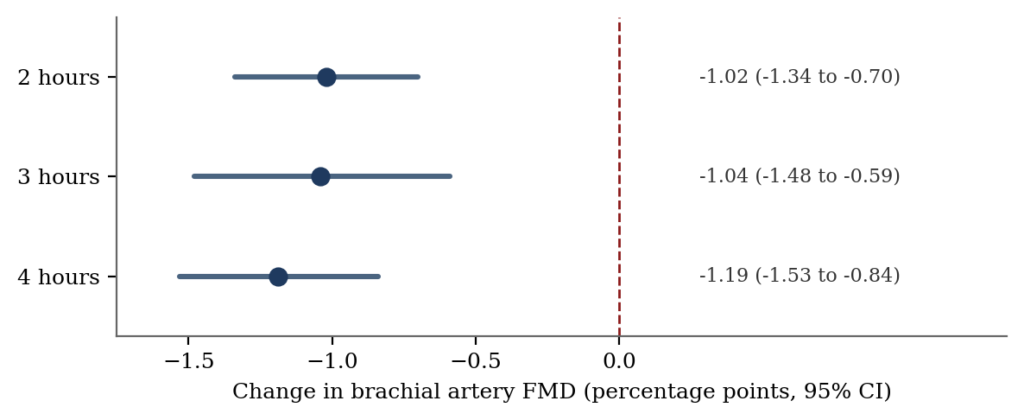
Figure 1. Change in brachial artery flow-mediated dilation after a single high-fat meal, pooled across trials. Values are mean differences in percentage points with 95% intervalos de confianza. FMD is a surrogate measure of endothelial function, not a clinical endpoint. Data from reference [3].
4.2 The Olive Oil FMD Paradox
A key observation in vascular biology is the olive oil FMD paradox described by Vogel and colleagues. Ten healthy, normolipidemic subjects consumed meals of 900 kcal containing 50 g of fat from different sources. [8]
The olive oil meal reduced postprandial FMD by 31%, from 14.3% to 9.9% (P = 0.008), whereas canola oil and salmon meals produced no significant decline. An inverse correlation was observed between the postprandial change in serum triglicéridos and the change in FMD (r = -0.47; P < 0.05). When the olive oil meal was accompanied by antioxidant-rich foods or by vitamins C and E, the reduction was substantially prevented (by 65% and 71%, respectively). This experiment shows that a high extra virgin olive oil meal did not prevent postprandial FMD impairment under these conditions. It is a ten-person acute high-fat challenge: the experimental meal contained approximately 50 g of fat, considerably greater than a typical single-meal fat intake for many individuals, so neither the magnitude of the response nor the ranking of oils should be extrapolated directly to habitual consumption. [8]
The preservation of endothelial function by extra virgin olive oil is often attributed to its hydrophilic secoiridoid phenolics, including hydroxytyrosol, oleuropein, oleocantal, and oleacein, which act in vitro as free radical scavengers. This attribution should be treated with caution, and this review does not present it as established. Funding in this literature is mixed and must be described case by case rather than in aggregate. A positive postprandial trial, a randomized controlled crossover study in 20 adults at risk for type 2 diabetes, reported that a single 50 mL dose of high-polyphenol extra virgin olive oil improved endothelial function relative to refined olive oil; that trial was funded by an olive oil producer which also supplied the study oils, with additional support from the Centers for Disease Control and Prevention. [28] The largest phenolic trial, EUROLIVE, was supported by the European Commission under grant QLK1-CT-2001-00287 and its authors declared no financial conflicts of interest. [17] A three-week crossover trial in 46 healthy volunteers comparing phenol-rich with phenol-poor extra virgin olive oil found no effect on the resistance of LDL o HDL to oxidation; that trial was supported by the International Olive Oil Council and the Foundation for Nutrition and Health Research, and one author was affiliated with the Unilever Health Institute. [29] The accurate summary is that this literature contains producer-funded positive trials, an independently funded positive trial, and an olive-industry-funded null trial, that its results are mixed in direction, and that every one of these studies measures a surrogate. Sponsorship therefore does not align neatly with study outcome, and on the evidence available the claim that olive oil polyphenols independently improve human endothelial function is not established.
| Fat / Oil | Fatty Acid Backbone | Secondary Components | Postprandial FMD Effect |
| Butter | SFA (16:0, 18:0) | SFA-rich dairy matrix; cholesterol present | Acute high-fat meals commonly reduce FMD; butter-specific inference not established by ref. [3] |
| Refined seed oils | PUFA (18:2n-6) | Tocopherols (variable) | Variable and context dependent; acute high-fat meals frequently reduce FMD |
| Refined olive oil | MUFA (18:1n-9) | Very low polyphenols | Reduction reported in some acute comparisons; context dependent |
| Aceite de oliva virgen extra | MUFA (18:1n-9) | Secoiridoid polyphenols | Mixed; context dependent |
| Canola oil | MUFA (18:1n-9) | Phytosterols, ALA (18:3n-3) | No significant reduction in the single acute experiment cited; generalizability uncertain |
Table 2. Reported postprandial flow-mediated dilation effects of major fat sources. Directional effects reflect the cited controlled studies; magnitudes vary by meal composition. FMD is a surrogate marker.
5. Omega-6 Fatty Acid Biology and Metabolism
To evaluate the hypothesis that seed oils promote systemic inflammation, the metabolic fate of linoleic acid (18:2n-6) must be examined. LA undergoes enzymatic conversion via a shared cascade of desaturation and elongation enzymes, ultimately yielding ácido araquidónico (AA, 20:4n-6), the substrate for eicosanoid synthesis through the cyclooxygenase, lipoxygenase, and cytochrome P450 pathways. [9]
The omega-6 hypothesis proposes that high dietary LA enriches membranes with AA, overproducing pro-inflammatory mediators. Human stable-isotope tracer studies show this model is not supported at usual Western dietary intakes. The fractional conversion of dietary LA to AA is estimated at only 0.3% to 0.6%, reflecting low activity of the rate-limiting delta-6-desaturase in adult human tissue. [9], [10]
A systematic review of human interventions found that decreasing dietary LA by up to 90% was not significantly correlated with the AA content of plasma or serum phospholipids (P = 0.39), and increasing dietary LA severalfold was likewise uncorrelated with AA (P = 0.72). Excess dietary LA is primarily beta-oxidized for energy or stored in adipose tissue rather than converted to AA. [9]
Arachidonic acid metabolism is also intrinsically balanced. Established eicosanoid biochemistry shows that AA is the precursor not only to pro-inflammatory mediators but also to prostacyclin, a vasodilator and inhibitor of platelet activation, and to lipoxins, which are specialized pro-resolving mediators that actively down-regulate inflammation. A simple model in which more dietary LA yields uniformly more inflammation is therefore inconsistent with the underlying biochemistry. [31]
6. Does Omega-6 Increase Chronic Inflammation?
A systematic review of ensayos controlados aleatorizados examining dietary LA and chronic inflammation in healthy, non-infant populations found no evidence of harm. Across trials, increasing dietary LA had no significant effect on circulating Proteína C reactiva (CRP), fibrinogen, plasminógeno activator inhibitor-1, interleucina-6 (IL-6), tumor necrosis factor-alpha (TNF-alpha), or soluble adhesion molecules. [11]
The clinical evidence therefore does not support the hypothesis that high dietary omega-6 intake promotes systemic inflammation in humans. This conclusion rests on controlled human trials with objective biomarker endpoints rather than on mechanistic extrapolation from eicosanoid pathways. [11]
For transparency, and consistent with the funding considerations in Section 2, the linoleic acid inflammation review was supported by an unrestricted grant from an industry technical committee, and the high-oleic oil review discussed below was funded by a commodity board. These disclosures are made for transparency; they neither invalidate the findings nor are they offset by unrelated evidence on lipids and clinical outcomes, which does not bear on whether linoleic acid raises inflammatory biomarkers. [11]
7. Seed Oils Versus Saturated Fat
7.1 Metabolic and Lipid Effects
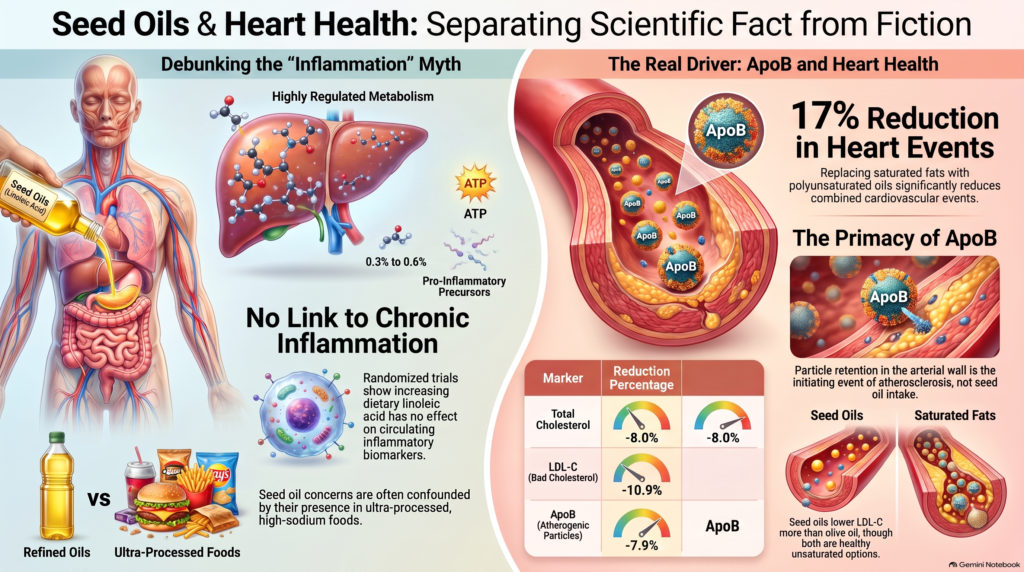
Replacing saturated fats with polyunsaturated seed oils substantially lowers atherogenic lipids. A network meta-analysis of 54 randomized trials ranked oils and solid fats by their effects on blood lipids. Safflower oil had the highest probability of reducing LDL-C (SUCRA 82%) and total cholesterol (SUCRA 90%), followed by rapeseed (canola) oil (SUCRA 76% for LDL-C, 85% for total cholesterol). Unsaturated oils reduced LDL-C by roughly 0.23 to 0.42 mmol/L relative to butter. [4] The mechanism generally invoked for this effect is up-regulation of hepatic receptores de LDL, which increases clearance of circulating partículas que contienen ApoB; that mechanism is established in the lipoprotein literature rather than demonstrated by the network meta-analysis itself. [21]
A systematic review of high-oleic vegetable oil substitutions quantified the ApoB effect directly: replacing saturated fats with aceites altos en oleico reduced total cholesterol by 8.0%, LDL-C by 10.9%, and ApoB by 7.9% (all P < 0.05). The relevant intervention is replacement rather than unrestricted addition: the evidence supports substituting grasa insaturada for saturated fat within the range of roughly 5 to 10 percent of total energy intake, not the unlimited addition of oils on top of an existing diet. [5] (Figure 2)
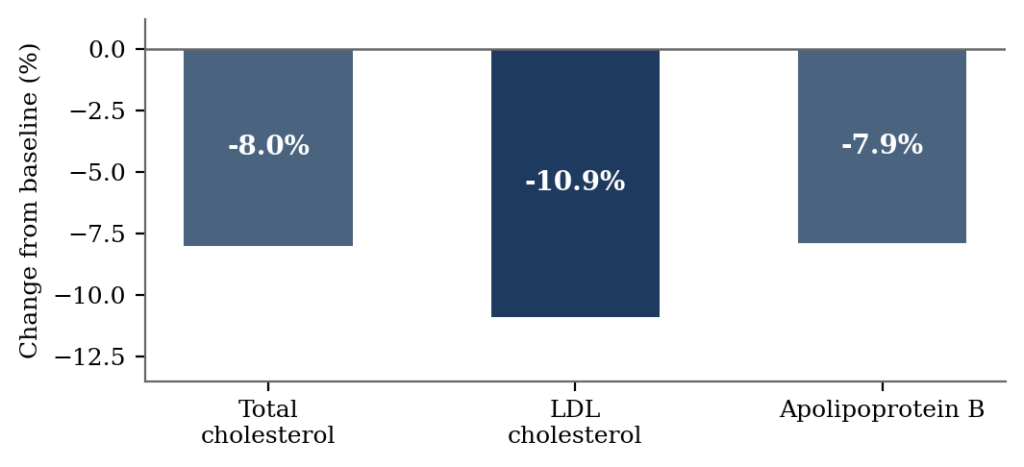
Figure 2. Change in atherogenic lipid measures when saturated fat is replaced with high-oleic vegetable oils. All changes P < 0.05. The relevant intervention is isocaloric replacement, not addition of oil to an existing diet. Data from reference [5].
7.2 Clinical Cardiovascular Outcomes
An updated Cochrane systematic review of reducing saturated fat intake pooled 15 randomized controlled trials comprising 56,675 participants who reduced saturated fat for at least two years. Reducing saturated fat produced a statistically significant 17% reduction in combined cardiovascular events (risk ratio 0.83; 95% CI 0.70 to 0.98; I-squared 67%). [18]
Subgroup analysis and meta-regression indicated the benefit was driven by replacing saturated fat with grasa poliinsaturada or high-quality carbohydrate, with greater cholesterol reductions predicting greater protection. The número necesario a tratar was 56 in prevención primaria and 53 in prevención secundaria. [18]
Despite the reduction in combined events, reducing saturated fat had little or no effect on mortalidad por todas las causas (55,858 participants, 11 trials) or cardiovascular mortality (53,421 participants, 10 trials), both with moderate-quality evidence. This dissociation between event reduction and mortality is itself important and is discussed further in Section 12. [18]
7.3 Critical Re-Evaluation of Historical Controversies
Critics of the diet-heart hypothesis frequently cite recovered data from two historical trials re-analyzed by Ramsden and colleagues.
- Minnesota Coronary Experiment: A double-blind randomized trial of 9,423 institutionalized participants comparing a diet in which saturated fat was replaced with corn oil against a saturated-fat control. The corn oil intervention lowered serum cholesterol by 13.8% versus 1.0% in controls (P < 0.001), yet produced no survival benefit. In covariate-adjusted models, a 30 mg/dL reduction in serum cholesterol was associated with a 22% higher risk of death (cociente de riesgos instantáneos 1.22; 95% CI 1.14 to 1.32; P < 0.001). [13]
- Sydney Diet Heart Study: A randomized trial in 458 men with a recent coronary event found that replacing saturated fat with safflower oil increased all-cause mortality (17.6% versus 11.8%; hazard ratio 1.62; 95% CI 1.00 to 2.64), cardiovascular mortality (hazard ratio 1.70; 95% CI 1.03 to 2.80), and coronary mortality (hazard ratio 1.74; 95% CI 1.04 to 2.92). [14]
Both trials have important limitations that constrain their relevance to modern recommendations. The interventions selectively increased linoleic acid without increasing n-3 PUFA intake, and in the Sydney trial the trans fat content of the study margarine was not recorded, leaving contemporaneous trans fat exposure uncertain against a background in which common margarines and shortenings of the period themselves contained trans fats. The historical trials also had important limitations in the duration of controlled dietary exposure, in follow-up, and in participant retention. [13], [14]
8. Seed Oils Versus Olive Oil
8.1 Direct Lipid-Modulating Effects
Because of their higher polyunsaturated content, linoleic-acid-rich seed oils lower total cholesterol and LDL-C somewhat more than monounsaturated-rich olive oil. A meta-analysis of 27 randomized placebo-controlled trials (1,089 participants) found that olive oil reduced LDL-C less than other plant oils by a weighted mean difference of 4.2 mg/dL (95% CI 1.4 to 7.01; P = 0.003) and reduced total cholesterol less by 6.27 mg/dL (95% CI 2.8 to 10.6). Although statistically significant, the magnitude of this LDL-C difference relative to olive oil is modest, and readers should not interpret it as a large clinical separation between the two. [15]
Conversely, olive oil raised high-density lipoprotein cholesterol (HDL-C) more than other plant oils, with a pooled weighted mean difference across all 27 trials of 1.37 mg/dL (95% CI 0.40 to 2.36). The effect is small and of uncertain clinical consequence. [15]
8.2 Olive Oil Grades
The term olive oil encompasses several distinct products that readers frequently conflate. Virgin olive oils are produced by mechanical means without chemical treatment; extra virgin olive oil is the highest calificación, meeting stricter sensory and free-acidity criteria and retaining substantially more native phenolic compounds. Refined olive oil is virgin oil that has been chemically or physically refined to remove defects, a process that strips the great majority of its polyphenols while leaving the oleic acid backbone intact. Olive pomace oil is extracted from the residual paste using solvents and then refined. Some surrogate effects have been associated with phenolic content rather than with oleic acid content, so these grades should not be treated as interchangeable, and evidence generated with high-polyphenol extra virgin oil should not be assumed to apply to refined or pomace grades. [17]
8.3 Vascular, Endothelial, and Inflammatory Profiles
Olive oil is sometimes said to outperform refined seed oils on vascular inflammation and endothelial function, but that claim rests on surrogate endpoints and is not relied upon here for clinical conclusions. A meta-analysis of 30 randomized controlled trials in 3,106 participants reported that olive oil consumption was associated with lower IL-6 (mean difference -0.29 pg/mL; 95% CI -0.57 to -0.02), lower soluble E-selectin (mean difference -3.16; 95% CI -4.07 to -2.25), and higher FMD (mean difference 0.76%; 95% CI 0.27 to 1.24). These are surrogate markers, not clinical events. The meta-analysis pools trials of heterogeneous design, duration, and sponsorship, and does not itself report a funding analysis, so no conclusion about the sponsorship profile of the underlying literature can be drawn from it. Because the results are surrogate improvements of uncertain clinical meaning, they should not be extrapolated to event reduction, and no conclusion of endothelial superiority for olive oil over other unsaturated oils can be drawn from them. [16]
8.4 Isolating the Contribution of Polyphenols
To determine whether the benefits of EVOO derive from its oleic acid backbone or its minor bioactive compounds, the EUROLIVE study fed 200 healthy men 25 mL/day of olive oils with low (2.7 mg/kg), medium (164 mg/kg), or high (366 mg/kg) polyphenol content in a randomized crossover design. HDL-C rose linearly with polyphenol content (change of +0.045 mmol/L at the highest dose; 95% CI 0.02 to 0.06), and LDL oxidada fell linearly (change of -3.21 U/L at the highest dose; 95% CI -5.1 to -0.8), while the low-polyphenol oil increased oxidized LDL. [17]
These dose-dependent findings underpin the European Union authorized health claim for olive oil polyphenols, which may be applied only to oils containing at least 5 mg of hydroxytyrosol and its derivatives per 20 g of oil. [30] EUROLIVE was funded by the European Commission under grant QLK1-CT-2001-00287 and its authors declared no financial conflicts of interest, so it is properly read as an independently funded trial. [17] Its principal limitation is not sponsorship but endpoint. HDL-C and oxidized LDL are surrogate markers, and no trial has shown that raising olive oil polyphenol intake reduces myocardial infarction, stroke, or cardiovascular death. A three-week crossover trial in 46 healthy volunteers found that phenol-rich oil did not increase the resistance of LDL or HDL to oxidation relative to a phenol-poor control; that trial was supported by the International Olive Oil Council and also included a commercial food-industry affiliation, so it is not an independent test either. [29] The polyphenol mechanism is therefore supported by surrogate-endpoint evidence of mixed direction and mixed sponsorship, and it does not by itself justify recommending olive oil over other unsaturated fats for cardiovascular outcomes. A further caution applies to generalization: EUROLIVE compared olive oils that differed in phenolic concentration but were otherwise similar, so its low-phenolic comparator should not be treated as equivalent to every commercially refined olive oil.
| Marcador | Extra Virgin Olive Oil | Refined Olive Oil | Refined Seed Oils |
| LDL-C lowering | Moderado | Moderado | Variable; generally greater with PUFA-rich oils |
| HDL-C effect | Small increase reported for olive oil overall | Not established separately by grade | Variable |
| LDL oxidada | Decrease reported with high-polyphenol olive oil | Increase reported with low-polyphenol olive oil in EUROLIVE | Variable / not consistently improved |
| Systemic inflammation (IL-6) | Some trials and meta-analyses report modest improvement | Insufficient grade-specific evidence | Generally no increase in chronic inflammatory biomarkers |
| Postprandial FMD | Mixed; context dependent | Context-dependent transient reduction | Context-dependent transient reduction |
| Oxidative stability | Relativamente alto | Moderate to relatively high | Variable: higher for high-oleic formulations, lower for PUFA-rich formulations |
Table 3. Comparative lipid, oxidative, and vascular profiles of extra virgin olive oil, refined olive oil, and refined seed oils, based on the cited trials.
9. Whole Foods Versus Extracted Oils
Comparing extracted oils with their whole-food counterparts reveals differences in bioavailability, postprandial kinetics, and saciedad. Extraction removes cellular structure and dietary fiber. In almonds, where this has been measured directly, intact cell walls limit lipid bioaccessibility so that a portion of fat passes unabsorbed into the lower gastrointestinal tract, and measured metabolizable energy falls below Atwater prediction. Equivalent controlled measurements are not available for olives, avocados, and most seeds, so the extension of this mechanism to whole-food fats generally remains an inference from a nut-specific literature. [25], [26]
The whole-food form also carries measurable lipid benefit. A systematic review, meta-analysis, and dosis-respuesta of 61 controlled trials (2,582 participants) found that tree nut consumption lowered total cholesterol and LDL-C in a nonlinear fashion, with stronger effects above roughly 60 g/day, and lowered ApoB and triglycerides in a linear dose-response. This is consistent with the ApoB-centered framework of this review, since whole nuts reduce the partícula aterogénica burden directly. [24]
Extracted oils are among the most calorie-dense foods in the diet, providing approximately 9 kcal/g, or roughly 120 kcal per tablespoon, with negligible fiber or proteína. Energy density of this magnitude can promote positive energy balance, which matters because excess adiposity is itself a cardiovascular factor de riesgo. Olive oil, seed oil, and butter are all energy-dense, so any of them, consumed in excess, can contribute to weight gain independent of fatty acid quality.
Controlled human data support a functional difference between whole foods and their oils: walnuts preserved postprandial endothelial function relative to olive oil in patients with hipercolesterolemia, an effect attributed to their combined fatty acid, antioxidant, and L-arginine content. [22]
Tree nuts lower circulating ApoB directly in randomized trials, and the almond food-matrix studies demonstrate reduced lipid bioaccessibility and a smaller postprandial triglyceride response relative to extracted oil. Evidence that all whole-food fat sources improve satiety per calorie, postprandial metabolism, or ApoB relative to isolated oils has not been established, and should not be asserted. Randomized trials have likewise not established that whole-food fat sources produce superior cardiovascular event reduction compared with high-quality dietary patterns containing unsaturated oils, because few long-term trials directly compare oil-free whole-food diets with oil-containing diets. The case for whole foods therefore rests on convergent intermediate evidence and biological plausibility, not on proven event reduction, and this distinction should be kept in view when translating mechanism into recommendation. [24], [25], [26]
10. Lipid Oxidation during Processing, Storage, and Cooking
The rate of lipid autoxidation is proportional to the number of double bonds in the fatty acid chain, so PUFAs are highly susceptible to free radical attack. When refined high-PUFA seed oils are heated for prolonged periods, especially under repeated commercial frying conditions, they undergo thermal oxidation, hydrolysis, and polymerization. Oxidation is also accelerated by repeated fryer reuse, air and light exposure, and prolonged storage, and is retarded by dark glass, cool storage, and inert-gas flushing. [6], [12]
This degradation generates primary lipid hydroperoxides that decompose into reactive secondary products, including aldehydes such as malondialdehyde and 4-hydroxynonenal, and oxidized linoleic acid metabolites such as 9-HODE and 13-HODE. In humans, lowering dietary linoleic acid measurably reduces circulating bioactive oxidized linoleic acid metabolites, confirming a diet-responsive pathway. An interpretive caution applies throughout this literature: circulating oxidized-LDL and oxidized-metabolite measurements correlate with, but do not directly demonstrate, oxidation occurring within the placa arterial itself, and the two should not be equated. [6], [23]
By contrast, monounsaturated and saturated fats have far fewer double bonds and lack vulnerable bis-allylic carbons, making them more resistant to thermal breakdown. These oxidation-product mechanisms are biologically plausible contributors to endothelial and mitochondrial stress, but the magnitude of their clinical contribution relative to circulating ApoB remains a proposed rather than an established pathway. A crucial distinction, frequently conflated in popular discussion, is that these concerns apply to repeatedly heated and thermally degraded oils, not to fresh, unheated seed oils; the oxidation products of abused frying oil are not a property of the fresh oil itself. [6], [12]
11. Endothelial Injury, Atherosclerosis, and the Primacy of ApoB
The vascular failure hypothesis proposes that repeated postprandial endothelial stress from extracted oils contributes over decades to increased endothelial permeability, lipoprotein entry, and vascular inflammation. Repeated transient endothelial dysfunction represents a biologically plausible mechanism that could contribute to long-term vascular injury, although direct clinical evidence demonstrating this pathway in humans remains limited. It is best regarded as a contributory hypothesis, not an established initiating cause. [3]
Vascular biology establishes that atherosclerotic plaque formation requires the entry and retention of ApoB-containing lipoproteins in the arterial wall. The European Atherosclerosis Society consensus concludes that the retention and accumulation of cholesterol-rich ApoB-containing lipoproteins within the arterial íntima is the initiating event of atherogenesis, with risk accruing in a dose-dependent manner. ApoB is generally a more direct measure of circulating número de partículas aterogénicas than colesterol LDL, because each atherogenic particle carries a single ApoB molecule. Any dietary change that lowers circulating ApoB reduces the carga de partículas available to penetrate and be retained in the arterial wall. This framework is consistent with the long-term clinical benefit observed when saturated fat is replaced by unsaturated fat, despite the transient postprandial FMD findings described above; no trial has directly tested that comparison. Aleatorización mendeliana studies reinforce the framework, showing that genetically lower LDL and ApoB reduce cardiovascular risk irrespective of the mechanism by which they are lowered. [2], [21]
12. Clinical Outcomes and Population Subgroups
Long-term randomized evidence indicates that reducing saturated fat lowers combined cardiovascular events, with benefit appearing greater when saturated fat is replaced by polyunsaturated fat, and with the magnitude of cholesterol lowering correlating with the magnitude of protection. This supports reduction of circulating ApoB as the principal mechanism. The effect on stroke and on total mortality is less pronounced in pooled randomized data. [18], [21]
12.1 Olive Oil and the Mediterranean Pattern
For established coronary disease, the estudio CORDIOPREV randomized 1,002 patients to a Dieta mediterránea rich in EVOO or a low-fat diet over seven years. The primary punto de terminación compuesto occurred at 28.1 versus 37.7 events per 1,000 person-years, and multivariable-adjusted hazard ratios across models ranged from 0.719 (95% CI 0.541 to 0.957) to 0.753 (95% CI 0.568 to 0.998) in favor of the Mediterranean diet. Two interpretive points apply: the low-fat comparator reduced total fat only to roughly 32 percent of calories, short of a strict low-fat target, and the trial carried mixed funding, including Spanish governmental and European Union sources alongside olive-oil organizations. The achieved comparator diet and the mixed funding should both be considered when interpreting generalizability. [20]
The landmark primary-prevention trial is PREDIMED, which randomized 7,447 high-risk participants to a Mediterranean diet supplemented with extra virgin olive oil, the same diet supplemented with nuts, or a reduced-fat control. In the republished intention-to-treat analysis, the adjusted hazard ratio for major cardiovascular events was 0.69 (95% CI 0.53 to 0.91) for the olive oil arm and 0.72 (95% CI 0.54 to 0.95) for the nut arm, roughly a 30% relative reduction. Three caveats are essential. First, the original 2013 report was retracted and republished in 2018 after a baseline-data audit found that aleatorización had been compromised for approximately 1,588 of the 7,447 participants (about 21 percent), including household members assigned en masse and a clinic randomized as a unit; it is best described as a randomized trial with important protocol deviations in assignment procedures, addressed in the 2018 reanalysis, which reported that results remained similar after excluding the affected assignments. Second, the intervention was an entire Mediterranean dietary pattern, not olive oil in isolation, so the benefit cannot be attributed to olive oil alone. Third, on funding, the intervention foods were donated by olive-oil and nut producers and commodity organizations, whereas the trial itself received extensive public research funding, and the investigators reported that the sponsors had no role in study design, analysis, or reporting. [19]
12.2 Absolute Risk Reduction and the Limits of Surrogate Markers
A recurring gap in discussions of dietary fat is the leap from surrogate markers to implied clinical benefit. Improvements in LDL-C, HDL-C, oxidized LDL, FMD, and IL-6 are meaningful mechanistically, but readers are ultimately concerned with heart attacks and deaths prevented, and the two do not always move in proportion. The clearest absolute figures come from the Cochrane saturated fat review, where the number needed to treat to prevent one cardiovascular event over the trial durations was 56 in primary prevention and 53 in secondary prevention, while all-cause and cardiovascular mortality were not significantly reduced. [18] The overall certainty of the edible-oil literature is also lower than its volume suggests. An revisión paraguas of 48 systematic reviews containing 206 meta-analyses graded 67.5 percent of the associations as very low certainty, 21.8 percent as low and 9.7 percent as moderate, with only 1 percent rated high; on the AMSTAR-2 instrument, a single one of the 48 reviews reached high confidence and 14.6 percent moderate, while 62.5 percent were low and 20.8 percent critically low. [32] (Figure 3)

Figure 3. Certainty and methodological confidence of the edible-oil evidence base. Left: GRADE certainty across 206 meta-analyses. Right: AMSTAR-2 confidence across the 48 systematic reviews containing them. Percentages may not sum to 100 because of rounding. Data from reference [32].
For olive oil specifically, no randomized trial has tested olive oil alone against a control for hard cardiovascular endpoints. The event-reduction evidence attributed to olive oil derives from whole-pattern Mediterranean diet trials such as PREDIMED and CORDIOPREV, in which olive oil was one component among many. Consequently, the precise riesgo absoluto reduction attributable to olive oil as an isolated intervention is not known. Accordingly, estimates that olive oil alone reduces myocardial infarction by a specific percentage cannot presently be supported by randomized evidence. Where olive oil has been pooled against comparators for hard endpoints, the summary estimates are null: no significant effect on cardiovascular events (RR 0.97; 95% CI 0.67 to 1.39), cardiovascular deaths (RR 1.07; 95% CI 0.77 to 1.48), or all-cause deaths (RR 0.99; 95% CI 0.85 to 1.15). [32] This is an honest limitation rather than a weakness of the underlying dietary advice. [19], [20] (Figure 4)
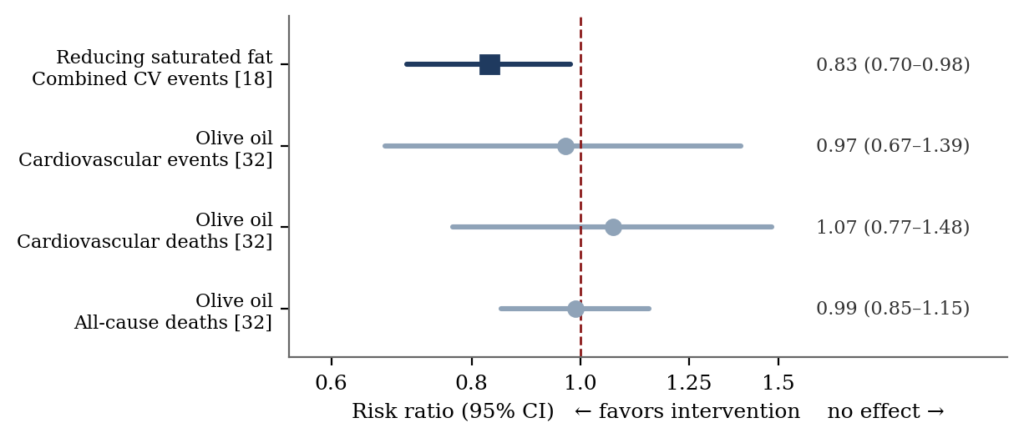
Figure 4. Randomized and pooled evidence for hard clinical endpoints. Reducing saturated fat lowers combined cardiovascular events; pooled estimates for olive oil against comparators are null for events and for mortality. Square denotes a statistically significant estimate. Note that the two rows are not a head-to-head comparison: the interventions, comparators, and trial populations differ. Data from references [18] and [32].
12.3 Population Subgroups
For patients with hipercolesterolemia familiar, who have genetically reduced LDL receptor function and high lifetime ApoB exposure, dietary saturated-fat restriction with substitution of unsaturated plant oils can complement pharmacotherapy, although pharmacologic LDL lowering remains central to management. Across subgroups, the unifying principle remains reduction of lifetime ApoB exposure. [2], [21]
13. Synthesis and Answers to Core Questions
- Are seed oils uniquely harmful compared with other added oils?
No. There is no convincing human evidence that commonly consumed seed oils have a unique cardiometabolic toxicity when substituted isocalorically for other dietary fats. Controlled human evidence does not show increased chronic inflammatory biomarkers, and lipid effects are generally favorable when they replace saturated fat. Their frequent occurrence in alimentos ultraprocesados is an important observational variable confunde. [4], [11]
- Do omega-6 fatty acids increase chronic inflammation in humans?
No. Randomized controlled trials show that dietary linoleic acid does not increase circulating inflammatory biomarkers. Conversion of linoleic acid to arachidonic acid is only 0.3% to 0.6% and tightly regulated, and arachidonic acid gives rise to both pro-inflammatory and pro-resolving mediators. [9], [11]
- Do seed oils impair endothelial function differently from olive oil?
No dependable difference has been established. Postprandial FMD changes are influenced by meal size and composition, and are associated in some studies with the magnitude of the postprandial triglyceride response; in the acute experiment cited here a canola oil meal produced no significant fall while an extra virgin olive oil meal did. [8] The trials comparing high-polyphenol with refined olive oil report mixed results under mixed sponsorship: a positive postprandial trial funded by a producer that supplied the study oil [28], a three-week crossover trial funded by the International Olive Oil Council that found no effect of phenol content on LDL oxidation resistance [29], and EUROLIVE, funded by the European Commission with no declared conflicts, which reported dose-dependent changes in HDL-C and oxidized LDL [17]. A predominantly oleic-acid fatty-acid profile alone has not been shown to prevent postprandial FMD impairment, and FMD is in any case only a surrogate marker.
- Is the primary concern extracted oils regardless of fatty acid composition?
Direct whole-food-versus-oil evidence, strongest for almonds, demonstrates substantially greater lipid bioaccessibility and lipemia posprandial from extracted oil than from the intact seed; generalization to all food matrices remains plausible but incompletely tested. Extracted oils are also calorie-dense. Whether either property translates into long-term risk independent of ApoB lowering remains uncertain. High-polyphenol EVOO is sometimes proposed as a partial exception on the grounds that its antioxidant fraction counteracts lipid-induced endothelial stress, but the trials supporting that proposition are few, mixed in result, and measure only surrogate endpoints. [3], [8], [25], [28], [29]
- Does replacing saturated fat with seed oils improve outcomes primarily through LDL-C and ApoB?
Yes. The benefit is likely mediated substantially by reductions in LDL and ApoB-containing lipoprotein exposure. Saturated fats down-regulate hepatic LDL receptors, and replacing them with unsaturated oils up-regulates receptor activity and sustainably lowers circulating ApoB for as long as the dietary change is maintained. [5], [21]
- Do whole-food fat sources provide superior cardiovascular outcomes?
Tree nuts lower ApoB directly in randomized trials, and almond food-matrix studies show reduced lipid bioaccessibility relative to extracted oil. Whether that advantage generalizes to all whole-food fat sources has not been established. For hard clinical endpoints the evidence is limited, because few long-term randomized trials compare oil-free with oil-containing diets. [24], [25], [26]
- What role does acute postprandial FMD impairment play in long-term atherosclerosis?
It is a reproducible marker of transient vascular stress but remains secondary to ApoB retention. Atherosclerotic plaque formation requires the entry and retention of ApoB-containing lipoproteins in the arterial wall. Long-term outcome evidence currently favors the clinical importance of sustained ApoB lowering over concern about transient FMD changes, though the two have never been compared directly in a trial. [2], [21]
13.1 Evidence-Based Recommendations
The totality of evidence supports a dietary pattern that prioritizes replacing saturated fat with plant-derived unsaturated fats, particularly for those with elevated ApoB, familial hypercholesterolemia, or established coronary disease; treats olive oil and other unsaturated plant oils as reasonable substitutes for animal fat on the basis of their LDL and ApoB effects rather than any demonstrated endothelial or polyphenol advantage, since the polyphenol evidence rests entirely on surrogate endpoints and has never been tested against clinical events; favors minimally processed whole-food fat sources such as nuts, seeds, avocados, and olives, among which tree nuts carry the strongest randomized evidence for modest reductions in LDL-C and ApoB, while noting that comparable ApoB evidence does not exist for every food in that list; and minimizes thermally degraded, repeatedly heated, or deep-fried oils. Where surrogate markers improve, the honest framing is that these are mechanistically favorable changes whose translation into event reduction is best evidenced for whole dietary patterns rather than for any single oil in isolation. [18], [24], [25], [26], [6]
Referencias
- Sacks FM, Lichtenstein AH, Wu JHY, et al. Dietary Fats and Cardiovascular Disease: A Presidential Advisory From the American Heart Association. Circulation. 2017;136(3):e1-e23. doi:10.1161/CIR.0000000000000510
- Ference BA, Ginsberg HN, Graham I, et al. Low-density lipoproteins cause atherosclerotic cardiovascular disease. 1. Evidence from genetic, epidemiologic, and clinical studies. A consensus statement from the European Atherosclerosis Society Consensus Panel. Eur Heart J. 2017;38(32):2459-2472. doi:10.1093/eurheartj/ehx144
- Fewkes JJ, Kellow NJ, Cowan SF, Williamson G, Dordevic AL. A single, high-fat meal adversely affects postprandial endothelial function: a systematic review and meta-analysis. Am J Clin Nutr. 2022;116(3):699-729. doi:10.1093/ajcn/nqac153
- Schwingshackl L, Bogensberger B, Benčič A, Knüppel S, Boeing H, Hoffmann G. Effects of oils and solid fats on blood lipids: a systematic review and network meta-analysis. J Lipid Res. 2018;59(9):1771-1782. doi:10.1194/jlr.P085522
- Huth PJ, Fulgoni VL 3rd, Larson BT. A systematic review of high-oleic vegetable oil substitutions for other fats and oils on cardiovascular disease risk factors: implications for novel high-oleic soybean oils. Adv Nutr. 2015;6(6):674-693. Published 2015 Nov 13. doi:10.3945/an.115.008979
- Grootveld M. Evidence-Based Challenges to the Continued Recommendation and Use of Peroxidatively-Susceptible Polyunsaturated Fatty Acid-Rich Culinary Oils for High-Temperature Frying Practises: Experimental Revelations Focused on Toxic Aldehydic Lipid Oxidation Products. Front Nutr. 2022;8:711640. Published 2022 Jan 5. doi:10.3389/fnut.2021.711640
- Lesser LI, Ebbeling CB, Goozner M, Wypij D, Ludwig DS. Relationship between funding source and conclusion among nutrition-related scientific articles. PLoS Med. 2007;4(1):e5. doi:10.1371/journal.pmed.0040005
- Vogel RA, Corretti MC, Plotnick GD. The postprandial effect of components of the Mediterranean diet on endothelial function. J Am Coll Cardiol. 2000;36(5):1455-1460. doi:10.1016/s0735-1097(00)00896-2
- Rett BS, Whelan J. Increasing dietary linoleic acid does not increase tissue arachidonic acid content in adults consuming Western-type diets: a systematic review. Nutr Metab (Lond). 2011;8:36. Published 2011 Jun 10. doi:10.1186/1743-7075-8-36
- Demmelmair H, Iser B, Rauh-Pfeiffer A, Koletzko B. Comparison of bolus versus fractionated oral applications of [13C]-linoleic acid in humans. Eur J Clin Invest. 1999;29(7):603-609. doi:10.1046/j.1365-2362.1999.00477.x
- Johnson GH, Fritsche K. Effect of dietary linoleic acid on markers of inflammation in healthy persons: a systematic review of randomized controlled trials. J Acad Nutr Diet. 2012;112(7):1029-1041.e10415. doi:10.1016/j.jand.2012.03.029
- Bazina N, Ahmed T, Almdaaf M, Abu Hallalah HMO, Jibia S. Chemical Changes in Deep-Fat Frying: Reaction Mechanisms, Oil Degradation, and Health Implications. Food Sci Nutr. 2025;13(10):e70969. Published 2025 Oct 13. doi:10.1002/fsn3.70969
- Ramsden CE, Zamora D, Majchrzak-Hong S, et al. Re-evaluation of the traditional diet-heart hypothesis: analysis of recovered data from Minnesota Coronary Experiment (1968-73). BMJ. 2016;353:i1246. Published 2016 Apr 12. doi:10.1136/bmj.i1246
- Ramsden CE, Zamora D, Leelarthaepin B, et al. Use of dietary linoleic acid for secondary prevention of coronary heart disease and death: evaluation of recovered data from the Sydney Diet Heart Study and updated meta-analysis. BMJ. 2013;346:e8707. Published 2013 Feb 4. doi:10.1136/bmj.e8707
- Ghobadi S, Hassanzadeh-Rostami Z, Mohammadian F, et al. Comparison of blood lipid-lowering effects of olive oil and other plant oils: A systematic review and meta-analysis of 27 randomized placebo-controlled clinical trials. Crit Rev Food Sci Nutr. 2019;59(13):2110-2124. doi:10.1080/10408398.2018.1438349
- Schwingshackl L, Christoph M, Hoffmann G. Effects of Olive Oil on Markers of Inflammation and Endothelial Function-A Systematic Review and Meta-Analysis. Nutrients. 2015;7(9):7651-7675. Published 2015 Sep 11. doi:10.3390/nu7095356
- Covas MI, Nyyssönen K, Poulsen HE, et al. The effect of polyphenols in olive oil on heart disease risk factors: a randomized trial. Ann Intern Med. 2006;145(5):333-341. doi:10.7326/0003-4819-145-5-200609050-00006
- Hooper L, Martin N, Jimoh OF, Kirk C, Foster E, Abdelhamid AS. Reduction in saturated fat intake for cardiovascular disease. Cochrane Database Syst Rev. 2020;8(8):CD011737. Published 2020 Aug 21. doi:10.1002/14651858.CD011737.pub3
- Estruch R, Ros E, Salas-Salvadó J, et al. Primary Prevention of Cardiovascular Disease with a Mediterranean Diet Supplemented with Extra-Virgin Olive Oil or Nuts. N Engl J Med. 2018;378(25):e34. doi:10.1056/NEJMoa1800389
- Delgado-Lista J, Alcala-Diaz JF, Torres-Peña JD, et al. Long-term secondary prevention of cardiovascular disease with a Mediterranean diet and a low-fat diet (CORDIOPREV): a randomised controlled trial. Lancet. 2022;399(10338):1876-1885. doi:10.1016/S0140-6736(22)00122-2
- Borén J, Chapman MJ, Krauss RM, et al. Low-density lipoproteins cause atherosclerotic cardiovascular disease: pathophysiological, genetic, and therapeutic insights: a consensus statement from the European Atherosclerosis Society Consensus Panel. Eur Heart J. 2020;41(24):2313-2330. doi:10.1093/eurheartj/ehz962
- Cortés B, Núñez I, Cofán M, et al. Acute effects of high-fat meals enriched with walnuts or olive oil on postprandial endothelial function. J Am Coll Cardiol. 2006;48(8):1666-1671. doi:10.1016/j.jacc.2006.06.057
- Ramsden CE, Ringel A, Feldstein AE, et al. Lowering dietary linoleic acid reduces bioactive oxidized linoleic acid metabolites in humans. Prostaglandins Leukot Essent Fatty Acids. 2012;87(4-5):135-141. doi:10.1016/j.plefa.2012.08.004
- Del Gobbo LC, Falk MC, Feldman R, Lewis K, Mozaffarian D. Effects of tree nuts on blood lipids, apolipoproteins, and blood pressure: systematic review, meta-analysis, and dose-response of 61 controlled intervention trials. Am J Clin Nutr. 2015;102(6):1347-1356. doi:10.3945/ajcn.115.110965
- Berry SE, Tydeman EA, Lewis HB, et al. Manipulation of lipid bioaccessibility of almond seeds influences postprandial lipemia in healthy human subjects. Am J Clin Nutr. 2008;88(4):922-929. doi:10.1093/ajcn/88.4.922
- Novotny JA, Gebauer SK, Baer DJ. Discrepancy between the Atwater factor predicted and empirically measured energy values of almonds in human diets. Am J Clin Nutr. 2012;96(2):296-301. doi:10.3945/ajcn.112.035782
- Inaba Y, Chen JA, Bergmann SR. Prediction of future cardiovascular outcomes by flow-mediated vasodilatation of brachial artery: a meta-analysis. Int J Cardiovasc Imaging. 2010;26(6):631-640. doi:10.1007/s10554-010-9616-1
- Njike VY, Ayettey R, Treu JA, Doughty KN, Katz DL. Post-prandial effects of high-polyphenolic extra virgin olive oil on endothelial function in adults at risk for type 2 diabetes: a randomized controlled crossover trial. Int J Cardiol. 2021;330:171-176. doi:10.1016/j.ijcard.2021.01.062
- Vissers MN, Zock PL, Wiseman SA, Meyboom S, Katan MB. Effect of phenol-rich extra virgin olive oil on markers of oxidation in healthy volunteers. Eur J Clin Nutr. 2001;55(5):334-341. doi:10.1038/sj.ejcn.1601161
- EFSA Panel on Dietetic Products, Nutrition and Allergies (NDA). Scientific opinion on the substantiation of health claims related to polyphenols in olive and protection of LDL particles from oxidative damage, pursuant to Article 13(1) of Regulation (EC) No 1924/2006. EFSA Journal. 2011;9(4):2033. doi:10.2903/j.efsa.2011.2033. Authorized wording established by Commission Regulation (EU) No 432/2012 of 16 May 2012.
- Serhan CN. Pro-resolving lipid mediators are leads for resolution physiology. Nature. 2014;510(7503):92-101. doi:10.1038/nature13479
- Voon PT, Ng CM, Ng YT, et al. Health effects of various edible vegetable oil: an umbrella review. Adv Nutr. 2024;15(9):100276. doi:10.1016/j.advnut.2024.100276. Several authors are affiliated with the Malaysian Palm Oil Board; the authors declared no conflicts of interest and no funding.