العلاجات الأيضية القائمة على الإنكريتين في طب القلب والأوعية الدموية
مراجعة شاملة للنتائج السريرية، والآليات المرضية الفسيولوجية، والآفاق المستقبلية
كلمات مفتاحية — تصلب الشرايين, طب القلب والأيض، حماية القلب والكلى، تجارب النتائج القلبية الوعائية، مثبطات ثنائي ببتيديل بيبيداز-4،, ناهض مستقبلات ثنائي غيب/غلوكاغون-1, ناهه مستقبل الببتيد-1 الشبيه بالاجلوكاجون, فشل القلب مع المحافظة عليها كسر القذف, استقرار اللويحة, سيماغلوتايد, تيرزيباتيد, ، النوع 2 مرض السكري.
اختصارات
| أبوبروتين ب أبروليپوبروتين B
آر آر إيه الخطر المطلق تخفيض المرض القلبي الوعائي تصلب الشرايين صلب الشرايين أمراض القلب والأوعية الدموية مؤشر كتلة الجسم مؤشر كتلة الجسم تصوير الأوعية الدموية التاجية المقطعي المحوسب تاجلي التصوير المقطعي المحوسب تصوير الأوعية الدموية تكامل مستمر فترة الثقة المرض الكلوي المزمن مرض الكلى المزمن السيرة الذاتية قلبي وعائي المرض القلبي الوعائي أمراض القلب والأوعية الدموية تجربة النتائج القلبية الوعائية تجربة النتائج القلبية الوعائية ثنائي ببتيديل بيريداز 4 ثنائي ببتيديل بيبيدايد-4 معدل الترشيح الكبيبي المقدر المقدر الترشيح الكبيبي معدل أكسيد النيتريك البطاني بطاني أكسيد النيتريك إنزيم المُصْلِعَة جيب عديد الببتيد الإنسولينوتروبي المعتمد على الجلوكوز GIP/GLP-1RA ثنائي GIP/ناهض مستقبلات الببتيد-1 الشبيه بالـجلوكاغون (على سبيل المثال، تيرزيباتيد) GLP-1 الببتيد-1 شبيه الجلوكاجون م ن ه - 1 (GLP-1RA) ناهض مستقبلات الببتيد-1 الشبيه بالـجلوكاغون الهيموجلوبين السكري الهيموجلوبين السكري HDL-C عالي الكثافة بروتين دهني كوليسترول HF فشل القلب قصور القلب مع انقباض محفوظ قصور القلب مع حفظ كسور القذف الموارد البشرية نسبة الخطر البروتين التفاعلي C عالي الحساسية عالي الحساسية البروتين التفاعلي C |
الكاكام-1 جزيء الالتصاق بين الخلايا 1
إنترلوكين-6 إنترلوكين-6 الموجات فوق الصوتية داخل الأوعية الدموية الموجات فوق الصوتية داخل الأوعية الدموية KCCQ-CSS كانساس سيتي اعتلال عضلة القلب موجز النتائج السريرية للاستبيان البروتين الدهني منخفض الكثافة (LDL-C) كوليسترول البروتين الدهني منخفض الكثافة الكسر القذفي للبُطين الأيسر كسر القذيفة البطيني الأيسر صولجان الأحداث القلبية الوعائية السلبية الكبرى مي احشاء عضلة القلب عامل نووي كابا بي العامل النووي كابا بي تصنيف جمعية القلب في نيويورك جمعية قلب نيويورك باد مرض الشرايين المحيطية PCSK9 كونفيرتاز البروتيين الطليعي النوع 9 من سابتليسين/كيكسين بي كيه إيه بروتين كيناز أ RRR الخطر النسبي تخفيض بنك الدولة الباكستاني ضغط الدم الانقباضي نظام التحكم الصناعي تحت الجلد م inhibitors Na+/glucose co-transporter 2 مُحَبِّط الناقل المشترك للصوديوم والجلوكوز-2 النوع الثاني من السكري مرض السكري من النوع الثاني عامل نخر الورم ألفا عامل نخر الورم ألفا نسبة الألبومين إلى الكرياتينين في البول نسبة الألبومين إلى الكرياتينين في البول جزيء التصاق الخلايا الوعائية-1 جزيء التصاق الخلايا الوعائية 1 VSMC وعائي خلية عضلية ملساء اختبار المشي لمدة 6 دقائق مسافة المشي لمدة 6 دقائق |
ملخص
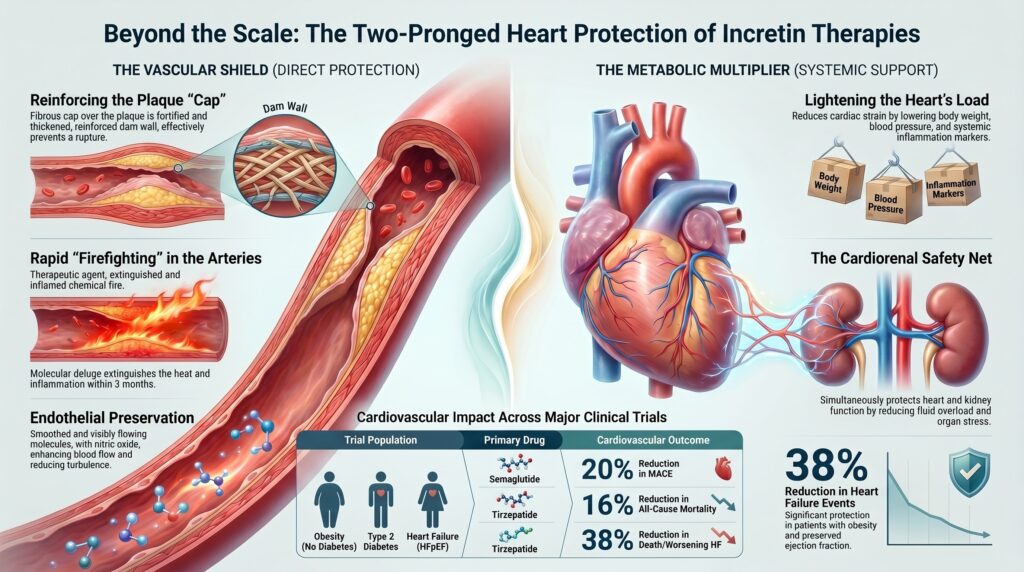
المُهْبِطَاتُ لمُسْتَقْبِلاتِ البِبْتِيدِ-1 الشَّبِيهِ بالغْلُوكَاغُون (GLP-1RAs) والمُهْبِطَاتُ المَازِجَةُ لمُسْتَقْبِلاتِ الجِيبِ/البِبْتِيدِ-1 الشَّبِيهِ بالغْلُوكَاغُون (GIP/GLP-1RAs) قد خَضَعَت لِلتَّقْيِيم عبر نطاق واسع تجربة النتائج القلبية الوعائية برنامج. تجارب التفوق المُحكَمَة بالدواء الوهمي في داء السكري من النوع الثاني (T2D) — LEADER و SUSTAIN-6 و REWIND و SOUL — وفي السمنة أظهرت دراسة «SELECT» الخاصة بالأشخاص غير المصابين بداء السكري انخفاضًا ذا دلالة إحصائية في الأحداث القلبية الوعائية السلبية الكبرى (MACE) بنسبة تتراوح بين 12% و26% [3], [4], [10]–[12أثبتت دراسة PIONEER 6 الأمان القلب الوعائي مع تقدير نقطي ملائم وغير ذي دلالة إحصائية13]. في إعداد المقارنة النشطة، كان تيرزيباتيد غير أدنى من دولاغلوتايد لـ 3 نقاط MACE في SURPASS-CVOT (نسبة الخطر 0.92؛ القيمة الاحتمالية P = 0.09 لتفوق) وأدى إلى انخفاض الوفيات لجميع الأسباب بقلم 16% [6]. في حالات قصور القلب مع الحفاظ على نسبة الطرد (HFpEF) المصحوبة بالسمنة، أظهرت دراسة SUMMIT انخفاضًا بنسبة 38% في المؤشر المركب للوفاة القلبية الوعائية وتفاقم قصور القلب، مما يكمل برنامج STEP-HFpEF [5], [20], [21أظهرت تجربة (FLOW) فائدة قلبية كلوية في الحالات المزمنة مرض الكلى (مرض الكلى المزمن) مع السكري من النوع الثاني [22].
السؤال السريري السائد هو ما إذا كانت هذه الفوائد هي عواقب لاحقة لـ فقدان الوزن, ، وتحسين سكر الدم، وخفض ضغط الدم، أم أنها تعكس تأثيرات مباشرة متعددة التأثيرات على جدار الأوعية الدموية و عضلة القلب. تدعم البيانات المتراكمة تفسيراً متعدد العوامل: إذ يقل العبء القلبي الاستقلابي، في حين أن التباعد السريع لمنحنیات حوادث القلب والأوعية الدموية الرئيسية (MACE) في التجارب المُحكاة بالدواء الوهمي — في غضون أشهر وقبل حدوث فقدان كبير في الوزن — إلى جانب أدلة التصوير الخاصة بـ لوحة الاستقرار وانخفاض الشريان التاجي التهاب, تدعم بشكل معقول إساهم الآليات المضادة للالتهابات الوعائية المباشرة وآليات بطانة الأوعية الدموية9], [24], [25]. تلخص هذه المراجعة الآليات الخلوية والفسيولوجية، وتقارن بين العلاجات القائمة على الإنكريتين والعلاج الدوائي خافض للدهون، وتلخص التجارب العشوائية الرئيسية، وتقيم التمييز بين تراجع اللويحة وتثبيت اللويحات، ويوجز الأسئلة التي لم تُحل واعتبارات التطبيق السريري.
1. الآليات الخلوية والفسيولوجية
تُعبَّر مستقبلات GLP-1 في خلايا بيتا البنكرياسية، ومراكز الشهية في الجهاز العصبي المركزي، وبكثافة أقل بكثير في أذينَي القلب، والأوعية الدموية بطانة الأوعية الدموية, ، العضلات الملساء، والخلايا المناعية، والنيفرون الكلوي [13], [14]. كان من الصعب تأكيد التعبير المباشر للمستقبلات في الخلايا البطانية وخلايا العضلات الملساء الشتاجية البشرية باستخدام أجسام مضادة معتمدة، مما يثير احتمال أن بعض التأثيرات “وعائية” يتم بوساطة غير مباشرة عبر الخلايا المناعية المتداولة، أو إشارات الكبد، أو مسارات الجهاز العصبي المركزي [14يستفيد التحفيز المزدوج لمستقبلات GIP و GLP-1 من تأثيرات استقلابية متكاملة: تحفيز إشارات عديد الببتيد الأنسوليني المعتمد على الجلوكوز (GIP) يعزز التعامل مع الدهون و حساسية الأنسولين في الأنسجة الدهنية، في حين أن إشارات GLP-1 تحفز شبع, معتمد على الجلوكوز الأنسولين إفراز، وال الجزء الأكبر من التأثيرات القلبية الوعائية بوساطة الإنكريتين2], [6]. يربط الجدول الأول الأنسجة المستهدفة بالشلالات الجزيئية، السريرية المؤشرات الحيوية, والنتائج القلبية الوعائية المقابلة التي تظهر في الدراسات السريرية.
الجدول الأول. الآليات الخلوية والفسيولوجية للحماية القلبية بوساطة الإنكريتين.
| الأنسجة / الجهاز المستهدف | مستقبل | سلسلة جزيئية | المؤشر الحيوي / البديل | النتائج القلبية الوعائية |
| بطانة الأوعية الدموية | مستقبلات GLP-1 | استعادة اقتران إنزيم أكسيد النيتريك البطاني (eNOS)؛ تقليل إنتاج جذور الأكسيد الفائق؛ زيادة التوافر الحيوي لأكسيد النيتريك. | تحسن التوسع الناتج عن التدفق؛ وانخفاض مستويات ICAM-1 وVCAM-1 القابلة للذوبان. | توسع الأوعية الدموية الدقيقة التاجية؛ محفوظ الوظيفة البطانية; تقليل التصاق الخلايا أحادية النوى. |
| الخلايا المناعية الوعائية والدورية | مستقبلات GLP-1 | تنشيط cAMP / PKA؛ تثبيط انتقال NF-κB؛ انخفاض بالعمى تفعيل. | خفض بروتين التفاعل السي عالي الحساسية، والإنترلوكين-6، وورم أرومة النفاويات-ألفا. | تثبيط تجنيد الخلايا الأحادية إلى جدار الأوعية الدموية؛ وانخفاض تكوين الخلايا الرغوية والتهاب اللويحات. |
| العضلات الملساء الشريانية ومصفوفة اللويحات | مستقبلات GLP-1 | تقليل تكاثف خلايا العضلات الملساء الوعائية؛ تعديل مصفوفة ميتالوبروتياز التعبير؛ زيادة ترسب الكولاجين. | زيادة حجم اللويحات الليفية في تصوير الأوعية المرجلة بالشرايين التاجية بالأشعة المقطعية; أكثر سمكاً غِلاف ليفي عن التصوير داخل الأوعية الدموية. | استقرار لوحة عصيدية عرضة للخطر العمارة؛ انخفاض التمزق والتآكل. |
| العضلة القلبية والدورة الدموية الدقيقة في الشرايين التاجية | مستقبلات GLP-1 | زيادة عضلة القلب جلوكوز الامتصاص تحت الإجهاد؛ تقليل موت الخلايا المبرمج لخلايا عضلة القلب عبر تثبيط مسار الكاسبيس-3. | مخفض NT-proBNP و تروبونين; ؛ الحفاظ على نسبة انقباض البطين الأيسر في مجموعات محددة من السكان. | التخفيف من آلام نقص التروية وإعادة التروية؛ وتحسين الوظيفة الانبساطية؛ والحد من تطور قصور القلب. |
| الأنسجة الدهنية والكبد | مستقبلات GLP-1 ومستقبلات GIP | تثبيط الشهية على المستوى المركزي؛ انخفاض تكوين الدهون في الكبد و الدهون خارج الموضع الترسب؛ تحسن حساسية الأنسولين. | 5%–15%: خفض وزن الجسم؛ انخفاض محيط الخصر; ؛ تم تحسينه مؤشر مقاومة الانسولين (HOMA-IR). | انخفاض الحمل المسبق/الحمل اللاحق للقلب؛; عكس الالتهاب الجهازي المرتبط بالسمنة. |
| النيفرون الكلوي وديناميكا الدم | مستقبلات GLP-1 ومستقبلات GIP | تثبيط مبادل الصوديوم والهيدروجين في الأنبوب القريب (NHE3)؛ إدرار الصوديوم؛ انخفاض فرط الترشيح الكبيبي. | انخفاض في الضغط الانقباضي بمقدار 2–5 ملم زئبق ضغط الدم; ؛ انحدار معدل الترشيح الكلوي المقدر (eGFR) الثابت. | تقليل الإجهاد الذي يتعرض له جدار عضلة القلب؛ التخفيف من حدة المتلازمة القلبية الكلوية. |
2. مقارنة بين فئات الأدوية: العلاجات القائمة على الإنكريتين مقابل العلاجات الخافضة للدهون
العلاجات التقليدية لخفض مستويات الدهون — ستاتين, إزيتيمايب, ، مثبطات إنزيم تحويل البروتين الأولي من نوع السوبتيليسين/الككسين 9 (PCSK9)،, إِنْكِليصيران, ، و حمض البيمبيدويك — تعمل في المقام الأول على خفض البروتينات الدهنية التي تحتوي على البروتين الدهني ب (ApoB) في الدورة الدموية، مما يؤدي إلى إبطاء ظهور حالات جديدة تكون العصيد الشرياني وعندما يصل حجمها إلى مستوى كافٍ، فإنها تؤدي إلى تراجع اللويحات الوعائية وفقًا للتصوير الوعائي [15]–[17]. تعمل العلاجات القائمة على الإنكريتين وفقًا لآلية مختلفة: فهي تؤثر تأثيرًا متواضعًا على مؤشرات الدهون، لكنها تؤثر تأثيرًا كبيرًا على الالتهاب الجهازي، وبيولوجيا الأوعية الدموية، وتكوين الجسم، وضغط الدم، وديناميكا الدم الكلوية [2], [18]. يلخص الجدول الثاني الملامح المقارنة من حيث كوليسترول البروتين الدهني منخفض الكثافة (LDL-C)، وكوليسترول البروتين الدهني عالي الكثافة (HDL-C)، ونتائج الأحداث القلبية الوعائية الخطيرة (MACE). ولا تكمن الآثار السريرية في الاستبدال بل في الجمع بين الأمرين: خفض مستويات البروتين الدهني ApoB بشكل مكثف لمعالجة العامل الدهني المسبب لتصلب الشرايين، إلى جانب العلاج بالإنكريتين لمعالجة المخاطر المتبقية المتعلقة بأمراض القلب والأيض والالتهابات.
الجدول الثاني. الخصائص الدوائية والسريرية: العلاجات القائمة على الإنكريتين مقابل العلاجات الخافضة للدهون.
| فئة الدواء (مثال) | الهدف الجزيئي الأساسي | التأثيرات على الدهون (نموذجية) | التأثير على المضاعفات القلبية الوعائية الخطيرة (MACE) وفشل القلب (HF) | الفوائد الأيضية الثانوية |
| منبهات مستقبلات GLP-1 (سيماجلوتيد، ليراجلوتيد، دولاجلوتيد) | مستقبلات GLP-1 | LDL-C ↓ ~2%–5%؛; الدهون الثلاثية ↓ ~12%–18%؛ ارتفاع الكوليسترول الحميد (HDL-C) ↑ ~3%–5%؛ انخفاض طفيف في البروتين ApoB. | انخفاض المخاطر النسبي في دراسة MACE يتراوح بين 12% و26% تقريبًا عبر تجارب CVOT الإيجابية التي تمت مقارنتها بالغفل (LEADER 13%، REWIND 12%، SOUL 14%، SELECT 20%، SUSTAIN-6 26%). وكانت دراسة PIONEER 6 تجربة سلامة لعدم الدونية مع تقدير نقطي إيجابي غير ذي دلالة إحصائية. نتائج إيجابية لأعراض قصور القلب والوظائف في حالات قصور القلب مع وظيفة انقباض محفوظة (HFpEF). | فقدان الوزن 6%–15%؛ انخفاض ضغط الدم الانقباضي (SBP) بمقدار 2–5 ملم زئبق؛ انخفاض ملحوظ في مستوى بروتين التفاعل C عالي الحساسية (hs-CRP)؛ الحفاظ على معدل الترشيح الكلوي المقدر (eGFR). |
| منبه مستقبلات GIP/GLP-1 (تيرزيباتيد) | مستقبلات GIP وGLP-1 | انخفاض الكوليسترول الدهني منخفض الكثافة (LDL-C) بنسبة ~5%–8%؛ انخفاض الدهون الثلاثية بنسبة ~20%–25%؛ ارتفاع الكوليسترول الدهني عالي الكثافة (HDL-C) بنسبة ~5%–8%؛ انخفاض أكبر في مستويات البروتين ApoB مقارنةً بالعلاج الأحادي بمستقبلات GLP-1. | لا يقل فعالية عن دولاغلوتيد فيما يتعلق بمؤشر MACE ذي النقاط الثلاث (HR 0.92، 95.3% CI 0.83–1.01؛ P = 0.09 بالنسبة للتفوق) في دراسة SURPASS-CVOT، مع انخفاض بنسبة 16% في معدل الوفيات من جميع الأسباب. وانخفاض بنسبة 38% في مؤشر الأحداث المركبة لقصور القلب، وانخفاض بنسبة 46% في أحداث تفاقم قصور القلب في دراسة SUMMIT (قصور القلب مع وظيفة انقباض محفزة + السمنة). | فقدان الوزن 11%–22%؛ انخفاض HbA1c 1.5%–2.0%؛ انخفاض ضغط الدم الانقباضي (SBP) بمقدار 3–5 ملم زئبق؛ منحنى إيجابي لمعدل الترشيح الكلوي التقديري (eGFR). |
| الستاتينات (إنزيم HMG-CoA المختزل (المثبطات) | إنزيم HMG-CoA ريدوكتاز الكبدي | الكوليسترول الضار (LDL-C) ↓ 30%–55%؛ الدهون الثلاثية ↓ 10%–25%؛ الكوليسترول النافع (HDL-C) ↑ 5%–10%؛ بروتين أبو ب (ApoB) ↓ 30%–50%. | انخفاض في المخاطر النسبية للإصابة بمرض MACE يبلغ حوالي 22% لكل انخفاض بمقدار 1.0 مليمول/لتر (38.7 ملغ/ديسيلتر) في مستوى الكوليسترول الضار (LDL-C) (CTT تحليل تلوي)؛ موقف محايد تجاه HF. | تثبيت مباشر للوحة الترسبات؛ انخفاض طفيف في مستوى بروتين CRP عالي الحساسية؛ تأثيرات متعددة على الخلايا البطانية. |
| إزيتيميب | NPC1L1 ناقل الكوليسترول | الكوليسترول الضار (LDL-C) انخفض بمقدار 15%–22%؛ الدهون الثلاثية انخفضت بمقدار ~5%؛ الكوليسترول النافع (HDL-C) ارتفع بمقدار ~1%–3%؛ بروتين ApoB انخفض بمقدار ~10%–15%. | ~6% انخفاض المخاطر النسبية في دراسة MACE عند إضافة هذا العلاج إلى العلاج بالستاتين (IMPROVE-IT)؛ موقف محايد تجاه HF. | آثار معوية موضعية؛ ملف أمان إيجابي. |
| مثبطات PCSK9 (أليروكوماب, إيفولوكوماب) والإينكليسييران | PCSK9 المتداول في الدم (mAb) أو mRNA لـ PCSK9 الكبدي (siRNA) | انخفاض الكوليسترول الدهني منخفض الكثافة (LDL-C) في النطاق 50%–60%؛ انخفاض بروتين أبو ب (ApoB) في النطاق 40%–50%؛ انخفاض البروتين الدهني (Lp(a)) في النطاق 20%–30%؛ انخفاض متواضع في مستويات الدهون الثلاثية. | ~15% انخفاض المخاطر النسبية وفقًا لدراسة MACE عند إضافة هذا العلاج إلى العلاج بالستاتين (فورييه, أوديسي (النتائج)؛ موقف محايد تجاه HF. | يحفز تراجع لويحات الشرايين التاجية في الموجات فوق الصوتية داخل الأوعية الدموية المتسلسلة (غلاغوف)؛ الآثار الجانبية النادرة. |
| حمض البيمبيدويك | إنزيم ATP-سيترات ليز الكبدي | انخفاض الكوليسترول الضار (LDL-C) بمقدار 17%–28%؛ تأثير طفيف على الدهون الثلاثية والكوليسترول الحميد (HDL-C)؛ انخفاض بروتين ApoB بمقدار ~15%. | 13% MACE: انخفاض المخاطر النسبية لدى المرضى الذين يعانون من عدم تحمل الستاتينات (نتائج CLEAR)؛ موقف محايد تجاه HF. | ~20%: انخفاض في مستويات hs-CRP؛ لا يؤثر على مستوى السكر في الدم. |
3. الأدلة المستمدة من التجارب العشوائية الكبرى
وقد ثبتت فعالية العلاجات القائمة على الإنكريتين في مجال أمراض القلب والأوعية الدموية من خلال سلسلة من التجارب السريرية المستقبلية الكبيرة المخصصة لتقييم النتائج القلبية الوعائية (CVOT). وقد تطور برنامج التجارب هذا من دراسات السلامة المتعلقة بمستويات السكر في الدم والنتائج السريرية في مرض السكري من النوع الثاني (في حقبة تجارب LEADER وSUSTAIN-6 وREWIND وEXSCEL وPIONEER 6 [10]–[13], [19])، إلى تجارب النتائج التي تشمل مجموعات سكانية أوسع نطاقًا، بما في ذلك المصابون بالسمنة دون إصابتهم بداء السكري (SELECT [3])، ضعف الضخ القلبي مع وظيفة ضخ محفزة (HFpEF) مصحوبًا بالسمنة (SUMMIT [5]، إلى جانب برنامج موازٍ لـ«سيماجلوتيد» في دراسة STEP-HFpEF [20], [21])، CKD (FLOW [22])، وإجراء مقارنة مع العلاج القياسي (SURPASS-CVOT [6]). ولأغراض سهولة التصفح، تم تلخيص التجارب في جدولين تم تجميعهما حسب الفئة المستهدفة: يغطي الجدول الثالث تجارب CVOT الخاصة بداء السكري من النوع الثاني (T2D)؛ بينما يغطي الجدول الرابع التجارب المتعلقة بالسمنة، وفشل القلب مع وظيفة انقباض محفزة (HFpEF)، ومرض الكلى المزمن (CKD). تناقش الأقسام التالية ما تكشفه هذه التجارب عن الآلية: المسار الزمني للفائدة، والسمات التصويرية لاستقرار اللويحات، وحدود الاستدلال من كل تصميم تجريبي.
الجدول الثالث: تجارب النتائج القلبية الوعائية في مرض السكري من النوع الثاني.
الاختصارات المستخدمة في هذا الجدول: ASCVD = أمراض القلب والأوعية الدموية التصلبية؛ CV = القلب والأوعية الدموية؛ CVD = أمراض القلب والأوعية الدموية؛ HR = نسبة الخطر؛ SC = تحت الجلد؛ SGLT2i = مثبط ناقل الجلوكوز والصوديوم 2.
| النسخة التجريبية (للنشر) | العلاج مقابل المجموعة المقارنة | السكان و N | المتابعة | النتيجة الأولية المتعلقة بالقلب والأوعية الدموية (نسبة المخاطر، نطاق الثقة 95٪) | الآثار الثانوية الرئيسية والقيود البارزة |
| مقال افتتاحي (مارسو وآخرون، مجلة نيو إنجلاند للطب 2016) [10] | ليراجلوتيد 1.8 مجم تحت الجلد يوميًا مقابل. دواء موهم, ، مقارنةً بالرعاية المعتادة. | مرض السكري من النوع الثاني المصحوب بخطر مرتفع للإصابة بأمراض القلب والأوعية الدموية (≥80% مع وجود أمراض قلبية وعائية مؤكدة). العدد الإجمالي: 9,340. | الوسيط: 3.8 سنوات. | مقياس MACE ذو النقاط الثلاث: معدل الخطر (HR) 0.87 (0.78–0.97)، P = 0.01 لإثبات التفوق. الوفاة القلبية الوعائية: معدل الخطر (HR) 0.78 (0.66–0.93). | نسبة المخاطر (HR) للوفيات من جميع الأسباب: 0.85؛ والنوبة القلبية غير المميتة و سكتة دماغية أقل من الناحية العددية (غير ذي دلالة إحصائية على المستوى الفردي). وتعد الآثار الجانبية المعوية السبب الأكثر شيوعًا لوقف العلاج. |
| SUSTAIN-6 (مارسو وآخرون، NEJM 2016) [11] | سيماجلوتيد بجرعة 0.5 مجم أو 1.0 مجم عن طريق الحقن تحت الجلد أسبوعياً مقارنةً بالعلاج الوهمي. | داء السكري من النوع الثاني المصحوب بخطر مرتفع للإصابة بأمراض القلب والأوعية الدموية. العدد الإجمالي: 3,297. | 104 أسابيع. | مقياس MACE ثلاثي النقاط: نسبة المخاطر (HR) 0.74 (0.58–0.95)، P < 0.001 بالنسبة لعدم الدونية، P = 0.02 بالنسبة للتفوق. السكتة الدماغية غير المميتة: نسبة المخاطر (HR) 0.61 (0.38–0.99). | زيادة ذات دلالة إحصائية في مضاعفات اعتلال الشبكية (نسبة الخطر 1.76، 1.11–2.78)؛ ويحد صغر حجم العينة من دقة تصنيف أنواع السكتات الدماغية الفرعية. |
| REWIND (جيرشتاين وآخرون، مجلة لانسيت 2019) [12] | دولاغلوتيد 1.5 مجم تحت الجلد أسبوعيًا مقابل الدواء الوهمي. | داء السكري من النوع الثاني، ~68% دون وجود أمراض قلبية وعائية مؤكدة (مجموعة واسعة للوقاية الأولية). العدد الإجمالي = 9,901. | الوسيط: 5.4 سنوات. | مقياس MACE ذو النقاط الثلاث: معدل المخاطر (HR) 0.88 (0.79–0.99)، P = 0.026 لإثبات التفوق. | تظهر الفائدة بشكل ثابت في مجموعات الوقاية الأولية والثانوية؛ وهي أول تجربة سريرية لتقييم النتائج القلبية الوعائية (CVOT) لعقاقير مستقبلات GLP-1 تثبت الفائدة في مجموعة سكانية تضم في الغالب حالات الوقاية الأولية. |
| PIONEER 6 (حسين وآخرون، NEJM 2019) [13] | سيماجلوتيد عن طريق الفم بجرعة 14 ملغ يوميًا مقابل الدواء الوهمي. | مرضى السكري من النوع الثاني (T2D) الذين تبلغ أعمارهم 50 عامًا أو أكثر والذين يعانون من أمراض قلبية وعائية (CVD) أو أمراض الكلى المزمنة (CKD) مؤكدة. العدد الإجمالي (N) = 3,183. | الوسيط: 15.9 شهرًا. | مقياس MACE ذو النقاط الثلاث: معدل المخاطر (HR) 0.79 (0.57–1.11)؛ P < 0.001 بالنسبة لعدم الدونية (لم يتم تصميم الدراسة لإثبات التفوق). | تجربة سريرية حول السلامة القلبية الوعائية؛ تقدير نقطي إيجابي لكنه غير ذي دلالة إحصائية. انخفض معدل الوفيات القلبية الوعائية ومعدل الوفيات من جميع الأسباب من الناحية العددية. |
| دراسة SOUL (ماكغواير وآخرون، مجلة نيو إنجلاند للطب 2025) [4] | سيماجلوتيد عن طريق الفم بجرعة متدرجة تصل إلى 14 مجم يوميًا مقارنةً بالعلاج الوهمي، ضمن إطار الرعاية القياسية (حوالي 27% يتلقون مثبطات SGLT2 في المرحلة الأولية). | مرضى السكري من النوع الثاني (T2D) الذين تبلغ أعمارهم 50 عامًا أو أكثر والذين يعانون من مرض القلب والأوعية الدموية الأنتية (ASCVD) أو مرض الكلى المزمن (CKD) أو كليهما. العدد الإجمالي: 9,650. | الوسيط: 49.5 شهرًا. | مقياس MACE ثلاثي النقاط: معدل المخاطر (HR) 0.86 (0.77–0.96)، P = 0.006 لإثبات التفوق. | ويعزى ذلك في المقام الأول إلى انخفاض معدل الإصابة بالنوبات القلبية غير المميتة بنسبة 26%؛ حيث استمرت الفائدة بغض النظر عن استخدام مثبطات SGLT2i في المرحلة الأولية أو أثناء التجربة. وكانت الأحداث المعوية هي الفئة الأكثر شيوعًا من الآثار الجانبية. |
| دراسة SURPASS-CVOT (نيكولز وآخرون، مجلة نيو إنجلاند للطب 2025) [6] | تيرزيباتيد (الجرعة القصوى المسموح بها تصل إلى 15 مجم) عن طريق الحقن تحت الجلد أسبوعيًا مقابل دولاغلوتيد 1.5 مجم عن طريق الحقن تحت الجلد أسبوعيًا (العقار المقارن الفعال). | داء السكري من النوع الثاني المصحوب بأمراض القلب والأوعية الدموية الأيروسية المؤكدة. العدد الإجمالي = 13,165 (6,586 مقابل 6,579). | الوسيط: 4.0 سنوات. | مؤشر MACE ذو النقاط الثلاث: نسبة المخاطر (HR) 0.92 (نطاق الثقة 95.3% 0.83–1.01)؛ P = 0.003 بالنسبة لعدم الدونية، P = 0.09 بالنسبة للتفوق. مؤشر MACE الموسع ذو النقاط الأربع: HR 0.88 (0.80–0.96). معدل خطر الوفيات من جميع الأسباب HR 0.84 (0.75–0.94). | يؤدي تصميم المقارنة النشطة إلى تضييق هامش إثبات التفوق. حقق تيرزيباتيد انخفاضًا في الوزن أكبر بنحو 7%–8%، وانخفاضًا في مستوى HbA1c أكبر بنحو 0.8%؛ مع اتجاه إيجابي في منحنى معدل الترشيح الكلوي التقديري (eGFR). |
الجدول الرابع: التجارب السريرية المتعلقة بالسمنة، وفشل القلب مع احتفاظ بنسبة الطرد، ومرض الكلى المزمن.
الاختصارات المستخدمة في هذا الجدول: ARR = الانخفاض المطلق في المخاطر؛ BMI = مؤشر كتلة الجسم؛ CV = القلب والأوعية الدموية؛ HR = نسبة الخطر؛ KCCQ-CSS = النتيجة الإجمالية السريرية لاستبيان كانساس سيتي لاضطرابات عضلة القلب؛ LVEF = نسبة طرد البطين الأيسر؛ NYHA = التصنيف الوظيفي لجمعية القلب في نيويورك؛ PAD = مرض الأوعية الدموية الطرفية شريان المرض؛ SC = تحت الجلد؛ UACR = نسبة الألبومين إلى الكرياتينين في البول.
| النسخة التجريبية (للنشر) | العلاج مقابل المجموعة المقارنة | السكان و N | المتابعة | النتيجة الرئيسية (نسبة الخطر أو الفرق في العلاج) | الآثار الثانوية الرئيسية والقيود البارزة |
| SELECT (لينكوف وآخرون، NEJM 2023) [3] | سيماجلوتيد 2.4 مجم تحت الجلد أسبوعياً مقابل الدواء الوهمي، مع تلقي جميع المرضى الرعاية القلبية الوعائية القياسية. | مؤشر كتلة الجسم (BMI) ≥27 كجم/م²، أمراض قلبية وعائية مؤكدة (نوبة قلبية سابقة، أو سكتة دماغية، أو مرض الشرايين الطرفية المصحوب بأعراض)، بدون داء السكري. العدد الإجمالي: 17,604. | المتوسط 39.8 شهرًا. | مقياس MACE ذو النقاط الثلاث: معدل المخاطر (HR) 0.80 (0.72–0.90)، P < 0.001 لإثبات التفوق. معدل المخاطر المطلق (ARR) 1.5%. | تحليل «الوقت اللازم لتحقيق الفائدة» المحدد مسبقًا: انخفاض ذو دلالة إحصائية اسمية في معدل الأحداث القلبية الوعائية الخطيرة (MACE) بعد 3 أشهر (نسبة الخطر 0.63، نطاق الثقة 95٪ 0.41–0.95) و6 أشهر (نسبة الخطر 0.60)، قبل حدوث فقدان كبير للوزن [25]. كان التأثير الوقائي على القلب متسقًا عبر فئات مستويات HbA1c والوزن ومحيط الخصر عند بداية الدراسة. وأدت الأحداث المعوية إلى توقف حوالي 17% عن العلاج. |
| SUMMIT (باكر وآخرون، NEJM 2025) [5] | تيرزيباتيد بجرعات متدرجة حتى الجرعة القصوى المسموح بها (5 أو 10 أو 15 مجم) عن طريق الحقن تحت الجلد أسبوعيًا مقارنةً بالدواء الوهمي. | HFpEF (LVEF ≥50%)، NYHA II–IV، مؤشر كتلة الجسم (BMI) ≥30 كجم/م²، مع أو بدون داء السكري. العدد الإجمالي (N) = 731. | الوسيط: 104 أسابيع. | الوفاة القلبية الوعائية أو تفاقم قصور القلب (مؤشر مركب): نسبة المخاطر (HR) 0.62 (0.41–0.95)، P = 0.026. حالات تفاقم قصور القلب: نسبة المخاطر (HR) 0.54 (0.34–0.85). | الفرق بين المجموعات في مقياس KCCQ-CSS +6.9 (3.3–10.6)؛ مسافة المشي لمدة 6 دقائق +18 م؛ الفرق في العلاج من حيث فقدان الوزن −11.6%؛ hs-CRP −34.9%. حجم العينة متواضع؛ أحداث الوفاة في وحدة الرعاية المركزة قليلة جدًّا بحيث يتعذر تفسيرها بشكل فردي. |
| دراسة STEP-HFpEF (Kosiborod وآخرون، NEJM 2023) [20] | سيماجلوتيد 2.4 مجم تحت الجلد أسبوعياً مقابل الدواء الوهمي. | HFpEF (معدل طرد البطين الأيسر ≥45%)، مؤشر كتلة الجسم ≥30 كجم/م²، عدم الإصابة بداء السكري. العدد الإجمالي: 529. | 52 أسبوعًا. | نقطتا النهاية الأساسيتان: التغير في مقياس KCCQ-CSS +16.6 مقابل +8.7 (الفرق بين المجموعتين +7.8، نطاق الثقة 95% 4.8–10.9، P < 0.001)؛ وزن الجسم −13.3% مقابل −2.6% (الفرق بين المجموعتين −10.7%، P < 0.001). | كما تحسنت مسافة المشي لمدة ست دقائق ومؤشر CRP بفضل سيماجلوتيد. تجربة تركز على الأعراض والقدرة على ممارسة التمارين؛ ولم تُصمم لتقييم النتائج النهائية القلبية الوعائية الصعبة. |
| دراسة STEP-HFpEF DM (Kosiborod وآخرون، مجلة لانسيت 2024) [21] | سيماجلوتيد 2.4 مجم تحت الجلد أسبوعياً مقابل الدواء الوهمي. | HFpEF (نسبة إخراج البطين الأيسر ≥45%)، مؤشر كتلة الجسم ≥30 كجم/م²، مع داء السكري من النوع الثاني. العدد الإجمالي: 616. | 52 أسبوعًا. | نقطتا النهاية الأساسيتان: التغير في مقياس KCCQ-CSS +13.7 مقابل +6.4 (الفرق بين المجموعتين +7.3، P < 0.001)؛ وزن الجسم −9.8% مقابل −3.4% (الفرق بين المجموعتين −6.4%، P < 0.001). | تحسّن أداء اختبار المشي لمدة ست دقائق ومؤشر CRP مع استخدام سيماجلوتيد؛ وكان فقدان الوزن المطلق أقل مقارنةً بمجموعة STEP-HFpEF غير المصابة بالسكري. لم تكن الدراسة مصممة لتقييم النتائج النهائية القلبية الوعائية الخطيرة. |
| FLOW (بيركوفيتش وآخرون، NEJM 2024) [22] | سيماجلوتيد 1.0 مجم تحت الجلد أسبوعيًا مقابل الدواء الوهمي (تم إنهاء التجربة مبكرًا بسبب فعاليتها). | داء السكري من النوع الثاني المصحوب بمرض الكلى المزمن (معدل الترشيح الكلوي التقديري [eGFR] 50–75 مع ارتفاع نسبة البول إلى الكرياتينين [UACR]، أو معدل الترشيح الكلوي التقديري [eGFR] 25–50). العدد الإجمالي: 3,533. | الوسيط: 3.4 سنوات. | الأحداث المركبة الكبرى المرتبطة بأمراض الكلى (الفشل الكلوي، انخفاض مستمر في معدل الترشيح الكلوي المقدر (eGFR) بنسبة ≥50%، الوفاة الكلوية أو القلبية الوعائية): نسبة الخطر (HR) 0.76 (0.66–0.88)، P = 0.0003. | MACE: نسبة المخاطر (HR) 0.82 (0.68–0.98). الوفاة القلبية الوعائية: نسبة المخاطر (HR) 0.71 (0.56–0.89). أثبتت فوائدها على القلب والكلى في حالات مرض الكلى المزمن المصحوب بداء السكري من النوع الثاني. |
4. تثبيت اللويحات مقابل تراجع تصلب الشرايين
أحد الأسئلة الآلية الأساسية هو ما إذا كان انخفاض معدل الأحداث القلبية الخطيرة (MACE) الذي لوحظ مع العلاج بمستقبلات GLP-1RA يرجع إلى التراجع المادي في إجمالي عصيدي من حيث الحجم أو من خلال إعادة تشكيل نوعي يعمل على تثبيت الوضع الحالي عبء اللويحات. العلاج المكثف لخفض مستويات الدهون في الدم باستخدام أستاتين عالية الشدة وقد أظهرت فحوصات الموجات فوق الصوتية المتسلسلة داخل الأوعية الدموية (IVUS) والتصوير المقطعي المحوسب للأوعية التاجية (CCTA) أن مثبطات PCSK9 تقلل من الحجم الإجمالي للصلبان الشريانية وكذلك لويحة غنية بالدهون المكونات [15], [17], [23]. السمات التصويرية لـ الإنكريتين العلاج مختلف.
في الدراسة الاستطلاعية المستقبلية التي أجراها هجولر بوسغارد وزملاؤه باستخدام التصوير المقطعي المحوسب للأوعية التاجية (CCTA)، خضع 204 مريضًا غير مصابين بأعراض من مرضى السكري من النوع الثاني (55 منهم يتلقون ليراجلوتيد كجزء من الرعاية السريرية، و149 لا يتلقونه) لفحص CCTA في بداية الدراسة وبعد عام واحد [9]. لم يختلف التغير في الحجم الإجمالي للويحات التصلبية بين المجموعتين (38 ± 180 مم³ في مجموعة ليراجلوتيد مقابل −1 ± 160 مم³ في المجموعة المقارنة، P = 0.13). ومع ذلك، أظهرت مجموعة ليراجلوتيد زيادة أكبر بشكل ذي دلالة إحصائية في حجم اللويحات الليفية. وفي سياق بيولوجيا اللويحات، يُعد تمدد اللويحات الليفية تغييرًا هيكليًّا إيجابيًّا: حيث يشكل النسيج الليفي الكثيف الغني بالكولاجين غطاءً أكثر سمكًا يعزل العوامل المسببة لتكوين الخثرات لب لبني من عوامل التخثر المتداولة. ويشبه هذا التحول نحو التركيب الليفي التغير النوعي الذي يطرأ على اللويحات عند تناول أدوية الستاتين، وهو الركيزة الهيكلية لتثبيت اللويحات [9], [15]. ويحد تصميم هذه الدراسة القائم على الملاحظة من إمكانية استخلاص استنتاجات سببية؛ ولا تزال هناك فجوة في الأدلة تتعلق بإجراء تجربة عشوائية باستخدام التصوير المقطعي المحوسب للأوعية التاجية (CCTA) تتناول هذه المسألة.
تأتي الأدلة التكميلية المأخوذة من التجارب الحيوية على وجود تأثير مباشر مضاد للالتهاب على الأوعية الدموية من دراسة LIRAFLAME تصوير المقطعي بالإصدار البوزيتروني / دراسة فرعية للتصوير المقطعي بالإصدار البوزيتروني (PET/CT) [24]. خضع ثلاثون مشاركًا تم اختيارهم عشوائيًا من التجربة الأم LIRAFLAME لتصوير PET/CT مزدوج باستخدام [⁶⁴Cu]Cu-DOTATATE لـ الشرايين التاجية عند خط الأساس وبعد 26 أسبوعًا. يرتبط المُتتبع بمستقبلات السوماتوستاتين 2، التي يُعبَّر عنها بدرجة عالية على البلاعم المنشطة. انخفض امتصاص المُتتبع التاجي بشكل ملحوظ في مجموعة ليراجلوتيد (تم تقييمه على أنه قيم الامتصاص المعيارية القصوى ومتوسط القيم القصوى) على مستوى المشاركين وعلى مستوى كل قطاع تاجي على حدة؛ ولم يُلاحظ مثل هذا الانخفاض مع الدواء الوهمي. ارتبط التغير في امتصاص المُتتبع التاجي بالتغير في البروتين التفاعلي C عالي الحساسية, ، حيث يربط بين التأثير المضاد للالتهاب على مستوى الجسم ككل وانخفاض نشاط البلاعم في منطقة معينة داخل جدار الشريان التاجي [24]. وقد أظهرت الدراسات ما قبل السريرية التي أُجريت على نماذج الفئران التي تعاني من نقص البروتين الدهني E ونقص مستقبلات LDL، وكذلك على أرانب «واتانابي» التي تعاني من فرط شحميات الدم الوراثي، تأثيرات مماثلة: انخفاض تراكم الخلايا البلعمية، وتثبيط تكوين الخلايا الرغوية، وزيادة سماكة الأغلفة الليفية [14], [18]. وبشكل عام، فإن بيانات التصوير البشري والبيانات المستمدة من التجارب على الحيوانات تتوافق بشكل أكبر مع فكرة استقرار اللويحات بدلاً من التراجع الكبير في حجم التصلب الشرياني، على الرغم من أن الآلية السببية لا تزال مجرد استنتاج وليست مسارًا مثبتًا بشكل مباشر.
5. الأساس الآلي لظهور الفوائد الوقائية للقلب بسرعة
تباعدت منحنيات أحداث MACE في دراسة SELECT في مرحلة مبكرة. وكانت النتيجة الرئيسية للتجربة هي انخفاض بنسبة 20% في معدل حدوث الأحداث القلبية الوعائية الخطيرة (MACE) ذات النقاط الثلاث خلال فترة متابعة متوسطة بلغت 39.8 شهرًا (نسبة الخطر 0.80، نطاق الثقة 95% 0.72–0.90) [3]. في تحليل ثانوي محدد مسبقًا حول «وقت ظهور الفائدة»، تم تقديمه في المؤتمر الأوروبي للسمنة عام 2025 ونُشر لاحقًا، أحدثت سيماجلوتيد انخفاضًا ذا دلالة إحصائية اسمية في معدل الأحداث القلبية الوعائية الخطيرة (MACE) خلال الأشهر الثلاثة الأولى (نسبة المخاطر 0.63، 95% CI 0.41–0.95) وخلال الأشهر الستة الأولى (HR 0.60، 95% CI 0.44–0.81)، مع ظهور انفصال المنحنيين في غضون حوالي 3 أسابيع من عشوائية [25], [26]. في الشهر الثالث، بلغ متوسط الفرق في وزن الجسم المعدّل وفقًا للعلاج الوهمي حوالي 3.6% فقط، وكان المرضى لا يزالون في مرحلة زيادة الجرعة المحددة في البروتوكول. وبالتالي، فإن ظهور الفائدة السريرية في هذا التحليل الثانوي يسبق فقدان الوزن الكبير ويسبق الوصول إلى الجرعة المستهدفة للصيانة، على الرغم من أن تقديرات «الوقت حتى ظهور الفائدة» تنطوي على فترات ثقة أوسع مقارنة بالنقطة النهائية الأولية.
هناك عدة آليات لا تعتمد على الوزن يمكن أن تفسر بشكل معقول هذه الحماية القلبية المبكرة:
الحفاظ على الخلايا البطانية. تقلل مستقبلات GLP-1RAs من تكوّن الجذور الحرة وتمنع أكسيد النيتريك البطاني المولد للنوتريه فصلها، مما يؤدي إلى زيادة التوافر البيولوجي المحلي لأكسيد النيتريك. ويتمثل التأثير النهائي في تحسين توسع الأوعية الدموية الدقيقة التاجية وتعزيز التوازن المحلي المضاد للتخثر/المضاد للصفائح الدموية.
القمع السريع للالتهاب الموضعي المرتبط باللويحات. تُفرز البلاعم الموجودة في اللويحات المعرضة للخطر السيتوكينات الالتهابية (عامل نخر الورم ألفا [TNF-α]، والإنترلوكين-6 [IL-6]) وميتالوبروتينازات المصفوفة التي تؤدي إلى تدهور الغطاء الليفي. يؤدي تنشيط مستقبلات GLP-1R إلى تثبيط سلسلة تفاعلات العامل النووي كابا-بي (NF-κB) في غضون أيام إلى أسابيع، مما يحافظ على سلامة الغطاء الليفي ويقلل من العوامل المساهمة في تآكله وتمزقه.
تحسين الركيزة القلبية. في ظل الظروف الإقفارية وظروف الإجهاد الشديد، يؤدي تنشيط مستقبلات GLP-1R إلى زيادة امتصاص عضلة القلب للجلوكوز وتدفق عملية التحلل السكري، مع تثبيط موت الخلايا المبرمج لخلايا عضلة القلب بوساطة الكاسباز-3. ويؤدي ذلك إلى تحسين كفاءة استخدام الأكسجين في إنتاج الطاقة، والحد من توسع منطقة النوبة القلبية والعوامل المسببة لاضطراب النظم القلبي.
تتوافق هذه المسارات مع الملاحظة التي تفيد بأن الانخفاض المبكر في معدل الأحداث القلبية الخطيرة (MACE) في دراسة SELECT كان مدفوعًا بشكل أساسي بانخفاض حالات احتشاء عضلة القلب غير المميتة (MI) والأحداث المرتبطة بقصور القلب، وليس بالتغيرات التي تتطلب شهورًا من فقدان الوزن لتتحقق [25], [27]. ولا يزال الإثبات السببي المباشر في أنسجة الشريان التاجي البشري يمثل فجوة في الأدلة.
6. التباين في مثبطات DPP-4
ويظهر تباين واضح في حالة مثبطات ديبتيديل ببتيداز-4 (DPP-4)، التي تعمل عن طريق منع تحلل GLP-1 النشط المُنتج داخليًّا. تحقق هذه العوامل تحسناً متواضعاً في مستوى الهيموجلوبين السكري (HbA1c) يتراوح بين 0.5% و0.8% تقريباً، مع تأثير محايد على الوزن وضغط الدم [28]. في جميع التجارب السريرية الرئيسية لتقييم التأثير القلبي الوعائي (CVOT) — SAVOR-TIMI 53 (ساكساغليبتين)، EXAMINE (ألوغليبتين)، TECOS (سيتاغليبتين)، CARMELINA (ليناجليبتين)، و CAROLINA (ليناجليبتين مقابل غليميبيريد) — مثبطات إنزيم ثنائي ببتيديل بيبيدايز-4 أثبتت هذه الأدوية سلامتها القلبية الوعائية، لكنها لم تُظهر انخفاضًا في معدل الأحداث القلبية الوعائية الخطيرة (MACE)؛ كما أظهرت دراسة SAVOR-TIMI 53 زيادة في حالات دخول المستشفى بسبب قصور القلب عند استخدام الساكساجليبتين [28]–[31].
يتم التوفيق بين هذا الاختلاف العلاجي من خلال علم الصيدلة المتعلق بالتعرض الدوائي. يُفرز GLP-1 الداخلي بكميات صغيرة من الخلايا L المعوية استجابةً لمحفزات المغذيات، ويبلغ عمر النصف في الدورة الدموية أقل من دقيقتين بسبب التحلل السريع بوساطة DPP-4. يؤدي تثبيط DPP-4 إلى إطالة هذا العمر النصفي وزيادة GLP-1 النشط المتداول في الدم بنحو 2 إلى 3 أضعاف، وهو ما يكفي لتفعيل مستقبلات جزر البنكرياس عالية الكثافة وإنتاج إفراز الأنسولين المعتمد على الجلوكوز وقمع الجلوكاجون. ومع ذلك، فإن كثافة المستقبلات في الأنسجة القلبية الوعائية والمناعية أقل بشكل ملحوظ منها في البنكرياس، ولا يبدو أن الزيادة الفسيولوجية المتواضعة في GLP-1 الناتجة عن تثبيط DPP-4 كافية لتحفيز إشارات التوصيل اللاحقة اللازمة للتأثيرات المضادة للالتهابات، أو التأثيرات على الخلايا البطانية، أو التأثيرات المعدلة لللويحات [13], [14], [28].
تحقق مستحضرات GLP-1RA المُصممة هندسيًا مستويات تعرض للعقار الفعال تفوق المستويات الفسيولوجية لفترات طويلة. ويبلغ عمر النصف في البلازما لسيماجلوتيد ما يقارب 155–184 ساعة (≈ أسبوع واحد)، وذلك بفضل ارتباطه بالألبومين عبر سلسلة جانبية من حمض دهني ثنائي C18 [32]. وبالتالي، فإن تناول الجرعة مرة واحدة أسبوعيًا ينتج عنه تركيزات مستدامة من الدواء تزيد بمقدار مرتبة عددية أو أكثر عن المستوى الفسيولوجي الأساسي. ولهذا الأمر أهمية من الناحية الآلية: يبدو أن الفائدة القلبية الوعائية تتطلب تنشيطًا مباشرًا للمستقبلات على المستوى الدوائي، وليس مجرد تعزيز الإشارات الفسيولوجية للإنكريتين.
7. الآثار السريرية العملية
7.1 فعالية العلاج القلبي-الكلوي في فئات معينة من السكان
مرض السكري من النوع الثاني المصحوب بأمراض القلب والأوعية الدموية الأوعية الدموية (ASCVD) أو مرض الكلى المزمن (CKD) المؤكد. تُعد مستقبلات GLP-1 (semaglutide وliraglutide وdulaglutide تحت الجلد) ومستقبل GIP/GLP-1 tirzepatide إضافات مستندة إلى الأدلة إلى علاجات خفض الدهون في الدم و علاج مضاد للصفيحات. أدى عقار سيماجلوتيد الفموي، الذي تم تعديل جرعته إلى 14 مجم يوميًا، إلى خفض معدل الأحداث القلبية الخطيرة (MACE) ذات النقاط الثلاث بنسبة 14% في دراسة SOUL (نسبة الخطر 0.86، 95% CI 0.77–0.96)، وكان العامل الرئيسي وراء ذلك هو انخفاض بنسبة 26% في حالات احتشاء عضلة القلب غير المميتة؛ وقد استمرت الفائدة في المجموعة الفرعية المحددة مسبقًا التي كانت تتلقى مثبطات ناقل الجلوكوز والصوديوم 2 (SGLT2i) عند خط الأساس، مما يدعم الاستخدام المشترك لـ GLP-1RA + SGLT2i كخيار مدعوم يسعى إلى مسارات تكميلية [4], [33].
زيادة الوزن أو السمنة دون إصابة بمرض السكري، مع وجود أمراض قلبية وعائية مؤكدة. في دراسة SELECT، أدى إعطاء سيماجلوتيد بجرعة 2.4 مجم تحت الجلد أسبوعياً إلى خفض معدل حدوث الأحداث القلبية الوعائية الكبرى (MACE) بمقدار 20% (نسبة الخطر 0.80، 95% CI 0.72–0.90) مع انخفاض في المخاطر المطلقة بمقدار 1.5% خلال فترة متابعة متوسطة بلغت 39.8 شهرًا [3]. كان التأثير الوقائي للقلب متسقًا عبر مستويات HbA1c الأساسية (فئتي مستويات السكر الطبيعية في الدم وما قبل السكري) وعبر فئات الوزن ومحيط الخصر الأساسية؛ أ تحليل الوساطة تشير التقديرات إلى أن حوالي ثلث الفائدة المترتبة على الحد من مخاطر الأحداث القلبية الوعائية (MACE) تعزى إلى انخفاض محيط الخصر، مما يشير إلى وجود فائدة كبيرة لا تعتمد على الوزن [34], [35]. ولذلك، لا ينبغي إيقاف العلاج لدى المرضى المصابين بأمراض قلبية وعائية مؤكدة والذين لم يحققوا أهداف فقدان الوزن المحددة في التجارب السريرية.
قصور القلب مع احتفاظ بالوظيفة القلبية (HFpEF) مصحوبًا بالسمنة. في دراسة SUMMIT، قلل تيرزيباتيد من معدل الحدث المركب المتمثل في الوفاة القلبية الوعائية أو تفاقم حالات قصور القلب بنسبة 38% (نسبة المخاطر 0.62، 95% CI 0.41–0.95) وحد من حالات تفاقم قصور القلب وحدها بمقدار 46% (HR 0.54، 95% CI 0.34–0.85)، مع تحسن بمقدار +6.9 نقطة بين المجموعتين في «الدرجة الإجمالية السريرية لاستبيان كنساس سيتي لاعتلال عضلة القلب» (KCCQ-CSS)، وتحسن بمقدار 18 مترًا في «مسافة المشي لمدة 6 دقائق» (6MWD)، وفقدان وزن معدّل مقابل الدواء الوهمي قدره −11.6% [5]. أظهرت برامج «STEP-HFpEF» و«STEP-HFpEF DM» المصاحبة تحسنات بفضل سيماجلوتيد في مؤشر KCCQ-CSS، ووزن الجسم، ومسافة المشي لمسافة 6 أمتار (6MWD) في مجموعات سكانية متشابهة، سواء كانت مصابة بمرض السكري أم لا [20], [21]. يُعد العلاج بالإنكريتين خيارًا مدعومًا ومستندًا إلى الأدلة في حالات قصور القلب مع وظيفة انقباض محفزة (HFpEF) المصحوبة بالسمنة.
مرض الكلى المزمن. في دراسة SOUL، أدى سيماجلوتيد عن طريق الفم إلى خفض معدل الأحداث القلبية الوعائية الخطيرة (MACE) في المجموعات الفرعية من مرضى الفشل الكلوي المزمن، وهو ما يتوافق مع النتائج الإجمالية للتجربة؛ وفي دراسة SURPASS-CVOT، أدى تيرزيباتيد إلى إبطاء انخفاض معدل الترشيح الكبيبي التقديري (eGFR) مقارنةً بدولاجلوتيد [4], [6]. أظهرت تجربة FLOW المخصصة لدراسة سيماجلوتيد تحت الجلد في حالات CKD المرتبطة بـT2D انخفاضًا بنسبة 24% في المركب من الأحداث الكلوية الرئيسية (HR 0.76، 95% CI 0.66–0.88) وانخفاضات كبيرة في النتائج القلبية الوعائية [22]، مما يدعم استخدام العلاج بمستقبلات GLP-1 كإضافة قائمة على الأدلة لحماية القلب والكلى لدى هذه الفئة من المرضى.
7.2 التكامل مع إدارة الدهون
تظل العقاقير المضادة للكوليسترول (الستاتينات)، والإزيتيميب، ومثبطات PCSK9، والإينكليسييران، وحمض البيمبيدويك، العلاج الأساسي لخفض البروتينات الدهنية المسببة لتصلب الشرايين. وبالمقارنة، فإن التأثيرات المعدلة للدهون التي تحدثها مستقبلات GLP-1 (GLP-1RAs) متواضعة: فقد أظهر تحليل الدهون في دراسة SELECT انخفاضات صافية معدلة مقابل الدواء الوهمي تبلغ حوالي 2% في الكوليسترول الضار (LDL-C) و15% في الدهون الثلاثية [34]. ويشير ذلك عمليًّا إلى أن العلاج بالإنكريتين لا يُعد بديلاً عن العلاج المُخفِّض لمستوى البروتين الدهني B (ApoB) في حالات مرض الشرايين التاجية والأوعية الدموية (ASCVD) المؤكدة، بل هو علاج تكميلي: فالخفض المكثف لمستوى البروتين الدهني B (ApoB) يعالج العامل الدهني المُحفِّز لتكوُّن اللويحات التصلبية، بينما يعالج العلاج بالإنكريتين المخاطر الالتهابية والوعائية والتمثيلية المتبقية. ويُعد هذا الجمع نهجًا مدعومًا ومستندًا إلى الأدلة من أجل الوقاية الثانوية في المرضى المعرضين لخطر مرتفع من الناحية القلبية الأيضية.
8. الأسئلة البحثية المفتوحة
8.1 الإشارات المباشرة للمستقبلات الوعائية مقابل الآثار الجهازية غير المباشرة
ما زال السؤال حول ما إذا كانت الفوائد القلبية الوعائية لعقاقير GLP-1RA تعتمد على التنشيط المباشر للمستقبلات في الأنسجة الوعائية وعضلة القلب — أم أنها تتم بوساطة تأثيرات جهازية غير مباشرة على التهاب الأنسجة الدهنية، ومعالجة الدهون الكبدية، والتوازن العصبي-الهرموني، والإشارات المعوية — غير محسوم تمامًا. وقد واجهت الفحوصات المناعية النسيجية المعتمدة صعوبة في تأكيد وجود تعبير عالي الكثافة لمستقبلات GLP-1R في بطانة الشرايين التاجية والعضلات الملساء البشرية، مما يثير احتمال أن تكون التأثيرات “الوعائية” غير مباشرة إلى حد كبير [14]. إن الإجابة عن هذا السؤال تتجاوز النطاق الأكاديمي: فهي تحدد ما إذا كان ينبغي تصميم الجيل القادم من الجزيئات القائمة على الإنكريتين بحيث تستهدف الأوعية الدموية بشكل انتقائي عبر المستقبلات، أم بحيث توفر نشاطًا استقلابيًا جهازيًّا أكثر دقة.
8.2 فرضية “التشبع” المستمدة من دراسة SURPASS-CVOT
قارنت دراسة SURPASS-CVOT عقار تيرزيباتيد مباشرةً مع عقار دولاغلوتيد، وحققت هامش عدم الدونية المحدد مسبقًا، لكنها لم تحقق التفوق الرسمي (نسبة المخاطر 0.92، نطاق الثقة 95.3% 0.83–1.01؛ P = 0.09) [6]. أدى تيرزيباتيد إلى فقدان وزن أكبر بكثير (حوالي 7–8% إضافي) وإلى نتائج أفضل ضبط السكر في الدم (انخفاض إضافي في مستوى HbA1c يبلغ حوالي 0.81 TP9T)، إلا أن الفائدة الإضافية على صحة القلب والأوعية الدموية مقارنةً بعقار مرجعي فعال بالفعل كانت متواضعة. أحد التفسيرات هو “تأثير التشبع”: بمجرد أن يعمل محور GLP-1 بكامل طاقته، قد يؤدي التحسن الأيضي الإضافي وتنشيط مستقبلات GIP إلى عوائد متناقصة على النتائج النهائية الصعبة للأوعية الدموية الكبيرة. وتشمل التفسيرات البديلة (أ) تصميم التجربة (حيث يضيق الدواء المقارن النشط هامش الكشف عن التفوق) و(ب) الآليات البيولوجية الكامنة التي تحد من الفائدة الإضافية في تثبيت اللويحات بعد تجاوز عتبة معينة. وتشير النتيجة المصاحبة المتمثلة في انخفاض ملحوظ في معدل الوفيات من جميع الأسباب بنسبة 16% مع تيرزيباتيد والفائدة على النقطة النهائية الموسعة MACE المكونة من 4 نقاط إلى احتمال وجود انخفاض إضافي في المخاطر، ولكنه موزع بشكل أكثر انتشارًا مما تلتقطه النقطة النهائية المركبة MACE المكونة من 3 نقاط [6]. وستكون هناك حاجة إلى إجراء تجارب سريرية ذات قوة إحصائية كافية ومُراقبة بالغفل لتقييم الجيل الجديد من منبهات الإنكريتين الثلاثية من أجل حسم هذه المسألة.
8.3 الفعالية على المدى الطويل وأنظمة العلاج المركبة
لا تزال البيانات المستقبلية العشوائية المتعلقة بأنظمة العلاج المركبة متعددة المسارات — GLP-1RA + SGLT2i، وGLP-1RA + فينيرينون، وGLP-1RA + العلاج المكثف لخفض مستويات ApoB — محدودة. وعلى الرغم من أن التحليل المحدد مسبقًا لدراسة SOUL أظهر استمرار الفائدة في الحد من الأحداث القلبية الوعائية الكبرى (MACE) في المجموعة الفرعية التي عولجت بـ SGLT2i، إلا أن هذا التحليل لم يكن عشوائيًا فيما يتعلق بالتعرض لـ SGLT2i [33]. ومن شأن إجراء تجارب عامليّة مخصصة أن توضح ما إذا كانت هذه المسارات التكميلية تُحدث تأثيرات تراكمية، أو فوق تراكمية، أو مخففة على النتائج الموضوعية.
8.4 التحمل والالتزام بالعلاج في الواقع العملي
تُعد الآثار الجانبية المعدية المعوية السبب الرئيسي وراء التوقف عن العلاج في التجارب السريرية. في تجربة «سوميت»، كان الإسهال (18.4% مقابل 6.3%)، والغثيان (17.0% مقابل 6.5%)، والآثار الجانبية التي أدت إلى التوقف عن العلاج (6.3% مقابل 1.4%) أكثر تواتراً مع تيرزيباتيد مقارنةً بالدواء الوهمي [5]. أشارت دراسة SOUL إلى حدوث أحداث سلبية خطيرة بشكل عام بنسبة 47.9% في مجموعة سيماجلوتيد الفموي مقابل 50.3% في مجموعة الدواء الوهمي، وكانت الأحداث المعوية هي الأكثر شيوعًا [4]. عادةً ما تكون معدلات التوقف عن العلاج في الواقع أعلى من تلك المسجلة في التجارب السريرية. وتعتمد الفوائد القلبية الوعائية على المدى الطويل على استمرار العلاج؛ لذا فإن تحسين بروتوكولات تعديل الجرعة وتحديد العوامل التنبؤية على مستوى المريض التي تشير إلى عدم تحمل العلاج تُعدان من الأولويات البحثية العملية.
الإفصاحات
تم تمويل تجارب LEADER وSUSTAIN-6 وREWIND وPIONEER 6 وSELECT وSOUL وSTEP-HFpEF (مع وجود مرض السكري وبدونه) وFLOW من قبل شركة نوفو نورديسك. أما تجارب SUMMIT وSURPASS-CVOT فقد رعتها شركة Eli Lilly. وتعد هذه الرعاية الصناعية أمراً معتاداً في تجارب النتائج القلبية الوعائية في مجال العلاج بالإنكريتين؛ وقد نُشرت النتائج في مجلات علمية محكمة مع نقاط نهاية تم التحكيم فيها. ويعلن المؤلف عدم وجود أي تضارب مالي يتعلق بالشركات المصنعة المذكورة.
المراجع
- Luconi M, Cantini G, Ceriello A, Mannucci E. Perspectives on cardiovascular effects of incretin-based drugs: From bedside to bench, return trip. Int J Cardiol. 2017;241:302-310. doi:10.1016/j.ijcard.2017.02.126
- Ibe T, Borlaug BA. Glucagon-Like Peptide 1 Receptor Agonists and Cardiovascular Disease. Annu Rev Med. 2026;77(1):1-15. doi:10.1146/annurev-med-043024-011141
- Lincoff AM, Brown-Frandsen K, Colhoun HM, et al. Semaglutide and Cardiovascular Outcomes in Obesity without Diabetes. N Engl J Med. 2023;389(24):2221-2232. doi:10.1056/NEJMoa2307563
- McGuire DK, Marx N, Mulvagh SL, et al. Oral Semaglutide and Cardiovascular Outcomes in High-Risk Type 2 Diabetes. N Engl J Med. 2025;392(20):2001-2012. doi:10.1056/NEJMoa2501006
- Packer M, Zile MR, Kramer CM, et al. Tirzepatide for Heart Failure with Preserved Ejection Fraction and Obesity. N Engl J Med. 2025;392(5):427-437. doi:10.1056/NEJMoa2410027
- Nicholls SJ, Pavo I, Bhatt DL, et al. Cardiovascular Outcomes with Tirzepatide versus Dulaglutide in Type 2 Diabetes. N Engl J Med. 2025;393(24):2409-2420. doi:10.1056/NEJMoa2505928
- Borlaug BA, Zile MR, Kramer CM, et al. Effects of tirzepatide on circulatory overload and end-organ damage in heart failure with preserved ejection fraction and obesity: a secondary analysis of the SUMMIT trial. Nat Med. 2025;31(2):544-551. doi:10.1038/s41591-024-03374-z
- Borlaug BA, Zile MR, Kramer CM, et al. Impact of Body Mass Index, Central Adiposity, and Weight Loss on the Benefits of Tirzepatide in HFpEF: The SUMMIT Trial. J Am Coll Cardiol. 2025;86(4):242-255. doi:10.1016/j.jacc.2025.04.059
- Heinsen LJ, Pararajasingam G, Andersen TR, et al. Liraglutide treatment is associated with progression of coronary artery fibrous plaque: a prospective 1-year follow-up study in asymptomatic patients with type 2 diabetes. BMC Cardiovasc Disord. 2023;23(1):214. Published 2023 Apr 28. doi:10.1186/s12872-023-03228-5
- Marso SP, Daniels GH, Brown-Frandsen K, et al. Liraglutide and Cardiovascular Outcomes in Type 2 Diabetes. N Engl J Med. 2016;375(4):311-322. doi:10.1056/NEJMoa1603827
- Marso SP, Bain SC, Consoli A, et al. Semaglutide and Cardiovascular Outcomes in Patients with Type 2 Diabetes. N Engl J Med. 2016;375(19):1834-1844. doi:10.1056/NEJMoa1607141
- Gerstein HC, Colhoun HM, Dagenais GR, et al. Dulaglutide and cardiovascular outcomes in type 2 diabetes (REWIND): a double-blind, randomised placebo-controlled trial. Lancet. 2019;394(10193):121-130. doi:10.1016/S0140-6736(19)31149-3
- Husain M, Birkenfeld AL, Donsmark M, et al. Oral Semaglutide and Cardiovascular Outcomes in Patients with Type 2 Diabetes. N Engl J Med. 2019;381(9):841-851. doi:10.1056/NEJMoa1901118
- Pyke C, Heller RS, Kirk RK, et al. GLP-1 receptor localization in monkey and human tissue: novel distribution revealed with extensively validated monoclonal antibody. Endocrinology. 2014;155(4):1280-1290. doi:10.1210/en.2013-1934
- Cholesterol Treatment Trialists’ (CTT) Collaboration, Baigent C, Blackwell L, et al. Efficacy and safety of more intensive lowering of LDL cholesterol: a meta-analysis of data from 170,000 participants in 26 randomised trials. Lancet. 2010;376(9753):1670-1681. doi:10.1016/S0140-6736(10)61350-5
- Cannon CP, Blazing MA, Giugliano RP, et al. Ezetimibe Added to Statin Therapy after Acute Coronary Syndromes. N Engl J Med. 2015;372(25):2387-2397. doi:10.1056/NEJMoa1410489
- Nicholls SJ, Puri R, Anderson T, et al. Effect of Evolocumab on Progression of Coronary Disease in Statin-Treated Patients: The GLAGOV Randomized Clinical Trial. JAMA. 2016;316(22):2373-2384. doi:10.1001/jama.2016.16951
- Park B, Bakbak E, Teoh H, et al. GLP-1 receptor agonists and atherosclerosis protection: the vascular endothelium takes center stage. Am J Physiol Heart Circ Physiol. 2024;326(5):H1159-H1176. doi:10.1152/ajpheart.00574.2023
- Holman RR, Bethel MA, Mentz RJ, et al. Effects of Once-Weekly Exenatide on Cardiovascular Outcomes in Type 2 Diabetes. N Engl J Med. 2017;377(13):1228-1239. doi:10.1056/NEJMoa1612917
- Kosiborod MN, Abildstrøm SZ, Borlaug BA, et al. Semaglutide in Patients with Heart Failure with Preserved Ejection Fraction and Obesity. N Engl J Med. 2023;389(12):1069-1084. doi:10.1056/NEJMoa2306963
- Kosiborod MN, Deanfield J, Pratley R, et al. Semaglutide versus placebo in patients with heart failure and mildly reduced or preserved ejection fraction: a pooled analysis of the SELECT, FLOW, STEP-HFpEF, and STEP-HFpEF DM randomised trials. Lancet. 2024;404(10456):949-961. doi:10.1016/S0140-6736(24)01643-X
- Perkovic V, Tuttle KR, Rossing P, et al. Effects of Semaglutide on Chronic Kidney Disease in Patients with Type 2 Diabetes. N Engl J Med. 2024;391(2):109-121. doi:10.1056/NEJMoa2403347
- Nissen SE, Nicholls SJ, Sipahi I, et al. Effect of very high-intensity statin therapy on regression of coronary atherosclerosis: the ASTEROID trial. JAMA. 2006;295(13):1556-1565. doi:10.1001/jama.295.13.jpc60002
- Jensen JK, Zobel EH, von Scholten BJ, et al. Effect of 26 Weeks of Liraglutide Treatment on Coronary Artery Inflammation in Type 2 Diabetes Quantified by [64Cu]Cu-DOTATATE PET/CT: Results from the LIRAFLAME Trial. Front Endocrinol (Lausanne). 2021;12:790405. Published 2021 Nov 30. doi:10.3389/fendo.2021.790405
- Garvey WT, Blüher M, Osorto Contreras CK, et al. Coadministered Cagrilintide and Semaglutide in Adults with Overweight or Obesity. N Engl J Med. 2025;393(7):635-647. doi:10.1056/NEJMoa2502081
- Hussain M, Miras AD. Peptidhormonanaloga basierte medikamentöse Adipositastherapie ist effektiv : Was ist die Evidenz zu harten Endpunkten und zum Langzeitverlauf? [Peptide hormone analogue-based pharmacotherapy for obesity is effective : What is the evidence on hard end points and the long-term course?]. Chirurgie (Heidelb). 2026;97(1):11-20. doi:10.1007/s00104-025-02402-z
- Deanfield J, Verma S, Scirica BM, et al. Semaglutide and cardiovascular outcomes in patients with obesity and prevalent heart failure: a prespecified analysis of the SELECT trial. Lancet. 2024;404(10454):773-786. doi:10.1016/S0140-6736(24)01498-3
- Scirica BM, Bhatt DL, Braunwald E, et al. Saxagliptin and cardiovascular outcomes in patients with type 2 diabetes mellitus. N Engl J Med. 2013;369(14):1317-1326. doi:10.1056/NEJMoa1307684
- Green JB, Bethel MA, Armstrong PW, et al. Effect of Sitagliptin on Cardiovascular Outcomes in Type 2 Diabetes. N Engl J Med. 2015;373(3):232-242. doi:10.1056/NEJMoa1501352
- Rosenstock J, Perkovic V, Johansen OE, et al. Effect of Linagliptin vs Placebo on Major Cardiovascular Events in Adults With Type 2 Diabetes and High Cardiovascular and Renal Risk: The CARMELINA Randomized Clinical Trial. JAMA. 2019;321(1):69-79. doi:10.1001/jama.2018.18269
- Rosenstock J, Kahn SE, Johansen OE, et al. Effect of Linagliptin vs Glimepiride on Major Adverse Cardiovascular Outcomes in Patients With Type 2 Diabetes: The CAROLINA Randomized Clinical Trial. JAMA. 2019;322(12):1155-1166. doi:10.1001/jama.2019.13772
- Lau J, Bloch P, Schäffer L, et al. Discovery of the Once-Weekly Glucagon-Like Peptide-1 (GLP-1) Analogue Semaglutide. J Med Chem. 2015;58(18):7370-7380. doi:10.1021/acs.jmedchem.5b00726
- Marx N, Deanfield JE, Mann JFE, et al. Oral Semaglutide and Cardiovascular Outcomes in People With Type 2 Diabetes, According to SGLT2i Use: Prespecified Analyses of the SOUL Randomized Trial. Circulation. 2025;151(23):1639-1650. doi:10.1161/CIRCULATIONAHA.125.074545
- Lingvay I, Deanfield J, Kahn SE, et al. Semaglutide and Cardiovascular Outcomes by Baseline HbA1c and Change in HbA1c in People With Overweight or Obesity but Without Diabetes in SELECT. Diabetes Care. 2024;47(8):1360-1369. doi:10.2337/dc24-0764
- Deanfield J, Lincoff AM, Kahn SE, et al. Semaglutide and cardiovascular outcomes by baseline and changes in adiposity measurements: a prespecified analysis of the SELECT trial. Lancet. 2025;406(10516):2257-2268. doi:10.1016/S0140-6736(25)01375-3