Heart Disease and The Fish-Oil Confusion, the Vascepa Controversy, and What the Evidence Actually Shows
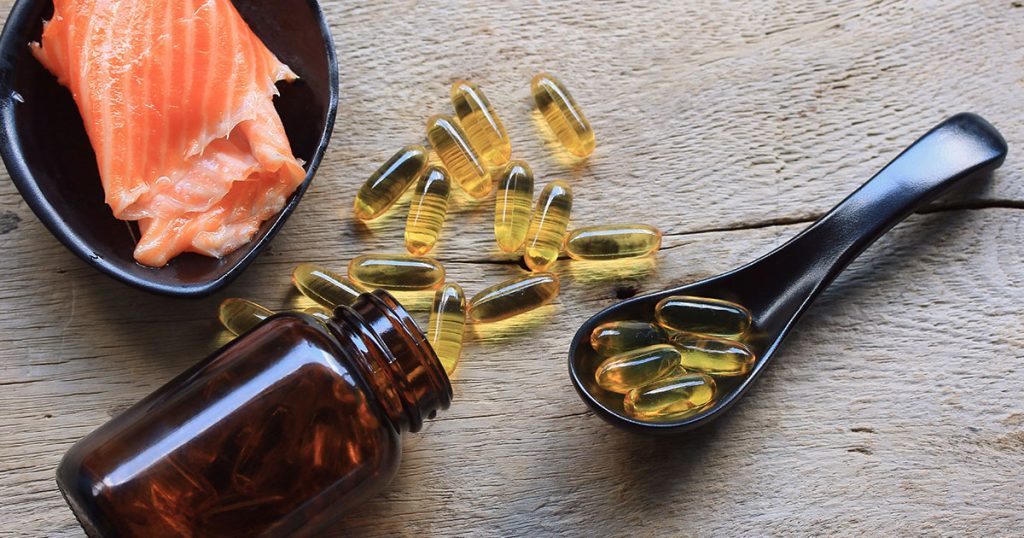
For decades, cardiovascular medicine has been dominated by a single, often misunderstood narrative: “Fish oil is good for your heart.” This belief has become so culturally entrenched that it blurs the line between evidence-based cardiology and retail wellness, leading millions of people to consume omega-3 supplements daily in the hope of reducing cardiovascular risk.
For many years, the data supporting this practice were inconsistent. Randomized trials of broadly defined omega-3 supplements frequently failed to show meaningful reductions in myocardial infarction, stroke, or cardiovascular death, while observational studies and smaller trials occasionally suggested benefit. The resulting cycle of enthusiasm, disappointment, and equivocation confused not only the public but clinicians as well. A core problem was conceptual: the term “fish oil” was treated as a single exposure, despite encompassing multiple fatty acids, doses, formulations, and manufacturing qualities.
The modern era has forced a more precise question: Which molecule, at what dose, in which population, compared against what, and with what trade-offs?
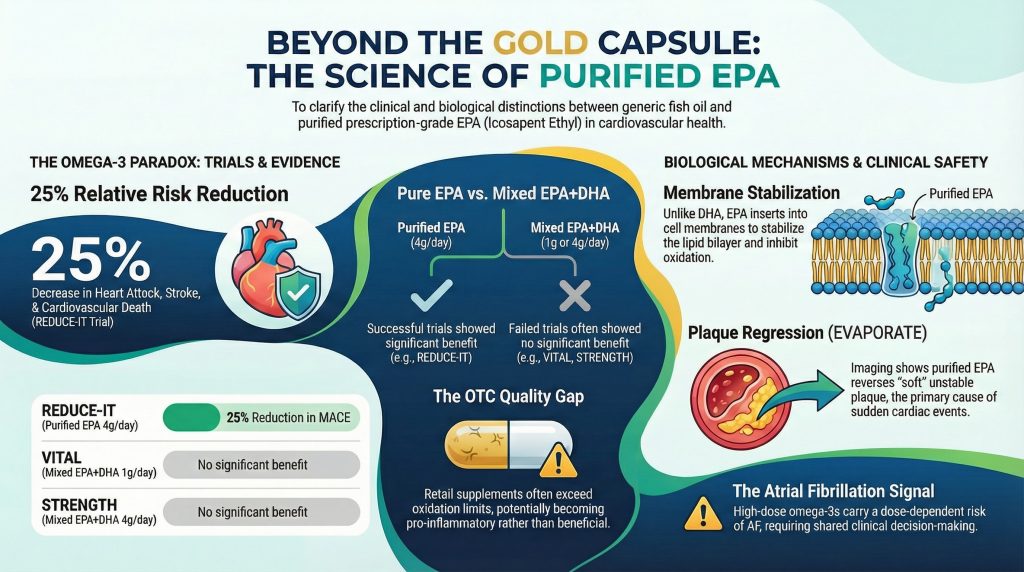
That reframing explains why icosapent ethyl (IPE; Vascepa) has become one of the most debated therapies in preventive cardiology. Icosapent ethyl is not generic fish oil. It is a prescription-grade, highly purified ethyl ester of eicosapentaenoic acid (EPA) administered at 4 g/day, and in a large randomized outcomes trial it behaved like a cardiovascular drug rather than a dietary supplement.
At the same time, Vascepa sits at the intersection of multiple sources of skepticism: decades of disappointing omega-3 trials, an unexpectedly large clinical effect from a single outcomes study, unresolved mechanistic questions, and controversy surrounding placebo choice.
Plaque Rupture, Not Luminal Narrowing, Drives Most Events
Most acute coronary events do not arise from slowly progressive luminal narrowing but from sudden plaque rupture. LDL particles penetrate the arterial wall, undergo oxidative modification, and initiate a chronic inflammatory response. Macrophage infiltration, foam-cell death, and formation of a necrotic lipid core beneath a thin fibrous cap create plaques that are biologically unstable. Rupture of these plaques precipitates abrupt thrombosis and vessel occlusion.
Statins substantially reduce LDL-C and vascular inflammation, but residual risk remains even with optimal LDL control. This residual risk is driven in part by triglyceride-rich lipoproteins, remnant cholesterol, and persistent inflammatory
signaling. Icosapent ethyl was tested specifically as an adjunct therapy in this residual-risk context.
Mechanistic Rationale: Why EPA Is Not Just “Fish Oil”
Triglyceride lowering alone is insufficient
In REDUCE-IT, patients with triglycerides 135–499 mg/dL experienced large reductions in ischemic events, but the magnitude of benefit exceeded what would be predicted from triglyceride lowering alone, suggesting additional mechanisms beyond simple lipid concentration changes (5).
Membrane biophysics and oxidative biology
EPA and docosahexaenoic acid (DHA) differ structurally and biophysically. DHA, with six double bonds, increases membrane fluidity and disorder, whereas EPA adopts a more extended conformation within phospholipid bilayers. Mason and colleagues demonstrated that EPA—but not DHA—inhibits oxidation of ApoB-containing lipoprotein particles across a range of particle sizes in vitro, providing a plausible mechanism for reducing downstream inflammatory signaling and plaque vulnerability (1).
Lipoprotein remodeling beyond triglycerides
Human lipidomic studies support triglyceride-independent effects. In normolipidemic individuals, Äikäs and colleagues showed that icosapent ethyl supplementation was associated with broad remodeling of the lipidome, including reductions in remnant cholesterol and ApoB-related markers, indicating a shift toward a less atherogenic circulating lipid profile (2).
Immune modulation
Inflammation plays a central role in atherosclerosis. Reilly and colleagues demonstrated that EPA exposure induces a distinct anti-inflammatory transcriptomic profile in human CD4+ T cells in vitro, implicating immune modulation as a potential triglyceride-independent pathway of benefit (3).
Imaging Evidence: Changing the Disease Substrate
Mechanistic hypotheses gain credibility when supported by human anatomic data. The EVAPORATE trial used serial coronary CT angiography in statin-treated patients with triglycerides 200–499 mg/dL randomized to icosapent ethyl or placebo. Over 18 months, patients receiving IPE demonstrated regression of low-attenuation plaque, a marker associated with necrotic core and plaque instability, while placebo-treated
patients showed plaque progression (4). Although imaging trials do not replace outcomes trials, EVAPORATE strengthens biological plausibility by demonstrating favorable changes in plaque phenotype.
Clinical Outcomes: What Was Proven—and What Was Not
REDUCE-IT
REDUCE-IT randomized 8,179 high-risk, statin-treated patients to icosapent ethyl 4 g/day or mineral oil placebo. The trial demonstrated a 25% relative risk reduction in the primary composite endpoint of cardiovascular death, myocardial infarction, stroke, coronary revascularization, or unstable angina (HR 0.75; 95% CI 0.68–0.83; p<0.001), with a number needed to treat of 21 over a median of 4.9 years (5).
Mortality signal
In a prespecified analysis of U.S. participants (REDUCE-IT USA), icosapent ethyl was associated with a statistically significant reduction in all-cause mortality (HR 0.70; 95% CI 0.50–0.99). While supportive, subgroup analyses are best interpreted as complementary to the global trial rather than definitive on their own (6).
Why “Fish Oil” Trials Failed to Reproduce These Results
Dose
Low-dose supplementation appears insufficient. The VITAL trial tested 1 g/day of EPA+DHA in a largely healthy population and showed no significant reduction in major cardiovascular events (7).
Molecule
STRENGTH tested 4 g/day of a mixed EPA/DHA formulation versus corn oil in high-risk patients and found no reduction in major adverse cardiovascular events (8). Secondary analyses confirmed no benefit despite high achieved omega-3 levels (9). These findings suggest that EPA-only and EPA+DHA formulations are not interchangeable interventions, although the precise causal explanation for this divergence remains unresolved.
Population risk
REDUCE-IT enrolled patients with established cardiovascular disease or diabetes plus additional risk factors, whereas many supplement trials targeted lower-risk populations less likely to benefit.
The Placebo Debate
Mineral oil placebo use in REDUCE-IT remains the most serious critique. The placebo group experienced modest increases in LDL-C and hs-CRP, raising concerns that mineral oil may not have been biologically inert. Regulatory and independent analyses concluded that while these changes could account for a small fraction of the observed benefit, they are insufficient to explain the magnitude of risk reduction seen in REDUCE-IT (10). Consistency with plaque imaging data and prior EPA-only trials such as JELIS further supports a genuine treatment effect (11).
Safety: Atrial Fibrillation and Bleeding
High-dose omega-3 therapy is consistently associated with an increased risk of atrial fibrillation. In REDUCE-IT, hospitalization for atrial fibrillation or flutter occurred more frequently with icosapent ethyl than placebo (5). Meta-analyses of cardiovascular outcome trials confirm a dose-dependent increase in atrial fibrillation risk (13). Bleeding events were numerically higher with EPA therapy, consistent with mild antiplatelet effects, though fatal bleeding was not significantly increased.
Beyond Cardiovascular Disease
Icosapent ethyl is approved for cardiovascular risk reduction and severe hypertriglyceridemia, with the MARINE trial providing foundational evidence for triglyceride lowering in patients with very high triglyceride levels (14). Anti-inflammatory effects of marine omega-3 fatty acids have been demonstrated in rheumatoid arthritis (15), and EPA-dominant formulations show modest benefit in depressive disorders, though these remain non-labeled indications (16).
Conclusion
The era of treating “fish oil” as a single therapeutic idea is ending. The evidence supports a more precise framework:
- Over-the-counter omega-3 supplements are not equivalent to prescription icosapent ethyl.
- REDUCE-IT provides strong randomized evidence for reduction in major ischemic events.
- Imaging and mechanistic studies support biological plausibility.
- Atrial fibrillation risk is real, dose-dependent, and must be incorporated into shared decision-making.
Vascepa is neither a miracle nor a myth. It is a rare example of a nutrient-derived molecule that, when purified, appropriately dosed, and rigorously tested, functions as a true cardiovascular therapy.
References
- Mason RP, Sherratt SC, Jacob RF. Eicosapentaenoic Acid Inhibits Oxidation of ApoB-containing Lipoprotein Particles of Different Size In Vitro When Administered Alone or in Combination With Atorvastatin Active Metabolite Compared With Other Triglyceride-lowering Agents. J Cardiovasc Pharmacol. 2016;68(1):33-40. doi:10.1097/FJC.0000000000000379
- Äikäs L, Kovanen PT, Lorey MB, et al. Icosapent ethyl-induced lipoprotein remodeling and its impact on cardiovascular disease risk markers in normolipidemic individuals. JCI Insight. 2025;10(19):e193637. Published 2025 Oct 8. doi:10.1172/jci.insight.193637
- Reilly NA, Dekkers KF, Molenaar J, et al. EPA Induces an Anti-Inflammatory Transcriptome in T Cells, Implicating a Triglyceride-Independent Pathway in Cardiovascular Risk Reduction. JACC Basic Transl Sci. 2025;10(3):383-395. doi:10.1016/j.jacbts.2024.09.002
- Budoff MJ, Bhatt DL, Kinninger A, et al. Effect of icosapent ethyl on progression of coronary atherosclerosis in patients with elevated triglycerides on statin therapy: final results of the EVAPORATE trial. Eur Heart J. 2020;41(40):3925-3932. doi:10.1093/eurheartj/ehaa652
- Bhatt DL, Steg PG, Miller M, et al. Cardiovascular Risk Reduction with Icosapent Ethyl for Hypertriglyceridemia. N Engl J Med. 2019;380(1):11-22. doi:10.1056/NEJMoa1812792
- Bhatt DL, Miller M, Brinton EA, et al. REDUCE-IT USA: Results From the 3146 Patients Randomized in the United States. Circulation. 2020;141(5):367-375. doi:10.1161/CIRCULATIONAHA.119.044440
- Manson JE, Cook NR, Lee IM, et al. Marine n-3 Fatty Acids and Prevention of Cardiovascular Disease and Cancer. N Engl J Med. 2019;380(1):23-32. doi:10.1056/NEJMoa1811403
- Nicholls SJ, Lincoff AM, Garcia M, et al. Effect of High-Dose Omega-3 Fatty Acids vs Corn Oil on Major Adverse Cardiovascular Events in Patients at High Cardiovascular Risk: The STRENGTH Randomized Clinical Trial. JAMA. 2020;324(22):2268-2280. doi:10.1001/jama.2020.22258
- Nissen SE, Lincoff AM, Wolski K, et al. Association Between Achieved ω-3 Fatty Acid Levels and Major Adverse Cardiovascular Outcomes in Patients With High Cardiovascular Risk: A Secondary Analysis of the STRENGTH Trial. JAMA Cardiol. 2021;6(8):910-917. doi:10.1001/jamacardio.2021.1157
- Olshansky B, Chung MK, Budoff MJ, et al. Mineral oil: safety and use as placebo in REDUCE-IT and other clinical studies. Eur Heart J Suppl. 2020;22(Suppl J):J34-J48. Published 2020 Oct 6. doi:10.1093/eurheartj/suaa117
- Tanaka K, Ishikawa Y, Yokoyama M, et al. Reduction in the recurrence of stroke by eicosapentaenoic acid for hypercholesterolemic patients: subanalysis of the JELIS trial. Stroke. 2008;39(7):2052-2058. doi:10.1161/STROKEAHA.107.509455
- Albert BB, Cameron-Smith D, Hofman PL, Cutfield WS. Oxidation of marine omega-3 supplements and human health. Biomed Res Int. 2013;2013:464921. doi:10.1155/2013/464921
- Gencer B, Djousse L, Al-Ramady OT, Cook NR, Manson JE, Albert CM. Effect of Long-Term Marine ɷ-3 Fatty Acids Supplementation on the Risk of Atrial Fibrillation in Randomized Controlled Trials of Cardiovascular Outcomes: A Systematic Review and Meta-Analysis. Circulation. 2021;144(25):1981-1990. doi:10.1161/CIRCULATIONAHA.121.055654
- Bays HE, Ballantyne CM, Kastelein JJ, Isaacsohn JL, Braeckman RA, Soni PN. Eicosapentaenoic acid ethyl ester (AMR101) therapy in patients with very high triglyceride levels (from the Multi-center, plAcebo-controlled, Randomized, double-blINd, 12-week study with an open-label Extension [MARINE] trial). Am J Cardiol. 2011;108(5):682-690. doi:10.1016/j.amjcard.2011.04.015
- Miles EA, Calder PC. Influence of marine n-3 polyunsaturated fatty acids on immune function and a systematic review of their effects on clinical outcomes in rheumatoid arthritis. Br J Nutr. 2012;107 Suppl 2:S171-S184. doi:10.1017/S0007114512001560
- Mocking RJ, Harmsen I, Assies J, Koeter MW, Ruhé HG, Schene AH. Meta-analysis and meta-regression of omega-3 polyunsaturated fatty acid supplementation for major depressive disorder. Transl Psychiatry. 2016;6(3):e756. Published 2016 Mar 15. doi:10.1038/tp.2016.29