
Il rischio di aterosclerosi aumenta con l'età?
Sì. Aterosclerosi è considerata una malattia dell'invecchiamento. La probabilità e la gravità di placca l'accumulo nelle arterie aumenta con l'età, anche quando altri fattori di rischio come ad esempio fumo, alto colesterolo, oppure ipertensione sono controllati.
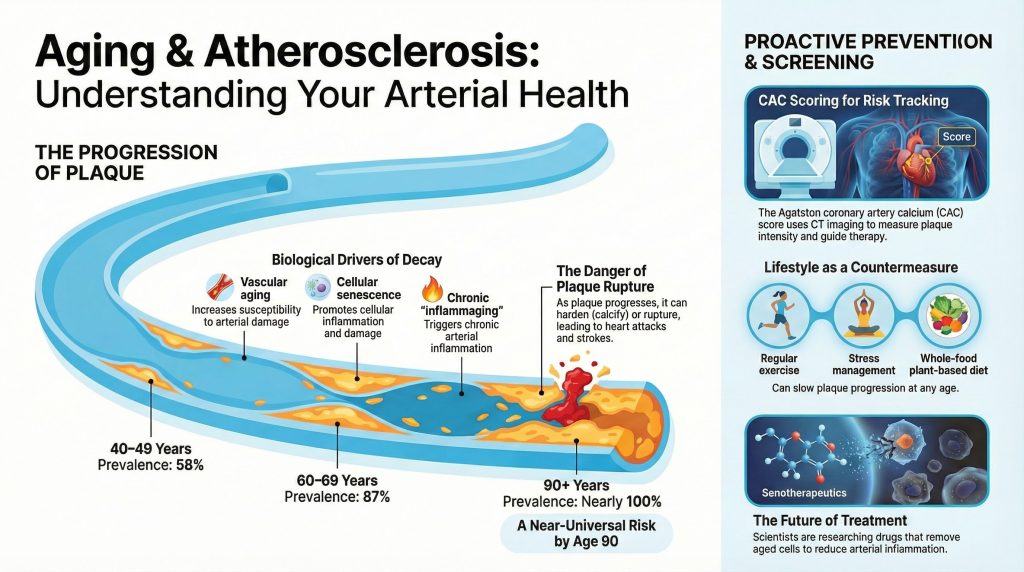
La ricerca mostra che all'età di 40 anni circa la metà degli adulti soffre di qualche forma di aterosclerosi. Entro i 90 anni, quasi tutti ne mostrano i segni.
(Citazione: Wang JC, Bennett MR. Circ Res. 2012;111(2):245–259.)
Progressione dell'aterosclerosi
Adattato da Sports Plus Physio / Wikimedia Commons – riuso didattico consentito.
Perché l'invecchiamento stesso favorisce l'accumulo di placca?
L'invecchiamento influisce sulle cellule, sui tessuti e sul sistema immunitario dell'organismo in diversi modi che rendono le arterie più vulnerabili alla formazione di placche.
- Invecchiamento vascolare – Con il tempo, le arterie perdono elasticità e sviluppano danni microscopici, rendendole più propense all'accumulo di lipidi e infiammazione.
- Senescenza cellulare – Le cellule più vecchie smettono di dividersi e di riparare i danni in modo efficace. Queste cellule senescenti rilasciare sostanze chimiche infiammatorie che peggiorano la crescita della placca.
- Infiammazione – Infiammazione cronica di basso livello (“inflammaging”) contribuisce all'ispessimento arterioso e calcificazione.
(Citazioni: Frismantiene A et al. Int J Mol Sci. 2023;24(24):17129; Zhang X et al. Ageing Res Rev. 2023;90:102041.)
Processo di senescenza cellulare
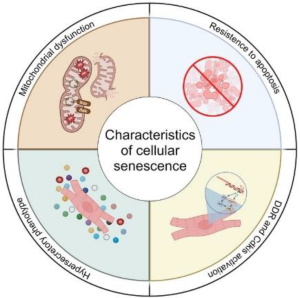
Adattato da Richardson et al., Cells (MDPI, open access).
Quanto è comune l'aterosclerosi negli adulti anziani?
La prevalenza aumenta ripidamente con l'età:
- 58% di adulti di età compresa tra i 40 e i 49 anni
- 87% di adulti di età compresa tra i 60 e i 69 anni
- Quasi 100% di adulti con più di 90 anni
Questi dati provengono da studi autoptici e di neuroimaging condotti nel corso di decenni di ricerca.
(Citazione: Roberts WC, Ferrans VJ. J Chronic Dis. 1961;14(6):614–631.)
La calcificazione della placca aumenta con l'età?
Sì. La calcificazione, che rende le placche dure e fragili, accelera con l'invecchiamento. Agatston punteggio di calcio coronarico punteggio è una misura utilizzata per monitorare questo.
Esempio TC: Visualizzazione del punteggio del CAC
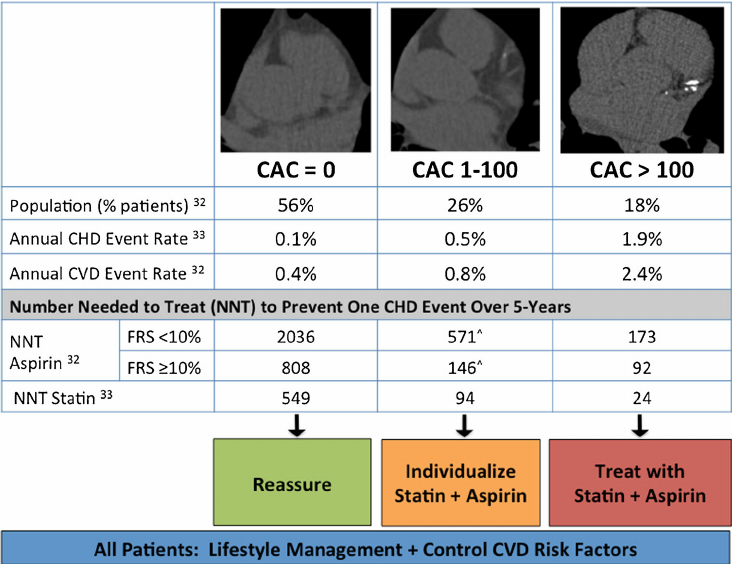
Adattato da Thomas D et al., tramite ResearchGate (uso didattico).
Gli adulti più anziani mostrano spesso livelli significativamente più elevati Punteggi CAC, riflettendo sia la durata che l'intensità dello sviluppo della placca.
(Citazione: Bild DE et al. Circolazione. 2005;111(10):1313–1320.)
TAC coronarica: Esempio di placche calcifiche
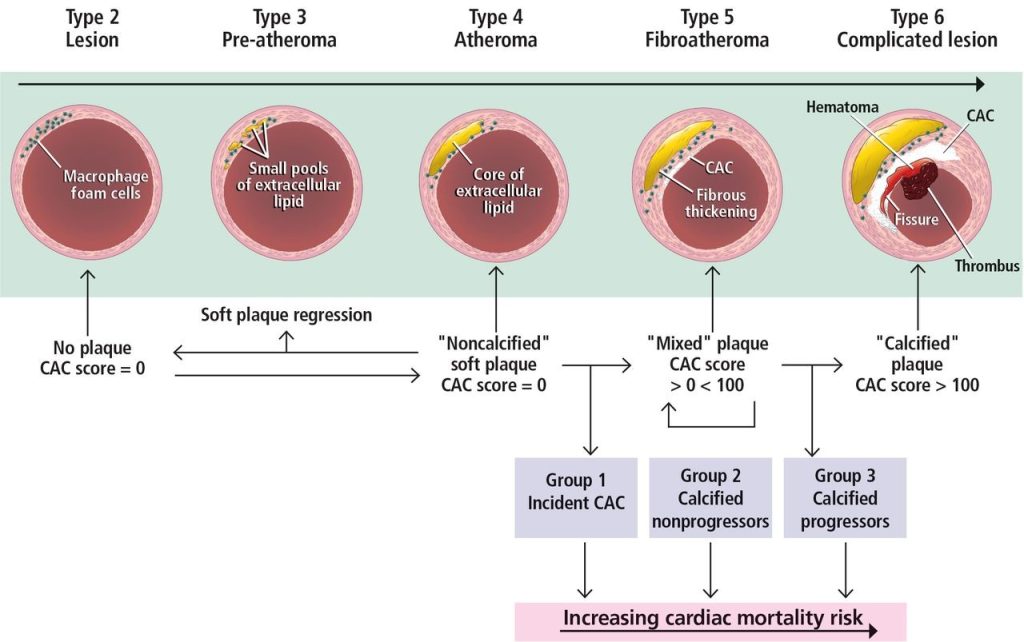 Adattato dal Cleveland Clinic Journal of Medicine (utilizzato per illustrazione accademica).
Qual è il ruolo del sistema immunitario mentre invecchiamo?
Con l'invecχανire, il nostro sistema immunitario cambia, un fenomeno chiamato immunosenescenza. Diventa meno efficiente nel risolvere l'infiammazione, consentendo alla placca di persistere e crescere. L'infiammazione persistente e di basso livello (“inflammaging”) contribuisce al peggioramento dell'aterosclerosi nel tempo.
(Citazione: Aiello A et al. Ageing Res Rev. 2024;99:102112.)
Quali sono le conseguenze cardiovascolari?
La progressione della placca correlata all'età aumenta il rischio di:
- Infarto (infarto miocardico)
- Ictus
- Malattia arteriosa periferica
Questi rischi aumentano perché le placche non solo si ingrandiscono ma possono rompersi, innescando la formazione di coaguli.
(Citazioni: Wang JC, Bennett MR. Circ Res. 2012;111(2):245–259; Mortensen MB et al. Interv Cardiol Rev. 2024;19:e04.)
Illustrazione di rottura della placca
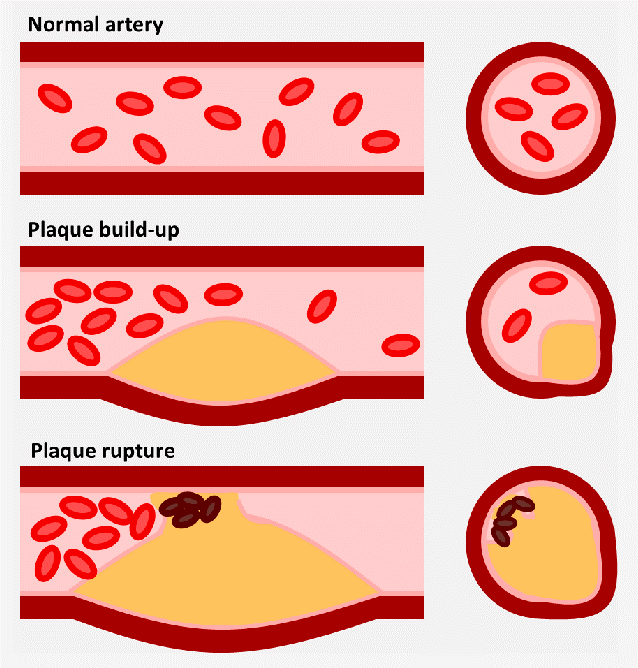
Adattato da illustrazione di ricerca, riutilizzo a scopo educativo consentito (ResearchGate).
Misurare la placca può aiutare a personalizzare la prevenzione?
Sì. Punteggio del calcio delle arterie coronarie L'uso della diagnostica per immagini TC aiuta a determinare i livelli di rischio e a guidare la terapia preventiva. Punteggi CAC più elevati predicono fortemente gli eventi cardiovascolari.
(Citazione: Arnett DK et al. J Am Coll Cardiol. 2019;74(10):e177–e232.)
Cosa possono fare gli adulti più anziani per contrastare l'invecchiamento arterioso?
- Mantenere il colesterolo sano e pressione sanguigna livelli.
- Evita di fumare e gestisci glicemia.
- Fai esercizio regolarmente per migliorare l'elasticità vascolare.
- Mangia in modo equilibrato, Dieta a base vegetale di cibi integrali
- Dormi a sufficienza e gestisci lo stress.
Adulti anziani che fanno esercizio
Adattato da Wikimedia Commons (“Anziani che camminano in inverno, Croazia”).
Anche modesti cambiamenti nello stile di vita possono rallentare la progressione della placca e ridurre il rischio di malattie cardiache a qualsiasi età.
Ci sono trattamenti antietà emergenti per l'aterosclerosi?
Gli scienziati stanno esplorando senoterapeutici—farmaci che rimuovono o modificano le cellule senescenti—per ridurre l'infiammazione e la formazione di placche. Questi sono sperimentali ma potrebbero, in futuro, diventare parte di malattia cardiovascolare prevenzione.
(Citazione: Farr JN et al. Trends Cardiovasc Med. 2024;34(10):e123–e135.)
Da asporto
L'invecchiamento stesso favorisce lo sviluppo dell'aterosclerosi alterando i processi cellulari e immunitari. Sebbene non possiamo fermare l'invecchiamento, comprenderne gli effetti ci aiuta a prendere provvedimenti proattivi – attraverso lo stile di vita, gli screening e possibilmente future terapie – per mantenere la salute cardiovascolare.
Crediti delle immagini (Fonti generiche e pubbliche)
- Schema dell'aterosclerosi: Adattato da Sports Plus Physio / Wikimedia Commons.
- Schema della senescenza cellulare: Adattato da Richardson et al., Cellule (MDPI, accesso aperto).
- Punteggio CAC (figura): Adattato da Thomas D et al., ResearchGate (uso didattico).
- Esempio di TAC coronarica per il punteggio di calcio: Adattato da Cleveland Clinic Journal of Medicine.
- Rottura di placca schema: Adattato da ResearchGate (contenuto educativo aperto).
Riferimenti
- Wang JC, Bennett M. Aging and atherosclerosis: mechanisms, functional consequences, and potential therapeutics for cellular senescence. Circ Res. 2012;111(2):245-259. doi:10.1161/CIRCRESAHA.111.261388
- Molnár AÁ, Pásztor DT, Tarcza Z, Merkely B. Cells in Atherosclerosis: Focus on Cellular Senescence from Basic Science to Clinical Practice. Int J Mol Sci. 2023;24(24):17129. Published 2023 Dec 5. doi:10.3390/ijms242417129
- Adav SS, Ng KW. Recent omics advances in hair aging biology and hair biomarkers analysis. Ageing Res Rev. 2023;91:102041. doi:10.1016/j.arr.2023.102041
- Leigh JP. Interpreting regression coefficients. J Chronic Dis. 1986;39(3):243-244. doi:10.1016/0021-9681(86)90029-9
- Bild DE, Detrano R, Peterson D, et al. Ethnic differences in coronary calcification: the Multi-Ethnic Study of Atherosclerosis (MESA). Circulation. 2005;111(10):1313-1320. doi:10.1161/01.CIR.0000157730.94423.4B
- Damarkusuma A, Mota P, Patel B, Oommen M. Consequences and Management of Excessive Ostial Stent Protrusion: A Case Report. Interv Cardiol. 2024;19:e04. Published 2024 Mar 11. doi:10.15420/icr.2023.34
- Hu C. Prevention of cardiovascular disease for healthy aging and longevity: A new scoring system and related “mechanisms-hallmarks-biomarkers”. Ageing Res Rev. 2025;107:102727. doi:10.1016/j.arr.2025.102727
- Arnett DK, Blumenthal RS, Albert MA, et al. 2019 ACC/AHA Guideline on the Primary Prevention of Cardiovascular Disease: A Report of the American College of Cardiology/American Heart Association Task Force on Clinical Practice Guidelines. J Am Coll Cardiol. 2019;74(10):e177-e232. doi:10.1016/j.jacc.2019.03.010
- Wann LS. Editorial commentary: Therapeutic ultrasound in atherosclerotic cardiovascular disease. Trends Cardiovasc Med. 2023;33(7):441. doi:10.1016/j.tcm.2022.06.009