Nuove ricerche dell'Università della California, a Riverside, suggeriscono microplastiche potrebbe accelerare direttamente l'insorgenza di malattie cardiache, specialmente negli uomini.
Ecco cosa ha scoperto lo studio, spiegato con un semplice sistema di domande e risposte.
Cosa sono esattamente le microplastiche?
A: Le microplastiche sono minuscole particelle di plastica rilasciate da:
- Imballaggio alimentare
- Abbigliamento e tessili
- Plastica domestica
- Rifiuti industriali
Ora si trovano in:
- Cibo
- Bere acqua
- Aria
- Tessuti umani — compresi quelli all'interno delle arterie
D: Perché gli scienziati sono preoccupati per le microplastiche e le malattie cardiache?
A: Recenti studi clinici hanno riscontrato microplastiche all'interno dell'essere umano placche arteriosi e ha associato livelli più elevati a esiti cardiovascolari più sfavorevoli.
Ma fino ad ora non era chiaro se loro direttamente causare danni.
Il nuovo studio fornisce alcune delle prove più forti che le microplastiche possono danneggiare le cellule vascolari e accelerare placca formazione.
D: Cosa hanno fatto i ricercatori in questo nuovo studio?
A: Gli scienziati hanno utilizzato un modello murino consolidato per le malattie cardiache (Topi con deficit di LDLR) e:
- Hanno seguito una dieta “sana”, a basso contenuto di grassi e colesterolo
- Li ha esposti quotidianamente alle microplastiche per 9 settimane
- Dosi utilizzate simili all'esposizione umana nel mondo reale
- Confronto delle differenze tra topi maschi e femmine
D: Cosa hanno scoperto?
Risultato principale n. 1 — Le microplastiche hanno peggiorato drasticamente la situazione aterosclerosi, ma solo nei maschi.
I topi maschi esposti alle microplastiche hanno sviluppato:
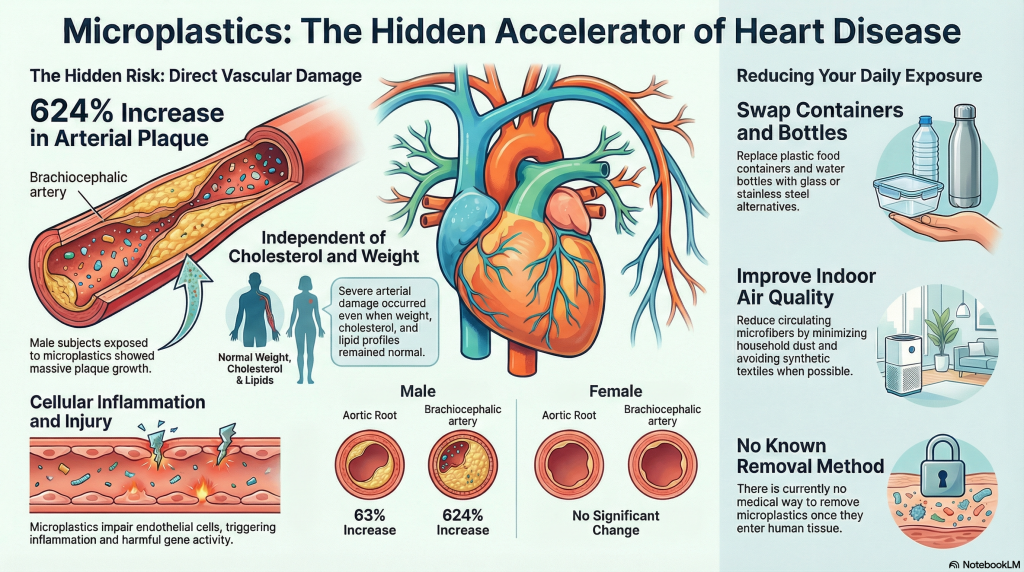
- 63%: più placca nel radice aortica
- 624%: più placca nel arteria brachiocefalica
I topi femmina hanno mostrato nessun aumento significativo della placca alle stesse condizioni.
Risultato principale n. 2 — L’effetto non aveva nulla a che vedere con il peso o colesterolo.
Nonostante le gravi arteria danno:
- Nessun aumento di peso
- Nessun aumento del colesterolo
- Nessuna variazione in profili lipidici
Questo dimostra che le microplastiche hanno causato lesione vascolare diretta, a differenza di quello tradizionale fattori di rischio.
Risultato principale n. 3 — Le microplastiche hanno compromesso cellule endoteliali.
Le cellule endoteliali (il rivestimento dei vasi sanguigni) sono state le più colpite:
- La loro attività genetica è cambiata in modi dannosi
- Hanno attivato infiammazione
- Hanno favorito la crescita della placca
- Sono state trovate microplastiche all'interno delle placche se stessi
Questo corrisponde agli studi sugli esseri umani che hanno trovato microplastiche nelle arterie lesioni.
D: Perché i maschi sono stati colpiti ma non le femmine?
I ricercatori non lo sanno ancora, ma lo sospettano:
- Cromosomi sessuali
- Differenze ormonali
- Degli estrogeni effetti protettivi cardiovascolari
Questo schema compare anche in altre ricerche sulle malattie cardiache.
Q: Questo significa che le microplastiche potrebbero danneggiare la salute del cuore umano?
A: Lo studio suggerisce fortemente che lattina, sebbene siano necessarie ulteriori ricerche sull'uomo.
Le risposte biologiche osservate nei topi sono comparse anche nelle cellule endoteliali umane in laboratorio.
I ricercatori avvertono che le microplastiche potrebbero:
“Contributori diretti alle malattie cardiovascolari, non solo semplici correlazioni.”
Dobbiamo rimuovere le microplastiche dal corpo?
A: In questo momento, no esiste un metodo noto per rimuovere le microplastiche una volta penetrate nei tessuti.
D: In che modo le persone possono ridurre la propria esposizione?
Gli scienziati consigliano:
- Utilizzare meno contenitori di plastica per alimenti e acqua
- Evitare la plastica monouso
- Ridurre i cibi altamente processati
- Usare bottiglie di vetro o di acciaio inossidabile
- Miglioramento della qualità dell'aria interna (le microfibre circolano nella polvere)
- Mantenere la salute del cuore attraverso la dieta e l'esercizio fisico
D: Cosa studieranno i ricercatori in seguito?
Il lavoro futuro esplorerà:
- Perché i maschi sono più vulnerabili
- Se diversi tipi di microplastiche causano lesioni differenti
- Come le microplastiche interagiscono con le cellule vascolari
- Se simili effetti specifici per sesso si verifichino negli esseri umani
D: Chi ha condotto la ricerca?
Lo studio ha coinvolto scienziati provenienti da:
- Università della California, Riverside
- Ospedale Pediatrico di Boston
- Facoltà di Medicina di Harvard
- Scienze della Salute dell'Università del Nuovo Messico
I fondi sono arrivati in parte da Istituti Nazionali della Sanità.
Riferimenti
- Wright SL, Kelly FJ. Plastic and Human Health: A Micro Issue?. Environ Sci Technol. 2017;51(12):6634-6647. doi:10.1021/acs.est.7b00423
- Marfella R, Prattichizzo F, Sardu C, et al. Microplastics and Nanoplastics in Atheromas and Cardiovascular Events. N Engl J Med. 2024;390(10):900-910. doi:10.1056/NEJMoa2309822
- Prata JC, da Costa JP, Lopes I, Duarte AC, Rocha-Santos T. Environmental exposure to microplastics: An overview on possible human health effects. Sci Total Environ. 2020;702:134455. doi:10.1016/j.scitotenv.2019.134455
- Campanale C, Massarelli C, Savino I, Locaputo V, Uricchio VF. A Detailed Review Study on Potential Effects of Microplastics and Additives of Concern on Human Health. Int J Environ Res Public Health. 2020;17(4):1212. Published 2020 Feb 13. doi:10.3390/ijerph17041212
- Cox KD, Covernton GA, Davies HL, Dower JF, Juanes F, Dudas SE. Human Consumption of Microplastics. Environ Sci Technol. 2019;53(12):7068-7074. doi:10.1021/acs.est.9b01517