Depuis des années, on nous répète sans cesse : “ Mangez plus de végétaux pour avoir un cœur en meilleure santé ! ” Et, dans l’ensemble, ce conseil est fondé. De nombreuses études ont mis en avant les bienfaits d’une alimentation à base de végétaux pour réduire le risque de maladie cardiovasculaire. Mais une étude récente publiée dans la prestigieuse revue Cohorte NutriNet-Santé en France a apporté une nuance essentielle, en révélant que le type de alimentation à base de plantes C'est important — très important. Se contenter d'adopter une alimentation “ à base de végétaux ” pourrait ne pas suffire si votre assiette regorge d'aliments hautement transformés.
La nuance : tous les régimes à base de végétaux ne se valent pas
L'étude française, publiée dans The Lancet Regional Health – Europe, a suivi plus de 63 000 adultes pendant une durée moyenne de neuf ans. Ce qui a rendu cette étude particulièrement instructive, c'est son approche détaillée. Au lieu de se contenter de classer les régimes alimentaires en deux catégories, “ à base de végétaux ” ou “ non végétaux ”, les chercheurs ont utilisé un système de notation sophistiqué qui prenait en compte trois dimensions essentielles :
- Proportion de produits d'origine végétale par rapport aux produits d'origine animale : Quelle part de ce régime alimentaire était réellement d'origine végétale ?
- Qualité nutritionnelle : Ce régime était-il riche en nutriments bénéfiques pour la santé ou en calories vides ?
- Degré de transformation industrielle (classification NOVA) : C'est ce qui a changé la donne. Les aliments d'origine végétale étaient-ils des aliments complets et peu transformés, ou ultra-transformés ?
Les conclusions étaient sans appel :
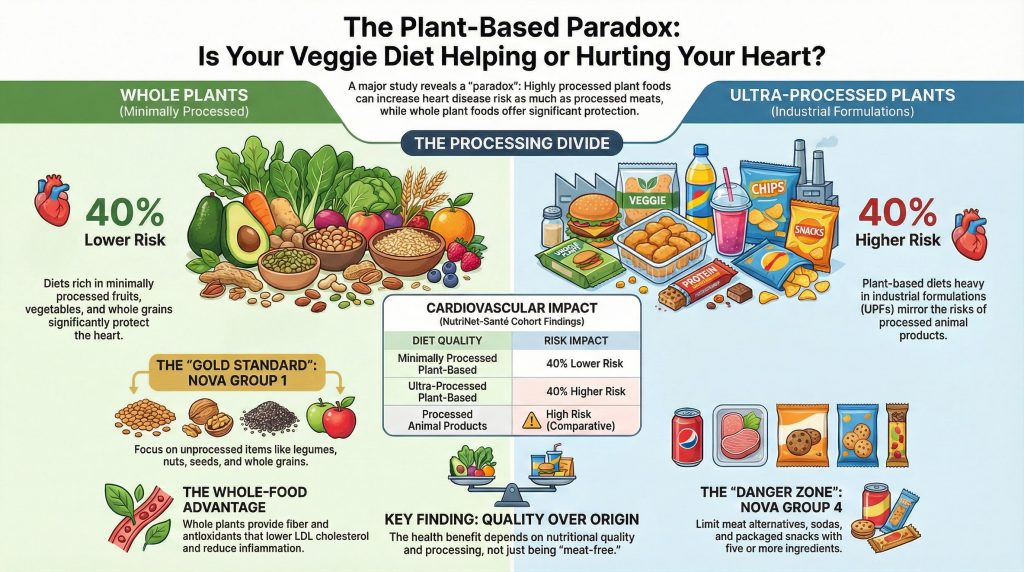
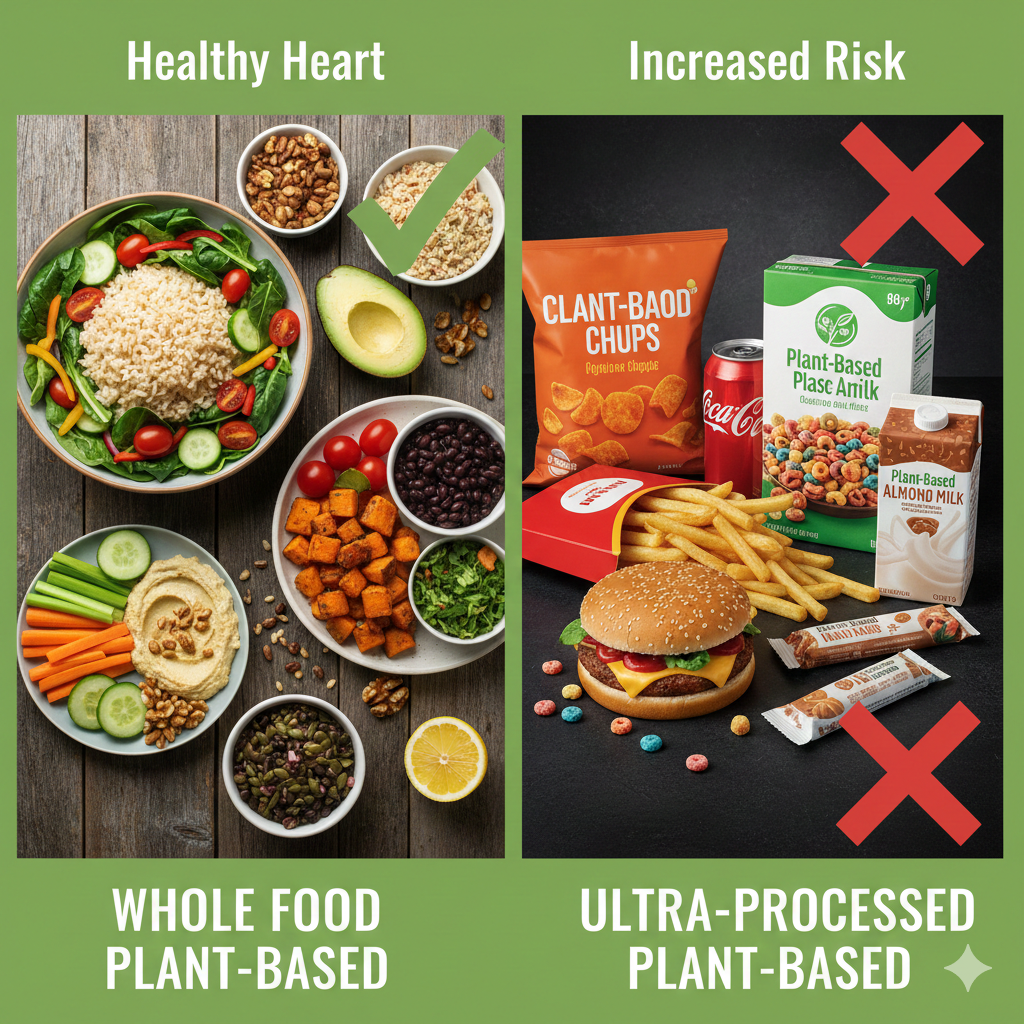
- Ceux qui ont consommé un une alimentation saine à base de végétaux, riche en aliments peu transformés (fruits, légumes, céréales complètes, fruits à coque, graines, légumineuses) ont eu un effet impressionnant 40% : risque réduit de maladies cardiovasculaires.
- À l'inverse, les personnes dont le régime alimentaire à base de végétaux était riche en aliments d'origine végétale ultra-transformés j'ai en fait vu un 40% : risque accru de maladies cardiovasculaires, ce qui reflète les risques liés aux régimes alimentaires riches en produits d'origine animale transformés.
Cette étude répond directement à une critique couramment formulée à l'encontre des messages “ à base de plantes ” : l'idée selon laquelle tous les aliments d'origine végétale seraient intrinsèquement sains.
Au-delà du mot à la mode : les aliments végétaux ultra-transformés
Cette nouvelle étude ne constitue pas un résultat isolé ; elle s'inscrit dans un corpus de données de plus en plus important qui met en évidence les dangers de aliments ultra-transformés, quelle que soit leur origine.
- La classification NOVA : Ce système classe les aliments en fonction de l'ampleur et de l'objectif de leur transformation industrielle.
- Groupe NOVA 1 : Aliments non transformés ou peu transformés (fruits, légumes, céréales, légumineuses, viande, poisson, œufs, lait).
- Groupe NOVA 2 : Ingrédients alimentaires transformés (sel, sucre, huiles, beurre).
- Groupe NOVA 3 : Les aliments transformés (légumes en conserve, pains nature, fromages, charcuterie).
- Groupe 4 de NOVA : Aliments ultra-transformés (AUT) : Les préparations industrielles contiennent généralement au moins cinq ingrédients, parmi lesquels figurent souvent des additifs tels que des arômes, des colorants, des émulsifiants et des épaississants. On y trouve notamment de nombreuses céréales pour le petit-déjeuner, des sodas, des snacks emballés, des nouilles instantanées, des produits à base de viande reconstituée et, surtout, de nombreuses alternatives végétales à la viande et aux produits laitiers.
- Recherches existantes sur les UPF : Des études antérieures ont systématiquement établi un lien entre une forte consommation d’aliments ultra-transformés et un risque accru de obésité, de type 2 diabète, certains cancers et les maladies cardiovasculaires, comme le montrent les revues et analyses publiées dans des revues telles que BMJ et JAMA Internal Medicine [1, 2]. La question ne se limite pas aux nutriments (ou à leur absence), mais concerne également les additifs, les matrice alimentaire, et comment ces aliments sont conçus pour être extrêmement appétissants et inciter à la surconsommation.
L'effet “ utilisateur en bonne santé ” et les facteurs de confusion
La force de l’étude NutriNet-Santé réside dans ses ajustements rigoureux pour tenir compte de facteur de confusion facteurs. Comme vous l’avez justement souligné, les personnes qui adoptent une alimentation plus saine ont souvent un mode de vie globalement plus sain – un phénomène connu sous le nom d“” effet de l’utilisateur sain ». Les chercheurs ont minutieusement pris en compte les facteurs sociodémographiques, tabagisme statut, le niveau d'activité physique, les antécédents médicaux et l'apport énergétique total. Cela leur a permis d'isoler plus efficacement l'impact des choix alimentaires, confirmant que, même après avoir pris en compte ces variables, la distinction entre les régimes végétaux sains et malsains restait significative.
À retenir : privilégiez les aliments végétaux entiers et non transformés
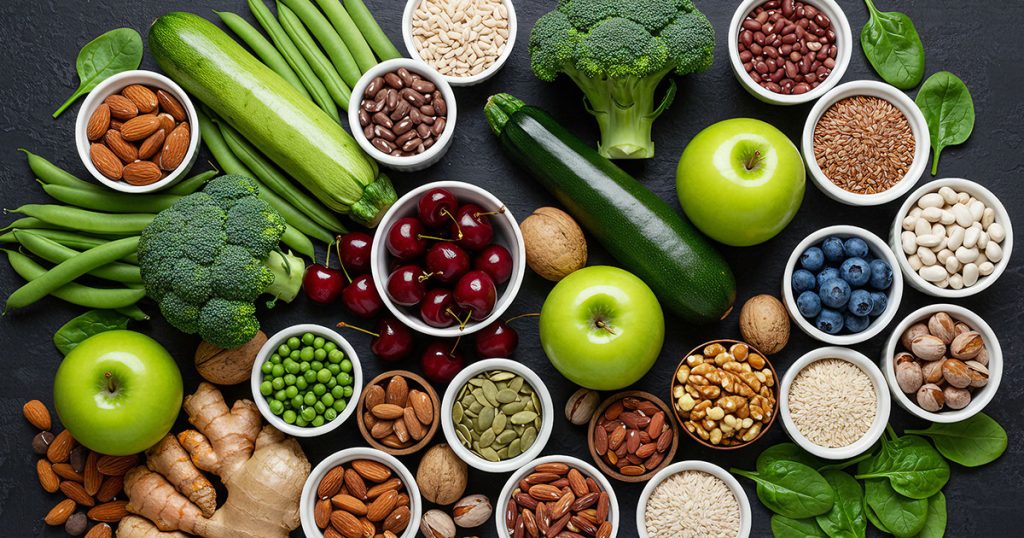
Le message est clair : lorsque l'on adopte un régime alimentaire à base de végétaux pour préserver la santé cardiaque, il faut privilégier aliments entiers, non transformés. Pensez à des fruits et légumes colorés, à des céréales complètes riches en nutriments, à une grande variété de légumineuses, aux fruits à coque et aux graines. Même si les plats préparés d'origine végétale ont leur place, ils ne doivent pas constituer la base de votre alimentation.
Questions-réponses : régimes alimentaires végétaux pauvres en matières grasses et maladies cardiaques
Q1 : En quoi un régime végétal pauvre en matières grasses est-il bénéfique pour prévenir et inverser l'évolution des maladies cardiaques ?
A1 : Un régime alimentaire à faible teneur en matières grasses et à base d’aliments végétaux non transformés (WFPB) s’est révélé très efficace tant pour prévenir que, dans certains cas, pour inverser l’évolution des maladies cardiaques. Les travaux pionniers du Dr Dean Ornish et du Dr Caldwell Esselstyn ont démontré que des régimes WFPB très pauvres en graisses, associés à des changements de mode de vie (tels que la gestion du stress et l'activité physique), pouvaient non seulement stopper la progression de maladie coronarienne mais entraînent également une régression de l'athérosclérose plaques chez de nombreux patients [3, 4].
Ces avantages découlent de plusieurs facteurs :
- Réduction des acides gras saturés et Acides gras trans: Les régimes alimentaires à base d'aliments d'origine végétale (WFPB) sont naturellement très pauvres en graisse saturée (que l'on trouve principalement dans les produits d'origine animale) et cholestérol, deux facteurs qui contribuent fortement à la formation de la plaque dentaire.
- Haut Fibre Contenu Les fibres solubles (présentes en grande quantité dans les fruits, les légumes, l'avoine et les légumineuses) contribuent à réduire LDL le “ mauvais ” cholestérol en s'y liant et en favorisant son élimination. Les fibres insolubles favorisent la santé intestinale et satiété.
- Riche en Antioxydants et les phytonutriments : Les plantes regorgent de composés qui réduisent inflammation et stress oxydatif, deux facteurs déterminants dans le développement des maladies cardiaques.
- Gestion du poids : Les régimes alimentaires à base d'aliments d'origine végétale (WFPB) ont généralement une densité calorique plus faible et une teneur en fibres plus élevée, ce qui favorise la satiété et permet de perte de poids et facilite son entretien, ce qui permet de réduire la sollicitation cardiaque.
- Amélioré Pression artérielle: La teneur élevée en potassium et l'absence de cholestérol, associées à un poids corporel globalement plus sain, entraînent souvent une baisse de la tension artérielle.
Q2 : Est-ce que “ pauvre en matières grasses ” signifie qu'il faut éviter toutes les matières grasses, même les matières grasses végétales bonnes pour la santé ?
A2 : Pas nécessairement. Bien que les maladies cardiaques les plus graves inversion Si certains protocoles (comme ceux d’Ornish et d’Esselstyn) préconisent un apport très faible en graisses (souvent entre 10 et 15% de calories provenant des graisses) à des fins de prévention générale et de maintien d’une bonne santé, de nombreux régimes alimentaires sains à base de végétaux comprennent des quantités modérées de graisses saines issues d’aliments complets. Parmi celles-ci, on trouve :
- Avocat
- Fruits à coque (noix, amandes)
- Graines (chia, lin, chanvre)
- Les olives (et huile d'olive (avec modération)
Ces graisses sont riches en acides gras monoinsaturés et polyinsaturés (notamment les oméga-3), qui sont bénéfiques pour la santé cardiaque. L'essentiel est de les consommer avec modération et dans le cadre d'une alimentation axée sur des aliments végétaux complets et non transformés, plutôt que de se tourner vers des huiles extraites ou des aliments transformés qui peuvent également contenir des graisses malsaines. En cas de maladie cardiaque grave déjà existante, un médecin peut recommander un régime alimentaire très pauvre en graisses.
Références
- Dicken SJ, Batterham RL. Ultra-processed Food and Obesity: What Is the Evidence?. Curr Nutr Rep. 2024;13(1):23-38. doi:10.1007/s13668-024-00517-z
- Rico-Campà A, Martínez-González MA, Alvarez-Alvarez I, et al. Association between consumption of ultra-processed foods and all cause mortality: SUN prospective cohort study. BMJ. 2019;365:l1949. Published 2019 May 29. doi:10.1136/bmj.l1949
- Ornish D, Scherwitz LW, Billings JH, et al. Intensive lifestyle changes for reversal of coronary heart disease. JAMA. 1998;280(23):2001-2007. doi:10.1001/jama.280.23.2001
- Esselstyn CB Jr. Resolving the Coronary Artery Disease Epidemic Through Plant-Based Nutrition. Prev Cardiol. 2001;4(4):171-177. doi:10.1111/j.1520-037x.2001.00538.x
- Prioux C, Kesse-Guyot E, Srour B, et al. Cardiovascular disease risk and the balance between animal-based and plant-based foods, nutritional quality, and food processing level in the French NutriNet-Santé cohort: a longitudinal observational study. Lancet Reg Health Eur. 2025;59:101470. Published 2025 Oct 6. doi:10.1016/j.lanepe.2025.101470