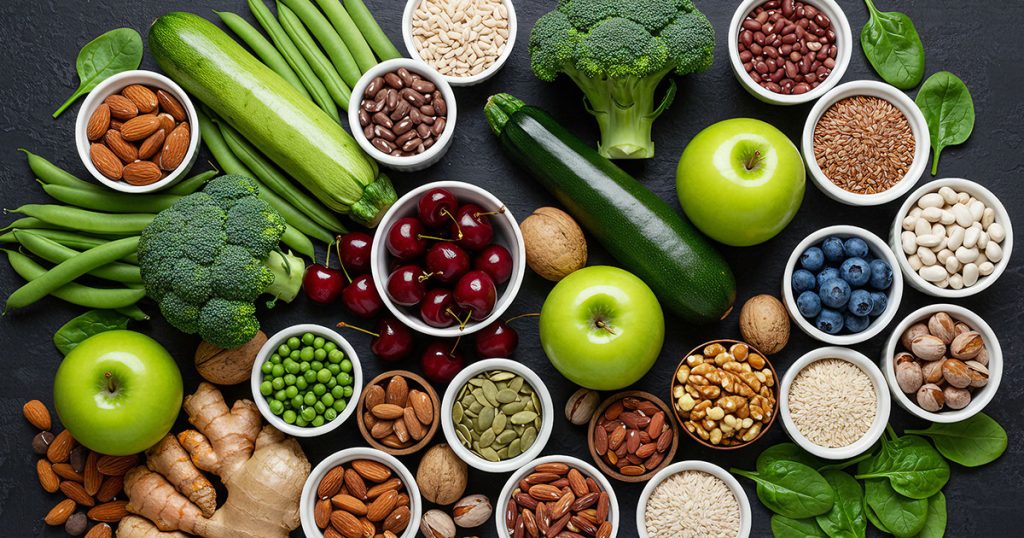
Da anni sentiamo ripetere lo stesso ritornello: “Mangia più vegetali per un cuore più sano!”. E, in linea di massima, questo consiglio è valido. Numerosi studi hanno evidenziato i benefici di un’alimentazione a base vegetale nel ridurre il rischio di malattia cardiovascolare. Ma un recente studio condotto dal solido Coorte NutriNet-Santé in Francia ha introdotto una sfumatura fondamentale, rivelando che il tipo di dieta a base vegetale è importante — e non poco. Passare semplicemente a una dieta “a base vegetale” potrebbe non essere sufficiente se il tuo piatto è pieno zeppo di alimenti altamente trasformati.
La sfumatura: non tutte le diete a base vegetale sono uguali
Lo studio francese, pubblicato su The Lancet Regional Health – Europa, ha seguito oltre 63.000 adulti per una media di nove anni. Ciò che ha reso questa ricerca particolarmente significativa è stato il suo approccio dettagliato. Anziché limitarsi a classificare le diete come “a base vegetale” o “non a base vegetale”, i ricercatori hanno utilizzato un sofisticato sistema di punteggio che teneva conto di tre dimensioni fondamentali:
- Rapporto tra prodotti vegetali e prodotti animali: In che misura la dieta era effettivamente a base vegetale?
- Qualità nutrizionale: La dieta era ricca di nutrienti salutari o di calorie vuote?
- Grado di trasformazione industriale (classificazione NOVA): Questo è stato il punto di svolta. Gli alimenti vegetali erano integrali e minimamente lavorati, oppure ultra-lavorati?
I risultati sono stati inequivocabili:
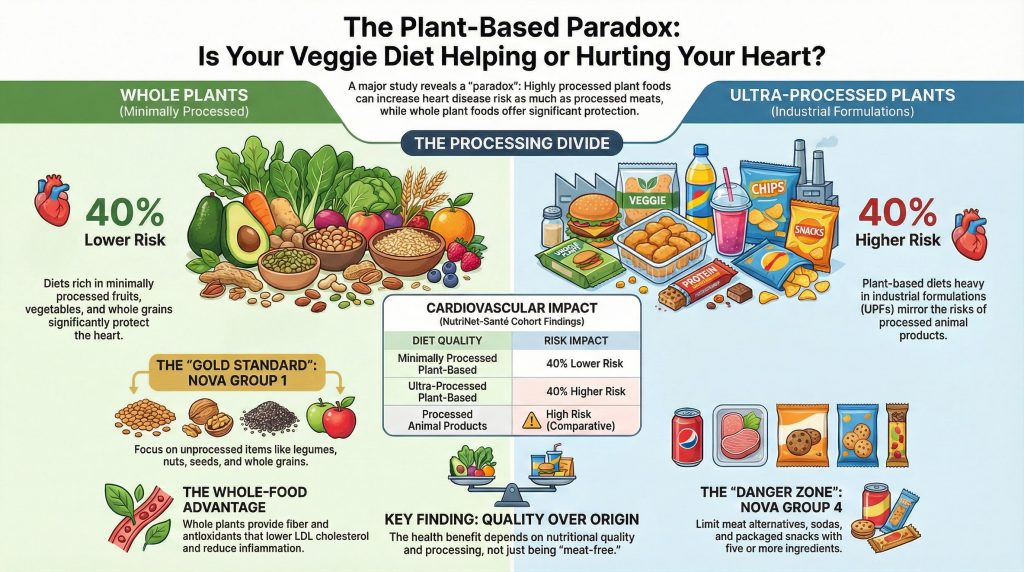
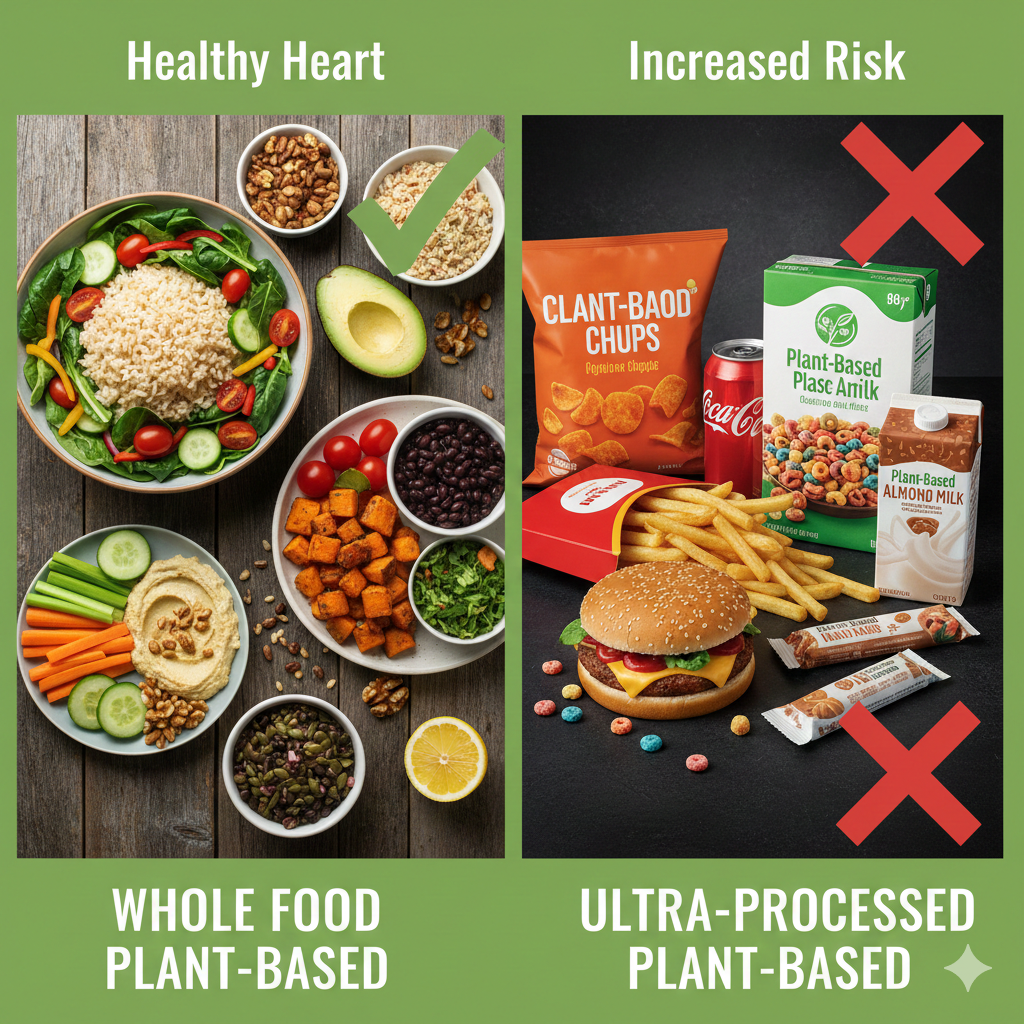
- Coloro che hanno consumato un una dieta sana a base vegetale, ricca di alimenti minimamente trasformati (frutta, verdura, cereali integrali, frutta secca, semi, legumi) hanno avuto un effetto notevole 40%: minor rischio di malattie cardiovascolari.
- Al contrario, le persone la cui dieta a base vegetale era ricca di alimenti vegetali ultra-trasformati ho visto davvero un 40%: rischio più elevato di malattie cardiovascolari, rispecchiando i rischi associati a diete ricche di prodotti animali trasformati.
Questo studio affronta direttamente una critica spesso mossa nei confronti dei messaggi a favore di un’alimentazione “a base vegetale”: il presupposto secondo cui tutti gli alimenti di origine vegetale siano intrinsecamente salutari.
Oltre le mode del momento: gli alimenti vegetali ultra-trasformati
Questa nuova ricerca non rappresenta un risultato isolato; è in linea con un corpus sempre più ampio di prove che evidenziano i pericoli di alimenti ultra-processati, a prescindere dalla loro origine.
- La classificazione NOVA: Questo sistema classifica gli alimenti in base all'entità e allo scopo della lavorazione industriale.
- Gruppo NOVA 1: Alimenti non trasformati o trasformati in misura minima (frutta, verdura, cereali, legumi, carne, pesce, uova, latte).
- Gruppo NOVA 2: Ingredienti alimentari trasformati (sale, zucchero, oli, burro).
- Gruppo NOVA 3: Alimenti trasformati (verdure in scatola, pane semplice, formaggi, salumi).
- Gruppo NOVA 4: Alimenti ultra-trasformati (UPF): Formulazioni industriali che contengono in genere cinque o più ingredienti, tra cui spesso additivi quali aromi, coloranti, emulsionanti e addensanti. Tra queste figurano molti cereali per la colazione, bibite gassate, snack confezionati, noodles istantanei, prodotti a base di carne ricostituita e, soprattutto, molte alternative vegetali alla carne e ai latticini.
- Ricerche esistenti sugli UPF: Studi precedenti hanno costantemente associato un elevato consumo di alimenti ultra-trasformati (UPF) a un aumento del rischio di obesità, di tipo 2 diabete, alcuni tipi di tumore e le malattie cardiovascolari, come illustrato in dettaglio nelle revisioni e nelle analisi pubblicate su riviste quali BMJ e JAMA Internal Medicine [1, 2]. Il problema non riguarda solo le sostanze nutritive (o la loro mancanza), ma anche gli additivi, il matrice alimentare, e come questi alimenti siano studiati appositamente per risultare estremamente appetibili e indurre a un consumo eccessivo.
L'effetto “utente sano” e i fattori di confondimento
Il punto di forza dello studio NutriNet-Santé risiede nei suoi rigorosi aggiustamenti per confondente fattori. Come hai giustamente sottolineato, chi adotta un’alimentazione più sana spesso conduce uno stile di vita complessivamente più sano: un fenomeno noto come “effetto dell’utente sano”. I ricercatori hanno tenuto meticolosamente conto dei fattori sociodemografici, fumo stato, i livelli di attività fisica, l’anamnesi medica e l’apporto energetico totale. Ciò ha permesso loro di isolare in modo più efficace l’impatto delle scelte alimentari, confermando che, anche dopo aver tenuto conto di queste variabili, la distinzione tra diete vegetali salutari e non salutari rimaneva significativa.
In sintesi: dare la priorità agli alimenti vegetali integrali e non trasformati
Il messaggio è chiaro: quando si adotta una dieta a base vegetale per la salute del cuore, è bene concentrarsi su alimenti integrali e non trasformati. Pensate a frutta e verdura colorata, cereali integrali nutrienti, legumi di vario tipo, frutta secca e semi. Sebbene i cibi pronti a base vegetale abbiano la loro utilità, non dovrebbero costituire la base della vostra alimentazione.
Domande e risposte: diete vegetali a basso contenuto di grassi e malattie cardiache
Domanda 1: Qual è l'importanza di una dieta vegetale a basso contenuto di grassi nella prevenzione e nel trattamento delle malattie cardiache?
A1: Una dieta a basso contenuto di grassi e a base di alimenti integrali di origine vegetale (WFPB) ha dimostrato di avere un valore significativo sia nella prevenzione che, in alcuni casi, nella regressione delle malattie cardiache. I lavori pionieristici del dottor Dean Ornish e del dottor Caldwell Esselstyn hanno dimostrato che le diete WFPB a bassissimo contenuto di grassi, abbinate a cambiamenti nello stile di vita (come la gestione dello stress e l’esercizio fisico), potrebbero non solo arrestare la progressione di malattia coronarica ma comportano anche la regressione delle lesioni aterosclerotiche targhe in molti pazienti [3, 4].
I vantaggi derivano da diversi fattori:
- Riduzione dei grassi saturi e Grassi trans: Le diete WFPB sono naturalmente molto povere di grassi saturi (presente soprattutto nei prodotti di origine animale) e colesterolo, entrambi fattori che contribuiscono in modo determinante alla formazione della placca.
- Alto Fibra Contenuto: Le fibre solubili (presenti in abbondanza nella frutta, nella verdura, nell'avena e nei legumi) aiutano a ridurre LDL il colesterolo “cattivo”, legandosi ad esso e favorendone l’eliminazione. Le fibre insolubili favoriscono la salute dell’intestino e sazietà.
- Ricco di Antiossidanti e fitonutrienti: Le piante sono ricche di sostanze che riducono infiammazione e stress ossidativo, entrambi fattori determinanti nello sviluppo delle malattie cardiache.
- Controllo del peso: Le diete WFPB hanno generalmente una densità calorica inferiore e un contenuto di fibre più elevato, favorendo il senso di sazietà e rendendo perdita di peso e ne facilita la manutenzione, il che a sua volta riduce lo sforzo cardiaco.
- Migliorato Pressione sanguigna: L'elevato contenuto di potassio e l'assenza di colesterolo, insieme a un peso corporeo complessivamente più sano, spesso determinano una riduzione della pressione sanguigna.
Domanda 2: “A basso contenuto di grassi” significa evitare tutti i grassi, anche quelli vegetali, che sono salutari?
A2: Non necessariamente. Sebbene la forma più grave di cardiopatia inversione Sebbene alcuni protocolli (come quelli di Ornish ed Esselstyn) raccomandino un apporto di grassi molto basso (spesso pari al 10-15% delle calorie totali) a fini di prevenzione generale e mantenimento della salute, molte diete salutari a base vegetale includono quantità moderate di grassi sani provenienti da alimenti integrali. Tra questi figurano:
- Avocado
- Frutta secca (noci, mandorle)
- Semi (chia, lino, canapa)
- Olive (e olio d'oliva (con moderazione)
Questi grassi sono ricchi di acidi grassi monoinsaturi e polinsaturi (compresi gli omega-3), che sono benefici per la salute del cuore. La chiave è consumarli con moderazione e nell’ambito di una dieta incentrata su alimenti vegetali integrali e non trasformati, piuttosto che fare affidamento su oli estratti o alimenti trasformati che potrebbero contenere anche grassi nocivi per la salute. In caso di gravi patologie cardiache preesistenti, il medico potrebbe raccomandare un approccio più rigoroso, basato su un apporto molto basso di grassi.
Riferimenti
- Dicken SJ, Batterham RL. Ultra-processed Food and Obesity: What Is the Evidence?. Curr Nutr Rep. 2024;13(1):23-38. doi:10.1007/s13668-024-00517-z
- Rico-Campà A, Martínez-González MA, Alvarez-Alvarez I, et al. Association between consumption of ultra-processed foods and all cause mortality: SUN prospective cohort study. BMJ. 2019;365:l1949. Published 2019 May 29. doi:10.1136/bmj.l1949
- Ornish D, Scherwitz LW, Billings JH, et al. Intensive lifestyle changes for reversal of coronary heart disease. JAMA. 1998;280(23):2001-2007. doi:10.1001/jama.280.23.2001
- Esselstyn CB Jr. Resolving the Coronary Artery Disease Epidemic Through Plant-Based Nutrition. Prev Cardiol. 2001;4(4):171-177. doi:10.1111/j.1520-037x.2001.00538.x
- Prioux C, Kesse-Guyot E, Srour B, et al. Cardiovascular disease risk and the balance between animal-based and plant-based foods, nutritional quality, and food processing level in the French NutriNet-Santé cohort: a longitudinal observational study. Lancet Reg Health Eur. 2025;59:101470. Published 2025 Oct 6. doi:10.1016/j.lanepe.2025.101470